The Primavera is on the second floor of the Uffizi Gallery, in room A9, on the museum's map of October 2026, in the same room as the Birth of Venus. Botticelli painted it in tempera on poplar wood in about 1480. It measures 207 by 319 centimetres, about 2 by 3.2 metres.
The Primavera hangs on the second floor of the Uffizi, in room A9, which it shares with Botticelli's Birth of Venus. That is where the museum's map placed it in October 2026. The Botticelli rooms next door, A10 to A12, were being rearranged at the time, so the painting may move when they reopen. If it is not in A9, ask for it by name.
Finding it
The visit starts on the second floor, and the rooms off the first long corridor run in time order. Botticelli's room comes after Uccello's Battle of San Romano in A8. The Primavera is on Roamer's routes "The Uffizi in an Hour" and "The Masterpieces in Two Hours".
It is a big panel: 207 by 319 centimetres, about 2 by 3.2 metres, painted in tempera on poplar wood in about 1480. Give it more time than you think you need. Botticelli painted for the slow look.
Read it from right to left
Hear a stop from this walk
Brunelleschi's Dome: Two Rivals, One Vault
Nine figures from ancient myth move across a flowering meadow, in a grove of orange and laurel trees. Start at the right edge, because that is where spring comes in.
- Zephyr. The wind of early spring reaches through the trees for a nymph called Chloris.
- Chloris. She runs, and flowers spill from her mouth.
- Flora. Beside her, Chloris becomes Flora, goddess of spring, in a dress of flowers, scattering roses.
- Venus. In the middle, a little set back, stands Venus, clothed and calm.
- Cupid. Above her, blindfolded, Cupid aims his arrow.
- The three Graces. They dance in a ring in sheer white.
- Mercury. Last, on the far left, in his winged sandals, he reaches up with his staff to touch the clouds.
Read that way, the picture is a story in time: a wind, a change, a goddess of love at the centre, and the season settling in.
A meadow you could botanise
Now look down. The museum counts at least forty-two plant species in the meadow, painted so precisely that Botticelli may have worked from dried plant collections. You may read much bigger numbers elsewhere; the museum's own count is the one used here.
The dark foliage is partly an accident of time. The green pigment has aged, so the grove was once greener than it looks today.
Whose house it hung in
The first record of the Primavera is an inventory of 1499. It hung in the Florence town house of Lorenzo di Pierfrancesco de' Medici, a cousin of Lorenzo the Magnificent, above a lettuccio, a grand wooden bench. It later hung at the Medici villa of Castello, outside Florence, where Giorgio Vasari saw it beside the Birth of Venus and described both in 1550. The pair came to the Uffizi in 1815, spent some years at the Galleria dell'Accademia, and returned in 1919.
Wood and canvas, side by side
Turn to the Birth of Venus across the room before you leave. The Primavera is painted on wood, the Birth of Venus on canvas, a cheaper support that was growing popular for country villas. Yet they share one world: orange trees, a goddess of love, a wind god, flowers carried on the air.
How this fits the Roamer guide
Roamer's independent audio guide to the Uffizi has a story for room A9 and one for each of its two paintings, short enough to play standing in front of them. Open the room and play its story, or start a route: the Uffizi guide. For the painting across the room, read the Birth of Venus, and for the rest of the museum, floor by floor, what to see at the Uffizi.
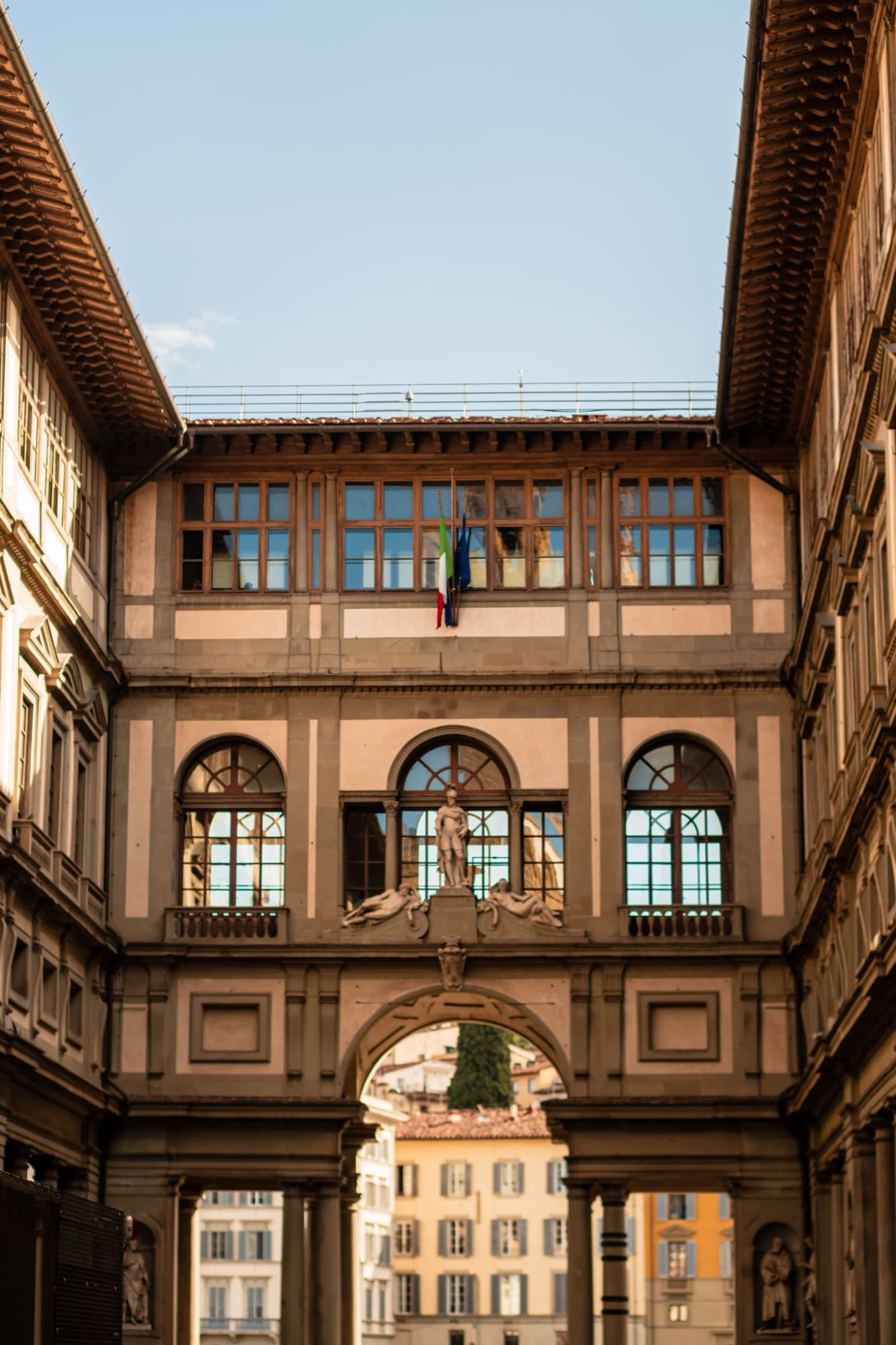
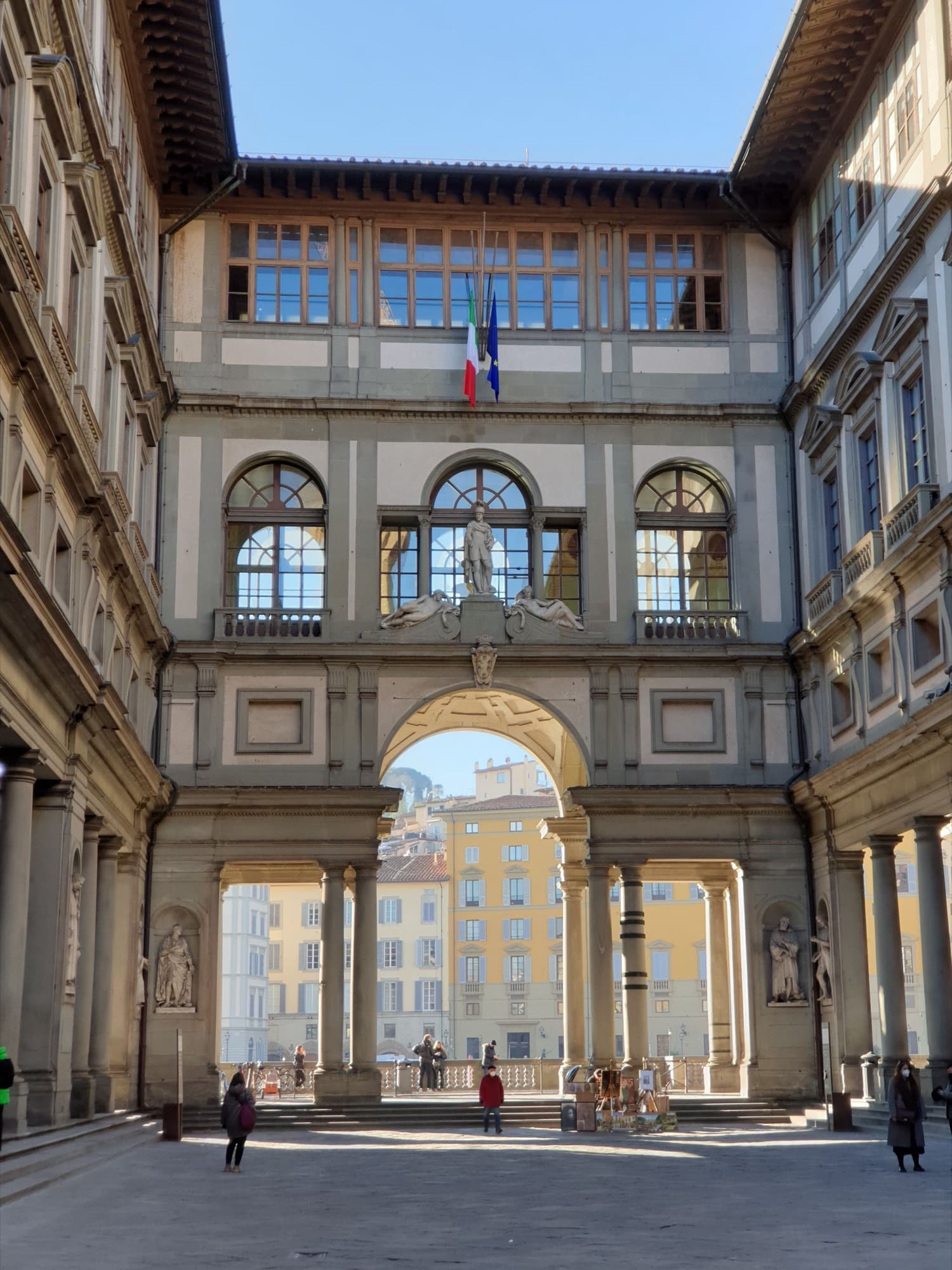
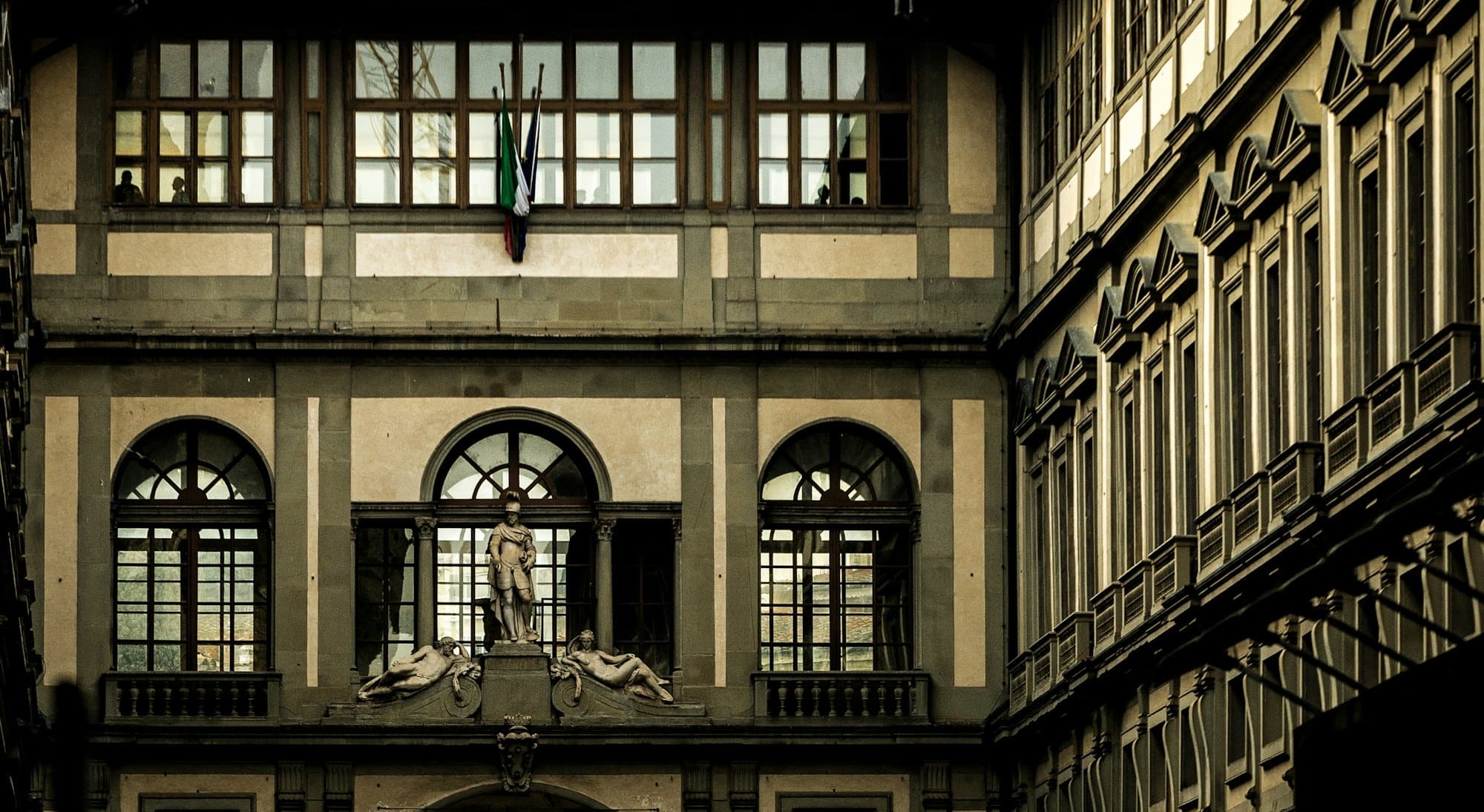
Cover photo: Alejandro Aznar, the courtyard's river end and its loggia, via Pexels.
Ready to experience it?
Historic Center: Duomo to Ponte Vecchio
90 min · 1.8 km · easy
More from Florence
Explore more at your own pace.
Michelangelo's Doni Tondo at the Uffizi: The Painting, the Frame and the Bill
The Birth of Venus at the Uffizi: Where It Hangs and What to Look For
Uffizi Gallery: What to See, Floor by Floor, and a Two-Hour Plan
Palazzo Medici Riccardi: How to Read a Banker's Balance Sheet in Stone
The Baptistery Door Competition That Started the Renaissance