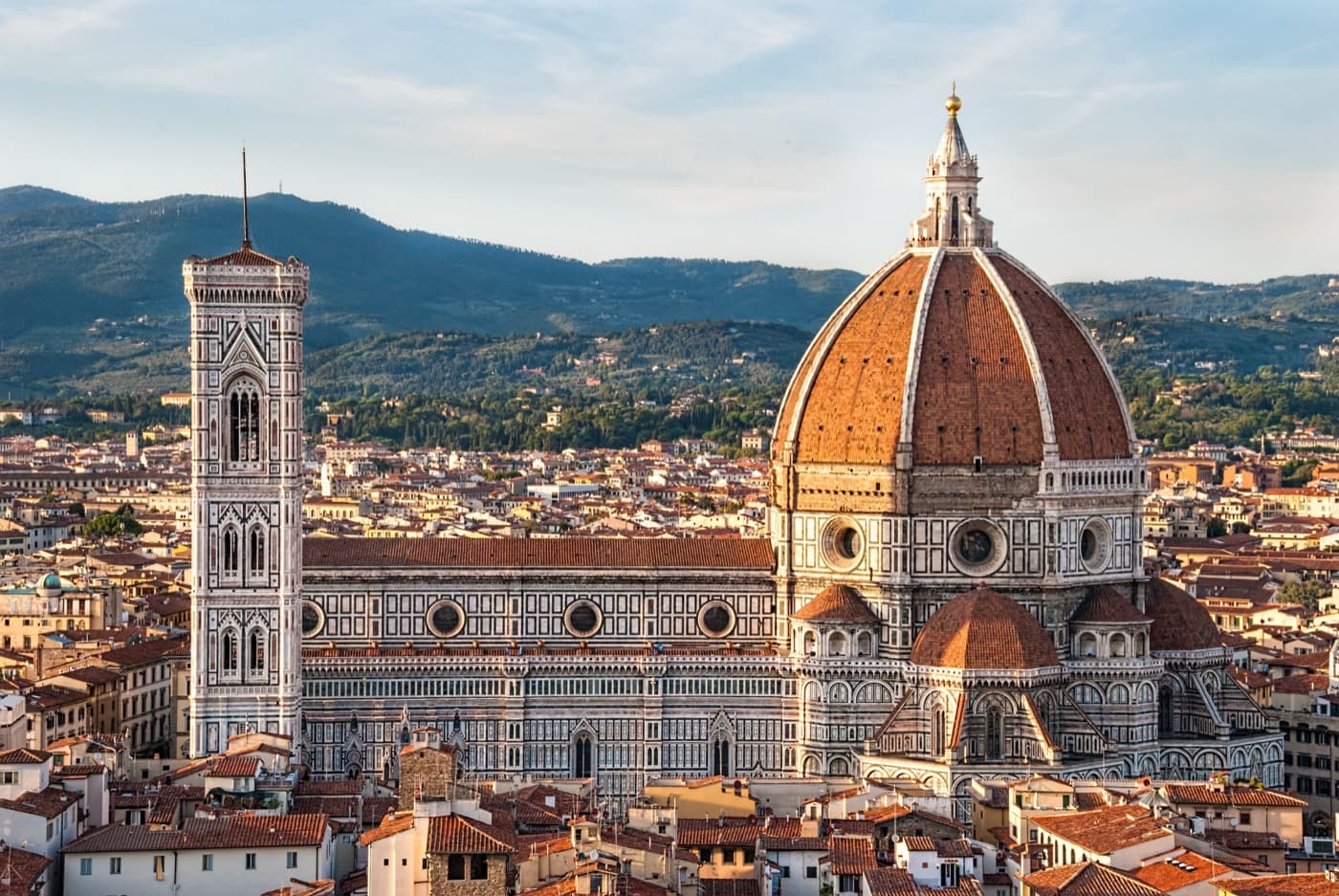
The dome over Santa Maria del Fiore matters not because one genius invented it from nothing, but because a town of wool merchants and money-changers set itself an engineering problem no one alive could solve, and then a goldsmith named Filippo Brunelleschi answered it with bricklaying. Stand in the cathedral nave in Florence and the size of the thing stops being a fact and becomes a feeling. That feeling is the whole point. The Opera di Santa Maria del Fiore, the cathedral works that still run the building, calls the great brick dome above you the largest masonry vault in the world, and it was raised between 1420 and 1436. Everything worth understanding about this building is contained in how it got there.
The problem the town had been dreading
The cathedral was begun long before anyone worried about the dome. Its first stone was laid on 8 September 1296, with Arnolfo di Cambio as master builder, and Giotto, elected master builder in 1334, began the bell tower that still stands beside the dome today. The church rose steadily. The trouble was the crossing, the wide octagonal opening left at the center, waiting for a roof that, by every rule of construction anyone knew, could not stand.
Large domes had always been built over a full temporary wooden frame, a scaffold called centering that holds the masonry in place until the ring is closed and can support its own weight. For an opening this wide and this high, no forest could supply timber long enough or strong enough, and no scaffold could span the gap without collapsing under its own bulk. So the cathedral neared completion with a hole at its heart. For a city that had staked its pride on the building, the unfinished crossing was a civic embarrassment that sat unsolved for decades.
The goldsmith and the competition
Hear a stop from this walk
Brunelleschi's Dome: Two Rivals, One Vault
In 1418 the cathedral works held a competition for models of the dome. Filippo Brunelleschi submitted a masonry model, and in 1420 the works office adopted his design, though not as a lone victory: it appointed Brunelleschi and Lorenzo Ghiberti, the rival who had beaten him for the Baptistery doors in 1401, as joint master builders. The detail that never stops mattering is that Brunelleschi was trained as a goldsmith, enrolled as a master in the silk guild that goldsmiths belonged to in 1404, not as an architect. He did not come to the problem with a builder's assumptions. He came with a maker's hands and a maker's willingness to solve a specific puzzle rather than repeat an inherited method.
It is worth resisting the tidy legend that Brunelleschi invented the dome from nothing. He did not. What he did was raise this dome without centering, the full temporary wooden frame that would normally hold it up while it was made. That is the achievement, stated precisely, and it is more impressive than the myth. His answer, as far as the record supports, was in the bricklaying itself. He set the bricks in a herringbone pattern, angled so that each ring of the dome locked into the one below and helped support itself as it rose. The shell could climb inward, course by course, without a scaffold beneath it, because each completed ring became the platform for the next. The dome, in effect, held itself up while it was being built.
Why a merchant republic could commission the impossible
The deeper story is not really about one man. It is about the kind of place that would set such a problem and then pay to have it solved. Florence had no royal court and no imperial grandeur of its own. It was run by guilds, by the associations of wool merchants and bankers and craftsmen who financed its buildings and expected them to rival the ancients. A wealthy, anxious, ambitious republic decided its cathedral should carry a dome that could stand comparison with the ancients, and then it lived with the consequence of that ambition for a generation until someone could deliver it.
That is the pattern you see repeated all across central Florence, and it is what makes this cathedral the right place to begin reading the Renaissance. The money came first. The competition came next. The genius arrived because the town had built a market for it. Brunelleschi did not descend on Florence like weather. He was produced by a system that rewarded a person who could solve what others could not, and that system is the actual engine of everything you will see in the surrounding streets.
What to understand standing in front of it
The cathedral was consecrated on the 25th of March, 1436, by Pope Eugene the Fourth, a hundred and forty years after its first stone. Even then the dome was not quite finished: the marble lantern on top was built to Brunelleschi's design only after his death in 1446, and Verrocchio's gilded ball went up in 1471. When you stand under the dome, the one thing to hold in mind is that you are looking at a solved problem, not a miracle. Every course of brick above you is a decision, and the herringbone bond is the visible logic of a mind working out how to make weight carry itself.
There is a practical grace to visiting, too. You can stand in the nave, under the full span of the dome and the whole weight of the idea, for free. Only the climb to the top requires a timed pass, and that climb takes you between the two shells of the dome, up the same winding stairs the fifteenth-century builders used, where the herringbone brick is close enough to touch. The dome climb is only available on the Brunelleschi Pass, which also covers Giotto's bell tower, the Baptistery interior, and the cathedral museum, and its timed slots often sell out weeks ahead, so book rather than attempt it as a walk-up.
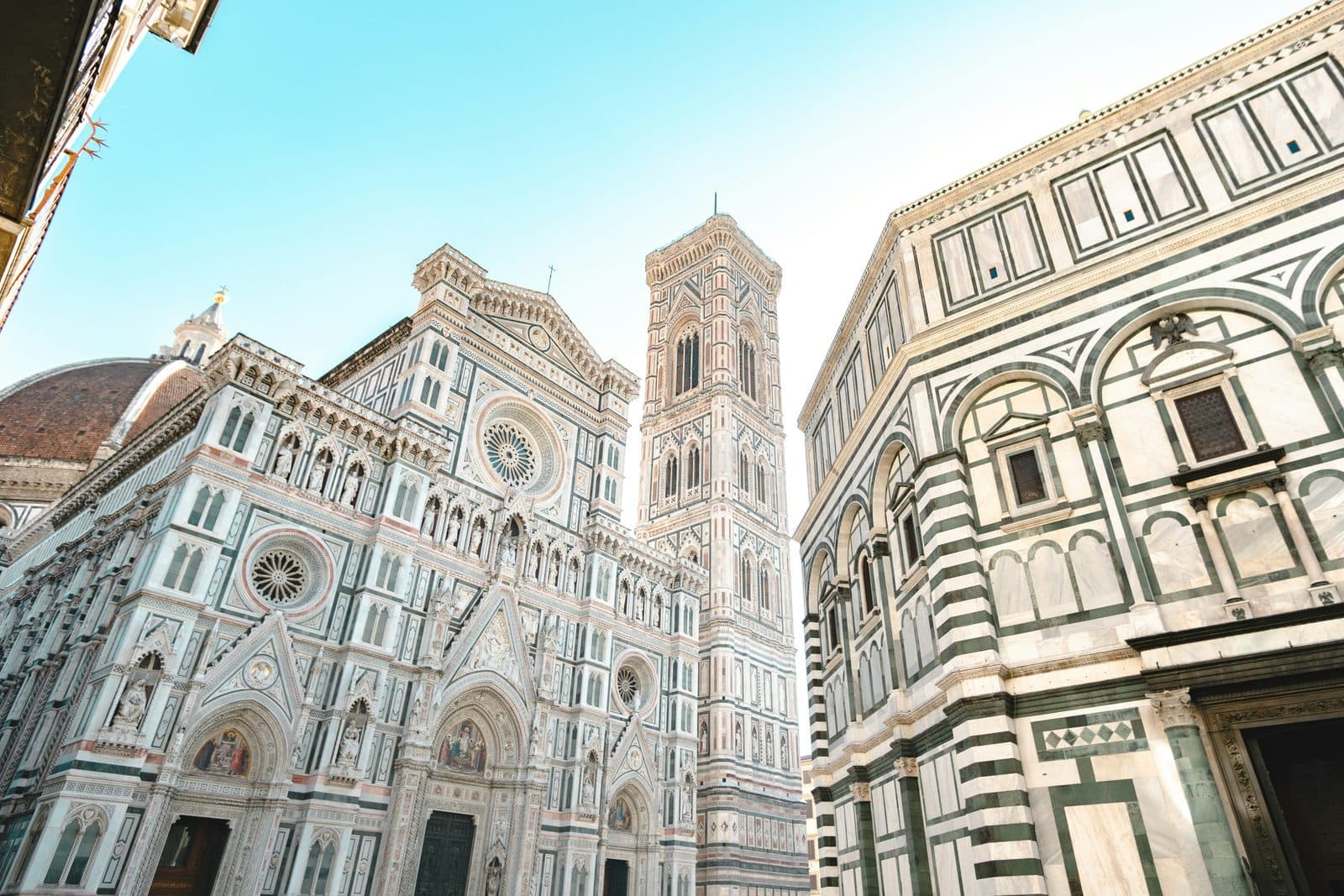
Notice the building it sits beside, as well. The octagonal Baptistery across the square is centuries older, and a competition held there in 1401, to design a set of bronze doors, is where many historians place the beginning of the Renaissance in art. Seven artists competed, and only two trial panels survive: Lorenzo Ghiberti's and that of the same Filippo Brunelleschi who would later build the dome. He lost the doors to Ghiberti. Nineteen years later he had to share the dome with him. The two contests, held a short walk apart, bracket the entire origin story of what happened next in this city.
That is why this cathedral is the opening move of a walk rather than a destination in itself. The dome answers a question the whole town was asking, and the streets running south from the cathedral toward the town hall are where you can watch the same question asked again and again: how did a place with no crown will itself into becoming the workshop of the modern imagination? The answer is always in the making of things, not the labels.
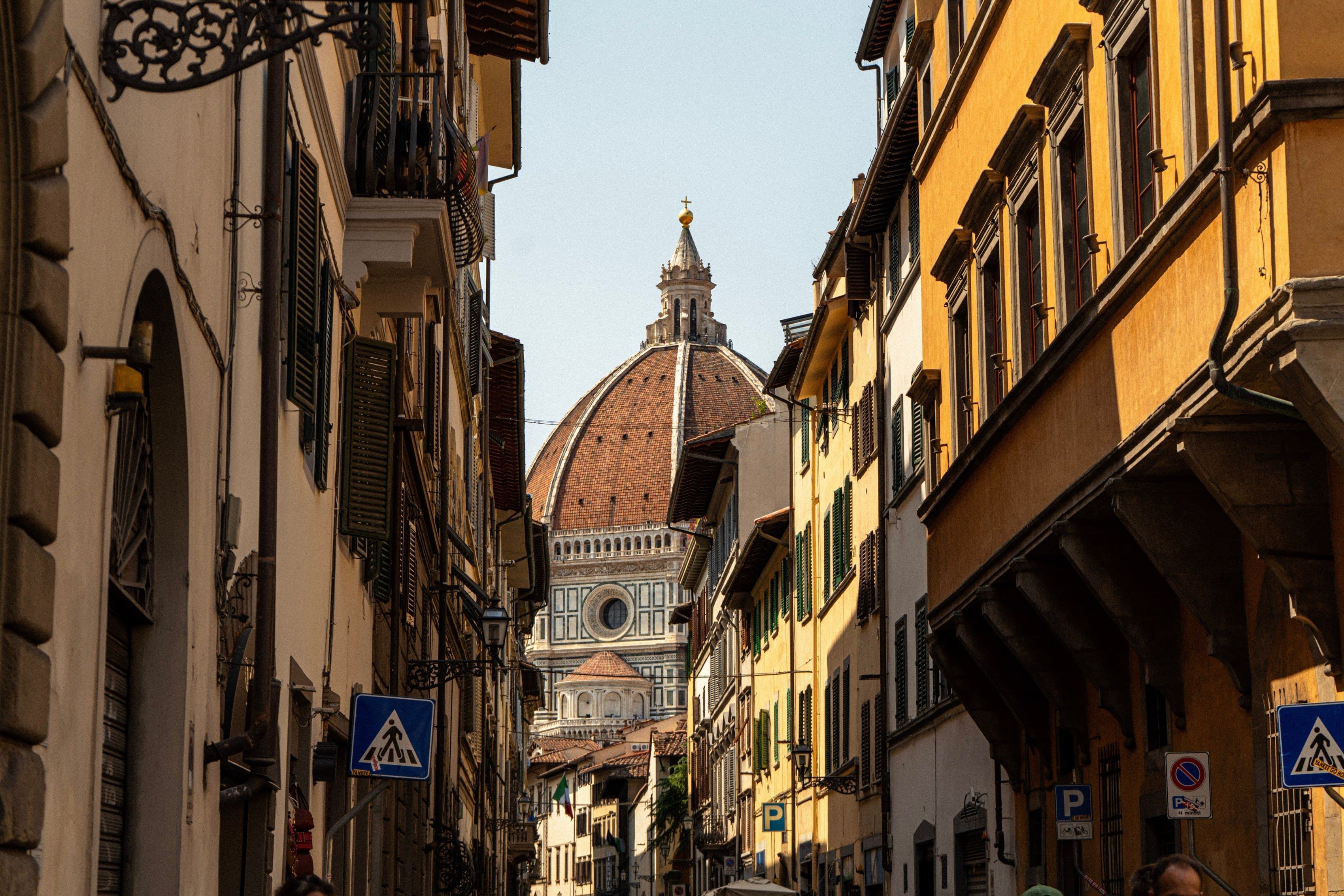
To read the Duomo in sequence with the Medici corner before it and the door, the guild niches, and the public square that follow, walk Historic Center: Duomo to Ponte Vecchio, a twelve-stop route of about 1.8 kilometers and ninety minutes that starts at San Lorenzo and reaches the dome from its south side, where the seated statues of Arnolfo and Brunelleschi look at their church and its dome. For the full set of self-guided routes through the city, see our guide to Florence walking tours, and browse everything on offer in Florence.
Sources
- Opera di Santa Maria del Fiore (duomo.firenze.it). The first stone of 8 September 1296, Giotto's election in 1334, the dome built 1420 to 1436 without centering and described by the Opera as the largest masonry vault in the world, the 1436 consecration by Pope Eugene the Fourth, and Verrocchio's ball of 1471.
- Treccani, Dizionario Biografico degli Italiani: Filippo Brunelleschi. His goldsmith training in the silk guild, the 1401 door competition, the 1418 model, and the 1420 joint appointment with Ghiberti.
- Italian national heritage catalogue (catalogo.beniculturali.it). The two surviving 1401 trial panels in the Bargello.
Ready to experience it?
Historic Center: Duomo to Ponte Vecchio
90 min · 1.8 km · easy
More from Florence
Explore more at your own pace.
Florence Travel Guide: How Many Days, Getting Around, and What to Book
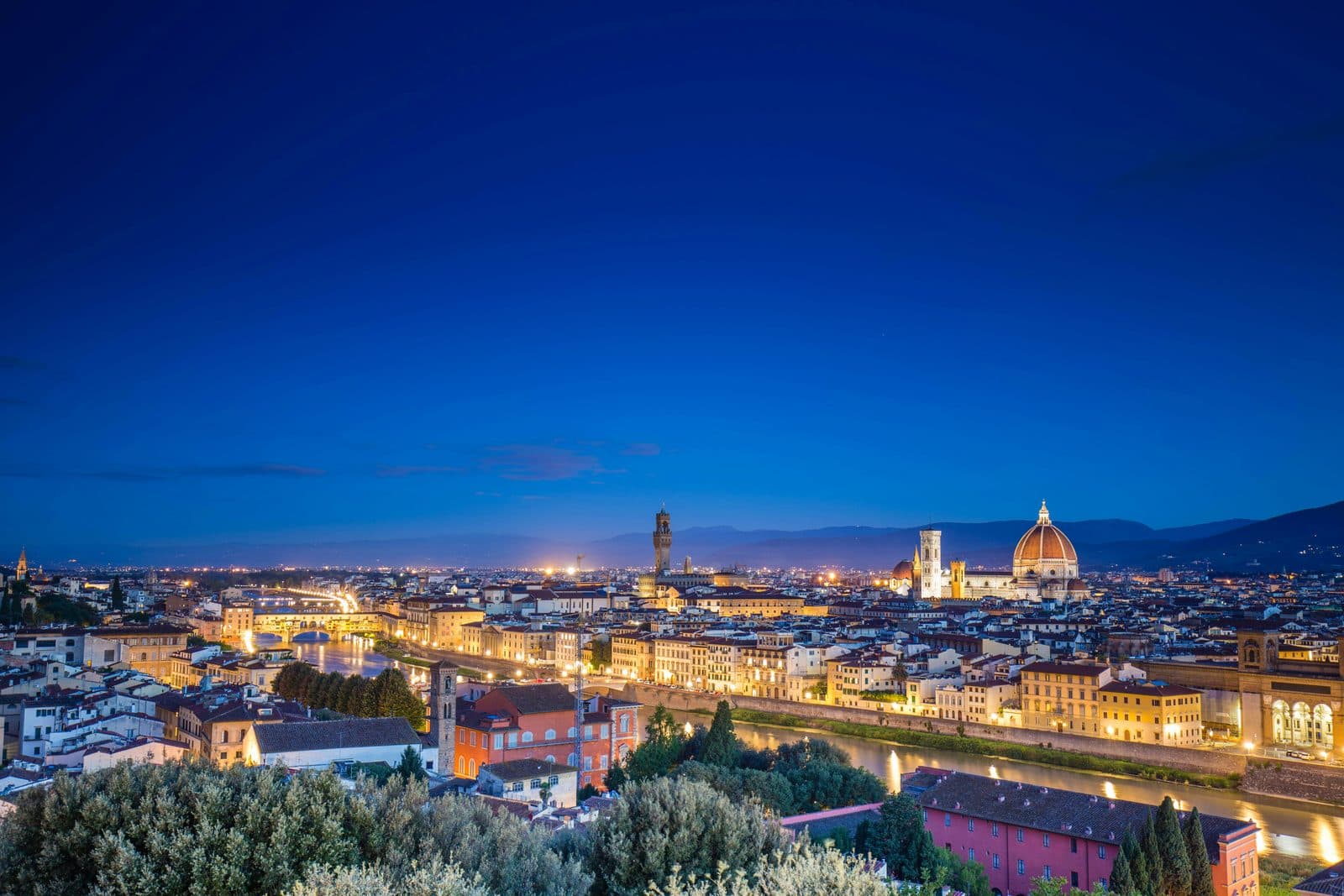
How Money and Competition Built the Renaissance in Florence
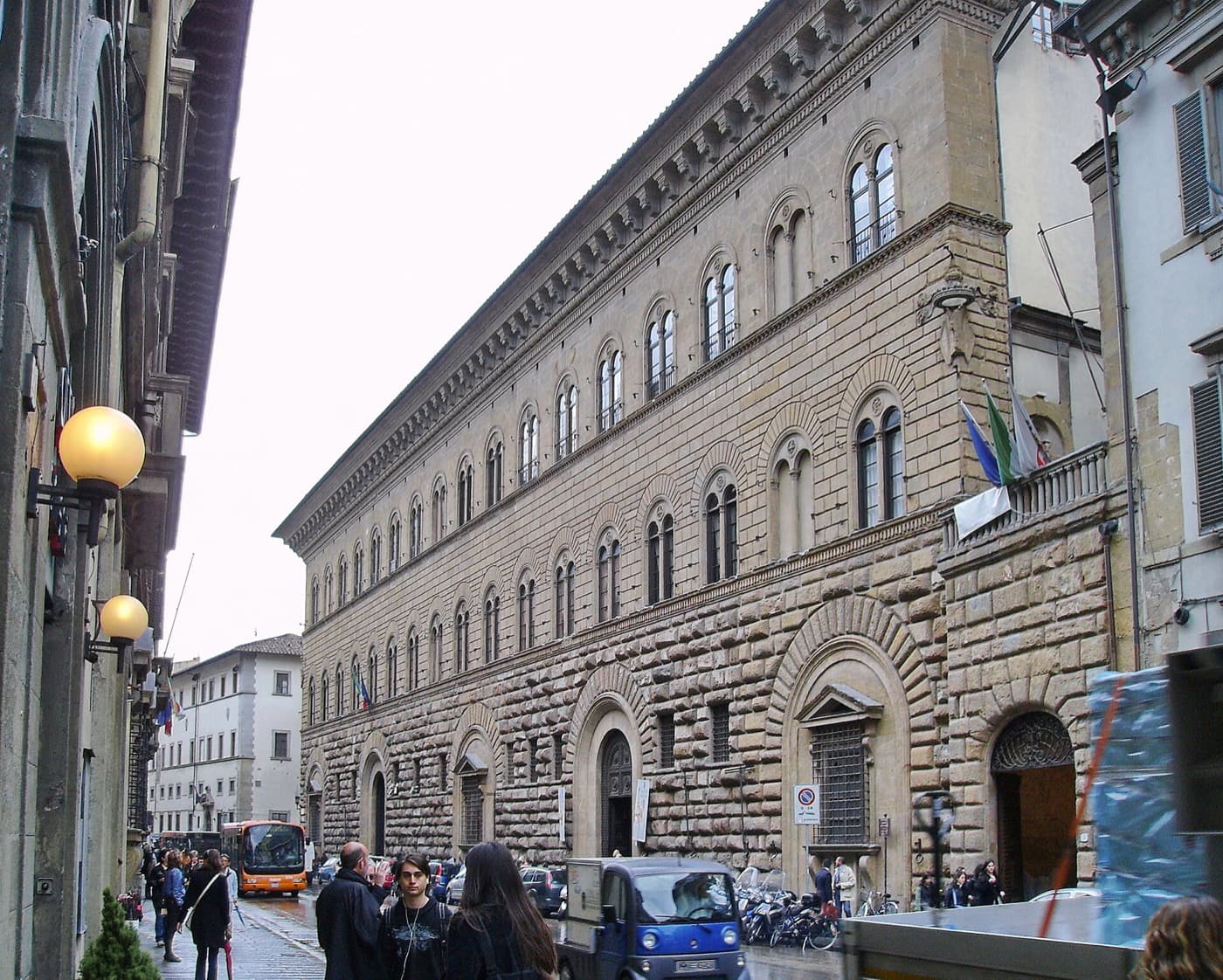
Palazzo Medici Riccardi: How to Read a Banker's Balance Sheet in Stone
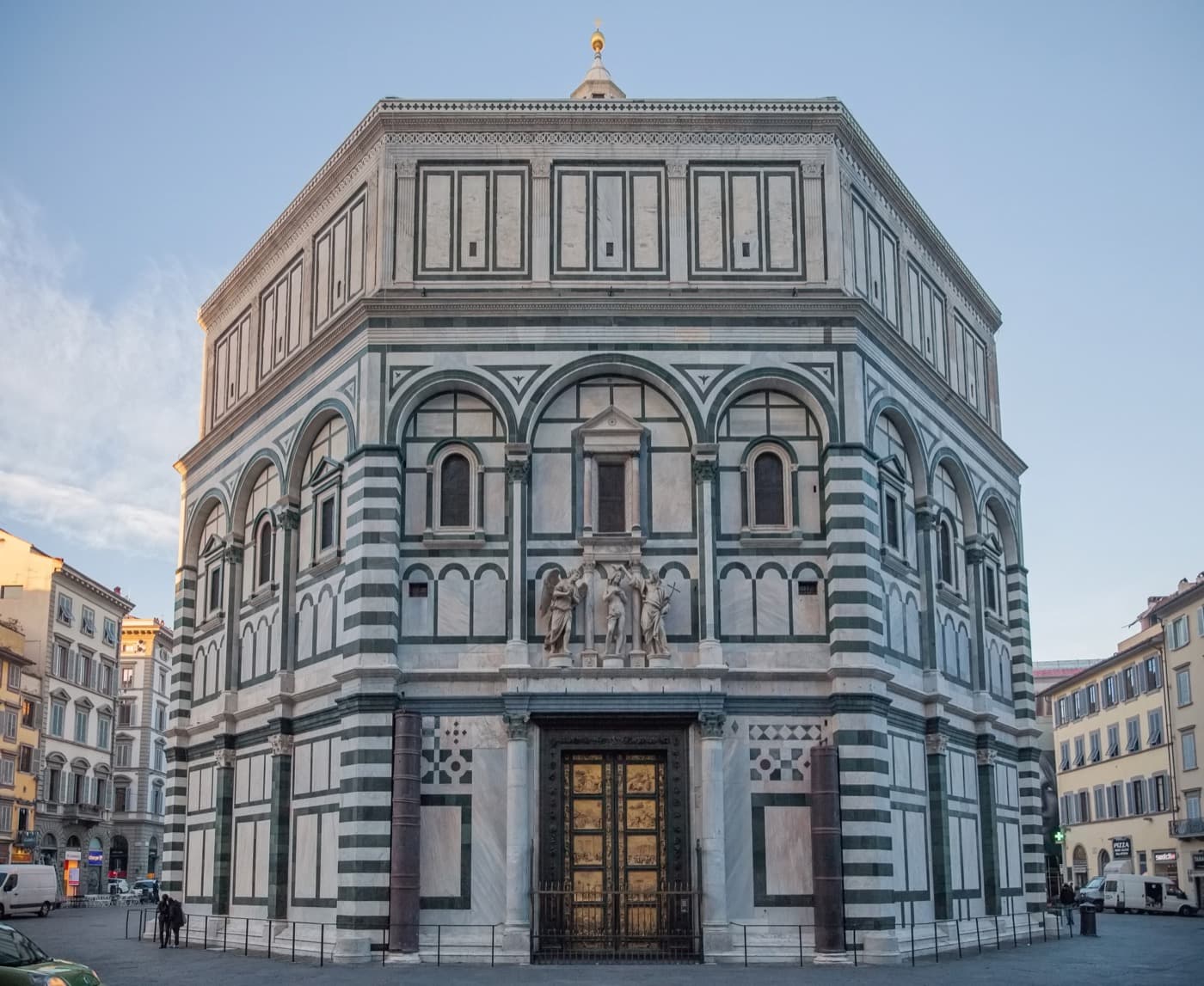
The Baptistery Door Competition That Started the Renaissance
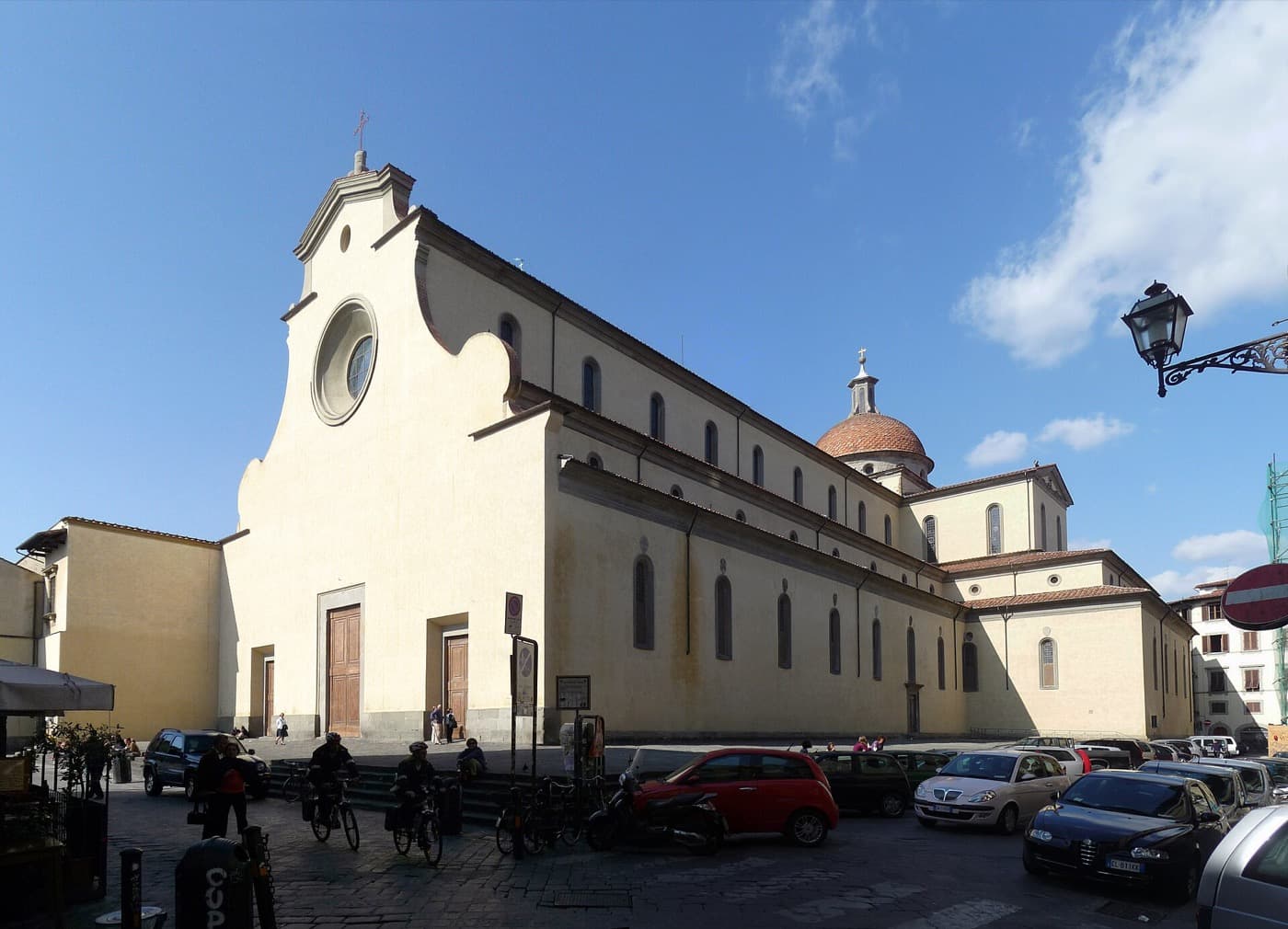
The Oltrarno: Reading Florence's Working Half From Santo Spirito Onward