Historic Center: Duomo to Ponte Vecchio
90 min · 1.8 km · easy
Florence turned concentrated money and civic competition into the engine of the Renaissance, and because the city is small enough to cross on foot, you can still read that machinery in stone. A town of wool merchants, money-changers, and guilds decided its buildings and its citizens should rival the ancients, and it funded that decision through banking profits, guild patronage, and the rivalry between families and trades. Two of our walks trace how that worked: how the money was made, how it was displayed, and how one banking family bought its way from a private palace into the seat of government. Follow both and the argument assembles itself. The Renaissance did not fall from the sky. It was engineered, deliberately, by people who left the receipts out in the open.
Competition built the monuments
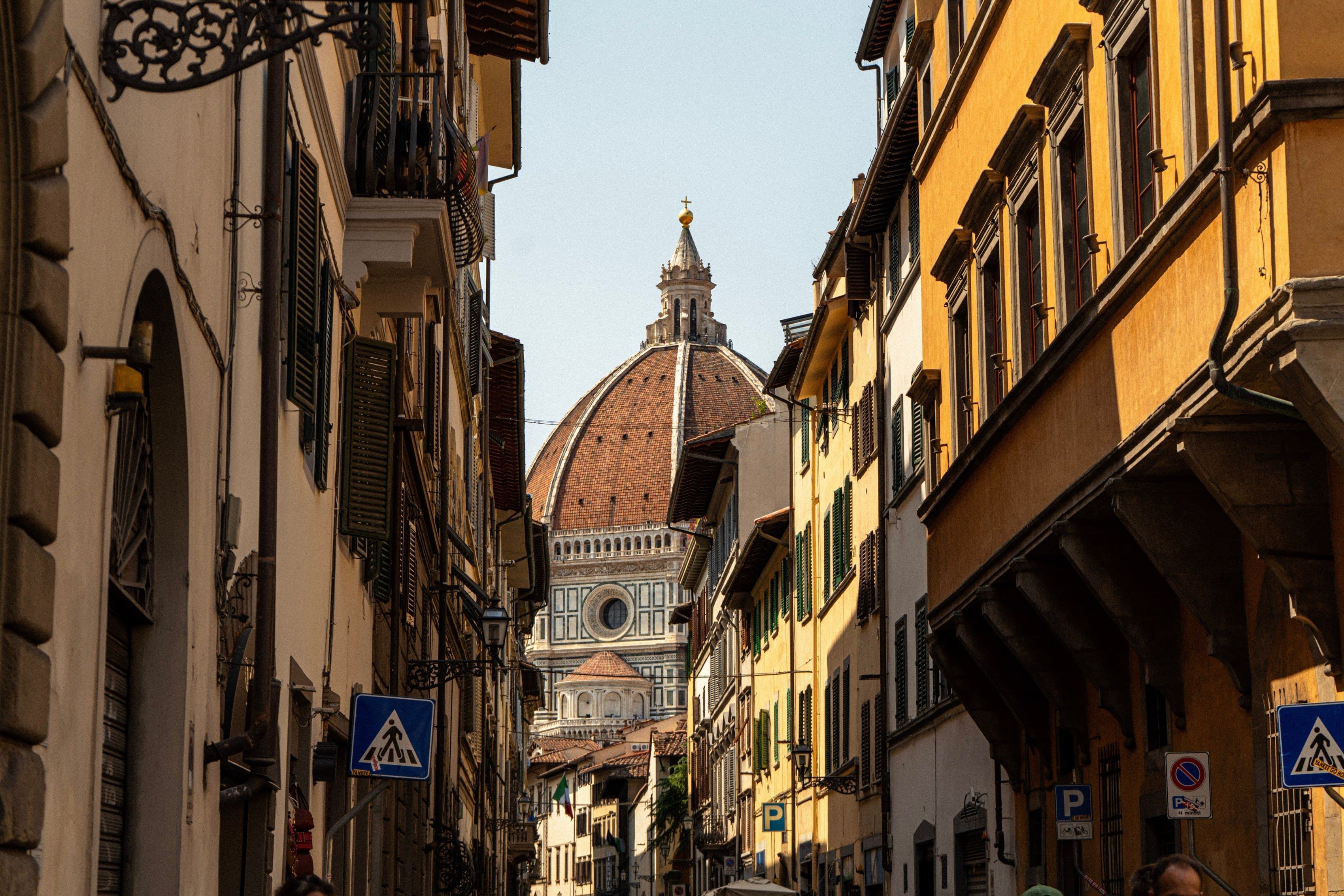
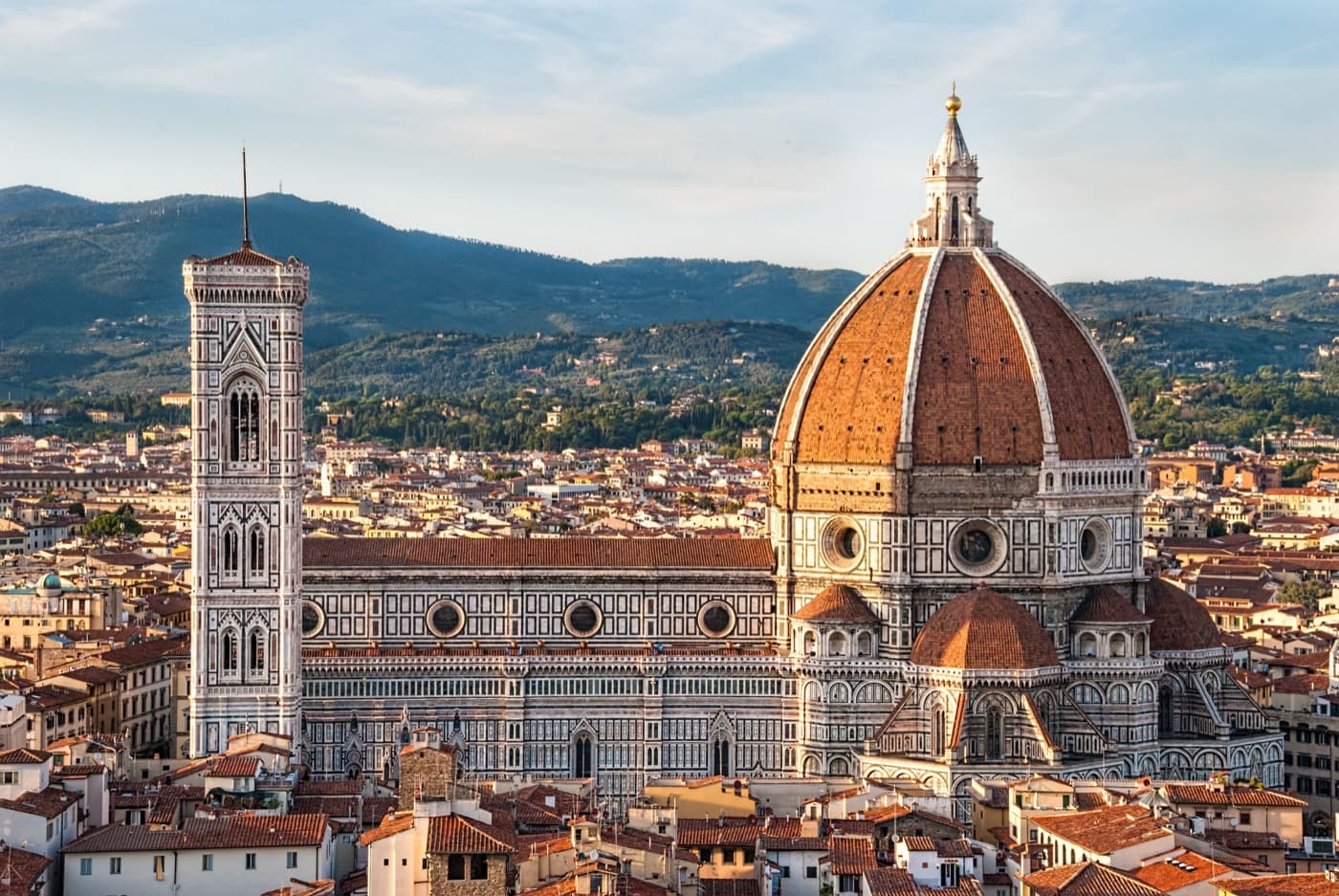
The clearest evidence sits in the few streets between the cathedral and the town hall. On Historic Center: Duomo to Ponte Vecchio, the mechanism is competition applied to civic pride. The cathedral crossing sat open for decades, a public embarrassment for a city that had staked its standing on the building, until a competition for models in fourteen eighteen. In fourteen twenty the works office adopted the design of Filippo Brunelleschi, trained as a goldsmith rather than an architect, and appointed him joint master builder with Lorenzo Ghiberti, the rival who had beaten him in fourteen-oh-one. His herringbone brickwork let the octagonal shell rise without a timber frame, and the result, raised between fourteen twenty and fourteen thirty-six, is what the cathedral works call the largest masonry vault in the world. It was consecrated by Pope Eugene the Fourth on the twenty-fifth of March, fourteen thirty-six.
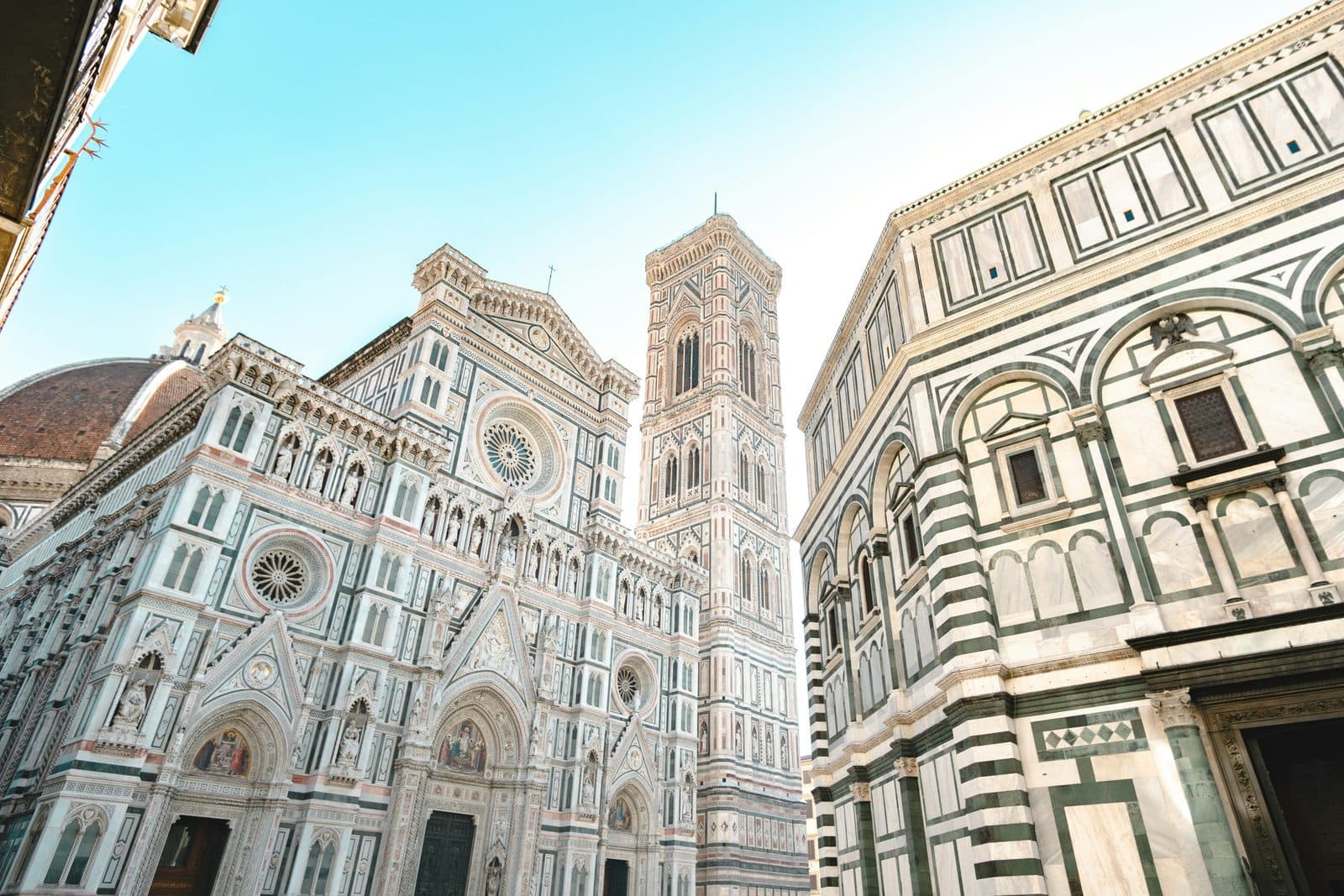
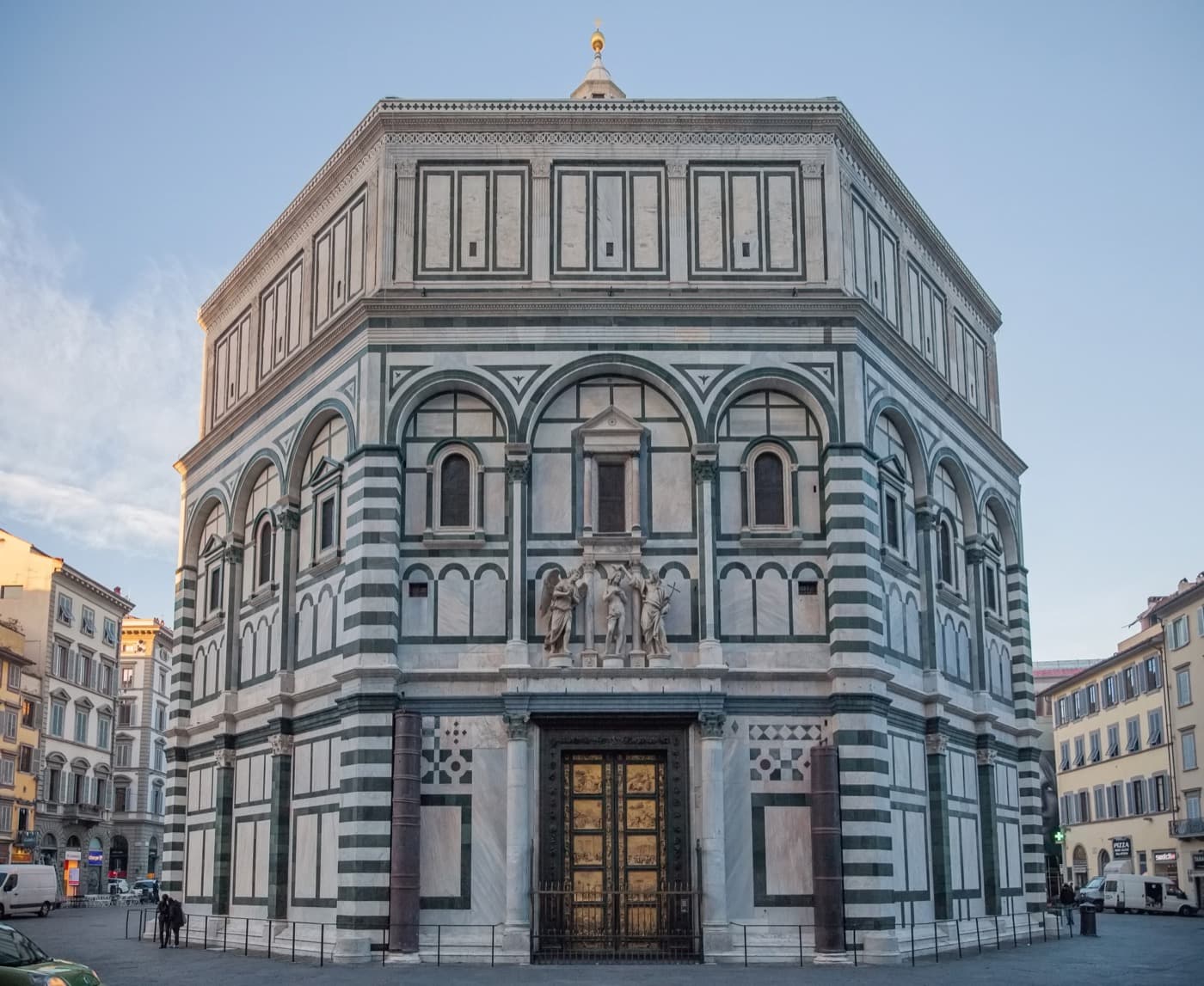
The pattern repeats at the Baptistery, where a fourteen-oh-one competition for a set of bronze doors is where many historians place the beginning of the Renaissance in art. Seven artists competed, each casting a trial panel of the Sacrifice of Isaac, and only two panels survive, Ghiberti's and the same Brunelleschi's, both now in the Museo del Bargello. Ghiberti won. His later doors were moved in fourteen fifty-two to the place of honour facing the cathedral, and their name, the Gates of Paradise, may come from the Paradiso, the old name for the ground between a baptistery and its church. Vasari credited it to Michelangelo, a line the cathedral works themselves say he may have invented.
Then the competition becomes literal accounting at Orsanmichele, a grain market loggia rebuilt from thirteen thirty-seven whose open arcades were walled in during the thirteen sixties to make a church. In fourteen-oh-four the city ordered the guilds holding its outer pillars to fill their niches with patron saints within ten years, and most niches went to the arti of wool merchants, stonecutters, and bankers who actually ran Florence, with one early niche held by the Guelph Party and later sold to the merchants' court. A guild that wanted to show its standing commissioned the best sculptor it could afford. Donatello carved a Saint Mark for the linen-weavers between fourteen eleven and fourteen thirteen. Ghiberti made a Saint John the Baptist for the cloth merchants, the building's first bronze statue, cast at his own expense. The statues in the niches today are copies; the originals stand upstairs. The whole street became an open contest in bronze and marble, an account book made visible where the currency was genius.
Civic pride peaks on this walk at Piazza della Signoria, where Michelangelo's original David stood at the entrance of Palazzo Vecchio from fifteen oh four until eighteen seventy-three, placed there as a symbol of the strength and independence of the Florentines. A marble copy has held the spot since nineteen ten. The Loggia dei Lanzi beside it, built between thirteen seventy-six and thirteen eighty-two, put the city's most charged images out in the open, free to anyone walking past.
The money was made on the working side
Hear a stop from this walk
Brunelleschi's Dome: Two Rivals, One Vault
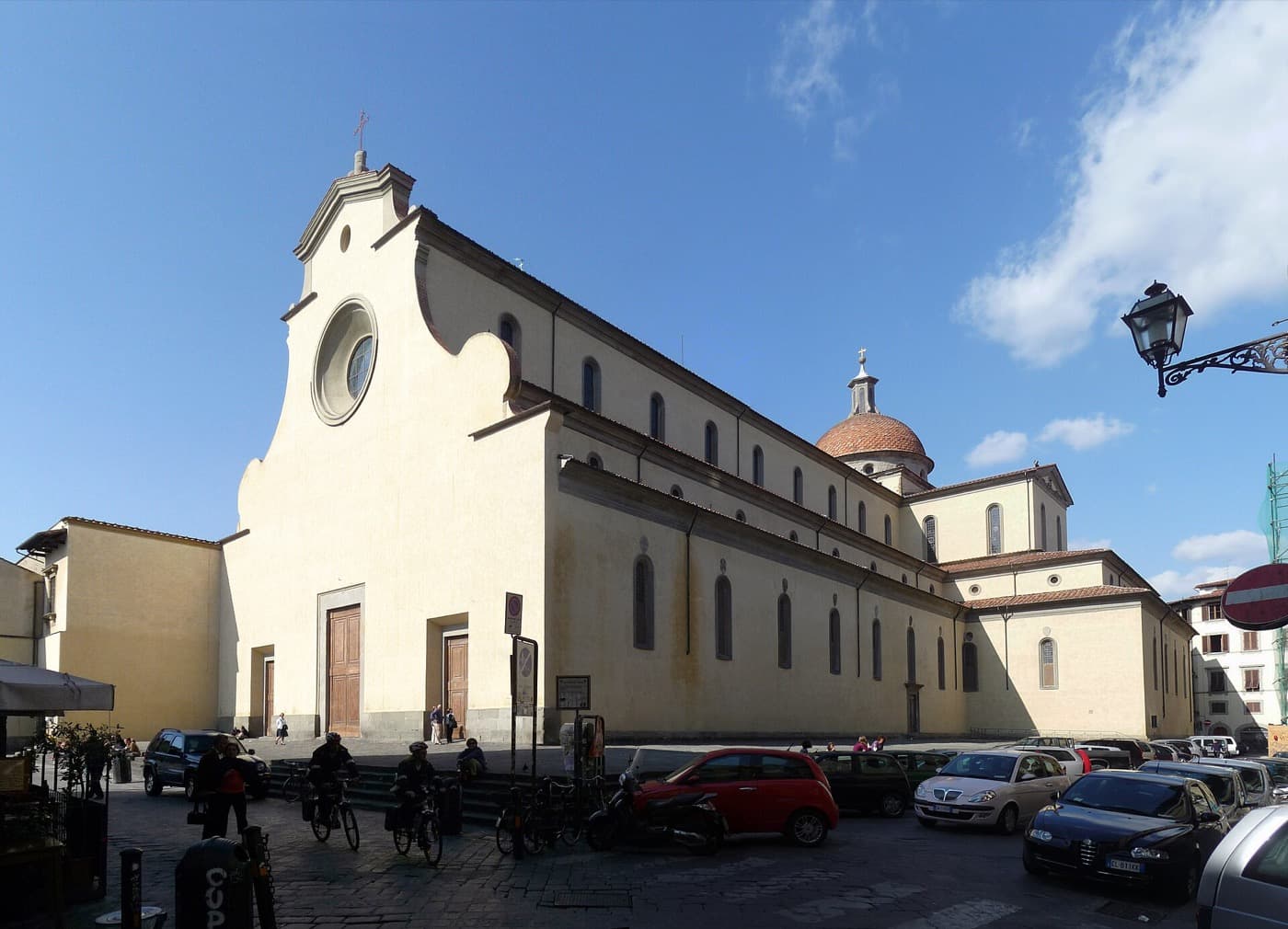
Cross the river and the picture completes. The Other Side of the Arno is the working half of the Renaissance city, the Oltrarno, where the botteghe that gilded and framed and repaired the masterpieces still work behind plain doors. Brunelleschi designed his last great church here, Santo Spirito, as early as fourteen twenty-eight, though the groundbreaking waited until fourteen forty-six, the year he died. Its broad, blank front was meant to carry a facade that was never built, so all the genius went inward: forty identical side niches marching around a Latin-cross plan in perfect rhythm. It is geometry you can walk through, the opposite of the gilded spectacle across the water.
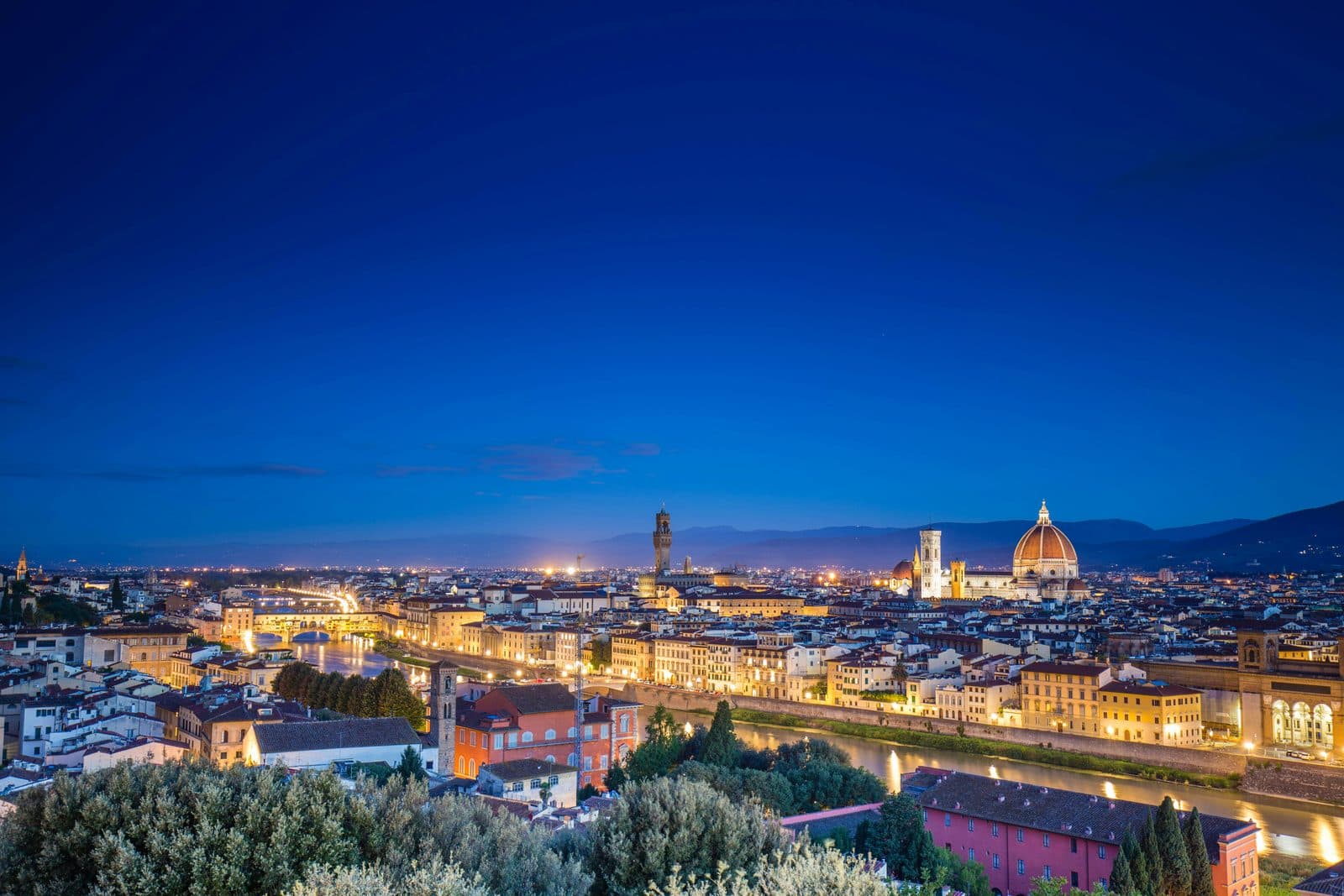
The Oltrarno also shows what the money bought when it stopped competing and started ruling. Santa Felicita is pierced by the Vasari Corridor, built in fifteen sixty-five by Giorgio Vasari on the orders of Cosimo the First de' Medici, a raised passage that let the family move between government and residence above the crowds, never touching the street. Inside, the grand dukes heard mass from behind a private grated window. The Palazzo Pitti tells the same story of ambition relocated. It was begun in fourteen fifty-eight for the banker Luca Pitti, a Medici rival, and was still unfinished when he died in fourteen seventy-two. Eleonora di Toledo, wife of Cosimo the First, acquired it for the Medici in fifteen forty-nine, and the ruling family bought its way across the river into a rival's house and made it the grandest address in the city. The walk climbs past the Boboli Gardens and the Romanesque San Miniato al Monte, founded in ten thirteen, to Piazzale Michelangelo, where the whole monumental skyline reassembles, seen from the half of Florence that made it.
A bank that bought influence, legitimacy, and eternity
The through-line sharpens at the two ends of the Historic Center walk, which opens at the Medici church and palace and closes at the duke's offices and private corridor, reading those buildings as a banking dynasty's balance sheet. Before Florence gave us the Renaissance, it gave us the ledger. The family were bankers long before they were dukes, and much of the art we revere here was the exhaust of a banking empire buying influence, legitimacy, and a place in heaven.
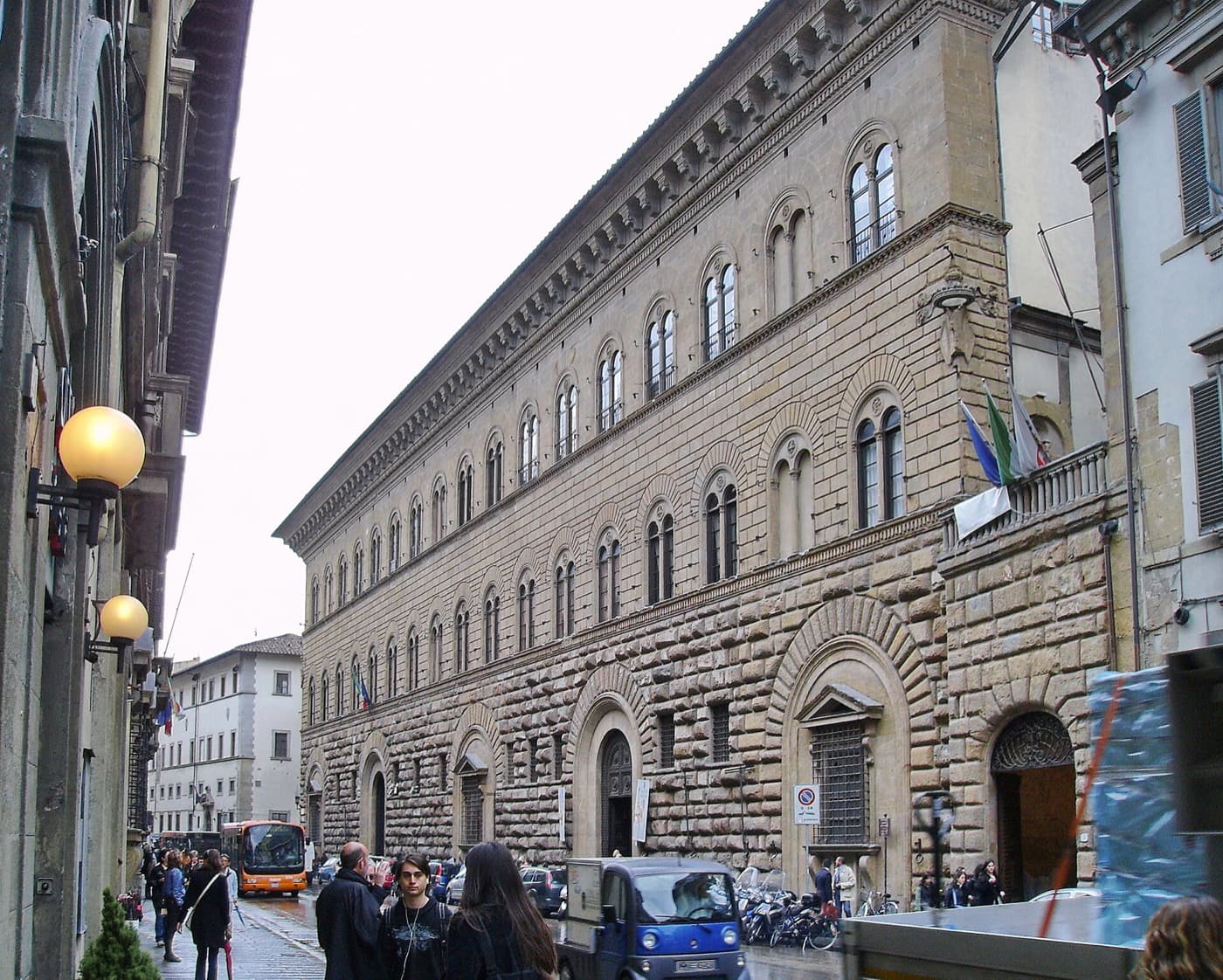
Palazzo Medici Riccardi, commissioned by Cosimo de' Medici in fourteen forty-four from Michelozzo di Bartolomeo, wears rusticated stone that Vasari explains as restraint: Cosimo, he says, rejected Brunelleschi's design as too grand, fearing it would arouse the envy of his fellow citizens. Its corner once held an open public loggia where citizens met and did business, until the Medici walled it up in fifteen seventeen behind windows designed by Michelangelo. The performance is inside, where Benozzo Gozzoli painted the Journey of the Magi around fourteen fifty-nine and set the family riding in the procession. At San Lorenzo, the Medici parish church that Brunelleschi rebuilt from fourteen twenty-one, the front is still bare stone and brick. Pope Leo the Tenth, a Medici, signed Michelangelo to give it a marble facade in fifteen eighteen, and a wooden model of the design survives, but the contract was cancelled in fifteen twenty and the quarried marble went to pave the cathedral. The family filled the interior with tombs and light and left the public face unfinished. Behind the church, in the Medici Chapels, a separate ticketed museum off the walk, the money buys eternity: Michelangelo's New Sacristy and the Chapel of the Princes, an octagonal mausoleum for the grand dukes.
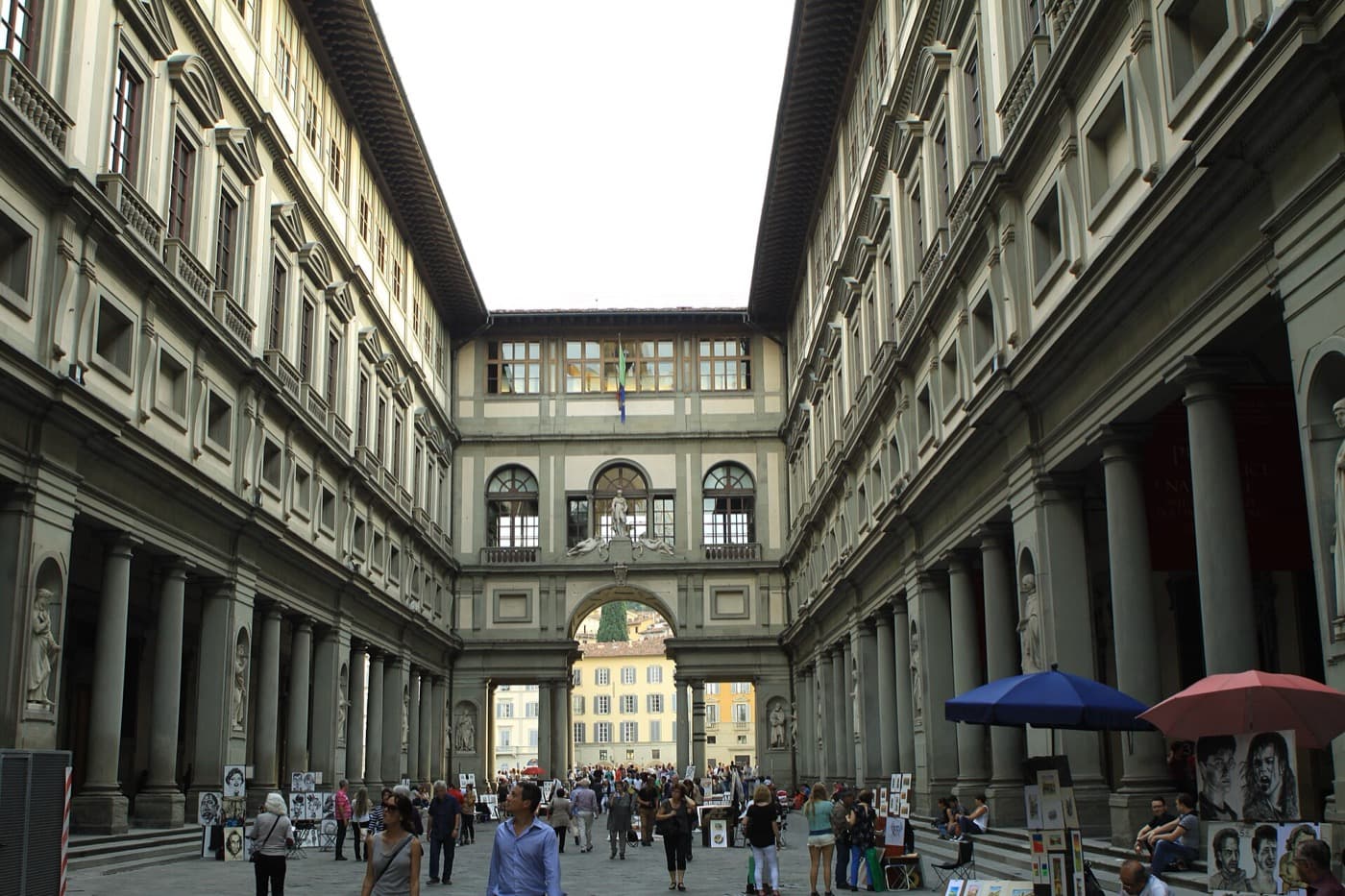
The arc lands where private wealth becomes public machinery. The Uffizi, designed by Vasari for Cosimo the First and begun in fifteen sixty, was built as offices, since running a duchy takes paperwork, and was finished about twenty years later by Buontalenti after both Cosimo and Vasari died in fifteen seventy-four. And the Palazzo Vecchio, begun at the end of the thirteenth century as the seat of the Florentine Republic, is where Cosimo the First moved his official seat in fifteen forty. The bank walked into the house of the Republic and made it a ducal residence. Read the two walks together and the compact city reveals its logic: banking profit, guild rivalry, and family ambition, competing and compounding across a few square kilometres, until a merchant town willed itself into the workshop of the modern imagination. Start planning with our Florence walking tours.
Sources
- Historic Center: Duomo to Ponte Vecchio (Roamer tour transcript)
- The Other Side of the Arno (Roamer tour transcript)
- Opera di Santa Maria del Fiore (duomo.firenze.it). The dome, the doors and the 1452 decision on the Gates of Paradise.
- Treccani, Dizionario Biografico degli Italiani: Filippo Brunelleschi and Arnolfo di Cambio.
- Casa Buonarroti. Michelangelo's San Lorenzo facade contract of 1518 and its cancellation in 1520.
- Palazzo Medici Riccardi and its Mediateca. The 1444 commission, Vasari's account of Cosimo and Brunelleschi, and the 1517 closing of the loggia.
- Repertorio delle Architetture Civili di Firenze (Palazzo Spinelli). Orsanmichele and its niches.
- Uffizi Galleries. The building of the Uffizi.
Frequently asked questions
- Why did the Renaissance start in Florence specifically?
- Florence was a compact city run by wool merchants, money-changers, and guilds who deliberately used their wealth and mutual competition to fund architecture and art meant to rival the ancients. The banking profits, guild patronage, and family rivalry concentrated in a few square kilometres. Many historians also point to a specific event, the fourteen-oh-one competition for the Baptistery bronze doors, as the beginning of the Renaissance in art.
- What role did the Medici bank play in Florentine art?
- The Medici were bankers long before they were dukes, and they spent their banking fortune on palaces, chapels, and commissioned art to buy influence and legitimacy. Cosimo de' Medici built a palace with a dazzling private chapel inside, after rejecting, as Vasari tells it, a grander design by Brunelleschi that he feared would arouse envy, and the family rebuilt San Lorenzo as a dynastic church and burial place. Cosimo the First later commissioned the Uffizi as government offices and moved his seat into the Palazzo Vecchio in fifteen forty.
- Is Florence small enough to explore on foot?
- Yes. The core Renaissance sites cluster in a compact center that you can walk between easily. Historic Center: Duomo to Ponte Vecchio covers twelve stops over about 1.8 kilometres in about ninety minutes, from San Lorenzo and the Medici palace to the Ponte Vecchio. The Oltrarno tour is longer at roughly five kilometres because it ends with an optional hill climb to Piazzale Michelangelo.
- Who built the dome of Florence Cathedral?
- Filippo Brunelleschi, trained as a goldsmith rather than an architect, submitted a masonry model to the fourteen eighteen competition, and in fourteen twenty the cathedral works adopted his design, appointing him joint master builder with his old rival Lorenzo Ghiberti. His herringbone brickwork let the octagonal shell rise without a timber frame. The dome was raised between fourteen twenty and fourteen thirty-six, and the cathedral works call it the largest masonry vault in the world.
- What is the Oltrarno and why does it matter to the Renaissance?
- The Oltrarno is the ground beyond the Arno, the working half of Renaissance Florence, where artisan workshops still operate behind plain doors. It holds Brunelleschi's last great church, Santo Spirito, and the Palazzo Pitti, which the Medici bought from a rival banker in fifteen forty-nine. It is where the making of the city happened, as opposed to the showing of it across the river.
Ready to experience it?
Historic Center: Duomo to Ponte Vecchio
90 min · 1.8 km · easy
More from Florence
Explore more at your own pace.
Florence Travel Guide: How Many Days, Getting Around, and What to Book
Palazzo Medici Riccardi: How to Read a Banker's Balance Sheet in Stone
The Baptistery Door Competition That Started the Renaissance
The Oltrarno: Reading Florence's Working Half From Santo Spirito Onward
Brunelleschi's Dome: How a Goldsmith Built the Impossible in Florence