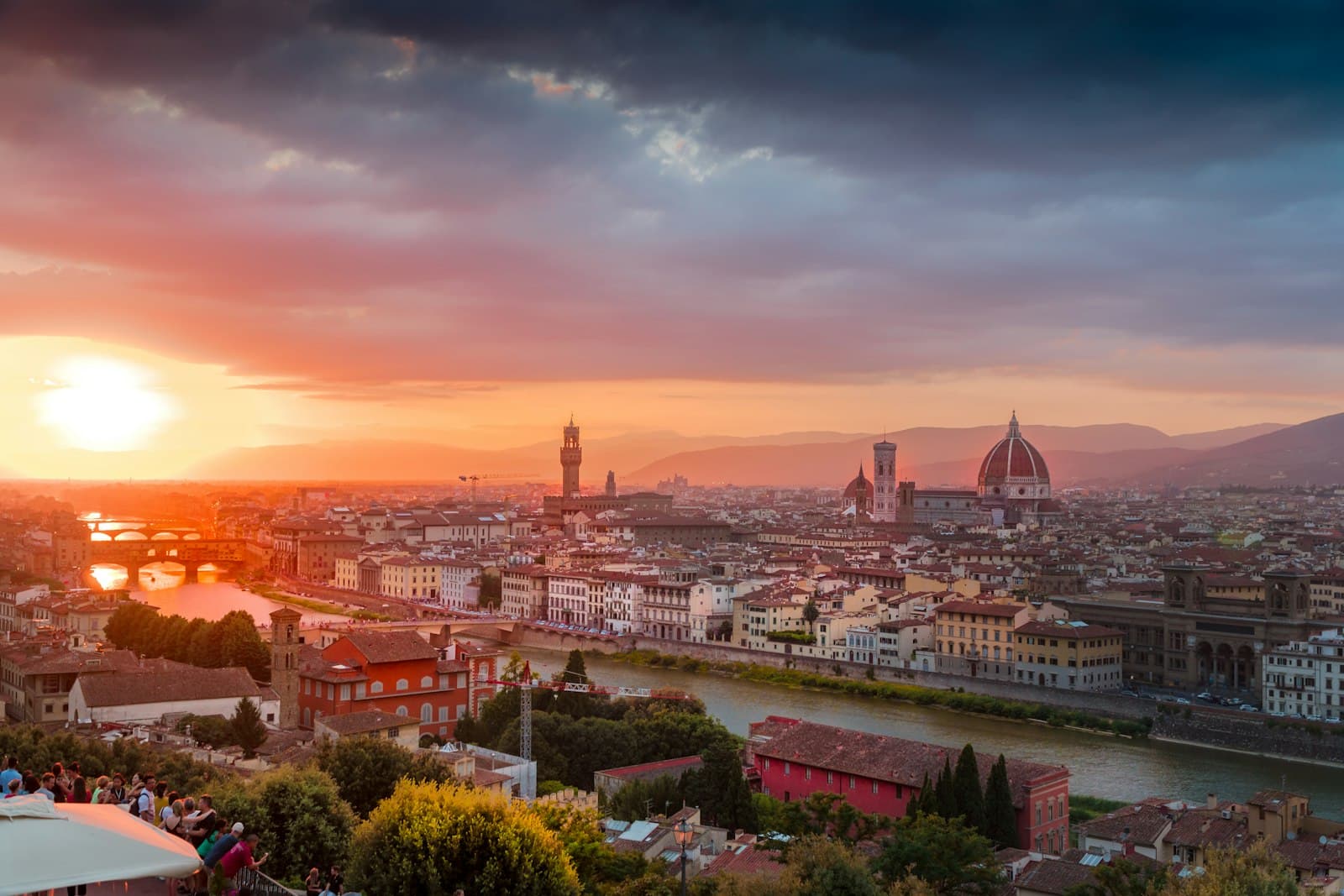
Cross the river into the Oltrarno, the working half of Renaissance Florence, where artisan workshops, a plain unfinished church, and a stiff hilltop climb reward you with the whole postcard skyline reassembling below.
Start · Basilica di Santo Spirito: the plain face of genius
DirectionsStops
- 1
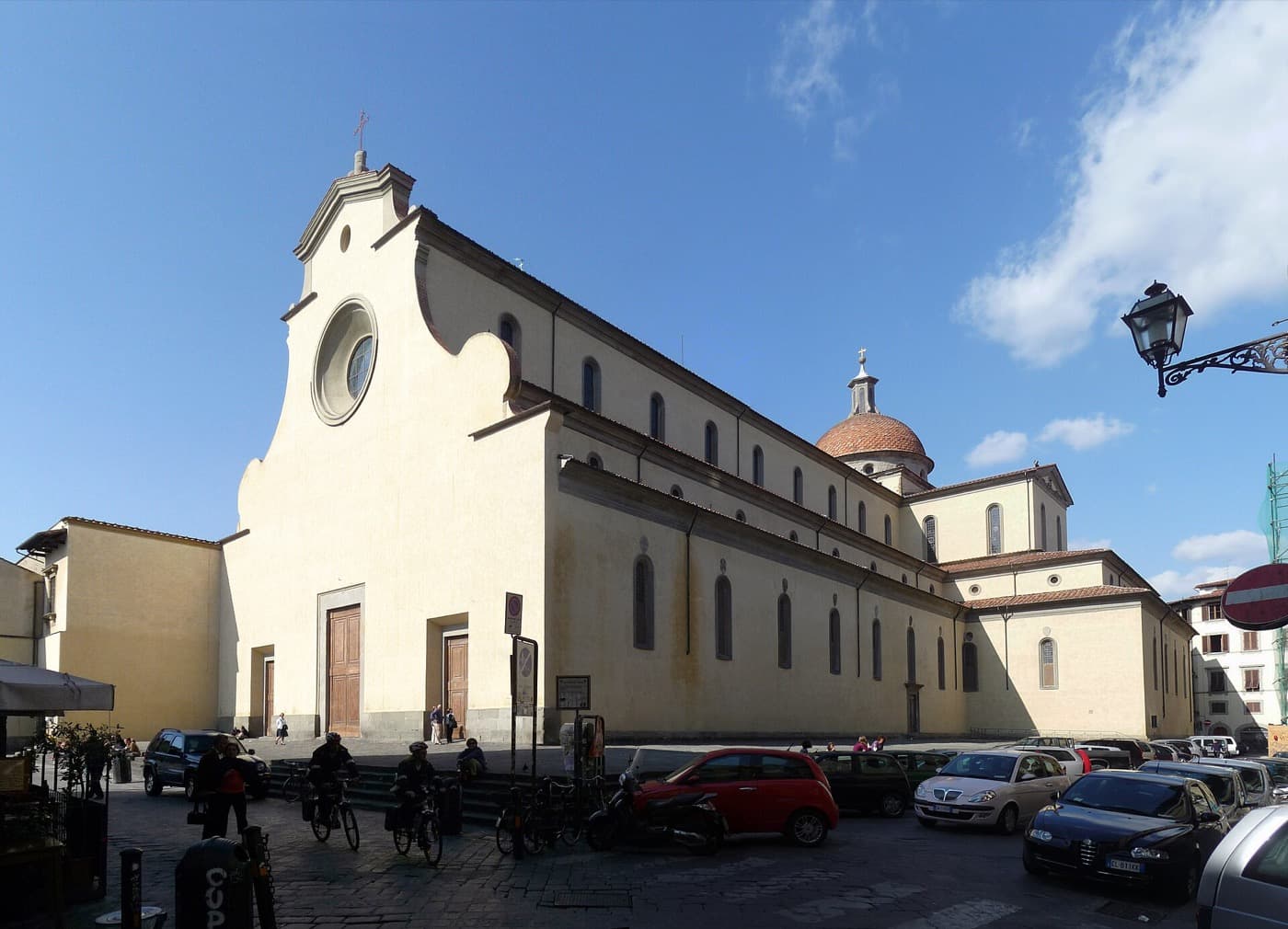
Basilica di Santo Spirito: the plain face of genius
Brunelleschi's last great church presides over the Oltrarno's liveliest square with a front left deliberately, famously blank.
- 2
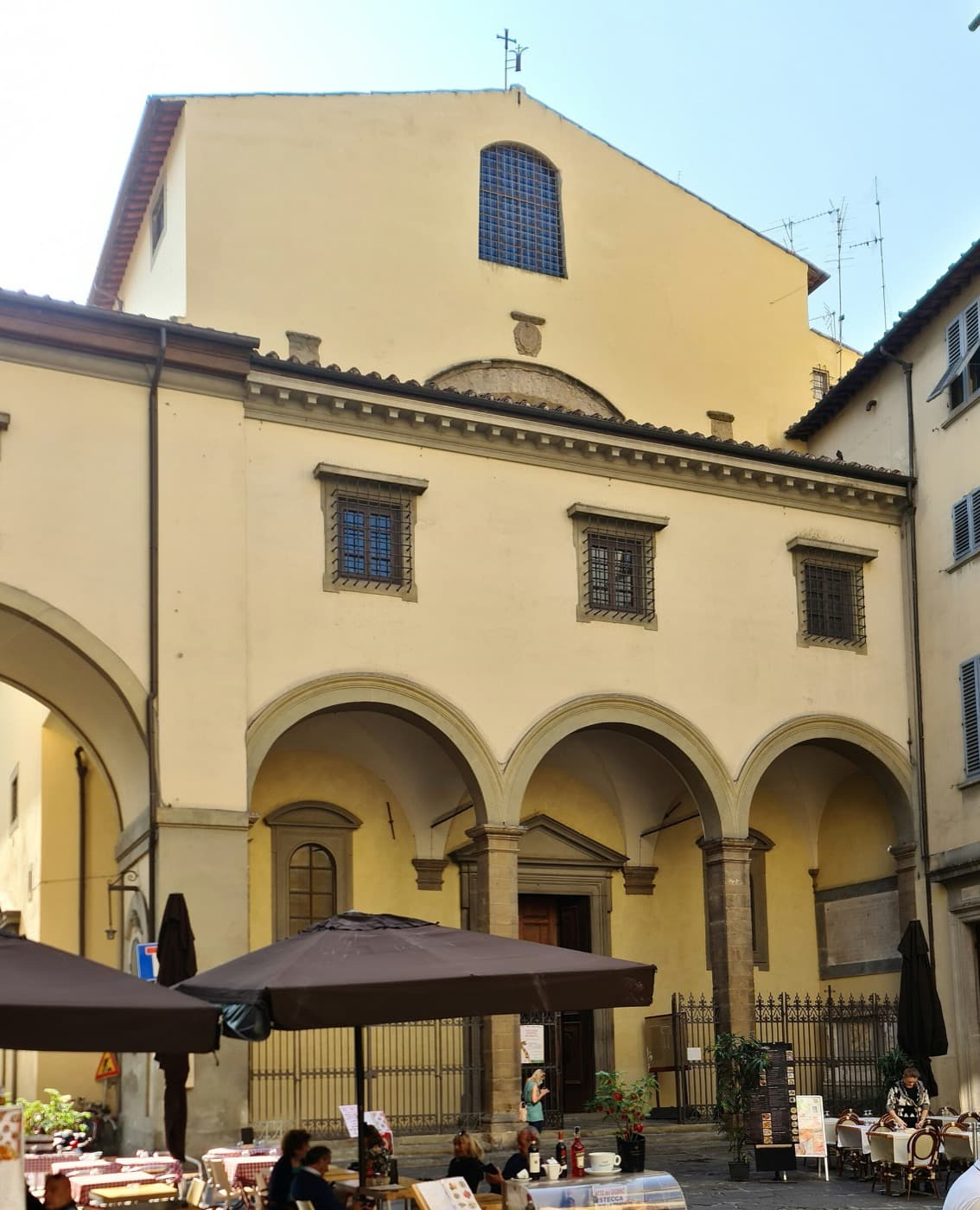
Santa Felicita and the Vasari Corridor: power passing overhead
A quiet church just south of the Ponte Vecchio, pierced by a private elevated passage the Medici used to move through the city unseen.
- 3
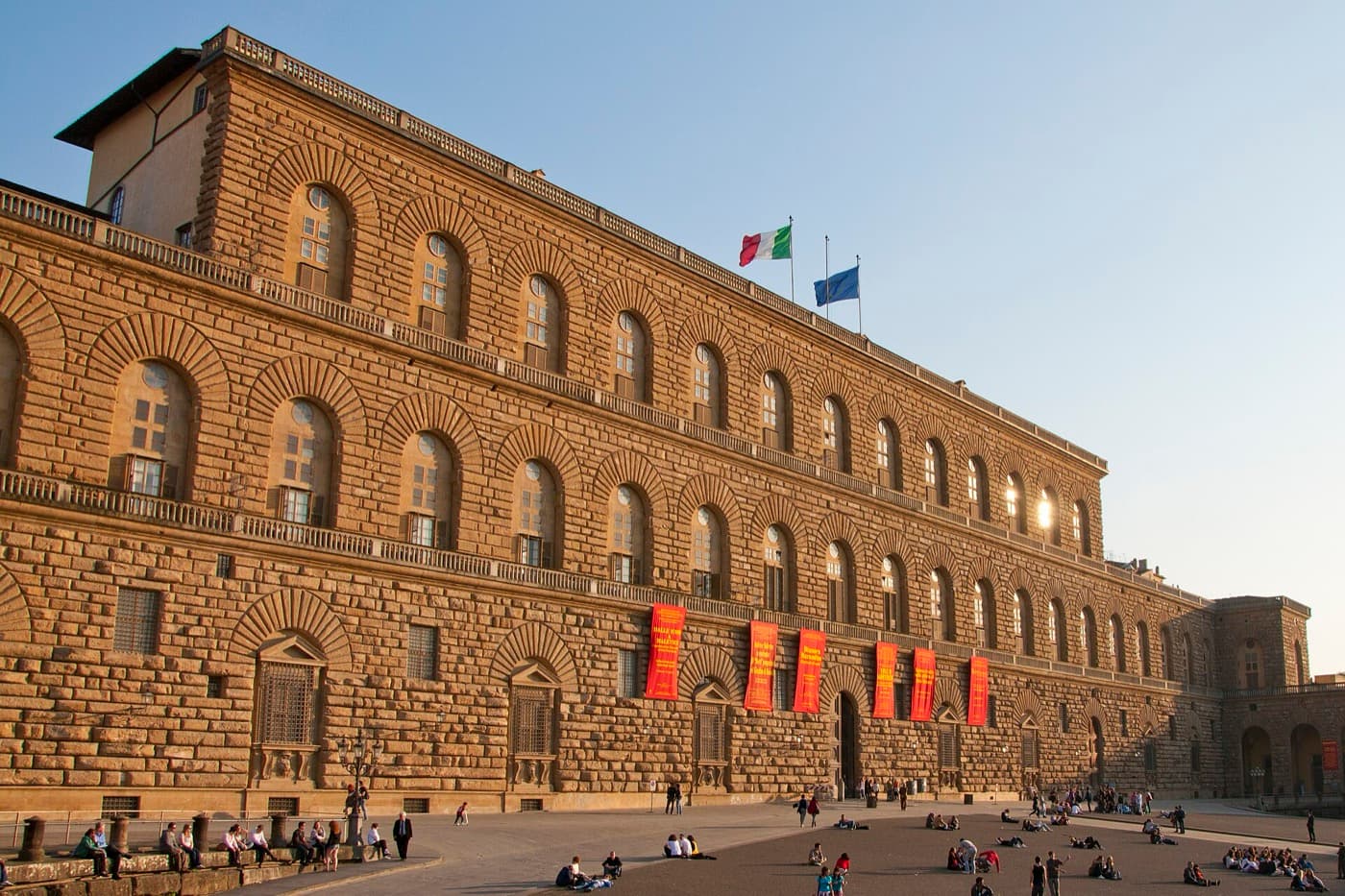
Palazzo Pitti: the ambition that crossed the river
A vast Renaissance palace begun by a rival banker, later bought for the Medici and grown into the grand-ducal seat, best read from the sloping square before it.
- 4
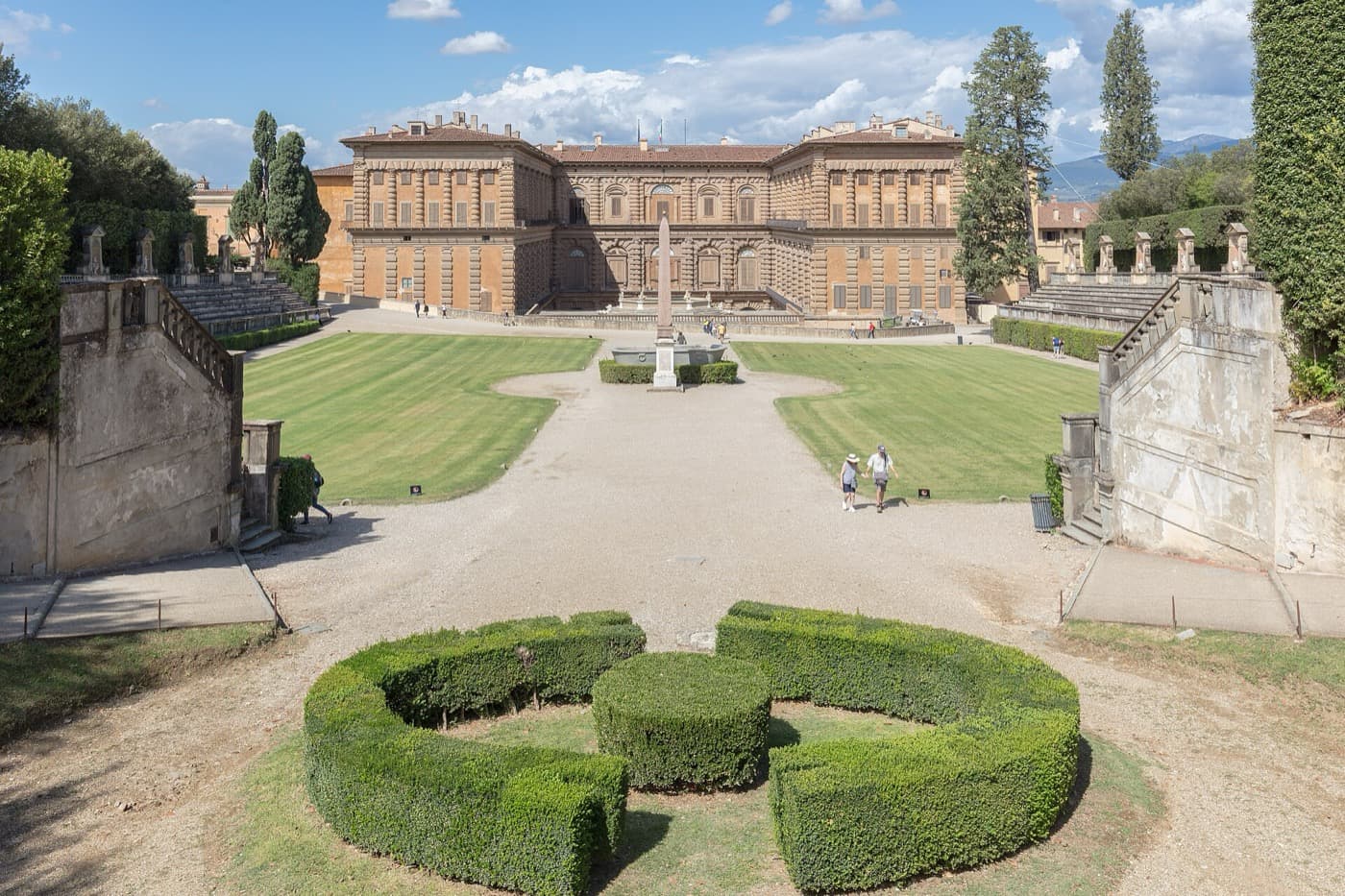
Giardino di Boboli: geometry on the hillside
The Medici's monumental formal garden behind the Palazzo Pitti, an early and defining model of the Italian garden, read from its entrance as the walk turns uphill.
- 5
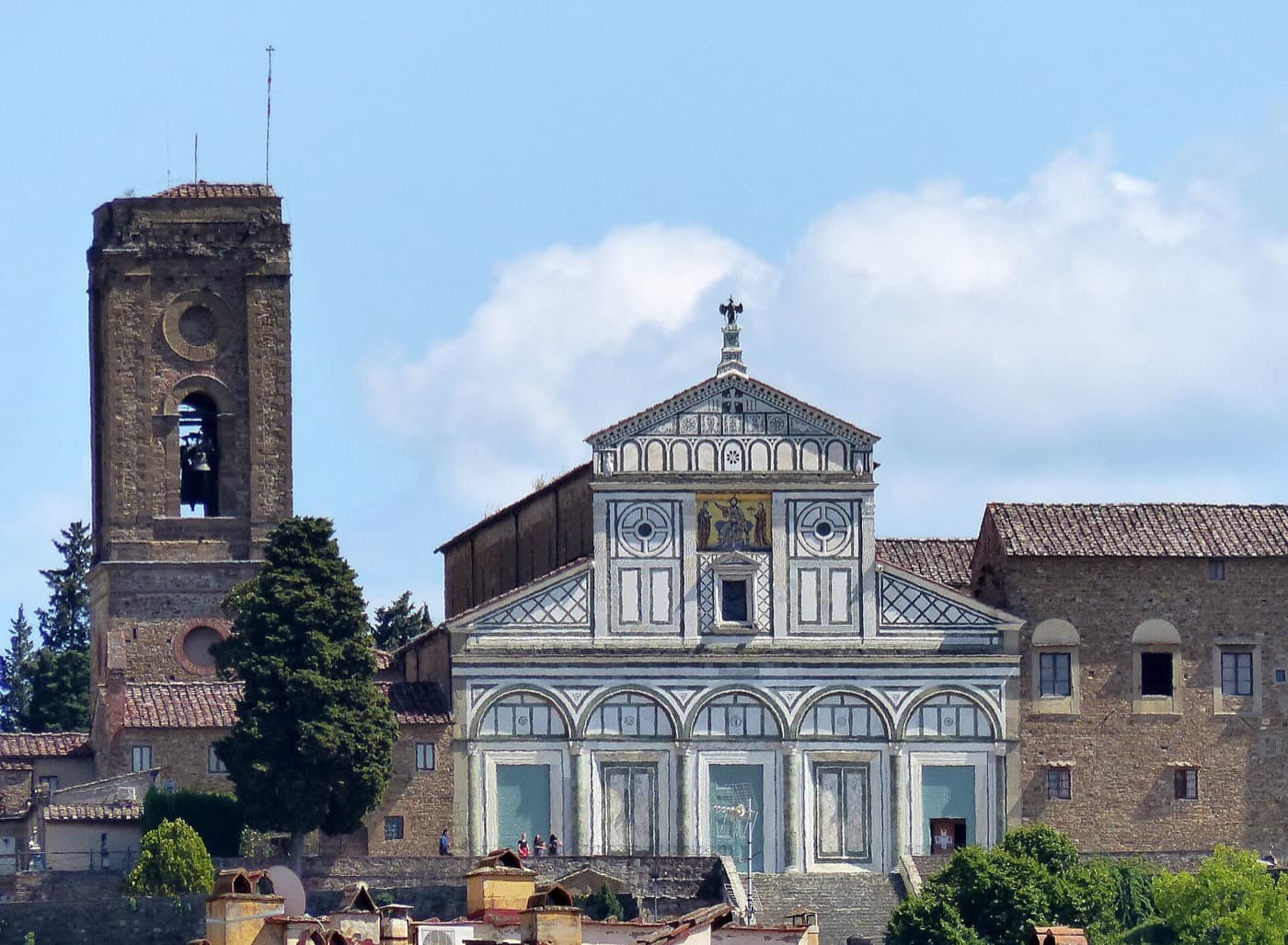
San Miniato al Monte: the sacred hill above it all
A Romanesque basilica crowning one of Florence's highest points, its inlaid green-and-white marble facade older than the Renaissance city below.
- 6
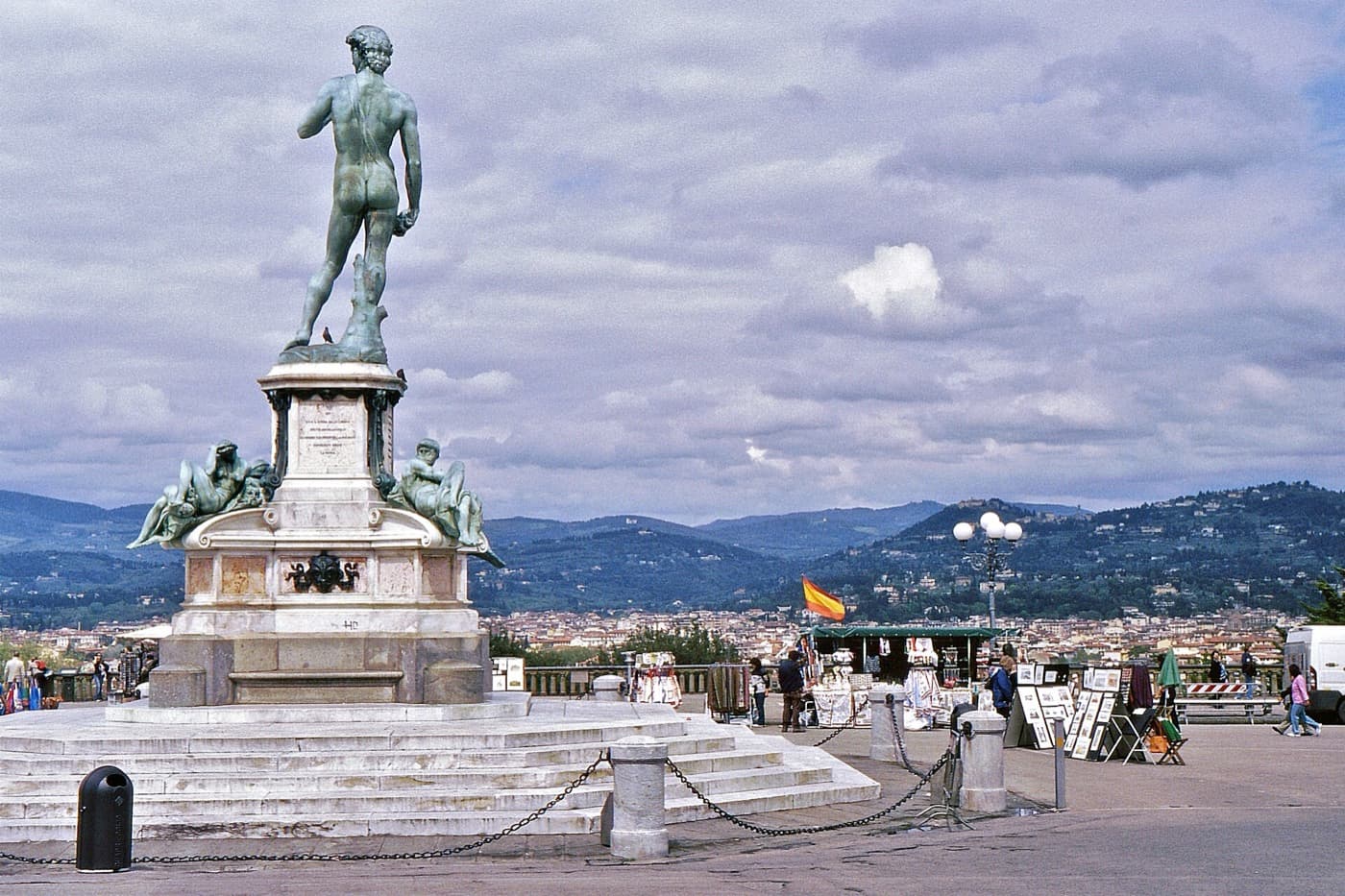
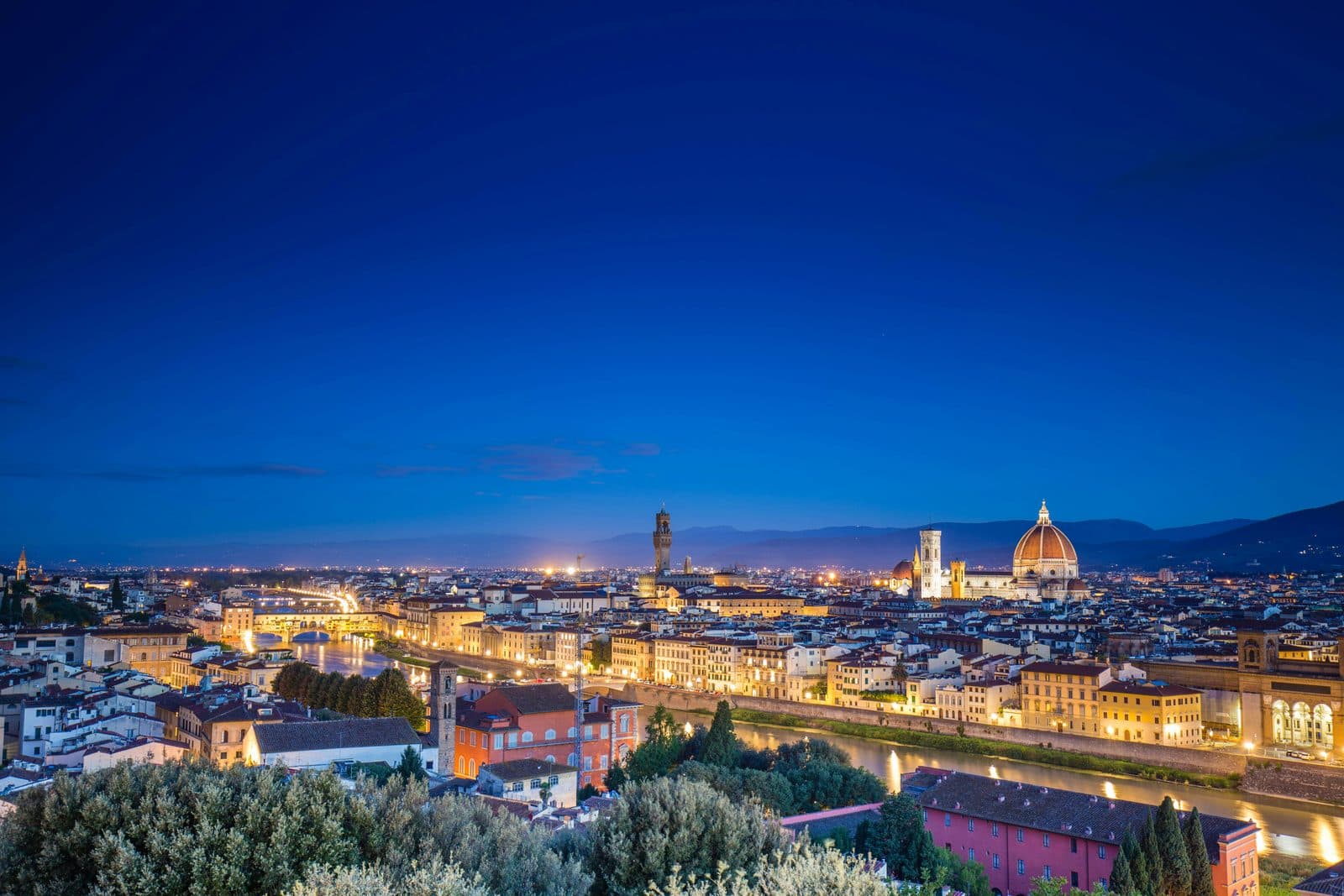
Piazzale Michelangelo: the postcard reassembles
A nineteenth-century panoramic terrace where the whole monumental skyline you left behind spreads out across the Arno.
Details
Best Time to Visit
Late afternoon into early evening is ideal. Start at Piazza Santo Spirito when the square is waking up, and time your climb so you reach Piazzale Michelangelo for the golden light and sunset over the Duomo. Mornings are cooler and quieter for the walk itself, which matters most on the uphill final stretch.
Pro Tips
- •The final climb to San Miniato and Piazzale Michelangelo is genuinely steep. It is optional, but it is the payoff of the walk, so pace yourself and carry water.
- •Santo Spirito, Santa Felicita, and San Miniato all offer free entry, so you can experience most of this tour without buying a single ticket.
- •If you want to go inside Palazzo Pitti or the Boboli Gardens, book ahead online to skip the day-of queue; a combined ticket can be better value than two separate ones.
- •Sit down in Piazza Santo Spirito for a while at the start. It is the neighborhood's living room, and feeling its rhythm sets up the whole idea of the Oltrarno as the working city.
- •The Oltrarno's artisan heritage lives behind plain doors along the side streets. Slow down between stops and you will hear workshops still at work, part of the quarter's living tradition.
- •Reaching Piazzale Michelangelo for sunset is worth planning around, but it draws crowds; arrive a little early to claim a spot at the wall.
Safety & Precautions
- •Keep valuables secure and zipped, especially in the crowded stretch around the Ponte Vecchio and at Piazzale Michelangelo, where pickpockets work the busy tourist zones.
- •Florence's streets are uneven cobblestone and the route ends on a steep climb with steps; wear sturdy, closed shoes and watch your footing.
- •Santo Spirito, Santa Felicita, and San Miniato are active churches with a modest dress code; cover your shoulders and knees to enter, and carry a light scarf or layer in summer.
- •The midday summer heat on the exposed uphill sections is real; carry water, use the shade of the churches to cool down, and consider timing the climb for late afternoon.
Travel advisory: Exercise Increased Caution (Level 2).
Gallery
Related Reading
Go deeper on what you'll see, hear, and walk through.
Overview
Best Self-Guided Walking Tours in Florence (2026)
3 min
Overview
Florence Travel Guide: How Many Days, Getting Around, and What to Book
6 min
Overview
One Day in Florence: A Walkable Morning-to-Evening Itinerary
7 min
Thematic
How Money and Competition Built the Renaissance in Florence
8 min
Companion
The Oltrarno: Reading Florence's Working Half From Santo Spirito Onward
7 min

Read
What to Eat in Florence: Dishes, Origins, and How to Order Like a Local
6 min
Read the walk
The full story of Oltrarno: The Other Side of the Arno, in words. Prefer to listen? Play it narrated, from home or on location.
Introduction
The famous Florence sits on the far bank: the Duomo, the ticketed galleries, the lines that snake around them. This walk turns its back on all of that and crosses the river into the Oltrarno, a name that means, quite literally, the ground beyond the Arno. This is the working half of the Renaissance city, the artisan quarter where the botteghe, the small workshops that gilded and framed and repaired the masterpieces, still hammer away behind plain doors. Over six stops and roughly two hours, walking about five kilometres here in Florence, Italy, you will read the making of the city rather than the showing of it. You will stand in a lively square before Brunelleschi's last, plainest church, brush the river's edge where power once passed overhead unseen, take the measure of a palace the Medici bought precisely because it was not theirs, and glance into a garden built to impose geometry on a hillside. Then the ground tilts up. The final stretch is a real climb, and it is entirely optional, though I think it earns its sweat: a Romanesque hill church older than the Renaissance below it, and just beyond, a terrace where the whole skyline you deliberately left behind spreads out at your feet. Go at your own pace. Linger where a stop pulls you, skip what does not, sit in the square as long as you like. Nothing here is on a clock but you. When you arrive at Piazza Santo Spirito, begin with stop one.
1. Basilica di Santo Spirito: the plain face of genius
Stand in Piazza Santo Spirito and look at the church. The first thing to notice is what is not there. That broad, blank, whitewashed front was meant to carry a grand facade that was never built. Everything the architect poured into this building went inward, and the man was Filippo Brunelleschi, the same mind behind the great dome across the river. According to Wikipedia, he designed Santo Spirito as early as the year fourteen twenty-eight, though the groundbreaking did not come until fourteen forty-six, the same year the architect died, ten days after the first columns were delivered. A line of followers then carried it to completion. It was consecrated in fourteen eighty-one and finished around fourteen eighty-seven. Step inside if the doors are open, and you will feel the whole point. The plan is a Latin cross, and running the entire perimeter are forty side niches, all the same size, marching around the interior in perfect rhythm. The nave stretches roughly ninety-seven metres. It is geometry you can walk through, cool and rational, the opposite of the gilded spectacle tourists queue for on the other bank. And the square outside is the neighborhood's living room. It was carved out of houses purchased back in the year thirteen oh one, and today it fills with residents, students, and the slow rhythm of the artisan quarter around it. This is the working half of Florence announcing itself: a masterpiece of proportion wearing a plain, unfinished face, sitting quietly in a square where real life happens. Take a bench. There is no ticket line to beat here, only a neighborhood to feel.
2. Santa Felicita and the Vasari Corridor: power passing overhead
Just south of the Ponte Vecchio sits Santa Felicita, an unassuming church with an extraordinary secret running across its front. Look up at the facade. A covered passage crosses it, and that is the Corridoio Vasariano, the Vasari Corridor. It was built in the year fifteen sixty-five by Giorgio Vasari on the orders of Cosimo the First de' Medici. Its purpose was pure convenience for the powerful: to connect the Palazzo Vecchio, then the seat of government, with the family's new home at the Palazzo Pitti, so the Medici could walk between the two above the crowds, never touching the street you are standing on. And here is the detail that captures the whole idea. Inside the church, where the corridor crosses, there is a large grated window, a private covered loggia. From behind that grate the grand dukes could hear mass without ever descending into the church among ordinary worshippers. Think about that against the spirit of this walk. You are moving through the city at your own pace, at street level, part of it. They built an entire raised passage precisely to avoid doing that. Step inside if you can, entry is free, and find the Capponi Chapel. There hangs Pontormo's Deposition, painted between fifteen twenty-five and fifteen twenty-eight, a swirling, weightless composition of pale figures that is one of the early landmarks of Mannerism. It is a strange, luminous thing to come upon in so modest a church. The working city carried on below while power moved above it, invisible. Here you can stand in the exact seam between the two.
3. Palazzo Pitti: the ambition that crossed the river
Walk up to the sloping paved square and simply take in the sheer scale of the facade in front of you. This is the Palazzo Pitti, and you do not need a ticket to feel what it is doing. The stone face rises over the square like a cliff, and it was meant to. Here is the twist in…
Full narration for this stop unlocks with the tour.
4. Giardino di Boboli: geometry on the hillside
Behind the Palazzo Pitti rises the Giardino di Boboli, the Boboli Gardens, and from the entrance you can already sense its ambition. This is not a garden that follows the land. It is a garden that commands it. Spread across roughly forty-five thousand square metres, about eleven…
Full narration for this stop unlocks with the tour.
5. San Miniato al Monte: the sacred hill above it all
You have made the climb, and here is your reward. San Miniato al Monte crowns one of the highest points above Florence, and it is often called one of the finest Romanesque structures in all of Tuscany. Take a moment before that facade. The front is a geometric composition of…
Full narration for this stop unlocks with the tour.
6. Piazzale Michelangelo: the postcard reassembles
This is the closing beat, and it is the point of the whole walk. Step out onto Piazzale Michelangelo and look across the river. Everything you deliberately turned your back on at the start now spreads out below you: the Ponte Vecchio, the great red dome of the Duomo, the tower…
Full narration for this stop unlocks with the tour.