The Birth of Venus is on the second floor of the Uffizi Gallery, in room A9, on the museum's map of October 2026, together with Botticelli's Primavera. Botticelli painted it in tempera on canvas in about 1485. It measures 172.5 by 278.5 centimetres, about 1.7 by 2.8 metres.
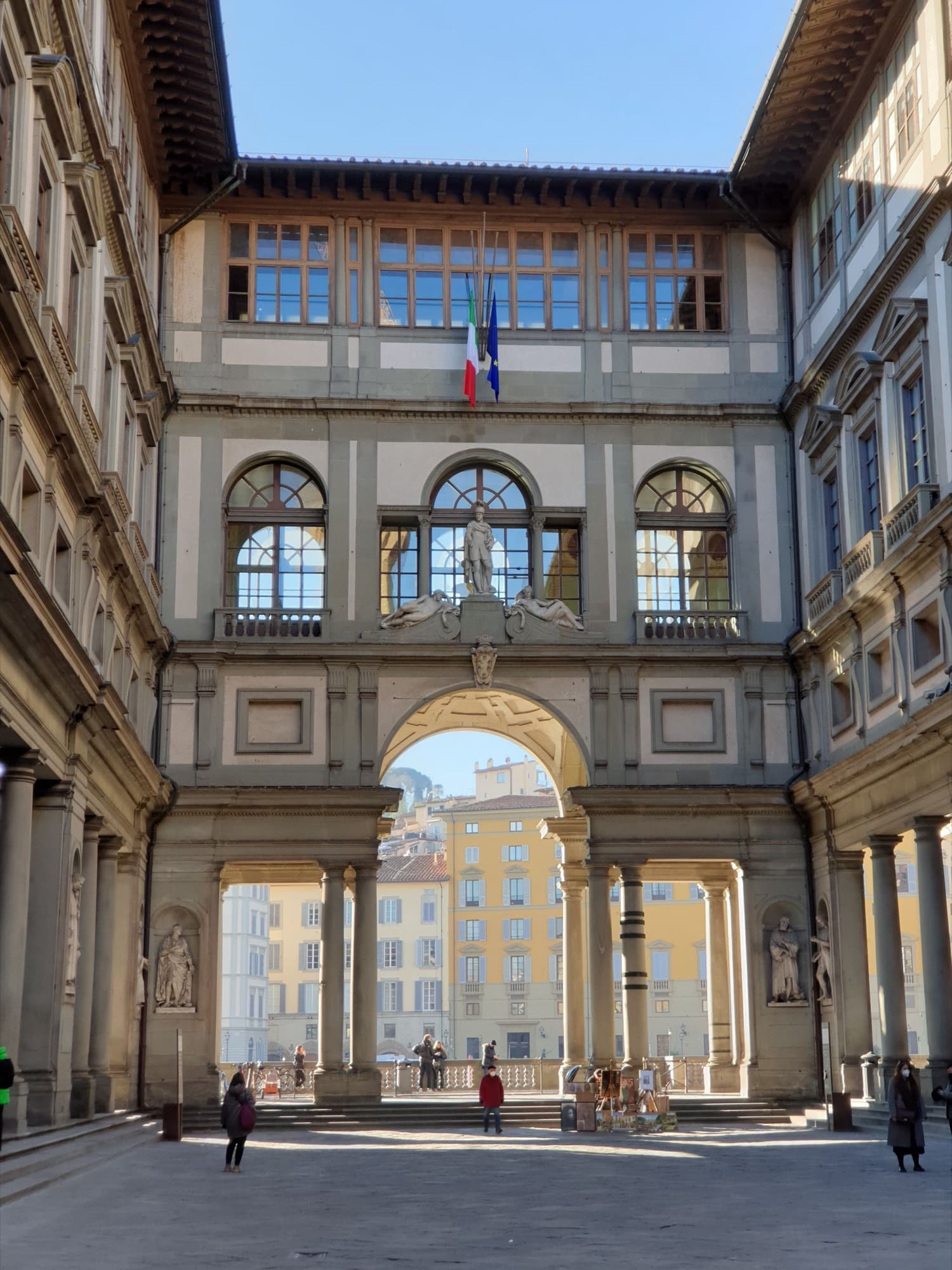
The Birth of Venus hangs on the second floor of the Uffizi, in room A9, the room the museum gives to Botticelli's two great mythologies. That is where the museum's map placed it in October 2026, with the Primavera on the neighbouring wall. The Botticelli rooms next door, A10 to A12, were being rearranged at the time, so the painting could move when they reopen. If you do not find it in A9, ask for it by name.
Finding it
You climb to the second floor at the start of the visit, and the rooms off the first long corridor run in time order, from gold-ground altarpieces of the twelve hundreds onwards. Botticelli comes after Uccello's Battle of San Romano in A8. The Birth of Venus is in Roamer's routes "The Uffizi in an Hour" and "The Masterpieces in Two Hours".
The canvas is 172.5 by 278.5 centimetres, about 1.7 by 2.8 metres, and Botticelli painted it in tempera in about 1485.
What to look for
Hear a stop from this walk
Brunelleschi's Dome: Two Rivals, One Vault
Start with the wind. On the left, the wind god Zephyr blows with a companion wrapped in his arms, perhaps the breeze Aura. You can see the lines of breath leaving their mouths, and roses tumble through the air around them. Their breath pushes Venus, born from the sea, ashore on Cyprus, standing on a scallop shell. On the right a young woman waits with a cloak covered in flowers.
Now look at Venus herself. She covers herself with her hands and her long hair, a modest pose Botticelli borrowed from ancient statues. Go close to the hair: it is highlighted with real gold, which catches the light.
Then step back and look at the body as a whole. Nobody could stand like this. Her neck is long, her weight sits too far over to one side, and nothing in the picture casts a shadow. Botticelli was not painting a woman he had seen. He was painting an idea of beauty.
Canvas, not wood
The Birth of Venus is painted on canvas, made of two pieces sewn together. Its neighbour, the Primavera, is on wood. Canvas was the cheaper support, and it was growing popular for country villas. That fits: Giorgio Vasari saw both pictures at the Medici villa of Castello, outside Florence, and described them in 1550. Ancient myths painted on this scale were virtually unknown in Western art since antiquity; large paintings in Botticelli's day were nearly always religious.
The two paintings have stayed together ever since. They came to the Uffizi in 1815, spent some years at the Galleria dell'Accademia, and came back for good in 1919.
The face and the legend
Later tradition gave Venus the face of Simonetta Vespucci, a celebrated Florentine. It is a good story, but it is legend, not record.
Her ancient sister along the corridor
The modest pose has a famous ancient source in the same building. In the Tribune, room A16, stands the Medici Venus, a Greek marble that shields her breast and lap with her hands in the same way. The surprise is the date: that statue was found only after Botticelli had painted his Venus, and it reached Florence in 1677. The pose had reached Botticelli through other ancient statues. See the two within a few minutes of each other and you can compare a goddess in stone with one in paint.
How this fits the Roamer guide
Roamer's independent audio guide to the Uffizi has a story for room A9 and one for each of its two paintings, short enough to play standing in front of them. Open the room and play its story, or start a route: the Uffizi guide. For the rest of the museum, floor by floor, read what to see at the Uffizi, and for the painting across the room, the Primavera.
Cover photo: Leonardo Di Manici, the Uffizi's river front on the Arno, via Unsplash.
Ready to experience it?
Historic Center: Duomo to Ponte Vecchio
90 min · 1.8 km · easy
More from Florence
Explore more at your own pace.
Botticelli's Primavera at the Uffizi: Where It Hangs and How to Read It
Michelangelo's Doni Tondo at the Uffizi: The Painting, the Frame and the Bill
Uffizi Gallery: What to See, Floor by Floor, and a Two-Hour Plan
Palazzo Medici Riccardi: How to Read a Banker's Balance Sheet in Stone
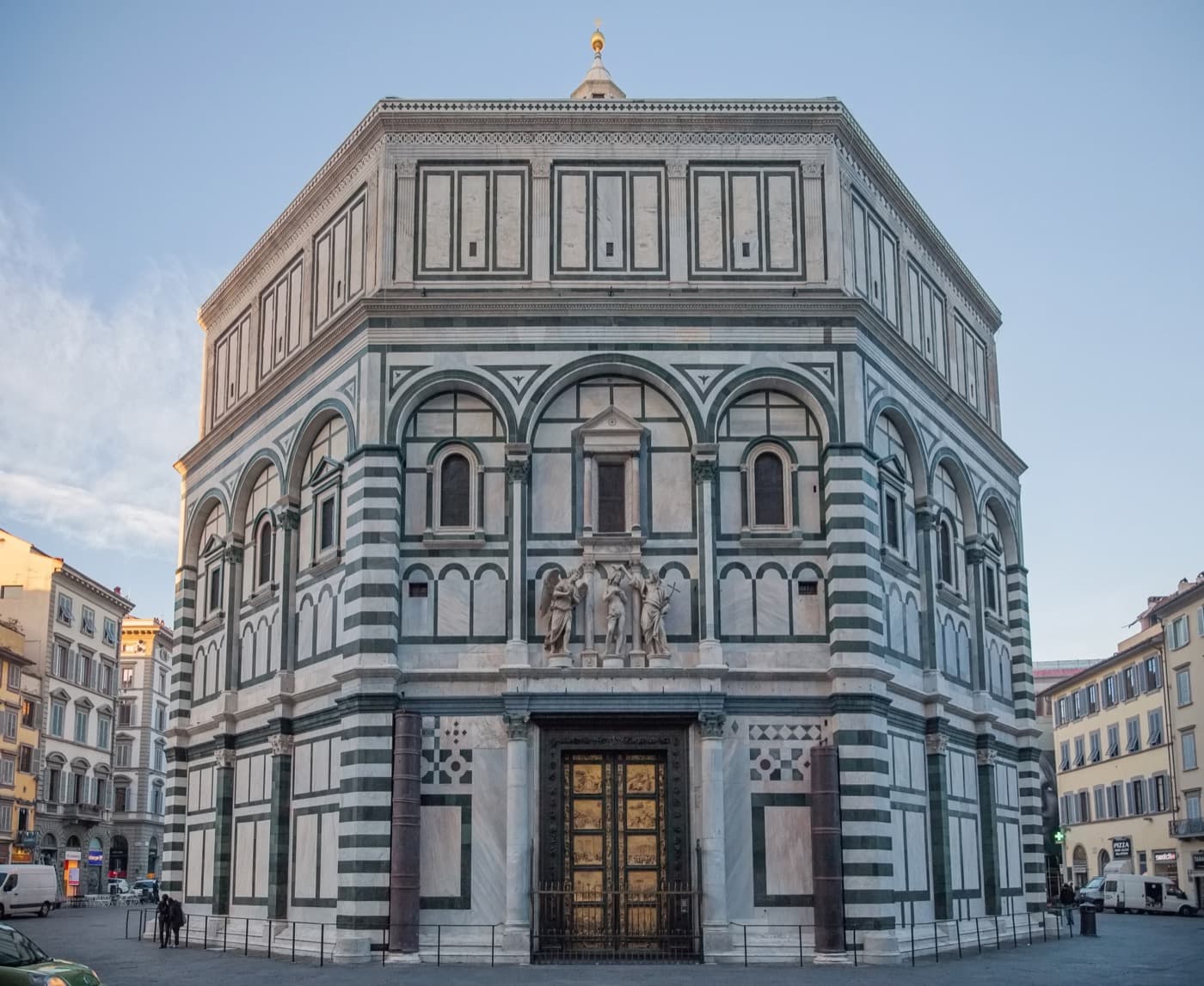
The Baptistery Door Competition That Started the Renaissance