In the Santa Maria Novella quarter, the names are on the front. Florence's rich families put their names and emblems on what they built: Giovanni Rucellai's name and sails across a church and a palace, the Strozzi family's start timed to the dawn, a blacksmith called Caparra in the iron, and Cosimo the First's column from Rome. The walk is bookended by two buildings that make the opposite point: a station kept low for a church, and a bridge the city fought to rebuild as it was, where it was. Between them, read every front for the signature.
Roamer's walk is ten stops over about 1.9 kilometers, flat, and about sixty minutes long. Every stop works from outside, so you can take it at your own pace and skip anything you have already seen.
A modern building that bows
It begins with a building that refuses to sign loudly. Santa Maria Novella Station is one long, low block of brown stone with a band of glass for the ticket hall. In 1932 Florence's press attacked a first design with a corner tower that would have competed with the church across the road. A competition followed, and in March 1933 a group of six Tuscan architects led by Giovanni Michelucci won it. The architects said they kept the station low to let the church's apse prevail, and they chose the same brown stone, pietra forte. The station opened in 1935. Inside, at platform 16, a memorial recalls the train of 9 November 1943 that carried about three hundred Jews to Auschwitz; only fifteen came back.
The name across the church
Hear a stop from this walk
Ponte Santa Trinita: As It Was, Where It Was
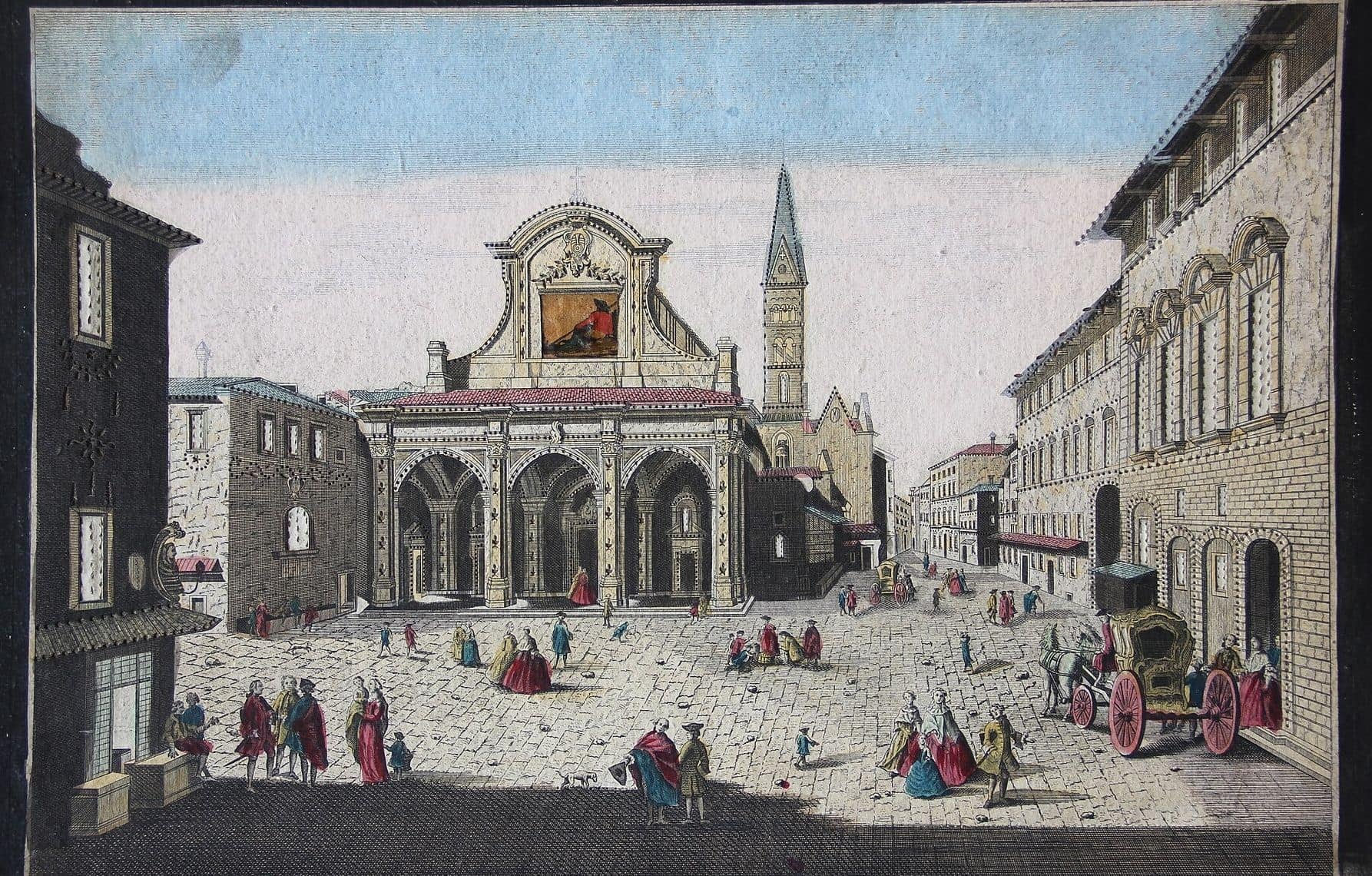
Along Via degli Avelli the church's side wall carries a row of pointed family tomb arches, and six more like them are set into the bottom of the front. The front itself is the walk's headline. Its striped lower storey was left unfinished when the money ran out, and the merchant Giovanni Rucellai paid Leon Battista Alberti to complete it. Alberti built it out of squares and circles in proportion, and near the top, under the triangle, a band of letters gives Rucellai's name in Latin with the year 1470. Along the frieze run little sails with their rigging: the family emblem.
Then the walk follows the friars. The Officina Profumo-Farmaceutica di Santa Maria Novella, on Via della Scala, dates its public opening to around 1612 and sells from a hall that was once a chapel. Ognissanti, at the river end of the next square, was founded by the Umiliati, wool-working friars who built beside the water. Botticelli, who lived on the lane the walk follows, was buried there in 1510; Amerigo Vespucci asked in his will for a requiem mass in the church, and to be buried in Seville. The same friars had the first Ponte alla Carraia built for their carts, a bridge that floods brought down again and again and that the retreating German army blew up in August 1944.
Two palaces, two answers
Across Via della Vigna Nuova stands the Palazzo Rucellai, the same patron again: a flat, finely jointed stone front with three tiers of pilasters, a stone bench along its base for anyone who wants to sit, and the sail carved on the family loggia opposite.
Around the corner, the Palazzo Strozzi answers it with weight. Filippo Strozzi the Elder came back from twenty-five years of exile imposed by the Medici and started his palace, by its own history, at dawn on 6 August 1489. Its rusticated blocks bulge at street level and smooth as they rise. Vasari credits the fine iron, the rings and corner lanterns, to the smith Niccolò Grosso, whom Lorenzo de' Medici nicknamed Caparra, the deposit, because he always wanted money up front. Some of the iron today may be later copies.
In Piazza Santa Trinita the signature is a duke's. The granite column came from the Baths of Caracalla in Rome, a gift from the pope to the Medici, and carries a porphyry Justice that took a father and son about eleven years to carve.
The bridge that signs nobody's name
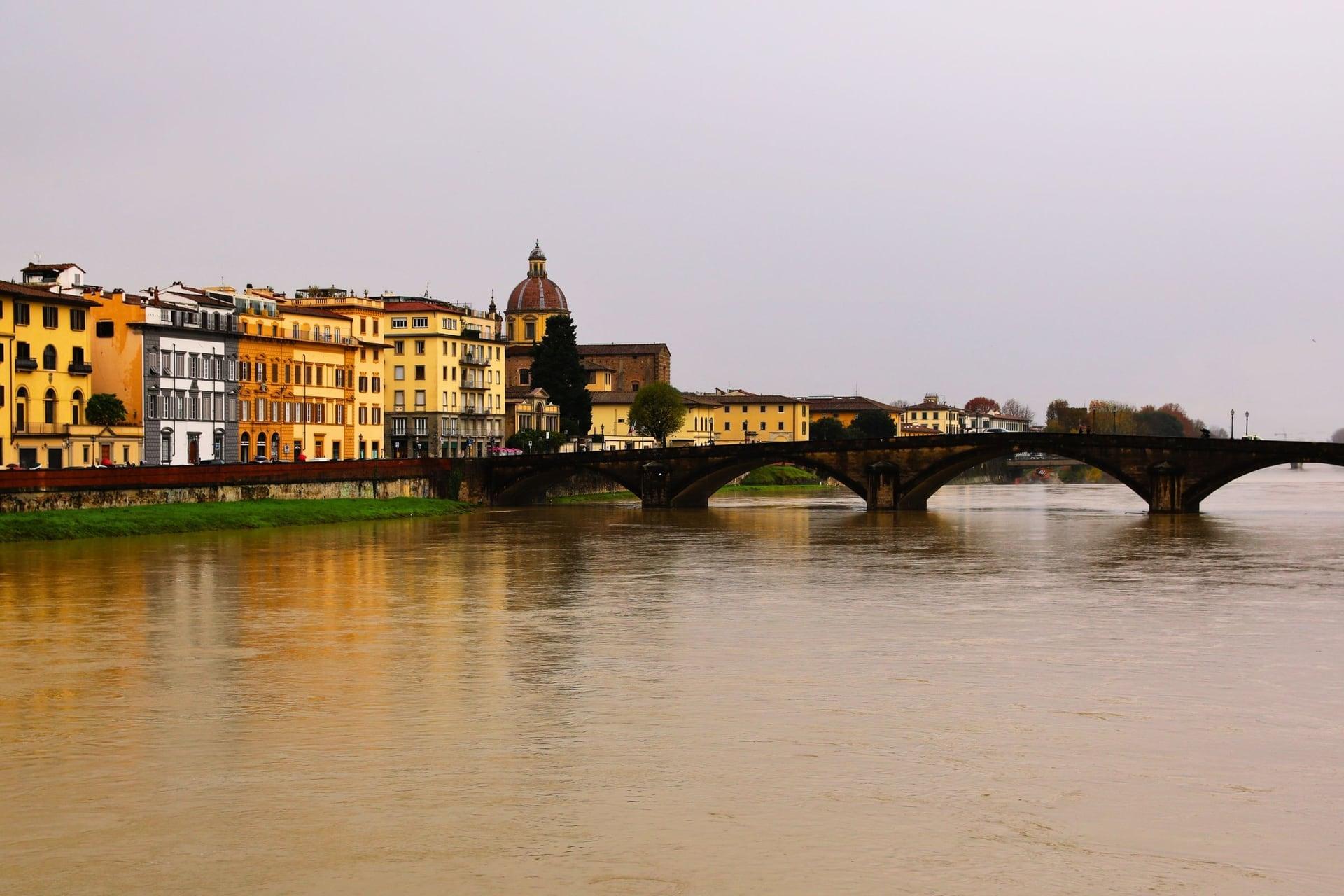
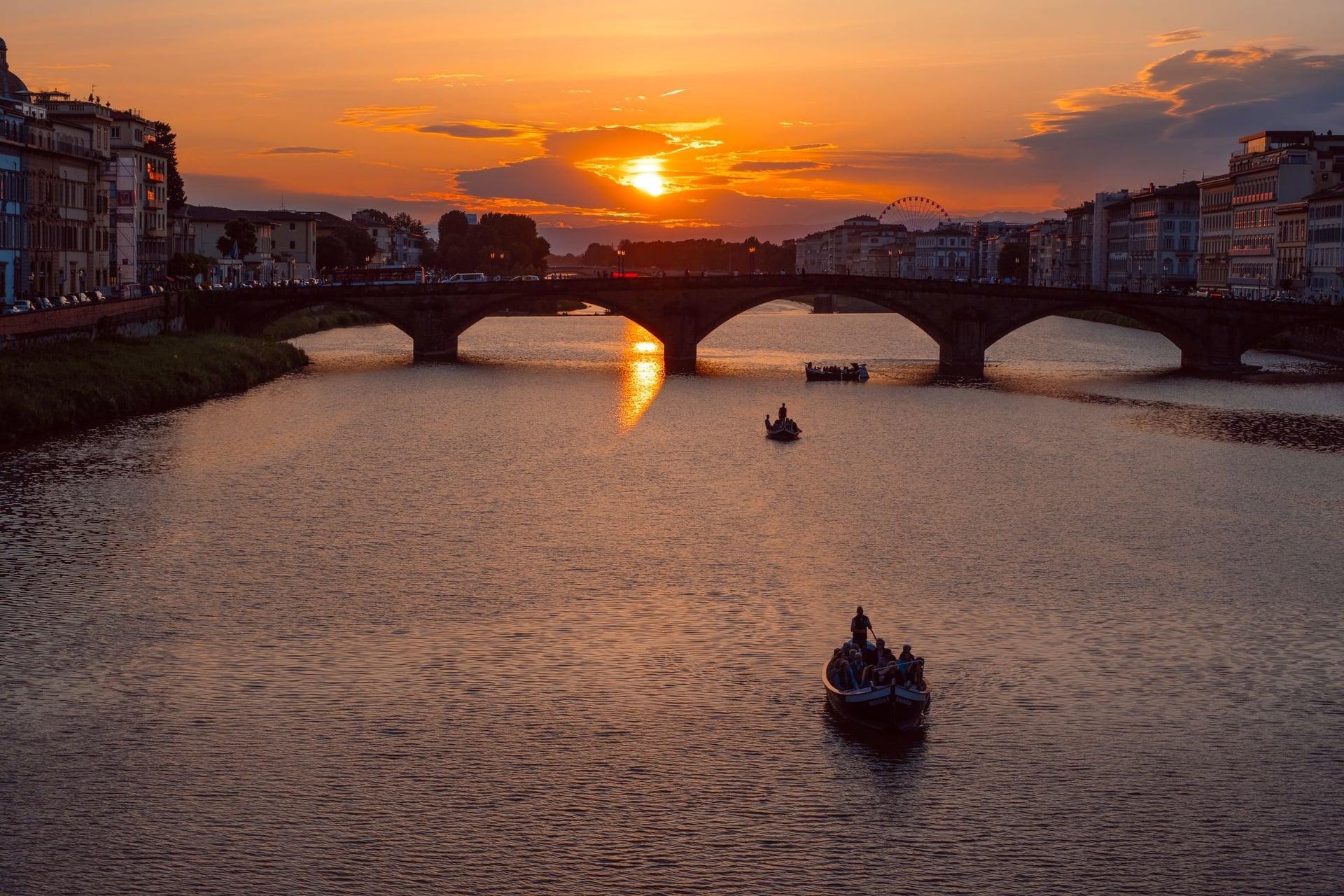
The walk ends on the Ponte Santa Trinita, Bartolomeo Ammannati's bridge of 1567 to 1571, blown up in the same night of August 1944. Rome wanted a concrete frame inside the new one. Florence refused, argued for eleven years, and won a bridge rebuilt in stone, as it was, where it was, opened on 16 March 1958. After a walk of signatures, its achievement is that it carries no new name at all.
The walk is Santa Maria Novella: Merchant Palaces and the Arno, ten stops from the station garden to the middle of the Ponte Santa Trinita. See all routes on the Florence page.
Sources
- Treccani, Dizionario Biografico degli Italiani: Leon Battista Alberti: the Santa Maria Novella front completed, as its inscription says, in 1470; the Palazzo Rucellai front.
- Fondazione Palazzo Strozzi, history of the palace: the start at dawn on 6 August 1489, the return from exile, the unfinished front and cornice.
- Gianluca Belli, "Marzo 1958: la ricostruzione del ponte a Santa Trinita" (Ministry of Culture catalogue): the bridge's dates, its destruction in 1944, eleven years of argument and the 1958 opening.
- ISI Florence, The History of Palazzo Rucellai: the street benches, the eight houses joined behind one front, the sail on the family loggia.
- Destination Florence (Comune di Firenze tourism), Ponte Santa Trinita: the bridge rebuilt as it was, where it was.
Ready to experience it?
Santa Maria Novella: Merchant Palaces and the Arno
60 min · 1.9 km · easy
More from Florence
Explore more at your own pace.
Best Architecture Walking Tours in Florence (2026)
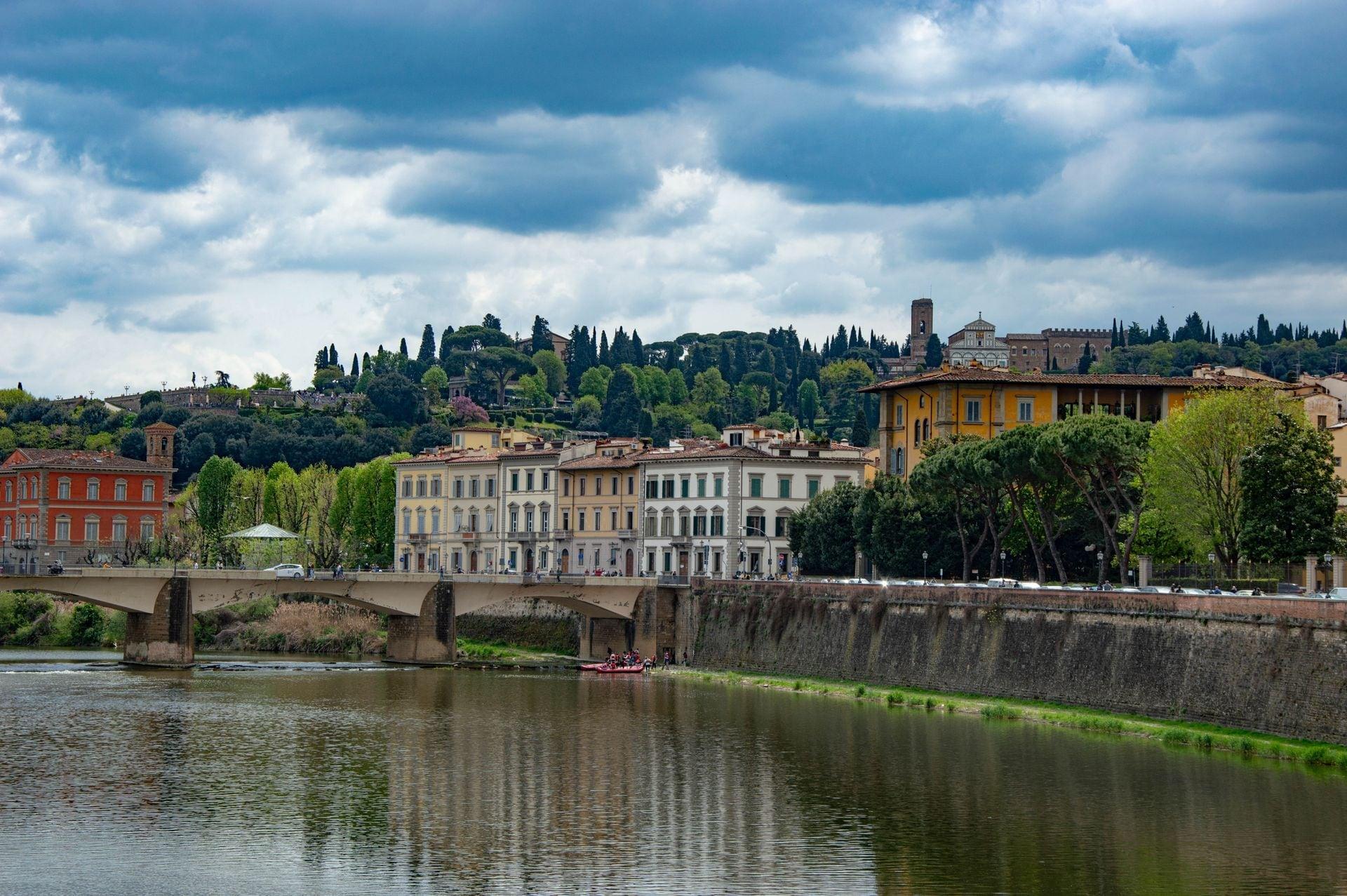
Piazzale Michelangelo Walking Tour: The Capital's Terrace and San Miniato
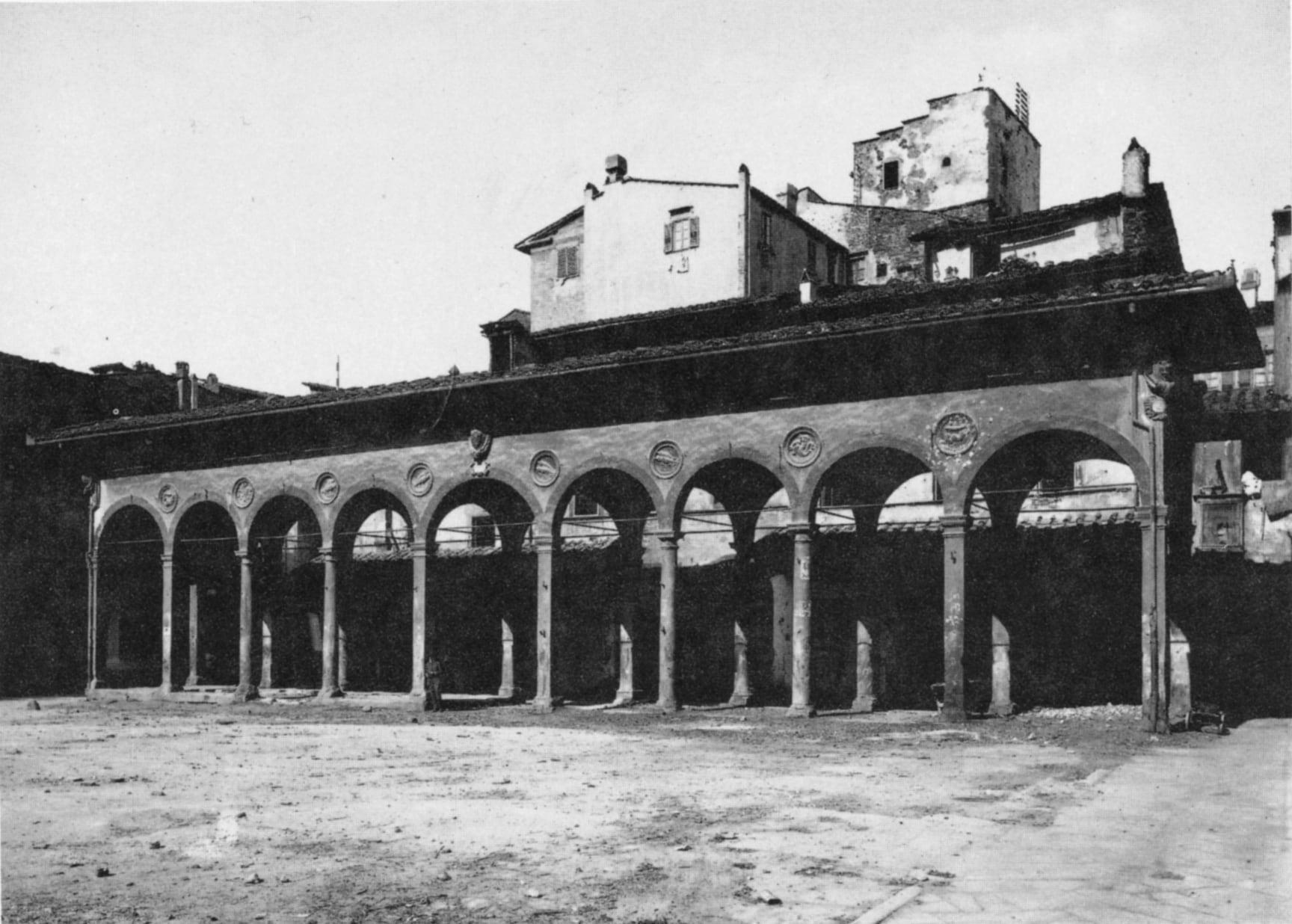
Loggia del Pesce: Vasari's Fish Market in the Wrong Florence Square
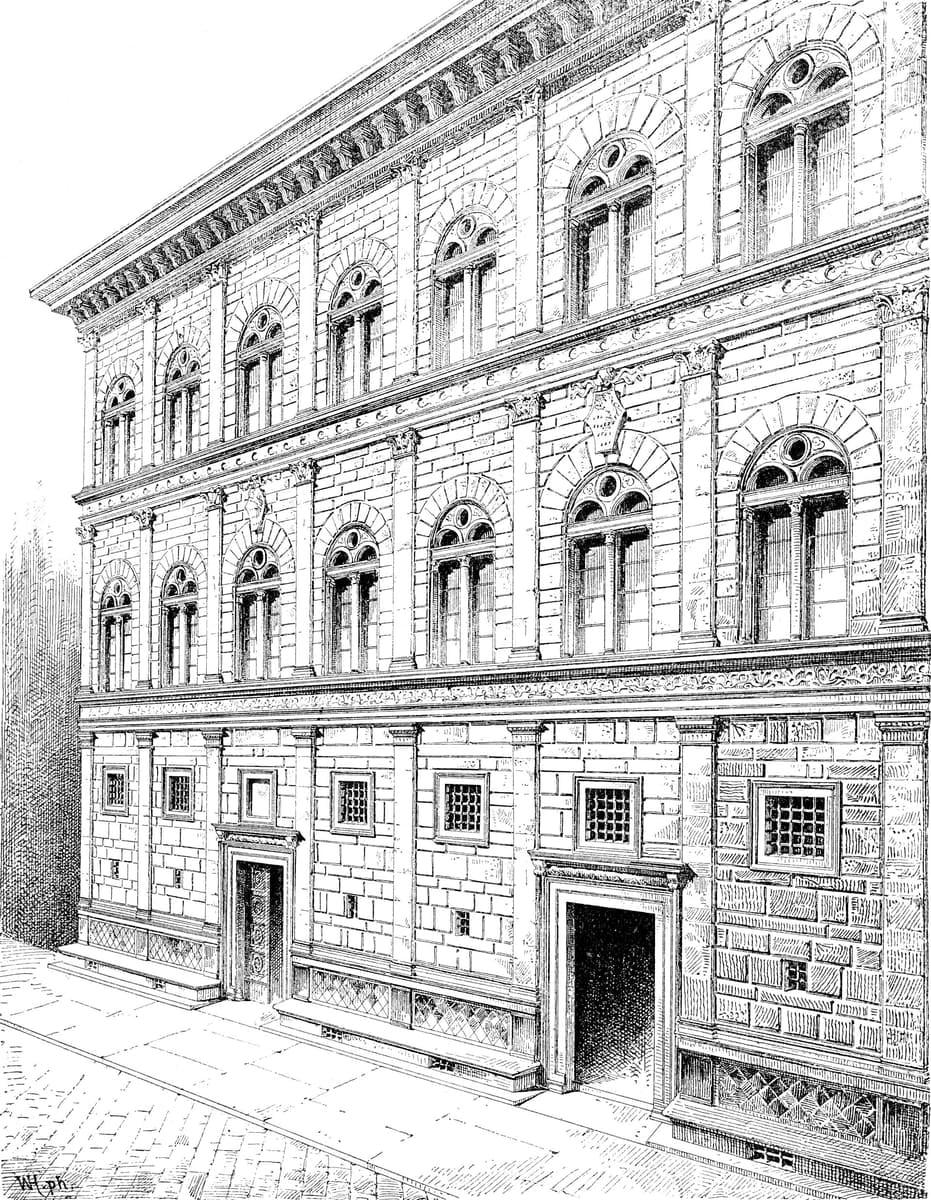
Palazzo Rucellai: How Alberti Dressed a Florentine House as a Roman Temple
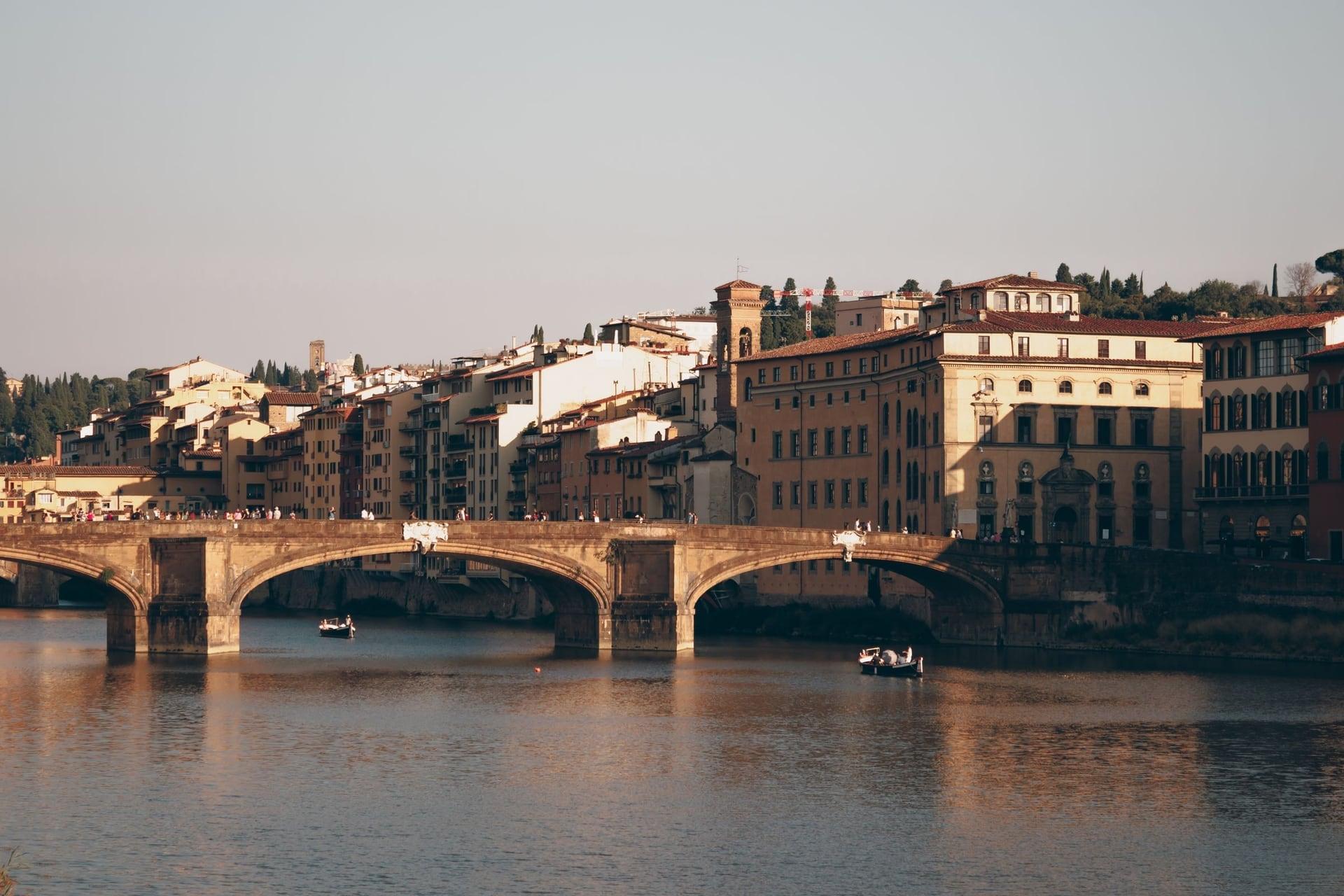
Ponte Santa Trinita: How Florence Rebuilt Its Bridge As It Was, Where It Was