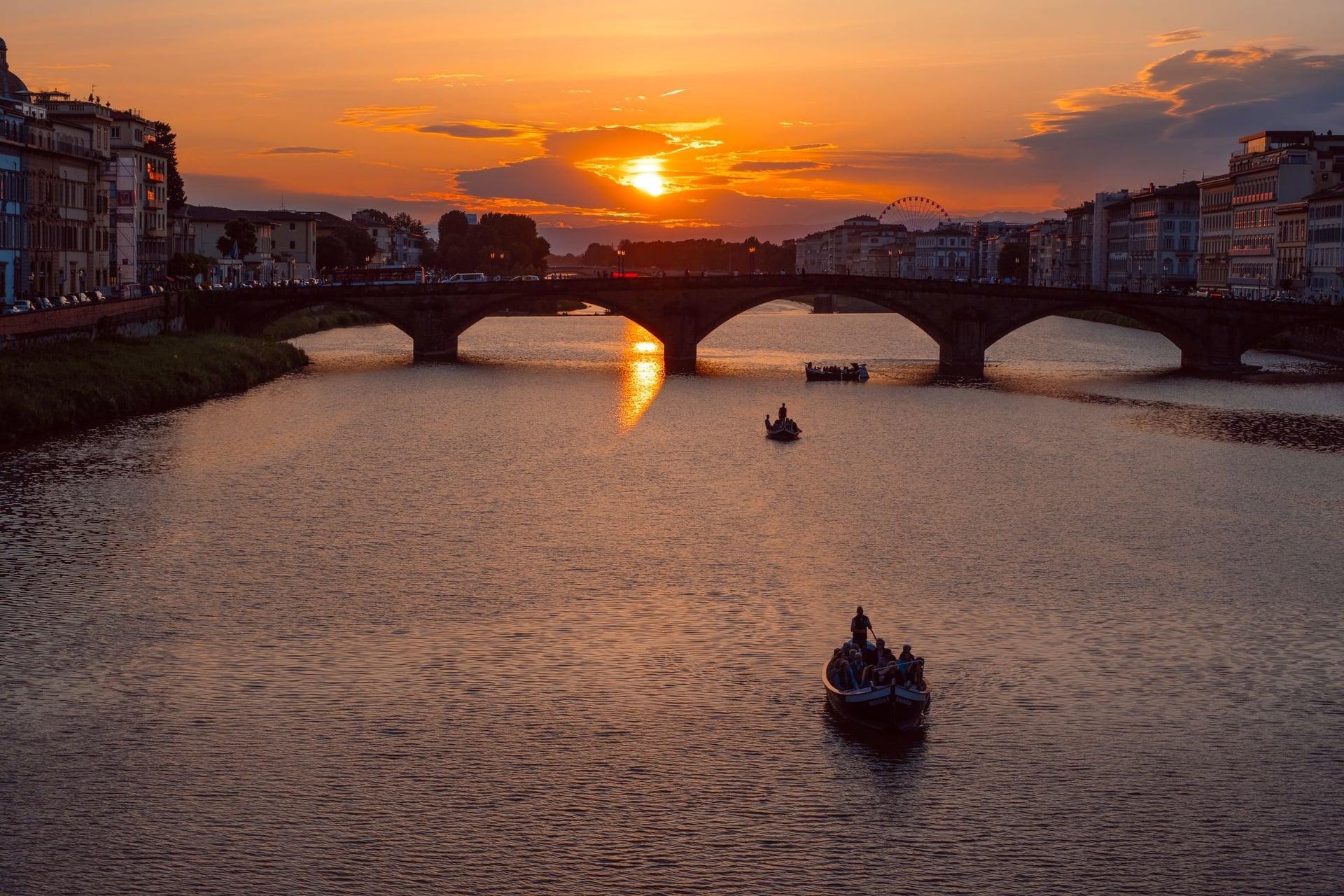
From Santa Maria Novella station past the church's marble front, the friars' pharmacy, Ognissanti and the Ponte alla Carraia to the Rucellai and Strozzi palaces, Piazza Santa Trinita and the Ponte Santa Trinita.
Start · Santa Maria Novella Station: Built Low for the Church
DirectionsStops
- 1
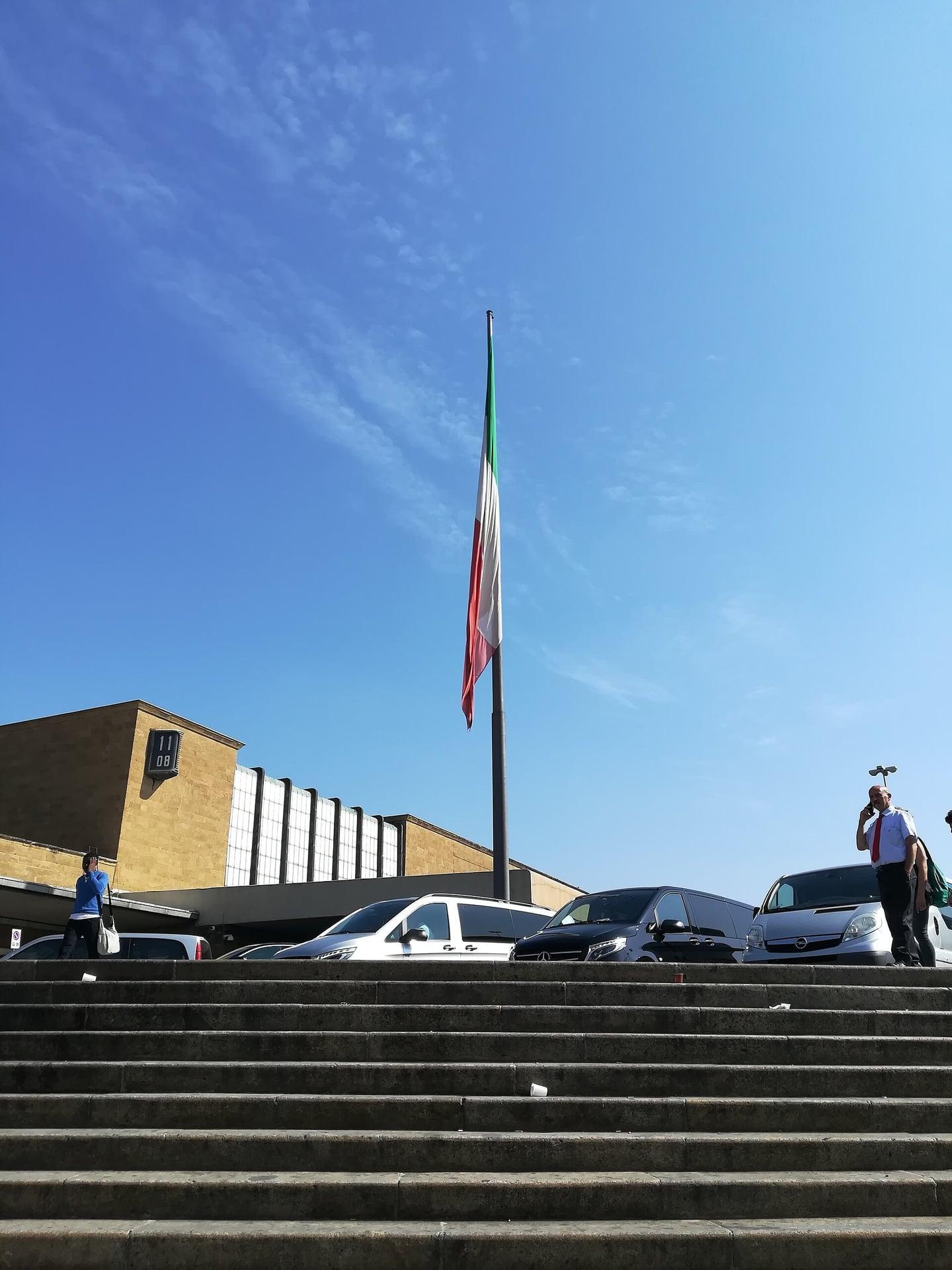
Santa Maria Novella Station: Built Low for the Church
A modern station built to bow to a church. Florence's main station, opened in 1935, was kept long and low and faced in the church's own brown stone so the medieval apse across the road would still rule the square.
- 2
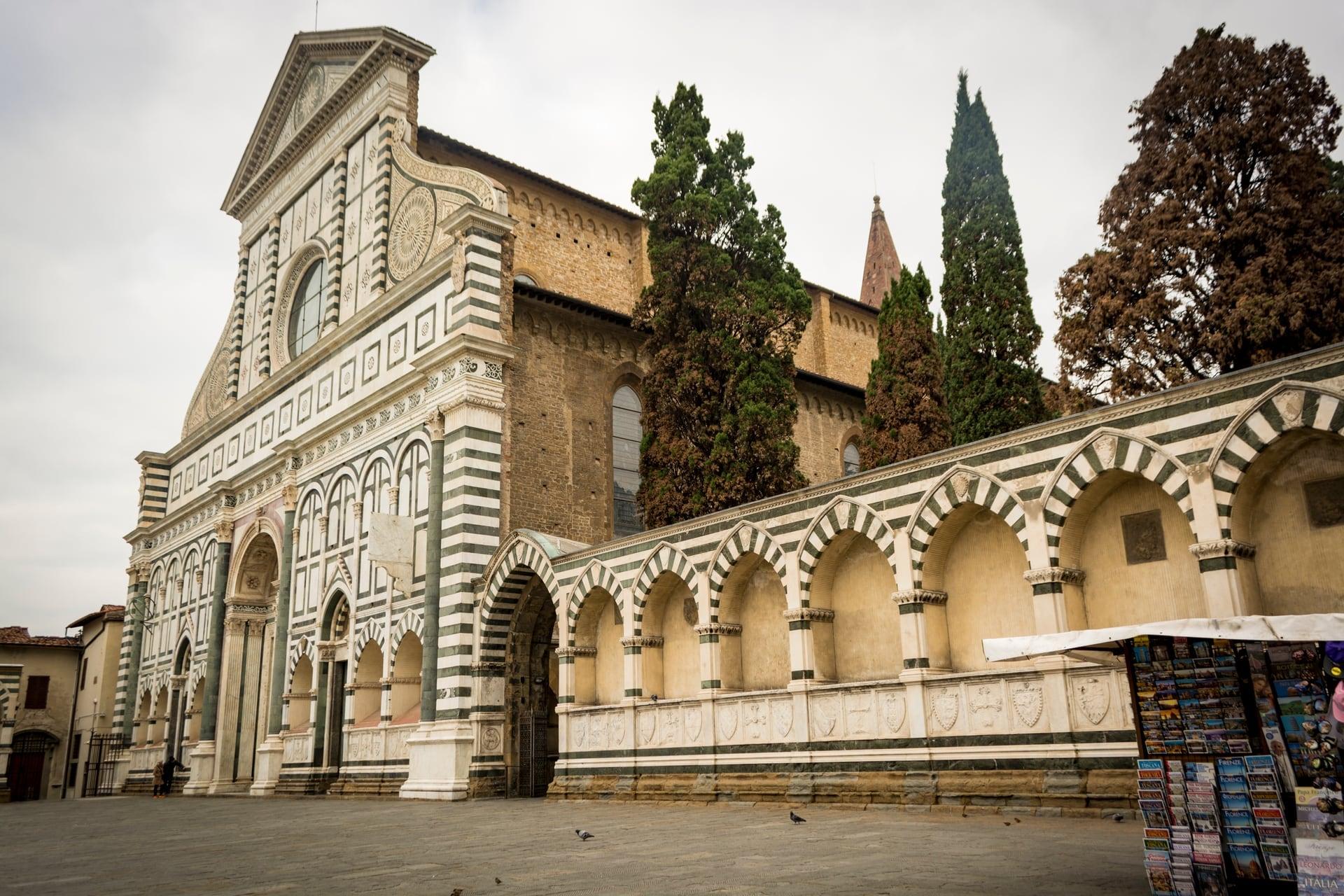
Via degli Avelli: A Wall of Family Tombs
A wall of family tombs along the church. Via degli Avelli runs beside Santa Maria Novella's old Avelli cemetery, whose wall of pointed arches marks the vaults of the city's families.
- 3
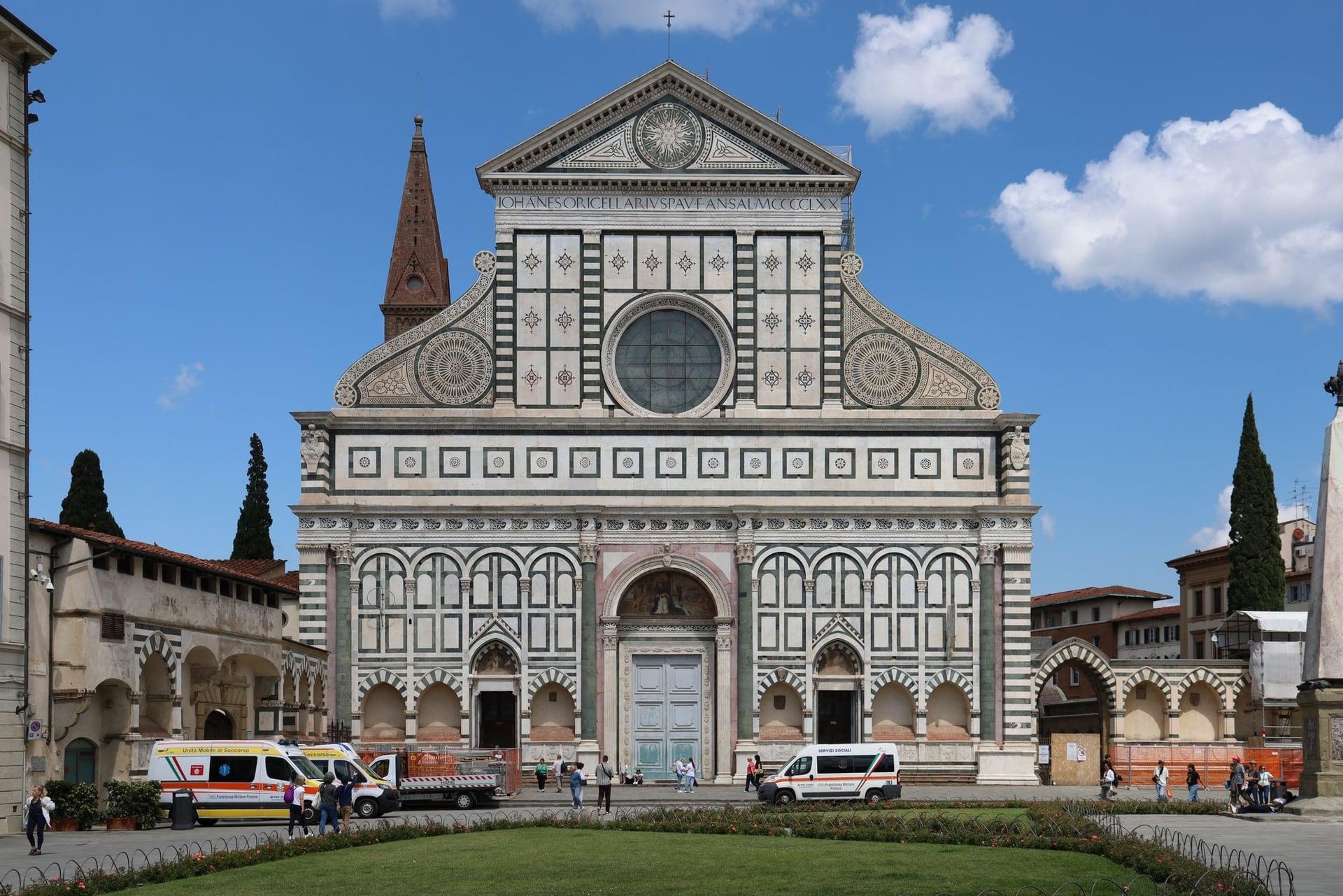
Piazza Santa Maria Novella: A Name Across the Front
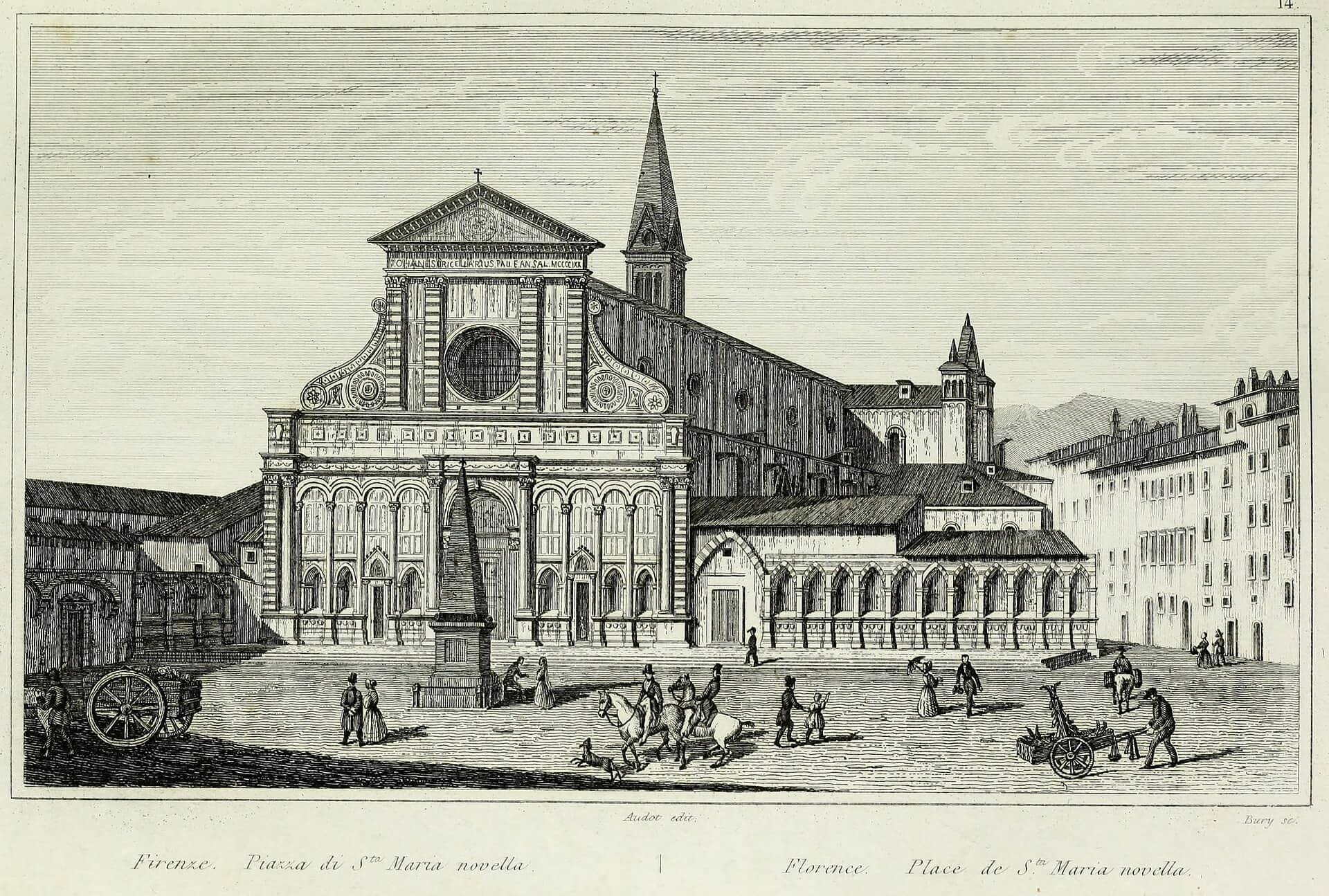
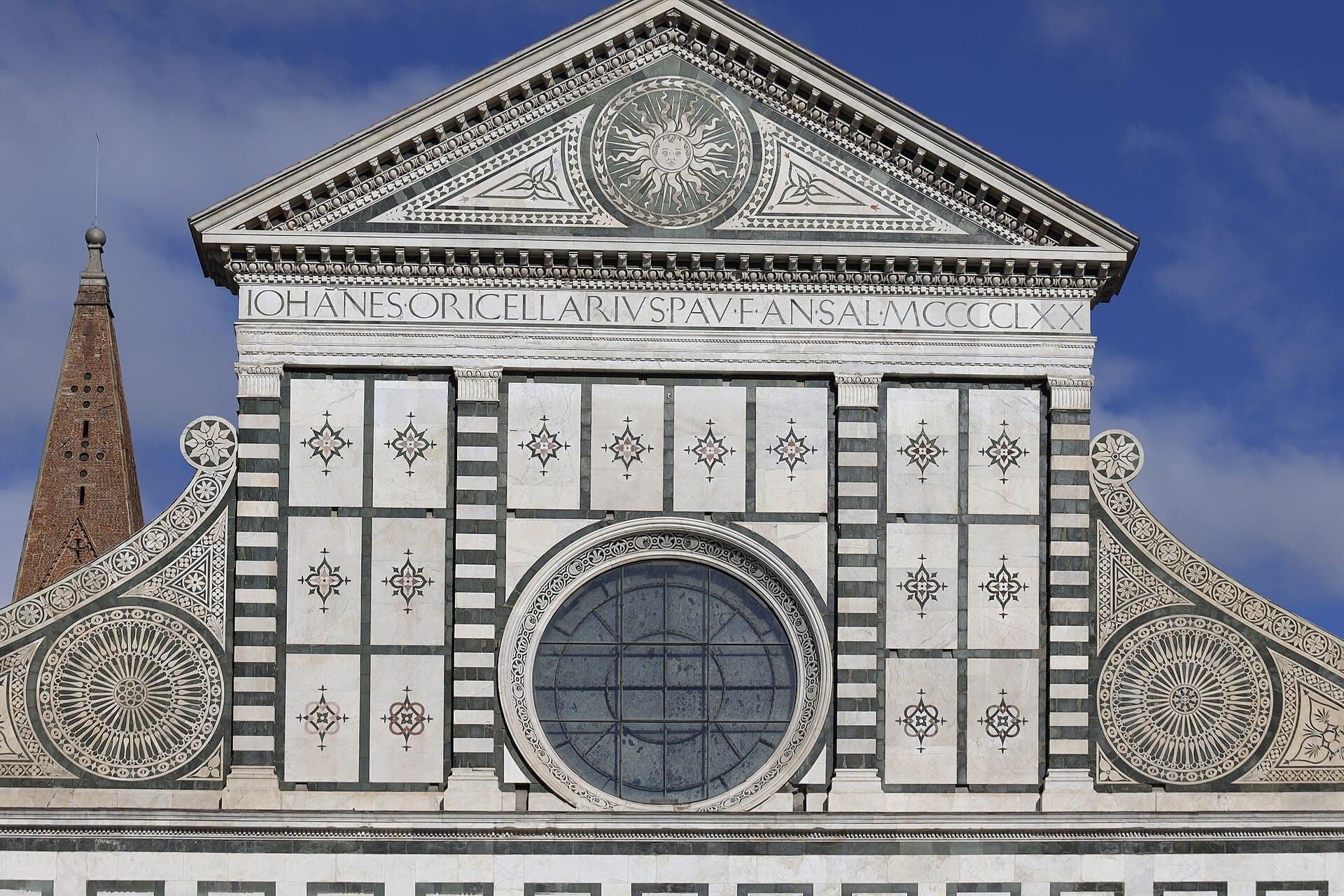
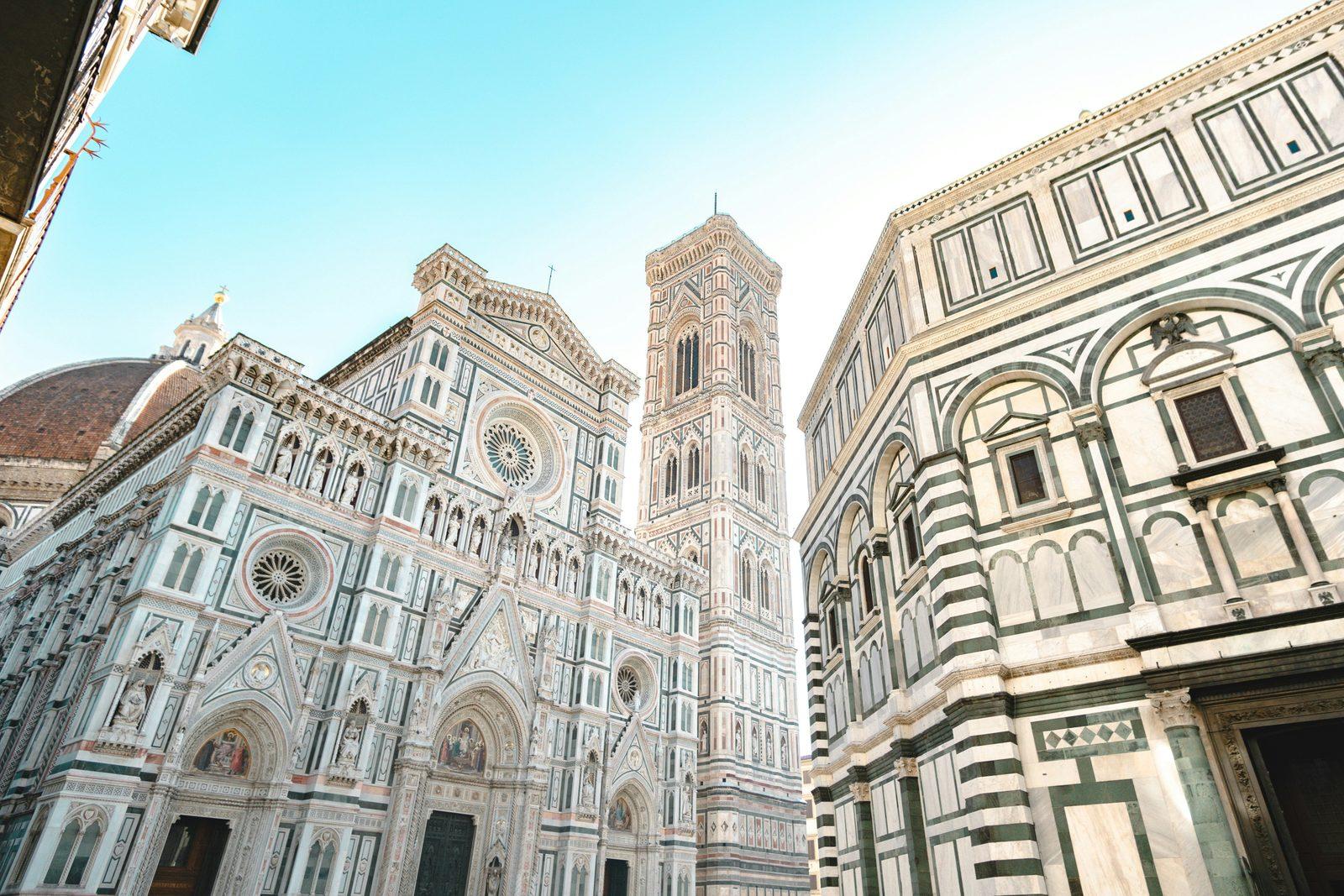
A merchant wrote his name across this church front. Santa Maria Novella's marble front, completed in 1470 for Giovanni Rucellai to Alberti's design, with a friar's astronomical instruments and the obelisks of a chariot race.
- 4
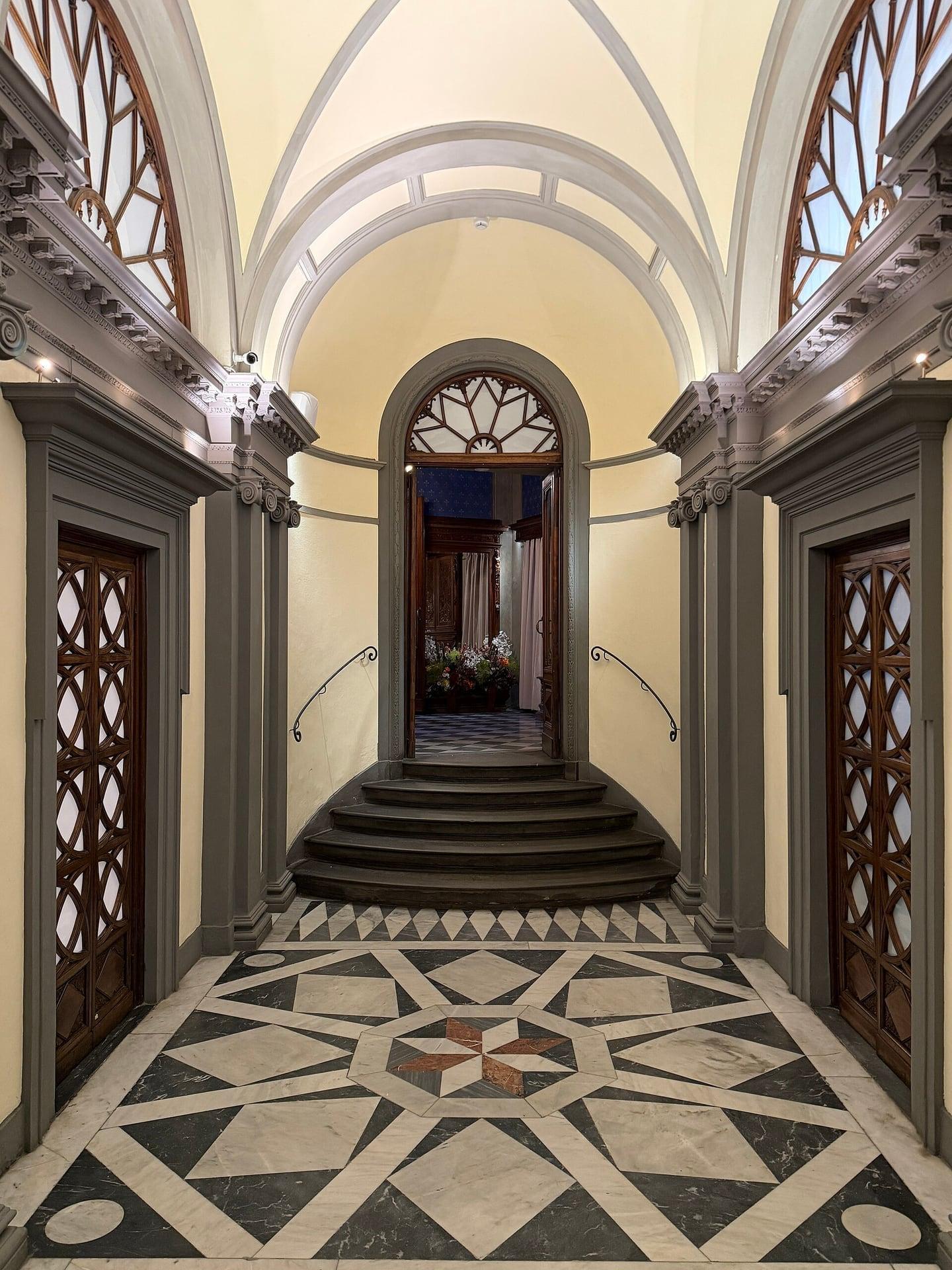
Via della Scala: The Friars' Pharmacy
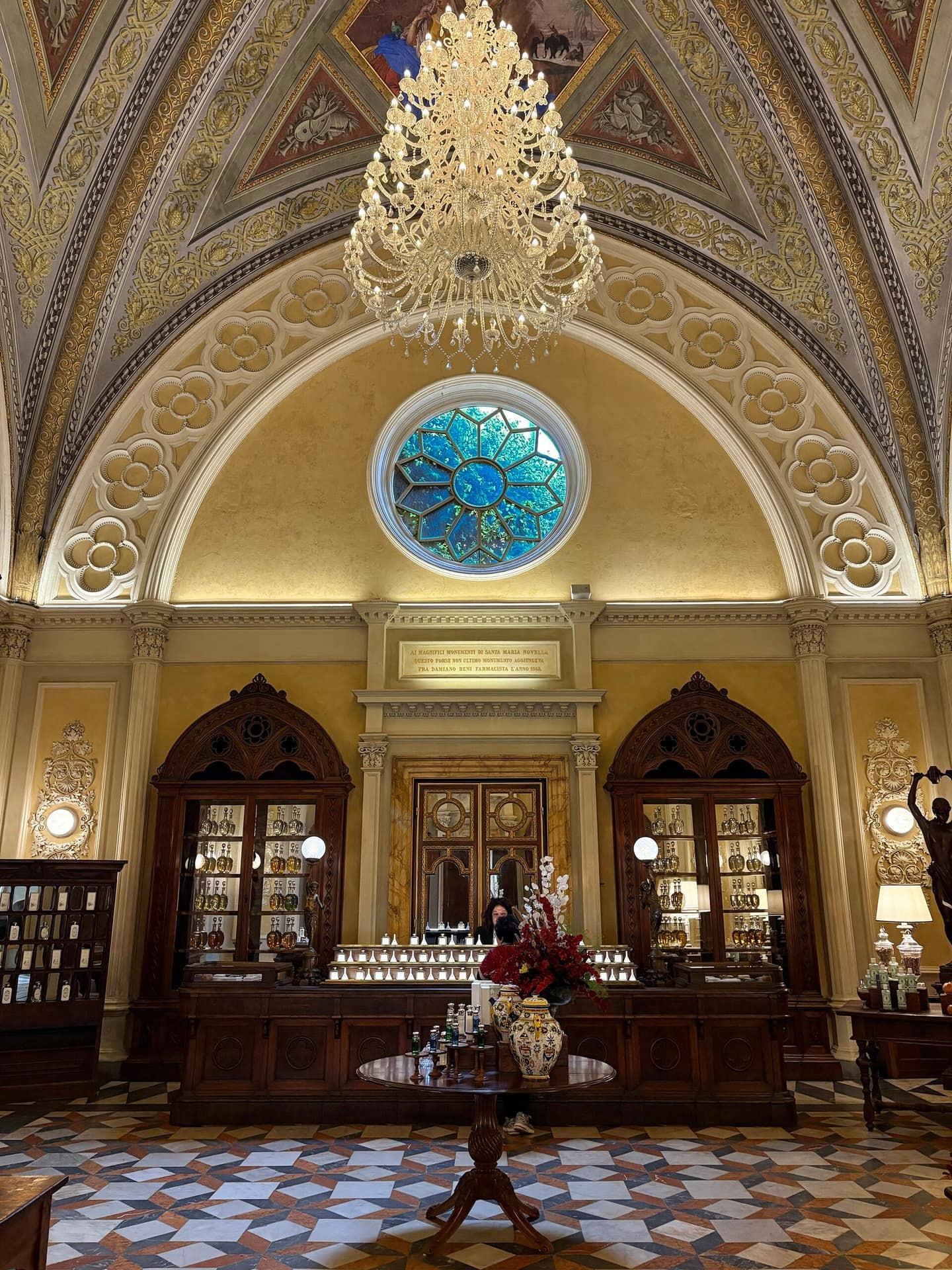
The friars' pharmacy is just up this street. Via della Scala, where the Officina Profumo-Farmaceutica di Santa Maria Novella, the Dominicans' pharmacy since about 1612, is free to walk into.
- 5
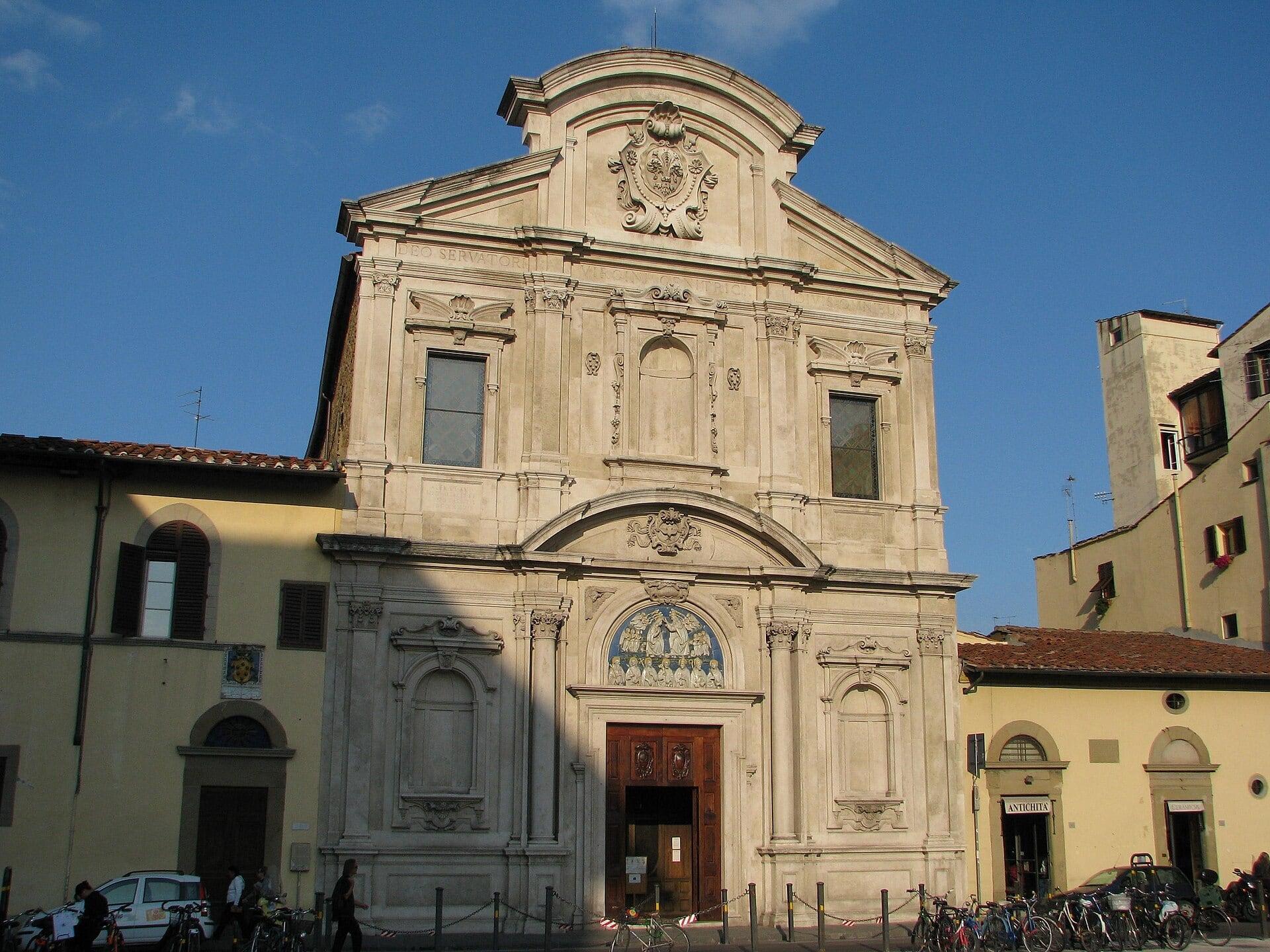
Ognissanti: The Wool Friars' Church
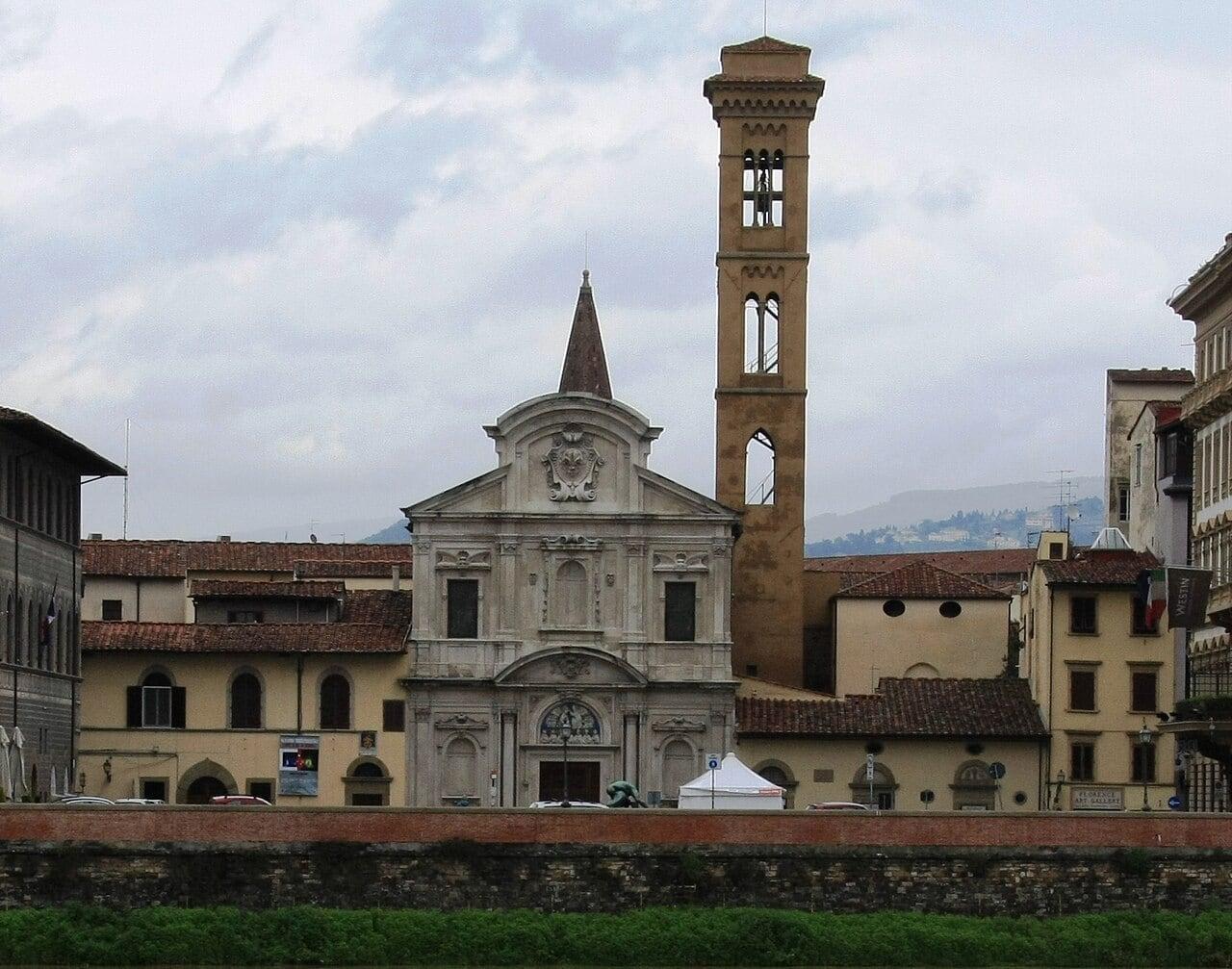
Botticelli is buried in this riverside church. Ognissanti, founded by wool-working friars where two rivers met, holds the painter's family tomb and had the Vespucci family's chapel.
- 6
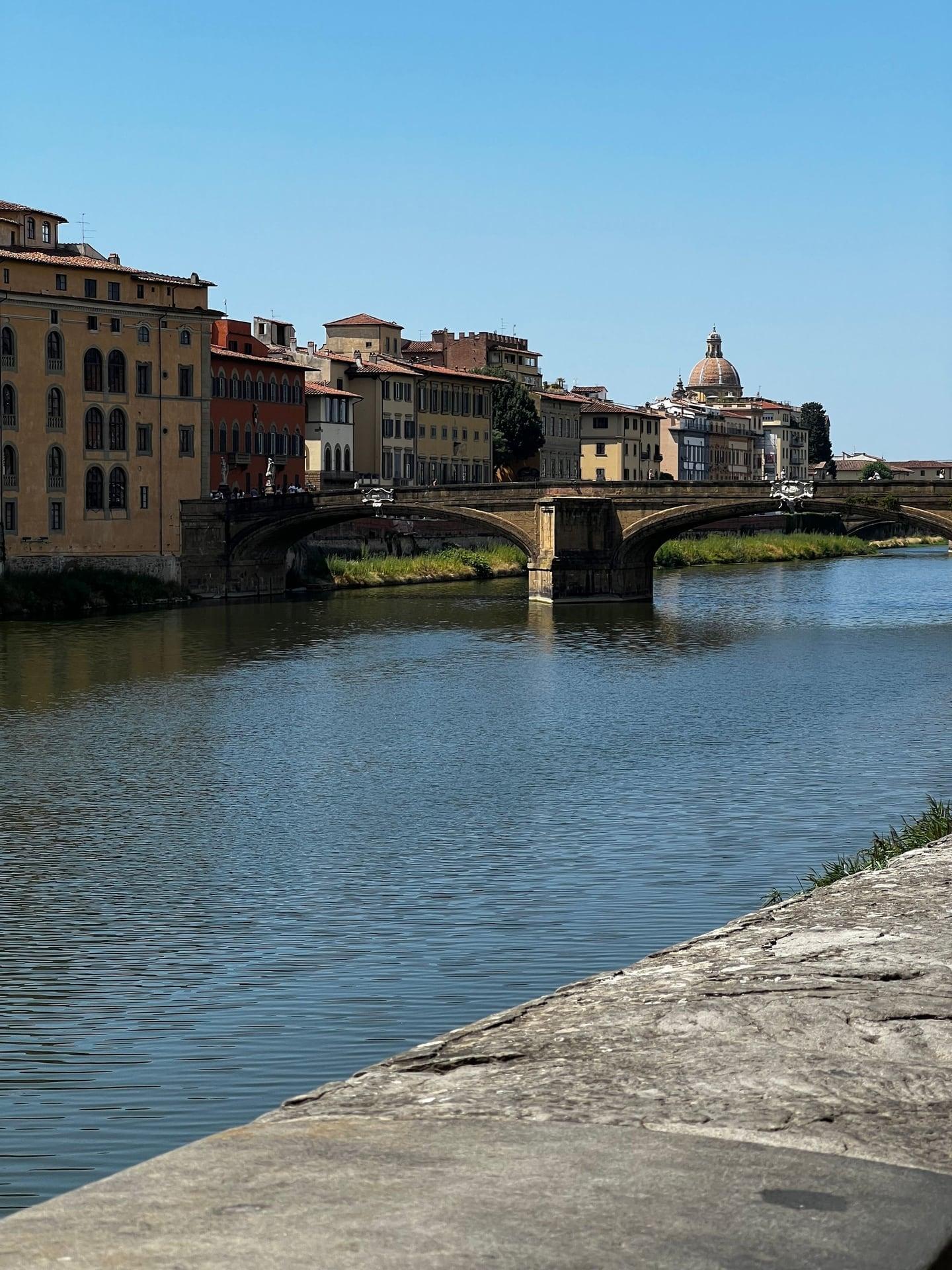
Ponte alla Carraia: The Cart Bridge
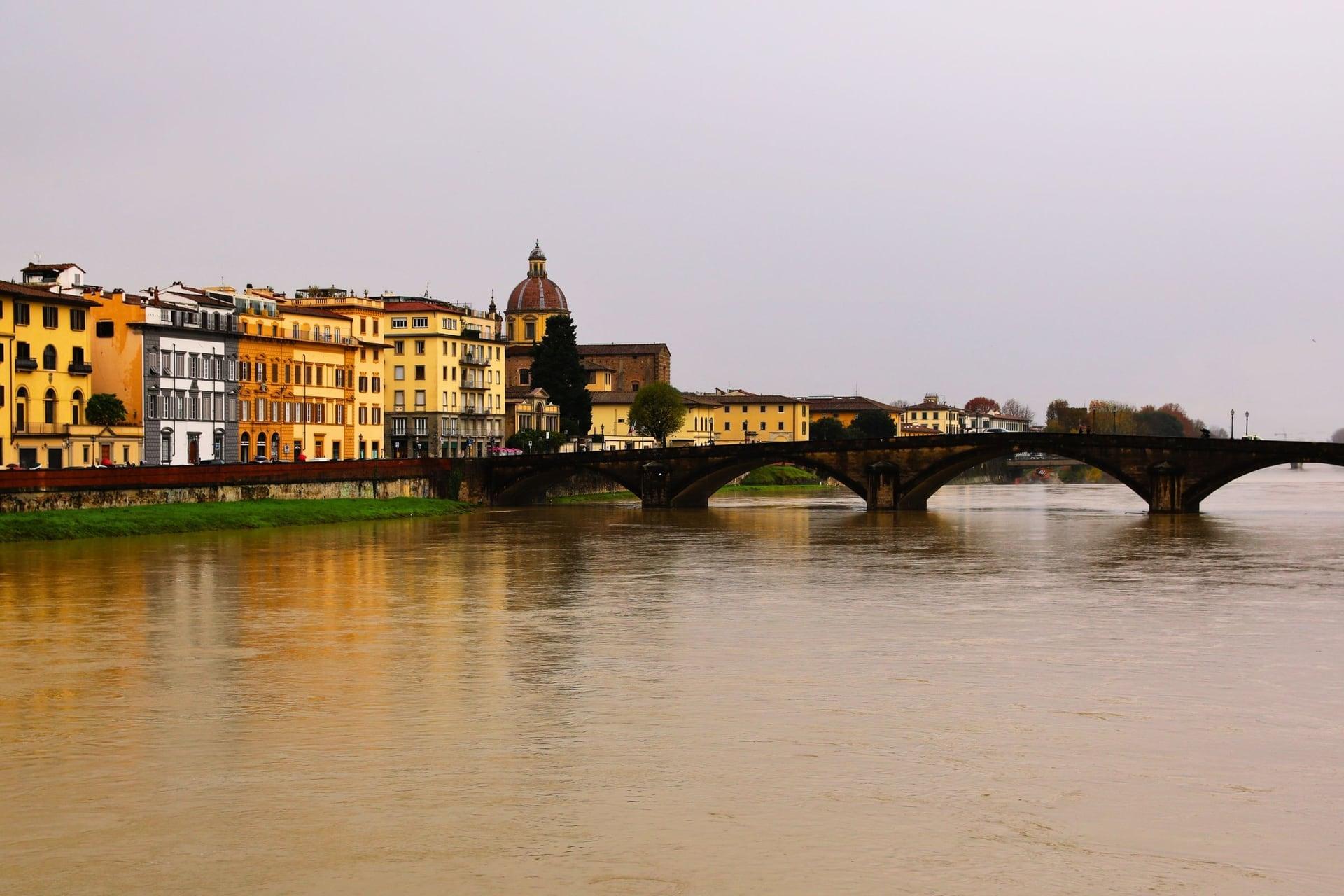
The bridge the wool friars built for carts. The Ponte alla Carraia, rebuilt again and again and blown up in 1944, seen from Piazza Carlo Goldoni.
- 7
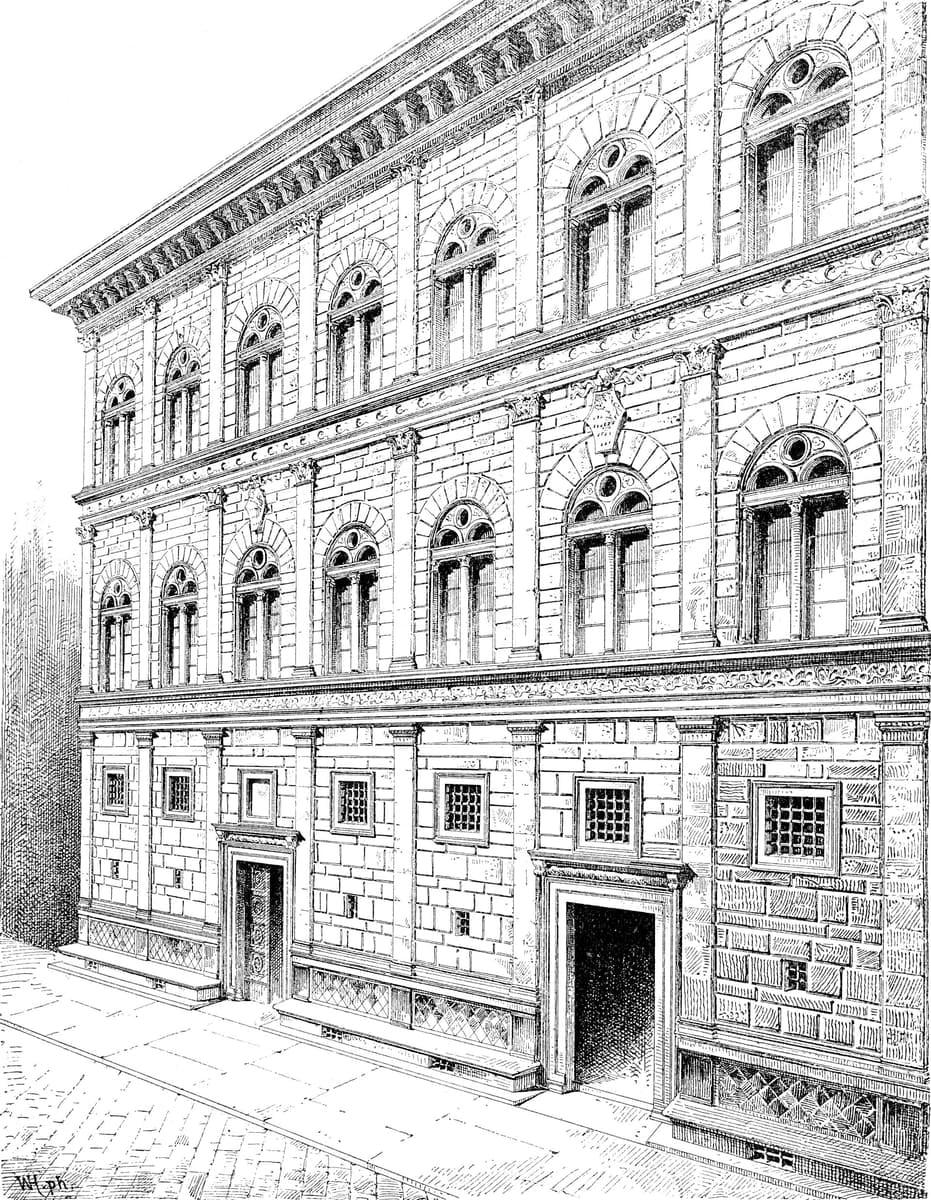
Palazzo Rucellai: The Same Sail Again
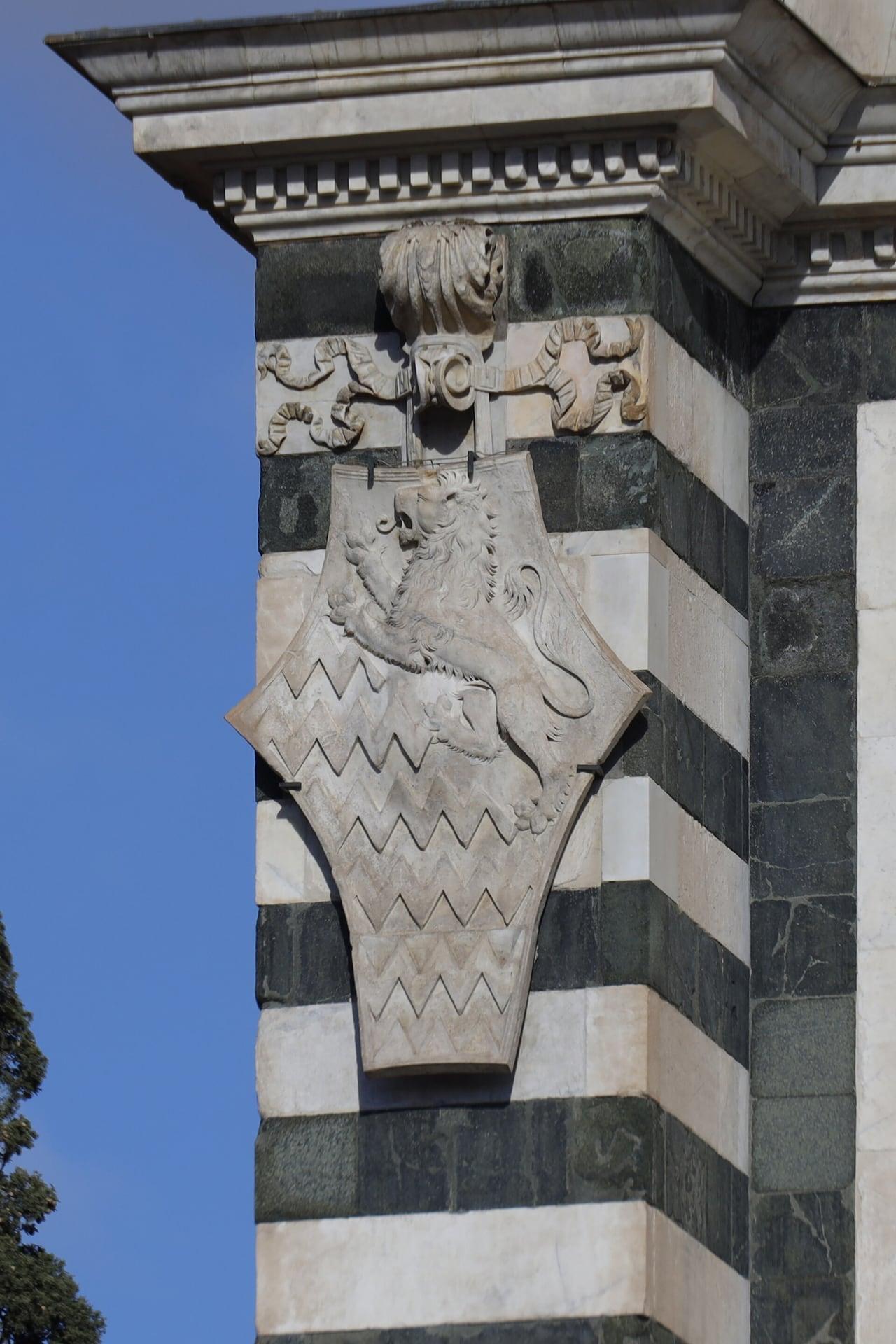
The same merchant's house faces its family loggia. The Palazzo Rucellai, its flat front of pilasters usually credited to Alberti, built for Giovanni Rucellai, with his sail on the family loggia.
- 8
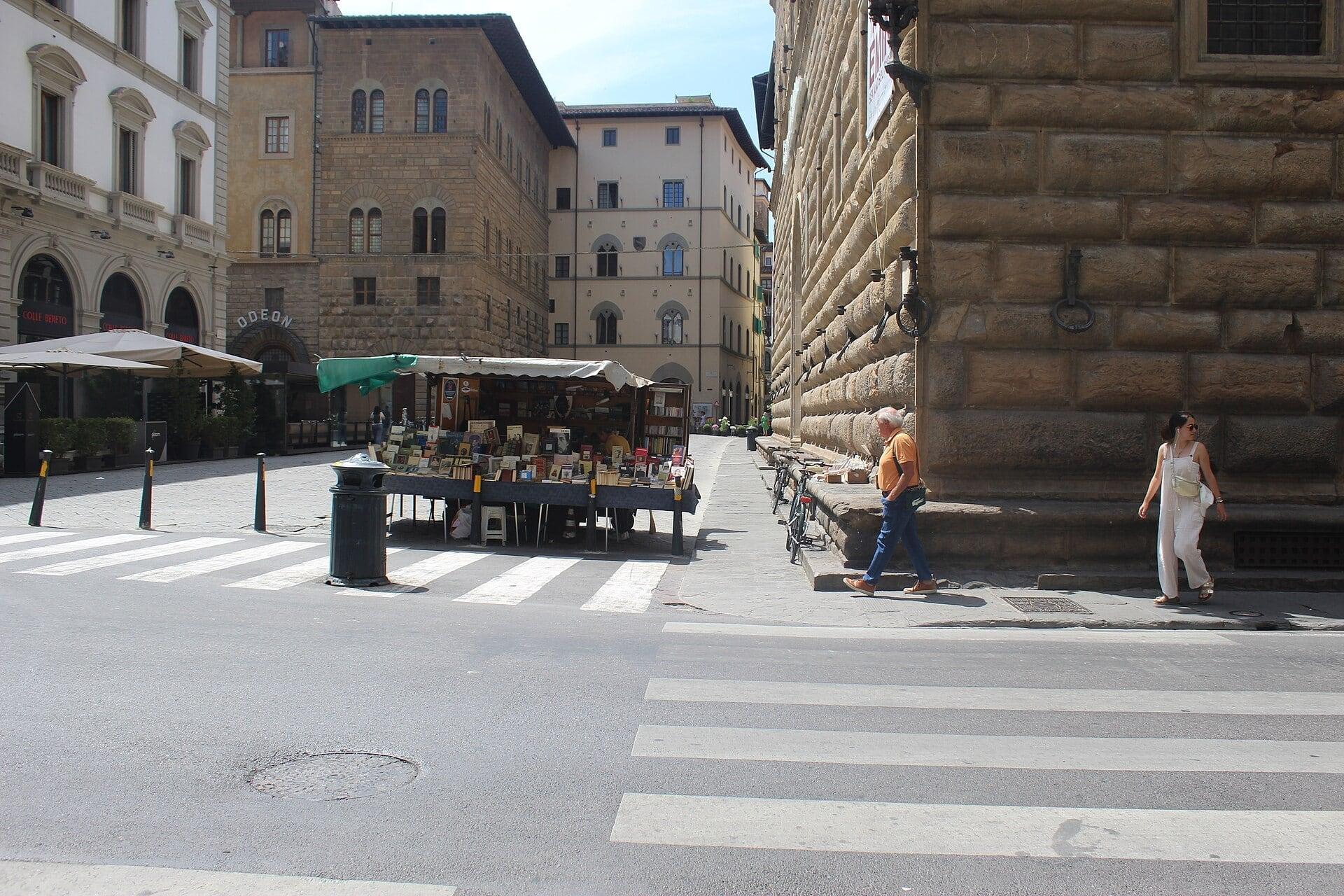
Palazzo Strozzi: Rough Stone, Iron Rings
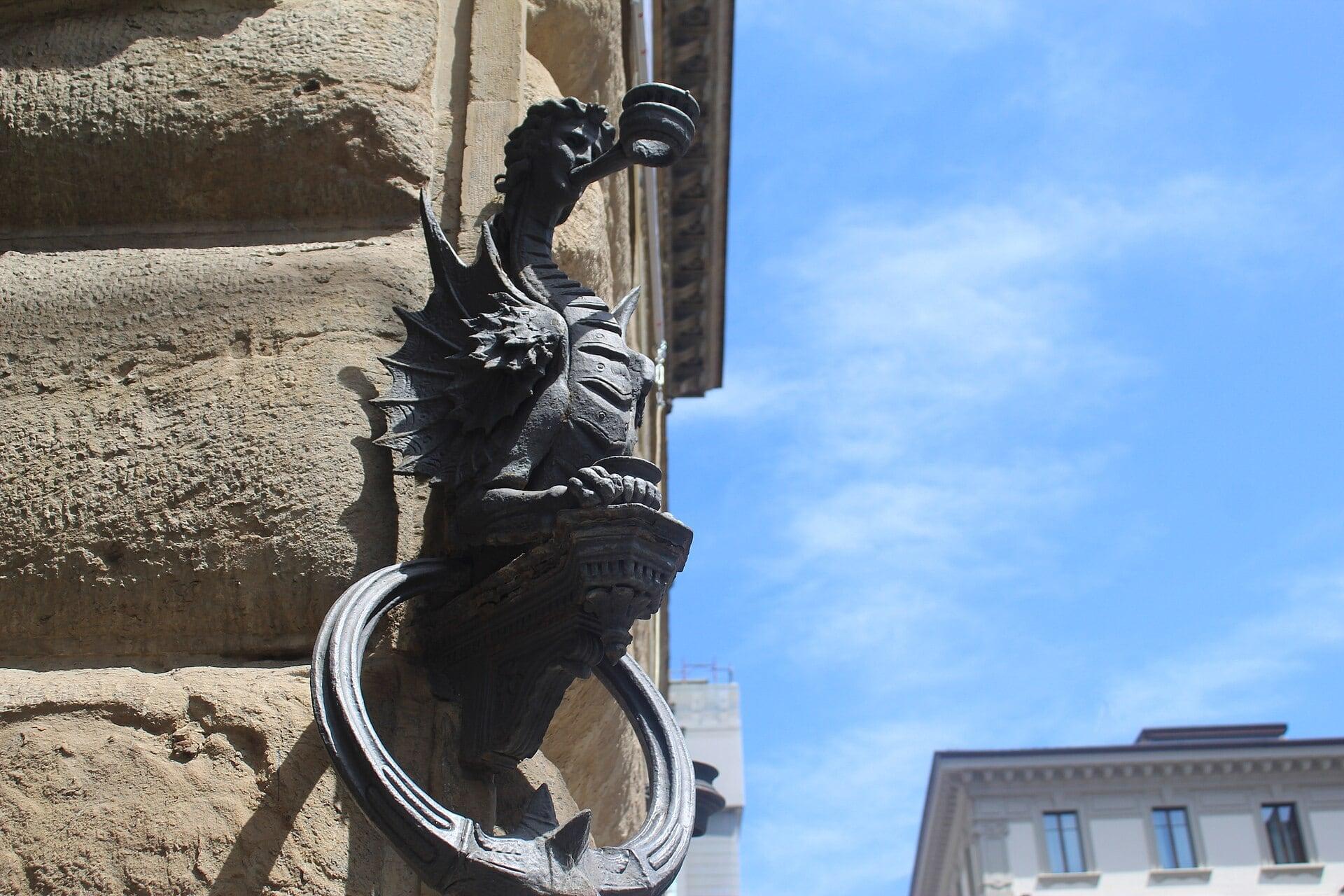
A great house of rough stone and iron. The Palazzo Strozzi, begun at dawn on 6 August 1489, with stone that smooths as it rises, iron lanterns and rings, and a courtyard free to walk into.
- 9
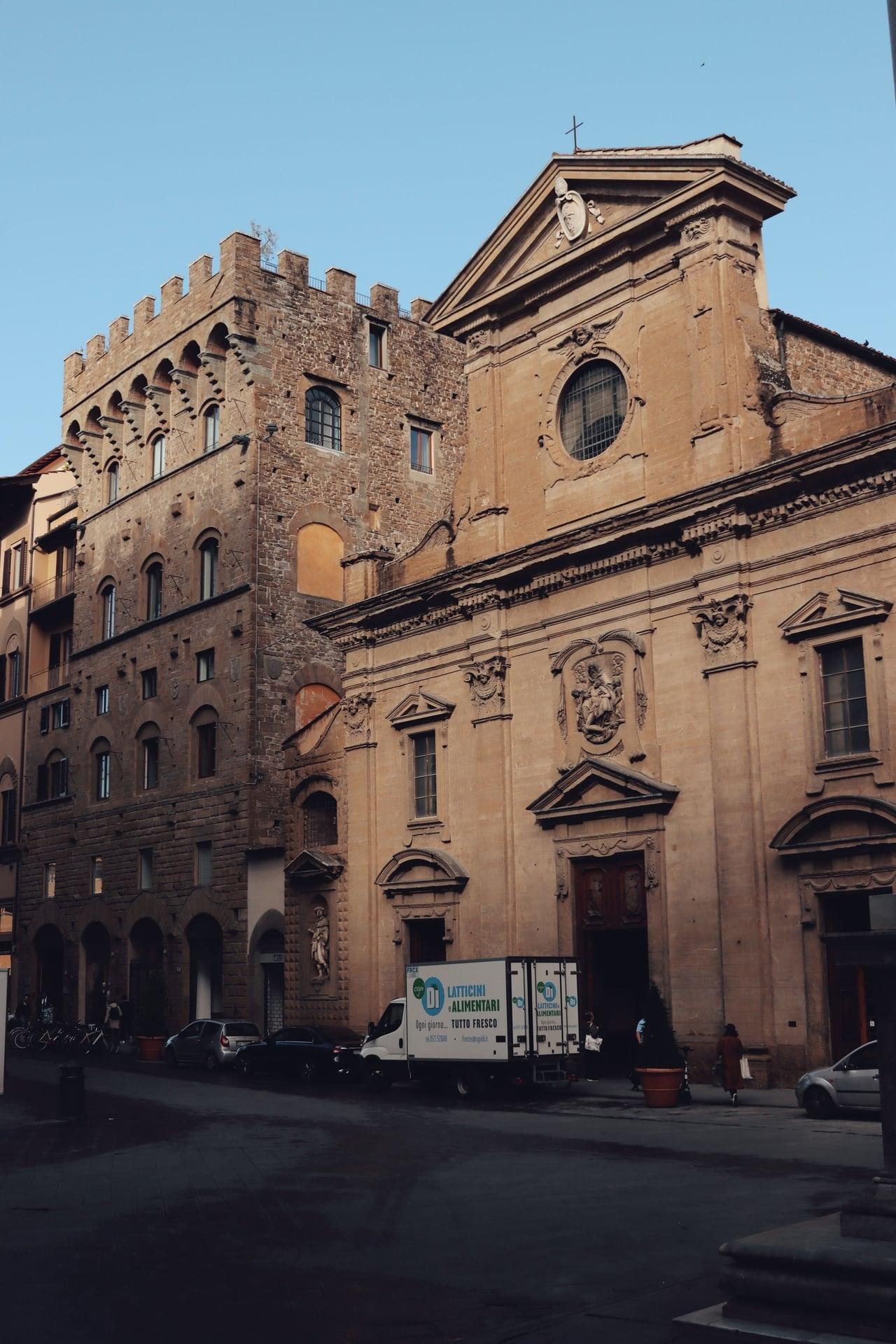
Piazza Santa Trinita: A Column From Rome
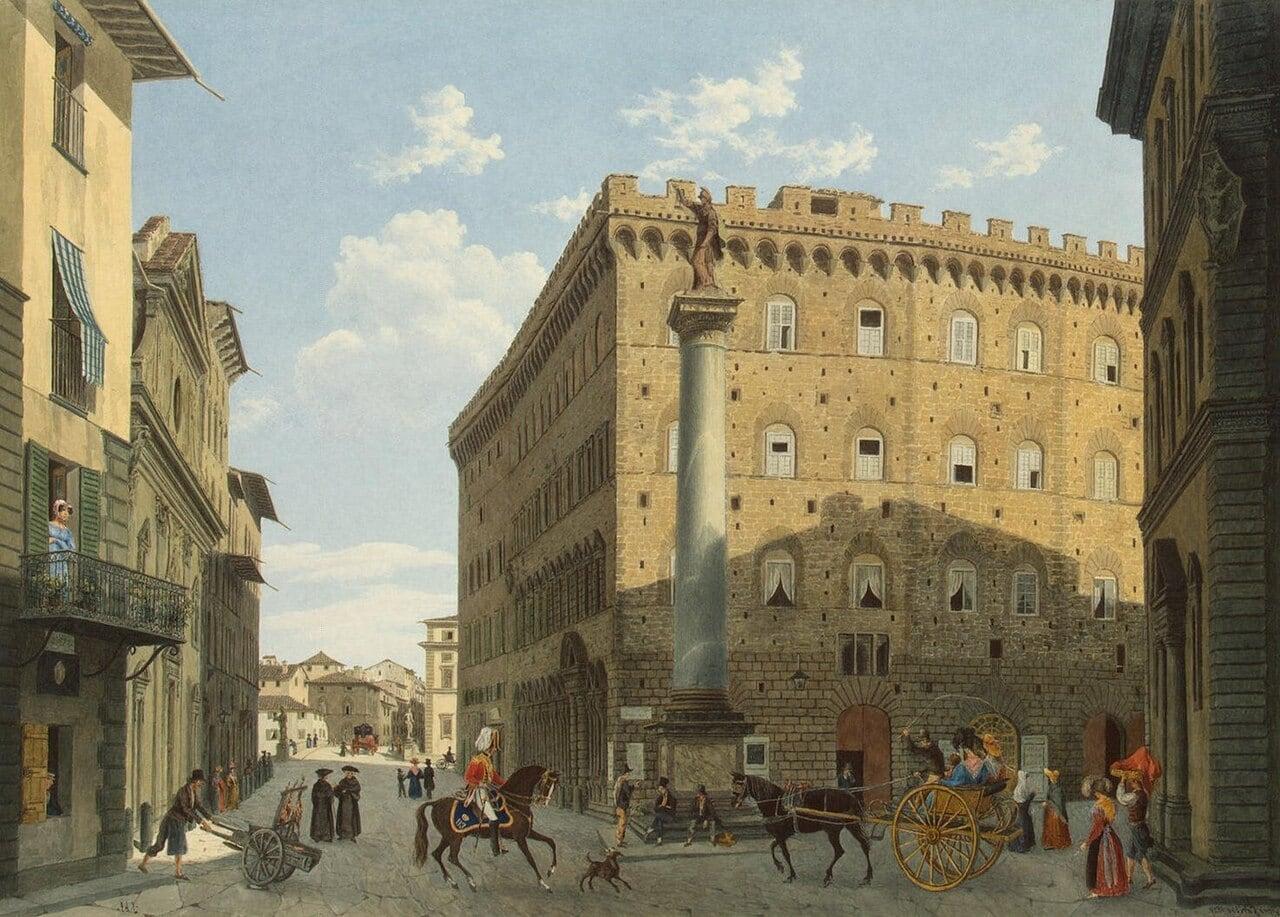
A Roman column stands in front of Santa Trinita. Piazza Santa Trinita, with a granite column from the Baths of Caracalla crowned by a porphyry Justice, a church free to enter and the Palazzo Spini Feroni.
- 10
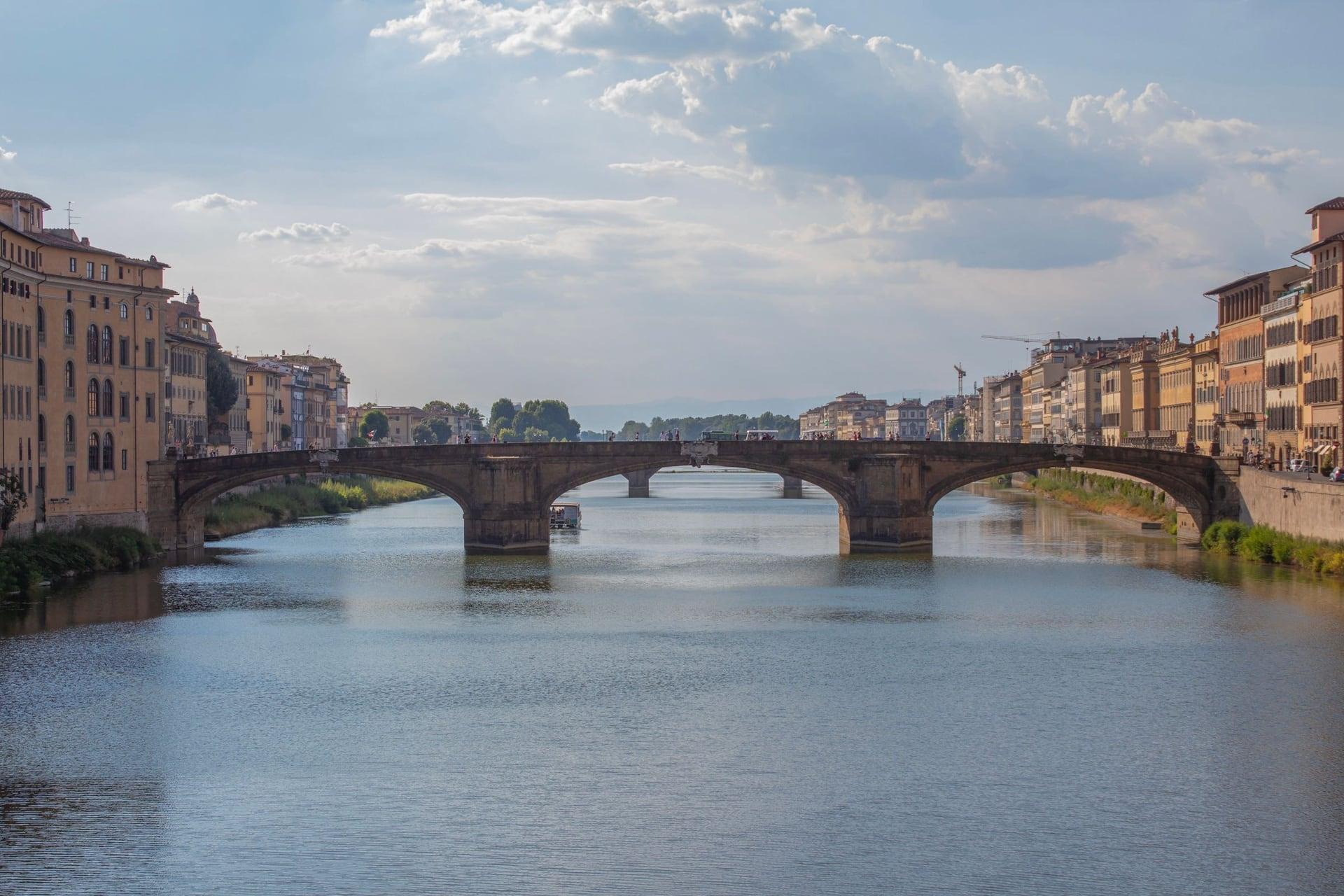
Ponte Santa Trinita: As It Was, Where It Was
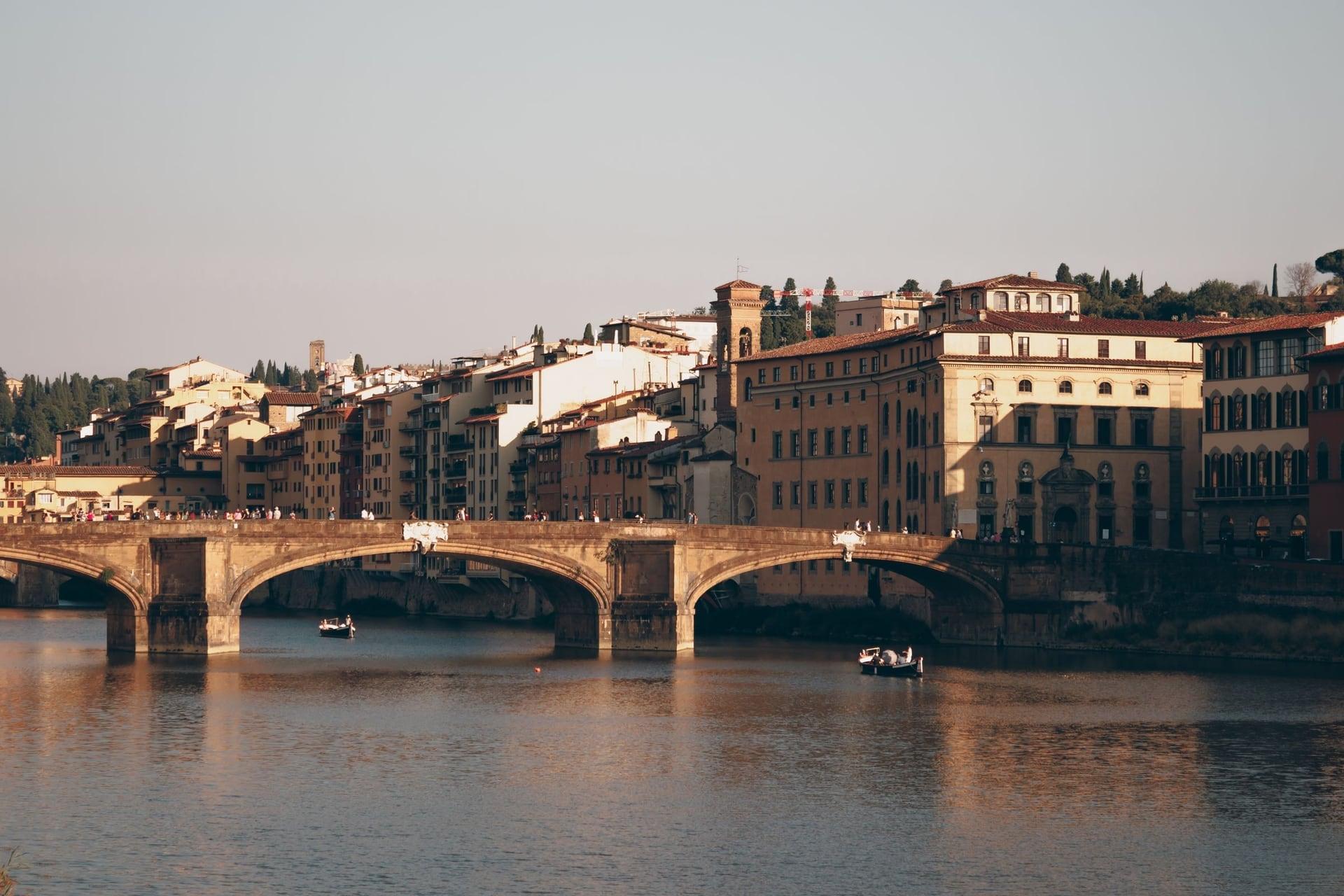
A rebuilt bridge looking up to the Ponte Vecchio. Ammannati's bridge of 1567 to 1571, blown up in 1944 and rebuilt as it was, where it was, in new stone, opened in 1958.
Details
Best Time to Visit
Monday, Wednesday or Thursday afternoon, starting at about 15:00: Santa Maria Novella is open until 17:30 (last entry 16:30), Ognissanti reopens at 15:00 (closed Tuesdays), the Palazzo Strozzi's courtyard is open into the evening, Santa Trinita reopens at 16:00, and in winter you reach the bridge toward sunset. On Fridays Santa Maria Novella opens at 11:00 and on Sundays from 13:00 to 17:00. The streets and squares work at any hour. Checked 8 November 2026.
Pro Tips
- •Getting to the start: the walk begins in the garden in front of the main front of Firenze Santa Maria Novella station, on the side facing the church. Trams T1 and T2 both stop at 'Alamanni Stazione S.M. Novella', on the west side of the station about 150 m from the start, and 'Valfonda Stazione S.M. Novella', on the north-east side about 90 m away; the T2 stop 'Unità' runs at limited times only (Gest stop diagram). Checked 8 November 2026.
- •Getting away from the end: the Oltrarno walk starts at the south foot of the Ponte Santa Trinita. The Ponte Vecchio is about 300 m upstream along the Lungarno degli Acciaiuoli. Santa Maria Novella station is about 1 km back on foot by Via de' Tornabuoni.
- •Officina Profumo-Farmaceutica di Santa Maria Novella (stop 4): Via della Scala 16, free to enter, daily 9:30 to 20:00 (City of Florence hours sheet, updated 2 November 2026). The door is about 60 m from the stop along the same sidewalk, with no road to cross; come back to the corner to continue. Checked 8 November 2026.
- •Ognissanti (stop 5): the church is free, 9:00 to 13:00 and 15:00 to 19:30, closed Tuesdays. Ghirlandaio's Last Supper in the Cenacolo next door (Borgo Ognissanti 42, Thursday to Saturday 9:00 to 13:00, 5 EUR) is listed as temporarily closed on the city's hours sheet of 2 November 2026: check before you go. Checked 8 November 2026.
- •Santa Trinita (stop 9): free, Monday to Saturday 8:00 to 12:00 and 16:00 to 18:15, Sunday 8:15 to 10:45 and 16:00 to 18:15. In the Sassetti chapel, in the right transept, Domenico Ghirlandaio and his workshop (1483 to 1486) painted a scene that shows the square outside with the Palazzo Spini Feroni and the church's old front. Checked 8 November 2026.
- •Museo Marino Marini and the Rucellai Chapel with Alberti's Holy Sepulchre, Piazza San Pancrazio, about 90 m from stop 7: Saturday to Monday 10:00 to 19:00, 10 EUR for both (City of Florence hours sheet, 2 November 2026). Checked 8 November 2026.
- •Museo Novecento, in the loggia behind stop 3: 13 EUR, reduced 9 EUR, 11:00 to 20:00 (museonovecento.it); the city's hours sheet lists it closed on Thursdays, so check the day. Checked 8 November 2026.
- •Museo Salvatore Ferragamo, in the Palazzo Spini Feroni (stop 9): ticketed. Its own site says its exhibition runs to 14 February 2027, while the city's hours sheet of 2 November 2026 lists the museum as temporarily closed until that date: check before you go. Checked 8 November 2026.
- •Platform 16 memorial: inside the station, a monument and a marble plaque unveiled on 8 November 2019 recall the train of 9 November 1943 that carried Jews from platform 16 to Auschwitz (City of Florence tourism office).
Safety & Precautions
- •The first crossing, in front of the station, takes you over a taxi lane, four tram rails and a three-lane bus road at marked and signalled crossings. Cross only on the green: the trams are nearly silent.
- •The station forecourt is crowded at all hours: keep bags closed and in front of you.
- •Via della Scala (stop 4), Via della Vigna Nuova (between stops 6 and 8) and Via degli Strozzi (before stop 8) are narrow streets that buses use, with sidewalks of about a meter or less. Walk single file and stop only at the stops.
- •Between stops 5 and 6 keep to the sidewalk along the buildings of Lungarno Amerigo Vespucci, with parked cars and traffic between you and the river. Do not cross to the riverside there: the walk's one crossing of that road is at the lights at Piazza Carlo Goldoni.
- •Florence's sandstone paving is slippery when wet.
- •The Ponte Santa Trinita's sidewalk is about 2 m wide and fills at sunset: stand at the parapet and leave the sidewalk free.
- •No fence or gate is mapped around the station garden; if it is closed, start on the sidewalk in front of the station.
- •Via del Porcellana, between stops 4 and 5, is a quiet residential lane: keep voices low.
- •Santa Maria Novella, Ognissanti and Santa Trinita are working churches: during services keep to the back and keep voices low. A 2022 city ordinance banned eating and drinking on the steps of Santa Croce, Santo Spirito and Sant'Ambrogio; on any church steps, please do not picnic.
Travel advisory: Exercise Increased Caution (Level 2).
Gallery
Related Reading
Go deeper on what you'll see, hear, and walk through.
Thematic
Best Architecture Walking Tours in Florence (2026)
2 min
Companion
Santa Maria Novella Walking Tour: Names on the Front, From Station to Bridge
5 min
Deep dive
Palazzo Rucellai: How Alberti Dressed a Florentine House as a Roman Temple
5 min
Deep dive
Ponte Santa Trinita: How Florence Rebuilt Its Bridge As It Was, Where It Was
5 min
Read the walk
The full story of Santa Maria Novella: Merchant Palaces and the Arno, in words. Prefer to listen? Play it narrated, from home or on location.
Introduction
Florence, in the heart of Tuscany, is a city where rich families put their names on what they built. This walk goes from the railway station to the river, through the quarter of Santa Maria Novella, the great Dominican church that gave the station its name.
You will see a station kept low out of respect for a church, a church front with its patron's name written across it, a friars' pharmacy, a painter's grave, two merchant palaces, a column from ancient Rome, and two bridges blown up in nineteen forty-four.
Three people shape what you will see. Giovanni Michelucci, who led the station's architects. Giovanni Rucellai, the merchant who put his name across the church front. And Niccolò Grosso, a blacksmith known as Caparra, who forged the iron of the Palazzo Strozzi.
The walk is ten stops over about one point nine kilometers, a little over a mile, and takes about sixty minutes. It is flat. The one crossing that matters is the first, over the tram and bus lanes in front of the station: cross only on the green, because the trams are nearly silent. The church and the Palazzo Strozzi's exhibitions charge to go in, and every stop works from outside. The walk begins in the small garden in front of the station and ends on the Ponte Santa Trinita, looking at the Ponte Vecchio. When you arrive at Santa Maria Novella Station, begin with stop one.
1. Santa Maria Novella Station: Built Low for the Church
Welcome to Florence, and to Santa Maria Novella Station, where this walk begins. Find a spot in the little garden in front of the station, and face the long, low front of brown stone across the lawn.
Look at how flat it is. One long block, with strong horizontal lines, and a tall band of glass that breaks the stone off center: the windows of the ticket hall. In summer the trees may hide part of it.
It nearly looked very different. In nineteen thirty-two Florence's press attacked the first design, all porticoes and arches, with a corner tower that would have competed with the church across the road. The minister in charge agreed to a competition. More than a hundred designs were shown in the Palazzo Vecchio, and in March nineteen thirty-three the winner was a group of six Tuscan architects led by Giovanni Michelucci. The station opened in nineteen thirty-five.
Now look across the tram lines at the church: its tall apse and its bell tower. The architects said they kept the station low to let that apse prevail, unchallenged. And they chose the same warm brown stone as the church, called pietra forte, strong stone. A modern building that bows to an old one. Keep that stone in mind: you will meet it again on the bridge at the end of the walk.
Inside the station, at platform sixteen, a memorial recalls the ninth of November nineteen forty-three, when a train left from that platform carrying about three hundred Jews to Auschwitz. Only fifteen came back.
The forecourt is crowded at all hours, and crowds draw pickpockets, so keep your bag closed and in front of you.
Follow the route across the tram and bus lanes at the crossings, on the green only. Next is the church's long side wall.
2. Via degli Avelli: A Wall of Family Tombs
Walk on down this street, Via degli Avelli, with the church's long wall beside you, and stop about halfway along.
The street's name tells you what to look for. An avello is a tomb, and the wall along the church is the edge of its old cemetery, which the church still calls the Avelli cemetery. Look along it for the row of pointed arches. Each marks a family's vault, built against the church. The cemetery behind the wall is part of the church's paid visit; from the street you see the arches for free.
Above the wall rise the long side of the nave and the bell tower.
Keep these pointed tomb arches in mind. Before the church had its finished marble front, six tombs like these were set into the front itself, under pointed arches, in marble striped white and dark green. They held the remains of notable citizens, so they could not be moved, and when the front was finally completed they stayed. You will find them in a moment, along the bottom of the front.
One more thing about this church. The Decameron, the fourteenth-century book of tales told while the plague was in Florence, opens here: seven young women meet in Santa Maria Novella one Tuesday morning. It is fiction, but this is the church the author chose.
Follow the route to the end of the street and out onto the big square. Next is the church's front.
3. Piazza Santa Maria Novella: A Name Across the Front
Walk on down the path beside the lawn to the obelisk at the far end, standing on bronze tortoises, and stop by it. Now turn around and face the church across the whole length of the square. The church, its cloisters and museum are one ticket, ten euros, and the details are on this stop's card. The front is free.
The striped lower story, with its pointed tomb arches, is the medieval front, begun in the thirteen hundreds and left unfinished when its patrons' money ran out. Then a merchant, Giovanni Rucellai, paid to complete it, and gave the job to the architect Leon Battista Alberti. Alberti finished it: the great round-arched door, the band of inlaid squares, the upper story built around the older round window, the scrolls at the sides and the triangle on top.
The design is geometry. Alberti fitted the front into squares stacked on squares, with every part in proportion to them and to the circles drawn inside them.
Now look for the patron. High on the upper story, just under the triangle, a band of large letters gives his name in Latin, Giovanni Rucellai, and the year fourteen seventy. You may need your phone's zoom. Then look along the frieze for little sails, with their rigging: the Rucellai family's emblem.
Two instruments hang on the front, one at each side: a bronze ring, and a marble quadrant with sundial lines. A Dominican friar, the Medici duke's astronomer, put them up in the fifteen seventies to time the equinox, on which the date of Easter depends.
That same duke also explains the obelisks. In fifteen sixty-three he started a chariot race here, three laps around two wooden turning posts, every twenty-third of June, the eve of Saint John's day. Later these obelisks replaced the posts.
Follow the route along the lawn and into Via della Scala, a bus street: keep to the sidewalk. Next is the friars' pharmacy.
4. Via della Scala: The Friars' Pharmacy
Walk on along this sidewalk toward the corner where a zebra crosses into a narrow lane, and stop against the wall before it. Keep close to the wall and let people pass. Look on up this same sidewalk. About sixty meters ahead, at number sixteen, is the door of the Officina…
Full narration for this stop unlocks with the tour.
5. Ognissanti: The Wool Friars' Church
Walk on down the side of this square, Piazza d'Ognissanti, all the way to its river end, where the road runs along the Arno, and stop on the paving there. Then turn around and face the church at the top of the square: Ognissanti, the church of All Saints. Friars founded it in…
Full narration for this stop unlocks with the tour.
6. Ponte alla Carraia: The Cart Bridge
Walk on along the sidewalk to the corner of the square ahead, Piazza Carlo Goldoni, where a statue stands, and stop by it, out of the way of the crossing. Across the road the Arno opens up, and a bridge runs from this junction to the far bank: the Ponte alla Carraia. Its name…
Full narration for this stop unlocks with the tour.
7. Palazzo Rucellai: The Same Sail Again
Walk on until the street opens into a small triangular square, beside an open loggia of three arches, and step into it, off the street. Across the street stands a flat stone front of three stories: the Palazzo Rucellai. This is the house of Giovanni Rucellai, the merchant whose…
Full narration for this stop unlocks with the tour.
8. Palazzo Strozzi: Rough Stone, Iron Rings
Walk on along the palace's huge stone wall, and where it turns the corner, turn with it into the narrow square along its side. Stop on the far side of the square, facing the wall. The exhibitions upstairs are ticketed, fifteen euros, and the details are on this stop's card. The…
Full narration for this stop unlocks with the tour.
9. Piazza Santa Trinita: A Column From Rome
Where Via Porta Rossa opens into the square, the tall granite column is ahead of you. Walk on to it and stop just beyond it, with the church front close by. The column is Roman. It came from the Baths of Caracalla in Rome, a gift from the pope to the Medici. Getting it here was…
Full narration for this stop unlocks with the tour.
10. Ponte Santa Trinita: As It Was, Where It Was
Walk on along the bridge's sidewalk and stop at the parapet near the middle, leaving the sidewalk free for others. Upstream, the next bridge is the Ponte Vecchio, the Old Bridge, with its shops, and the long corridor running above them. This is the Ponte Santa Trinita. After a…
Full narration for this stop unlocks with the tour.