In Piazza San Pier Maggiore a church porch survives with no church behind it. The nave of San Pier Maggiore, a church consecrated in 1067, was pulled down in 1783; the porch was kept, its side arches were turned into houses, and the street through its middle arch now runs where the nave stood. Most visitors walk straight past it on the way along Borgo degli Albizi. Turn around in the square and you are looking at a front door that opens onto a street.
One of the oldest churches in Florence
San Pier Maggiore was the church of a community of Benedictine nuns. The Repertorio delle Architetture Civili di Firenze, the scholarly record of the city's buildings, says it was consecrated in 1067 and so counted among the oldest churches in the city, and that it was one of Florence's principal churches for its size and for the wealth of its art. The square took its name from it, and so, the Repertorio adds, did the gate that once opened in the city's earlier ring of walls on this side.
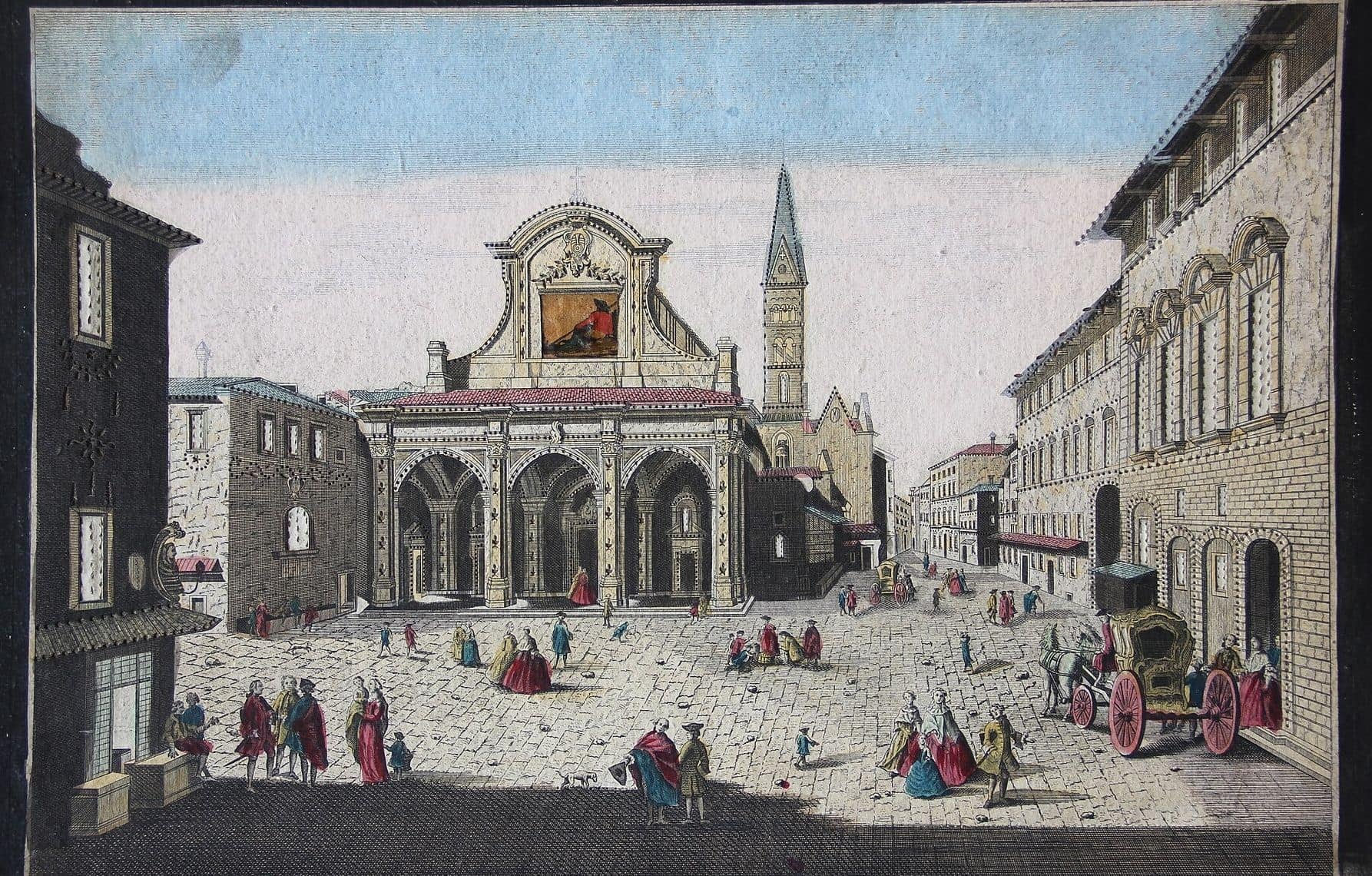
In 1638 the church was remodelled at the expense of Luca degli Albizi, to a design by the architect Matteo Nigetti. The Albizi name is all around you: the street you arrive by is Borgo degli Albizi. The porch you are looking at is that 1638 work, three great arches in pietra serena, the grey Florentine sandstone. A well-known engraving by Giuseppe Zocchi of 1744 shows the porch with the whole church still standing behind it, and the eighteenth-century print reproduced at the top of this page shows the same scene: carriages in the square, the arcade, and the church front rising above it.
Pulled down in 1783
Hear a stop from this walk
Basilica of Santa Croce: The Marble Front
Then the church went. In 1783, according to the Repertorio, it was demolished because it was believed to be unsafe. At least one of its paintings belongs today to the National Gallery in London, which says Botticini's Palmieri altarpiece was installed in San Pier Maggiore in 1477, and it describes the church as largely destroyed in the eighteenth century. The gallery's exhibition on that painting came with a short film reconstructing the lost church from archival, archaeological and visual evidence. The patron, Matteo Palmieri, is still in the neighborhood in another form: one of the streets into this square is Via Matteo Palmieri.
The porch, though, was not demolished. Somebody decided it was worth keeping.
How to read what was kept
Look at it closely and you can see what Florence did with a church front that had lost its church.
The two side arches were walled up and turned into houses. A new storey was built on top of the old entablature, the stone beam that runs across the columns, so balconies and windows now sit where the church's roofline once began.
Then look through the middle arch. The Repertorio puts it plainly: instead of leading into the nave of the church, it opens onto a street. That street, Via di San Pier Maggiore, runs exactly where the central nave stood, and it is lined with houses made out of the church and its convent. Walk a few steps into it and you are, in a sense, walking up the aisle.
Finally, look at the details that still name the patron. Two of the capitals, the carved tops of the columns, carry the Albizi coat of arms, and the inscription along the frieze records what Luca degli Albizi paid for. The porch was restored in 2004.
A square that kept its character
The Repertorio notes one more survival: the square has a popular character, with shops, trattorias and meeting places, still partly tied, it suggests, to the market once held in this area. An older name for the square was Piazza del Mercatino di San Pietro, the little market of Saint Peter.
On Roamer's Santa Croce walk this is the moment where the quarter's habit becomes literal. Something is taken away, and a piece of it is kept on purpose: a fish loggia in the wrong square a few minutes earlier, a Roman arena surviving as the bend of a street a little later. Here it is a front door with nothing behind it but daylight and a street.
The porch is stop 4 of Santa Croce and the Bargello: Dante and the Flood Line, which you can walk at your own pace, stopping for a coffee in this square if you like. See all routes on the Florence page.
Sources
- Repertorio delle Architetture Civili di Firenze, Piazza di San Pier Maggiore (ID 2548): the church and Benedictine convent, consecrated 1067, among the principal churches of the city, the gate named for it, the 1638 remodelling by Matteo Nigetti for Luca degli Albizi, demolition in 1783, Zocchi's 1744 engraving, the surviving portico and houses, Via di San Pier Maggiore on the line of the nave, the square's popular character and its older name.
- Repertorio delle Architetture Civili di Firenze, San Pier Maggiore portico (ID 1939): the Albizi arms on the capitals, the frieze inscription, the 2004 restoration, and the National Gallery film on the destroyed church.
- The National Gallery, Visions of Paradise: Botticini's Palmieri Altarpiece: the altarpiece installed in San Pier Maggiore in 1477, the church largely destroyed in the eighteenth century, Matteo Palmieri as patron, the reconstruction film.
Ready to experience it?
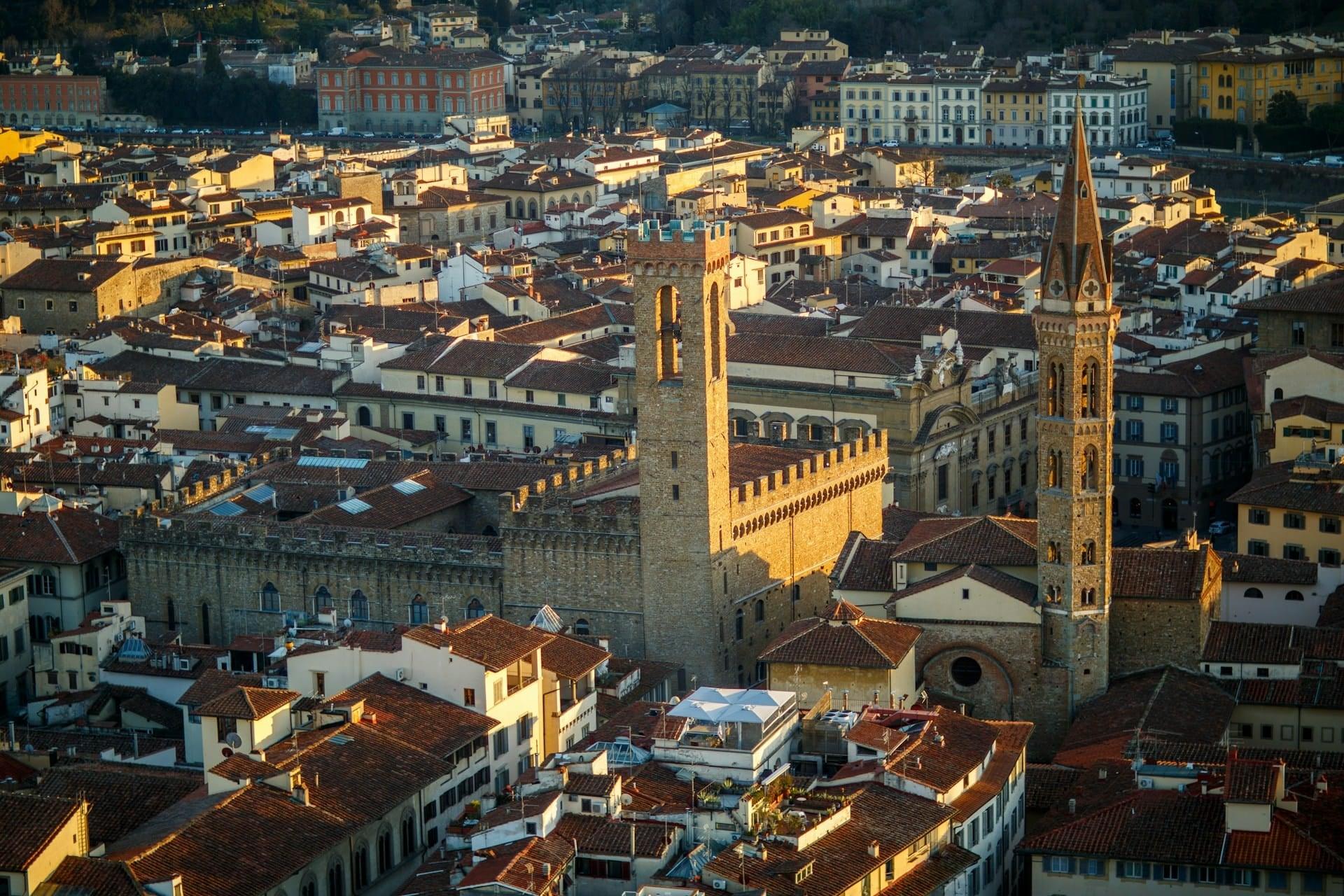
Santa Croce and the Bargello: Dante and the Flood Line
75 min · 1.8 km · easy
More from Florence
Explore more at your own pace.
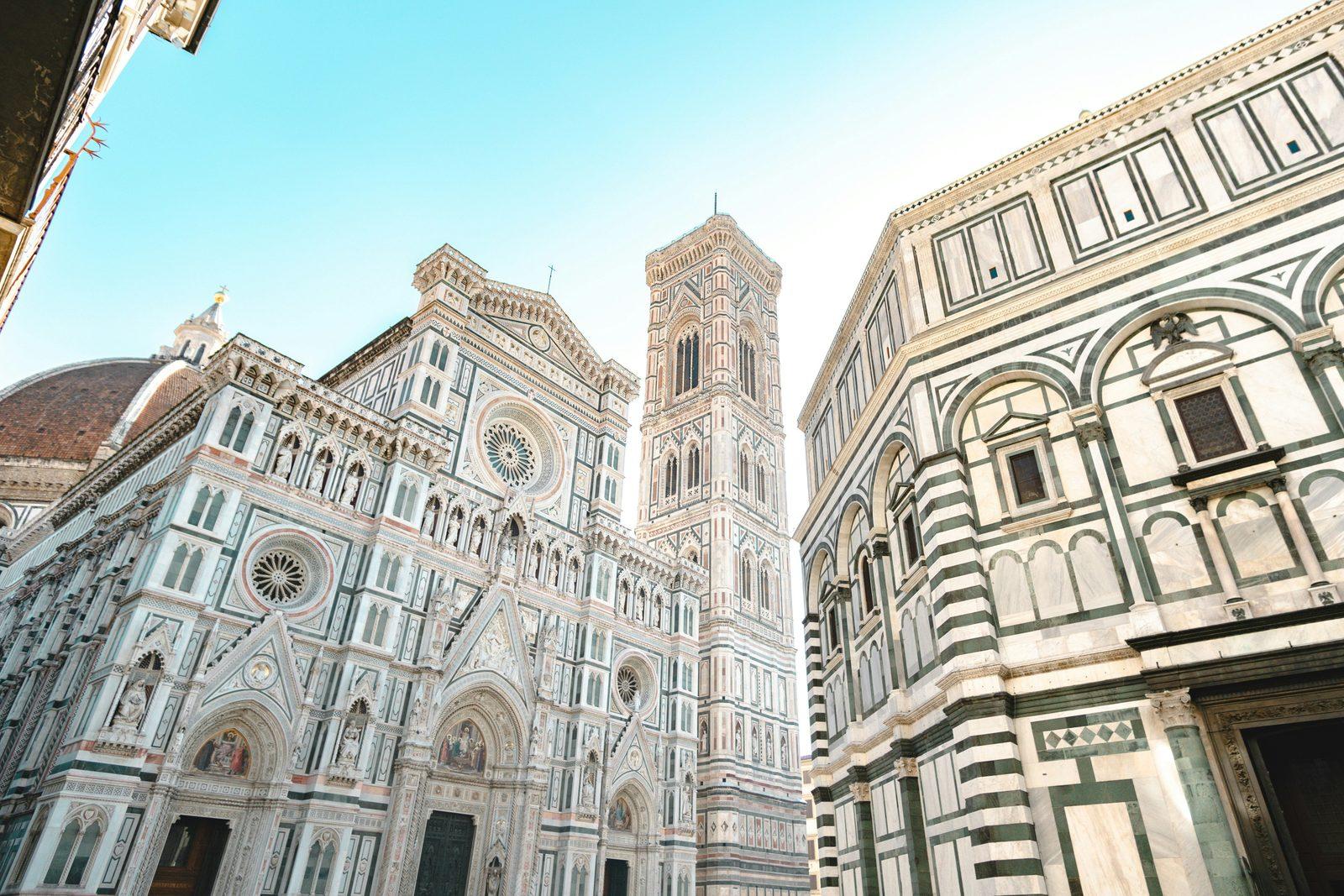
Best Architecture Walking Tours in Florence (2026)
Piazzale Michelangelo Walking Tour: The Capital's Terrace and San Miniato
Santa Croce Walking Tour: The Florence Quarter That Keeps What It Lost
Loggia del Pesce: Vasari's Fish Market in the Wrong Florence Square
Palazzo Rucellai: How Alberti Dressed a Florentine House as a Roman Temple