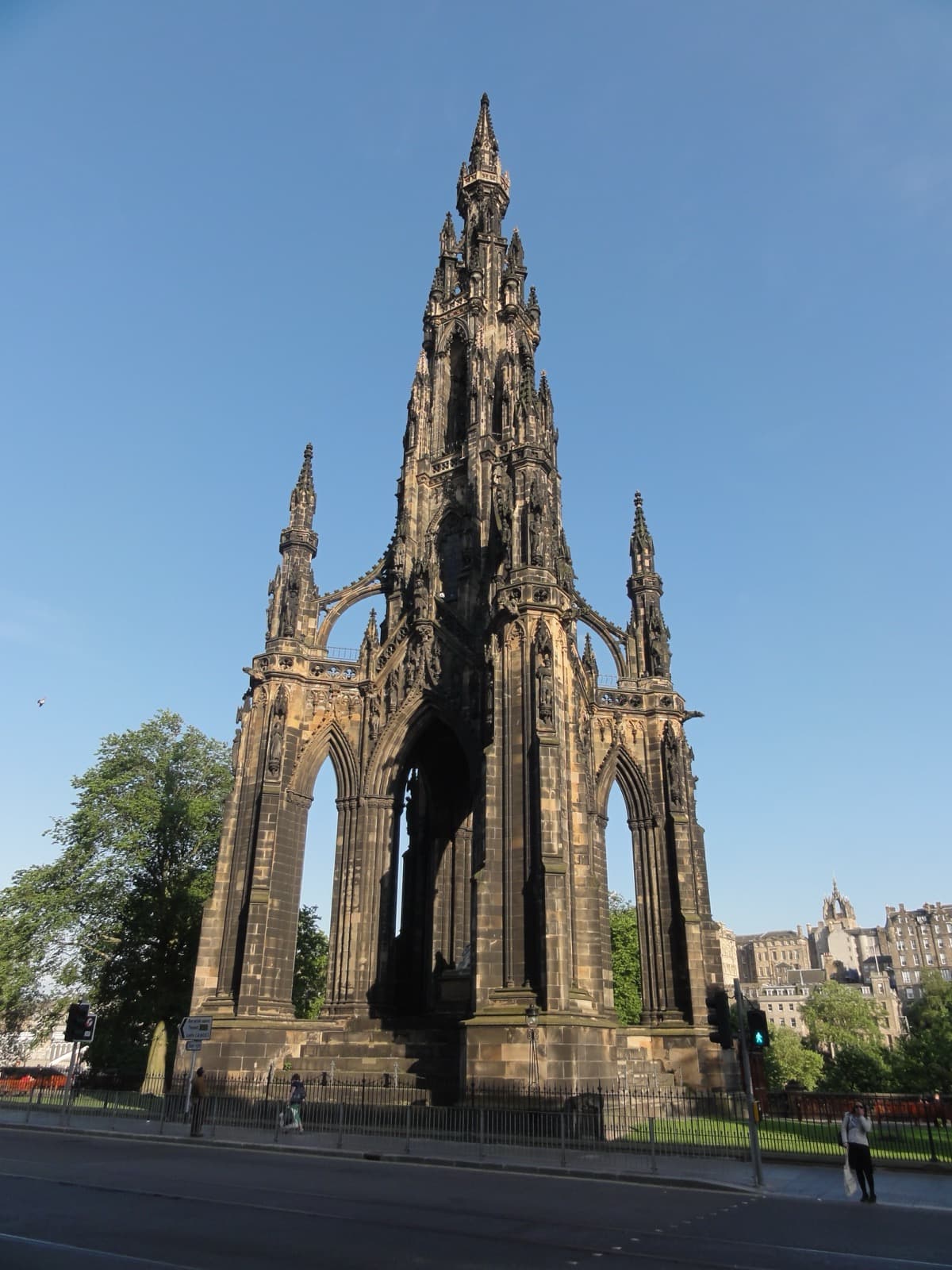
The Scott Monument is a 61-metre Victorian Gothic spire built between 1841 and 1844 to honour the novelist Sir Walter Scott, and its blackened stone rocket, its drowned architect, and its foundation on the bed of a drained loch make it the single clearest reading of how Edinburgh's civic pride shifted from Enlightenment reason to Romantic storytelling. It rises from the gardens on the south side of Princes Street, and once you understand why it looks the way it does, and why it sits where it sits, the whole New Town around it starts to make sense.
A spire usually reserved for saints or kings
Look at the shape first. Almost everything in the New Town below and around you is Neoclassical: straight lines, Greek columns, temple fronts, the ordered grammar of the Enlightenment that produced David Hume and Adam Smith. The Scott Monument is the deliberate exception. It is a soaring Gothic canopy, the kind of vertical, pinnacled form that European cities usually built over a cathedral or a royal tomb. Here that form was raised over a writer.
That was the point. Walter Scott died in 1832 as arguably the most famous author in Europe, the man whose historical novels and narrative poems had reshaped how the whole continent imagined Scotland's past. When Edinburgh chose to commemorate him, it reached past the rational vocabulary of its own planned city and borrowed the visual language of sanctity. Reason had built the grid. Romance built this. The tension between the two is exactly what you are standing inside.
The architect who never saw it finished
Hear a stop from this walk
St Andrew Square: The Banker's Square and the Reweighed Column
The design came out of an open competition held after Scott's death, and it produced one of the more poignant stories in the city. George Meikle Kemp was a joiner and largely self-taught draughtsman with no formal architectural training, and he feared the judges would hold that against him. So he submitted his drawings under a pseudonym, "John Morvo," a name borrowed from the medieval master mason associated with Melrose Abbey. The disguise worked. His Gothic design was chosen ahead of the rest of a field of 54 entrants, adopted after the committee reran the competition and Kemp refined his proposal.
The foundation stone was laid on 15 August 1840, and construction ran from 1841 to autumn 1844. Kemp did not live to see it topped out. In March 1844, months before completion, he fell into the Union Canal in the fog on his way home and drowned. His masterpiece was finished without him and formally inaugurated in 1846. When you tilt your head back to follow the spire up, you are looking at a building whose designer never got to look at it whole.
Why it is black, and what it is made of
Visitors often assume the dark colour is soot from a century of coal fires. It is not, or not only. The monument is built from Binny sandstone, quarried near Ecclesmachan in West Lothian, a stone rich in hydrocarbons that darkens naturally as it weathers. As the surface ages, the brown deepens and city pollution clings to it, so the blackening is partly the material behaving as the material does. Conservators explored cleaning it in the late 1990s and largely left it, because stripping it back to pale gold would erase the very quality that gives the spire its brooding, rocket-like silhouette against the sky. There is even an account that Kemp chose the stone knowing it would darken toward that Gothic look.
Set into that dark stone are 64 carved figures of characters drawn from Scott's novels and poems, worked into the niches and buttresses at every level, so the monument is not just about the author but populated by his imagination. Counting the additional statuary, there are 68 sculpted figures in total. It is a library turned into architecture.
The white statue at its heart
Step in under the canopy and the mood changes. Beneath the arches sits a statue of Scott himself, carved by John Steell from white Carrara marble, the writer seated with a book and with his deerhound Maida at his feet. The contrast is deliberate and it lands: a blackened Gothic frame around a gleaming white figure, the storyteller kept bright at the centre of his own dark spire.
If you climb, there are 287 steps winding up through progressively narrower stairways to a series of viewing platforms and, at the top, a long view over the whole city. You do not need to climb to read the monument, but the number is worth knowing before you decide.
The claim to correct
You will often hear the Scott Monument called the largest monument to a writer in the world. Treat that with care, because it is not quite true. It is the second-largest, after the memorial to José Martí in Havana. The distinction is small, but keeping it straight is part of taking a place seriously rather than repeating its best slogan.
The ground it stands on
Now look at where it is. Princes Street is built up on one side only: shops and hotels line the north, while the south is left deliberately open to the view of Edinburgh Castle on its rock. The open ground below the monument is Princes Street Gardens, and that ground has a history most people walk straight past.
The gardens occupy the bed of the old Nor Loch, an artificial medieval lake that once defended the northern flank of the Old Town and, over the centuries, filled with sewage draining down from the overcrowded closes above. Draining that foul loch from the 1760s onward is what physically opened the ground for the New Town to be built across the valley. So the Scott Monument does not just stand near the New Town. It stands on the reclaimed floor of the loch whose removal made the whole planned city possible. The spire and the ground beneath it tell the same story of a city remaking itself.
Standing in front of it
If you take one idea away, take this: the Scott Monument is the hinge between two Edinburghs. The Neoclassical grid records a city that trusted reason and geometry. This Gothic spire records the same city, a generation later, deciding that a storyteller deserved the form of a cathedral, and building it on the bed of a drained lake. Reading that contrast on foot, at your own pace, is the real reward.
The monument is the second stop on a self-guided walk that traces exactly this shift across the planned Georgian half of the city, from the half-built Athens on Calton Hill to Robert Adam's palace front on Charlotte Square. You can walk it whenever you like, lingering under the spire as long as you want, with the full narration in your ear and no group at your shoulder.
Browse more Edinburgh walking tours, or start planning your visit to Edinburgh.
Sources
- Scott Monument, Wikipedia. Verified the 61.11 metre height, 1841 to 1844 construction, 15 August 1840 foundation stone, Kemp's "John Morvo" pseudonym and field of 54 entrants, the 6 March 1844 drowning in the Union Canal, 287 steps, the 64 character figures and 68 total, John Steell's Carrara marble statue with the deerhound Maida, and the José Martí comparison.
- British Geological Survey, "Building stones spotlight: the Sir Walter Scott Memorial." Detail on the hydrocarbon-rich Binny sandstone quarried near Ecclesmachan and its natural darkening.
- Roamer tour transcript, "New Town: The Enlightenment Grid" (Scott Monument stop). Fact-audited narration on the drained Nor Loch, the single-sided Princes Street, and Kemp's death in the Union Canal.
- Edinburgh Expert Walking Tours, "Architecture of Edinburgh: The Scott Monument." Context on the competition and the monument's place in the Georgian city.
Ready to experience it?
New Town: The Enlightenment Grid
115 min · 3 km · moderate
More from Edinburgh
Explore more at your own pace.
Two Cities on Two Ridges: How to Read Edinburgh's Old and New Towns
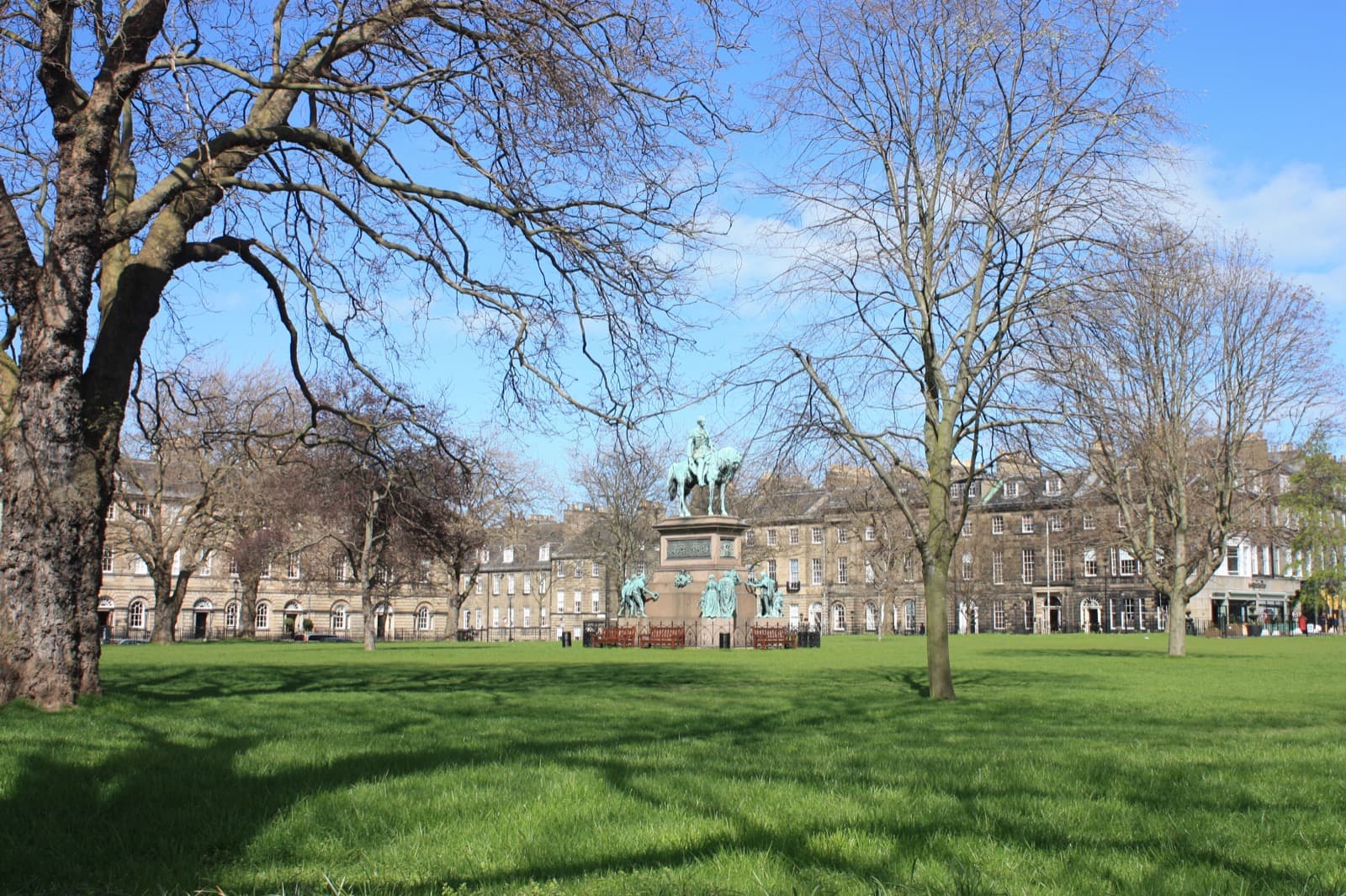
Charlotte Square: The Palace Front Where Edinburgh's Grid Resolves
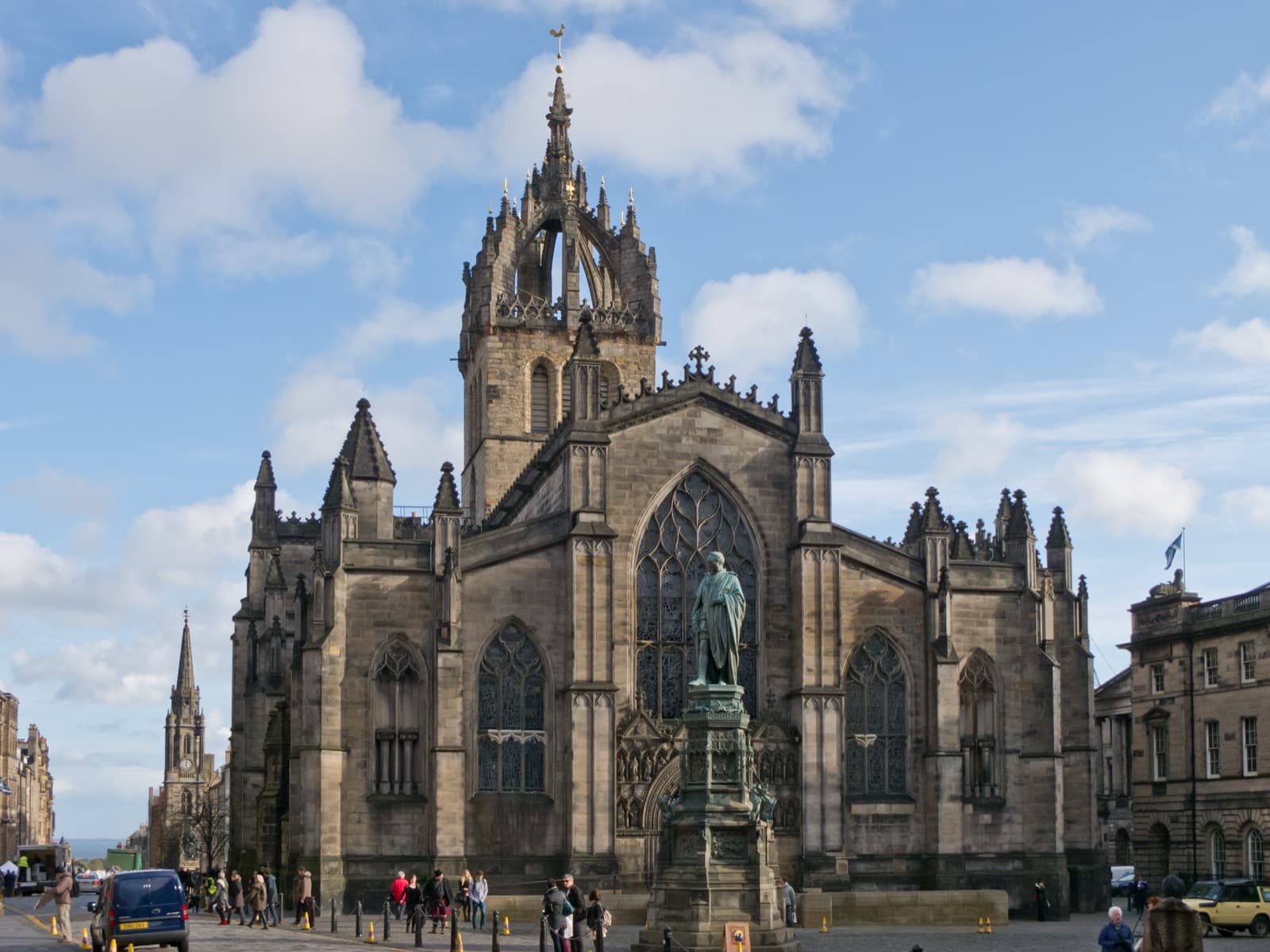
Saint Giles' Cathedral: Where the Royal Mile's Whole Story Turns
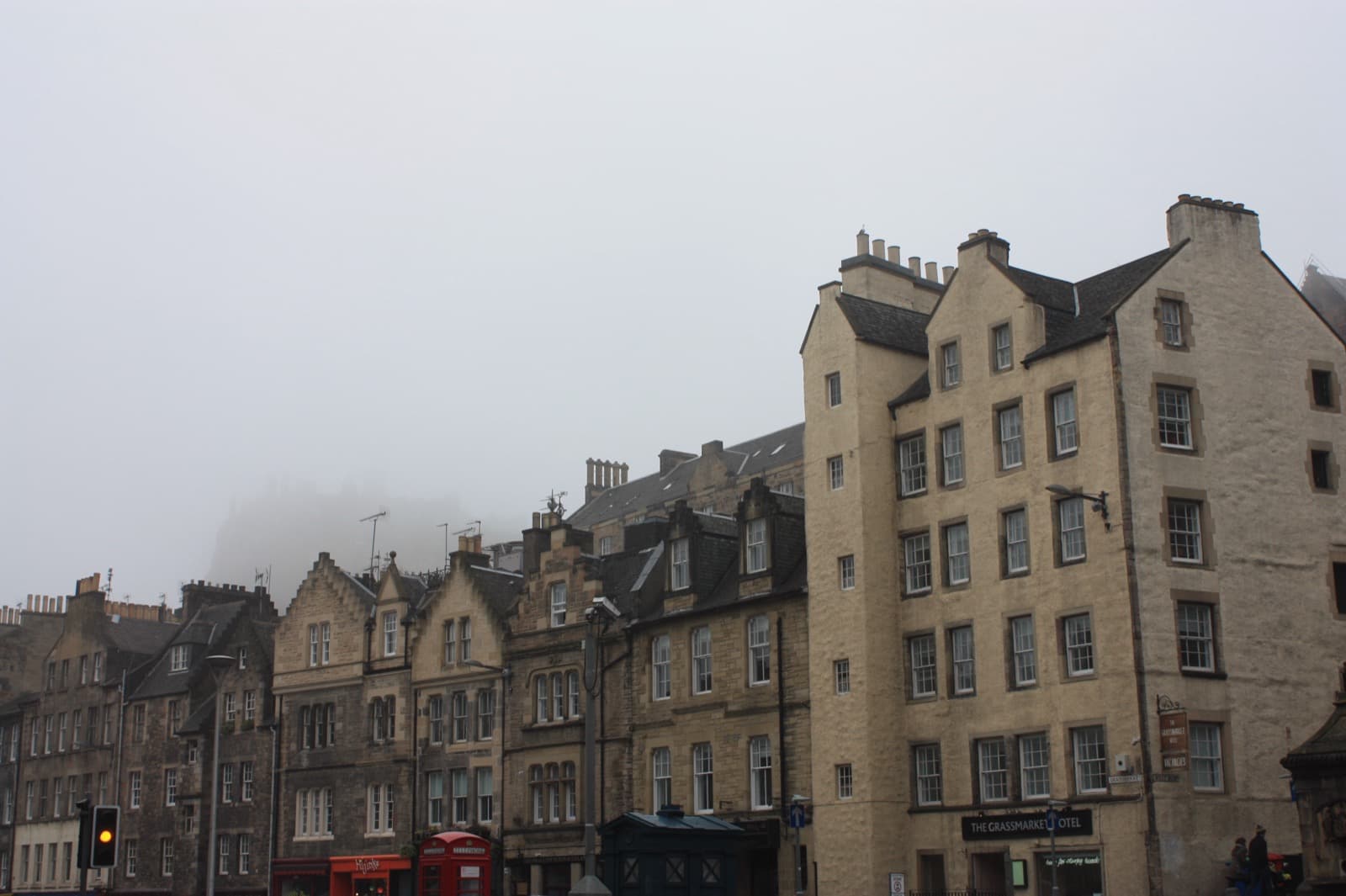
The Grassmarket: Edinburgh's Execution Square and the Old Town Underworld
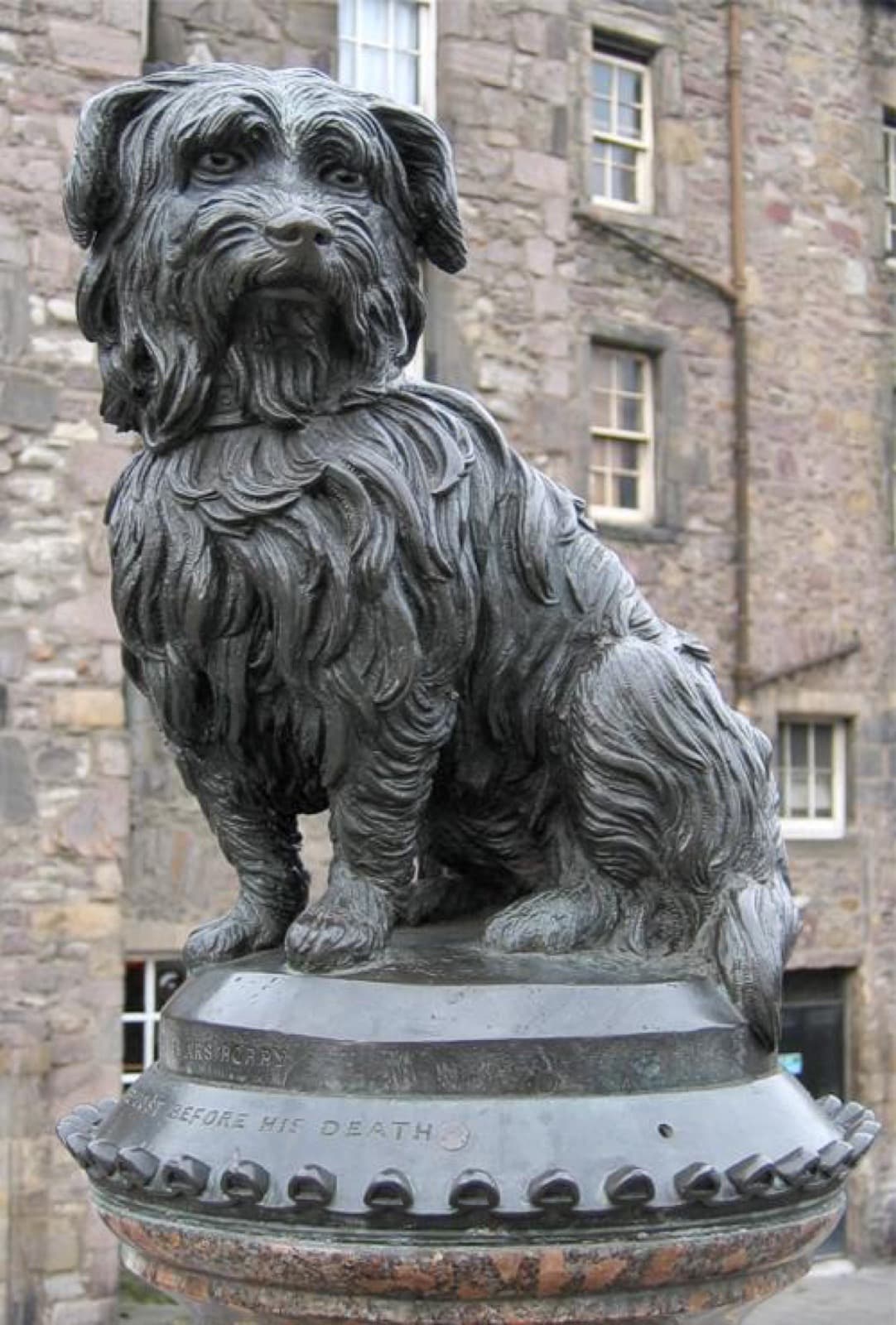
Greyfriars Bobby: The Legend, the Monument, and What the Record Actually Says