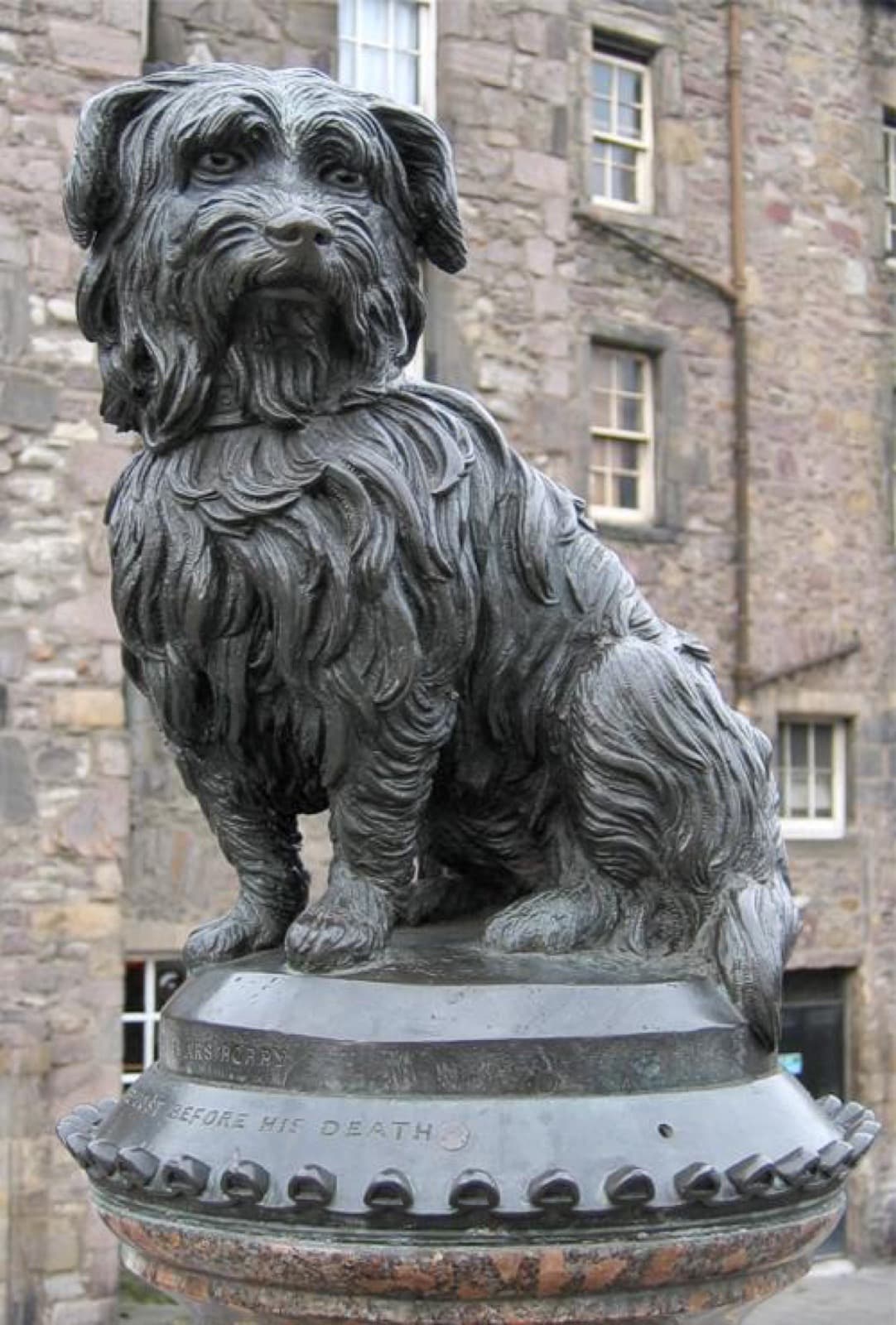
Greyfriars Bobby is a small bronze terrier on a granite drinking fountain, standing at the corner where George the Fourth Bridge meets Candlemaker Row, and the honest thing to understand while looking at it is that the fountain commemorates a story the Victorians loved more than they verified. The statue is real, erected in 1873. The dog was real. The account of a fourteen-year graveside vigil is a cherished legend, and this page is about holding both of those facts at once, calmly, while standing in front of the smallest listed monument in Edinburgh.
What you are actually looking at
The monument is modest by design. A life-sized bronze of a terrier sits atop a low granite fountain that once offered water to people at street level and dogs at the base. It was sculpted by William Brodie, a Scottish sculptor of some standing in the period, and erected in 1873. The cost was met by Baroness Angela Burdett-Coutts, one of the wealthiest and most active philanthropists of Victorian Britain, who took a particular interest in animal welfare. The fountain is often described as Edinburgh's smallest listed structure, which tells you something about how a small bronze dog came to carry official architectural protection: the city decided the legend attached to it was worth preserving as heritage.
Directly behind you is Greyfriars Kirkyard, the churchyard the story hinges on. That geography matters. The whole tale depends on a dog choosing to remain within sight of a specific grave, and here the grave and the monument sit within a stone's walk of each other. When you visit, you are standing at the seam where a private grief was turned into a public emblem.
The story the Victorians told
Hear a stop from this walk
The Cowgate: The Sunless Street and the Anatomists
The version that made Bobby famous runs like this. Bobby was a terrier who lived from roughly 1855 to 1872. He belonged to John Gray, a night watchman with the Edinburgh City Police, a man whose job was to walk the cold streets after dark. Gray died on 15 February 1858 and was buried in the kirkyard behind the fountain. By the telling, Bobby then kept vigil at his master's grave for about fourteen years, refusing to leave, until his own death on 14 January 1872. Local people fed him. The tale, in its most quoted form, makes Bobby a Skye Terrier, the small long-haired Highland breed, and treats his loyalty as unbroken across a decade and a half.
It is a genuinely moving story, and it is worth understanding why it took hold. Victorian Britain prized loyalty, duty, and sentiment about animals, and a small dog mourning a poor policeman for fourteen years condensed all three into a single image. The statue, the fountain, and eventually books and films followed. The story became a fixed point in how the city presents itself.
Where the legend parts from the record
Here is the part most walking tours skip. The fourteen-year vigil is not settled fact, and serious researchers have questioned it closely.
The most thorough skeptic is the writer Jan Bondeson, a historian and lecturer at Cardiff University, who examined the tale in detail and published his findings around 2011. Bondeson catalogued more than sixty documented cases of loyal cemetery dogs across nineteenth-century Europe, a pattern common enough that it undercuts the idea of Bobby as a singular miracle. He argued the Edinburgh version may blend more than one animal, and that the story served commercial interests: a graveyard dog drew visitors, and visitors were good for the people who ran the kirkyard and the nearby eating houses. A more recent book has even argued that Bobby may have been a different breed than the Skye Terrier of the popular telling.
None of this means someone invented the whole thing from nothing. A dog associated with the kirkyard clearly existed, was fed by locals, and became well known enough that a leading philanthropist paid for a monument within a year of its death. What the scrutiny does mean is that the precise fourteen-year, one-master, unbroken-vigil biography is a Victorian construction laid over a thinner set of facts. Loving the story is fine. Mistaking it for a verified record is where the trouble starts, and standing at the fountain is exactly the place to keep that distinction clear.
The one thing to understand while you are here
If you take one idea away from this corner, let it be this: Greyfriars Bobby is a monument to how a city chooses its own myths. The bronze is not really a record of a dog. It is a record of what nineteenth-century Edinburgh wanted to believe about loyalty, and of a philanthropist wealthy enough to cast that belief in metal and set it on a public street. That is a more interesting thing to look at than a simple tale of a faithful pet, because it is true, and because it is still working. People still leave sticks at the base. The tradition of rubbing the statue's nose, which has worn the bronze bright, is itself a modern habit layered onto an older legend, one more coat of story on a monument built from story.
You will hear other threads here too. Certain graves in the kirkyard behind you, including that of the poet William McGonagall and a headstone reading Thomas Riddell, are popularly tied to the Harry Potter books. That, like Bobby's vigil, is folklore draped over a genuine old burial ground. The kirkyard is real and centuries deep. The associations are recent decoration. Treating them separately is the whole discipline of visiting a place like this well.
Walk the ground it belongs to
Greyfriars Bobby makes far more sense when you reach it in sequence rather than as a standalone photo stop. It sits at the emotional turn of a longer route through the darker layer of the Old Town: the Grassmarket execution square, the National Covenant signed in Greyfriars Kirk, the Covenanters penned through a winter in the kirkyard, and the sunken Cowgate tied to the Burke and Hare murders. Arriving at the little bronze dog after that heavier ground changes how it reads. It becomes the city's gentlest legend set against its grimmest history.
Roamer's self-guided audio tour "Grassmarket & the Closes: The Old Town Underworld" walks all of it at your own pace, with no group, no schedule, and no tip pressure, and it treats Bobby exactly as this page does: with affection and with honesty. Plan the wider visit through our guide to Edinburgh walking tours, or browse everything on offer in Edinburgh.
Sources
- Greyfriars Bobby Fountain, Wikipedia. Basic monument facts: sculptor William Brodie, erection in 1873, funding by Baroness Angela Burdett-Coutts.
- The Story of Greyfriars Bobby, Historic UK. The traditional Victorian account of John Gray and the fourteen-year vigil.
- Jan Bondeson, Cardiff University historian, research published around 2011. The scholarly case that the vigil is a shaggy-dog story, with more than sixty comparable European cemetery-dog accounts.
- The remarkable tale of Greyfriars Bobby, The Scotsman. John Gray as Edinburgh City Police night watchman, his death on 15 February 1858, and the Skye Terrier tradition.
Ready to experience it?
Grassmarket & the Closes: The Old Town Underworld
90 min · 2 km · moderate
More from Edinburgh
Explore more at your own pace.
Two Cities on Two Ridges: How to Read Edinburgh's Old and New Towns
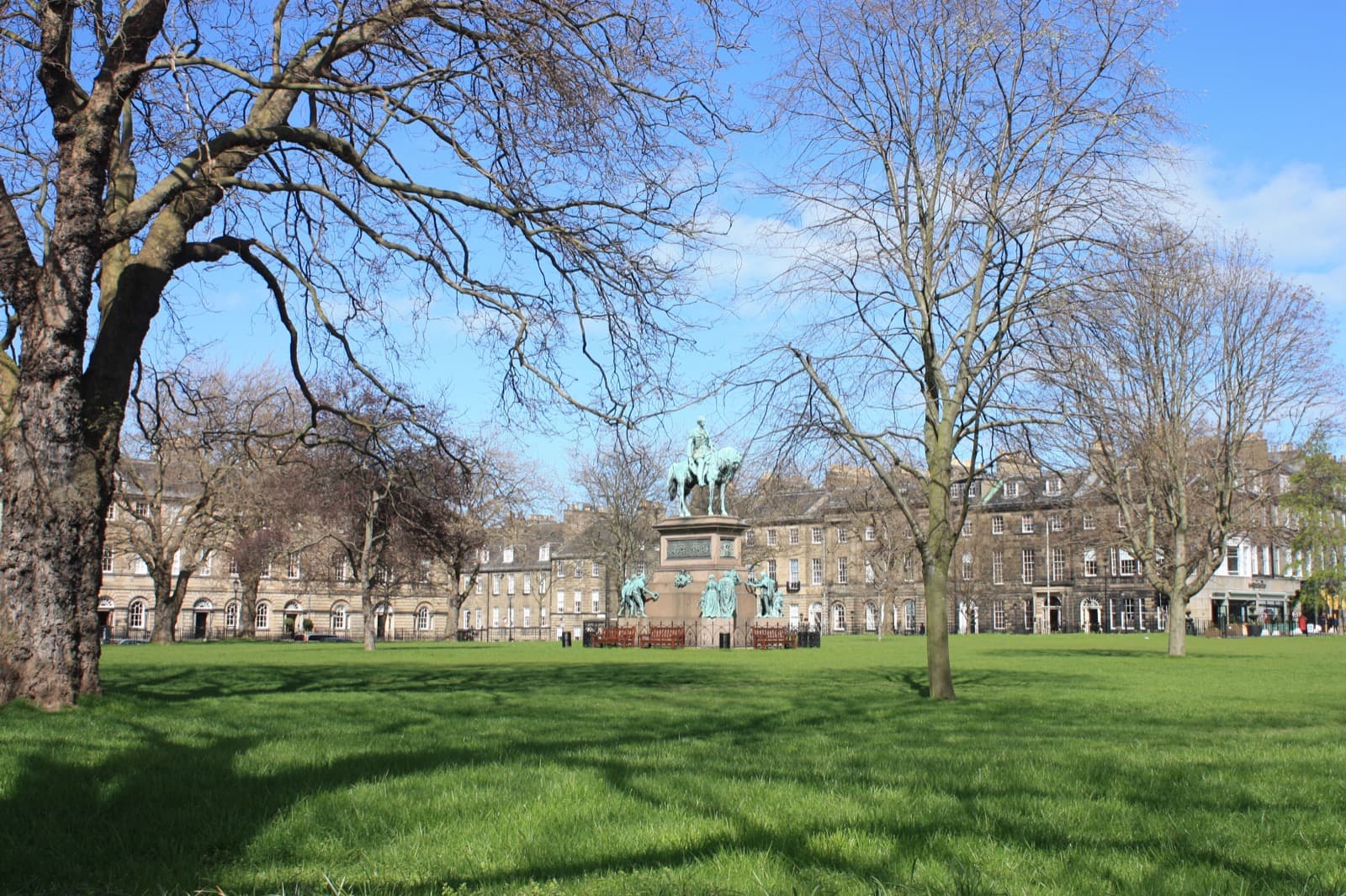
Charlotte Square: The Palace Front Where Edinburgh's Grid Resolves
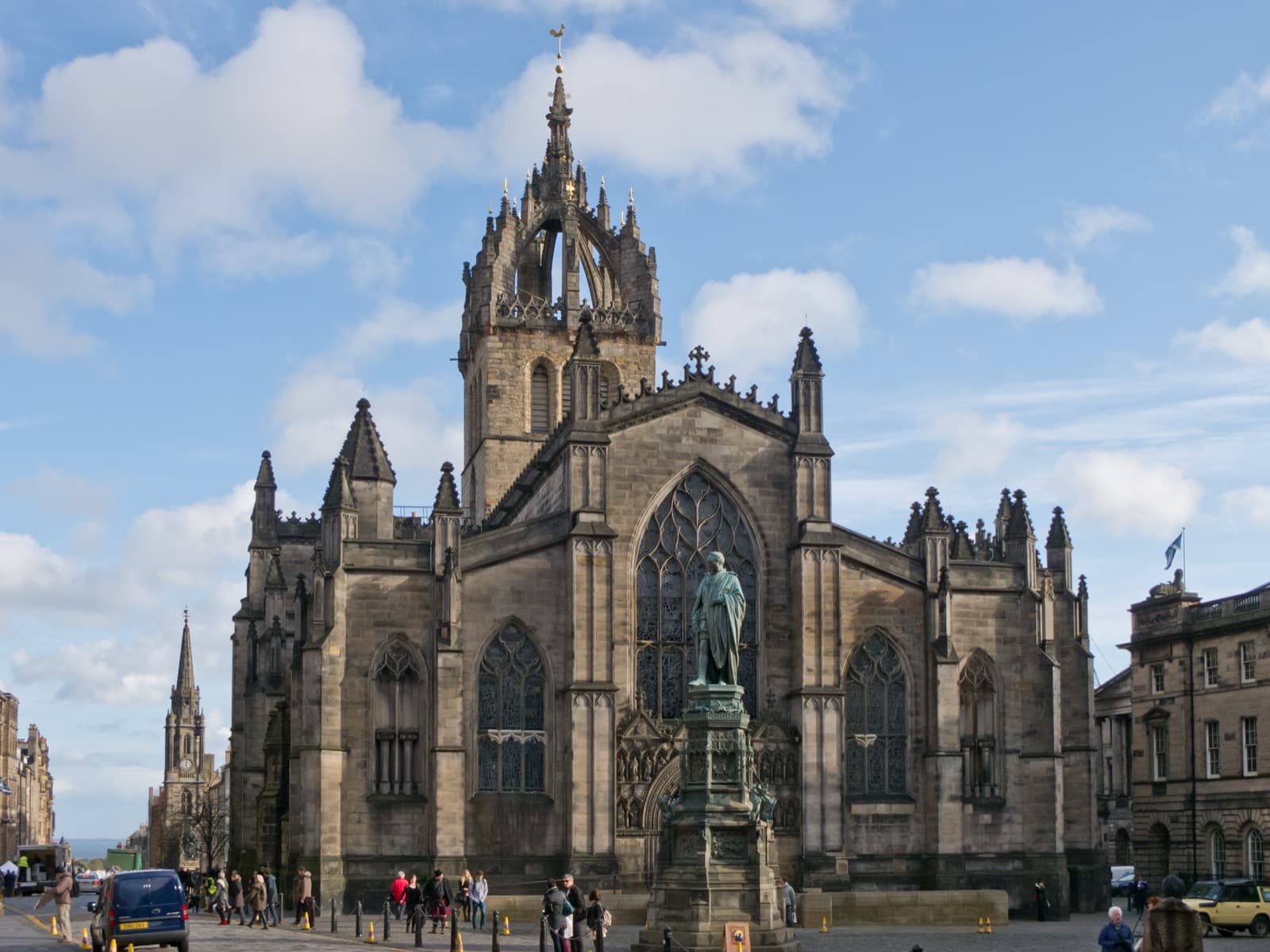
Saint Giles' Cathedral: Where the Royal Mile's Whole Story Turns
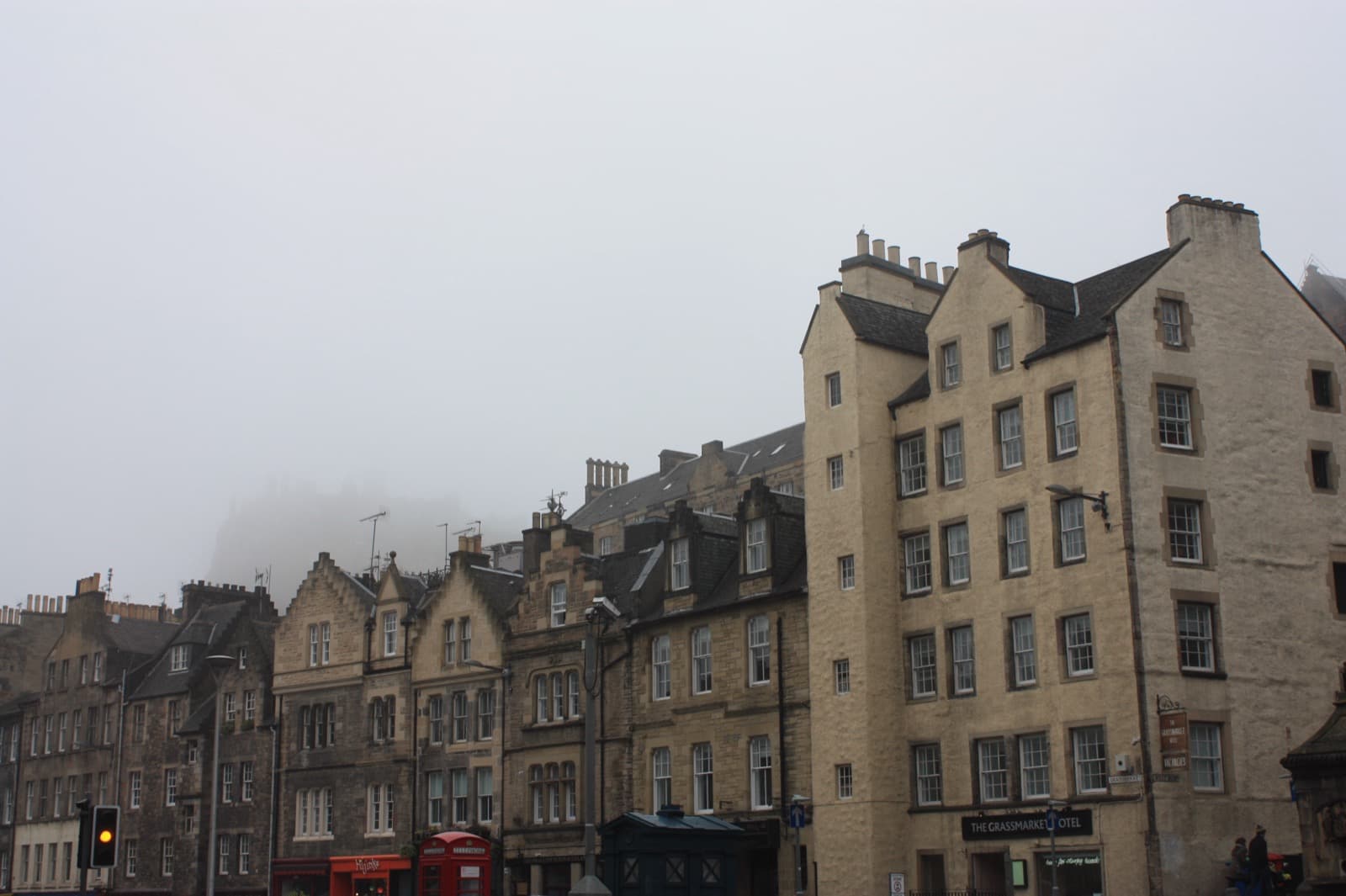
The Grassmarket: Edinburgh's Execution Square and the Old Town Underworld
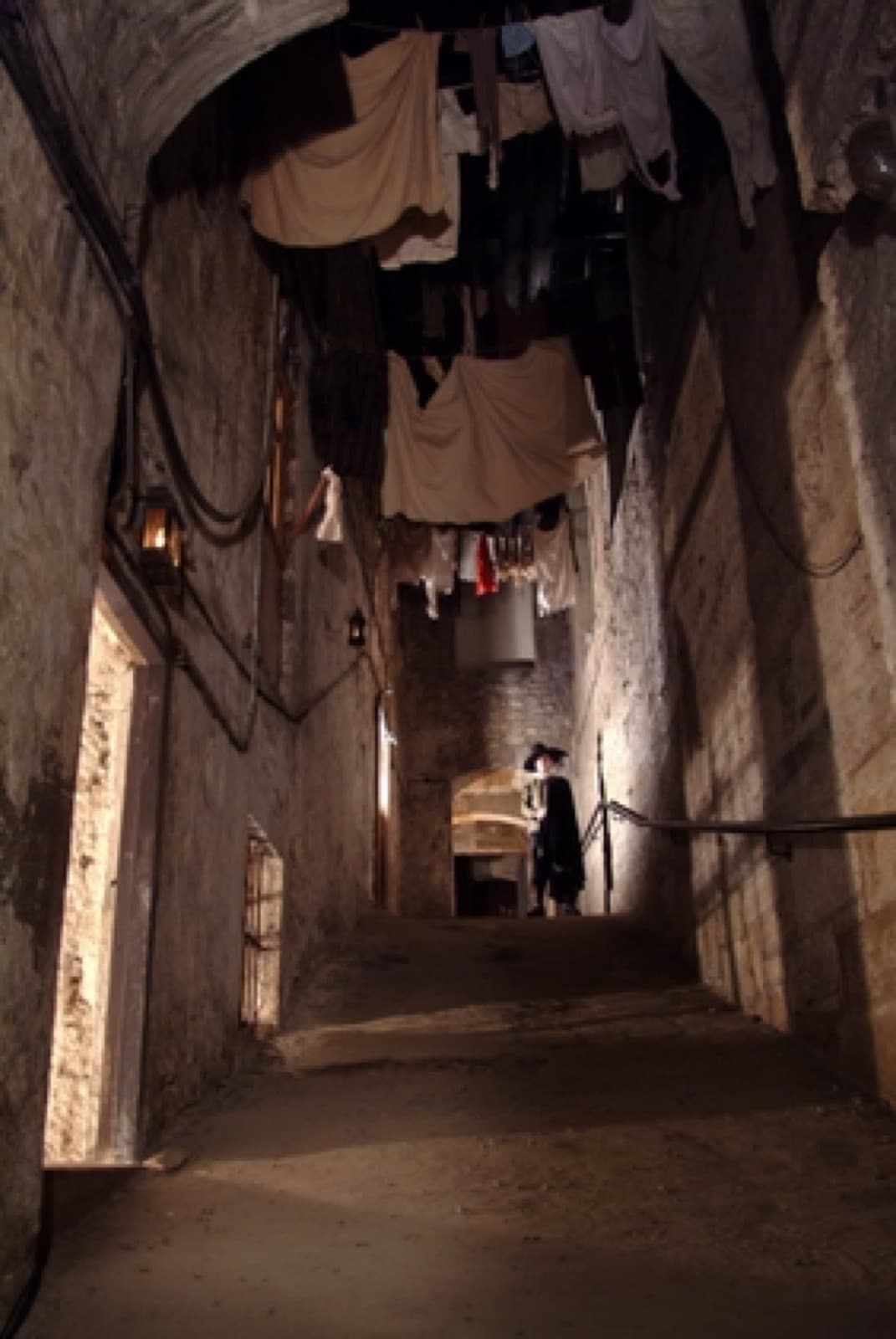
The Real Mary King's Close: The Edinburgh Street That Was Buried Alive