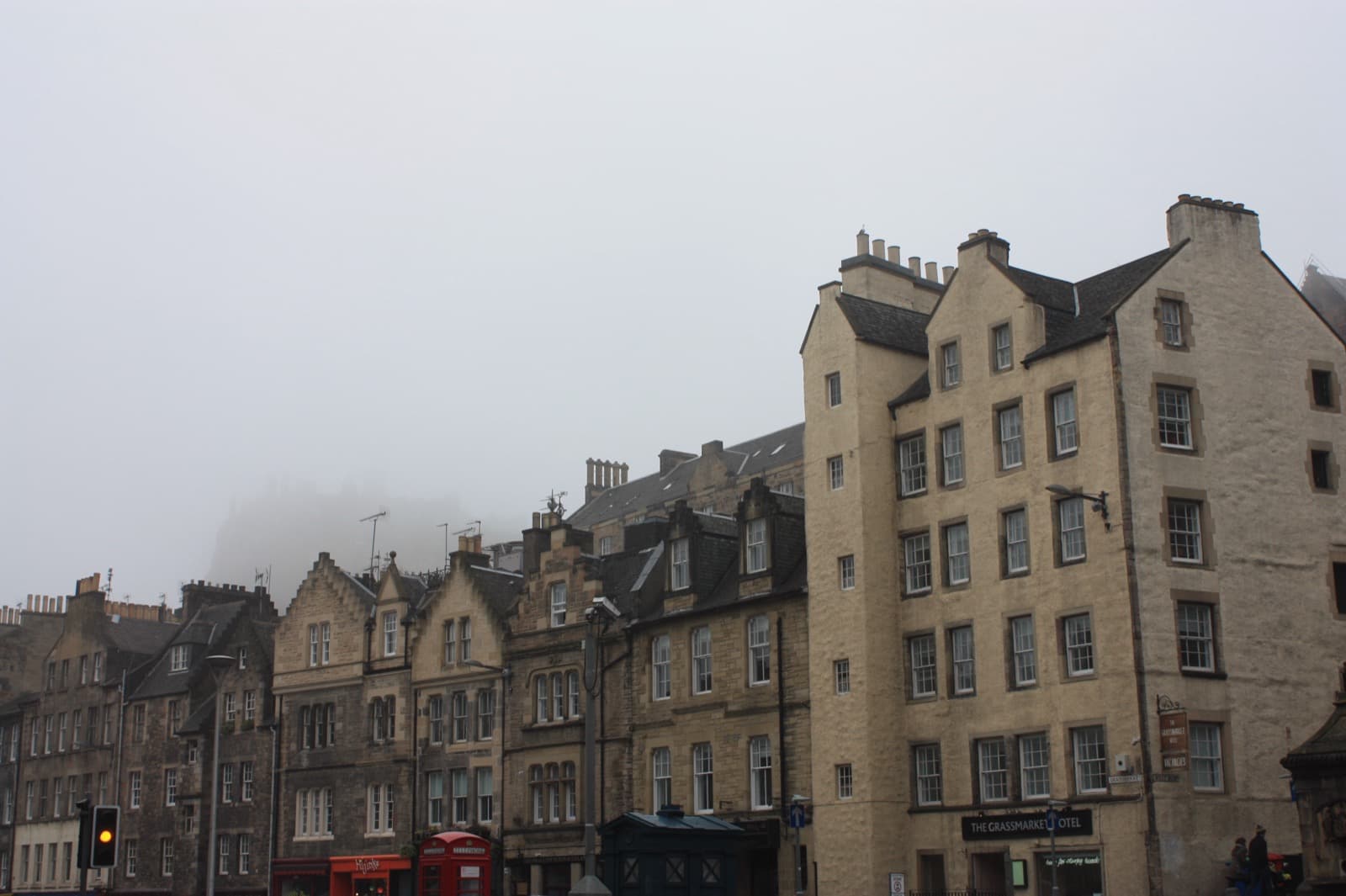
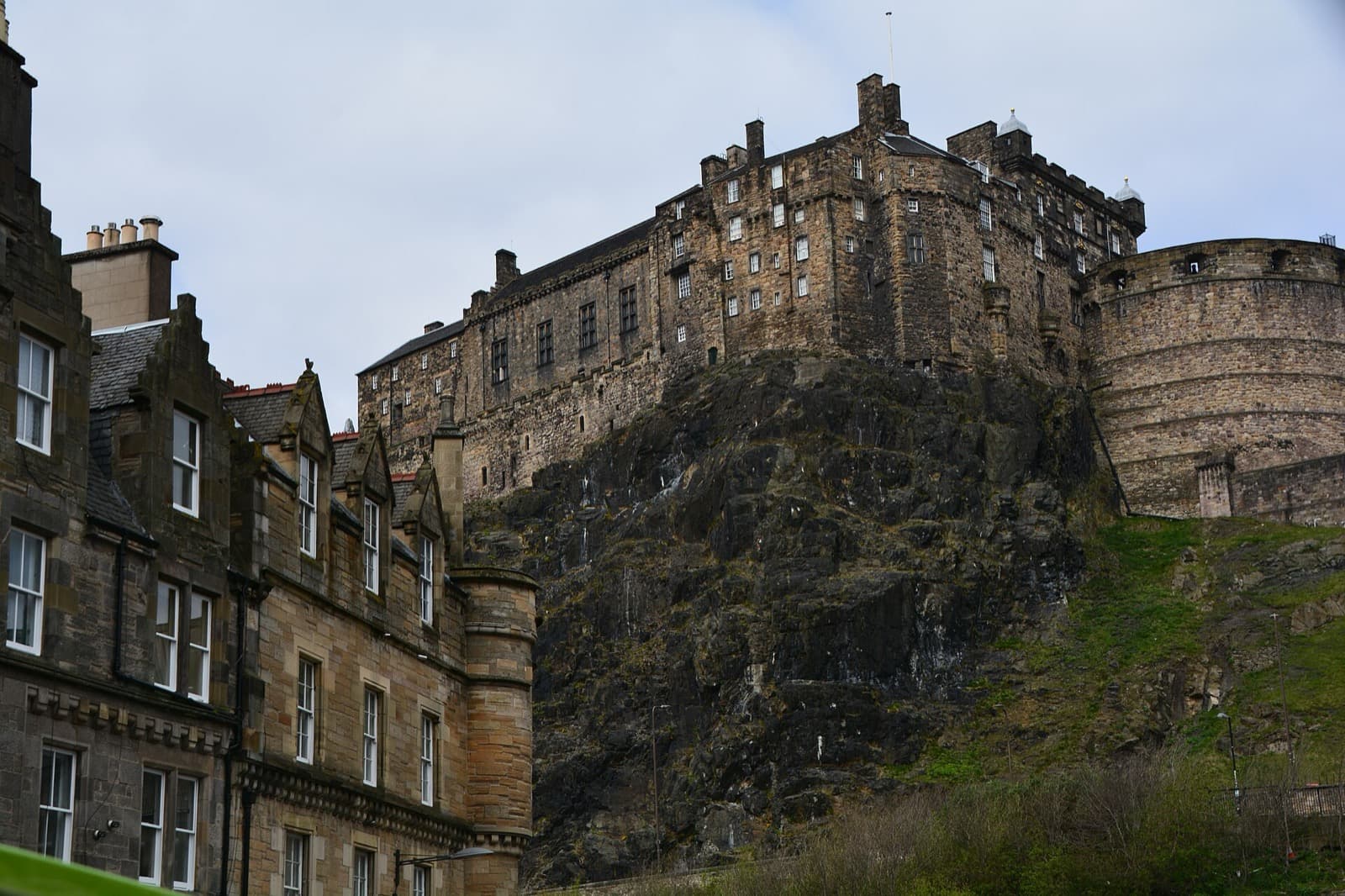
The Grassmarket is a broad open square at the south-west foot of the castle rock, and for close to two centuries it was where Edinburgh did its public hanging. Below the crag where the castle rides, the gallows stood and the city executed its condemned in the open, as a spectacle of law. That single fact is the doorway into a self-guided walk that reads the Old Town's second story, older and grimmer than the painted tourist spine above it. Start in the square, look underfoot, and the whole route opens: an execution ground, a churchyard where a nation signed its defiance, a beloved dog, a fairy-tale school, and a sunless street bound up with real murder.
A marketplace that was also a killing ground
The Grassmarket has been one of the city's chief marketplaces since fourteen seventy-seven, first a horse and cattle market, a place of noise and bargaining. The trade and the executions ran side by side. Public hangings continued here until seventeen eighty-four, the last man hanged in the square being one recorded as James Andrews, after which the city moved its executions up the hill.
The dead who matter most to this walk are the Covenanters, Presbyterian Scots who refused to accept the king's authority over their Church. More than one hundred of them were put to death on this ground between sixteen sixty-one and sixteen eighty-eight, in the years remembered as the Killing Time. These were people executed for their faith, and the tour treats them as people rather than as a thrill. Two markers hold their memory in the paving. A circular memorial was raised here by public subscription in nineteen thirty-seven, funded by the citizens rather than the state. And during a streetscape scheme in two thousand nine and two thousand ten, a dark shadow of the old gibbet was set into the stones to show exactly where the gallows once stood. Both are easy to walk straight past, which is why the walk asks you to look down.
You will also hear the tale of Margaret Dickson, hanged in seventeen twenty-four and said somehow to have survived. That story belongs more to legend than to certain record, and the tour says so plainly. Holding the beloved story and the documented fact apart, without discarding either, is the discipline that runs through the entire route.
From the square, the layers begin to separate
Hear a stop from this walk
The Cowgate: The Sunless Street and the Anatomists
Walk on and the tension the Grassmarket sets up plays out stop by stop. The steep curve of Victoria Street, one of the most photographed corners of the city, looks medieval but was built between about eighteen twenty-nine and eighteen thirty-four under Edinburgh's Improvement Act of eighteen twenty-seven, designed by the architect Thomas Hamilton in an Old Flemish style. It replaced the older twisting West Bow, and its two-level terrace, with an upper walkway above the shops, is part of why the eye loves it. You will hear it called the inspiration for Diagon Alley, but the author J. K. Rowling stated in twenty twenty-two that no real street inspired it and that she had never even seen Victoria Street when she created it. Popular story, layered over an older one.
The heart of the walk is Greyfriars. The kirk was begun in sixteen oh two and completed in sixteen twenty, with worship first held on Christmas Day of that year, on the grounds of a Franciscan friary dissolved around the Scottish Reformation of fifteen sixty. In sixteen thirty-eight the National Covenant was signed here, a pledge by Scots to defend their Presbyterian Church against King Charles the First and Archbishop Laud. By the kirk's own account it was first read aloud from the pulpit by Archibald Johnston of Warriston before being signed inside the church and out in the kirkyard. This is where the Grassmarket's dead were, in effect, sentenced: the movement born in this churchyard is the same one whose martyrs were hanged in the square.
The persecution becomes physical a few steps further on. After the Covenanter defeat at the Battle of Bothwell Bridge on the twenty-second of June sixteen seventy-nine, about one thousand two hundred prisoners were brought to Edinburgh, and many hundreds were penned in a makeshift open-air prison beside the kirkyard through the winter. The enclosure was bounded by the old Flodden Wall and the wall of George Heriot's School and closed by a guarded picket fence. The nearby Martyrs' Monument names Covenanters executed in those years, among them James Guthrie, James Renwick, and the Marquis of Argyll. Modern ghost tours have turned this ground into poltergeist theatre; the walk deliberately refuses that framing and gives the real prisoners the plain respect of your attention.
Legend, charity, and the anatomists' street
Not every stop is grief. At the corner of George the Fourth Bridge and Candlemaker Row stands the small bronze of Greyfriars Bobby, the terrier said to have kept vigil at his master's grave for about fourteen years. The statue was sculpted by William Brodie, erected in eighteen seventy-three, and paid for by Baroness Angela Burdett-Coutts. The tour loves the story while noting that scholars, including the writer Jan Bondeson, have questioned it, cataloguing more than sixty documented cases of loyal cemetery dogs across nineteenth-century Europe. Nearby rises George Heriot's School, founded on the bequest of a royal goldsmith to King James the Sixth, nicknamed Jinglin' Geordie, who died in sixteen twenty-four leaving just over twenty-three thousand pounds to teach the poor, fatherless children of the city. Its foundation stone was laid in sixteen twenty-eight and it opened in sixteen fifty-nine.
The route ends in the Cowgate, a sunken street the sun barely reaches, running beneath the great bridges. Fashionable by fifteen eighty-one, it had declined by the eighteenth century into one of the poorest quarters of the Old Town, bound up with the anatomy trade that supplied the city's medical school with bodies. In eighteen twenty-eight William Burke and William Hare murdered sixteen people over about ten months and sold the corpses to the anatomist Doctor Robert Knox. Burke was hanged before a crowd of about twenty-five thousand in eighteen twenty-nine and publicly dissected days later; Hare turned king's evidence and walked free. Sixteen victims, named as victims, close the walk in the same register the Grassmarket opened it.
This is a walk best taken slowly, on a weekday, at your own pace, with no group at your shoulder and no schedule pressing you along. Begin where the city did its hanging, and let the rest unfold. For more routes through the city, see our guide to Edinburgh walking tours and the full Edinburgh city page.
Sources
- Tour transcript and fact audit, "Grassmarket & the Closes: The Old Town Underworld" (Roamer): primary source for dates, figures, and the sober treatment of the Covenanters and Burke and Hare victims.
- ExecutedToday, "1784: James Andrews, the last to hang in the Grassmarket": confirms the last public Grassmarket execution.
- Wikipedia, "The Signing of the National Covenant in Greyfriars Kirkyard": the sixteen thirty-eight signing and Archibald Johnston of Warriston.
- Historic UK, "The Story of Greyfriars Bobby": the Victorian vigil legend and its commemoration.
- Wikipedia, "Burke and Hare murders" and "Cowgate": the eighteen twenty-eight murders, Doctor Robert Knox, and the sunken street's history.
Ready to experience it?
Grassmarket & the Closes: The Old Town Underworld
90 min · 2 km · moderate
More from Edinburgh
Explore more at your own pace.
Two Cities on Two Ridges: How to Read Edinburgh's Old and New Towns
Charlotte Square: The Palace Front Where Edinburgh's Grid Resolves
Saint Giles' Cathedral: Where the Royal Mile's Whole Story Turns
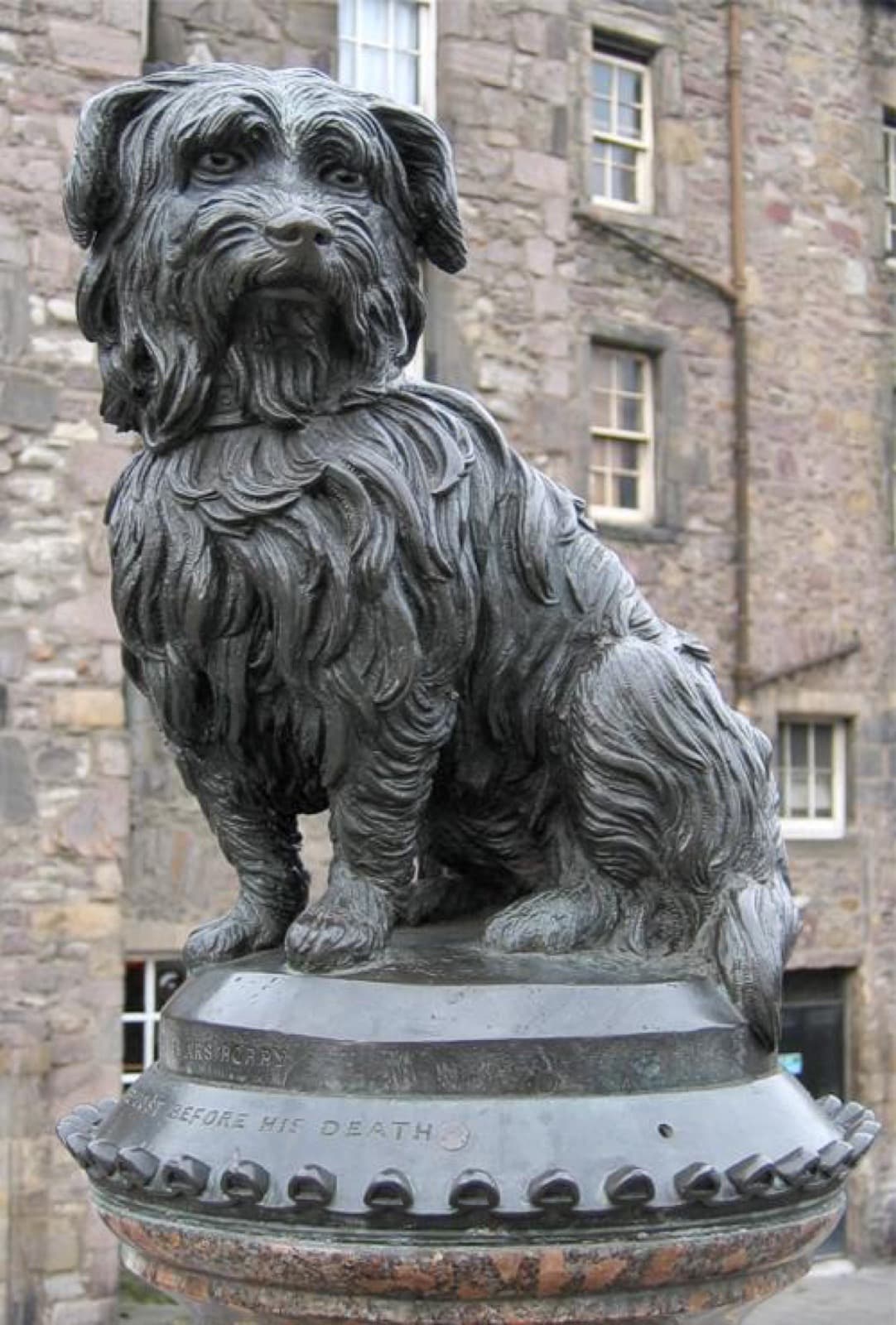
Greyfriars Bobby: The Legend, the Monument, and What the Record Actually Says
The Real Mary King's Close: The Edinburgh Street That Was Buried Alive