Charlotte Square is the point where Edinburgh's rational New Town grid stops being geometry and becomes architecture. Robert Adam took a terrace of separate houses, unified them behind one grand palace front, and turned a block of private dwellings into a single dignified building that reads the whole city's ambition in stone. Everything the New Town argued for on paper, order, hierarchy, reason imposed on a crowded medieval city, resolves here into one elegant chord at the west end of George Street.
To understand why the square matters, it helps to know what came before it. Edinburgh's Old Town had grown upward on a single ridge until it choked on its own crowding, tenements stacked storey on storey above closes that ran with sewage. When the city could hold no more, it did something few cities dared: it drained a foul artificial loch, the Nor Loch, and built a whole second city on the flat ground to the north. A design competition opened in 1766 and was won by a young architect, James Craig, then just twenty-six. His plan, finalised in 1767, was a piece of grammar as much as a map. A straight spine, George Street, ran along the crest of the ridge, closed at each end by a square. St Andrew Square anchored the east. Charlotte Square anchored the west. This was the built expression of the Scottish Enlightenment, the same age of reason that produced David Hume and Adam Smith, and UNESCO inscribed the whole contrast between the tangled Old Town and the ordered New Town as a World Heritage Site in 1995.
What Robert Adam actually did
Craig gave the New Town its bones. Adam gave Charlotte Square its face. His design for the north side, drawn in 1791, does something quietly radical. A Georgian terrace was normally a row of individual house fronts, each proprietor building to the party wall and expressing his own doorway and windows. Adam refused that. He composed the entire north side as though it were the elevation of a single great palace, with a central pediment, projecting end pavilions, and a rhythm of columns and windows that ties the separate houses into one continuous facade. This is what architects call a palace front, and Charlotte Square is widely regarded as one of the finest Georgian set-pieces in Europe.
There is a poignancy to the timing that is worth carrying with you as you stand in the square. Robert Adam died in 1792, the year after he drew the design and just as construction began. He never saw his finest square completed. The terrace you are looking at is a posthumous masterpiece, executed by others to a dead man's drawing, which is a fitting emblem for a whole city that so often built to ideals it could not quite finish in its own lifetime.
Reading the square in stone
Hear a stop from this walk
St Andrew Square: The Banker's Square and the Reweighed Column
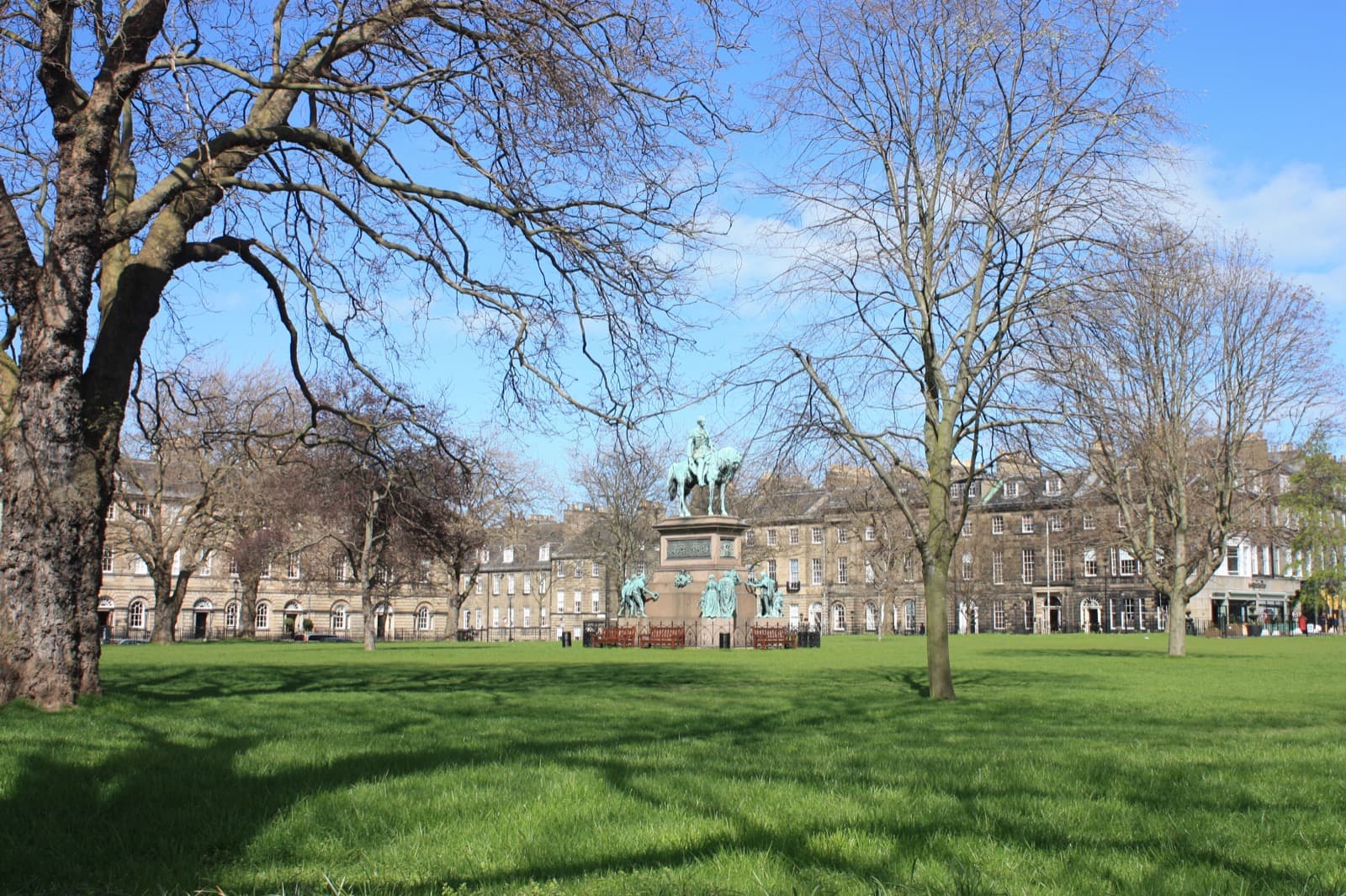
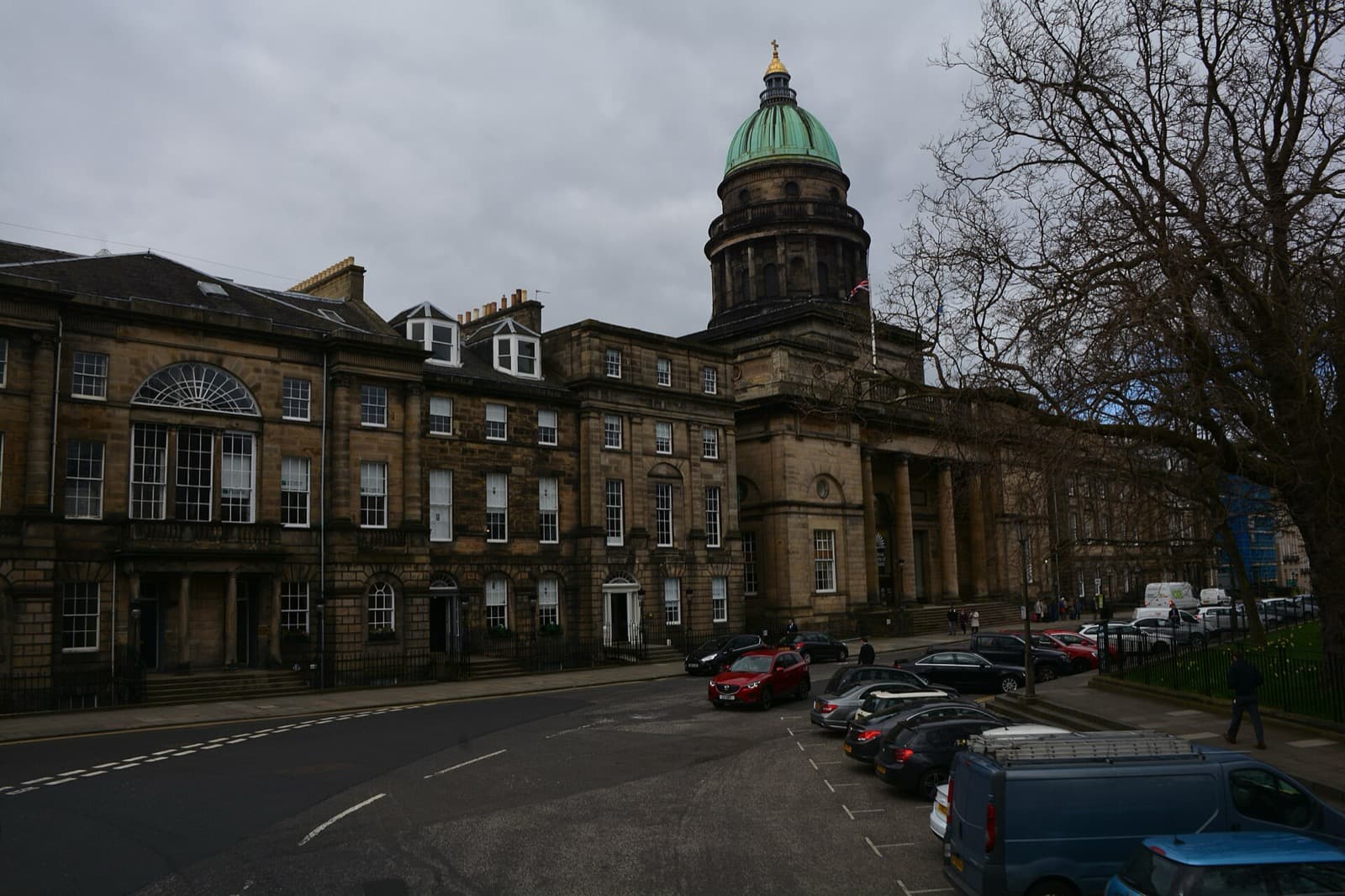
Stand in the garden at the centre and you can read the New Town's entire hierarchy without walking a step. At number six on the north side is Bute House, the official residence of the First Minister of Scotland, so the finest domestic facade in the city still houses the head of Scotland's government. Closing the west side is West Register House, a domed building that began life in 1811 as St George's Church, designed by Robert Reid, and was converted into a records office in 1964. The square therefore holds a church that became an archive, a private terrace that became a seat of power, and a green garden at the core, with an equestrian statue of Prince Albert at its heart that Queen Victoria herself unveiled in 1876.
That is the composed, resolved city: the palace front, the church-turned-archive, the official residence, the ordered square. It is the moment James Craig's rational plan stops being a diagram and becomes a place you would want to live. To see how it fits the rest of the plan, it helps to walk the full route rather than arrive here cold, which is exactly what the tour does. See the wider context of Edinburgh walking tours for how this square sits among the city's other layers.
The rest of the argument
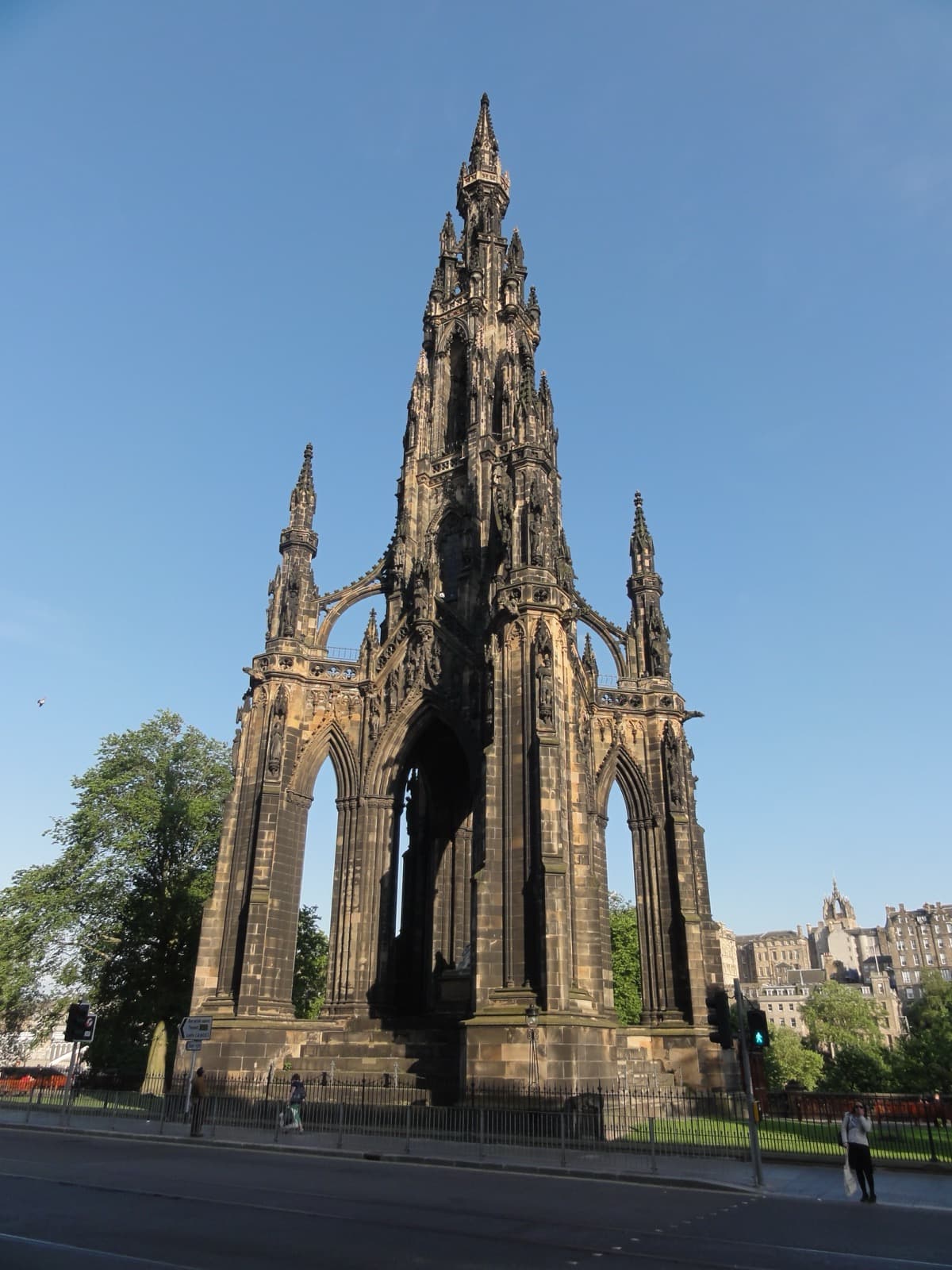
Charlotte Square is the climax, but the New Town tells its story across seven stops, and the square lands harder when you have watched the argument build. The tour opens on Calton Hill, a low volcanic rise crowned with the National Monument, a deliberate replica of the Parthenon begun in 1826 and abandoned in 1829 when the money ran out, standing ever since as a dozen bare columns. From up there you see the whole thesis at once: the medieval Old Town on one ridge, the Georgian grid on the other. The route then drops to the Scott Monument, a Victorian Gothic spire of sixty-one metres raised to the novelist Sir Walter Scott, honest enough to admit it is the second-largest monument to a writer in the world, not the first.
The walk does not flinch from the harder history either. At St Andrew Square, the tour stops at the Melville Monument, whose column carries a statue of Henry Dundas, the First Viscount Melville. In 1792 Dundas pressed for the abolition of the Atlantic slave trade to be gradual rather than immediate, and this is widely held to have delayed abolition, which was not achieved until 1807. In October 2021 the city installed a permanent plaque recording that role and dedicating it to the memory of the enslaved. The elegance of the grid and the cost that helped pay for it stand in the same square.
By the time you reach Charlotte Square, you have earned the resolution. And the tour does not end at the facade. It ends inside it, at the Georgian House at number seven, restored by the National Trust for Scotland down to the below-stairs kitchen, where you finally step through one of Adam's unified fronts and see the rational city from within, room by room, servants' quarters and all. Its first owner, John Lamont, bought that door in 1796 for eighteen hundred pounds.
The point of walking it yourself, at your own pace with no group at your shoulder, is that the New Town rewards lingering. You can sit on a bench in the square as long as you like, read the palace front slowly, and let the geometry of the whole plan settle. Start from the city page for Edinburgh and let Charlotte Square be the chord the rest of the walk builds toward.
Sources
- Charlotte Square, Wikipedia. Design history, Robert Adam's 1791 north side, Bute House, and the square's place in the First New Town.
- West Register House, Wikipedia. Its origin as St George's Church (1811, Robert Reid) and 1964 conversion to a records office.
- The Georgian House, Edinburgh, National Trust for Scotland. Restoration of number seven Charlotte Square and its below-stairs interior.
- New wording for plaque at Melville Monument agreed, City of Edinburgh Council. The plaque recording Henry Dundas's role in delaying abolition of the Atlantic slave trade.
- James Craig (architect), Wikipedia. The 1766 competition and 1767 plan for the New Town grid.
Ready to experience it?
New Town: The Enlightenment Grid
115 min · 3 km · moderate
More from Edinburgh
Explore more at your own pace.
Two Cities on Two Ridges: How to Read Edinburgh's Old and New Towns
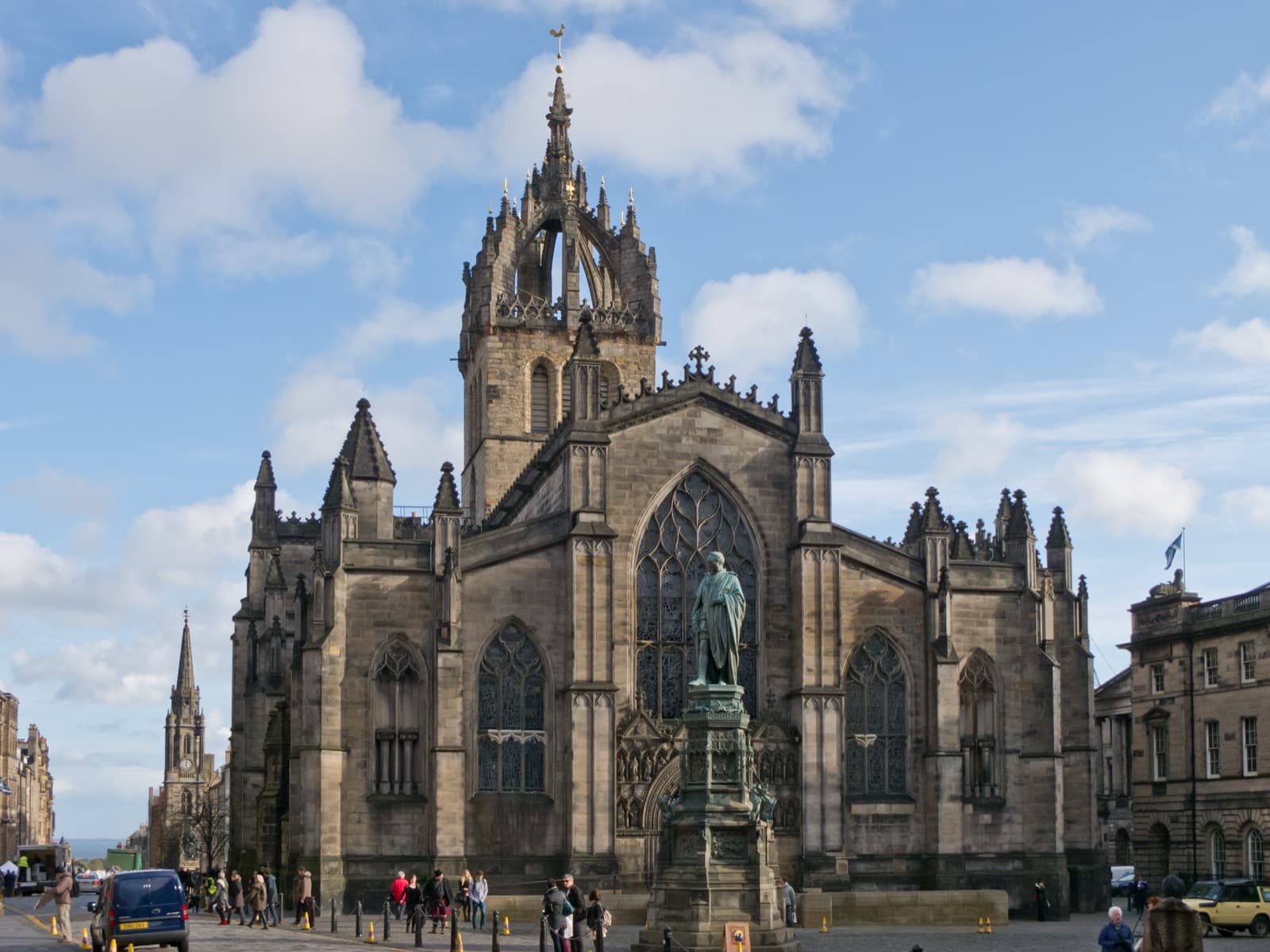
Saint Giles' Cathedral: Where the Royal Mile's Whole Story Turns
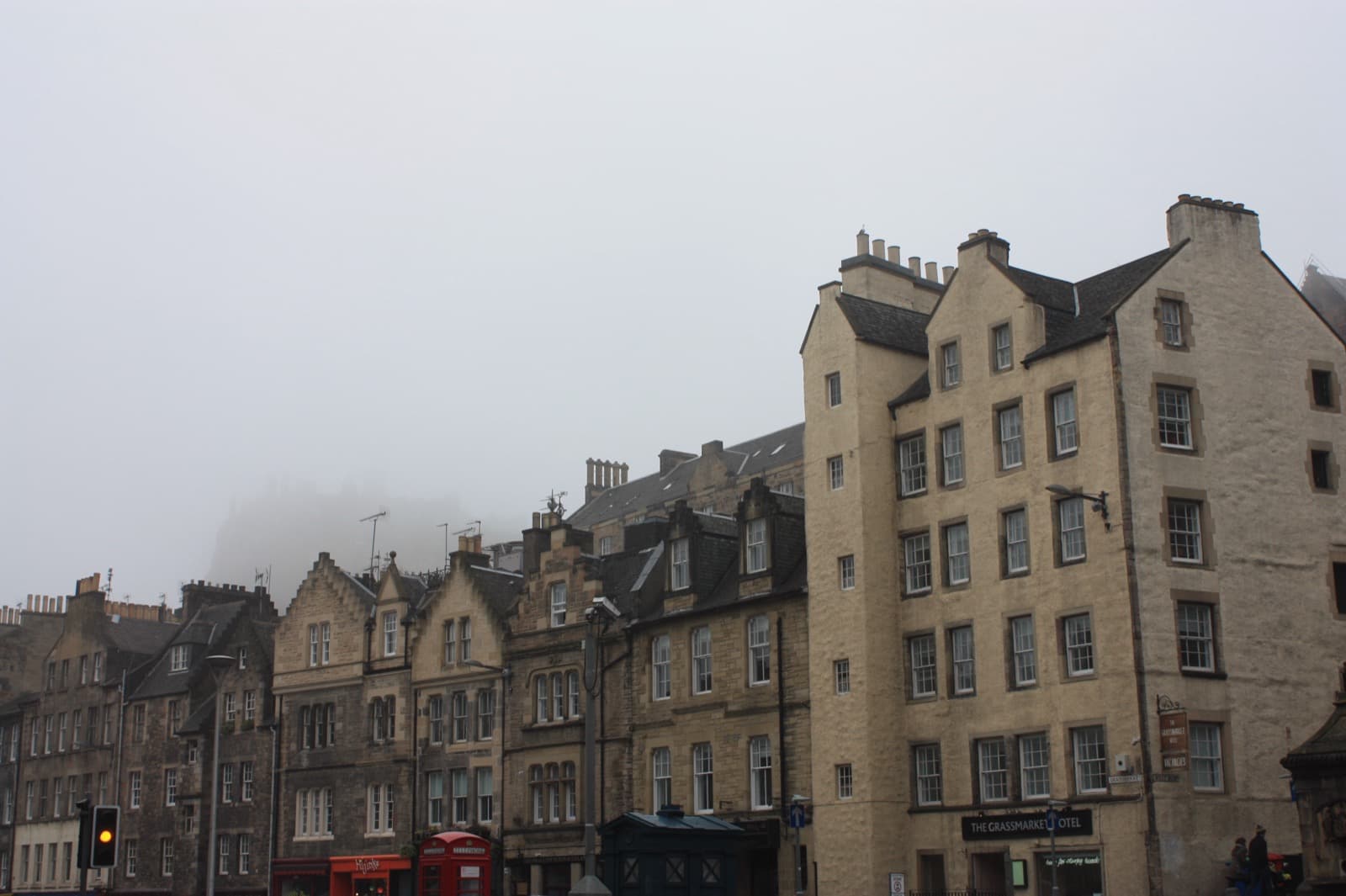
The Grassmarket: Edinburgh's Execution Square and the Old Town Underworld
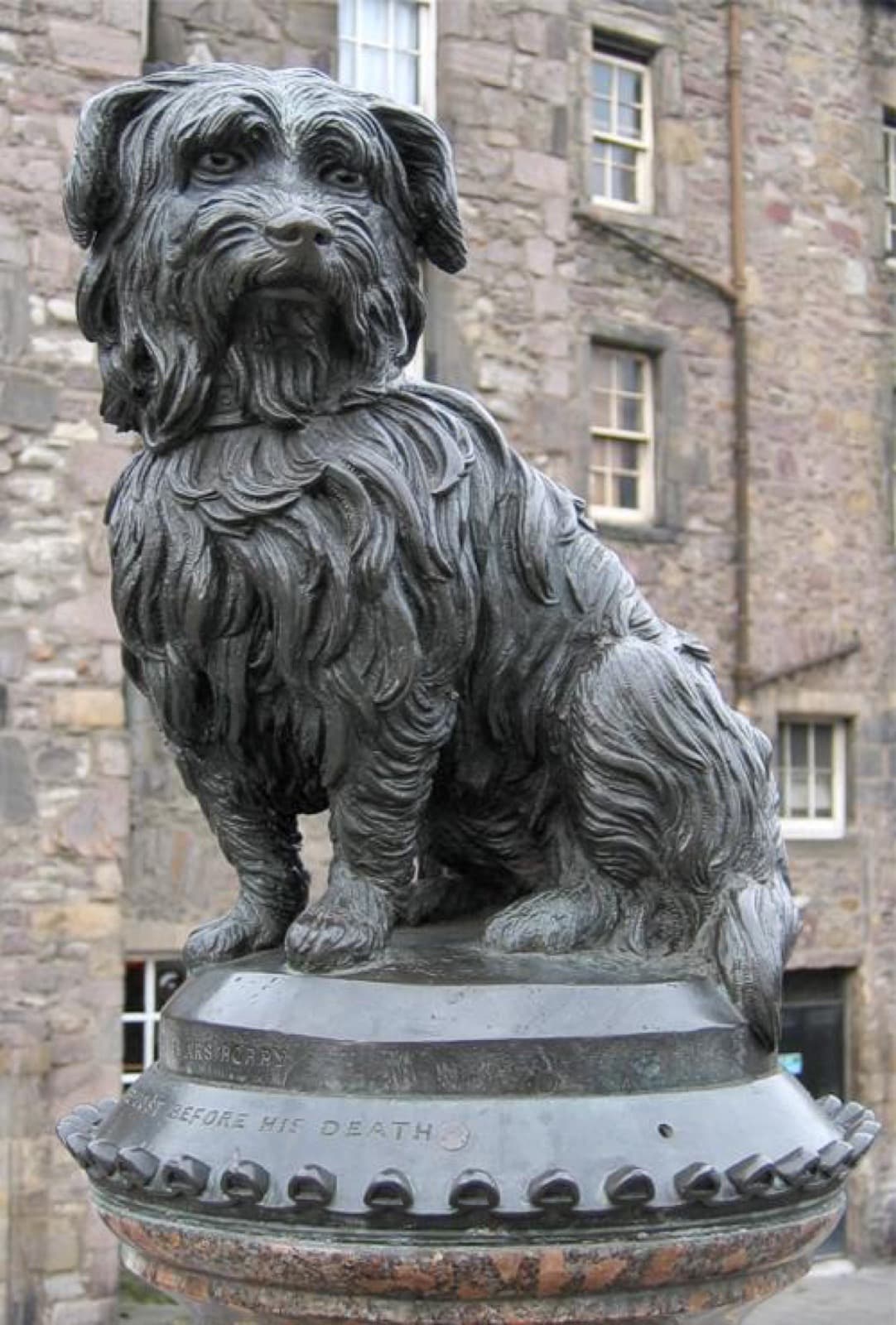
Greyfriars Bobby: The Legend, the Monument, and What the Record Actually Says
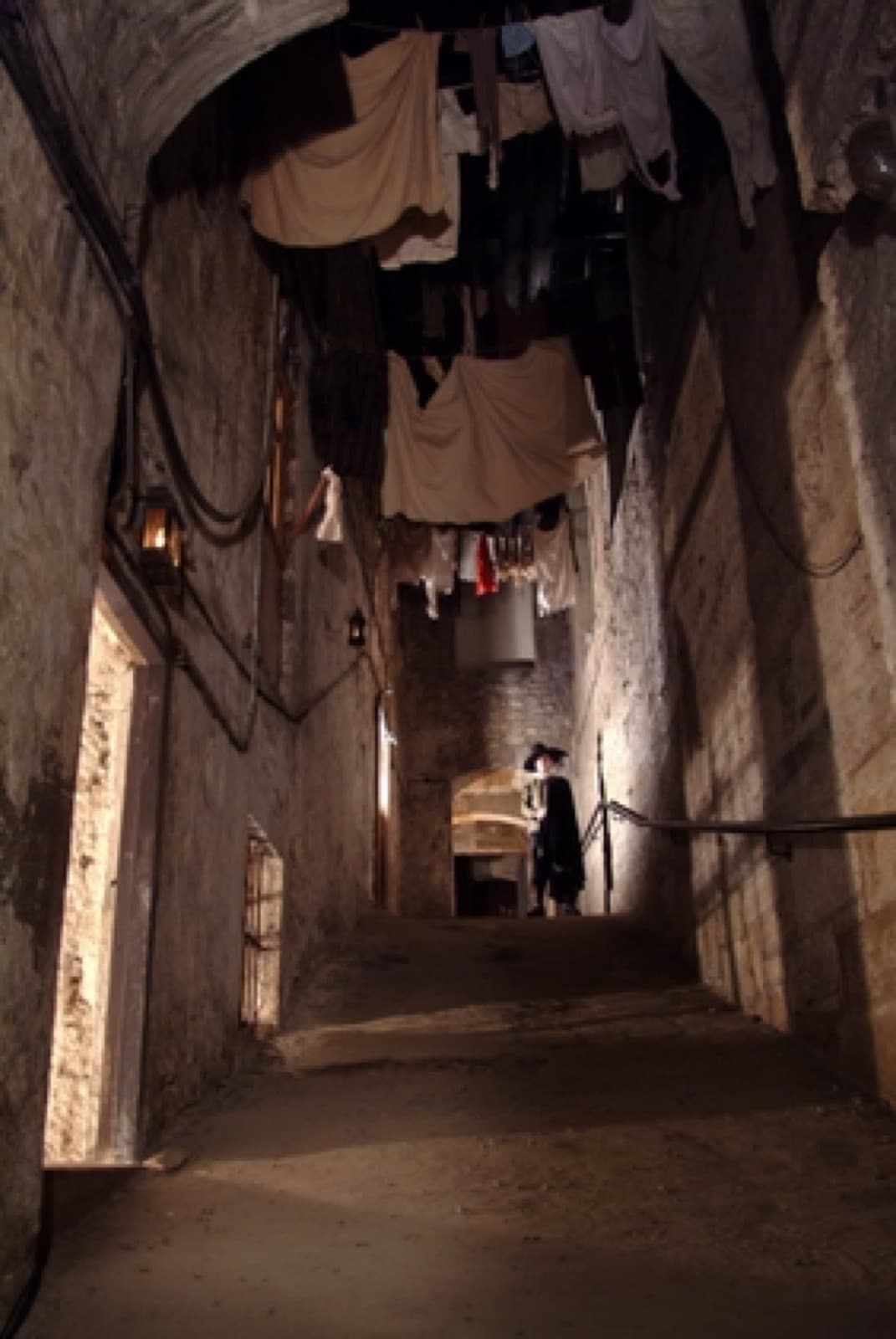
The Real Mary King's Close: The Edinburgh Street That Was Buried Alive