The Ponte de Santa Clara is a threshold. It carries you from Coimbra's lower town across the Mondego River to the far bank, the left bank, where a Gothic convent was slowly drowned by water and a murdered noblewoman became the center of Portugal's most retold tragedy. Stand on the bridge and the crossing itself does not look like much: a low concrete span, useful traffic, a river that reads as calm and ordinary. That plainness is the point. The whole story waiting on the other side turns on the fact that this gentle-looking water is the patient, unstoppable agent behind everything downstream. Before you cross, it is worth learning to read the river, because the bridge is where the reading begins.
A young surface on a very old habit
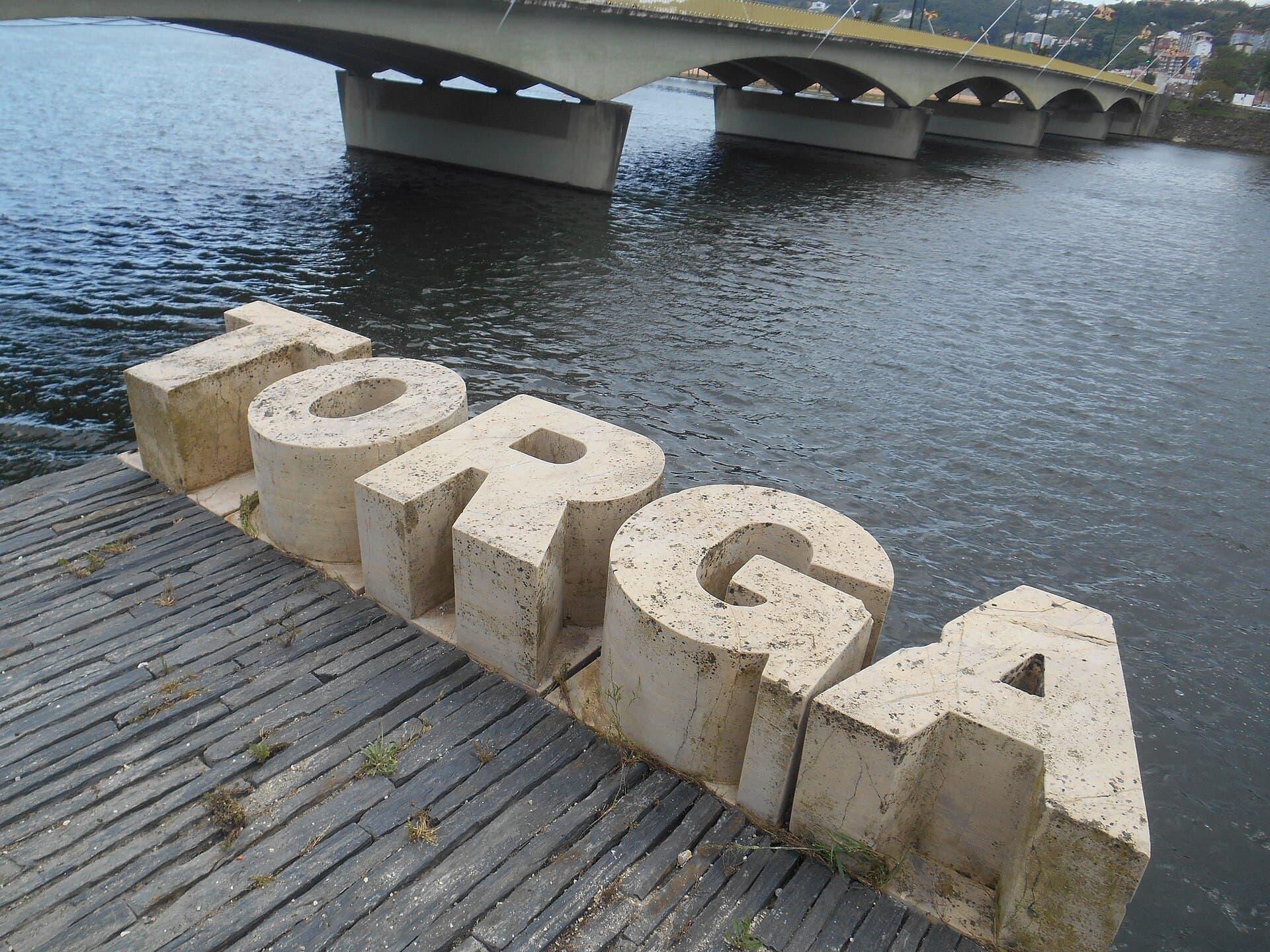
The first thing to understand is that the bridge is younger than it looks. The concrete crossing under your feet was designed by the engineer Edgar Cardoso, and it opened on the thirtieth of October, 1954, inaugurated by the prime minister of the time, Antonio de Oliveira Salazar. So the specific structure you are standing on is a mid-twentieth-century object, a product of Portugal's Estado Novo period and its taste for engineered public works.
But people have been crossing at this point far longer than the concrete suggests. According to the documented record, this modern span succeeded a stone bridge dated to 1513, and before the current structure there was also an iron bridge that opened in 1875. That is three distinct crossings across roughly four and a half centuries, each replacing the last, each a fresh answer to the same simple need: reach the other side. You are standing on the newest surface of a very old habit.
That layering matters, because it is also the oldest of Coimbra's three river bridges today. It was joined later by the Ponte Rainha Santa and the Ponte do Acude. When you walk this crossing, you are on the senior link between the two halves of the city, the one that has always defined the connection between the university side and the quieter bank across the water.
Why the river is the real protagonist
Hear a stop from this walk
Pedro and Ines de Castro: The Story Itself
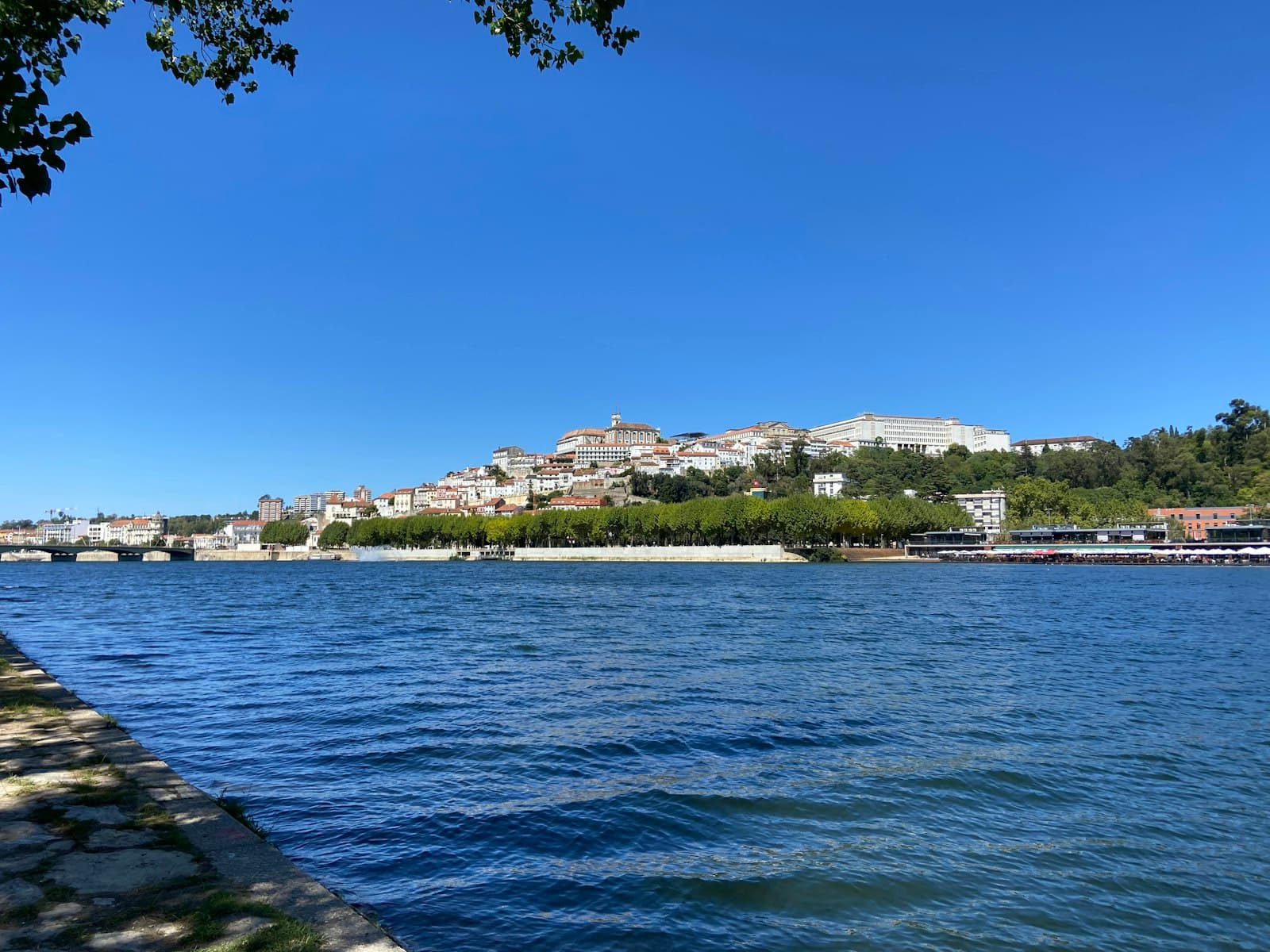
Here is the thing to hold onto while you stand there. Look upstream, then downstream. The Mondego looks placid, almost dull. Hold that image deliberately, because the elegy of this entire bank depends on your not being fooled by it.
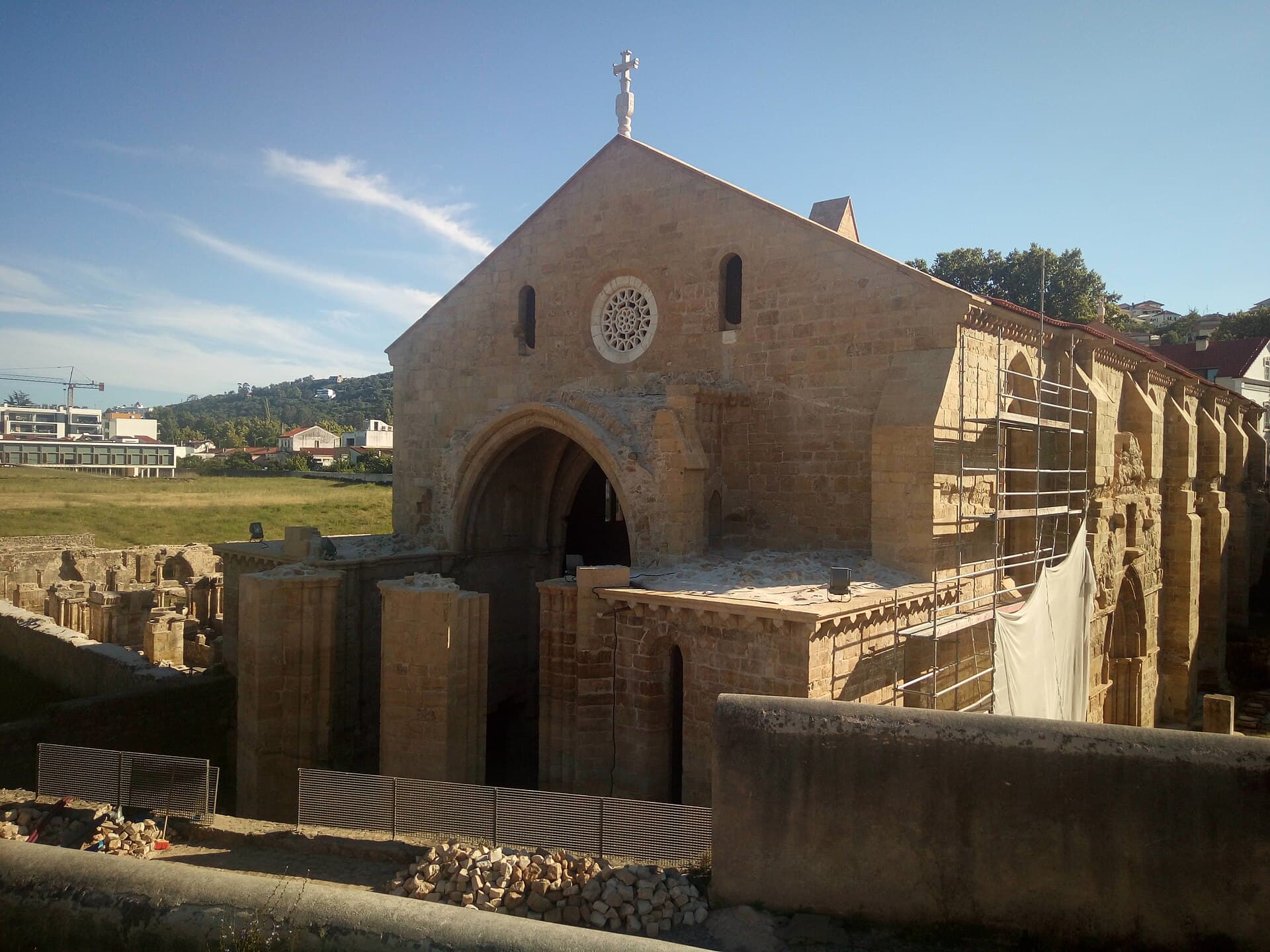
This same river, over centuries, rose high enough to fill a church to its windows and force a community of nuns to abandon their home. Downstream on the far bank sits Santa Clara-a-Velha, the old Santa Clara, a Gothic monastery of the Poor Clares. It was already flooding as early as 1331. The nuns did not surrender easily. By the year 1612 they had built a raised floor, an entire new interior pavement halfway up toward the roof, just to keep living above the water that kept seeping in. Picture a congregation rising, quite literally, inside its own drowning church. Only in 1647 did King John the Fourth order them out, and the last nuns finally left in 1677, carrying their royal tombs uphill to dry ground. Then the river simply won. The church silted up, was partly buried, and stayed that way until archaeologists began clearing it after 1995. It reopened to the public in April 2009.
So the calm water beneath the Ponte de Santa Clara is not scenery. It is the force that decided the fate of the buildings you are about to visit. Everything on the far side is a response to what this river can do: convents built and abandoned, a new monastery raised on high ground specifically to escape the flood, a saint's tomb carried up out of the water's reach. The bridge is where you meet the antagonist before you meet the story.
The one thing to understand standing here
If you take a single idea across the bridge, make it this: the crossing is a boundary between two moods, and the river is what draws the line. The Coimbra side behind you is the city of the famous university hill, upright and public. The bank ahead is lower, quieter, and heavy with loss. The Mondego separates them physically, but it also separates them in feeling.
The far bank carries two kinds of loss that rhyme with each other. One is the drowned convent, a matter of hard archaeology and flood records. The other is the love story of Prince Pedro and Ines de Castro, part documented history and part centuries of romantic legend layered on top. Both of those stories sit on the same low ground the river once threatened, and the honest walk keeps telling you, at every stop, which part is stone and which part is story. Standing on the bridge, you do not need the details yet. You only need to feel the weight of what you are about to enter, and to notice that the water is what set that weight in place.
There is a discipline in reading the river this way. It teaches you to distrust the obvious surface. The bridge looks like plain infrastructure, so you learn its three centuries of predecessors. The water looks harmless, so you learn it once buried a church. That habit of looking twice is exactly what the far bank rewards, because the whole walk is built on the seam between what is genuinely old and true and what is beautiful, later invention.
Cross when you are ready
When you step off the Ponte de Santa Clara onto the left bank, you leave the university side behind and enter the bank of water, death, and love. The route trends mostly downhill toward the drowned convent, then climbs to the high ground where the saint-queen's tomb rests dry, and finally lets the walk breathe out at a lighter, gentler stop. It is a solo walk you can shape entirely to your own mood. Linger by a fountain if a fountain asks you to. Skip a stop that does not call, and double back to one that does.
The Ponte de Santa Clara is the first of six stops on the Roamer self-guided audio walk called "The Convent the River Drowned," and it is the doorway to the rest. If you want to walk it in full, with the story unfolding stop by stop as you move, you can start from our guide to Coimbra walking tours or browse everything on offer in Coimbra. Meet the river first. Then cross.
Sources
- Ponte de Santa Clara, Wikipedia. Structure history, Edgar Cardoso design, and the 30 October 1954 inauguration by Salazar.
- Ponte de Santa Clara (Coimbra, 1954), Structurae. Engineering reference confirming the 1954 concrete bridge, its designer, and the predecessor stone (1513) and iron (1875) crossings.
- Monastery of Santa Clara-a-Velha, Wikipedia. Flood chronology from 1331, the 1612 raised floor, the 1647 order to abandon, the 1677 departure, and the April 2009 reopening.
- Roamer tour, "The Convent the River Drowned" (coimbra-santa-clara). Fact-audited walking-tour narration for the far-bank stops.
Ready to experience it?
Santa Clara-a-Velha: The Convent the River Drowned
110 min · 3.6 km · moderate
More from Coimbra
Explore more at your own pace.
Coimbra Travel Guide: Days, Getting Around, Safety, and Cost
Coimbra Has Been Portugal's Mind for Seven Centuries
Igreja de Santiago and the Case for Walking Coimbra's Low Town
Santa Clara-a-Velha: The Convent the Mondego Drowned
The Old Cathedral That Explains All of Coimbra