Grand Place: The Square Rebuilt in Four Years
60 min · 1.5 km · easy
Brussels is a city built on a slope, and the slope is the story. The lower town of markets, guilds and workers spreads along the buried river Senne, and above it the upper town of palaces, museums and law courts rises on the hill. At the seam where the city divides stand two rebuilt worlds raised out of fire and ambition: the Grand Place, a market square burned to rubble in sixteen ninety-five and rebuilt in gilded stone by the trade guilds within about four years, and the Royal Quarter, a crest of neoclassical palaces laid over a burned ducal palace and cleared, in part, at the expense of the poor districts below. Walk the two levels in order and you read the class geography of a capital written straight into the hillside.
A square rebuilt from fire
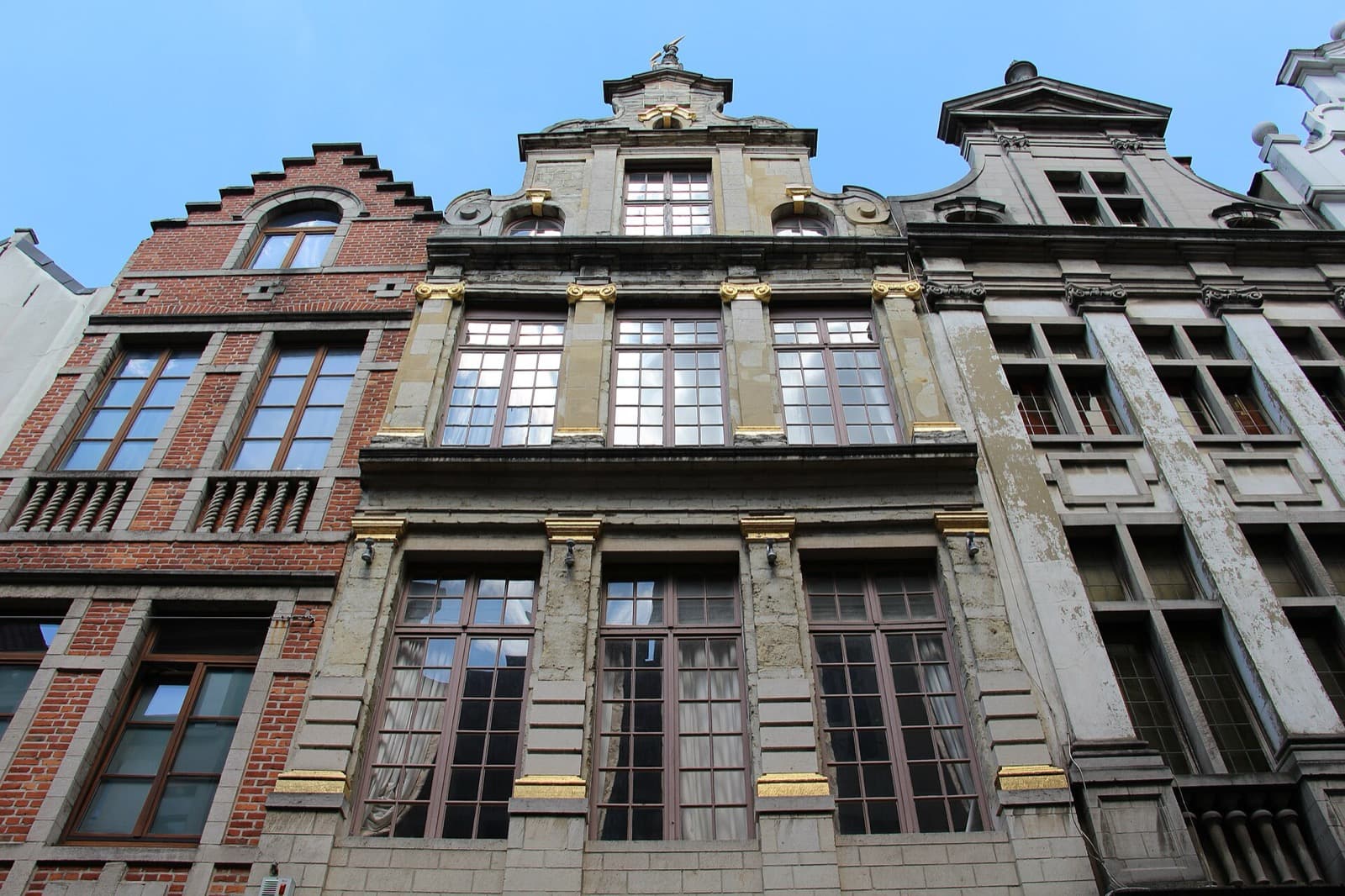
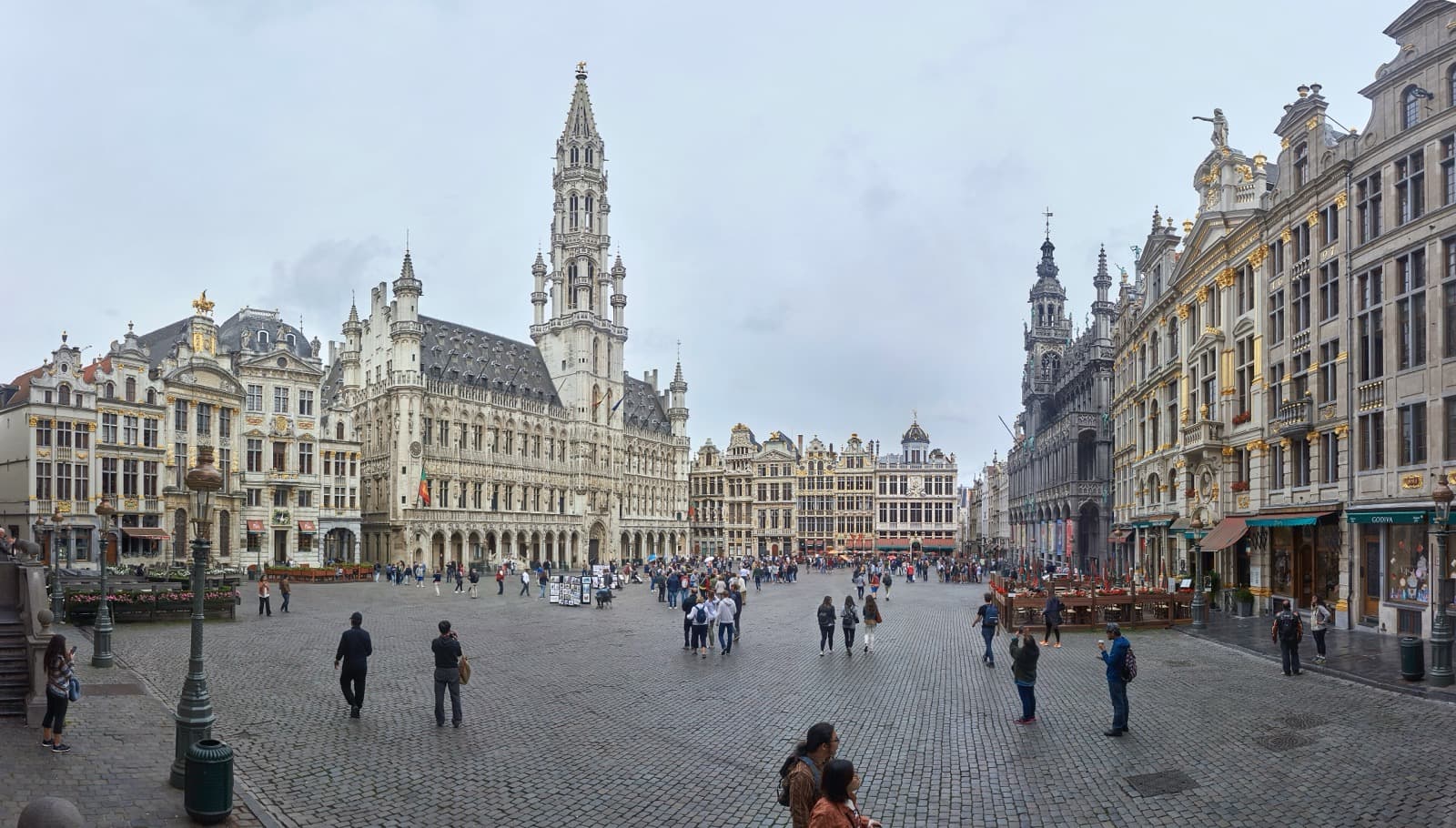
Start in the lower town. The Grand Place is the most admired square in Europe and, beneath the beauty, a scar. On the thirteenth of August, sixteen ninety-five, during the Nine Years' War, a French army under Marshal Villeroy bombarded a largely defenseless city for roughly three days. The city's museums and UNESCO record an estimated three thousand cannonballs and twelve hundred incendiary shells, about four thousand houses destroyed, and most of the Grand Place flattened and burned. It remains the most destructive event in the city's history. Yet within about four years the trade guilds and property owners rebuilt their houses in stone, under strict municipal oversight that required every plan be submitted for approval. That is why the square reads as a single harmony of Gothic, Baroque and the Louis the Fourteenth manner even though almost all of it is the same age. Catastrophe became a coordinated display of civic pride.
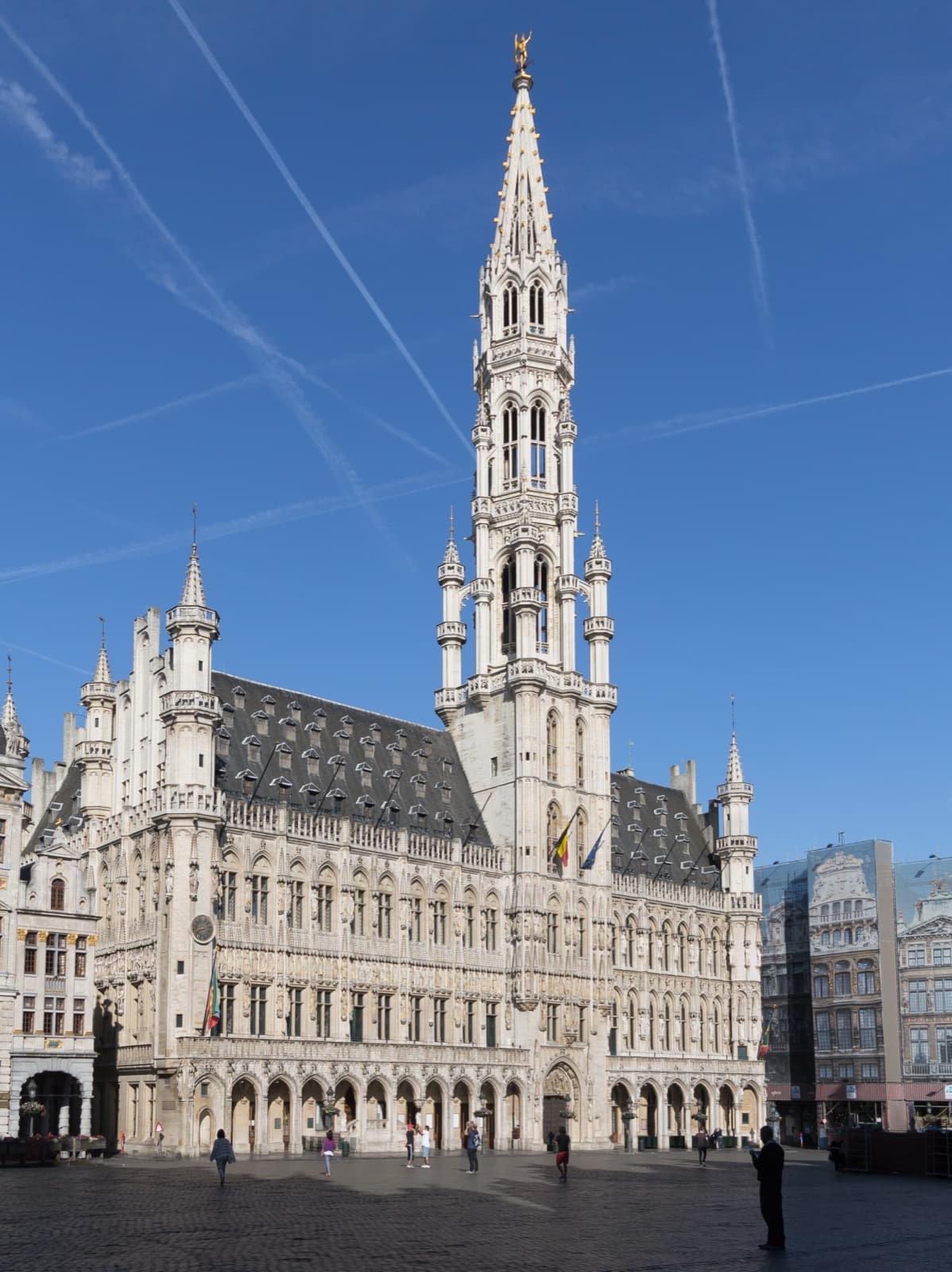
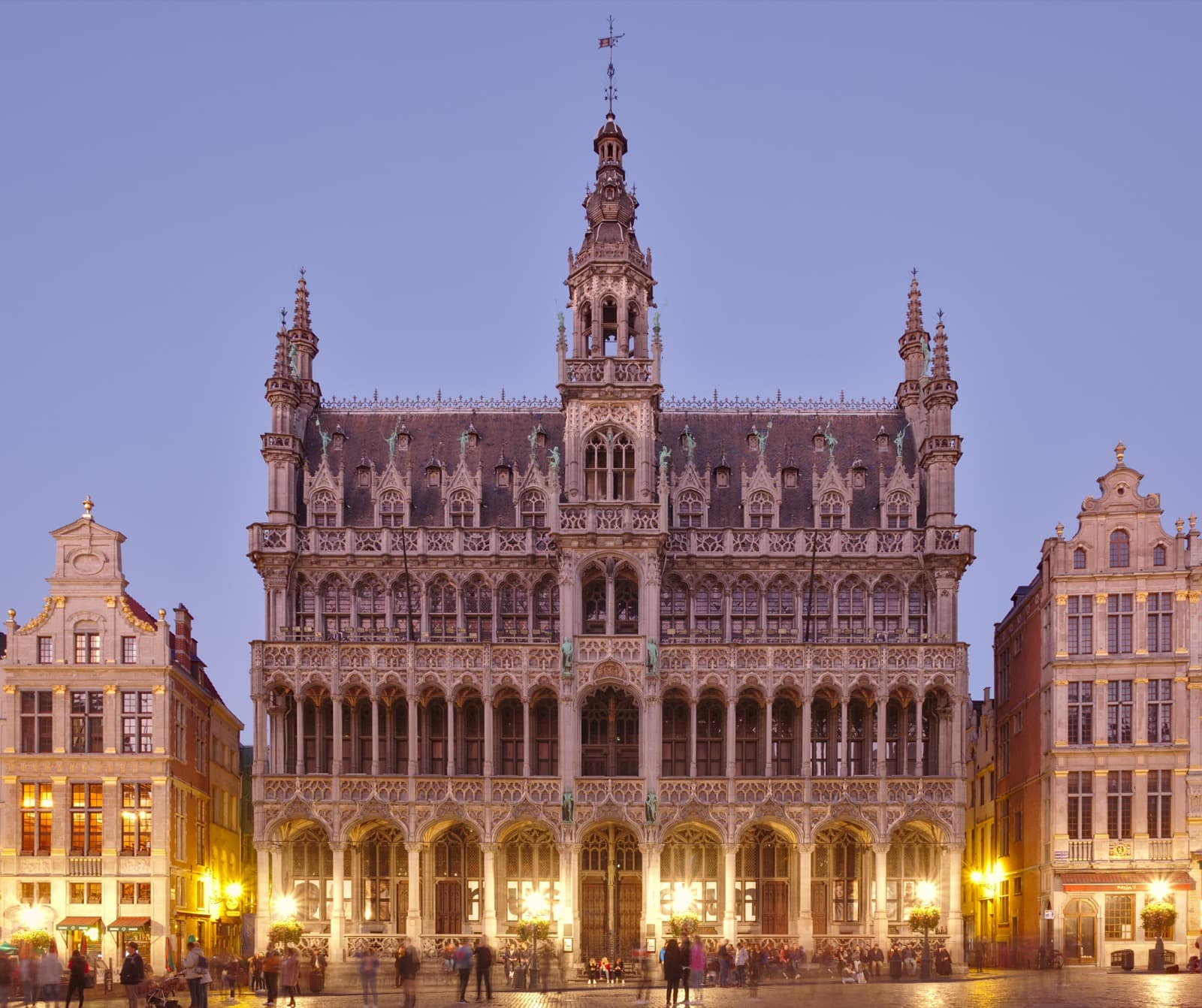
The Grand Place walk lets you read that hidden layer stone by stone. The Town Hall on the south side is the survivor: Brabantine Gothic, begun in fourteen oh one and completed in fourteen fifty-five, its openwork tower climbing about ninety-six metres and crowned by a gilt statue of Saint Michael slaying a dragon. When the bombardment struck, the city museums record that only the stone shell of the Town Hall remained standing, tower and all, the fixed point around which everything else was rebuilt. Facing it across the square is the King's House, called the Breadhouse in Dutch for the medieval bread market on the spot, rebuilt in neo-Gothic between eighteen seventy-four and eighteen ninety-six and now the Brussels City Museum. Around the rest of the square rise the true heroes of the story, the guild houses, each crowned with the emblem of its trade: the Fox of the haberdashers, the She-Wolf of the archers, the Swan of the butchers, the King of Spain of the bakers. Each guild competed to raise the proudest facade, and the city oversight kept them in harmony.
The small pleasures of the lower town
Hear a stop from this walk
The Cathedral of Saint Michael and Saint Gudula: The National Church on the Hill
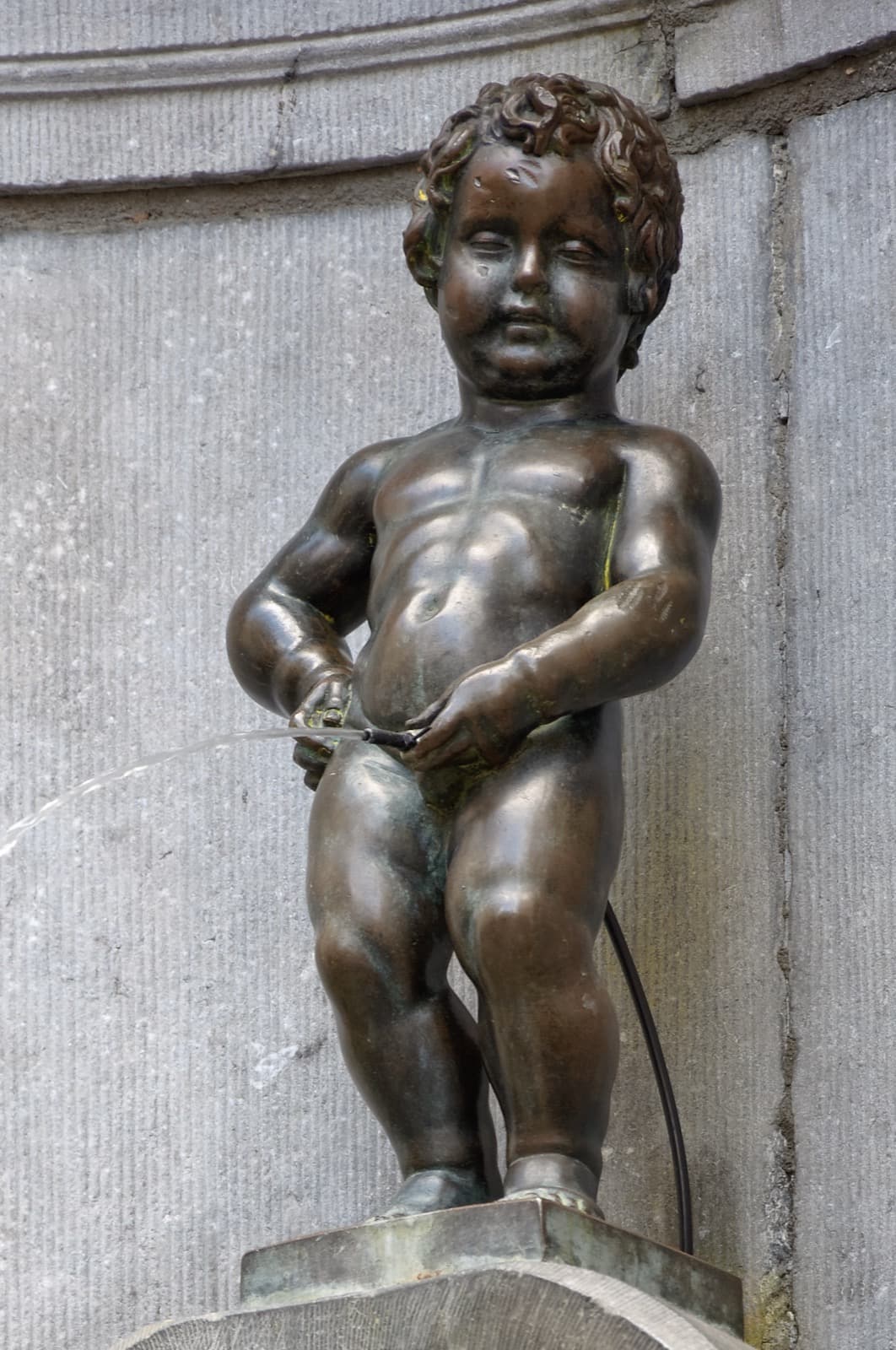
The lower town keeps its wit close. A few streets southwest, about three hundred and fifty metres on foot, stands Manneken Pis, a bronze boy only about fifty-five and a half centimetres tall, cast around sixteen nineteen by Jerome Duquesnoy the Elder (the figure on the fountain today is a nineteen-sixties copy, the original kept safe in the city museum). His origin tales are all folklore, and one of them, the boy who doused a burning fuse, has a certain wit in a city rebuilt from fire. Northeast of the square, the Royal Saint-Hubert Galleries open under an arched glass roof carried on a slender cast-iron frame, inaugurated on the twentieth of June eighteen forty-seven under King Leopold the First and designed by Jean-Pierre Cluysenaar. Running more than two hundred and thirteen metres, it is among the oldest glazed shopping arcades in Europe and predates the celebrated Milan galleria. Then the ground rises east to the Cathedral of Saint Michael and Saint Gudula, Belgium's national church, its twin west towers sixty-four metres tall, built between fourteen seventy and fourteen eighty-five and left deliberately without spires. Two ways a city builds, both on one short walk: the square raised from fire in four years, the cathedral raised slowly over three centuries.
Climbing into the upper town
Now take the hill. The Royal Quarter walk begins at the Mont des Arts, the terraced garden on the exact seam where the city divides, where the tower of the Town Hall stands clear over the lower roofs. The whole tour is in that one glance: markets below, law and palaces above. Here the Leopold-the-Second thread begins quietly, because the old Saint-Roch quarter that stood on this hill was demolished in eighteen ninety-seven and ninety-eight to clear the height for grand building. That is the pattern the walk repeats. To make the upper town monumental, something below was swept away.
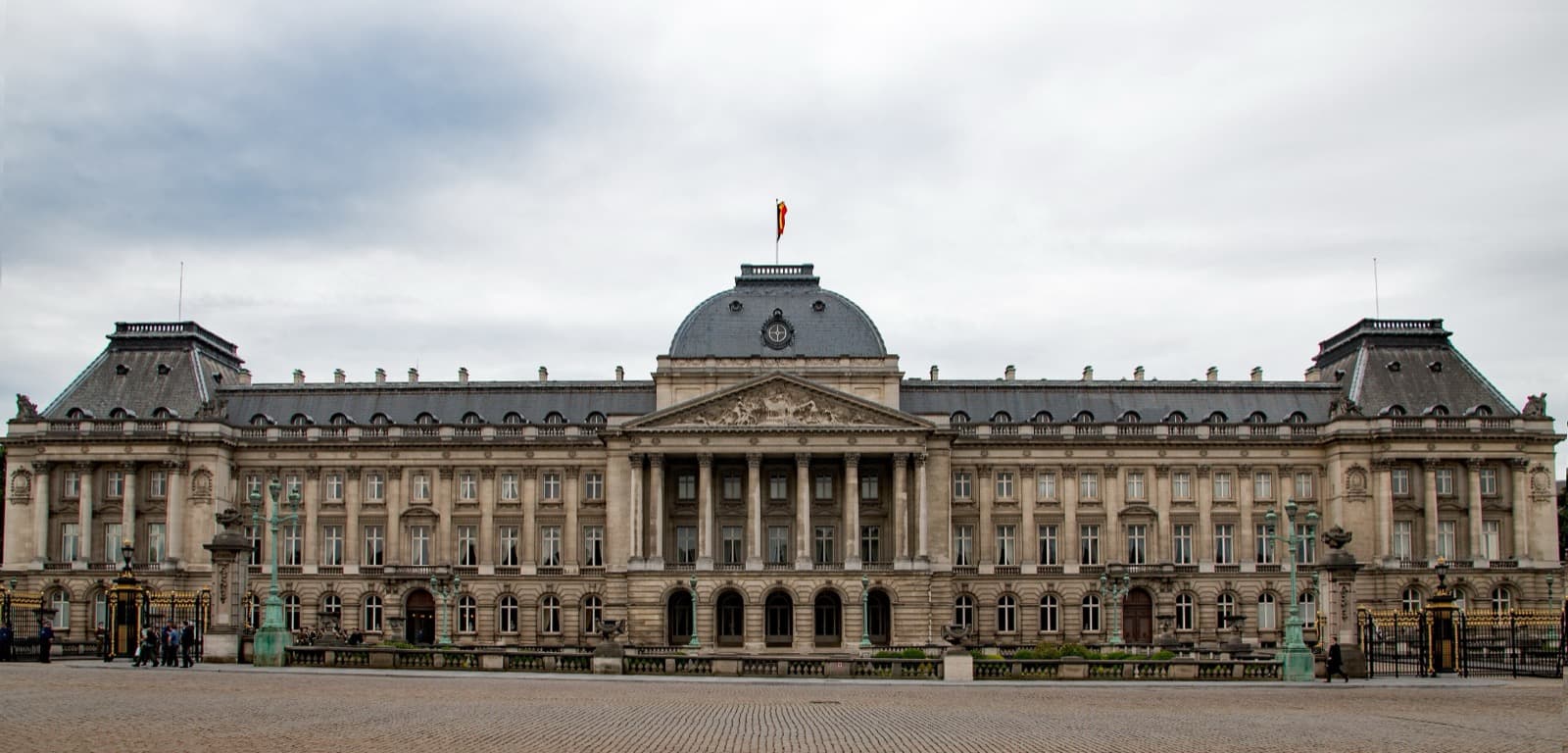
At the top sits the Place Royale, a calm white neoclassical square built between seventeen seventy-five and seventeen eighty-two, laid over a grave. Beneath it lie the buried remains of the Coudenberg palace, seat of the dukes of Brabant and then the Burgundian, Spanish and Austrian courts, where the Emperor Charles the Fifth abdicated in fifteen fifty-five before it burned on the freezing night of the third of February seventeen thirty-one. The vaulted cellars survive underground as the Coudenberg archaeological site. Along the crest run the long white Royal Palace, whose present facade was built after nineteen oh four under Leopold the Second, and the Royal Museums of Fine Arts, founded in eighteen oh one and holding Pieter Bruegel the Elder, Peter Paul Rubens and Anthony van Dyck alongside the world's largest collection of Rene Magritte, whose museum opened on the twentieth of May two thousand nine. Culture, like the crown, is one more claim staked on the height.
The reckoning and the divided slope
This monumental Brussels does not get to be only beautiful. The age that gave the city its grandeur is also the age of Leopold's Congo, and the Royal Quarter walk names it plainly. From eighteen eighty-five to nineteen oh eight the Congo Free State was the personal possession of King Leopold the Second, not a Belgian colony at all. Its forced-labour rubber regime caused mass atrocities and a population collapse widely estimated in the millions, documented by the Casement Report of nineteen oh four and the campaigning of E. D. Morel, until international outcry forced the Belgian state to take over the colony on the fifteenth of November nineteen oh eight. Much of monumental Brussels was built partly with colonial wealth, and Belgium has in recent years reckoned publicly with this history.
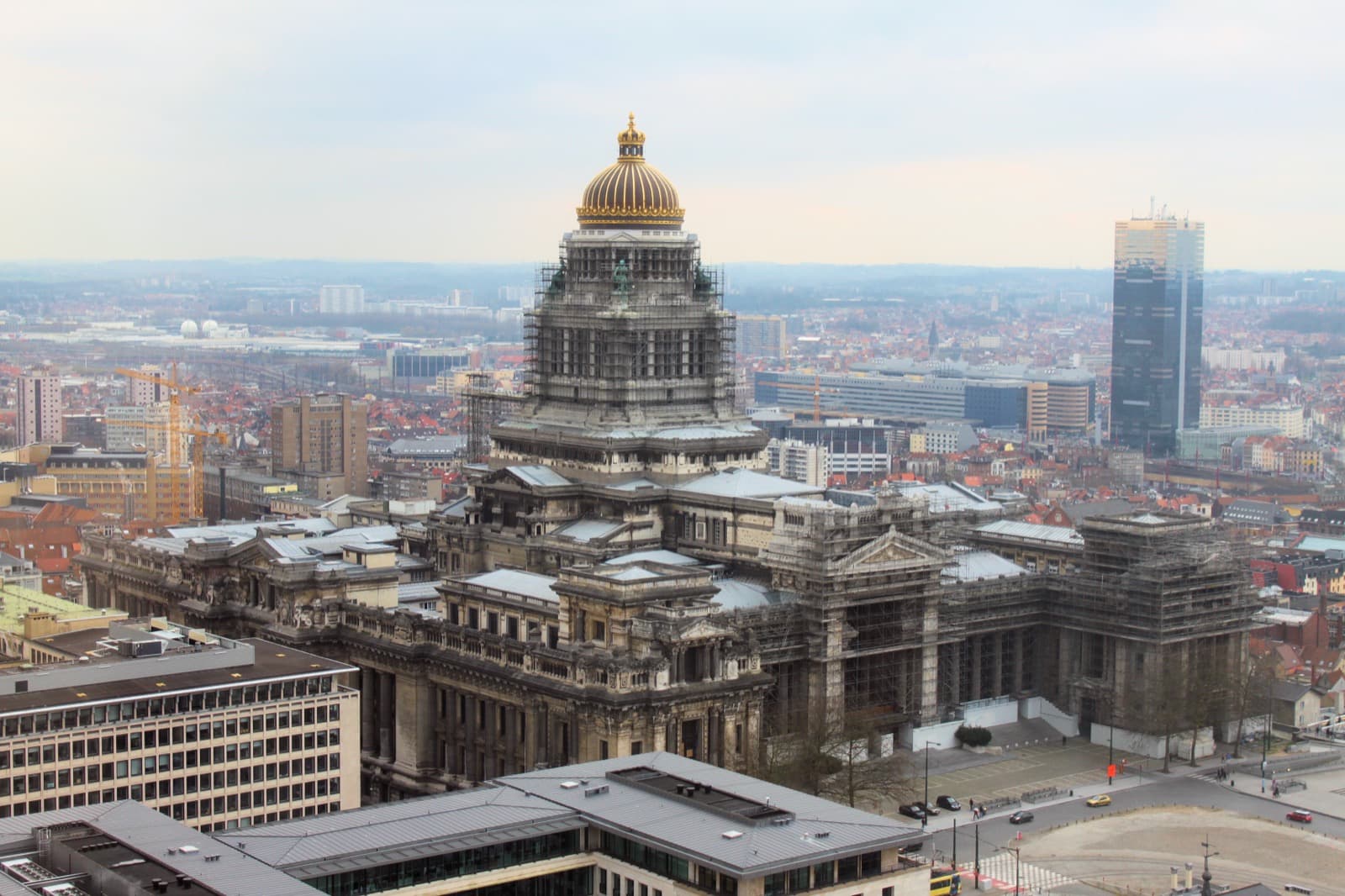
The slope makes its final argument at the Grand Sablon, the sloping antiques square crowned by the guild church of Notre-Dame du Sablon, and at the Petit Sablon, whose wrought-iron balustrade carries forty-eight bronze statuettes of the old craft guilds, the makers of the lower town gathered in miniature and set in a garden of the upper. At its head stand the Counts Egmont and Horn, beheaded on the Grand Place on the fifth of June fifteen sixty-eight on the orders of the Duke of Alba, a spark of the long Dutch Revolt. The climb ends at the Palais de Justice, built by Joseph Poelaert between eighteen sixty-six and eighteen eighty-three, its footprint about one hundred and sixty by one hundred and fifty metres and rising about one hundred and sixteen metres to the dome, reputedly the largest building in the world when finished. To clear its hill, part of the poor Marolles district below was demolished, and folk memory holds that people of the Marolles still use the word architect as an insult. The law of the upper town looms over the working district it displaced. The city read as a slope, made literal in stone.
Walk both levels at your own pace, with no group and no schedule. For the full set of routes through the phoenix city, see the Brussels walking tours hub.
Sources
- UNESCO World Heritage List, La Grand-Place, Brussels (inscription 1998).
- Brussels City Museum (Maison du Roi / Broodhuis), collections on the 1695 bombardment and Manneken Pis.
- Coudenberg archaeological site and BELvue Museum, on the former palace of Coudenberg and its 1731 fire.
- Royal Museums of Fine Arts of Belgium and the Magritte Museum, institutional history and collection.
- Casement Report (1904) and the Congo Reform Association, on the Congo Free State under Leopold the Second.
Frequently asked questions
- Why was the Grand Place in Brussels rebuilt?
- On the thirteenth of August, sixteen ninety-five, a French army under Marshal Villeroy bombarded Brussels for roughly three days during the Nine Years' War, destroying most of the Grand Place and about four thousand houses across the city. The trade guilds and property owners rebuilt their houses in stone within about four years, under strict municipal oversight that required every plan be approved. That coordinated rebuild is why the square reads as a single Baroque harmony today.
- What is the difference between the lower town and upper town in Brussels?
- Brussels is built on a slope. The lower town, along the buried river Senne, held the markets, guilds and workers and contains the Grand Place, Manneken Pis and the Royal Saint-Hubert Galleries. The upper town on the hill holds the palaces, museums and law courts, including the Place Royale, the Royal Palace and the Palais de Justice. The two levels together read the city's class geography.
- What was under the Place Royale before it was built?
- The Place Royale was built between seventeen seventy-five and seventeen eighty-two over the buried remains of the Coudenberg palace, the seat of the dukes of Brabant and later the Burgundian, Spanish and Austrian courts. The Emperor Charles the Fifth abdicated there in fifteen fifty-five, and the palace burned on the night of the third of February seventeen thirty-one. Its vaulted cellars survive underground as the Coudenberg archaeological site.
- How does Brussels address the history of King Leopold the Second and the Congo?
- Much of monumental Brussels was raised in the reign of Leopold the Second, whose Congo Free State was his personal possession from eighteen eighty-five to nineteen oh eight, not a Belgian colony. Its forced-labour rubber regime caused mass atrocities and a population collapse widely estimated in the millions, documented by the Casement Report of nineteen oh four. Belgium has in recent years reckoned publicly with this history.
- Why does the Palais de Justice loom over the Marolles district?
- The Palais de Justice was built by Joseph Poelaert between eighteen sixty-six and eighteen eighty-three on Gallows Hill, reputedly the largest building in the world when finished. To clear the ground, part of the working-class Marolles district below was demolished, with about seventy-five landlords bought out and around a hundred more modest residents rehoused. Folk memory holds that people of the Marolles still use the word architect as an insult.
Ready to experience it?
Grand Place: The Square Rebuilt in Four Years
60 min · 1.5 km · easy
More from Brussels
Explore more at your own pace.
Brussels Travel Guide: How Many Days, Getting Around, Best Time, and Safety
One Day in Brussels: A Walkable Route From the Grand Place to the Upper Town
The Grand Place Is a Burn Scar: Reading Brussels Rebuilt From Fire
The Royal Palace of Brussels: A Facade That Holds the Whole Upper Town
Manneken Pis: Why Brussels Built a Legend Around a 55-Centimetre Bronze Boy