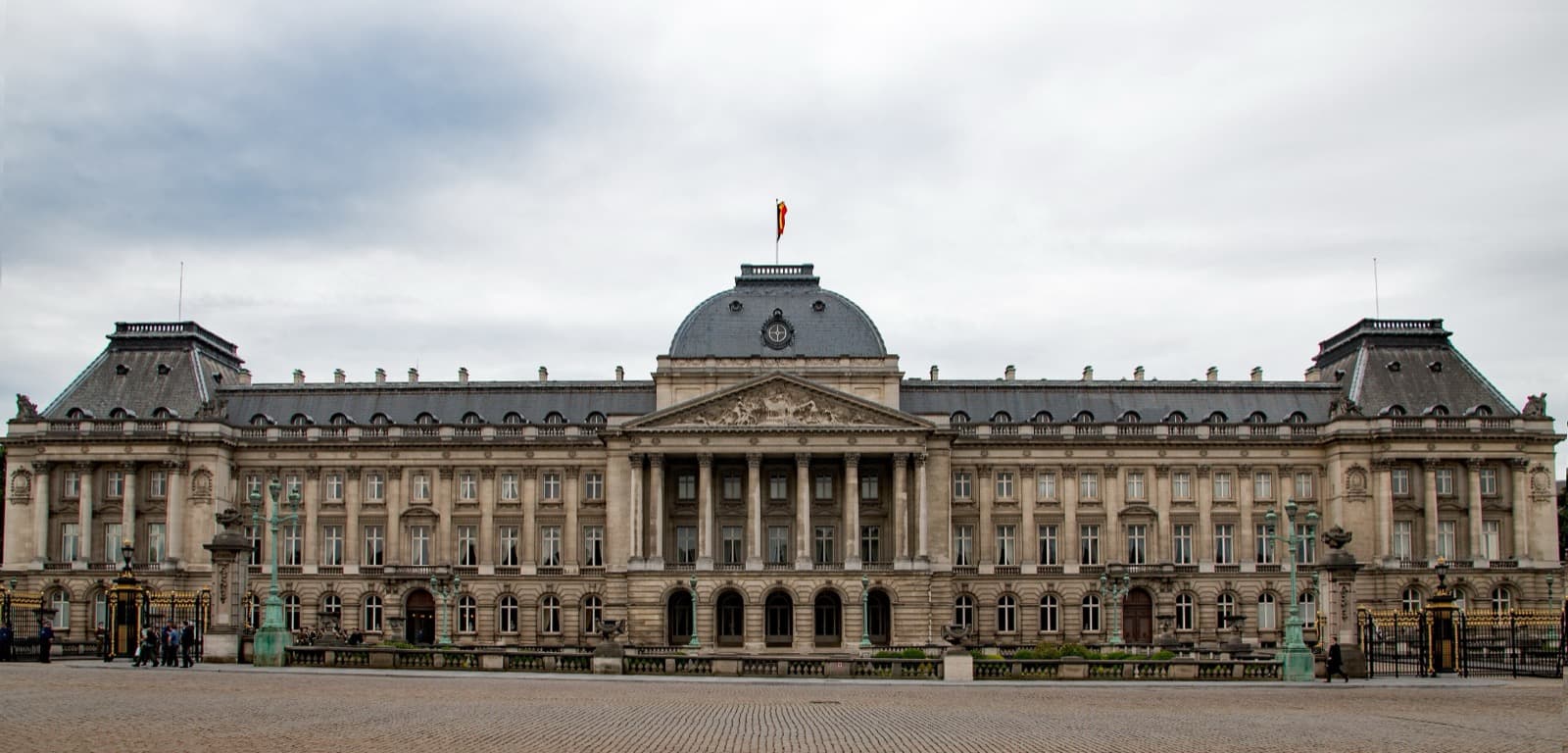
The long white front of the Royal Palace of Brussels was built in the reign of King Leopold the Second, and its grandeur cannot be separated from his Congo. That single fact is the key to the whole upper town. Stand before this facade and you are standing in the middle of an argument the city has been making with itself for two centuries: about who the height belonged to, what it cost the town below, and how power gets written straight into a hillside. The palace does not answer the question. It holds it open. That is exactly why it is the best place to understand the entire climb through the Royal Quarter.
A palace where no king sleeps
The first thing to know about the Palais Royal is that the king does not live here. The royal family resides at the Palace of Laeken on the edge of the city, and this long building facing the green Brussels Park, the Warande, is used for affairs of state, audiences and receptions. So the facade is a working stage set, not a home. That matters, because the grand neoclassical front you see was designed by the architect Henri Maquet and built after nineteen oh four, with the major works running to about nineteen oh nine. It is a very recent face on a very old idea of monarchy.
And that date, the first decade of the twentieth century, is the hinge of the whole tour. The age that gave Brussels much of its monumental grandeur is also the age of Leopold's Congo, and the honest way to stand here is to hold both together.
The record, named plainly
Hear a stop from this walk
The Royal Palace: The Crown and the Colonial Reckoning
From eighteen eighty-five to nineteen oh eight the Congo Free State was not a Belgian colony at all. It was the personal possession of King Leopold the Second. Its forced-labour rubber regime, enforced by the Force Publique, caused mass atrocities, including mutilation, and a catastrophic collapse of the Congolese population, whose exact toll is debated by historians but is widely estimated in the millions. These abuses were documented at the time. The Casement Report of nineteen oh four, by Roger Casement, and the campaigning of E. D. Morel and the Congo Reform Association forced the story into the open. International outcry finally pushed the Belgian state to take over the colony on the fifteenth of November nineteen oh eight.
Much of the monumental Brussels of this era was built partly with colonial wealth, and Belgium has in recent years reckoned publicly with this history, including the recontextualization of the AfricaMuseum at Tervuren. You do not need to accept a single simplification to feel the point. The bright facade and the darkest chapter of Belgian history share a decade. Standing with the palace means holding the crown and the record together, which is precisely the posture the rest of the walk asks of you.
The lid over an older palace
Walk a few steps back down the hill to the Place Royale and the theme sharpens. This calm white neoclassical square was built between seventeen seventy-five and seventeen eighty-two to the plans of Jean-Benoit-Vincent Barre and Gilles-Barnabe Guimard, and it looks like the birth of an orderly age. It is a lid. Beneath your feet lie the buried remains of the Coudenberg palace, seat of the dukes of Brabant and then of the Burgundian, Spanish and Austrian courts. In its great hall the Emperor Charles the Fifth abdicated in fifteen fifty-five in favour of his son Philip the Second. On the freezing night of the third of February seventeen thirty-one, fire broke out in the kitchens and the palace burned. Rather than rebuild the ruin, the planners levelled it and raised the bright square over the top. The vaulted cellars survive underground as the Coudenberg archaeological site.
So the Royal Palace is only the newest layer of a much older habit. On this hilltop, each age erases the one before and calls the result order.
Culture staked on the height
Just off the square stand the Royal Museums of Fine Arts of Belgium, founded on the first of September eighteen oh one, and the most visited museum complex in the country. Here hang works by Pieter Bruegel the Elder, Peter Paul Rubens and Anthony van Dyck, and here too is the Magritte Museum, opened on the twentieth of May two thousand nine, holding the world's largest collection of the Belgian surrealist Rene Magritte. To pass from Bruegel's frozen villages to Magritte's floating stones in a single building is to walk the whole arc of painting in these countries. Note where it sits: on the crest of the hill, beside the palace and the square. The nation gathered its way of seeing itself and placed it at the top. Culture, too, is a claim staked on the height.
The garden that remembers two beheadings
Below, the mood turns quieter and then graver. The Grand Sablon tilts down the slope, an antiques square crowned by the church of Notre-Dame du Sablon, which began in thirteen oh four as a chapel raised by the Noble Guild of Crossbowmen. Just across the way, the Petit Sablon garden, inaugurated in eighteen ninety to a design by Henri Beyaert, rings itself with forty-eight bronze statuettes, one for each old craft guild of the city. The trades of the lower town, gathered in miniature in a decorative garden of the upper town. At its head stand the Counts Egmont and Horn, Lamoral of Egmont and Philip de Montmorency, beheaded on the Grand Place on the fifth of June fifteen sixty-eight on the orders of the Duke of Alba. A pretty garden holding two truths: the pride of a trading city, and two noblemen who lost their heads on the square below.
The building that erased a neighborhood
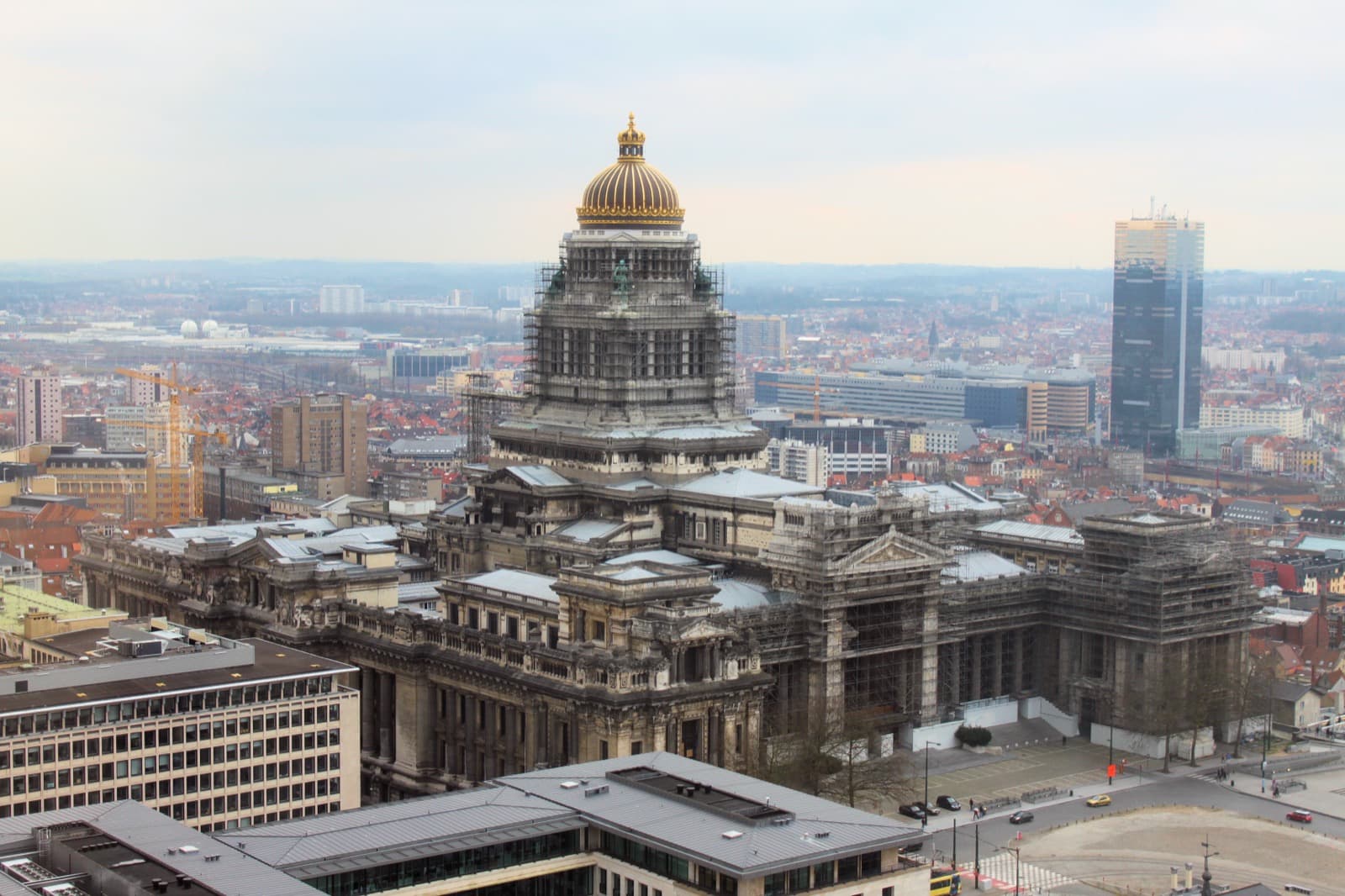
The walk ends at the Palais de Justice, designed by Joseph Poelaert and built between eighteen sixty-six and eighteen eighty-three on Gallows Hill. Poelaert died in eighteen seventy-nine before it was finished, and the work was carried on by Joseph Joachim Benoit. Upon completion it was reputed to be the largest building in the world. To clear the ground, part of the poor Marolles district below was demolished: about seventy-five landlords were bought out, and around a hundred more modest residents rehoused. Folk memory holds that people of the Marolles still use the word architect as an insult. The law of the upper town, in the largest building of its age, looms over the district it displaced.
That is the sentence the whole hill spells out, and the Royal Palace is where you first read it clearly. If you want the full climb, from the Mont des Arts terrace up to the Place Poelaert view, see our guide to Brussels walking tours and start from the city page for Brussels. Walk it in order, take the slope at your own pace, and let the facade hold its two truths for you.
Sources
- Royal Palace of Brussels, Wikipedia. Facade by Henri Maquet, built under Leopold the Second, and the palace's ceremonial rather than residential use.
- Casement Report and Congo Free State, Wikipedia. Roger Casement's nineteen oh four documentation of the Congo rubber regime and the pressure that led to Belgian annexation on the fifteenth of November nineteen oh eight.
- Place Royale, Brussels, and the Coudenberg archaeological site (coudenberg.brussels). The buried palace, the fire of seventeen thirty-one, and Charles the Fifth's abdication in fifteen fifty-five.
- Palace of Justice, Brussels, Wikipedia. Poelaert's design, the eighteen sixty-six to eighteen eighty-three construction, and the demolition in the Marolles.
- Royal Museums of Fine Arts of Belgium and the Magritte Museum (official sites). Founding in eighteen oh one and the Magritte Museum opening in two thousand nine.
Ready to experience it?
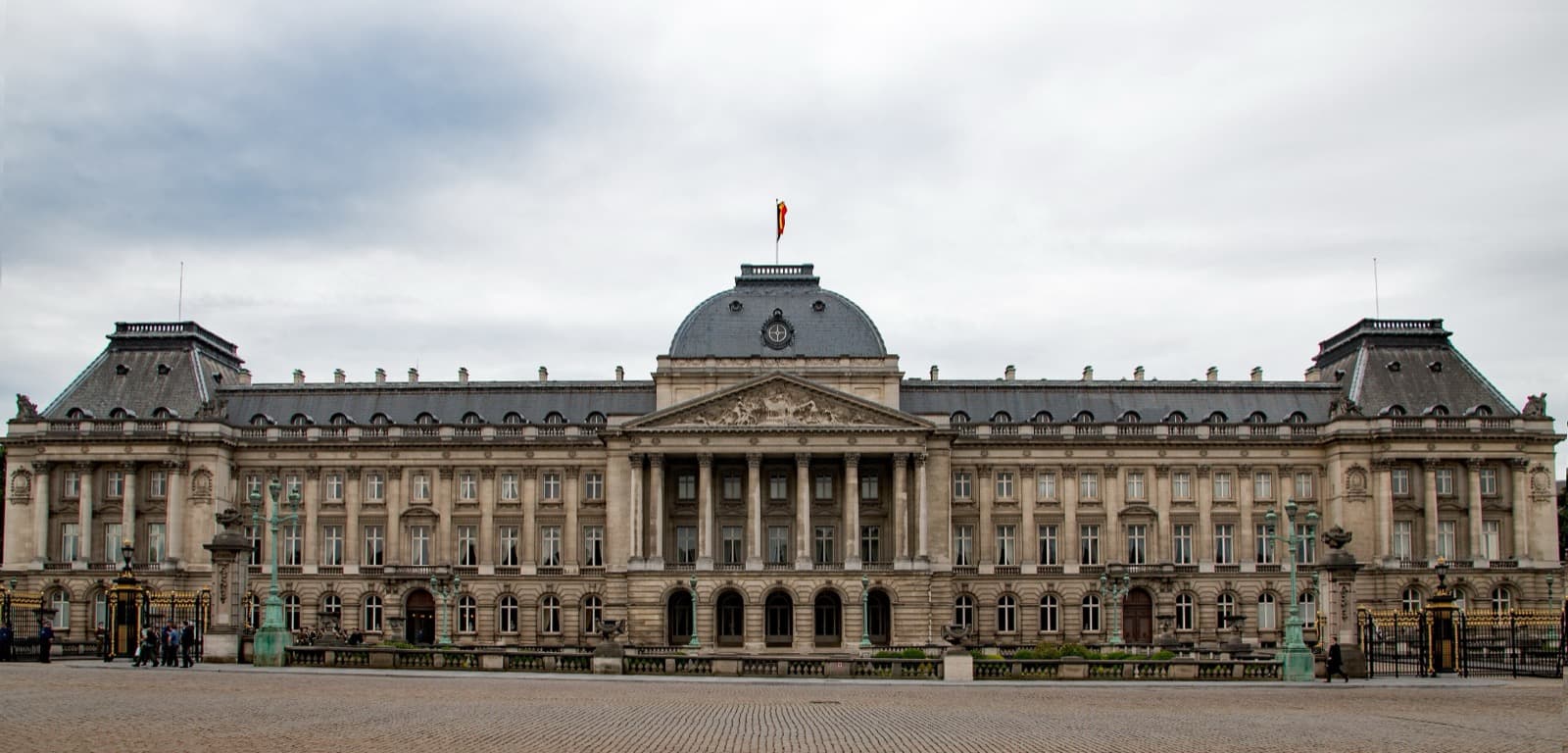
Royal Quarter: The Upper Town of Palaces and the Sablon
70 min · 2.3 km · moderate
More from Brussels
Explore more at your own pace.
Brussels Travel Guide: How Many Days, Getting Around, Best Time, and Safety
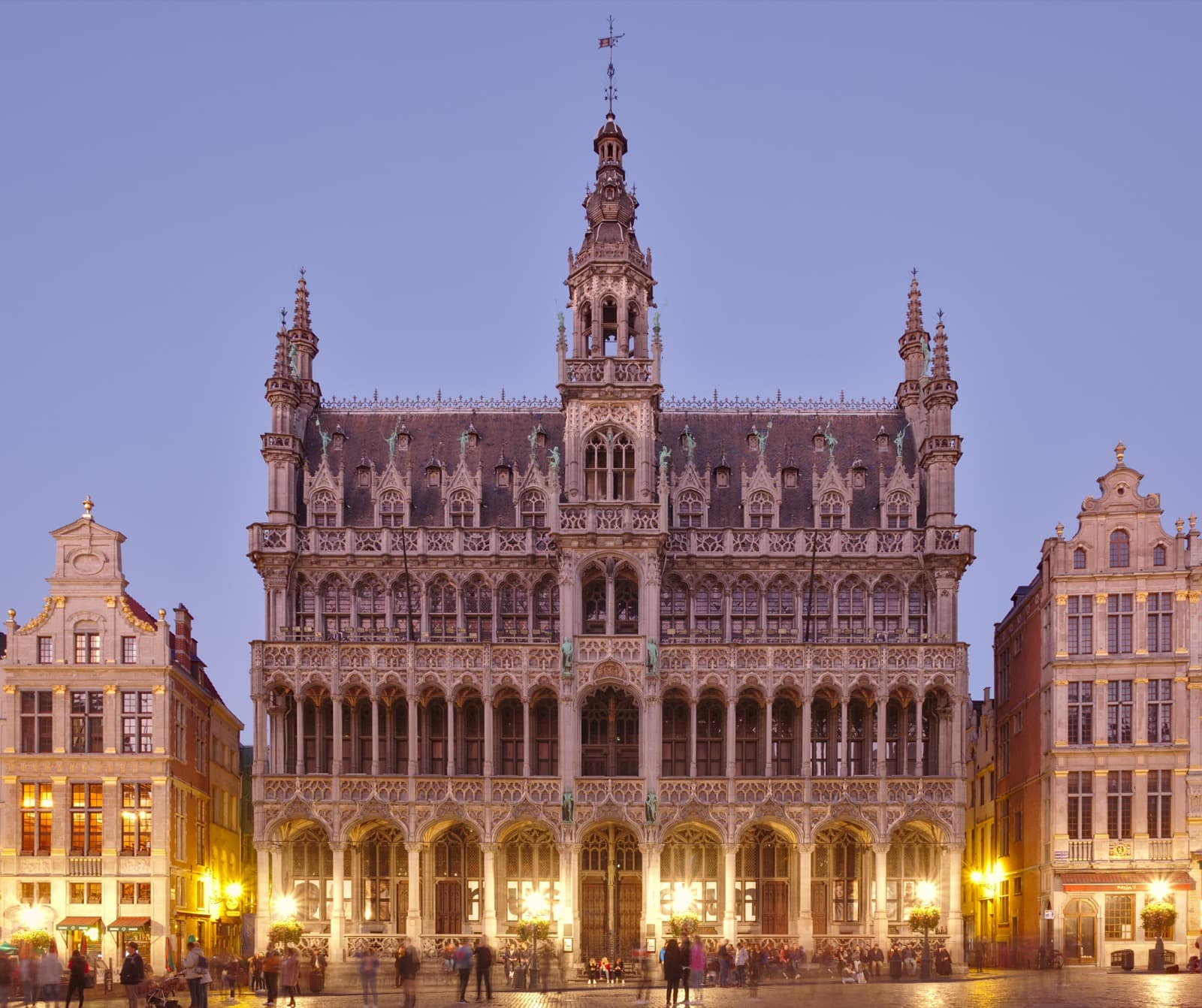
One Day in Brussels: A Walkable Route From the Grand Place to the Upper Town
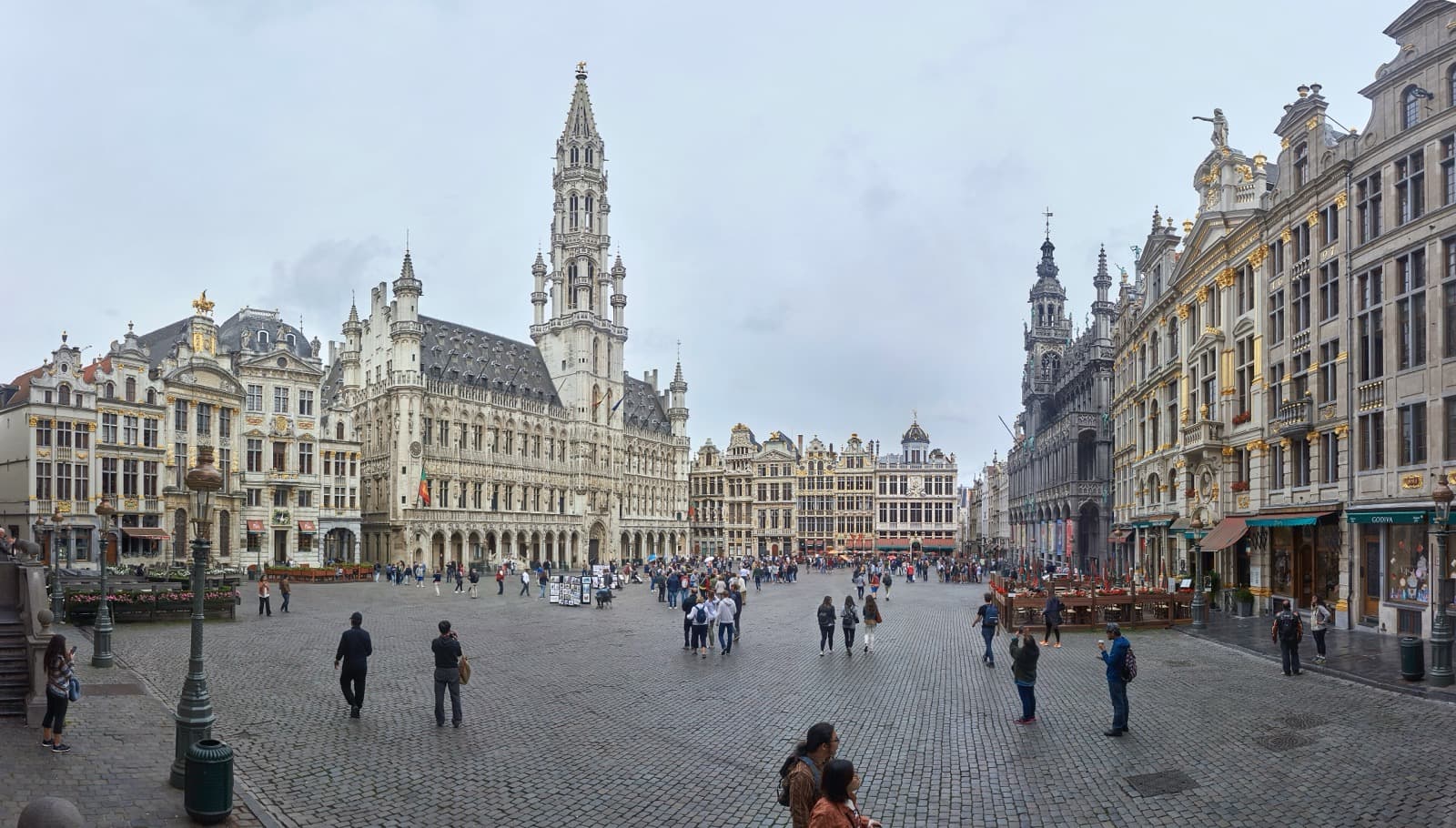
The Phoenix City on the Slope: How Brussels Reads Its Own Hillside
The Grand Place Is a Burn Scar: Reading Brussels Rebuilt From Fire
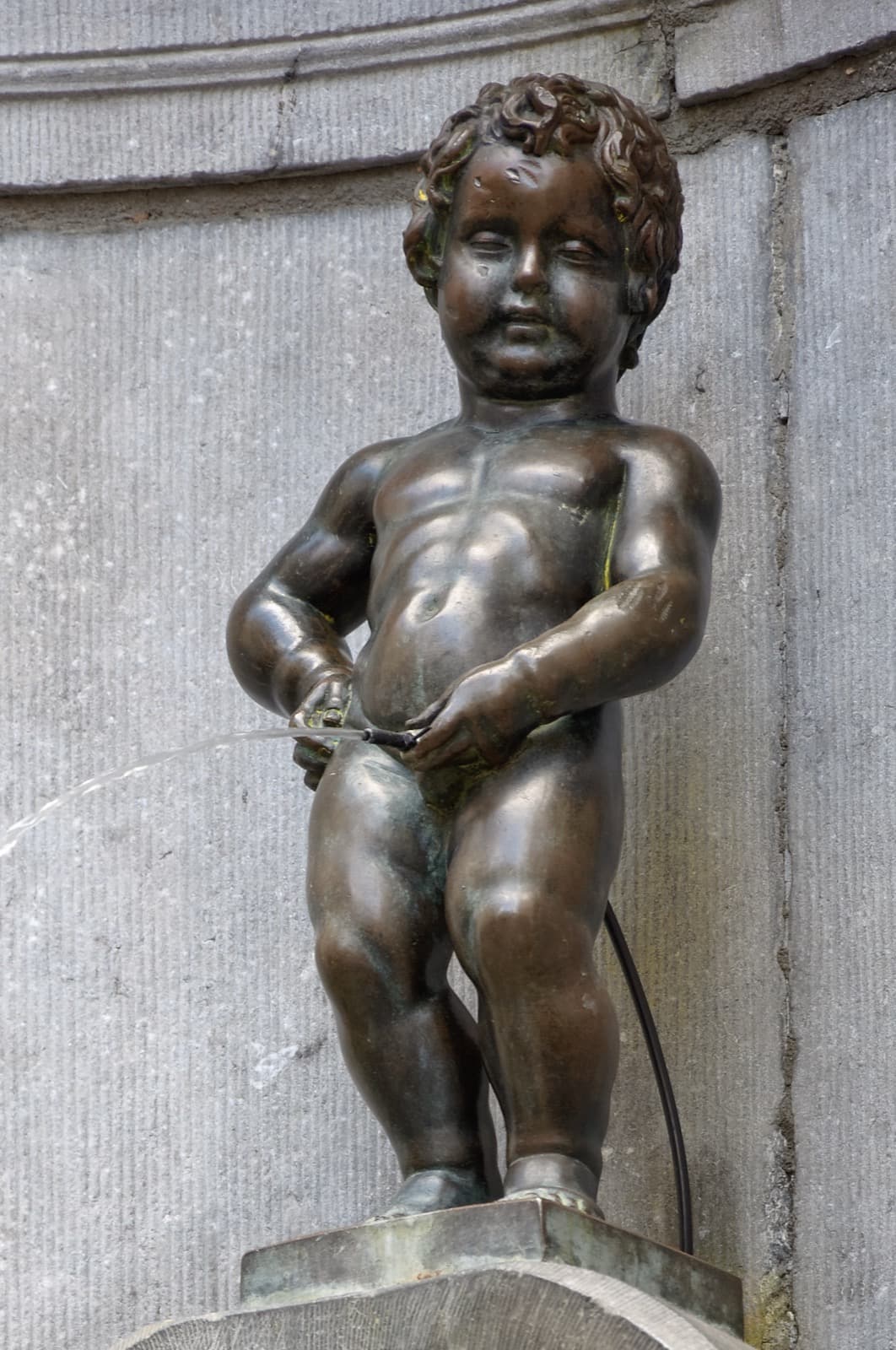
Manneken Pis: Why Brussels Built a Legend Around a 55-Centimetre Bronze Boy