One of Europe's most admired squares is a scar. In August 1695, during the Nine Years' War, a French army bombarded the heart of Brussels for roughly three days and burned most of the Grand Place to the ground. The trade guilds rebuilt their houses in stone within about four years, and that speed is the whole story: the serene, gilded harmony people cross today was raised, almost all at once, out of catastrophe. The Roamer self-guided walk through Brussels' old lower town begins at the Grand Place and teaches you to read the fire beneath the beauty, then follows the rebuilt city to a cheeky bronze boy, a glass-roofed arcade, and a cathedral on the hill.
A square that reads as one hand, built by many
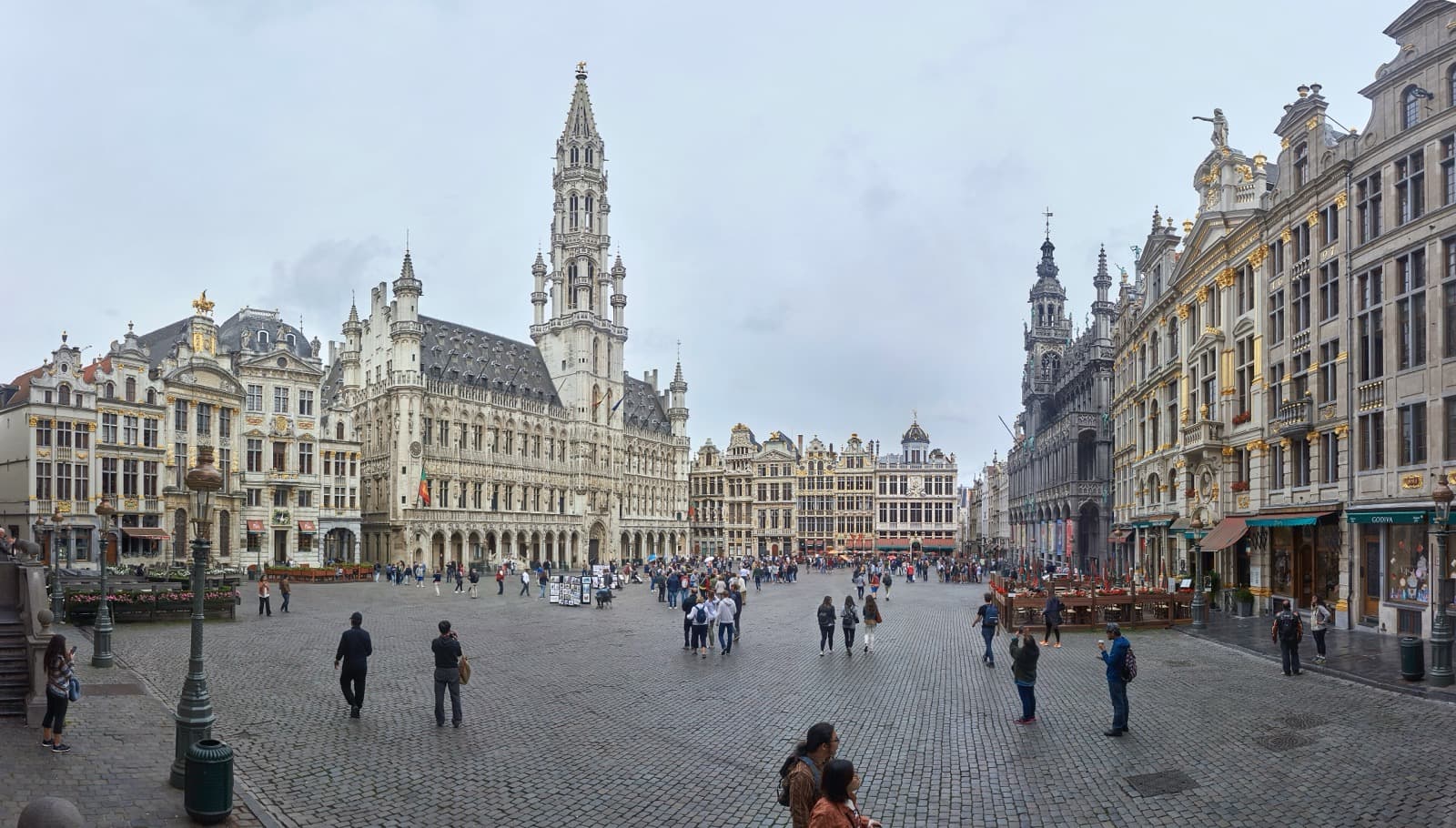
Stand in the middle of the Grand Place and the first impression is coherence. Gilded gables, stone facades in Gothic, Baroque, and the Louis the Fourteenth manner, all leaning into one another as if planned by a single mind across centuries. It was not. Almost everything you see is the same age, and it exists because of the bombardment.
On the thirteenth of August, 1695, a French army under Marshal Villeroy, the second Duke of Villeroy, shelled this largely defenseless city. Brussels' own museums and UNESCO record the toll: an estimated three thousand cannonballs and twelve hundred incendiary shells, about four thousand houses destroyed, and most of the Grand Place flattened. The aim was to draw enemy forces away from a siege elsewhere. The diversion failed, and it remains the most destructive event in the city's history. Within about four years, the guilds and property owners rebuilt in stone under strict municipal oversight that required every plan be submitted for approval. That is why the square reads as one hand: it was rebuilt almost simultaneously, under one rule. Catastrophe became a coordinated display of civic pride. The Grand Place was inscribed on the UNESCO World Heritage List in 1998, valued for exactly this decorative and aesthetic unity.
The square carries older, darker memory too, told plainly rather than sentimentally. In 1568, during the Spanish repression of the Dutch Revolt, the Counts Egmont and Horn were beheaded here on the orders of the Duke of Alba, two real men executed before a crowd. Beauty and violence share the same paving stones. That is the argument the whole tour makes, and the Grand Place is where it lands hardest.
The one survivor, and why the rest could rise
Hear a stop from this walk
The Cathedral of Saint Michael and Saint Gudula: The National Church on the Hill
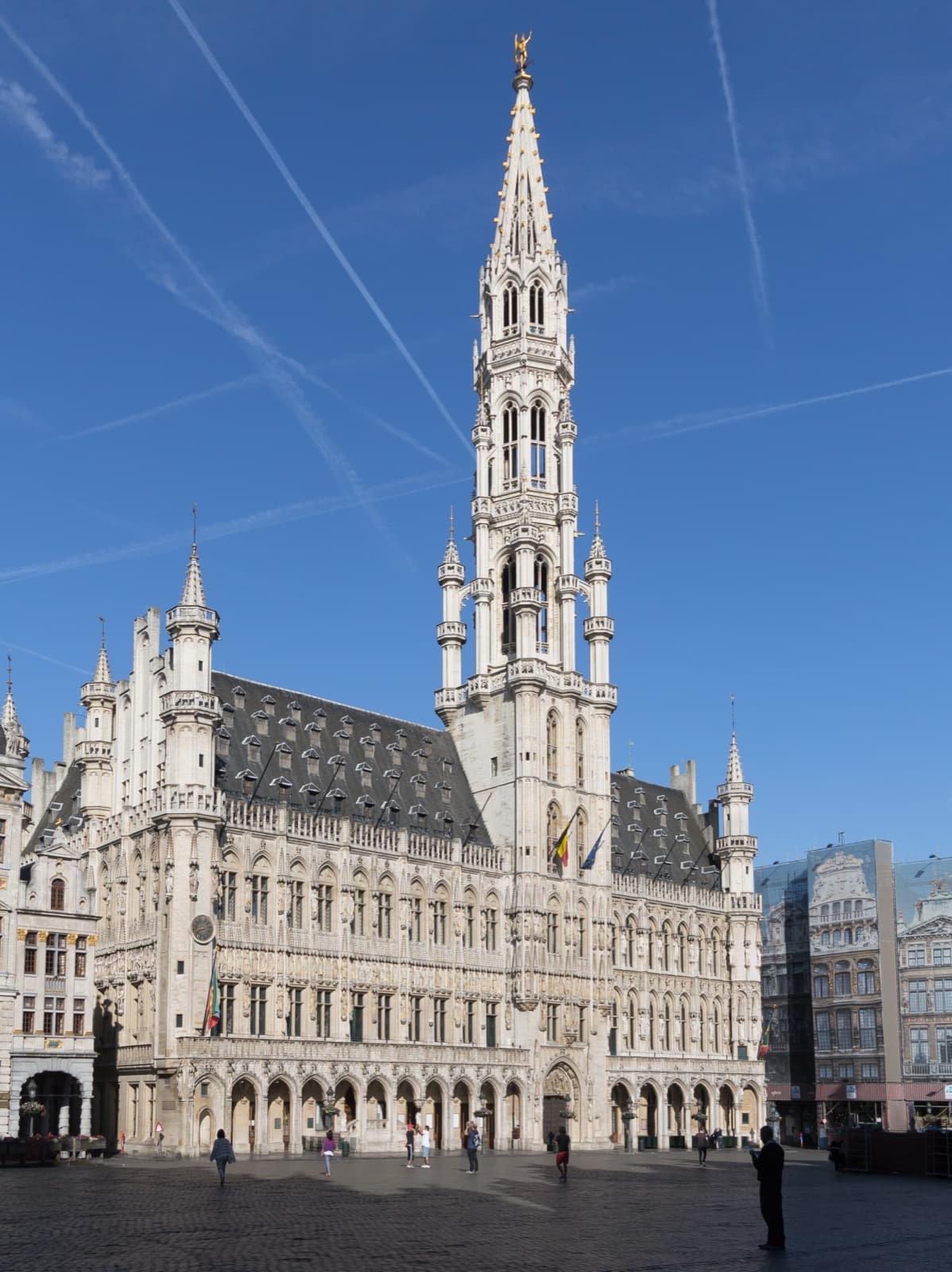
Turn to the south side and you meet the reason the fire has a witness. The Town Hall is Brabantine Gothic, begun in 1401 and completed in 1455, its openwork stone tower climbing about ninety-six metres and crowned by a gilt statue of Saint Michael slaying a dragon, roughly 2.7 metres tall, set in place in the mid-1450s. Look closely and the building is not symmetrical: the two wings do not quite match, the tower does not sit dead centre, the great entrance is slightly off. That is not a mistake but the result of a scattered building history and a cramped site, and it gives the facade a restless, living quality.
Now hold the fire in mind. When the bombardment struck, the city museums record that only the stone shell of the Town Hall remained standing. The interior was destroyed, but the structure, and crucially the tower, endured. Picture the square in flames, four thousand houses falling, and this Gothic tower still upright above the smoke, the fixed point around which everything else would be rebuilt. Understanding this stop changes how you see stop one: the harmony of the guildhalls was measured against the one thing that survived.
The rebuilders sign their work
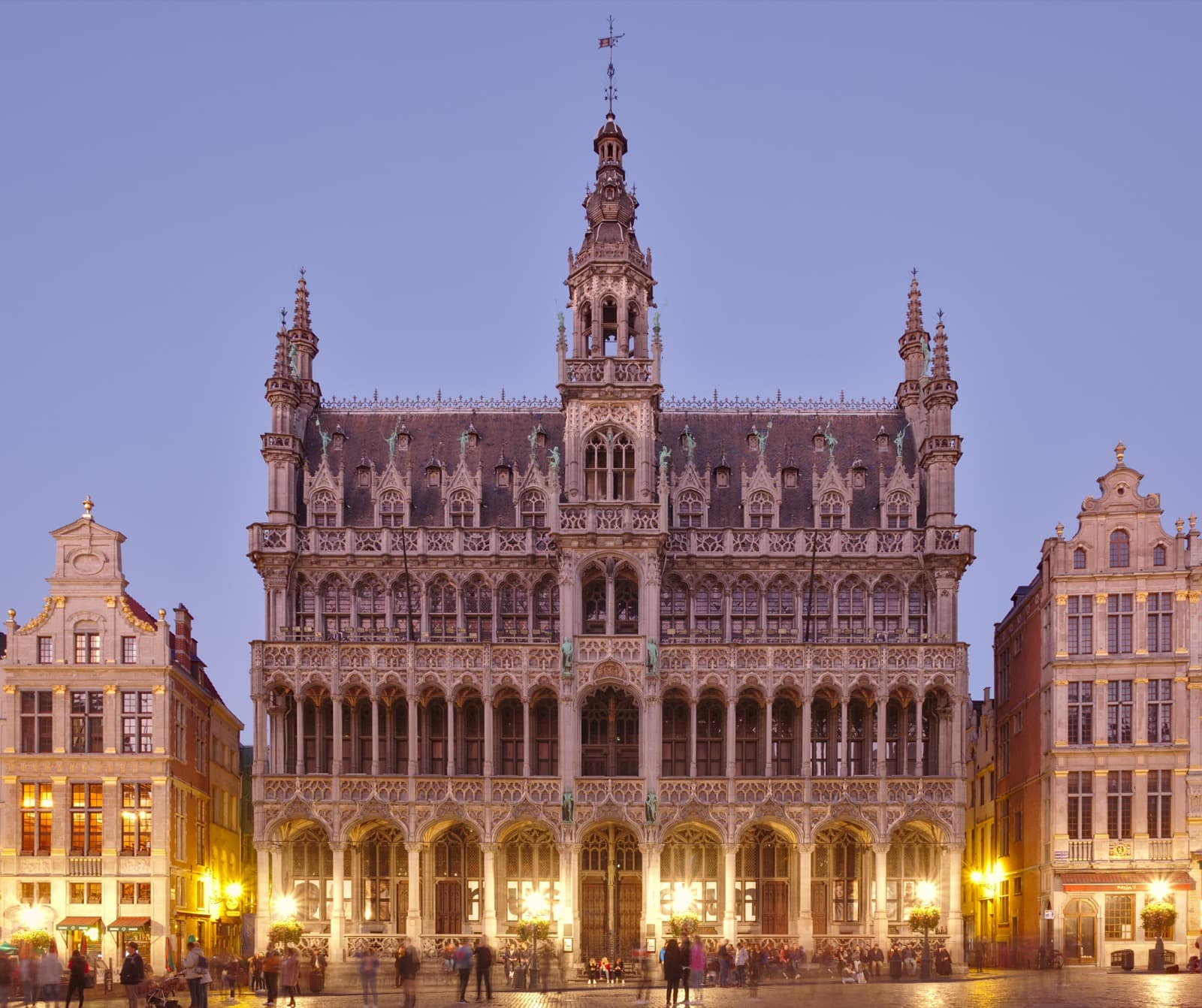
Directly facing the Town Hall stands the King's House, called the Broodhuis, the Breadhouse, in Dutch. Despite the royal name, no king ever lived here; a bread market occupied the spot from the early thirteenth century. The building you see is a neo-Gothic reconstruction raised between 1874 and 1896 by the architect Victor Jamaer, and it now holds the Brussels City Museum, whose collection includes paintings of the 1695 bombardment and the original costumes of Manneken Pis. If you want the tour's thesis grounded in physical evidence, step inside and look at those bombardment canvases before you walk on.
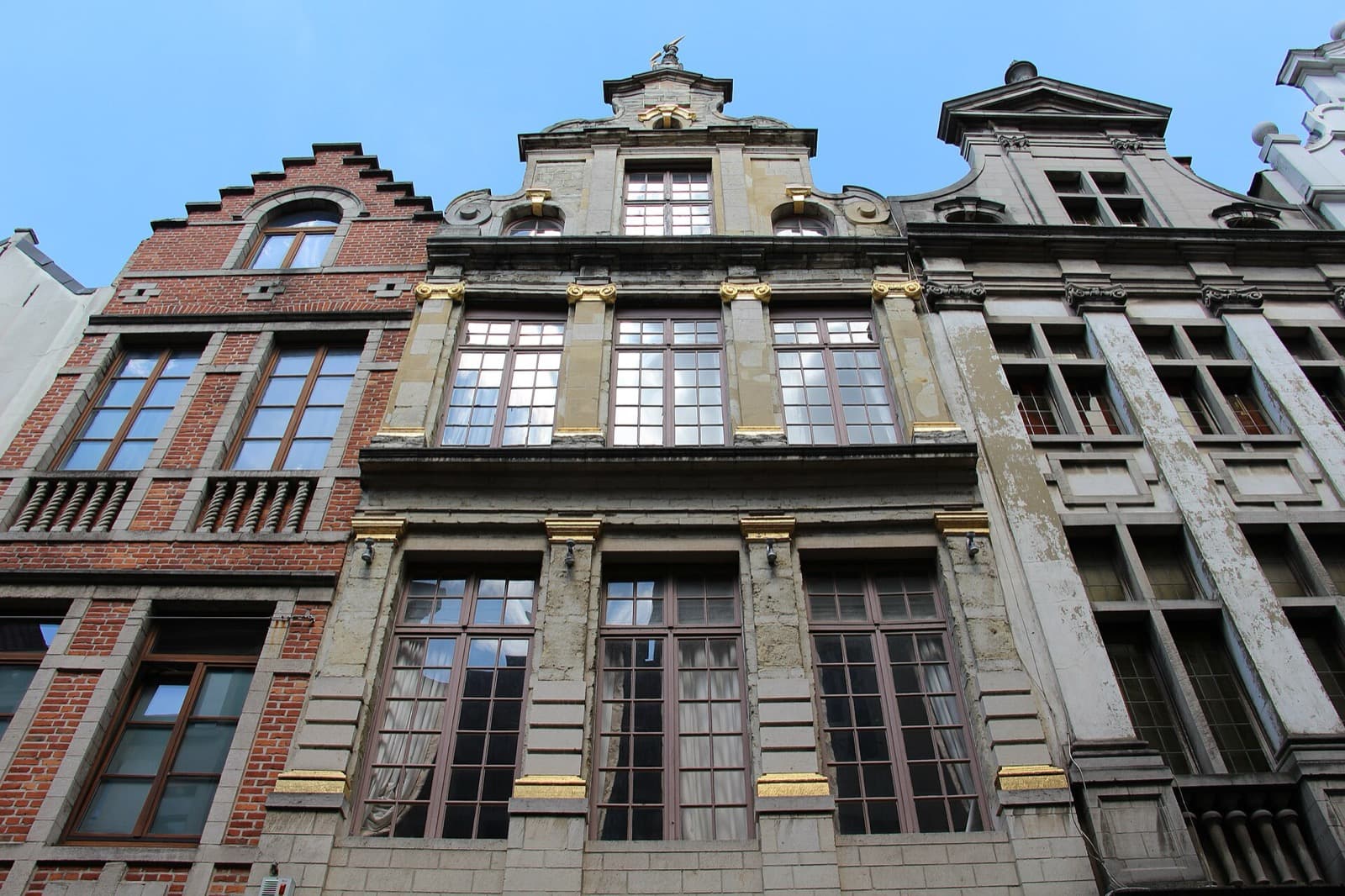
Then let your eye travel the gables around the square. These guild houses are the true protagonists, each crowned with the emblem of its trade: the Fox of the haberdashers, the She-Wolf of the archers, the Horn of the boatmen, the King of Spain of the bakers, the Swan of the butchers. Every guild competed to raise the proudest facade, while strict city oversight kept them in harmony. This is merchant ambition turned into gilded stone, catastrophe answered with craftsmanship.
From folklore to glass to the hill
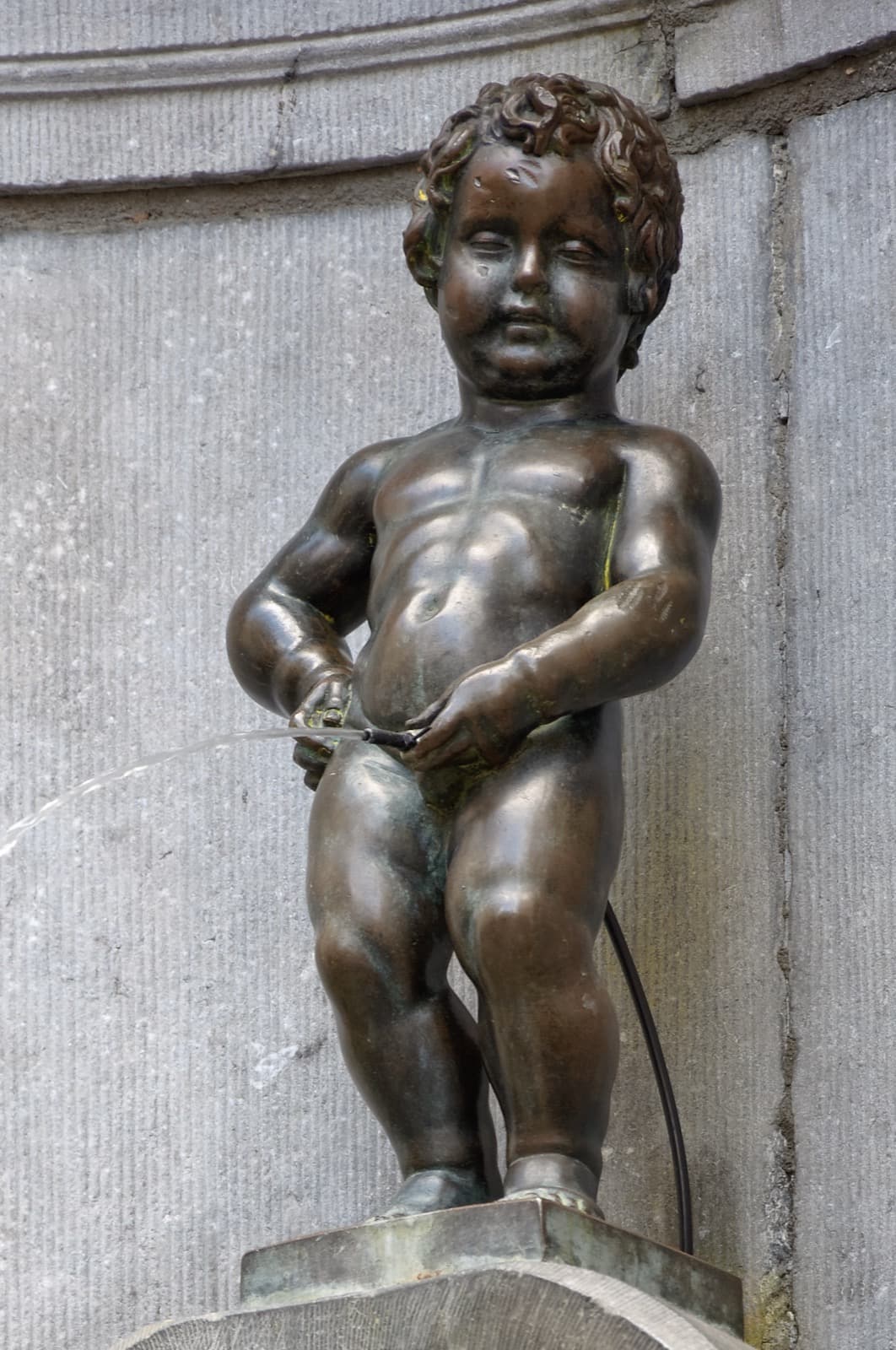
The walk loosens after the square, and that shift is deliberate. A few streets southwest, about three hundred and fifty metres on foot, a small crowd gathers around Manneken Pis, a bronze boy only about 55.5 centimetres tall, cast about 1619 by the sculptor Jerome Duquesnoy the Elder. The figure on the fountain today is a 1960s copy; the original is kept in the city museum. His origin stories are folklore, not documented history, and the city offers them as legend. In a place rebuilt from fire, there is wit in a mascot dressed through the year in around a thousand costumes now shown at a museum devoted entirely to his clothes.
Northeast of the square, the Royal Saint-Hubert Galleries open a different chapter. Inaugurated on the twentieth of June, 1847, under King Leopold the First and designed by Jean-Pierre Cluysenaar, the arcade runs more than two hundred and thirteen metres under an arched glass roof on a slender cast-iron frame. It is among the oldest glazed arcades in Europe and predates the celebrated Milan galleria. Its three linked sections, the King's, the Queen's, and the Princes' galleries, run one into the next. This is the confident nineteenth-century city that could roof a whole street in glass and call it royal.
Finally the ground rises east to the Cathedral of Saint Michael and Saint Gudula, Belgium's national church. Its Gothic reconstruction began in 1226 under Henry the Second, Duke of Brabant, and took about three centuries. The twin west towers, sixty-four metres tall, were built between 1470 and 1485, attributed to Jan van Ruysbroeck, and left deliberately without spires. Do not confuse this pair with the Town Hall's single ninety-six-metre tower back on the square: different building, different age, different story. The Grand Place rose from fire in about four years; this cathedral rose slowly over three centuries. Two ways a city builds, both visible on one short walk of roughly one and a half kilometres.
To plan the full route and pair it with more reading, see our guide to Brussels walking tours and the Brussels city page, then start the audio walk at the Grand Place and read the hidden layer for yourself.
Sources
- La Grand-Place, Brussels, UNESCO World Heritage Centre: the 1998 inscription and the ensemble's decorative and aesthetic value.
- The Bombardment of 1695, Brussels City Museum: the scale of the French bombardment and the survival of the Town Hall's stone shell and tower.
- Grand-Place and Brussels Town Hall, Wikipedia: construction dates, the guild-house emblems, and the rebuilding under municipal oversight.
- Manneken Pis, Wikipedia and the GardeRobe MannekenPis costume museum: the 1619 bronze, its 55.5 cm height, the 1960s replica, and the costume tradition.
- Royal Saint-Hubert Galleries and Cathedral of St. Michael and St. Gudula, Wikipedia: the 1847 arcade and the cathedral's Gothic construction and twin towers.
Ready to experience it?
Grand Place: The Square Rebuilt in Four Years
60 min · 1.5 km · easy
More from Brussels
Explore more at your own pace.
Brussels Travel Guide: How Many Days, Getting Around, Best Time, and Safety
One Day in Brussels: A Walkable Route From the Grand Place to the Upper Town
The Phoenix City on the Slope: How Brussels Reads Its Own Hillside
The Royal Palace of Brussels: A Facade That Holds the Whole Upper Town
Manneken Pis: Why Brussels Built a Legend Around a 55-Centimetre Bronze Boy