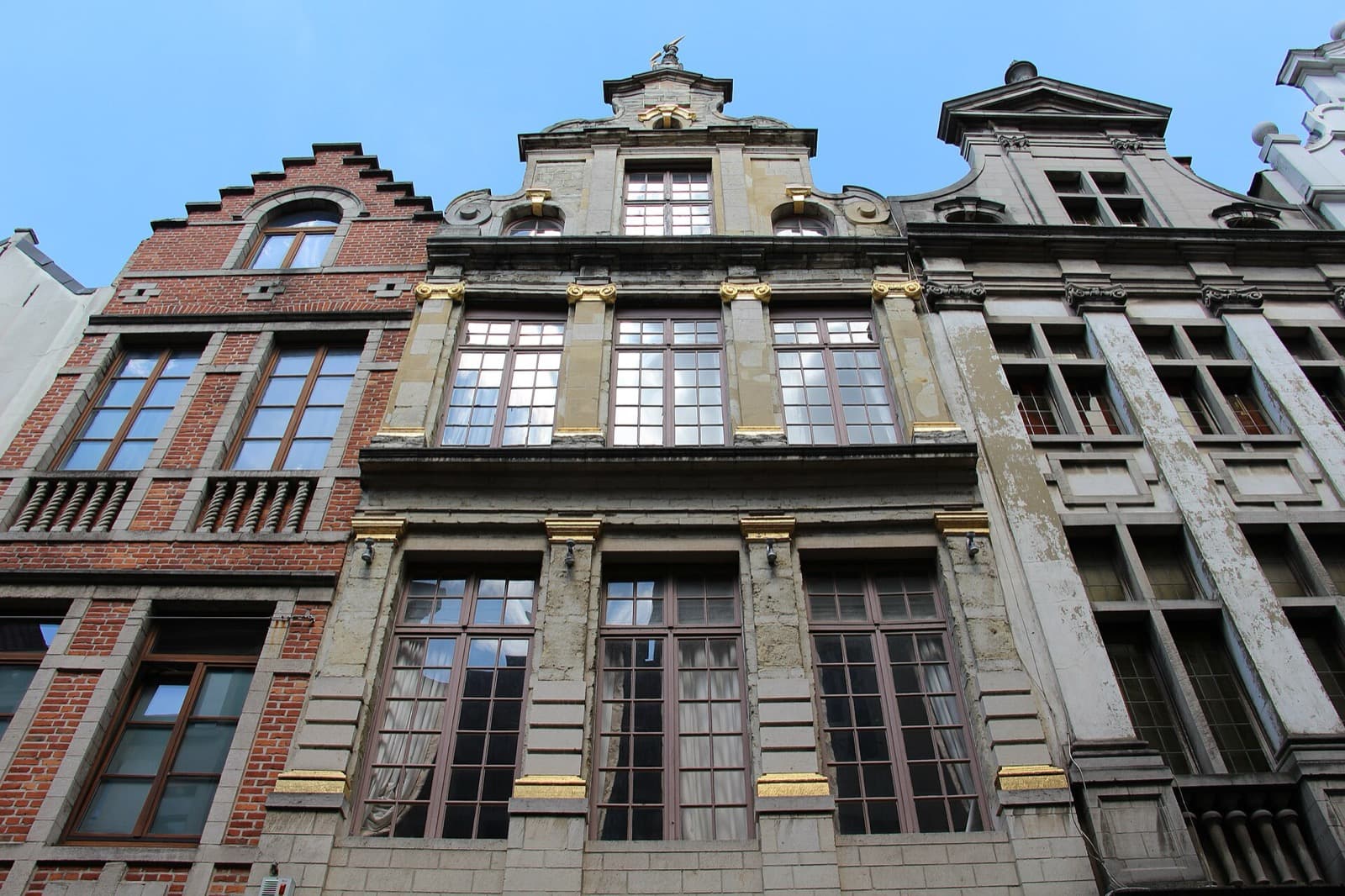
The most beautiful square in Europe is a scar: in sixteen ninety-five a French bombardment burned its heart, and the trade guilds rebuilt it in gilded stone within about four years, a phoenix you can still read beneath the beauty.
Start · The Grand Place: The Square Rebuilt From Fire
DirectionsStops
- 1
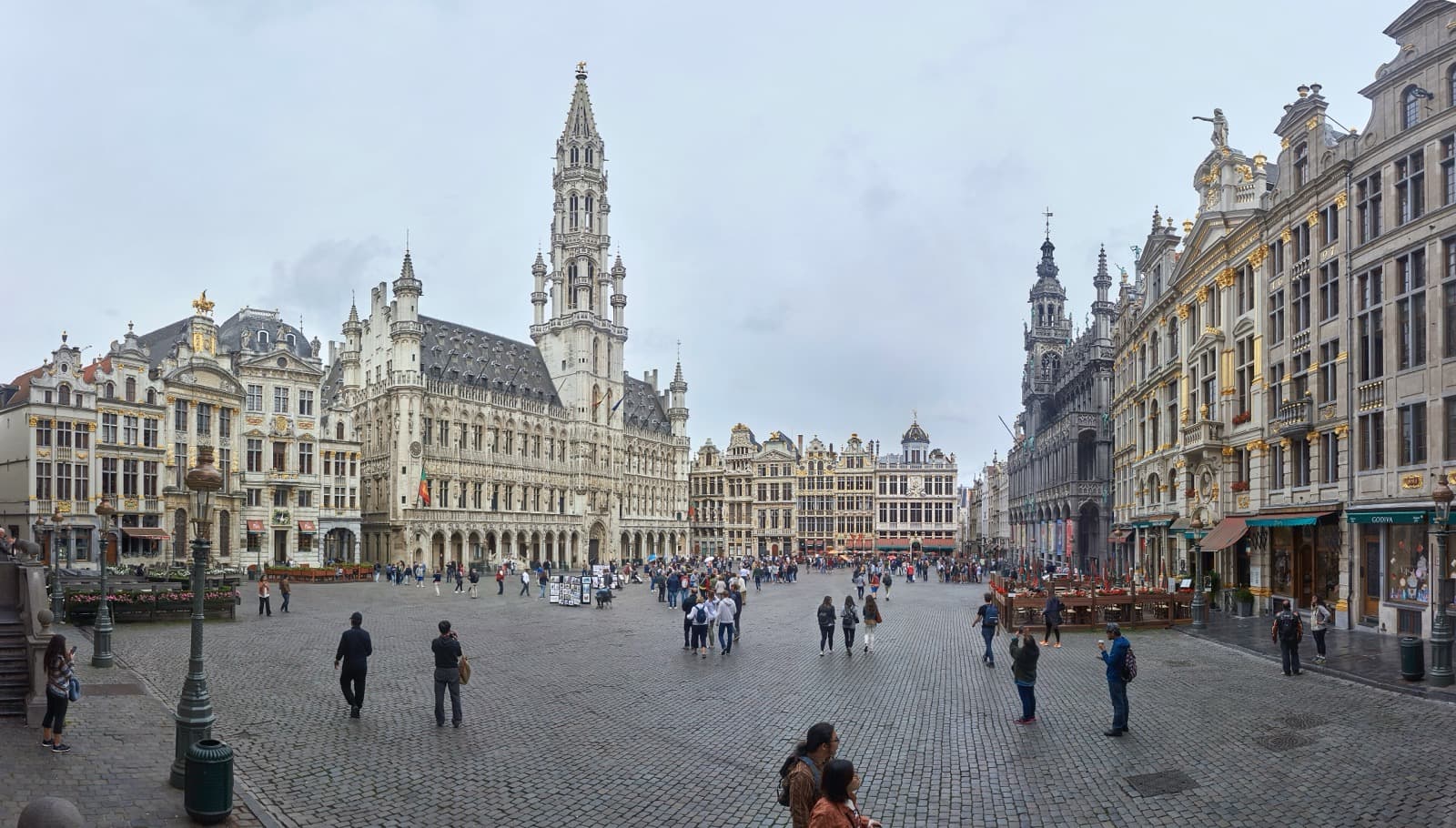
The Grand Place: The Square Rebuilt From Fire
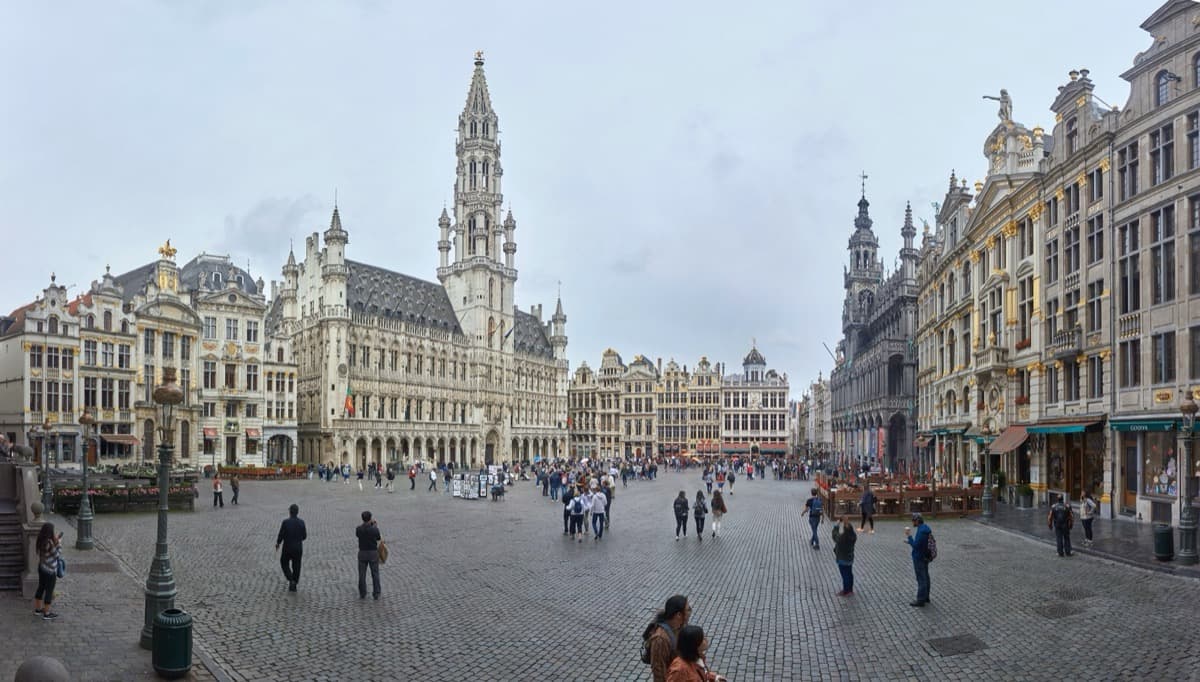
The gilded market square of Brussels, a harmony of Baroque guildhalls raised out of the ashes of a deliberate bombardment.
- 2
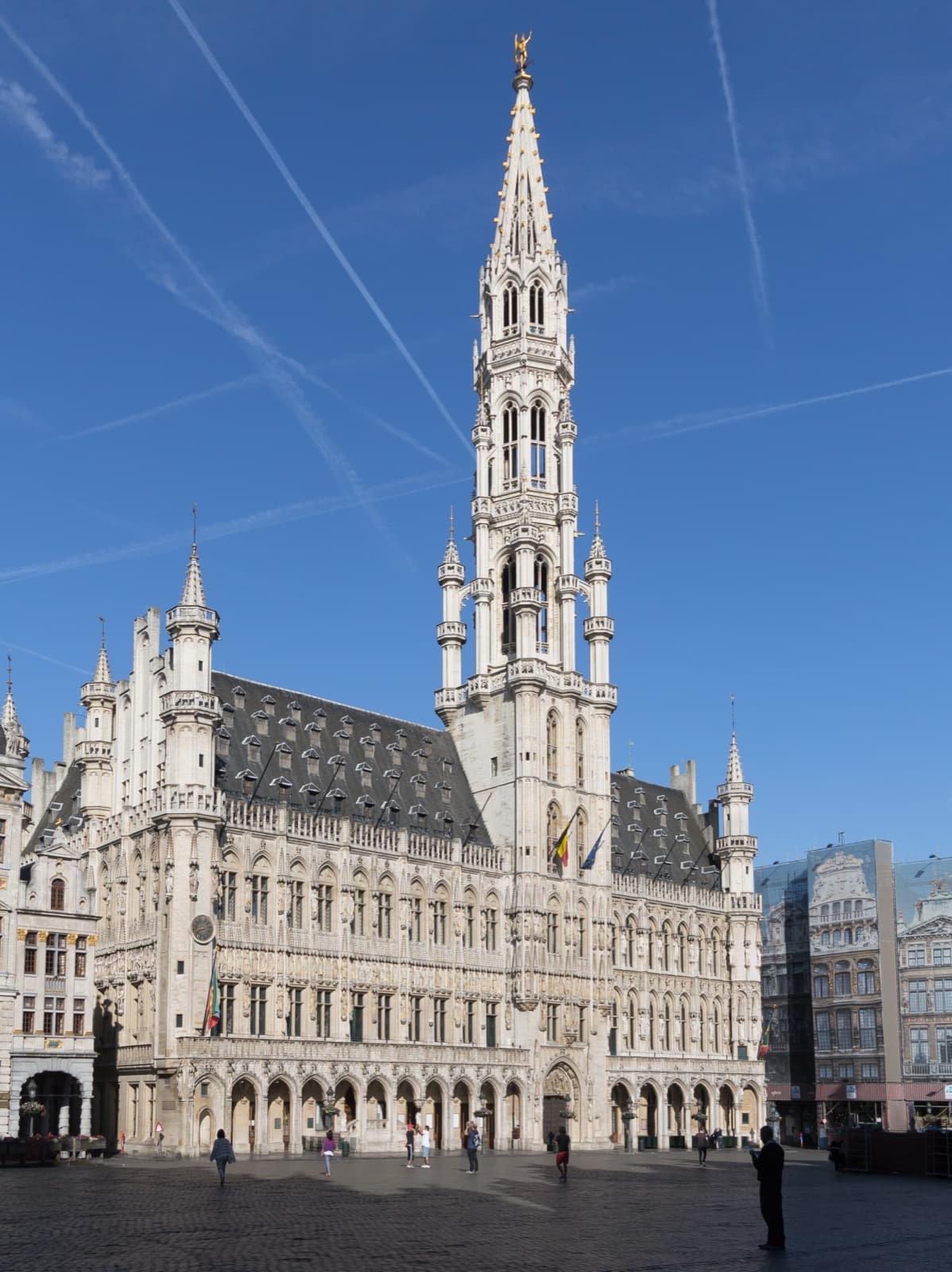
The Town Hall: The Tower That Stood Through the Fire
The Brabantine Gothic Town Hall on the south side of the square, whose openwork tower survived the bombardment when all around it burned.
- 3
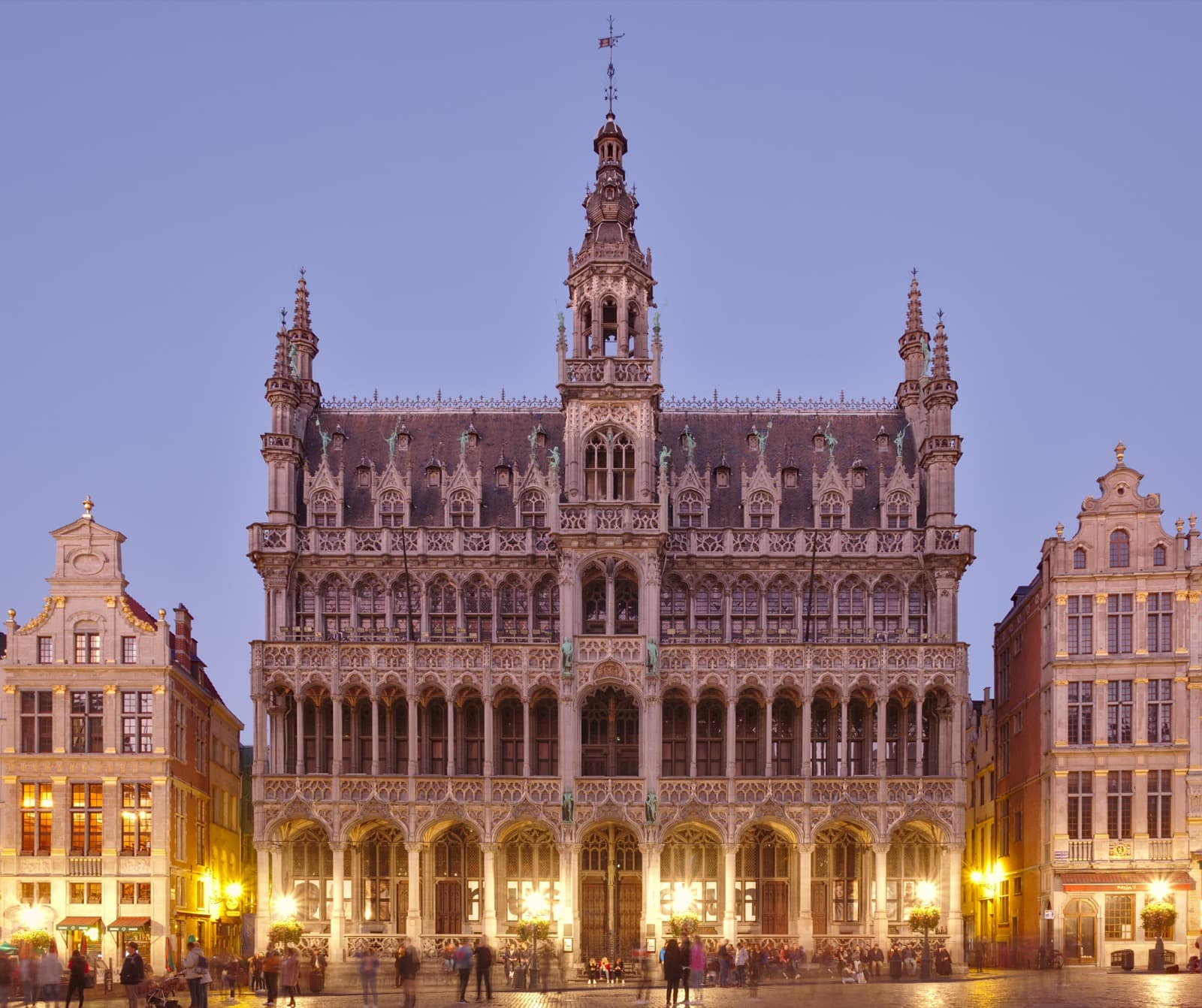
The King's House and the Guild Houses: The Rebuilt Pride of the Trades
The neo-Gothic King's House facing the Town Hall, and the emblemed Baroque guildhalls the trades raised in stone after the fire.
- 4
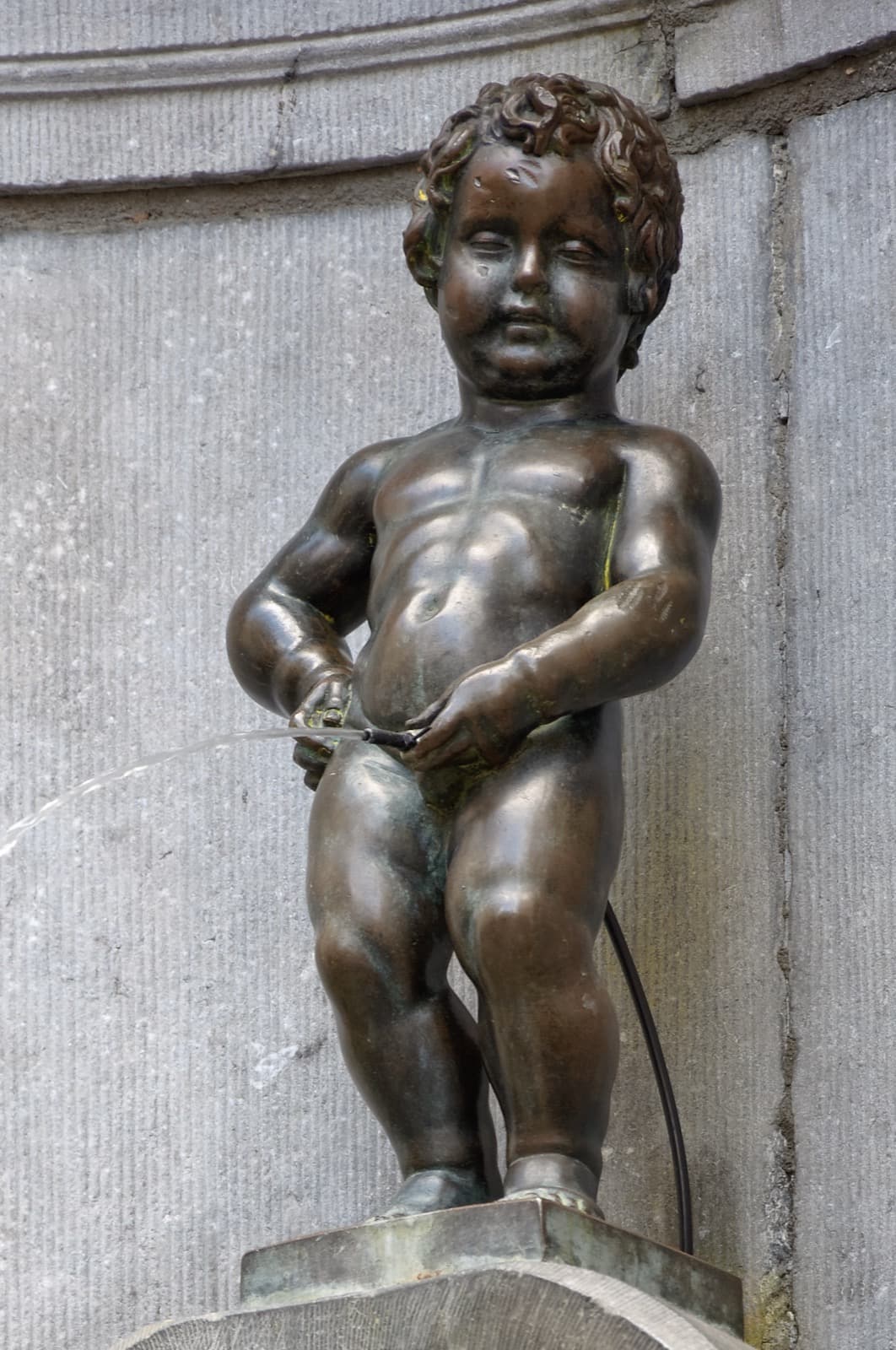
Manneken Pis: The Cheeky Bronze Boy of Brussels
The small bronze fountain-boy a few streets southwest of the square, the irreverent mascot of the whole city.
- 5
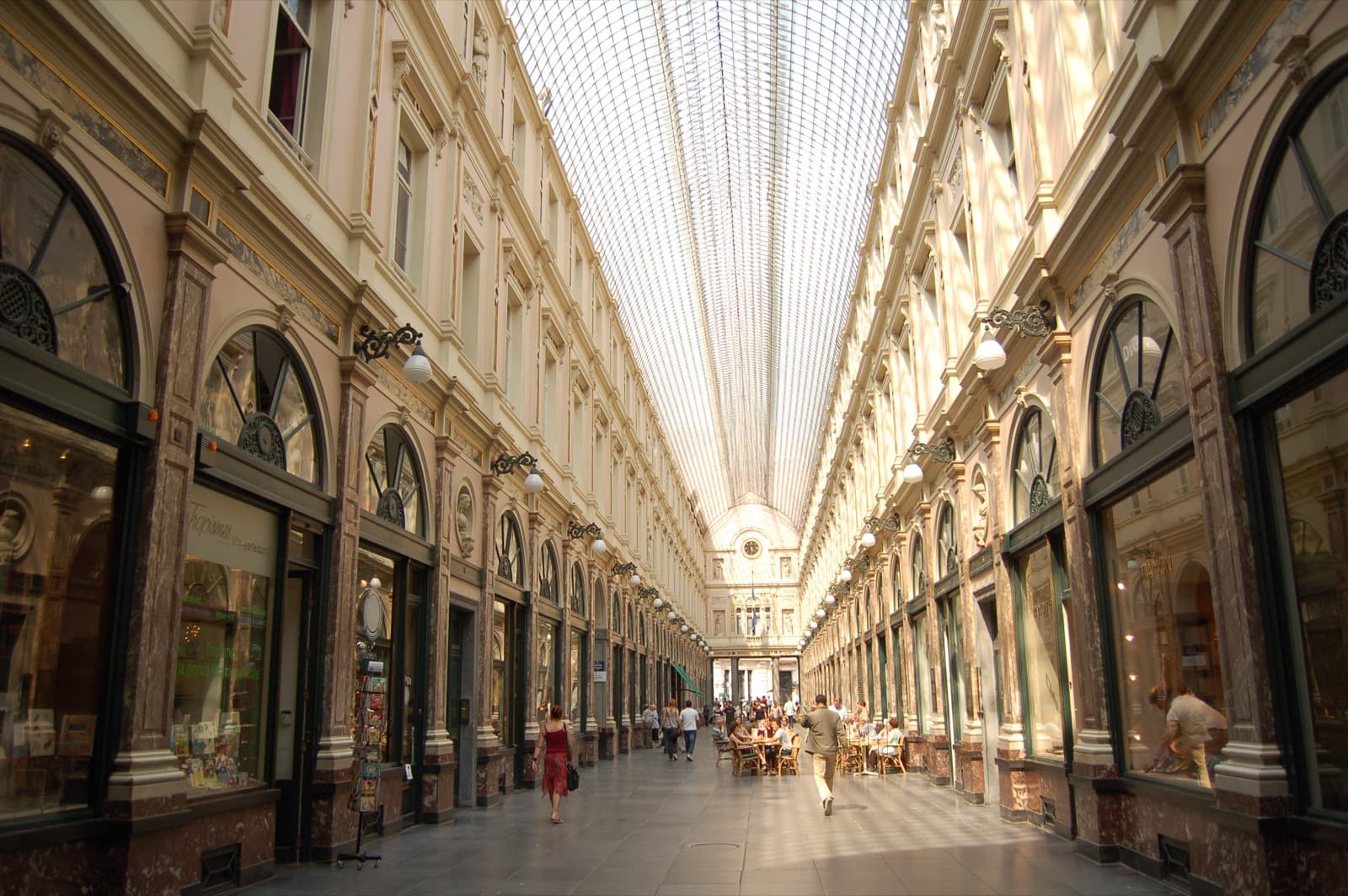
The Royal Saint-Hubert Galleries: Europe's Glass-Vaulted Arcade
The elegant glass-roofed shopping arcade northeast of the square, among the oldest covered arcades in Europe.
- 6
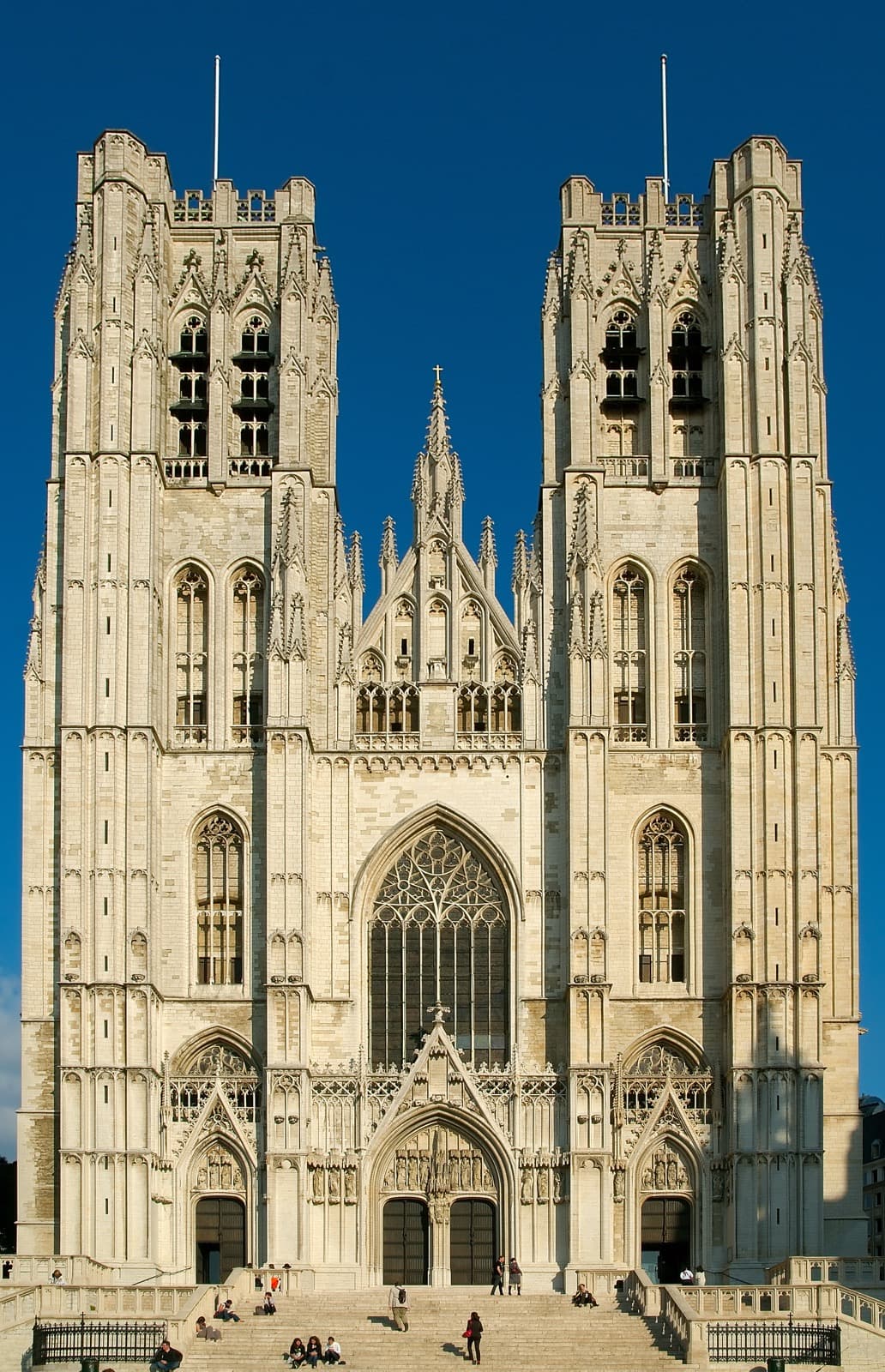
The Cathedral of Saint Michael and Saint Gudula: The National Church on the Hill
The twin-towered Brabantine Gothic cathedral on the hill above the lower town, Belgium's national church.
Details
Best Time to Visit
Early morning is the finest time to cross the Grand Place, when the square is nearly empty and the low light catches the gilded gables before the day-trip crowds and guided circuits arrive. Evening is a close second, when the facades are lit and the crowds thin again. Weekdays are calmer than weekends throughout the lower town, and the interior stops, the Brussels City Museum, the arcade and the cathedral, are best enjoyed outside the midday peak. Spring and early autumn bring the mildest weather; northern skies are changeable in any season, so a bright morning can turn to rain by afternoon.
Pro Tips
- •Cross the Grand Place at dawn or after dark to have the gilded square nearly to yourself, with the guildhall gables lit and no group pressing you on.
- •Step into the Brussels City Museum in the King's House to see paintings of the sixteen ninety-five bombardment and the original costumes of Manneken Pis, which grounds the whole walk.
- •Manneken Pis is genuinely tiny, only about fifty-five centimetres, so look for the small crowd at the corner rather than a monument, and enjoy him at your own pace.
- •Walk the Royal Saint-Hubert Galleries slowly and look up at the iron-and-glass roof; the architecture, not any particular shop, is the reward.
- •The cathedral is a working national church with free entry to the nave and a small fee for the treasury and crypt, so keep your voice low, dress modestly and visit outside service times.
- •This is a continuous walk of about two kilometres on foot with a gentle climb toward the cathedral, so wear comfortable shoes for the cobbles and set your own unhurried rhythm.
Safety & Precautions
- •The Grand Place and Manneken Pis draw dense crowds and, with them, pickpockets, so keep your phone, wallet and valuables discreet and secure in busy areas.
- •The lower town's streets are cobbled and the route climbs from the lower to the upper town toward the cathedral, so watch your footing and take the slope at your own pace.
- •Trams and traffic cross parts of the route and cyclists share the streets, so look carefully before stepping off a kerb or crossing.
- •Northern weather is changeable in any season, so carry a waterproof, and remember that the City Museum, the cathedral treasury and other ticketed sites charge entry in euros.
Gallery
Related Reading
Go deeper on what you'll see, hear, and walk through.
Overview
Best Self-Guided Walking Tours in Brussels (2026)
3 min
Overview
Brussels Travel Guide: How Many Days, Getting Around, Best Time, and Safety
7 min
Overview
One Day in Brussels: A Walkable Route From the Grand Place to the Upper Town
8 min
Thematic
Best History Walking Tours in Brussels (2026)
2 min
Thematic
The Phoenix City on the Slope: How Brussels Reads Its Own Hillside
8 min
Companion
The Grand Place Is a Burn Scar: Reading Brussels Rebuilt From Fire
7 min
Deep dive
Manneken Pis: Why Brussels Built a Legend Around a 55-Centimetre Bronze Boy
7 min
Read
What to Eat in Brussels: The Dishes, Their Origins, and How to Order
7 min
Read the walk
The full story of Grand Place: The Square Rebuilt in Four Years, in words. Prefer to listen? Play it narrated, from home or on location.
Introduction
The most admired square in Europe is a scar, though almost no one who crosses it knows. In sixteen ninety-five a French army bombarded the heart of Brussels, in Belgium, for roughly three days, and burned most of the Grand Place to the ground. The trade guilds rebuilt their houses in stone within about four years, so the serene, gilded harmony you will admire was raised, almost all at once, out of catastrophe. This walk reads that hidden layer, then follows the old lower town to its small pleasures and up to the cathedral on the hill. There are six stops. Plan on about sixty minutes at your own pace, over roughly one and a half kilometres, all on foot, though the beauty of doing this alone is that the clock is yours: you can linger under a Gothic tower or cross an empty square at dawn with no group at your back and no schedule pressing you on. We begin in the Grand Place itself, the market square of gilded guildhalls raised from ruin. From there we move to the Town Hall, the one survivor whose tower stood through the fire, then to the King's House and the emblemed guild houses of the rebuilders. We slip southwest to Manneken Pis, the cheeky little bronze who became the city's mascot, then to the glass-vaulted Royal Saint-Hubert Galleries of the confident nineteenth-century city, and finally uphill to the Cathedral of Saint Michael and Saint Gudula, the national church above the rebuilt lower town. When you arrive at the Grand Place, begin with stop one.
1. The Grand Place: The Square Rebuilt From Fire
Stand in the middle of the Grand Place and let the whole square speak. Gilded gables, stone facades in Gothic, Baroque and the Louis the Fourteenth manner, all leaning into one another in a harmony so complete it feels planned by a single hand across centuries. It was not. Almost all of what surrounds you is the same age, and it exists because of a fire. On the thirteenth of August, sixteen ninety-five, during the Nine Years' War, a French army under Marshal Villeroy, the second Duke of Villeroy, bombarded this largely defenseless city for roughly three days. The city's museums and UNESCO both record the toll: an estimated three thousand cannonballs and twelve hundred incendiary shells, about four thousand houses destroyed, and most of the Grand Place flattened and burned. The aim was to draw enemy forces away from a siege elsewhere. The diversion failed, and it remains the most destructive event in the city's history. Yet look again. Within about four years the trade guilds and property owners rebuilt their houses in stone, under strict municipal oversight that required every plan be submitted for approval. Catastrophe became a coordinated display of civic pride. This square has also seen darker days told plainly. In fifteen sixty-eight, during the Spanish repression of the Dutch Revolt, the Counts Egmont and Horn were beheaded here on the orders of the Duke of Alba, two real men executed before a crowd. The Grand Place was inscribed on the UNESCO World Heritage List in nineteen ninety-eight. Take your time. The beauty is real, and so is the fire beneath it.
2. The Town Hall: The Tower That Stood Through the Fire
On the south side of the square rises the Town Hall, and it is the reason the fire has a survivor to tell it. This is Brabantine Gothic, a masterpiece of civil Gothic architecture, begun in fourteen oh one and completed in fourteen fifty-five. Its openwork stone tower climbs about ninety-six metres and is crowned by a gilt statue of Saint Michael slaying a dragon, roughly two point seven metres tall, set in place in the mid fourteen fifties. Notice that the building is not symmetrical. The two wings do not quite match, the tower does not sit dead centre, and the great entrance is slightly off. This is not an error but the result of a scattered building history and a cramped site, and it gives the facade its restless, living quality. Now hold the fire in your mind. When the French bombardment struck in sixteen ninety-five, the city museums record that only the stone shell of the Town Hall remained standing. The interior was destroyed, but the structure, and crucially the tower, endured. The city's own history notes that the facade and the tower withstood the cannonballs. Picture it: the square around it in flames, four thousand houses falling, and this Gothic tower still upright above the smoke, the fixed point around which everything else would be rebuilt in stone within about four years. It remains the seat of the city to this day. You can walk the whole exterior freely; the interior opens by guided visit. Stand back far enough to take in the full height of the tower, and you are looking at the one thing on the square that watched the fire and stayed.
3. The King's House and the Guild Houses: The Rebuilt Pride of the Trades
Turn to the north side of the square, directly facing the Town Hall, and you meet the King's House, in French the Maison du Roi, in Dutch the Broodhuis, which means the Breadhouse. Despite the royal name, no king ever lived here; the French name recalls the administration of the…
Full narration for this stop unlocks with the tour.
4. Manneken Pis: The Cheeky Bronze Boy of Brussels
A few streets southwest of the Grand Place, about three hundred and fifty metres on foot, you reach a corner where a small crowd is almost always gathered around something tiny. This is Manneken Pis, a little bronze boy, cheerfully urinating into a fountain basin, and he is one…
Full narration for this stop unlocks with the tour.
5. The Royal Saint-Hubert Galleries: Europe's Glass-Vaulted Arcade
Make your way back and northeast of the Grand Place, where a facade opens into one of the most elegant interiors in the city. This is the Galeries Royales Saint-Hubert, the Royal Saint-Hubert Galleries, a glass-roofed shopping arcade inaugurated on the twentieth of June,…
Full narration for this stop unlocks with the tour.
6. The Cathedral of Saint Michael and Saint Gudula: The National Church on the Hill
Climb the slope east of the arcade, from the lower town toward the upper, and the ground rises to meet the last stop: the Cathedral of Saint Michael and Saint Gudula, set on a hill between the two halves of the city. This is Belgium's national church, and it looks the part. The…
Full narration for this stop unlocks with the tour.