A slow climb through the upper town of Brussels, where the palaces, museums, guild squares and the colossal Law Courts read the city's class geography written straight into the hillside.
Start · The Mont des Arts: Where the City Divides
DirectionsStops
- 1
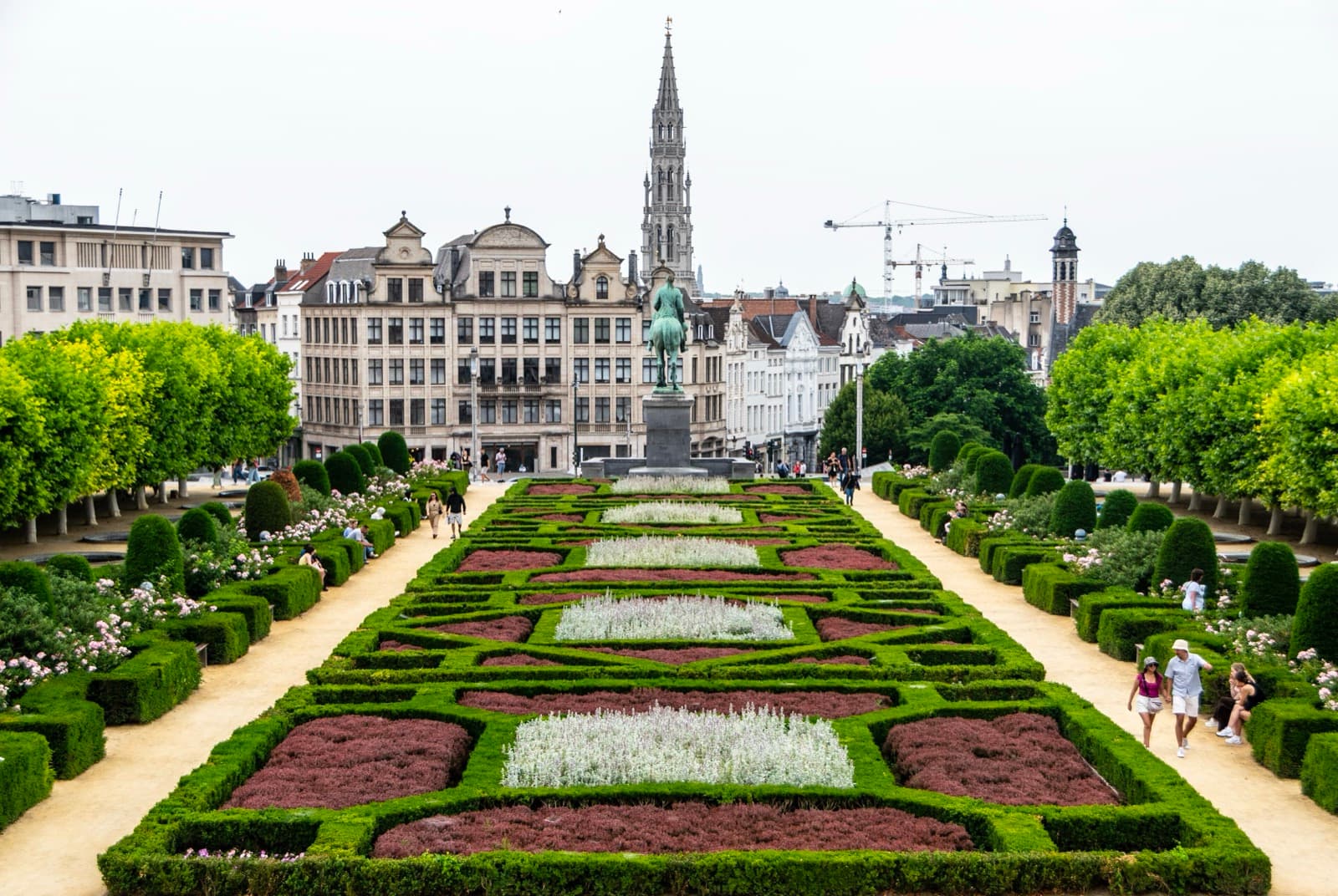
The Mont des Arts: Where the City Divides
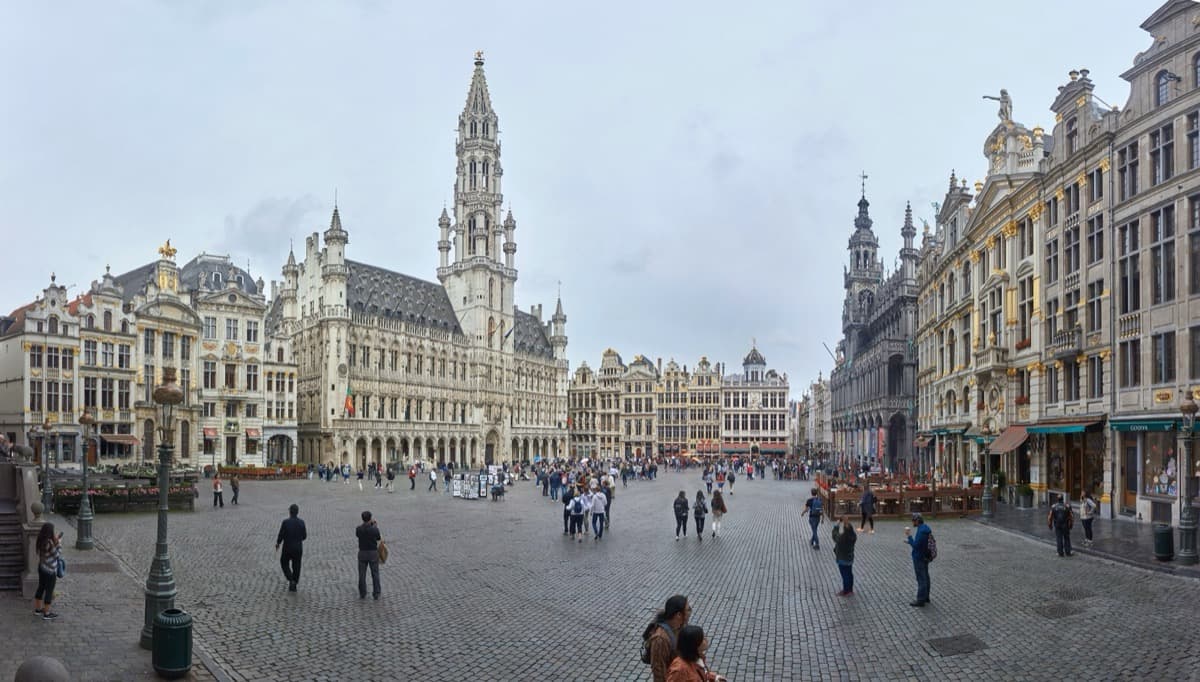
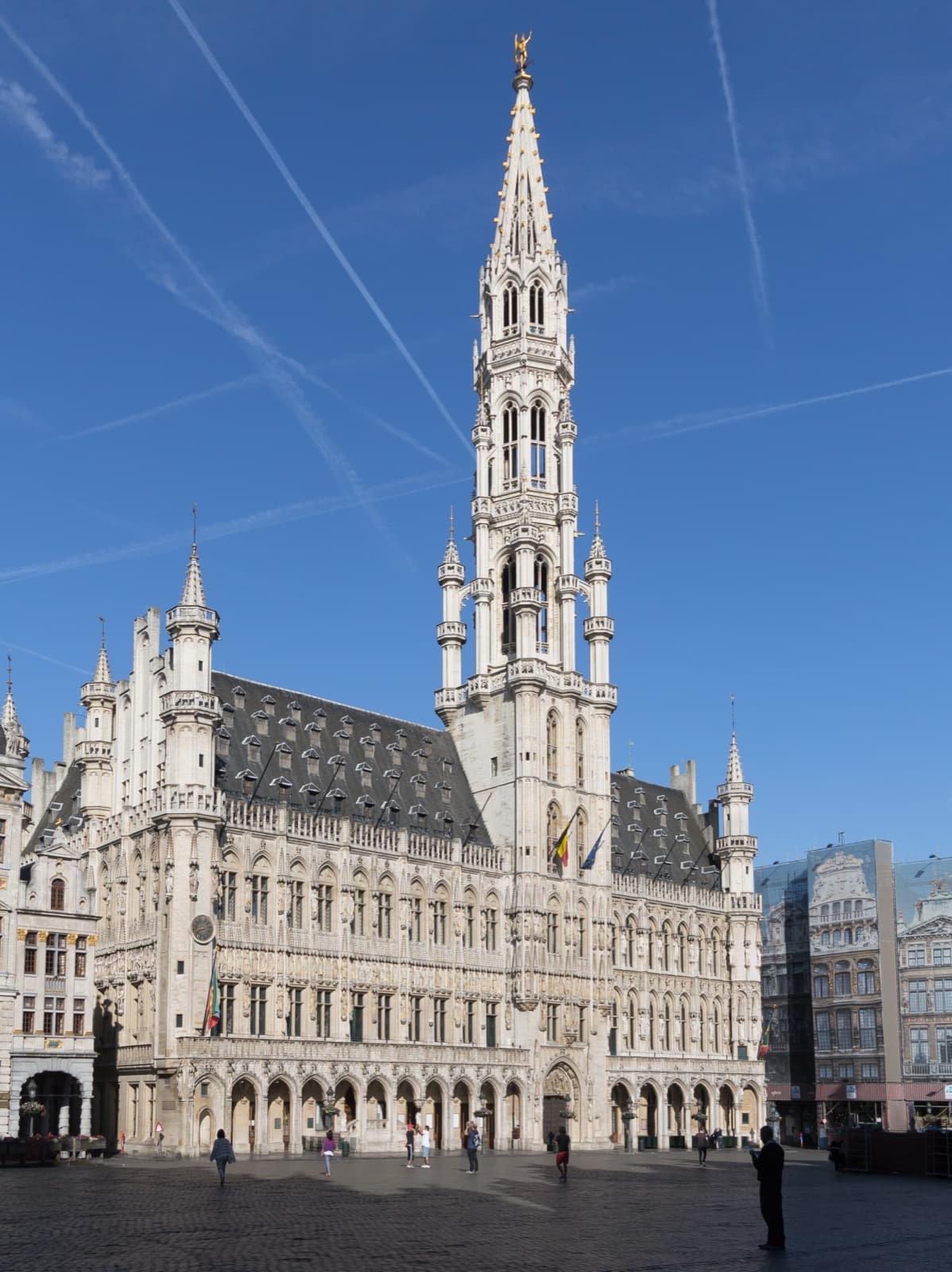
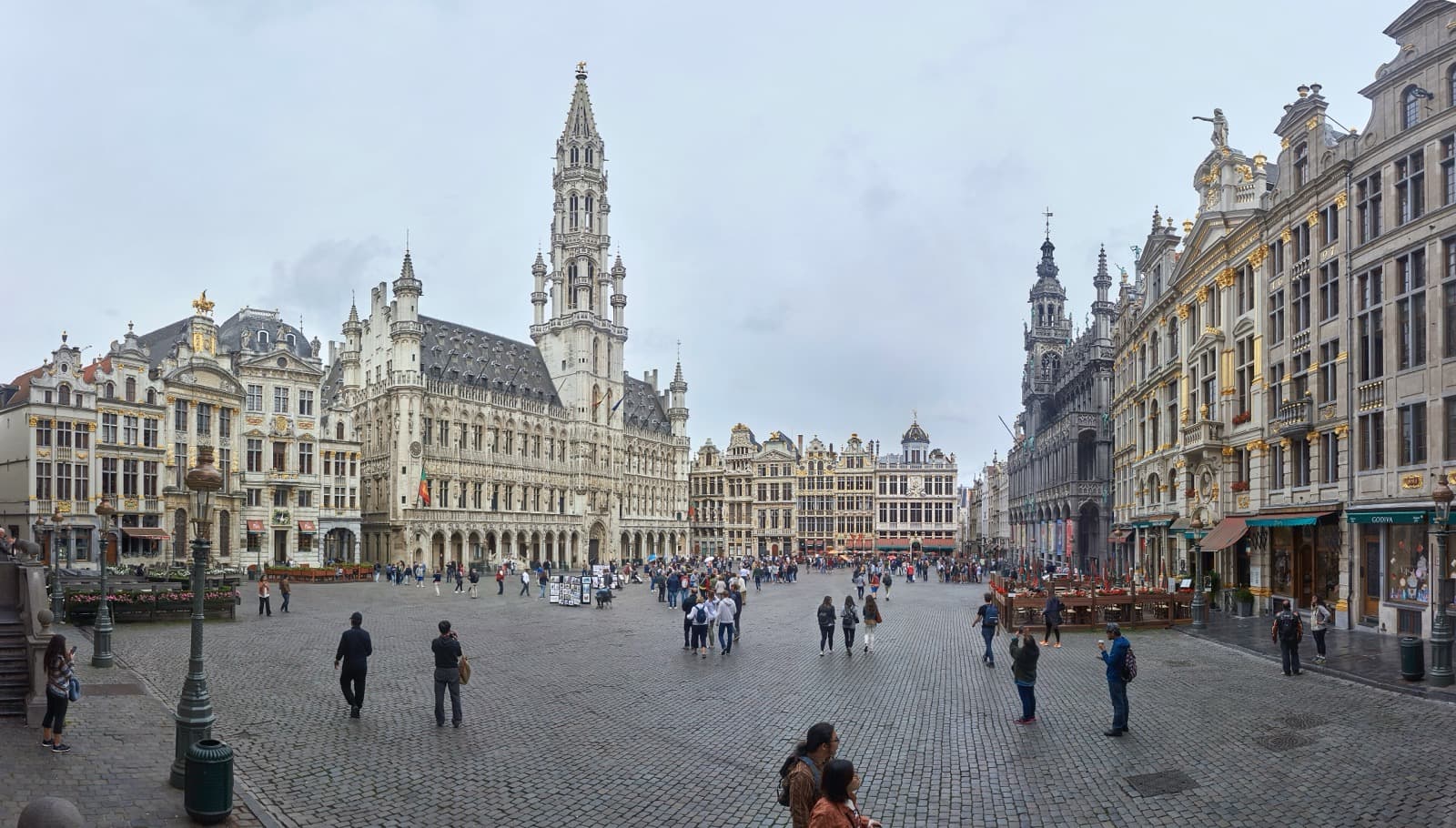
A terraced garden and stair on the slope between the lower and upper towns, where the city splits into low and high and the tower of the Town Hall stands clear over the roofs below.
- 2
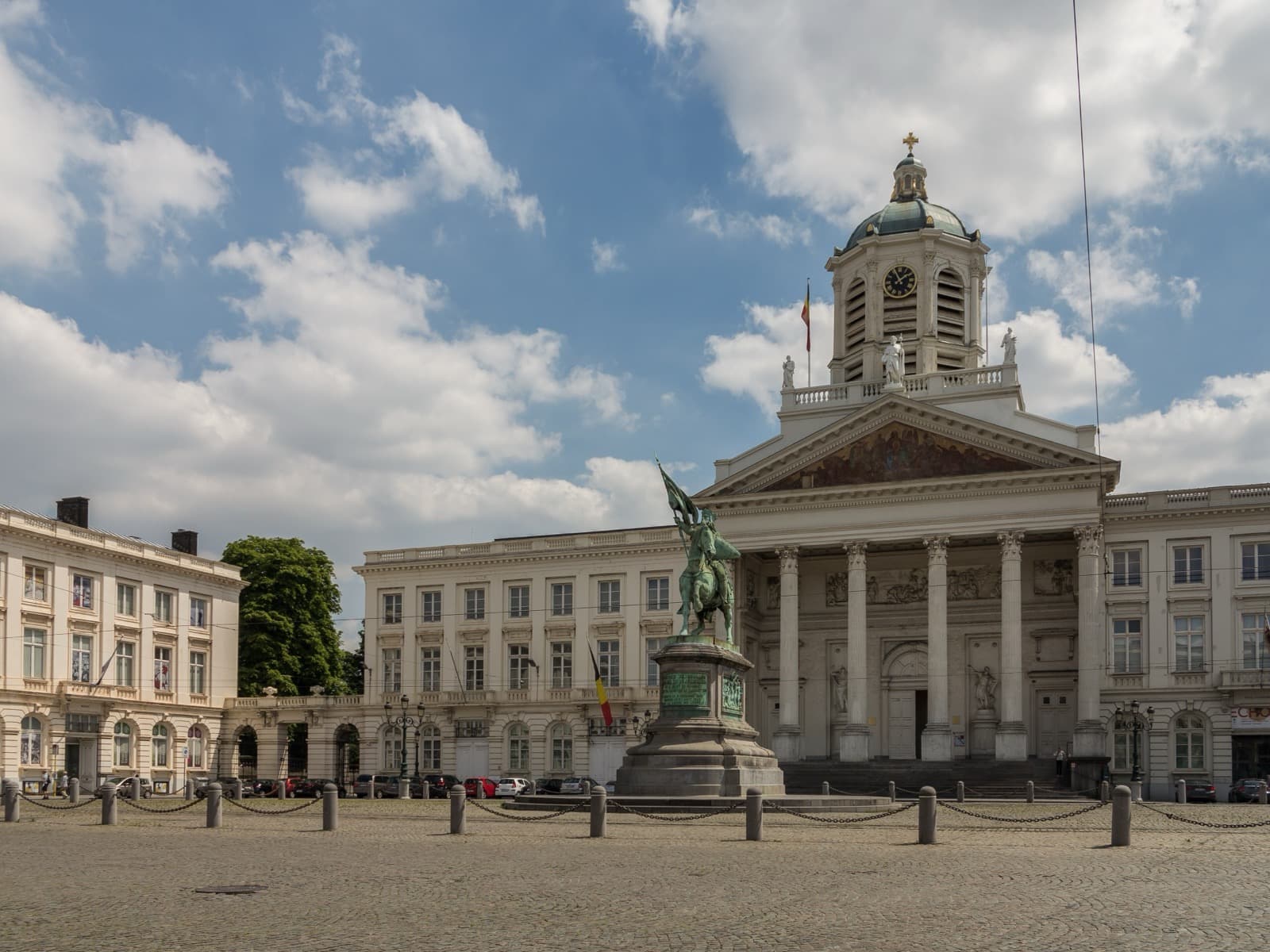
Place Royale: The Square Over the Buried Palace
A serene white neoclassical square, laid out over the vaulted ruins of the vanished Coudenberg palace of dukes and emperors.
- 3
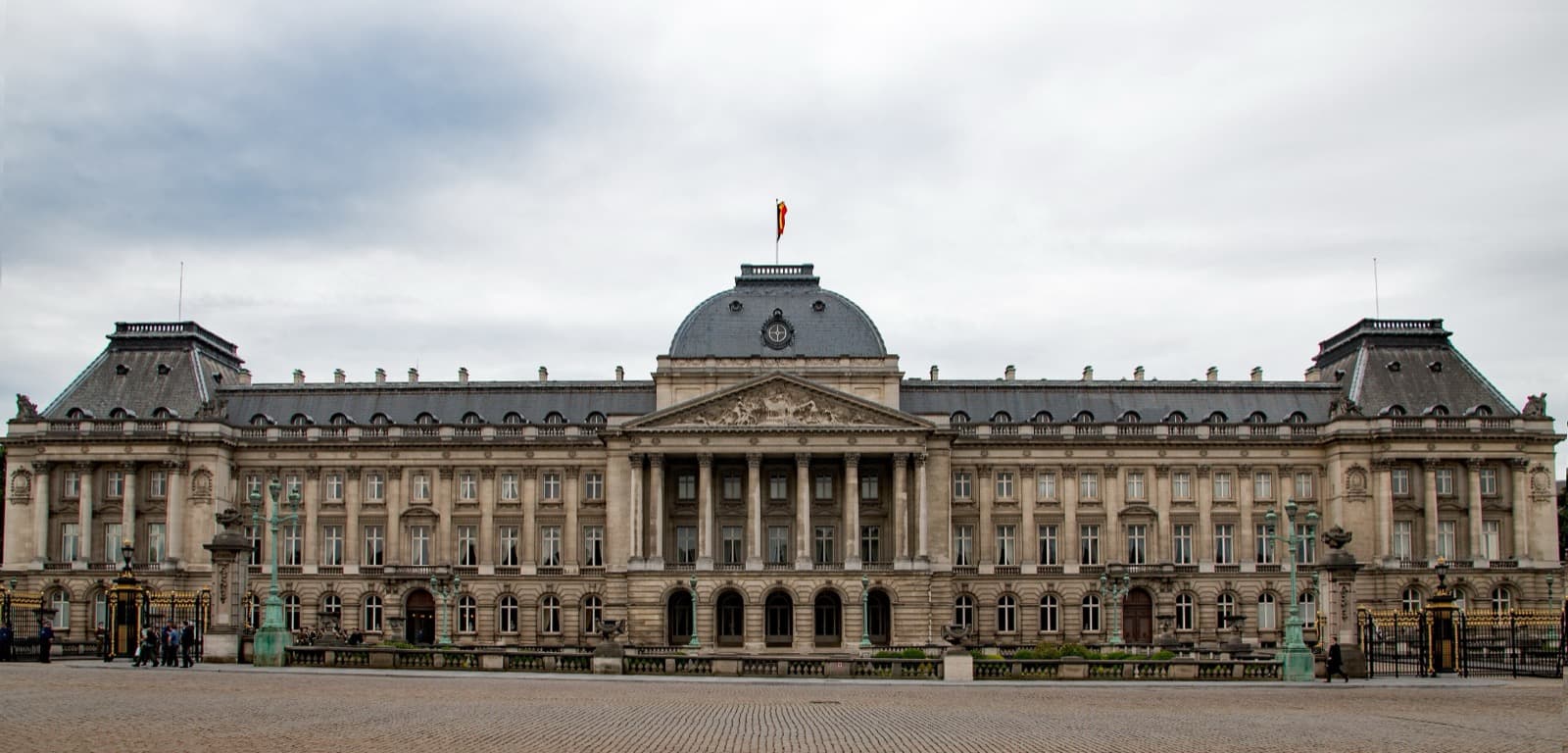
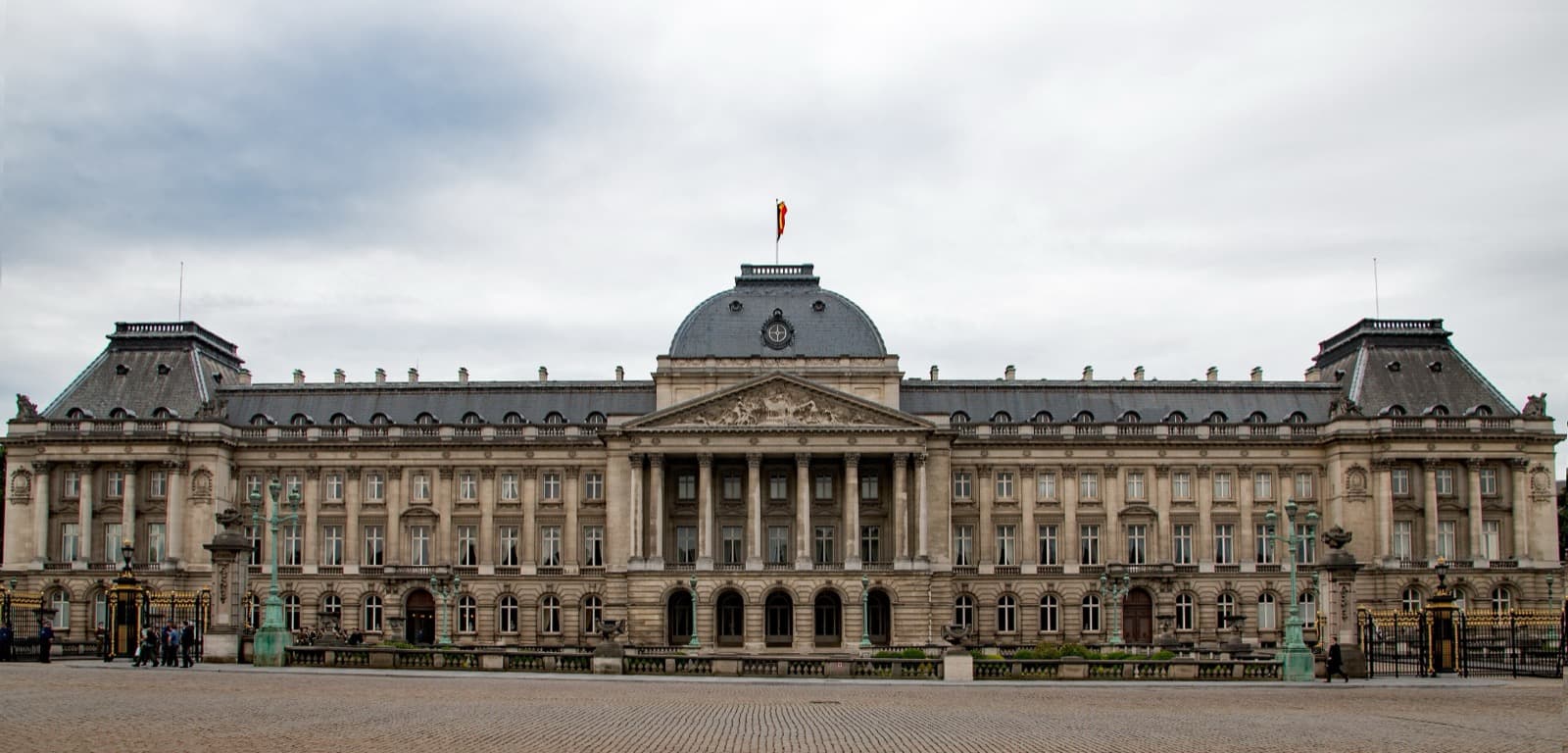
The Royal Palace: The Crown and the Colonial Reckoning
The long white official palace of the King of the Belgians, whose grand facade belongs to the era of Leopold the Second and his Congo.
- 4
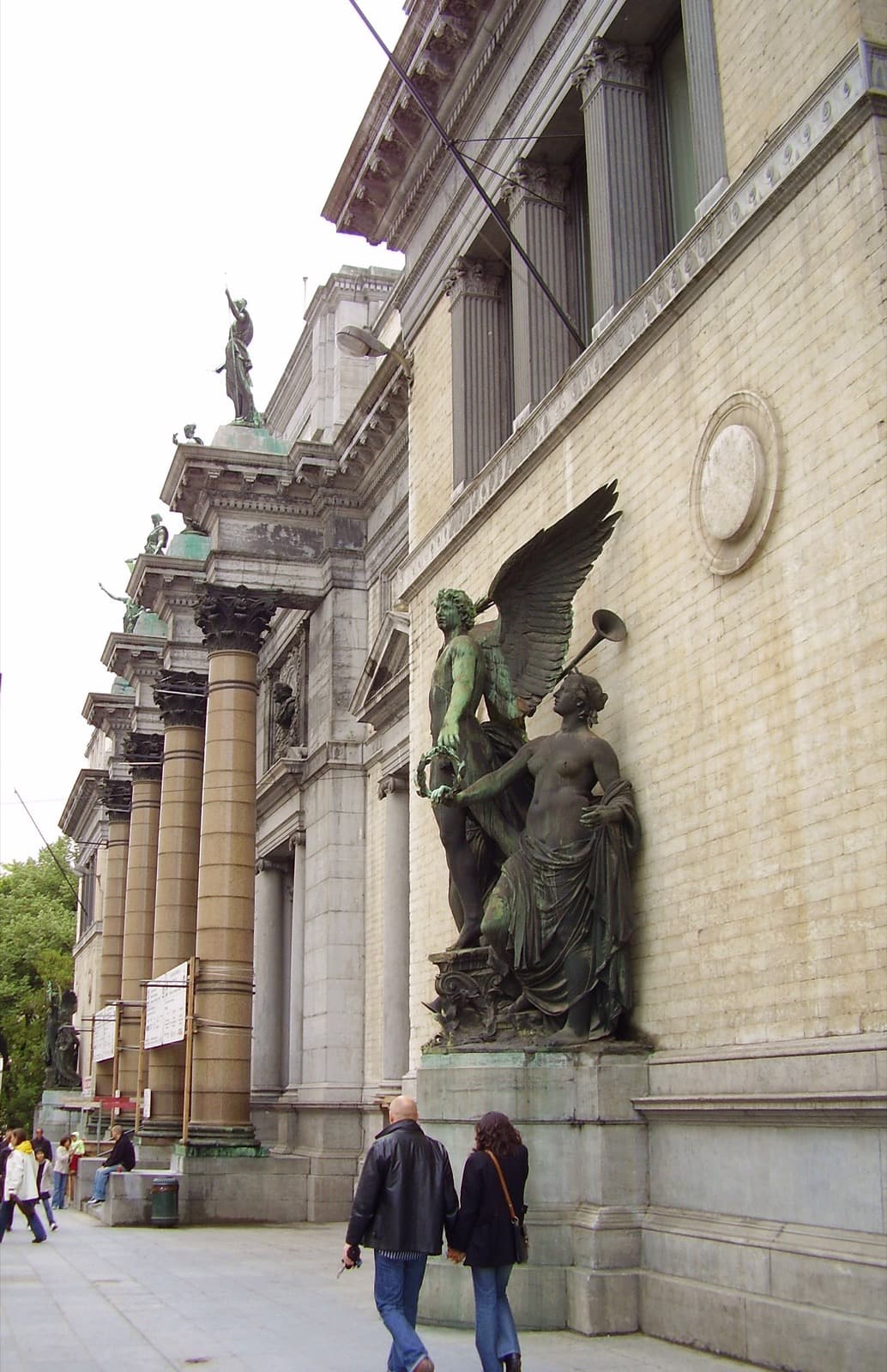
The Royal Museums of Fine Arts: Bruegel, Rubens, Magritte
One of Europe's great art collections, holding Old Masters like Bruegel, Rubens and van Dyck alongside the world's largest gathering of Rene Magritte.
- 5
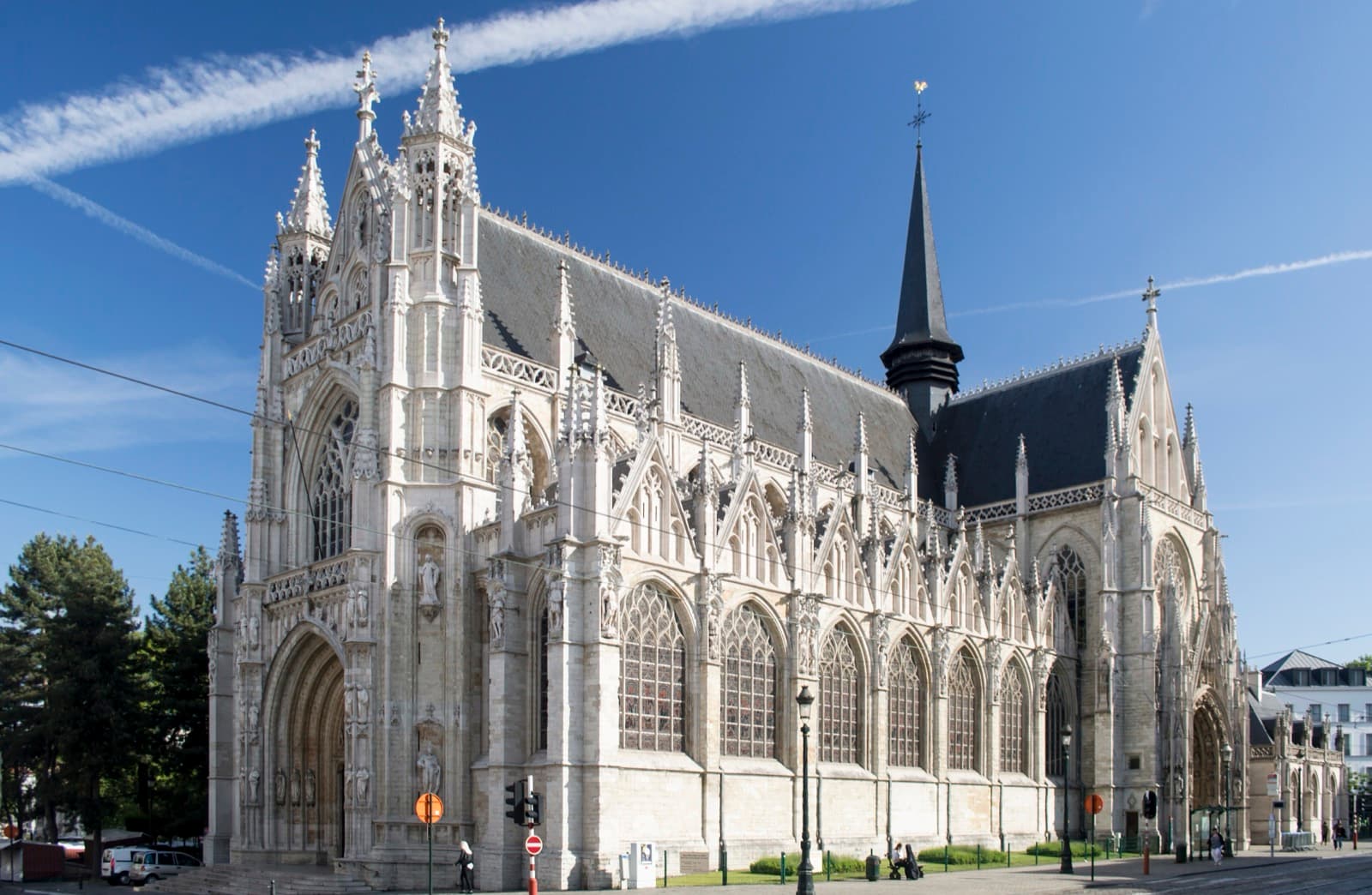
The Grand Sablon: The Antiques Square and the Guild Church
An elegant sloping square of antiques dealers, crowned by the glowing Gothic church raised by the guild of crossbowmen.
- 6
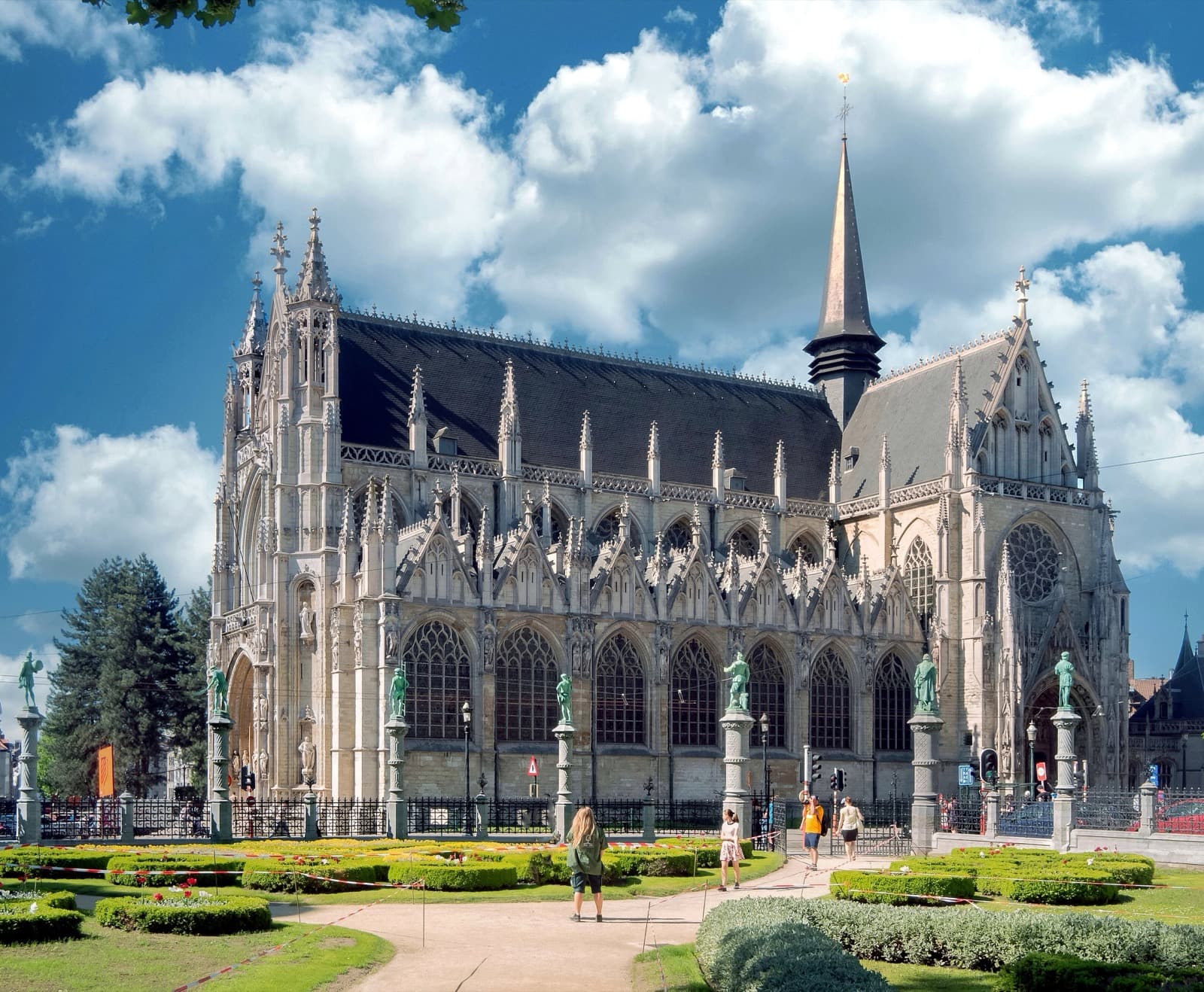
The Petit Sablon: The Guilds' Garden and the Beheaded Counts
A jewel-box ornamental garden ringed by bronze statuettes of the old craft guilds, watched over by statues of the Counts Egmont and Horn.
- 7
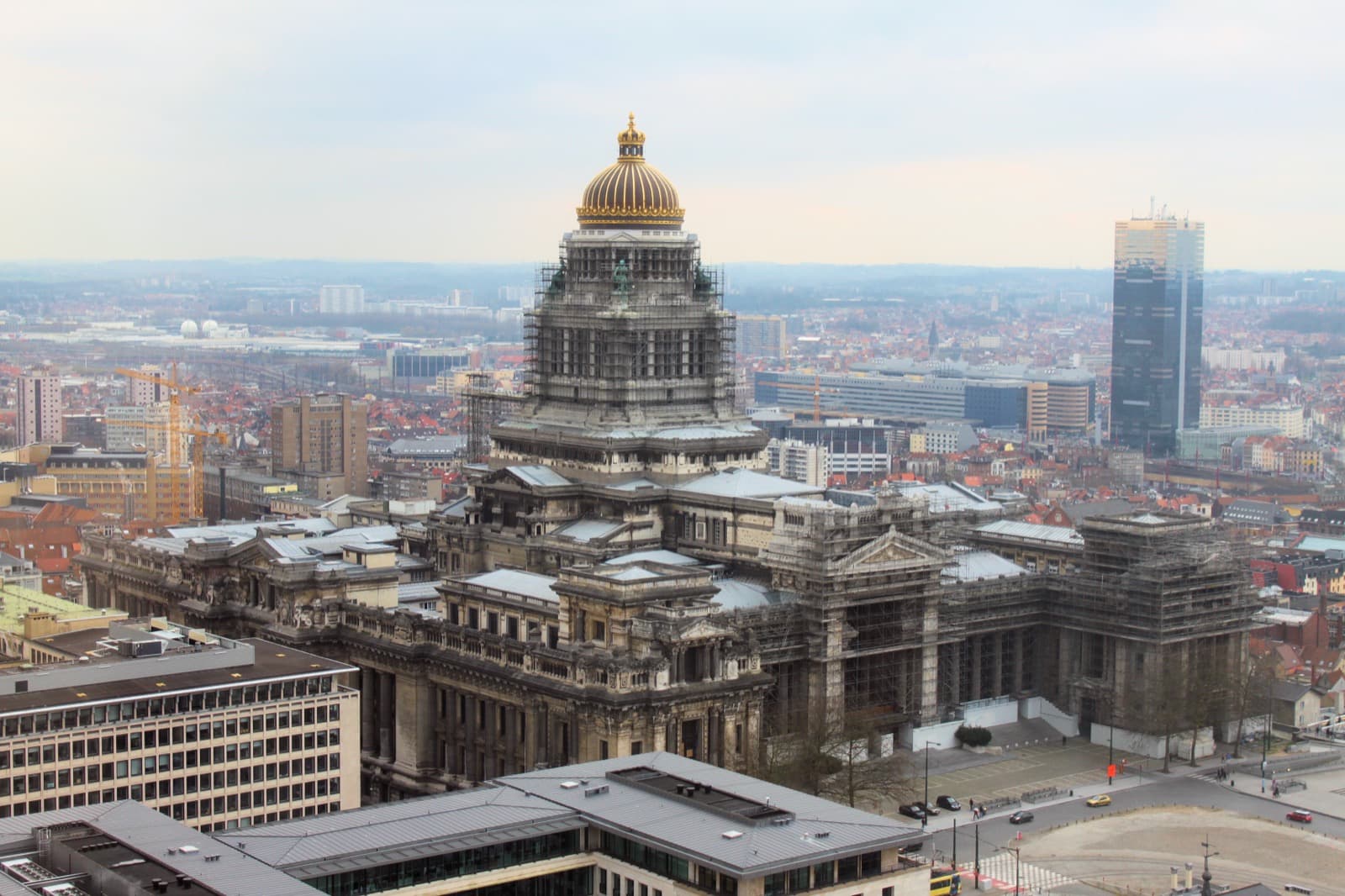
The Palais de Justice: The Law Court Over the Marolles
A colossal nineteenth-century courthouse on Gallows Hill, whose construction erased part of the poor Marolles district it still towers over.
Details
Best Time to Visit
Late morning to mid-afternoon on a weekend suits this walk best, when the Grand Sablon antiques market is in full swing and the museums keep their longest hours. Come earlier in the day for softer crowds on the Place Royale and cleaner light for the long view from the Mont des Arts and the Place Poelaert terrace. On a clear day the panoramas over the lower town are sharpest; spring and early autumn give the gentlest weather for the climb.
Pro Tips
- •Do the walk in the order given, from the Mont des Arts up to the Palais de Justice, so the route climbs with the hill and the divided-city idea builds stop by stop.
- •Wear comfortable shoes with grip: the upper town is a real climb over cobbles and sloping squares, and the last stretch to the Law Courts is the steepest.
- •The Coudenberg archaeological site under the Place Royale is entered through the BELvue Museum and is worth an hour if you want to stand inside the buried palace.
- •The Royal Museums of Fine Arts sell a combined ticket for the Old Masters and the Magritte Museum; check the free first-Wednesday-afternoon opening if you are on a budget.
- •Time your visit to the Grand Sablon for a Saturday or Sunday, when the antiques market fills the square, then step into the church of Notre-Dame du Sablon to see its windows glow.
- •Save the Place Poelaert terrace beside the Palais de Justice for last, for the wide view back over the lower town toward the Town Hall tower that opened the walk.
Safety & Precautions
- •The route is a genuine uphill walk from the lower to the upper town over cobbles and sloping squares; take the climb at your own pace and pause on the terraces to rest.
- •The upper town has trams and traffic on several streets, so cross with care at junctions and mind the tram lines underfoot, which can be slippery when wet.
- •Keep valuables discreet and zipped away in the busiest spots, around the museums, the Sablon market and the Palais de Justice terrace, where crowds attract pickpockets.
- •Museums and the Coudenberg site are ticketed in euros and keep set hours, and the churches are working places of worship, so dress modestly and keep quiet during services; carry a waterproof, as Brussels weather turns quickly.
Gallery
Related Reading
Go deeper on what you'll see, hear, and walk through.
Overview
Best Self-Guided Walking Tours in Brussels (2026)
3 min
Overview
Brussels Travel Guide: How Many Days, Getting Around, Best Time, and Safety
7 min
Overview
One Day in Brussels: A Walkable Route From the Grand Place to the Upper Town
8 min
Thematic
Best History Walking Tours in Brussels (2026)
2 min
Thematic
The Phoenix City on the Slope: How Brussels Reads Its Own Hillside
8 min
Companion
The Royal Palace of Brussels: A Facade That Holds the Whole Upper Town
7 min
Deep dive
The Palais de Justice: The Courthouse That Loomed Over the Marolles
6 min
Read
What to Eat in Brussels: The Dishes, Their Origins, and How to Order
7 min
Read the walk
The full story of Royal Quarter: The Upper Town of Palaces and the Sablon, in words. Prefer to listen? Play it narrated, from home or on location.
Introduction
Brussels is a city built on a slope, and this walk reads that slope like a sentence. Below runs the old lower town of markets, guilds and workers by the buried river Senne. Above rises the upper town of palaces, museums and law courts, and it is this height that you will climb, at your own unhurried pace, in Brussels, Belgium. Over a bit more than two kilometres and roughly seventy minutes across seven stops, the route parses a divided city. On the hill once stood the Coudenberg, the palace of the dukes of Brabant and later of the Habsburg and Spanish courts, until it burned in seventeen thirty-one. Over its buried ruins the neoclassical Place Royale and the long white front of the Royal Palace were laid out, the seat of the modern Belgian monarchy. The walk passes the Royal Museums of Fine Arts, the sloping antiques square of the Grand Sablon with its glowing guild church, and the ornamental garden of the Petit Sablon. It ends at the enormous nineteenth-century Palais de Justice, the Law Courts, whose site was cleared by demolishing part of the poor Marolles district below, so that the courthouse still looms over the working town in a picture of the divided city. Much of this monumental Brussels rose in the reign of King Leopold the Second, whose Congo we will name soberly where it belongs. This is your route, your quiet map, no group and no schedule. When you arrive at the terrace of the Mont des Arts, begin with stop one.
1. The Mont des Arts: Where the City Divides
The Mont des Arts, the Hill of the Arts, or Kunstberg in Dutch, is a formal terraced garden on the exact seam where Brussels divides. From the top of this stair the city opens beneath you, and over the roofs of the lower town the slender tower of the Town Hall on the Grand Place stands clear against the sky. That view is the whole tour in one glance. Behind and above you lies the upper town of palaces, museums and law. In front and below lies the lower town of markets, guilds and workers, laid along the buried river Senne. The present garden, geometric and green, dates from the nineteen fifties and sixties, on the site of an earlier garden inaugurated in nineteen ten by King Albert the First. But the slope itself was opened a little earlier, and here the tour's Leopold-the-Second thread begins quietly: the old Saint-Roch quarter that stood on this hill was demolished in eighteen ninety-seven and ninety-eight, under Leopold the Second, to clear the height for grand building. That is the pattern you will meet again and again on this walk. To make the upper town monumental, something below was swept away. Around you rise the Royal Library of Belgium, the Albertine, holding some four million volumes, and the museum buildings that guard the crest of the hill. Take your time on the terrace. There is no group behind you and no schedule pulling you on. When you have read the split city from here, low town below and high town above, climb on toward the square at the top of the hill.
2. Place Royale: The Square Over the Buried Palace
The Place Royale, the Koningsplein, is a calm white neoclassical square at the very top of the hill, built between seventeen seventy-five and seventeen eighty-two to the plans of the architects Jean-Benoit-Vincent Barre and Gilles-Barnabe Guimard. At its centre stands the church of Saint-Jacques-sur-Coudenberg, whose first stone was laid on the twelfth of February seventeen seventy-six, and in the middle of the square an equestrian statue of Godfrey of Bouillon, leader of the First Crusade, by the sculptor Eugene Simonis, unveiled on the twenty-fourth of August eighteen forty-eight. It looks like the birth of a new, orderly age. But this square was laid over a grave. Beneath your feet lie the buried remains of the Coudenberg palace, the residence of the dukes of Brabant and then of the Burgundian, Spanish and Austrian courts, from the twelfth century to the eighteenth. In its great hall, the Aula Magna, the Emperor Charles the Fifth abdicated in fifteen fifty-five in favour of his son Philip the Second, one of the great scenes of European history, played out on this very height. Then, on the freezing night of the third of February seventeen thirty-one, fire broke out in the kitchens, and the palace burned. Rather than rebuild the ruin, the planners levelled it and raised this bright square over the top. The vaulted cellars survive underground to this day, open as the Coudenberg archaeological site. So the neoclassical calm you stand in is a lid. Under the order of dukes and emperors lies the burned palace they once ruled from. When you are ready, cross toward the long facade of the working palace.
3. The Royal Palace: The Crown and the Colonial Reckoning
The Palais Royal, the Royal Palace of Brussels, is the official palace of the King of the Belgians, its long white front facing the green Brussels Park, the Warande. It is worth knowing that the king does not actually live here. The royal family resides at the Palace of Laeken on the edge of the city, and this building is used for affairs of state, audiences and receptions. The grand neoclassical facade you see was designed by the architect Henri Maquet and built after nineteen oh four, under King Leopold the Second, with the major works running to about nineteen oh nine. That date matters, because the age that gave Brussels much of its monumental grandeur is also the age of Leopold's Congo, and here, plainly and briefly, we name it. From eighteen eighty-five to nineteen oh eight the Congo Free State was not a Belgian colony at all but the personal possession of King Leopold the Second. Its forced-labour rubber regime, enforced by the Force Publique, caused mass atrocities, including mutilation, and a catastrophic collapse of the Congolese population, whose exact toll is debated by historians but is widely estimated in the millions. These abuses were documented by contemporaries: the Casement Report of nineteen oh four, by Roger Casement, and the campaigning of E. D. Morel and the Congo Reform Association. International outcry finally forced the Belgian state to take over the colony on the fifteenth of November nineteen oh eight. Much of the monumental Brussels of this era was built partly with colonial wealth, and Belgium has in recent years reckoned publicly with this history. Stand with the palace a while, holding both the crown and the record together.
4. The Royal Museums of Fine Arts: Bruegel, Rubens, Magritte
Just off the Place Royale stand the Royal Museums of Fine Arts of Belgium, the Musees royaux des Beaux-Arts, one of the great art collections of Europe and the most visited museum complex in the country. The institution was founded on the first of September eighteen oh one and…
Full narration for this stop unlocks with the tour.
5. The Grand Sablon: The Antiques Square and the Guild Church
The Place du Grand Sablon, the Grote Zavel, is an elegant square that tilts gently down the hillside, long known for its antiques dealers and its weekend antiques market, where old furniture, prints and curiosities change hands under the eaves of tall town houses. It is a…
Full narration for this stop unlocks with the tour.
6. The Petit Sablon: The Guilds' Garden and the Beheaded Counts
Across the way lies the Place du Petit Sablon, the Kleine Zavel, a small ornamental garden that feels like a jewel box after the open square above. It was inaugurated in eighteen ninety and designed by the architect Henri Beyaert. Its glory is the wrought-iron balustrade that…
Full narration for this stop unlocks with the tour.
7. The Palais de Justice: The Law Court Over the Marolles
The walk ends at the Palais de Justice, the Law Courts of Brussels, a building of almost unreasonable size crowning the height once called the Galgenberg, Gallows Hill. It was designed by the architect Joseph Poelaert and built between eighteen sixty-six and eighteen…
Full narration for this stop unlocks with the tour.