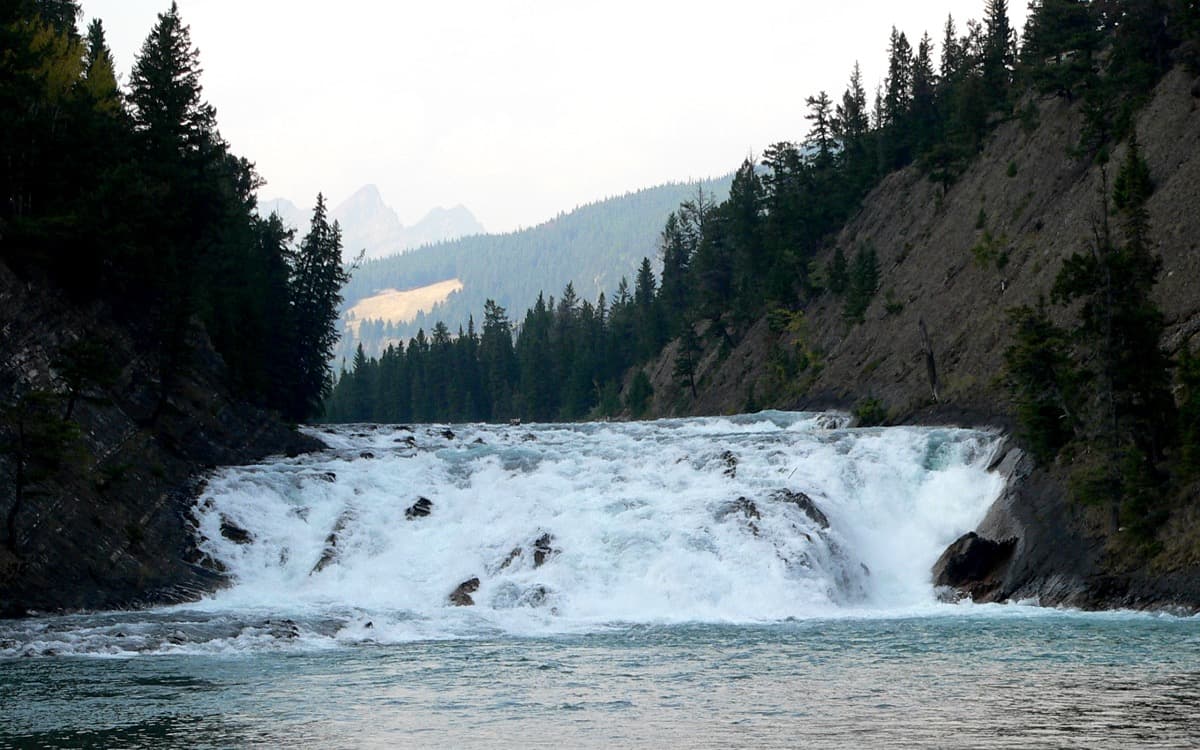
People arrive at Bow Falls expecting height and are quietly puzzled. It is not a great plunge. The Bow River here drops only about nine metres, wide and fast rather than tall. The puzzlement fades the moment you understand what Bow Falls is actually for. It was never meant to be the tallest waterfall you would ever see. It is a piece of stagecraft, and it does its job perfectly.
A river that begins in ice
The water pouring over the falls has come a long way. The Bow River rises far up the valley at the Bow Glacier, an outflow of the Wapta Icefield near Bow Lake, and runs down through the mountains to the town. Just below Bow Falls, inside Banff, the Spray River joins it before the combined flow carries on east across the Alberta foothills and prairies. So the falls are a hinge in the river's life, the point where the mountain Bow gathers the Spray and turns toward the plains. The confluence itself is a stop on the walk, and it matters more than its size suggests.
Why the size is the point
Hear a stop from this walk
Fairmont Banff Springs: The Stone Up Close
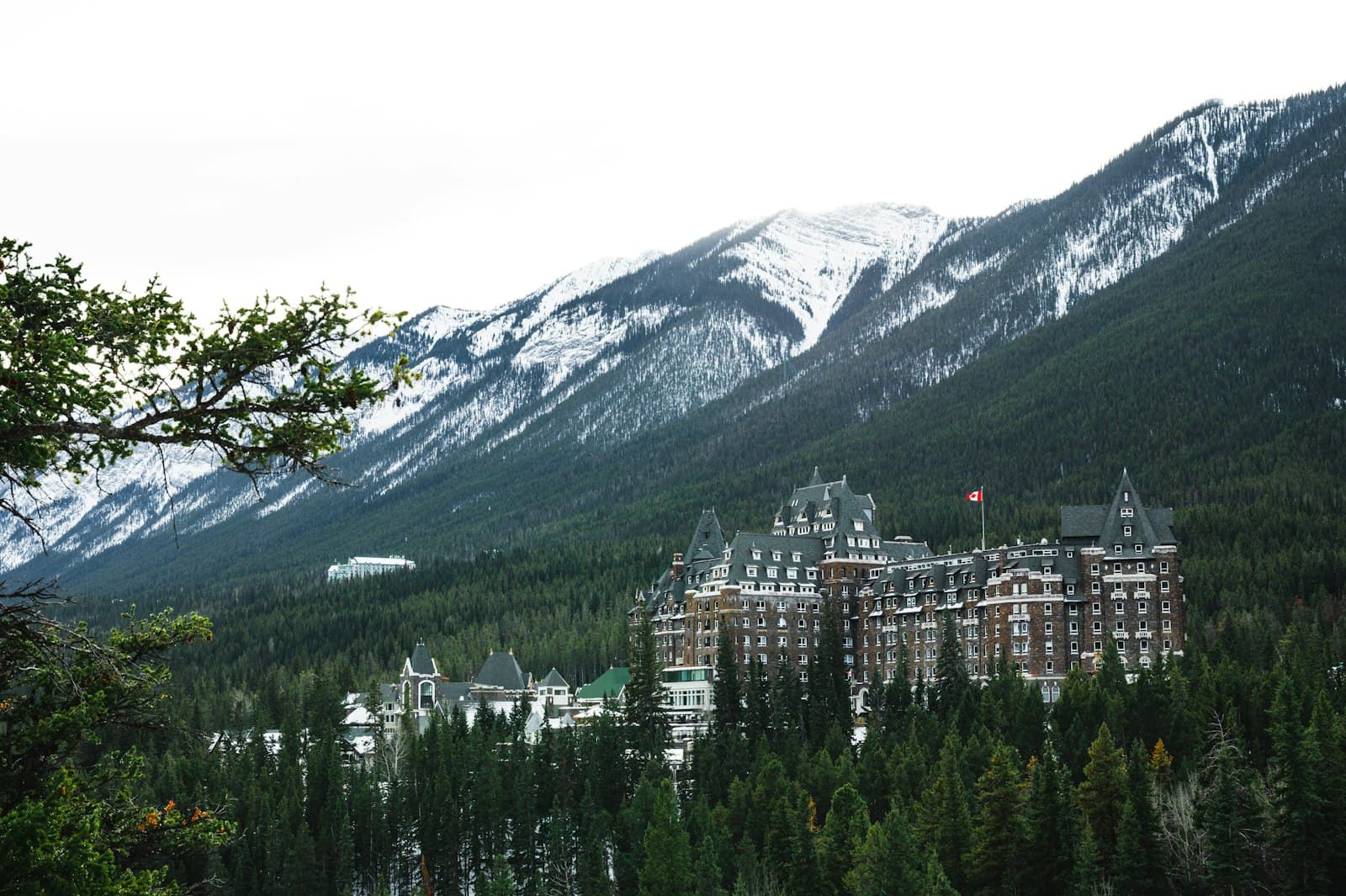
Here is the reading the Banff Springs walk commits to. Bow Falls is not a headline attraction on its own terms. It is a supporting player in a composition, and the composition is a sales pitch. The Canadian Pacific Railway built the Banff Springs Hotel above this valley to sell the Rockies to travellers who would not otherwise cross the country. The president William Cornelius Van Horne said it directly: since we cannot export the scenery, we will import the tourists.
A castle hotel alone does not read as wilderness. It reads as a building. What makes the scene sell is a wild, kinetic foreground, water in motion, spray, noise, the mountains behind, with the baronial pile presiding over all of it. Bow Falls is that foreground. Its modest nine metres are wide enough and loud enough to feel wild, close enough to the hotel to share a frame, and low enough not to compete with the castle for the eye. It is scaled, whether by nature or by fortunate accident, exactly to flatter the building the railway was selling. The full argument about the hotel as advertisement is in the Banff Springs companion.
The engineered postcard
The walk pairs the falls with the Surprise Corner viewpoint, and the pairing is deliberate. Surprise Corner exists to astonish you with the castle-above-the-river view, an early postcard vantage that still delivers. Bow Falls exists to give that postcard its wild heart. Together they are not two natural wonders you happen upon. They are two halves of a designed picture, the same instinct that named the town after Banffshire in Scotland to dress a frontier in old-world costume.
That does not make the falls less beautiful. It makes them more legible. Once you see the stagecraft, the whole scene stops being a coincidence of geography and becomes a thing someone built you to admire.
Standing at the water
Stand where the Bow throws its spray and take the picture everyone takes. Then look up at the castle and notice that the picture was arranged for you more than a century ago. The falls are real, the river is real, the ice it came from is real. The framing is a sales pitch, and Bow Falls is the part that makes the pitch feel like nature.
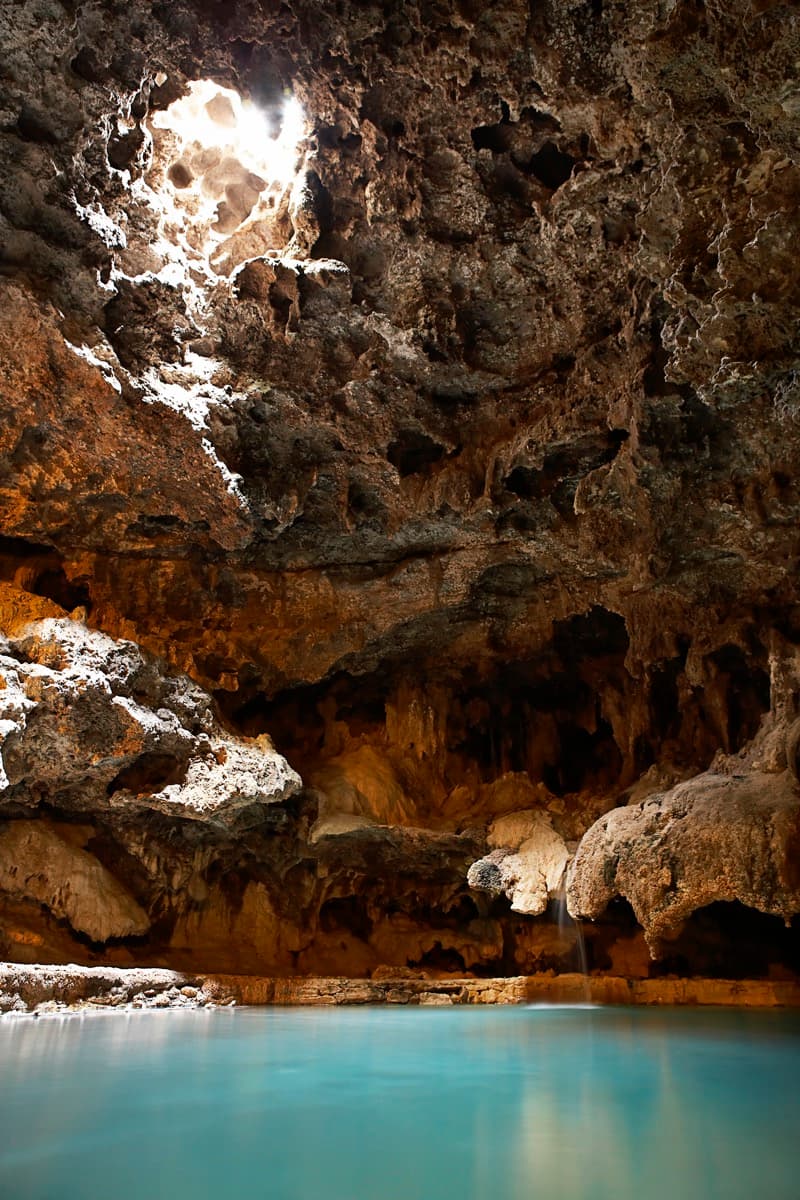
This is one of Banff's three founding stories, and the other two are close by. The hot spring that started everything is at the Cave and Basin. The capped, leased town the trade built is on Banff Avenue. Begin the Banff Springs walk at the viewpoint, meet the falls as foreground, and watch a nine-metre drop do the work of a mountain.
Ready to experience it?
The Castle Built to Sell the Wilderness
88 min · 4.9 km · easy
More from Banff
Explore more at your own pace.
How a River Valley Became a Park: The Bow, the Ice, and the Warm Water
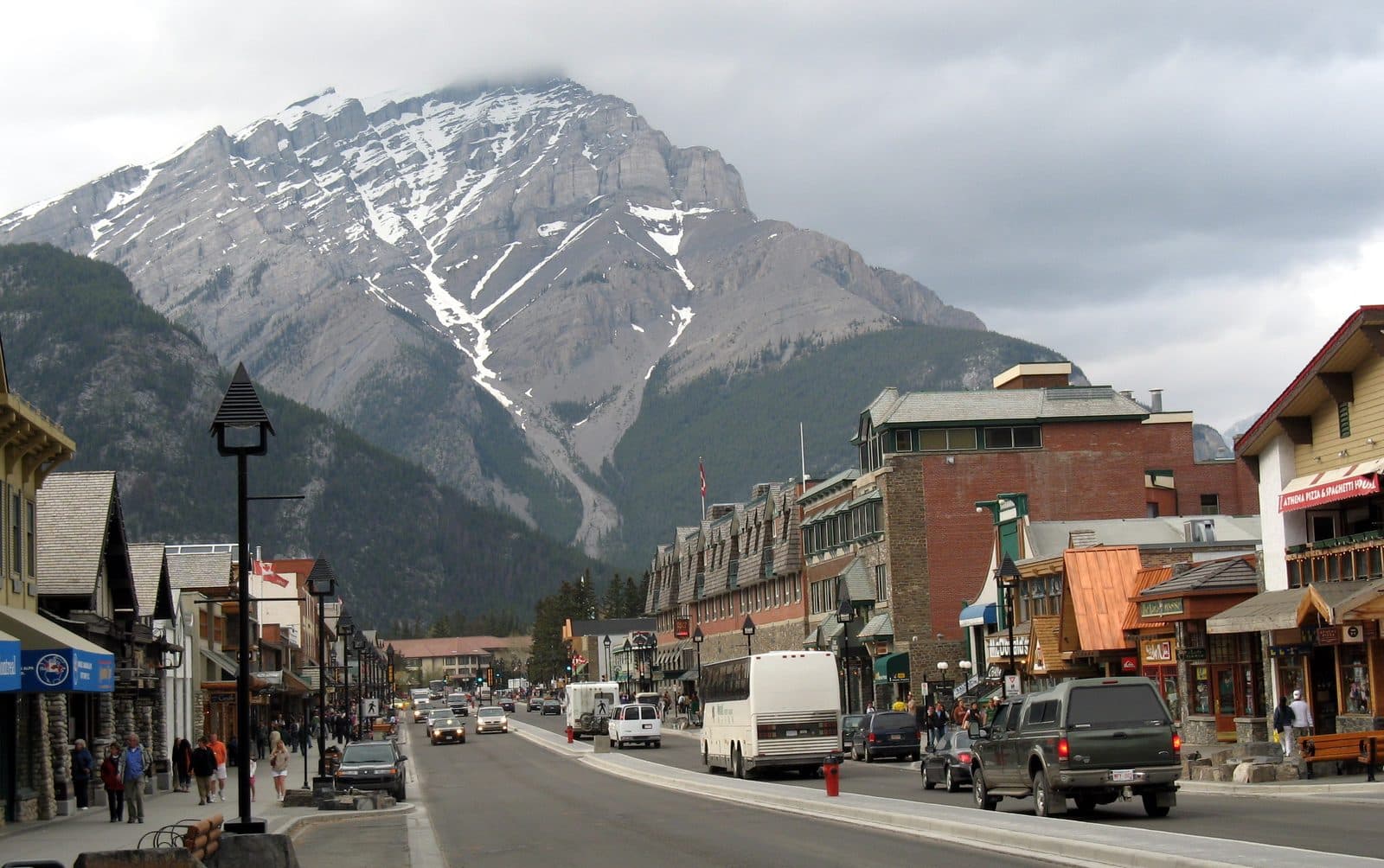
The Town That Lives Inside a Park: How Banff Was Reserved Before It Was Founded
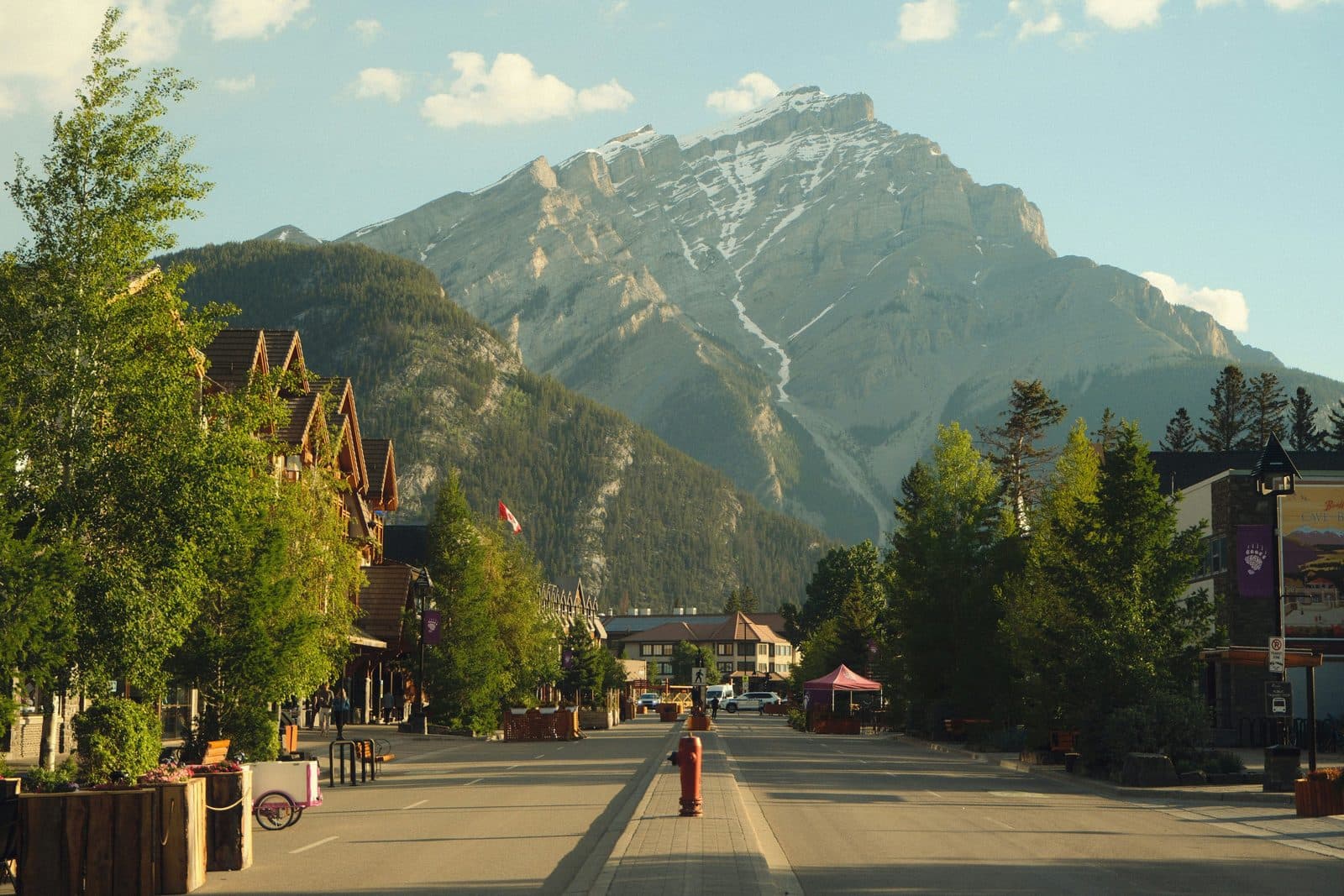
A National Park's Shopping Street: Walking the Town That Can't Grow
The Castle Built to Sell the Wilderness: Reading the Banff Springs Hotel
The Property Fight That Became a Country's Conservation Movement