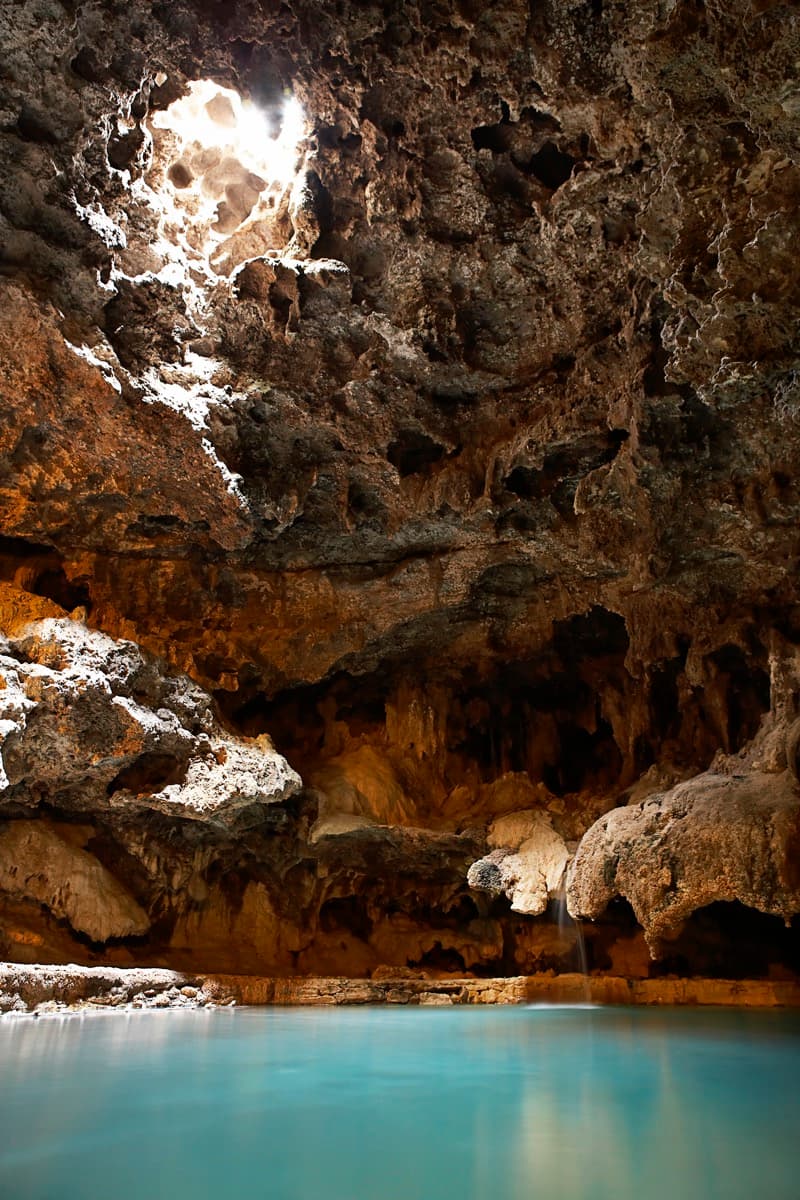
The first stop on the Cave and Basin walk is not a monument. It is a hole. You step down into a low, dim chamber where warm water pools and the air smells of sulphur, and if you did not know the story you might pass it in a minute. Know the story and you cannot, because these are the most consequential square metres in the history of Canadian conservation.
What actually happened here in 1883
Three Canadian Pacific Railway workers, Frank McCabe and the brothers Tom and William McCardell, found thermal springs on the lower slopes of Sulphur Mountain in 1883. There was no dramatic doorway. There was a vent in the rock leaking warm, mineral-heavy water. They lowered a tree trunk into the opening and used it as a ladder to climb down into the cave below, the space you now enter by a constructed tunnel. Inside was a natural hot pool in the dark.
They understood at once what they had. Hot water in a cold country is a resource, and a resource near a brand-new transcontinental railway is a fortune. So they did the ordinary thing: they tried to claim it. That claim is the hinge on which everything turns.
The claim that backfired into a park
Hear a stop from this walk
Buffalo Nations Luxton Museum
The government refused to hand the springs to a few railway men. It could see the same value and wanted it kept public and flowing toward the nation and its railway. To settle the competing claims, an Order in Council vested ownership in the Crown, and in 1885 the government reserved 26 square kilometres around the site as the Banff Hot Springs Reserve. McCabe and the McCardells were offered a settlement and had to give up their plans.
Two years later the Rocky Mountains Park Act of 1887 expanded the reserve to 674 square kilometres and made it Canada's first national park, the third in North America after Yellowstone and Mackinac. So the cave you are standing in did not merely witness the birth of the national parks. It caused it. The founding was not an act of wilderness idealism, it was a property dispute resolved in the public's favour, and this hole is where the disputed property was. The wider founding sequence is told in the town-inside-a-park thesis.
The creature that lives in the water
Look at the water and remember that you cannot touch it. The Cave and Basin thermal springs are the only home on Earth of the Banff Springs snail, Physella johnsoni, an endangered species whose entire global range is a handful of springs at this one site. The living space of the whole species is smaller than a corner of a hockey rink. It was designated threatened in 1997, uplisted to endangered by 2000, and is protected under both the Species at Risk Act and the National Parks Act. Lost subpopulations were reintroduced in 2002 and 2003 and now sustain themselves.
The snail is the perfect emblem of what this site became. A reserve created to settle a squabble over a bathhouse now guards a creature found nowhere else, which is conservation the founders never imagined and the modern park cannot afford to fail. The Cave and Basin companion follows that thread out along the marsh, where the warm outflow keeps the water alive in winter.
Why this stop rewards standing still
Most of the route ahead is landscape and later buildings, the Bow River path, the 1903 Park Museum, the Buffalo Nations Luxton Museum. This first stop is the argument in miniature. Everything downstream, the reserve, the park, the railway hotels, the capped town on leased land, the exclusion and later return of the Stoney Nakoda, radiates out from a warm hole in the rock that three men tried to own and a government would not let them.
Stand in the cave a moment longer than feels necessary. Then start the Cave and Basin walk and watch a country's whole idea of protected land grow outward from this one dark, steaming room.
Ready to experience it?
Cave and Basin: The Hot Spring That Made a Country Conserve
89 min · 4.4 km · easy
More from Banff
Explore more at your own pace.
How a River Valley Became a Park: The Bow, the Ice, and the Warm Water
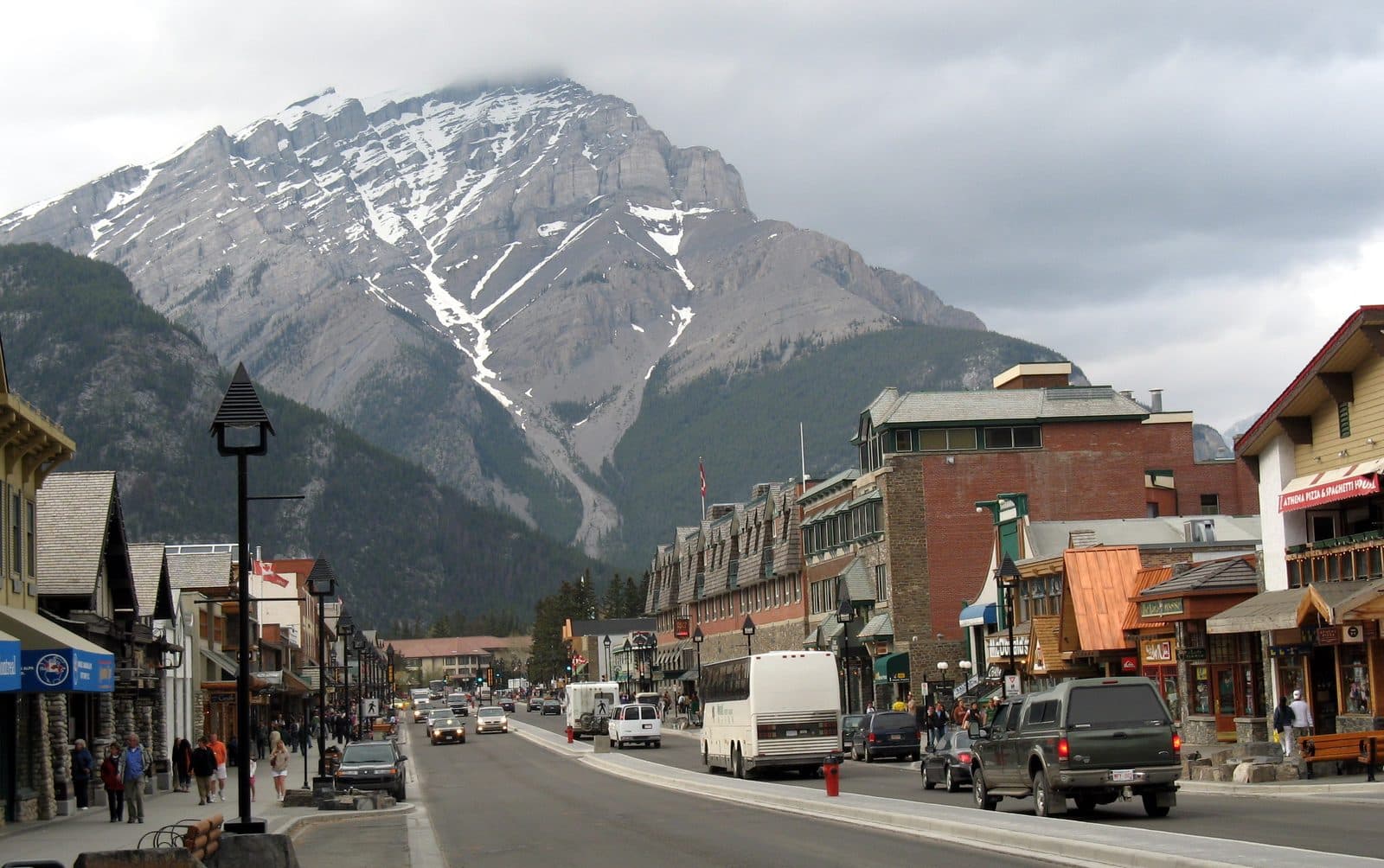
The Town That Lives Inside a Park: How Banff Was Reserved Before It Was Founded
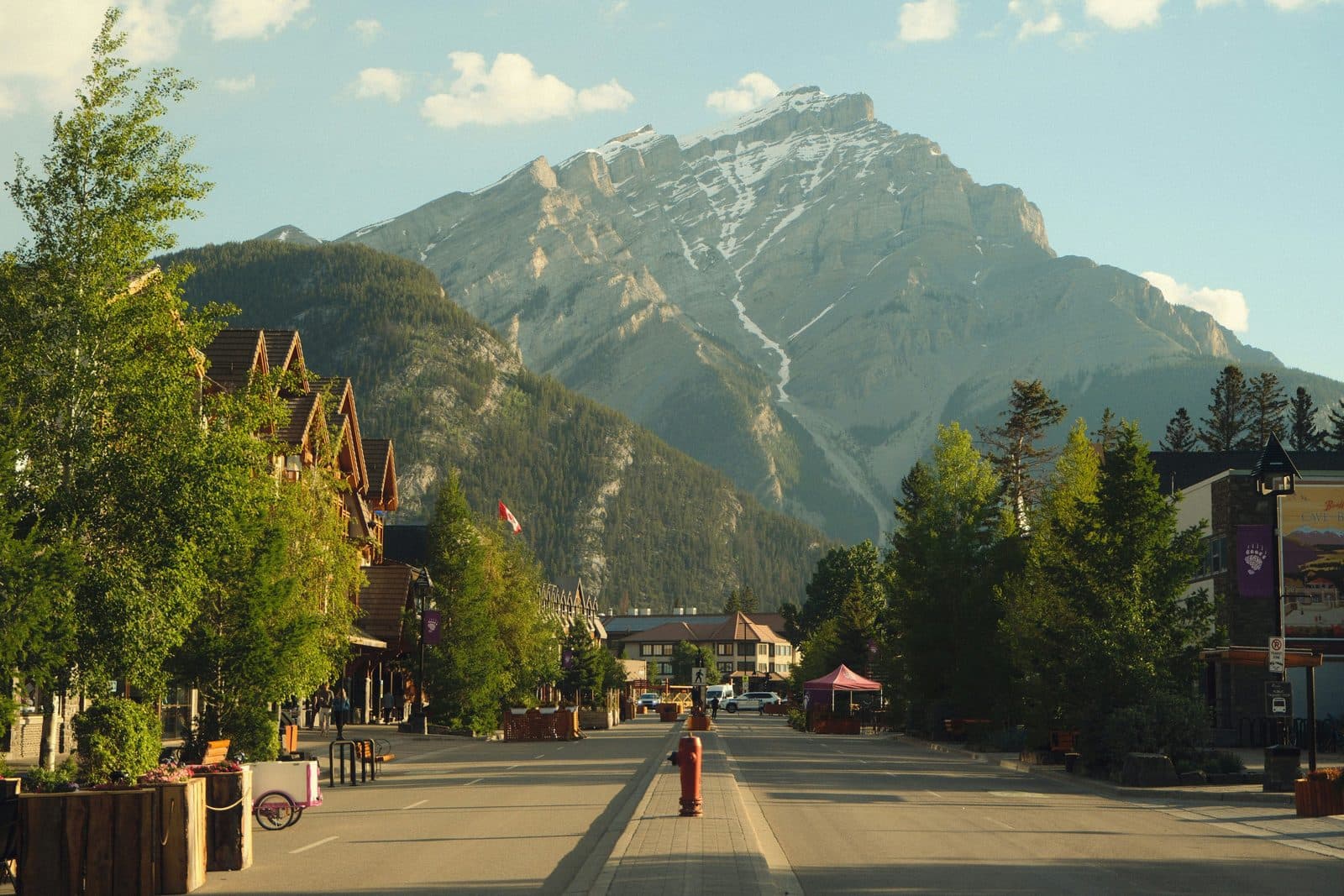
A National Park's Shopping Street: Walking the Town That Can't Grow
The Castle Built to Sell the Wilderness: Reading the Banff Springs Hotel
The Property Fight That Became a Country's Conservation Movement