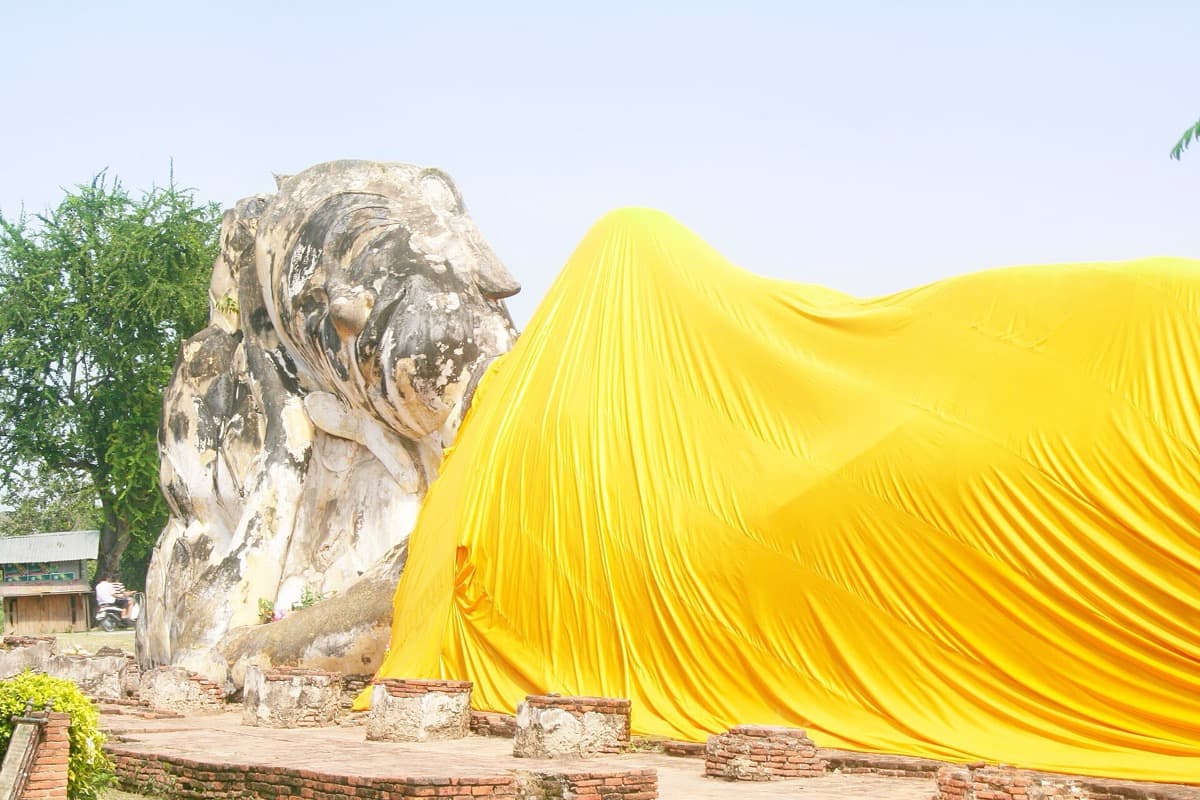
Wat Lokayasutharam holds a reclining brick-and-stucco Buddha roughly forty metres long, lying in the open air on the western side of Ayutthaya island, and the single thing to understand standing in front of it is that its horizontal repose is a deliberate change of register from the vertical towers that define the rest of the old royal skyline. This is the Buddha at the moment of parinirvana, his passing into final nirvana, and the temple built the scene at a scale that forces you to walk the figure rather than look up at it.
What you are looking at
The image is called Phra Buddha Saiyat (rendered Phra Buddhasaiyart in some sources). It is not carved from a single block of stone. It is built of brick and finished in stucco, a construction method that matters because it explains both the size and the wear. A brick core plastered over in stucco can be extended to enormous length in a way a carved figure cannot, and it also weathers differently once the protecting roof is gone.
And the roof is gone. The reclining Buddha once lay inside a viharn, a columned chapel that enclosed it. The brick columns of that hall have collapsed, leaving only stubs, which is why the giant now reclines fully exposed with the weather on its shoulders. That single fact reshapes the whole encounter. Most large Buddha images of this kind were meant to be met in shade, inside a hall, with the eye adjusting from bright exterior to dim interior before the scale registered. Here you meet it in full daylight, in the open, with nothing between the brick and the sky.
Notice the orientation. The body lies along a north-south line while the face turns to the west, toward the setting sun. The head rests on a lotus. The feet are squared off at the far end, stacked in the conventional pose that runs the soles flat and parallel. Walk from the head toward the feet and you are pacing out the length of a dying god rendered as architecture.
The length nobody agrees on
Hear a stop from this walk
Wat Chaiwatthanaram: The Cosmos as a Plan
If you look for the measurement, you will find a disagreement, and it is worth carrying honestly rather than pretending to a clean number. Wikipedia records the figure as thirty-seven metres long and eight metres high. Several temple histories and local guides instead give forty-two metres. The safest thing to say is that it is roughly forty metres long and about eight metres high, and to let the range stand.
This is not a footnote. It is the point. Ruined, open-air, brick-and-stucco monuments do not come with clean documentation, and the honest response to a place like this is to hold what is known loosely. The founding date of the temple, for instance, is not recorded in the sources, and while some historians place it in the early Ayutthaya period, no responsible account should assert an exact year. What you can trust is the body in front of you: its length, its exposure, and the quiet it holds.
Why the horizontal matters
To understand why a reclining Buddha lands so differently here, it helps to know what surrounds it. Ayutthaya's royal builders worked for four centuries with two towering forms until they became a kind of writing across the sky. One is the prang, a tall corn-cob tower that tapers toward heaven, borrowed from Khmer temple building. The other is the chedi, a bell rising from a rounded base, an idea that traveled from Sri Lanka. Both reach up and away from the viewer. Both ask the eye to climb.
The reclining Buddha does the opposite. It meets you at eye level and asks you to move along it. Where the towers assert verticality, sacred height, the axis between earth and heaven, this figure lays that axis down flat and turns it into distance. In the sequence of a walk through these temples, arriving here is a pause between tower-shapes, a moment where scale stops being about how high a thing rises and starts being about how far you have to walk to take it in. That shift from vertical to horizontal is the reason the stop earns its place, and it is the one perceptual thing to hold onto while you stand there.
Reading the pose
The reclining posture is not rest in the ordinary sense. It depicts the Buddha in his final repose, the moment of passing into nirvana, the death that is also a release from the cycle of rebirth. The serenity carved into the face is the point of the doctrine made visible: this is a passing without struggle. The lotus beneath the head, the composed line of the body, the feet squared and still, all of it stages a departure as calm rather than loss.
There is a discipline the place asks of you in return, and it applies at every active and ruined temple in Ayutthaya but is easy to forget at an open-air giant that feels like a monument more than a shrine. Do not point your feet toward the image, do not climb on the figure, and keep your shoulders and knees covered. It is still, in the eyes of those who come to bow before it, a Buddha in the act of passing, not a photo backdrop. The exposure that lets you walk right up to it also removes the architectural cues, the threshold, the shade, the doorway, that would otherwise remind you where you are standing.
Standing in front of it
Give the figure the length of a slow walk. Start at the lotus under the head, move down the body along the north-south line, and end at the squared feet. Feel the scale accumulate as horizontal rather than vertical. Then look up and around at the collapsed brick stubs where the chapel columns once stood, and picture the hall that used to hold all of this inside. The reclining Buddha you are pacing was designed to be seen in an interior that no longer exists, which is why the encounter feels both grander and more precarious than its builders intended.
If you want to read the whole royal skyline this figure belongs to, the reclining Buddha sits in the middle of a walk that traces both the prang and the chedi across the western and riverside temples of the old capital. That route, the ayutthaya-wat-chaiwatthanaram tour, begins at an intact surviving roofline, moves down the island past a memorial bell-chedi to this reclining giant, then crosses the Chao Phraya to a working monastery and on to the riverside masterpiece where the whole grammar resolves into one silhouette at golden hour. You can find it, and the rest of the city's routes, through the Ayutthaya walking tours hub and the Ayutthaya city page. The audio for this stop puts the reclining giant in its place in that sequence, so you understand the horizontal as an answer to everything vertical around it.
Sources
- Wat Lokayasutharam, Wikipedia. Records the reclining Buddha's length as thirty-seven metres and height as eight metres, and gives the Phra Buddha Saiyat naming.
- Renown Travel, Wat Lokaya Sutha page. Gives the length as forty-two metres and height as eight metres, describes the brick-and-mortar construction, the west-facing orientation, the head resting on lotus buds, and the collapsed viharn columns.
- Roamer tour transcript, "The Architecture of Kings" (ayutthaya-wat-chaiwatthanaram), fact-audited primary source for the pose, orientation, construction, and the vertical-to-horizontal reading.
- UNESCO World Heritage Centre, Ayutthaya Historical Park listing, for the general context of the western-island temple group and its preservation status.
Ready to experience it?
Wat Chaiwatthanaram: The Architecture of Kings
135 min · 7 km · hard
More from Ayutthaya
Explore more at your own pace.
Ayutthaya Travel Guide: Days, Transport, Season, Safety, and Costs
The Burned Capital: How Ayutthaya's Ruins Read the World That Made Them
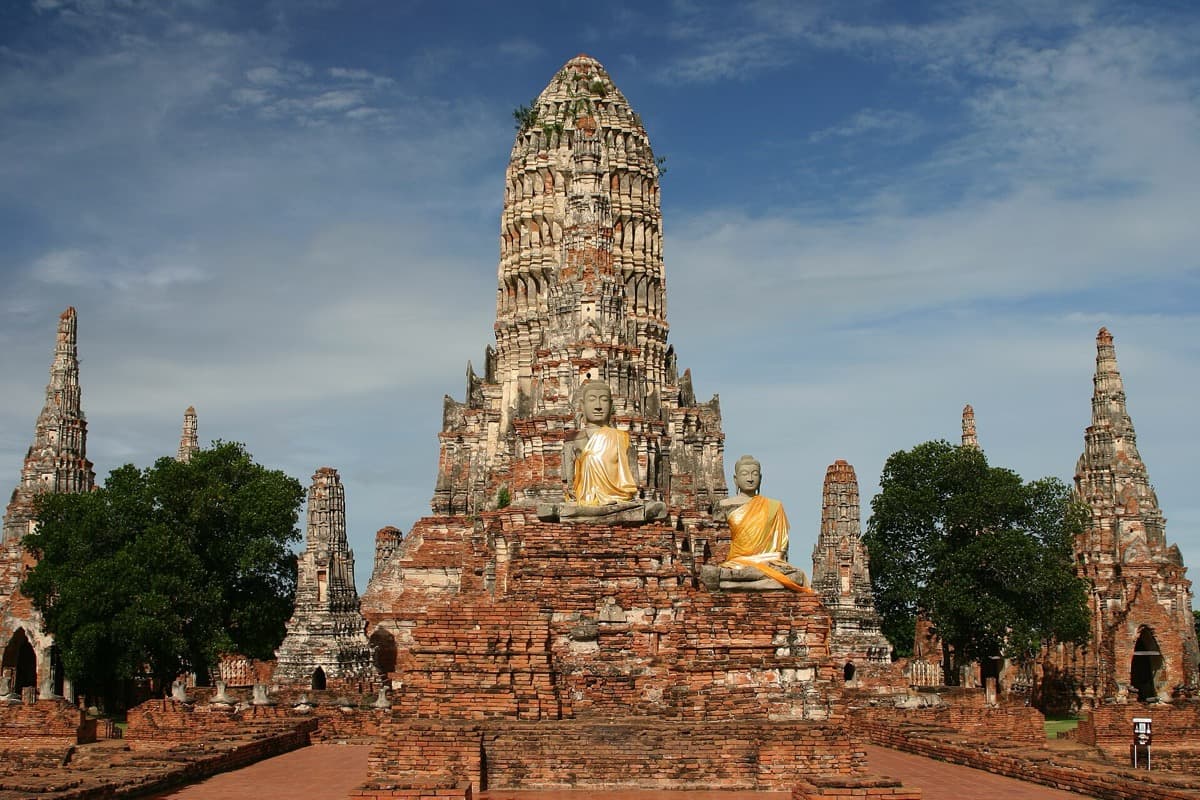
Reading Ayutthaya's Royal Skyline at Wat Chaiwatthanaram
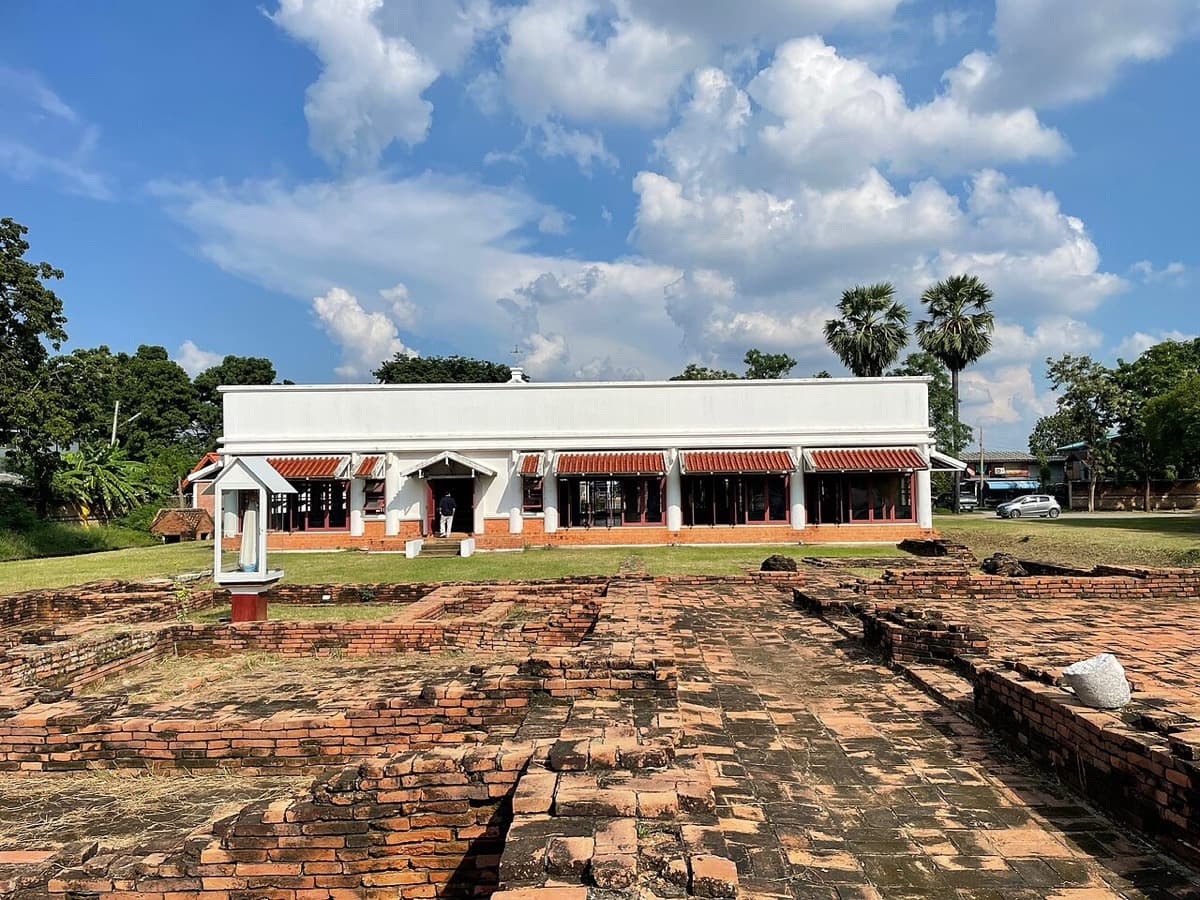
The Excavated Dead of Ayutthaya's Portuguese Settlement
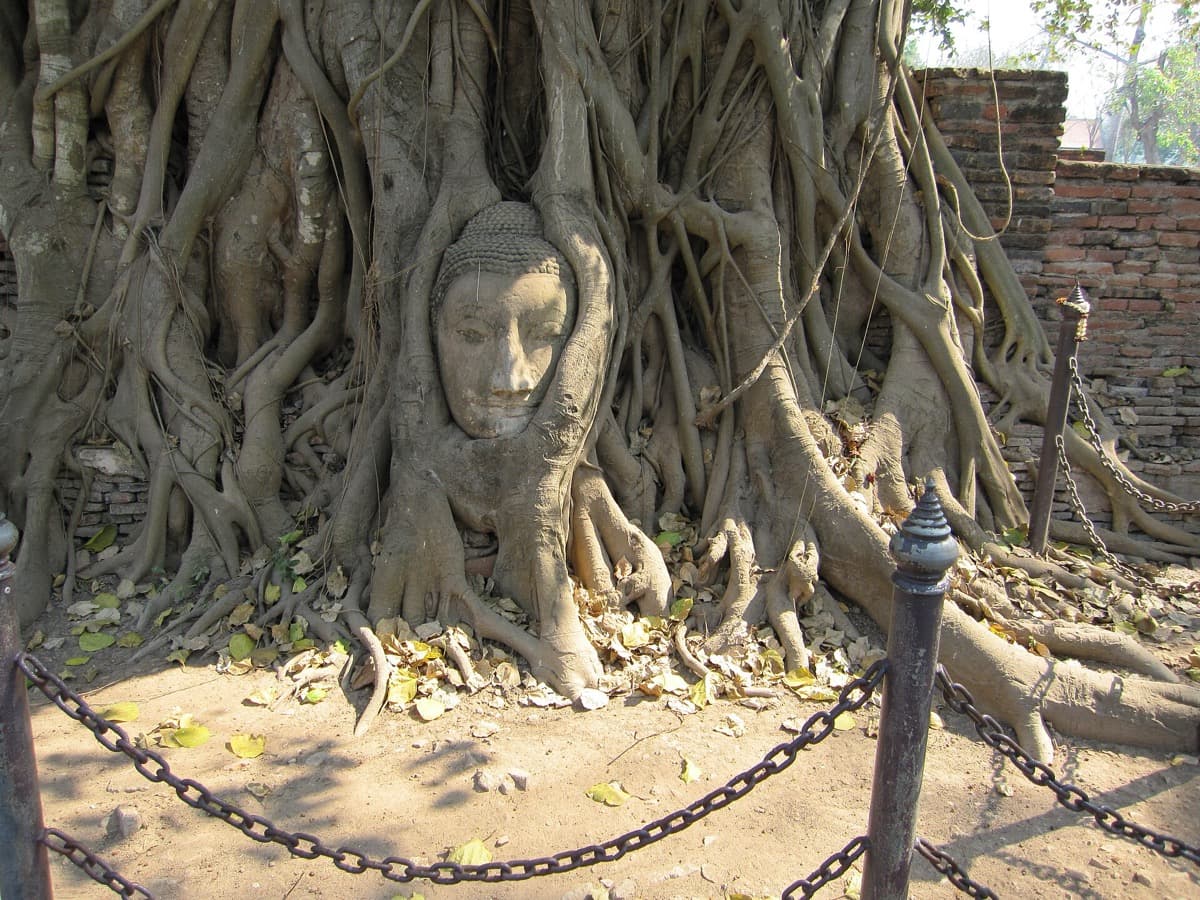
Wat Mahathat, Ayutthaya: The Buddha Head in the Tree Roots