Historical Park: The Burned Capital
110 min · 5 km · moderate
Spend one day in Ayutthaya by starting on the central temple island at opening time, walking the royal ruins through the cool morning, breaking for lunch out of the midday heat, then crossing the river in the late afternoon to reach Wat Chaiwatthanaram for sunset. The old capital sits on an island roughly 80 kilometers north of Bangkok, and the ruins that matter most cluster tightly enough that a single day on foot, with a bicycle or tuk-tuk for the longer river crossings, covers the story from the royal center to the vanished foreign quarters. This guide walks you hour by hour and hands you off to the three self-guided Ayutthaya walking tours that carry the history in your ears as you go.
The short answer: how to structure the day
The temples inside the historical park open around 8:00 in the morning and close around 6:00 in the evening. Heat is the deciding factor. Midday sun on open brick with almost no shade pushes above 35 degrees Celsius in the hot months, so the workable rhythm is simple: royal center in the morning, indoor or shaded break at midday, riverside temple at sunset.
Here is the arc of a full day:
- Morning (8:00 to 11:30): the royal city core, on foot, walking the tightest and most famous cluster.
- Midday (11:30 to 14:30): lunch and rest, ideally near the island's cafes or a museum.
- Afternoon (14:30 to 17:00): the western and riverside temples, best reached by bicycle or tuk-tuk.
- Late afternoon into evening (17:00 to sunset): Wat Chaiwatthanaram across the river, where the light is best.
If you have energy on a second day, or if history over architecture is your interest, the downriver foreign quarters make a strong separate loop.
Morning: the royal city on foot
Hear a stop from this walk
Ancient Royal Palace (Wang Luang): The Foundations That Became Bangkok
Start where the kingdom's power was concentrated. The central island holds Wat Ratchaburana, Wat Mahathat, Wat Phra Si Sanphet, the Wihan Phra Mongkhon Bophit, the site of the ancient royal palace, and Wat Thammikarat, all within a compact walk. This is the exact route of the Ayutthaya Royal City self-guided tour, which reads the ruins as a record of a city that was one of the largest and richest places on earth for four centuries, until fire in 1767 erased it so completely that its bricks were carried downriver to help build Bangkok.
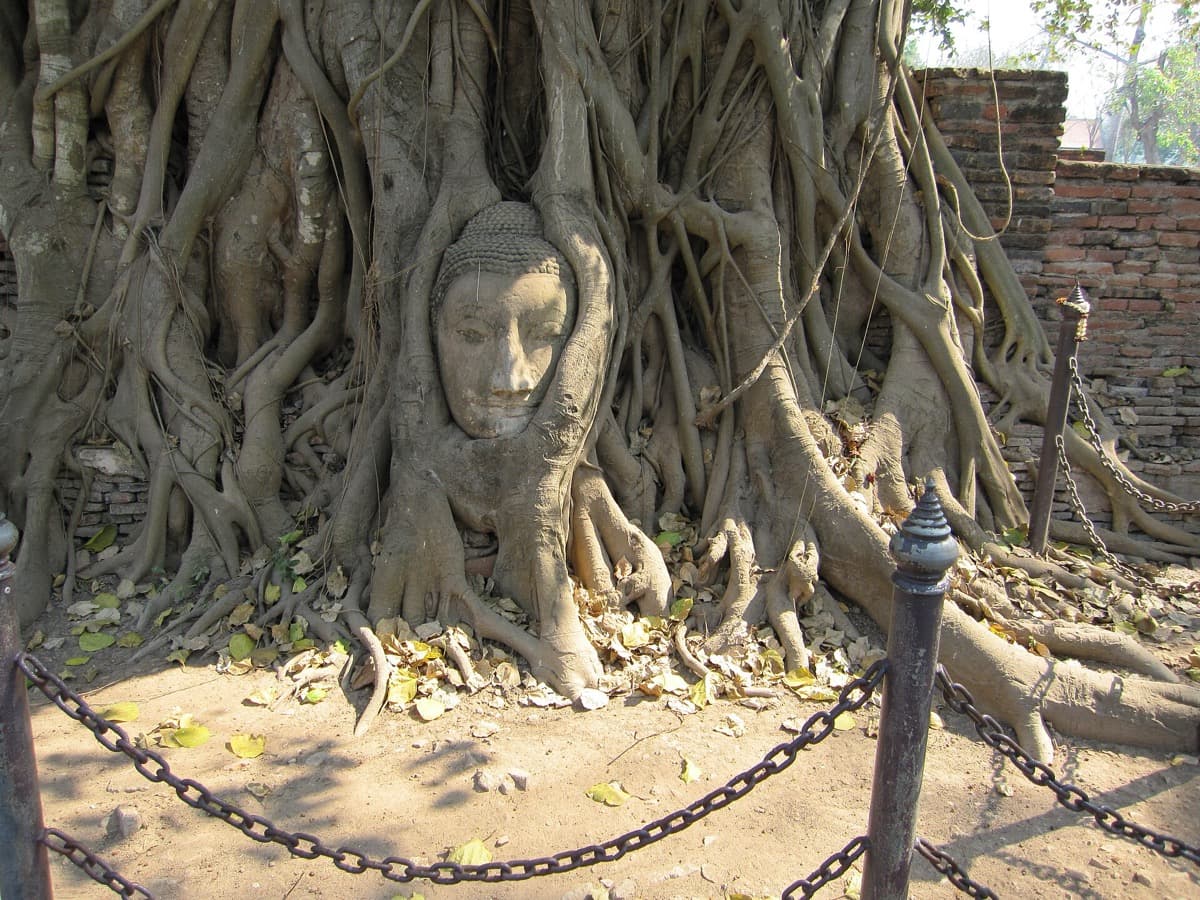
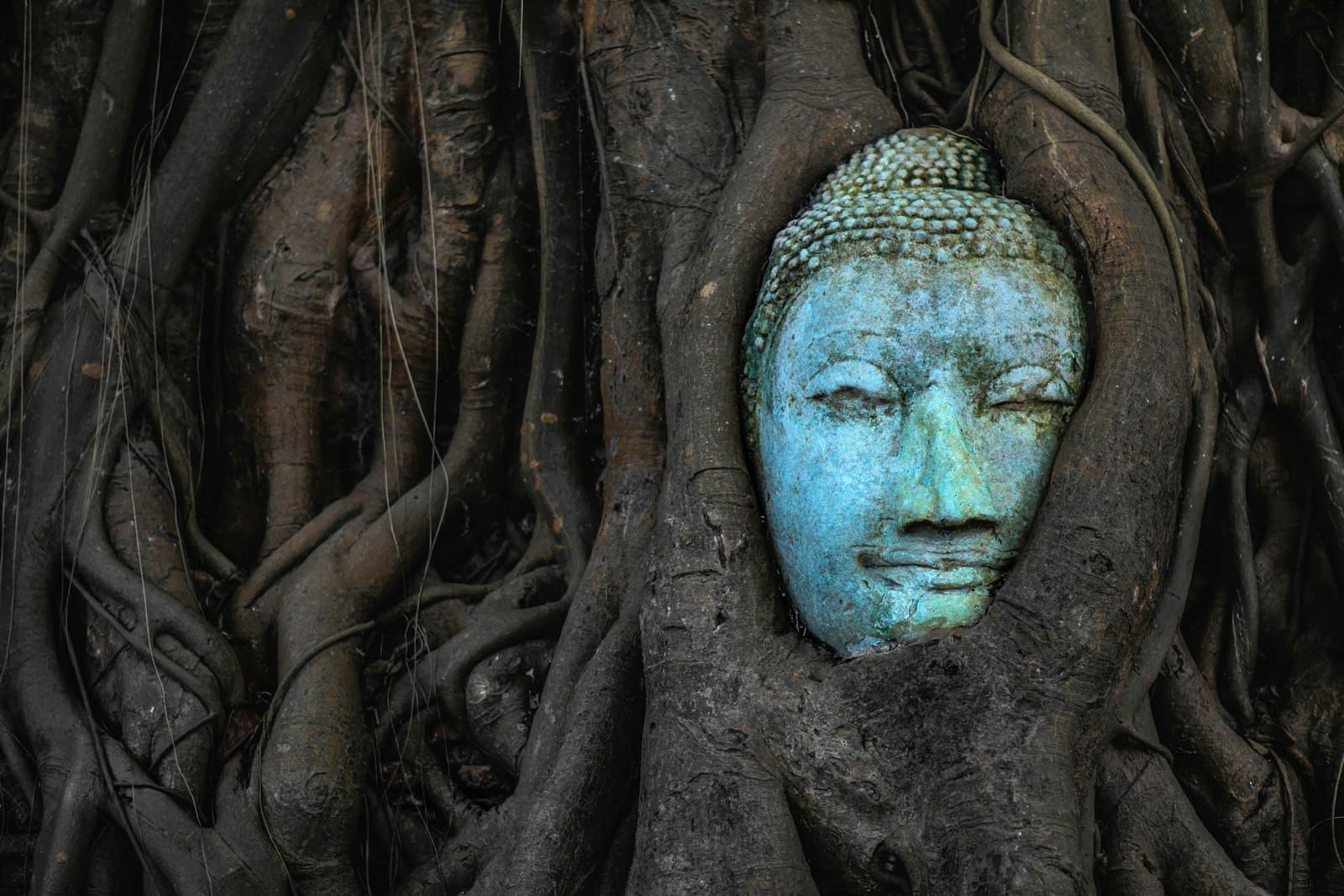
Begin at Wat Ratchaburana and Wat Mahathat, next to each other. Wat Mahathat holds the image most people carry away from Ayutthaya: a stone Buddha head held in the roots of a fig tree. Both charge a small entry fee (about 50 baht each). A short walk west brings you to Wat Phra Si Sanphet, the former royal monastery with its three restored bell-shaped chedis, and the neighboring Wihan Phra Mongkhon Bophit, which shelters a large bronze Buddha and is free to enter. The royal palace foundations and Wat Thammikarat sit just to the north and are free.
Walking this whole cluster runs a bit over 5 kilometers with all the loops, and it is flat. The historical park itself has no gate fee. You pay per temple, and the individual tickets are small. If you plan to enter several of the ticketed temples, a combined six-temple pass (around 220 baht, valid for 30 days) usually saves money over buying them one at a time.
Cover your shoulders and knees at all of these sites. They are active religious places as well as ruins.
Midday: eat, rest, wait out the heat
By late morning the sun is punishing and the crowds thicken. Use the middle of the day the way locals and repeat visitors do: get indoors or into shade. The island has clusters of cafes and small restaurants, and the Chao Sam Phraya National Museum and the Ayutthaya Historical Study Centre give you air conditioning plus context for what you saw in the morning. This is also the natural moment to sort out afternoon transport if you have not already. A rented bicycle (commonly 50 to 100 baht for the day, with electric bikes higher) turns the wider afternoon distances into an easy ride, and a tuk-tuk hired by the hour is the alternative if you would rather not pedal in the heat.
Afternoon: the western and riverside temples
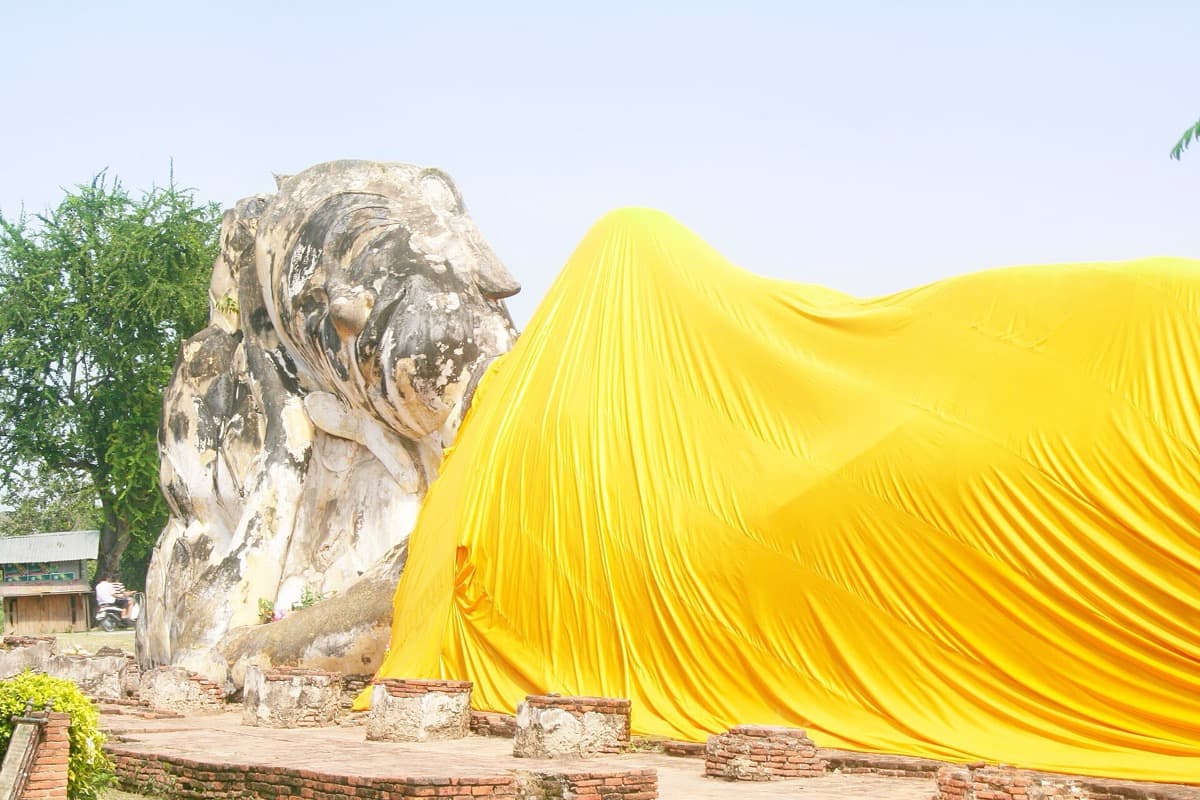
As the light softens, head west toward the river. This is the ground the Ayutthaya Riverside and Prang self-guided tour covers, and it reads the old skyline as a kind of language: the tapering corn-cob prang and the bell-shaped chedi, the two shapes that came to signify Siam. The loop threads Wat Na Phra Men, which survived the 1767 destruction largely intact and keeps a crowned Buddha in its main hall, then Wat Worachettharam, the reclining Buddha at Wat Lokayasutharam, and Wat Kasattrathirat, before reaching the river. Several of these are free or charge only about 20 baht; the reclining Buddha is free and open-air.
This half of the day covers roughly 7 kilometers and is graded harder than the morning walk, which is why a bicycle earns its keep here.
Sunset: Wat Chaiwatthanaram across the river
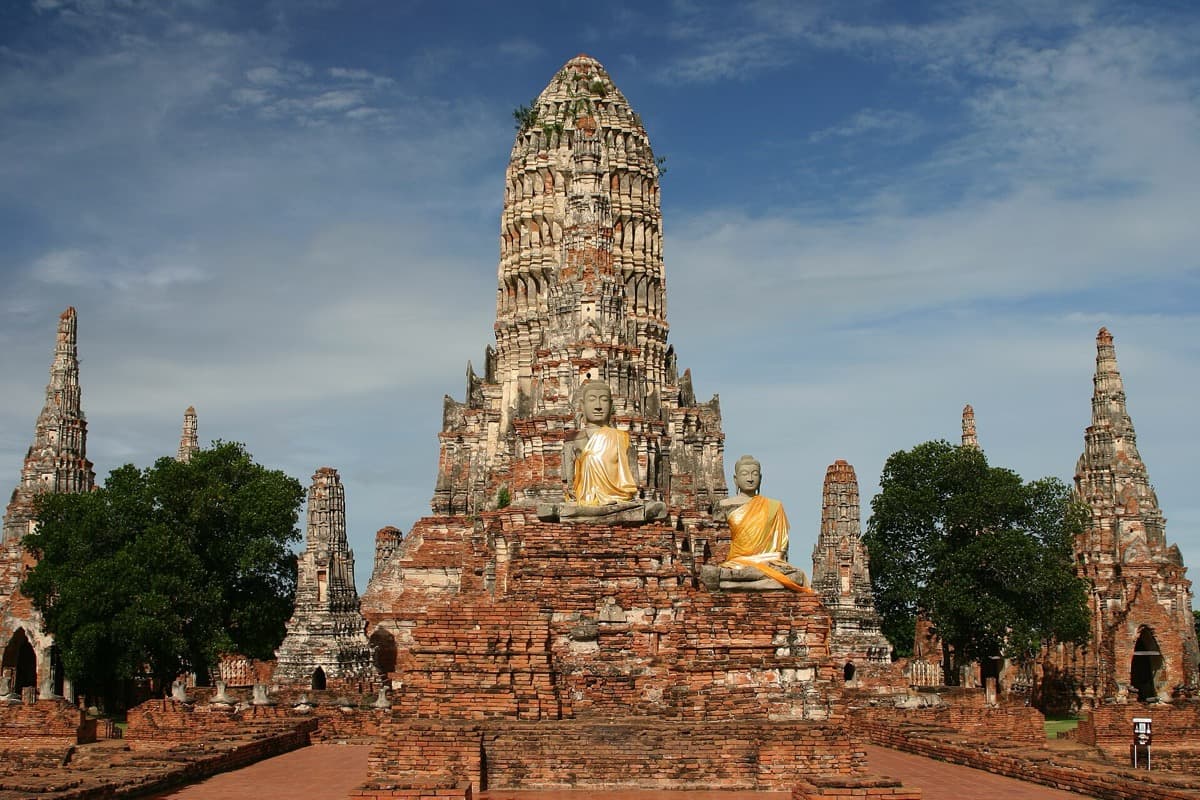
End the day at Wat Chaiwatthanaram, on the west bank of the Chao Phraya. Built in the 1600s under King Prasat Thong, its central prang ringed by smaller towers reads as the most complete royal statement left standing, and late afternoon into sunset is when it looks its best, the brick going warm gold as the crowds of the day thin out. Entry is about 50 baht. The temple's posted hours run to roughly 6:00 in the evening, and on many evenings the ruins are illuminated after dark, with a fuller cool-season light-and-culture program running on weekends from about December to February, so lingering near closing time can reward you. This is the climax of the Riverside and Prang route.
Shops opposite the temple rent traditional Thai outfits (commonly 200 to 300 baht for adults, less for children) if you want to dress the part for photos, a local custom rather than a requirement. The dress code for entry is the same as everywhere: shoulders and knees covered.
The other Ayutthaya: the foreign quarters
If you have a second day, or you care more about who traded here than about temple form, walk the vanished cosmopolitan port south and downriver of the island. The Ayutthaya Foreign Quarters self-guided tour covers Wat Phanan Choeng and its towering seated Buddha, the reconstructed Dutch trading post at Baan Hollanda, the sites of the Japanese and Portuguese settlements, Wat Phutthaisawan, and St Joseph's Church. It is a longer, harder loop of about 7 kilometers that tells the story of the era when Siam kept the whole world close enough to trade with and close enough to watch. Baan Hollanda and the settlement sites charge modest admissions; the churches and several temples are free.
Getting there and back in a day
Ayutthaya works well as a day trip from Bangkok, and it is easy to reach independently. Trains now run from Krung Thep Aphiwat Central Terminal (the station that replaced Hua Lamphong for most long-distance service). Express trains reach Ayutthaya in under an hour; ordinary trains take longer, roughly 1.5 to 2.5 hours, and the cheapest third-class ordinary tickets cost only a small handful of baht. Air-conditioned minivans are the other common option, generally around 100 to 200 baht per person and roughly 1 to 1.5 hours depending on traffic and where you board. From Ayutthaya station, a short ferry across the river or a tuk-tuk drops you at the edge of the temple island.
To hold to the morning-to-sunset arc above, aim for an early train out of Bangkok and a return in the evening. That gives you the cool hours at the royal center and the golden hour at Wat Chaiwatthanaram, which is the whole point of doing it in a day.
A calm note on safety
Ayutthaya is a low-key provincial town, and the walking itself is straightforward. The real hazards are ordinary ones: sun and heat, uneven brick and low walls at the ruins, and road traffic if you cycle on the busier stretches. Carry water, wear a hat, watch your footing on old stairs, and if you rent a bicycle, stay alert on the main roads. The self-guided tour format helps here, because you set your own pace, stop in the shade whenever you want, and never wait on a group.
Sources
- Ayutthaya Historical Park entrance fees and opening hours, Renown Travel
- Ayutthaya: The Definitive Guide 2026 (fees, six-temple pass, hours), Voyage Tips
- How to Get to Ayutthaya from Bangkok: 2026 Transport Guide, ItiMaker
- Ayutthaya Bike Rental Tips: 2026 Cycling Guide, ItiMaker
- Wat Chaiwatthanaram: Sunset Temple Guide (hours, dress code, lighting), Thai-Hub
Frequently asked questions
- Can you see Ayutthaya in one day?
- Yes. The most important ruins sit in a tight cluster on the central island, and a single day on foot, with a bicycle or tuk-tuk for the longer river crossings, covers the royal city core in the morning and the riverside temples at sunset. The key is to order the day around the heat and start early, since temples open around 8:00 in the morning and close around 6:00 in the evening.
- How much does it cost to enter Ayutthaya's temples?
- There is no gate fee for the historical park as a whole; you pay per temple. Major ticketed temples like Wat Mahathat, Wat Phra Si Sanphet, and Wat Chaiwatthanaram charge about 50 baht each. Smaller temples charge around 20 baht or are free. A combined six-temple pass costs about 220 baht and saves money if you plan to enter several ticketed sites.
- How do you get from Bangkok to Ayutthaya?
- Trains run from Krung Thep Aphiwat Central Terminal in Bangkok. Express trains reach Ayutthaya in under an hour, while ordinary trains take roughly 1.5 to 2.5 hours and cost only a few baht for third class. Air-conditioned minivans are the other common choice, generally around 100 to 200 baht per person and roughly 1 to 1.5 hours depending on traffic.
- What is the best time of day to visit Wat Chaiwatthanaram?
- Late afternoon into sunset is the best time. The brick warms to gold as the day's crowds thin, and the temple's central prang looks its most complete in that light. Posted hours run to roughly 6:00 in the evening, and on many evenings the temple is illuminated after dark, with a fuller cool-season light program running on weekends from about December to February. Entry is about 50 baht and you must cover shoulders and knees.
- Should you walk or bike around Ayutthaya?
- Both. The morning royal-city cluster is compact and flat, so walking it is comfortable. The western and riverside temples are more spread out, so a rented bicycle (commonly 50 to 100 baht for the day, more for an electric bike) or a tuk-tuk hired by the hour makes the afternoon far easier, especially in the heat.
- When is the best season to visit Ayutthaya?
- November to January is the most comfortable window, with little rain and lower heat. From March to May the hot season pushes midday temperatures above 35 degrees Celsius on the shadeless brick, so if you visit then, do the ruins early, rest at midday, and return for the late afternoon.
Ready to experience it?
Historical Park: The Burned Capital
110 min · 5 km · moderate
More from Ayutthaya
Explore more at your own pace.
Ayutthaya Travel Guide: Days, Transport, Season, Safety, and Costs
The Burned Capital: How Ayutthaya's Ruins Read the World That Made Them
Reading Ayutthaya's Royal Skyline at Wat Chaiwatthanaram
The Excavated Dead of Ayutthaya's Portuguese Settlement
Wat Lokayasutharam: Reading Ayutthaya's Reclining Buddha