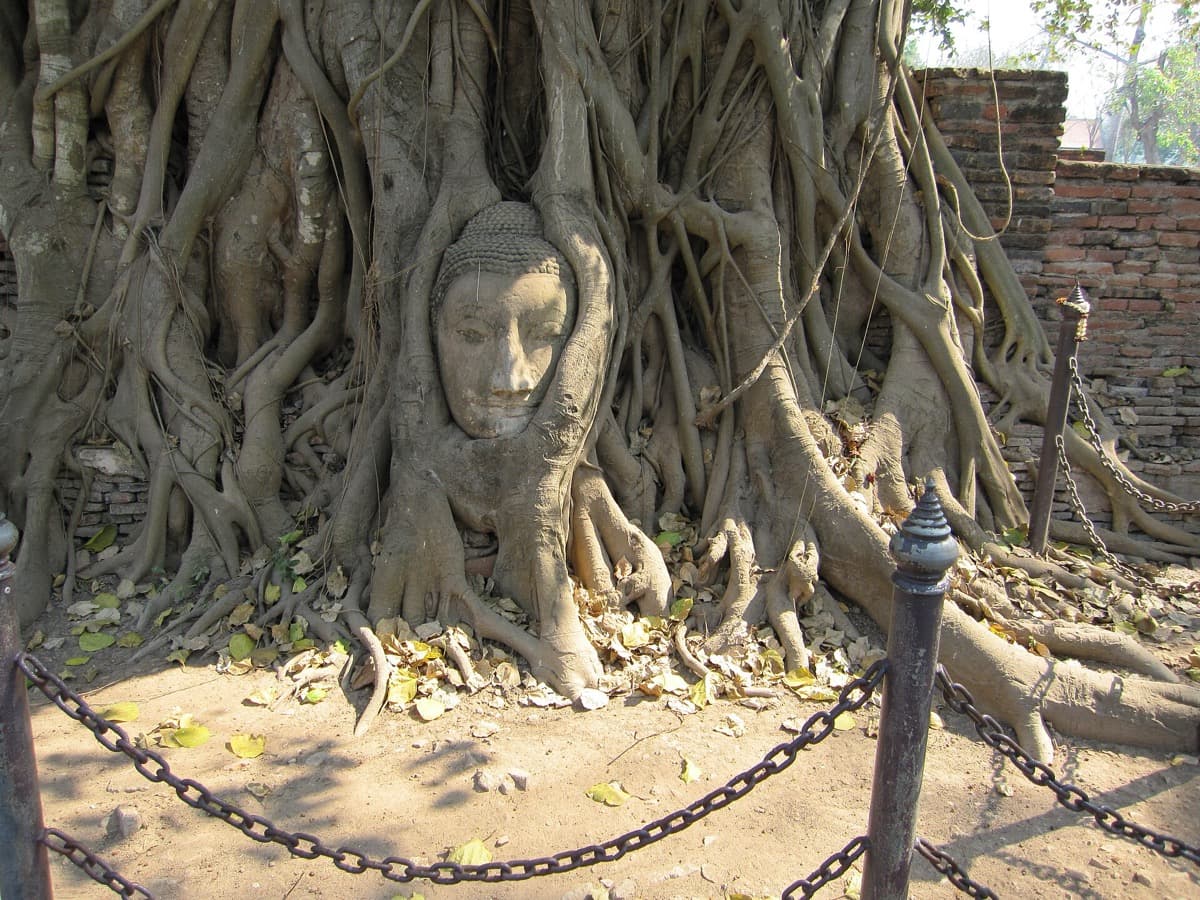
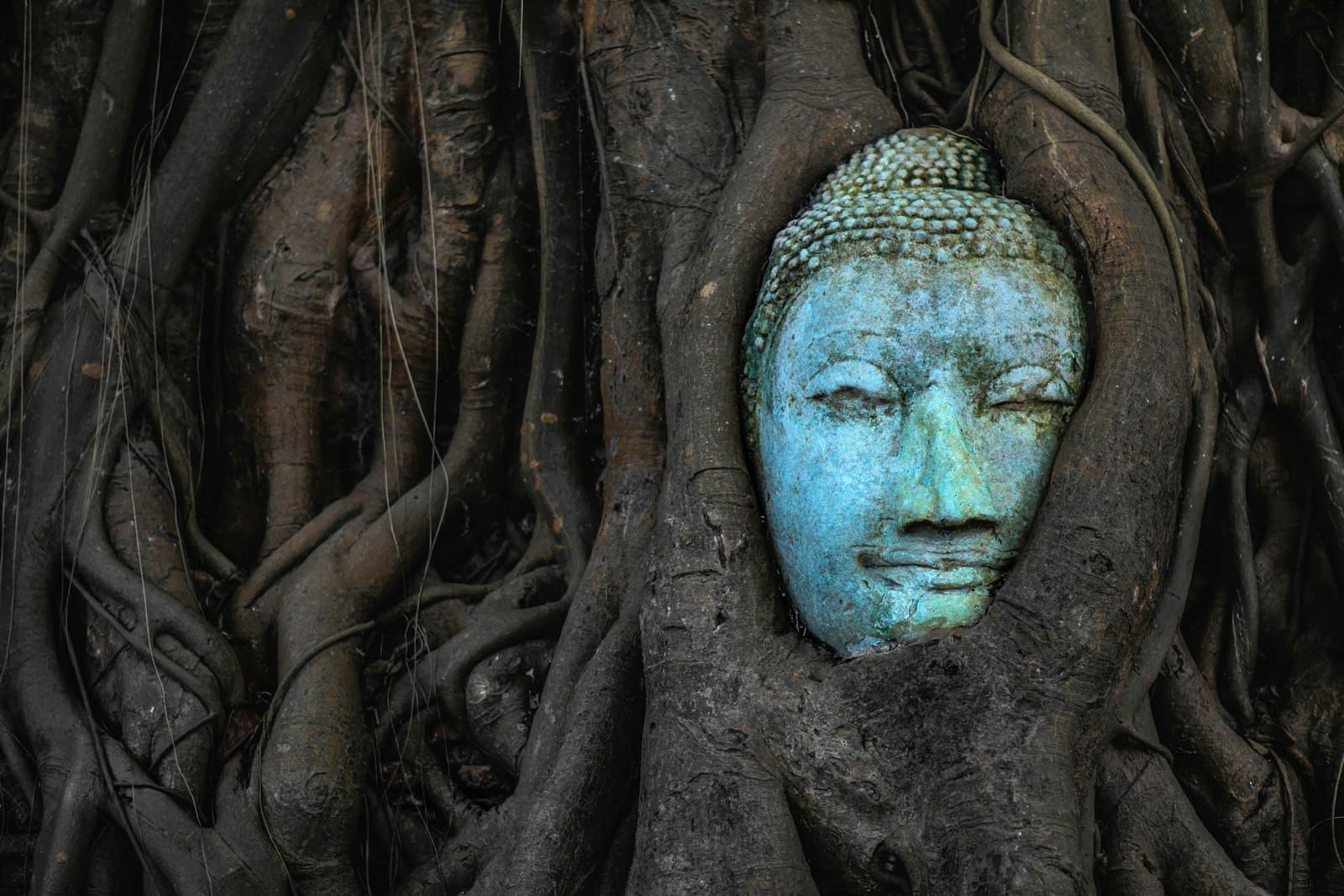
Wat Mahathat was the religious and political center of Ayutthaya, the shrine that held the kingdom's most sacred relic, and after a Burmese army sacked the city in 1767 it was reduced to the brick stumps that fill the site today. Almost everyone who comes here comes for one thing: a stone Buddha head enmeshed in the roots of a bodhi tree, the face calm and level, the wood curling up around it like cupped hands. It is the most photographed object in the entire archaeological park. The honest and more interesting truth is that nobody actually knows how the head arrived there. This is a place where a real relic temple, a documented catastrophe, and an unsolved mystery all sit in the same few square meters of ground.
The center of everything
Start with what the name tells you. Mahathat means Temple of the Great Relic. In the Ayutthaya kingdom a temple carrying that name was not one shrine among many. It was the principal reliquary, the building raised over the most sacred relic a capital possessed, and it stood at the point where religion and kingship overlapped. That is the role this ruin played. The original structure here was the jewelled reliquary that anchored the sacred core of the city.
The royal chronicle records that King Borommarachathirat the First established Wat Mahathat in 1374. A later king, Ramesuan, expanded it in 1384, and it took the name it still carries. For nearly four centuries this was the address that mattered most on the royal island, the fixed point around which ambassadors, processions, and the machinery of the court arranged themselves. Ayutthaya itself was, for that stretch, one of the largest and richest cities on earth, an island ringed by three rivers whose court received envoys from as far away as Versailles. Wat Mahathat sat at the middle of that wealth.
What 1767 left behind
Hear a stop from this walk
Ancient Royal Palace (Wang Luang): The Foundations That Became Bangkok
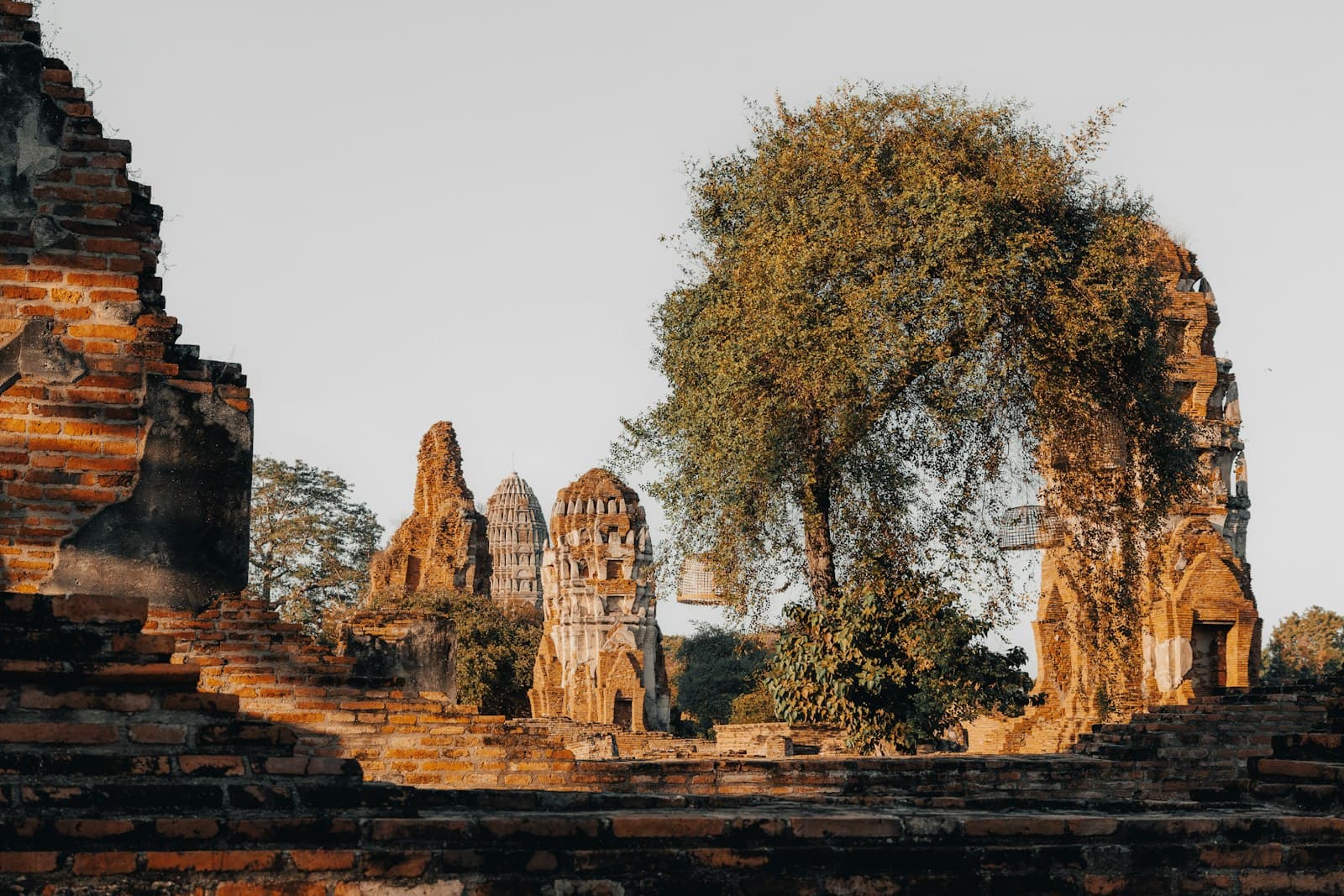
In 1767 a Burmese army razed Ayutthaya so completely that the Siamese abandoned the site rather than rebuild it, founding a new capital downriver at Bangkok. They even carried Ayutthaya's own bricks with them. Wat Mahathat did not survive that fire as anything more than foundations. The soaring central prang collapsed. The prayer halls came down. What you walk through now is the negative outline of a great temple: brick platforms, rows of headless seated Buddhas, the bases of columns that no longer hold up anything.
The headlessness is not weathering. When the Burmese took the city, they defaced many of its Buddha images, and the sandstone head in the tree roots is believed to have been struck from one of those statues during the sack. So the single most beloved sight in the park is, at its origin, a piece of documented violence. That matters for how you read it. The serenity of the face is real, and so is the act that separated it from its body.
The head in the roots
Here is where the ruins go quiet, and where a good guide has to stop pretending to know more than the record supports. There are two theories for how the head came to rest in the bodhi tree, and both are only theories.
The first says the tree simply grew around it. During the long centuries after 1767, the temple lay abandoned and overgrown, jungle reclaiming the brick. A stone head resting on or near the ground would, over that much time, be slowly embraced by a spreading root system until the wood cradled it in place. Nobody arranged it. Time did.
The second says a person did. In this version a thief moved the head to hide it, possibly during the treasure hunting that swept the ruins in the early twentieth century, meaning to come back for it later, and simply never returned. The tree then grew around a head that a human hand had already placed.
Neither theory has a document behind it. There is no dated account, no named witness, no excavation report that settles the question. What survives is the object itself and two competing explanations, and the intellectually honest position is to hold both and commit to neither. You are looking at real destruction, from a real war, resolved into an image of extraordinary calm, and the mechanism that produced that image is genuinely unknown. That is rarer than a legend. A legend gives you an answer. This gives you an unanswered question that has quietly become one of the defining images of Thailand.
How to stand in front of it
A few practical notes for the visit. Wat Mahathat is a ticketed site, fifty baht at the gate, though a six-temple park pass at two hundred twenty baht is the better value if you plan to see the other ruins on the same island. It is an active religious site, so cover your shoulders and knees. There is a widely observed courtesy at the head itself: because a Buddha image should never be looked down upon, visitors crouch low to bring themselves beneath the level of the face before photographing it, and you will see signs and staff reminding people to do the same. Do it. It costs nothing and it changes the encounter.
Come early, near the eight o'clock opening, or in the last couple of hours before sunset. Midday sun on open brick is punishing and there is almost no shade here. The low light of the day's edges also does something for the ruins that the flat glare of noon cannot.
Wat Mahathat is the second stop on the Ayutthaya walking tours route called The Burned Capital, a self-guided audio walk that links six ruins across the royal island over roughly two hours. The tour reads the head in the roots against the rest of the city's story: the looted crypt at Wat Ratchaburana next door, the melted gold at Wat Phra Si Sanphet, the palace foundations that were literally shipped downriver to build Bangkok. Standing at the head with that larger paradox in mind, that the more total the destruction, the more powerful the ruin became, is a different experience than arriving cold for the photograph. Plan the walk from the Ayutthaya city page, go at your own pace, and let this stop hold you as long as it wants to.
Sources
- Wat Mahathat (Ayutthaya), Wikipedia. Founding dates under Borommarachathirat the First (1374) and expansion under Ramesuan (1384), the temple's role as principal relic temple, and the account of the Buddha head in the tree roots.
- Roamer, The Burned Capital self-guided audio tour (fact-audited tour transcript). Primary source for the two competing theories on the head, the Burmese defacement of images, and the 1767 sack.
- Fine Arts Department of Thailand, Ayutthaya Historical Park documentation. Site management, ticketing, and the status of Wat Mahathat as an active protected ruin within the UNESCO-listed park.
Ready to experience it?
Historical Park: The Burned Capital
110 min · 5 km · moderate
More from Ayutthaya
Explore more at your own pace.
Ayutthaya Travel Guide: Days, Transport, Season, Safety, and Costs
The Burned Capital: How Ayutthaya's Ruins Read the World That Made Them
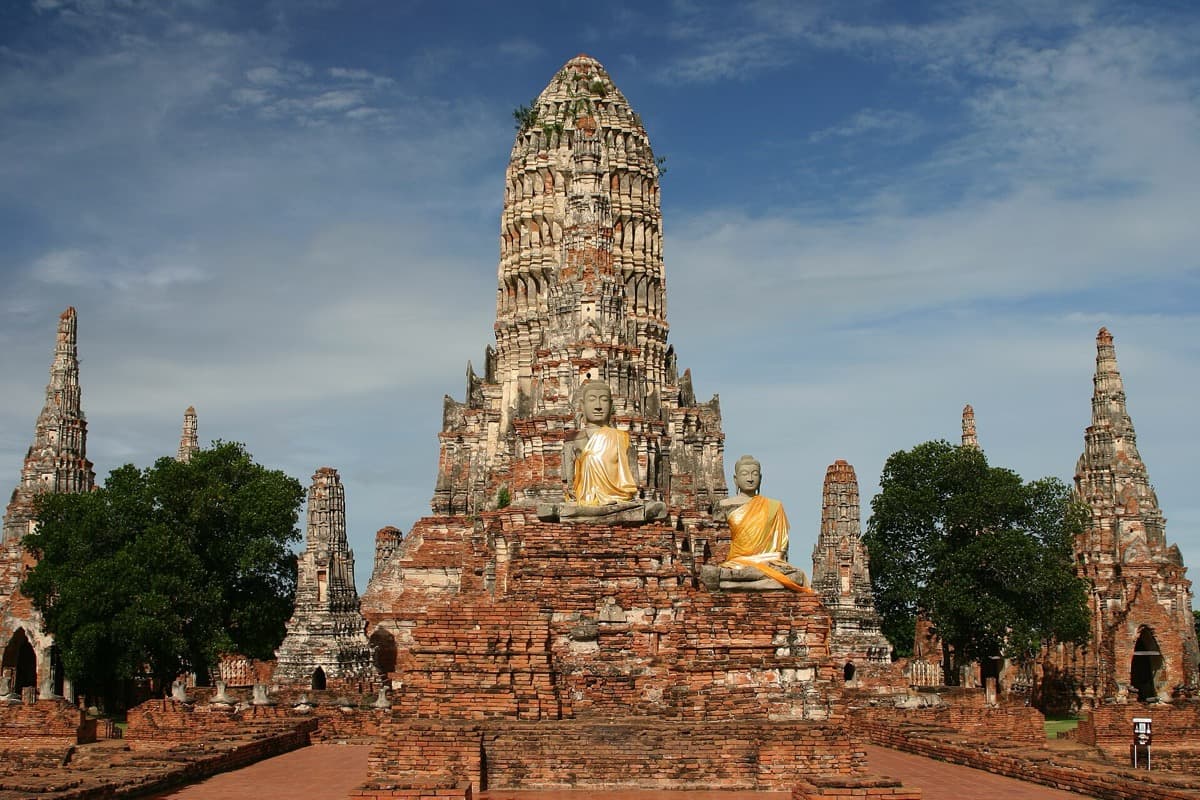
Reading Ayutthaya's Royal Skyline at Wat Chaiwatthanaram
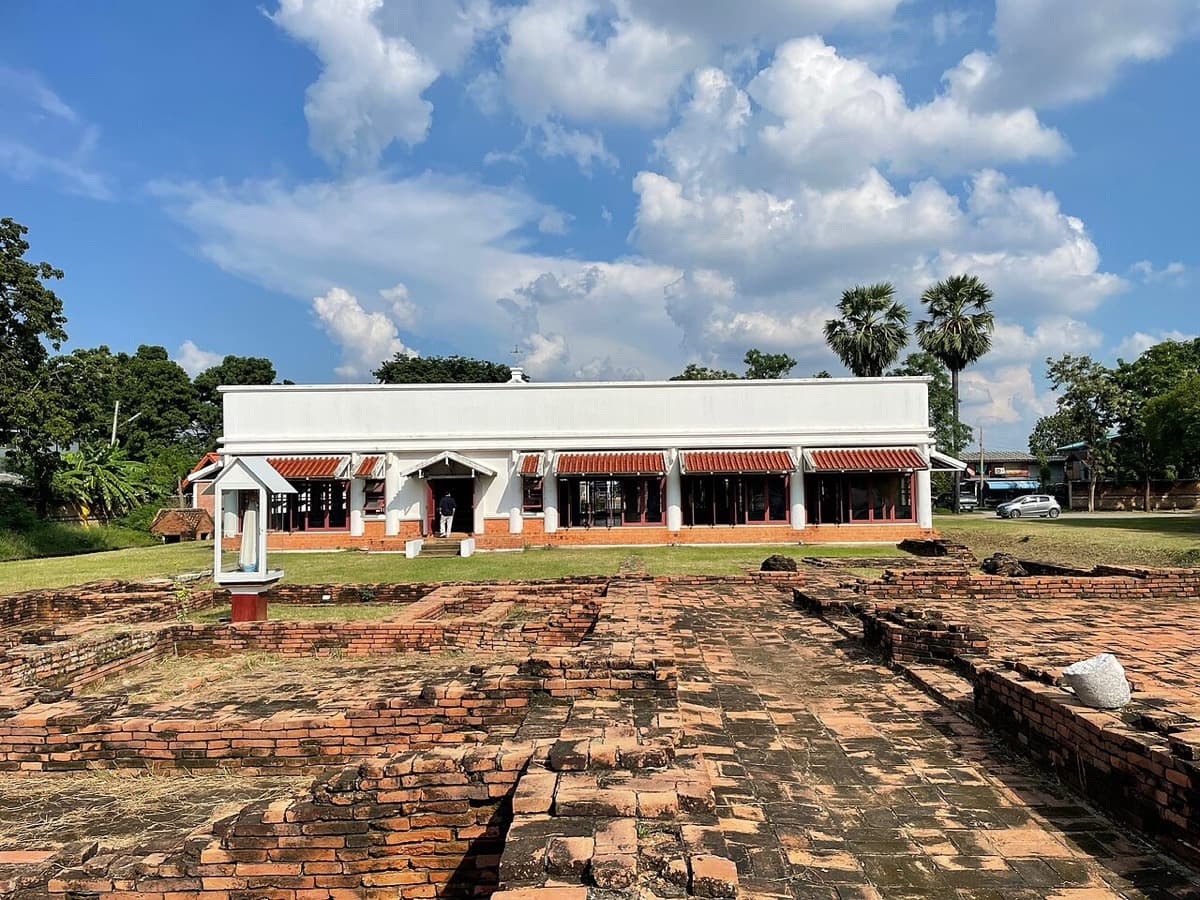
The Excavated Dead of Ayutthaya's Portuguese Settlement
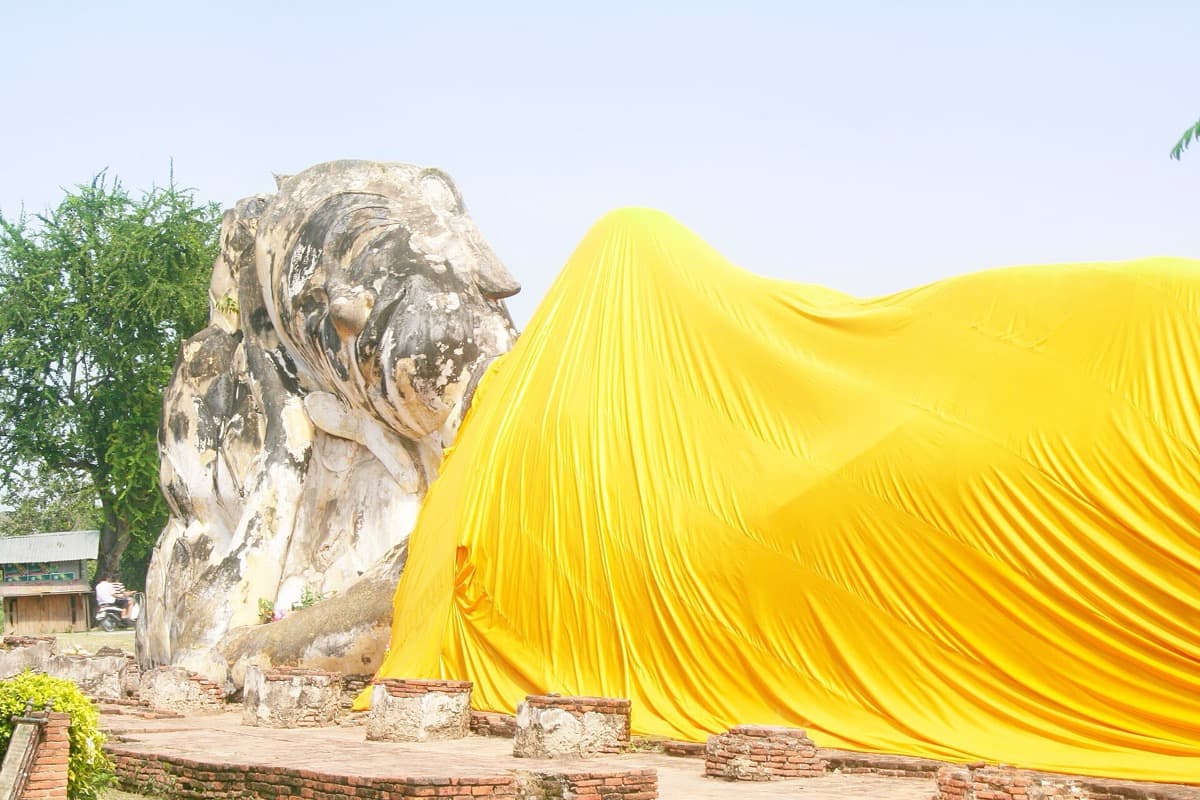
Wat Lokayasutharam: Reading Ayutthaya's Reclining Buddha