Historical Park: The Burned Capital
110 min · 5 km · moderate
Ayutthaya rewards two unhurried days, moves best by bicycle on its flat river island, and costs very little once you understand its ticket system. The old Siamese capital sits about 80 kilometres north of Bangkok, close enough for a day trip but built on a scale that punishes rushing. Below is the practical plan: how long to stay, how to arrive, how to get around the ruins, when to come, an honest word on safety, and what a day here actually costs.
How many days do you need?
Two days is the comfortable answer. You can see the headline ruins in a single long day trip from Bangkok, and many travelers do, spending roughly five to seven hours on the island. But the heat, the distances between temple clusters, and the sheer density of the site make one day feel like a forced march by mid-afternoon.
With two days you can split the island into halves and rest through the hottest hours. Our three self-guided walks are built to match that rhythm. The Ayutthaya Royal City walk covers the sacred core (Wat Ratchaburana, Wat Mahathat, Wat Phra Si Sanphet) in about two hours over five kilometres. The Foreign Quarters walk runs downriver through the vanished Dutch, Japanese, and Portuguese settlements, and the Riverside Prang walk reads the western temples, ending at Wat Chaiwatthanaram. Doing one or two walks per day, with a long lunch break, is the sane pace. See all three at Ayutthaya walking tours.
How to get to Ayutthaya from Bangkok
Hear a stop from this walk
Ancient Royal Palace (Wang Luang): The Foundations That Became Bangkok
The train is the classic choice and the cheapest. Ordinary trains from Krung Thep Aphiwat Central Terminal take about one and a half to two and a half hours, with third-class fares starting around 15 to 20 baht (well under a dollar). Faster express services cover the run in roughly an hour. The ride shows you the countryside slide past, and Ayutthaya's station sits a short ferry hop from the historical island.
Minivans are the quickest budget option. Air-conditioned vans leave Bangkok's Mo Chit area every twenty to thirty minutes and reach Ayutthaya in a little over an hour for roughly 60 to 100 baht. A private taxi or car does the door-to-door trip in about an hour for 1,500 to 2,500 baht, worth splitting among a group.
Getting around the ruins
Rent a bicycle. Ayutthaya's historical park sits on a flat island only about three kilometres across, and a bike is the single best transport decision you can make here. Day rentals run 50 to 100 baht, and shops cluster opposite the train station, along Naresuan Road near the guesthouses, and inside many hotels. Electric bikes have become common too, usually 150 to 300 baht per day.
If cycling in the heat is not for you, tuk-tuks charge roughly 200 to 300 baht per hour or 800 to 1,500 baht for a half-day charter. Agree the price before you climb in. Scooters rent for about 200 to 250 baht per day, but you need a valid international driving permit to ride one legally, and scooters are not allowed inside the pedestrian zones of the park. For most visitors, a bicycle plus our audio walks covers everything without a fixed route or a driver waiting on the meter.
When to visit
November to February is the window. Those months bring the coolest, driest weather, with daytime temperatures in the high 20s to low 30s Celsius and little rain, which is exactly the condition you want for cycling between temples. March to May turns hot, often above 35 Celsius with heavy humidity.
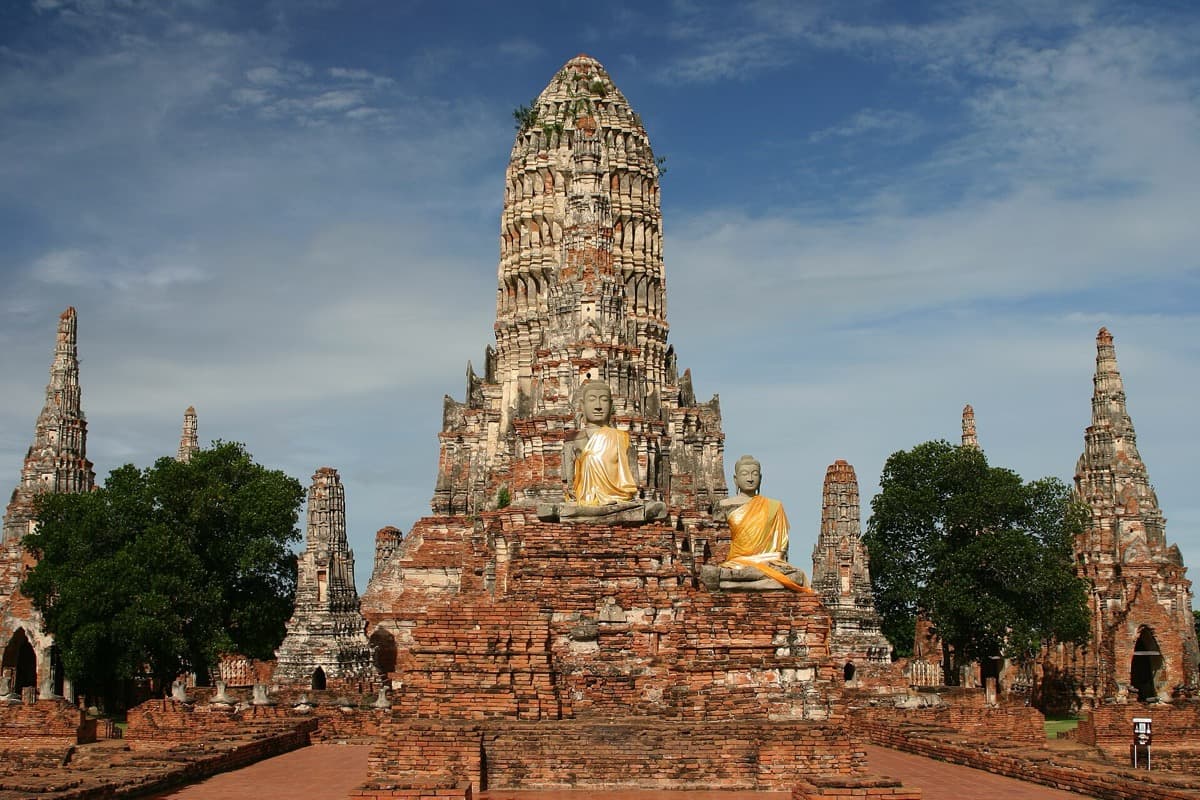
The rainy season runs June to October. It is quieter and greener, but afternoon downpours are common and low-lying parts of the island can flood after heavy rain. If you come in the cool season, one bonus: on Fridays, Saturdays, Sundays, and public holidays from December to February, Wat Chaiwatthanaram opens into the evening under floodlights, roughly 4:30 PM to 9:30 PM, and the illuminated prang over the river is the finest sight in town.
Is Ayutthaya safe?
Ayutthaya is calm and low-risk, with the ordinary caveats of any Thai town. Violent crime against travelers is rare. The real hazards are practical: traffic that feels chaotic if you are not used to it, occasional petty theft in markets, heat exhaustion, tourist overcharging, and temple stone that turns slippery in the rain.
Handle those with common sense. Wear a helmet if you rent a scooter, avoid cycling on busy roads after dark, and never ride through floodwater, which can hide potholes and open drains. Only take scooters out if you are an experienced rider. None of this should keep you away, it just rewards a bit of caution.
What it costs (entry fees and budget)
Temple entry is modest and predictable. Most of the major ruins charge 50 baht for foreign visitors (Thai nationals pay less), and the smartest move is the six-temple combined pass at 220 baht, which covers Wat Mahathat, Wat Ratchaburana, Wat Phra Si Sanphet, Wat Phra Ram, Wat Maheyong, and Wat Chaiwatthanaram. Smaller sites like Wat Phanan Choeng ask around 20 baht, and several temples, including Wihan Phra Mongkhon Bophit and Wat Lokayasutharam, are free to enter. Ticketed sites generally open 8:00 AM to 6:30 PM.
A frugal day here is genuinely cheap. Bicycle rental, the combined temple pass, street food, and water can come in under 500 baht per person once you are on the island. Bring covered shoulders and knees for every temple, since the historical park enforces that dress code for all visitors. Start with the Ayutthaya Royal City walk on your first morning, and let the ruins set the pace.
Sources
Frequently asked questions
- How many days should I spend in Ayutthaya?
- Two days is the comfortable choice. You can hit the headline ruins in a single long day trip from Bangkok, and many travelers do, spending five to seven hours on the island. But the heat and the distance between temple clusters make one day feel rushed. Two days lets you split the island in half and rest through the hottest hours.
- How do I get to Ayutthaya from Bangkok?
- By train, minivan, or car. Ordinary trains from Krung Thep Aphiwat Central Terminal take about one and a half to two and a half hours, with third-class fares from around 15 to 20 baht. Minivans from the Mo Chit area reach Ayutthaya in a little over an hour for roughly 60 to 100 baht. A private taxi costs 1,500 to 2,500 baht.
- What is the best way to get around Ayutthaya?
- Rent a bicycle. The historical park sits on a flat island only about three kilometres across, and day rentals cost 50 to 100 baht. Tuk-tuks charge roughly 200 to 300 baht per hour, and scooters rent for about 200 to 250 baht per day but require a valid international driving permit and are banned from pedestrian zones.
- How much does temple entry cost in Ayutthaya?
- Most major ruins charge 50 baht for foreign visitors. The best value is the six-temple combined pass at 220 baht, covering Wat Mahathat, Wat Ratchaburana, Wat Phra Si Sanphet, Wat Phra Ram, Wat Maheyong, and Wat Chaiwatthanaram. Some sites like Wat Phanan Choeng ask around 20 baht, and several temples are free. Ticketed sites usually open 8:00 AM to 6:30 PM.
- When is the best time to visit Ayutthaya?
- November to February brings the coolest, driest weather, with daytime temperatures in the high 20s to low 30s Celsius and little rain, ideal for cycling. March to May turns hot, often above 35 Celsius. The rainy season runs June to October, quieter and greener but with afternoon downpours and some flood risk on low-lying parts of the island.
- Is Ayutthaya safe for travelers?
- Yes, Ayutthaya is calm and low-risk. Violent crime against visitors is rare. The main hazards are practical: chaotic traffic, occasional petty theft in markets, heat exhaustion, overcharging, and slippery temple stone in the rain. Wear a helmet on scooters, avoid cycling busy roads after dark, and never ride through floodwater.
Ready to experience it?
Historical Park: The Burned Capital
110 min · 5 km · moderate
More from Ayutthaya
Explore more at your own pace.
The Burned Capital: How Ayutthaya's Ruins Read the World That Made Them
Reading Ayutthaya's Royal Skyline at Wat Chaiwatthanaram
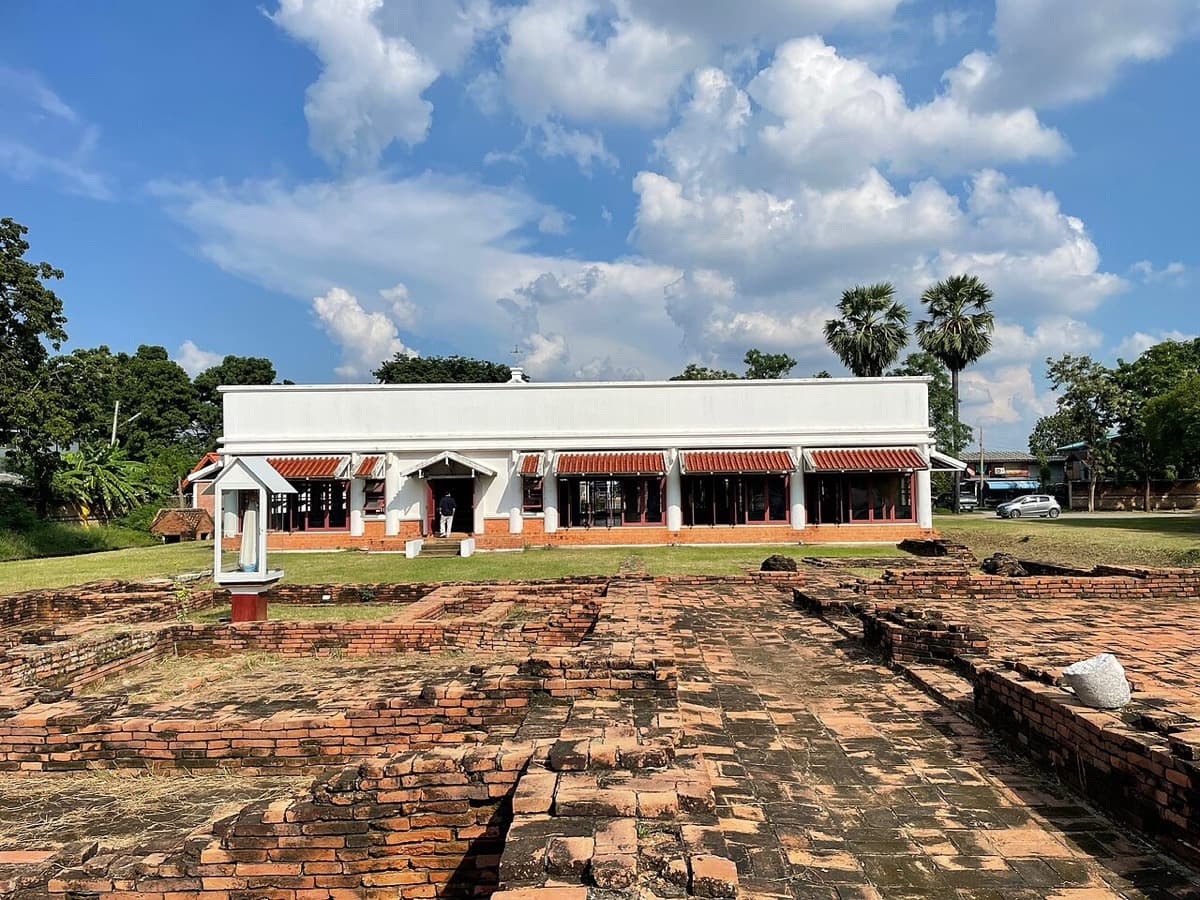
The Excavated Dead of Ayutthaya's Portuguese Settlement
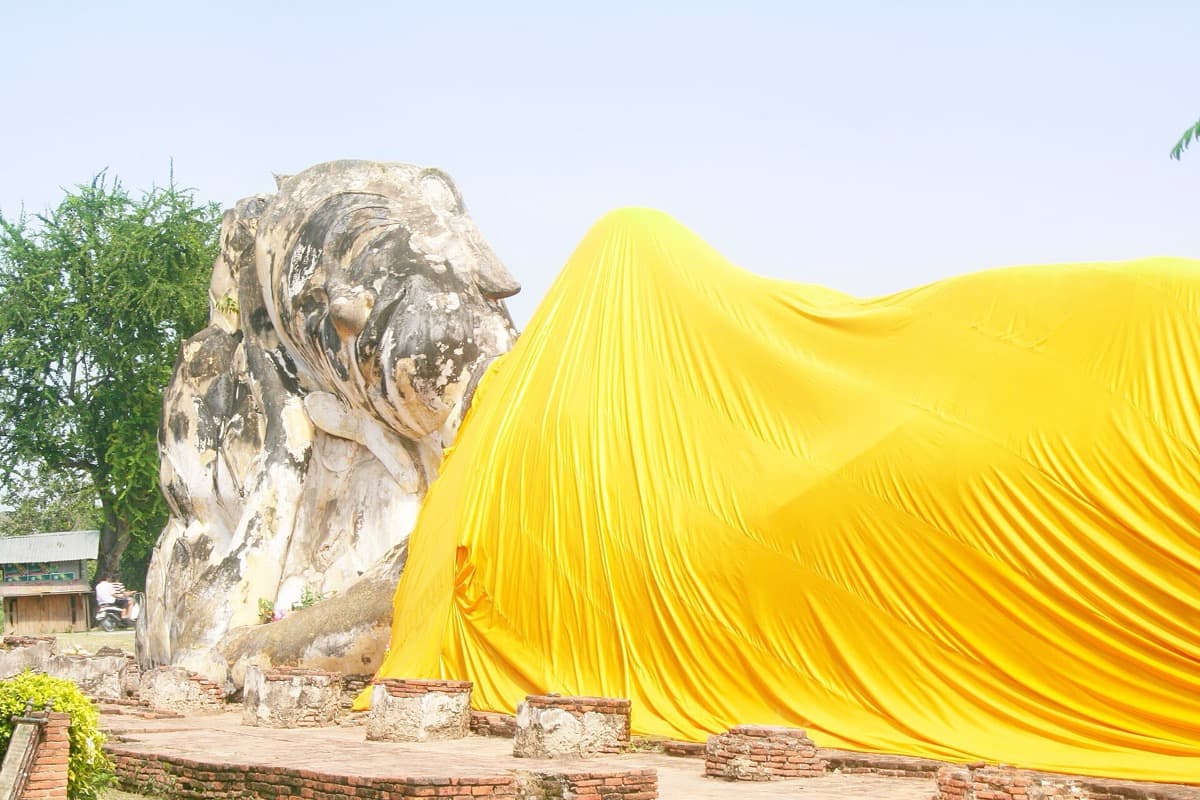
Wat Lokayasutharam: Reading Ayutthaya's Reclining Buddha
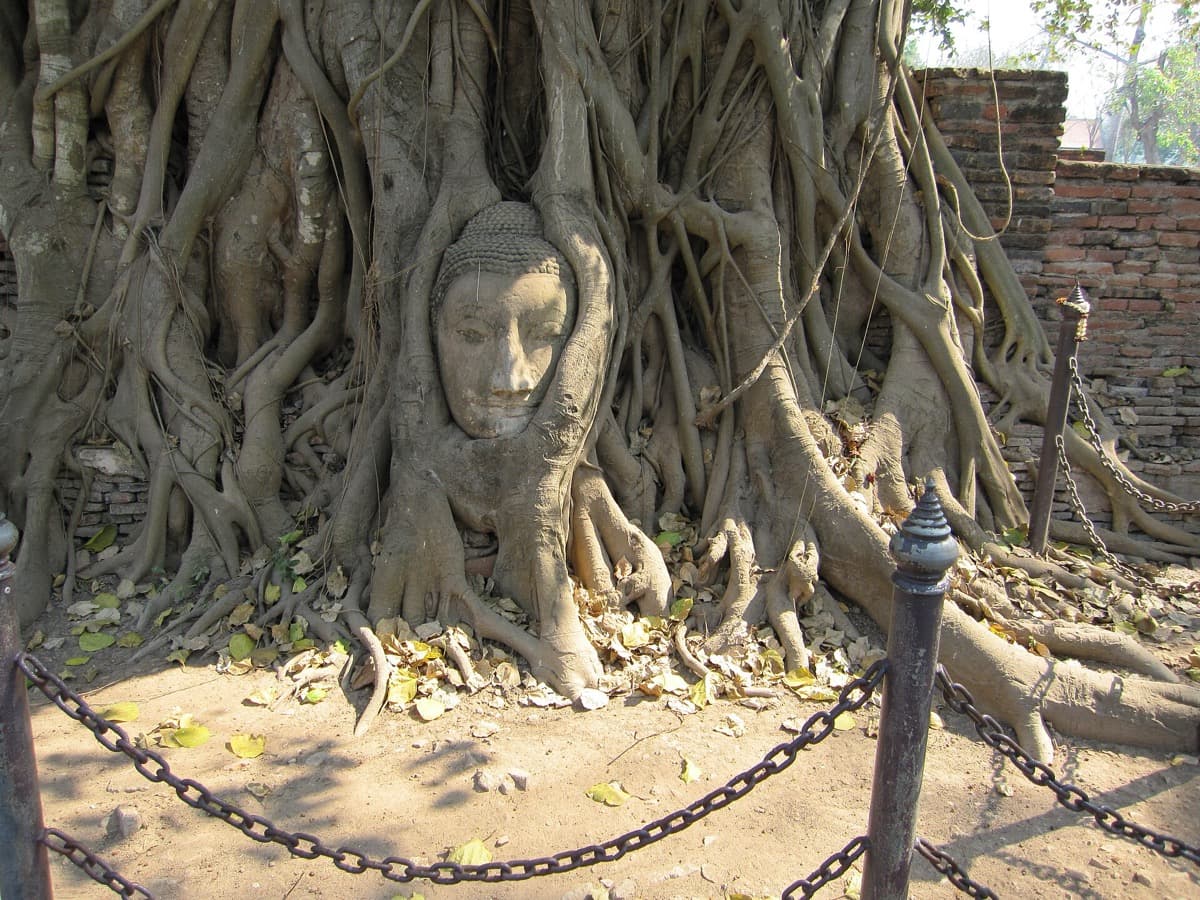
Wat Mahathat, Ayutthaya: The Buddha Head in the Tree Roots