Bibliotheca and the Corniche: The Greek City by the Sea
150 min · 2.7 km · easy
Alexander the Great founded Alexandria on the Mediterranean shore in the fourth century B C, and for centuries it was the most brilliant city in the world: seat of the Ptolemies and of Cleopatra, home to the greatest library of antiquity and to the Pharos, the lighthouse counted among the seven wonders. Almost all of that Greek city is gone now. It drowned in the harbour, was quarried for stone, or lies buried under the modern one. Yet Alexandria still faces the sea it was built for, and the fragments that remain tell a single story: a city that once stood at the centre of the world and has never stopped answering its own losses. Read the surviving pieces in the right order and you read a city remembering.
That through-line is the reason to walk Alexandria rather than simply list its monuments. The city keeps almost nothing intact on the surface. To reach the ancient capital you go down, into fused catacombs, or out, to the harbour mouth and the seabed beneath it. What is left is not a ruin field but a set of answers to absence, each one grounded in a documented site you can still stand on.
The library that vanished, and the one that answers it
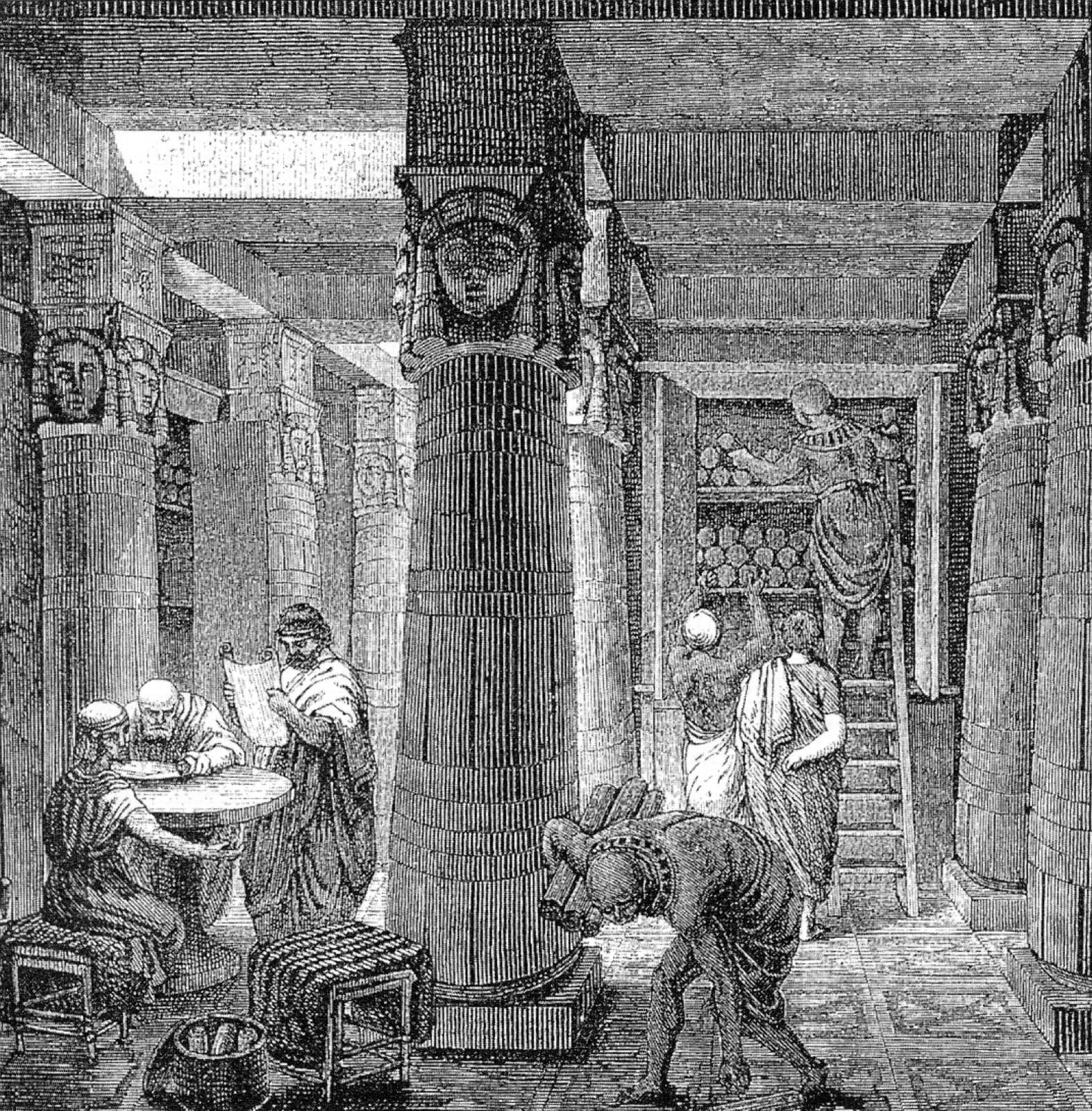
The clearest case of loss and answer sits together on the Eastern Harbour shore. The ancient Library was part of the Mouseion, a shrine to the Muses most likely established under Ptolemy the Second Philadelphus, who reigned from two hundred and eighty-five to two hundred and forty-six B C. To it the Ptolemies drew Eratosthenes, who measured the circumference of the Earth, Euclid, who worked out his geometry in this city, Callimachus, who compiled the Pinakes, and Aristarchus, who studied Homer. The popular story that the whole Library burned in a single fire, often pinned on Julius Caesar in forty-eight B C, is legend rather than fact. Modern scholarship holds that the Library declined gradually over centuries, and no trace of the building survives. You can stand near where it stood and see nothing.
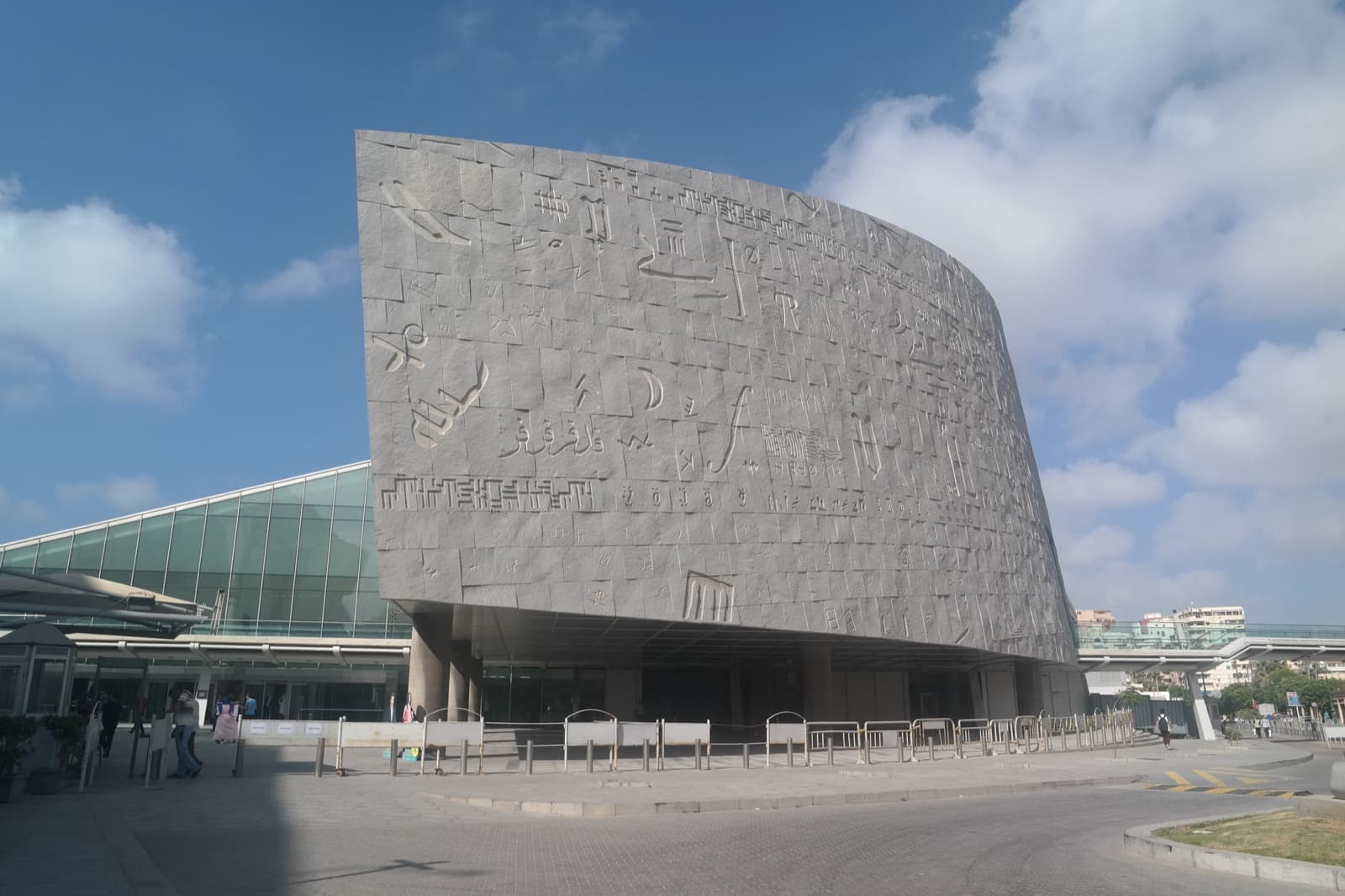
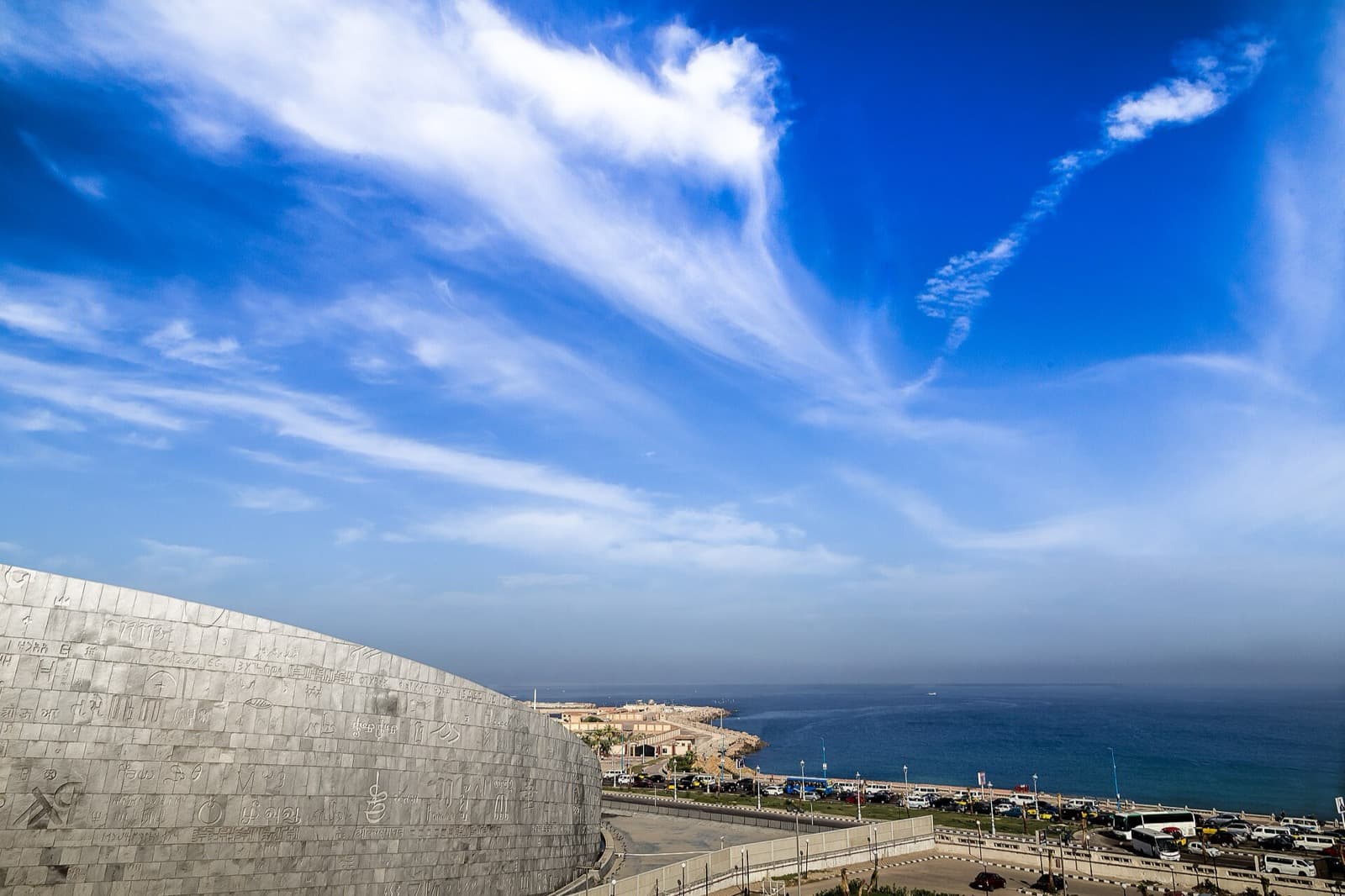
The absence is answered a few steps away. The Bibliotheca Alexandrina opened on October sixteenth, two thousand two, conceived as a deliberate revival of the ancient Library and built near the site of the old royal quarter. Its design, by the then young Norwegian firm Snohetta, was chosen from an international competition held with UNESCO's involvement. The main reading room is roofed by a tilted disc about one hundred and sixty metres across, angled toward the Mediterranean like a half-sunk sundial, and the granite wall wrapping the building is carved with characters from about one hundred and twenty of the world's writing systems. According to the Bibliotheca Alexandrina, its shelves can hold up to eight million books. It is not a reconstruction. It is a promise, made on the same shore, that a city can lose its greatest treasure and still build another. The full arc of that idea runs through the Bibliotheca and the Corniche tour.
The sea that swallowed the palaces
Hear a stop from this walk
The Roman Theatre at Kom el-Dikka: The Ancient City Surfacing
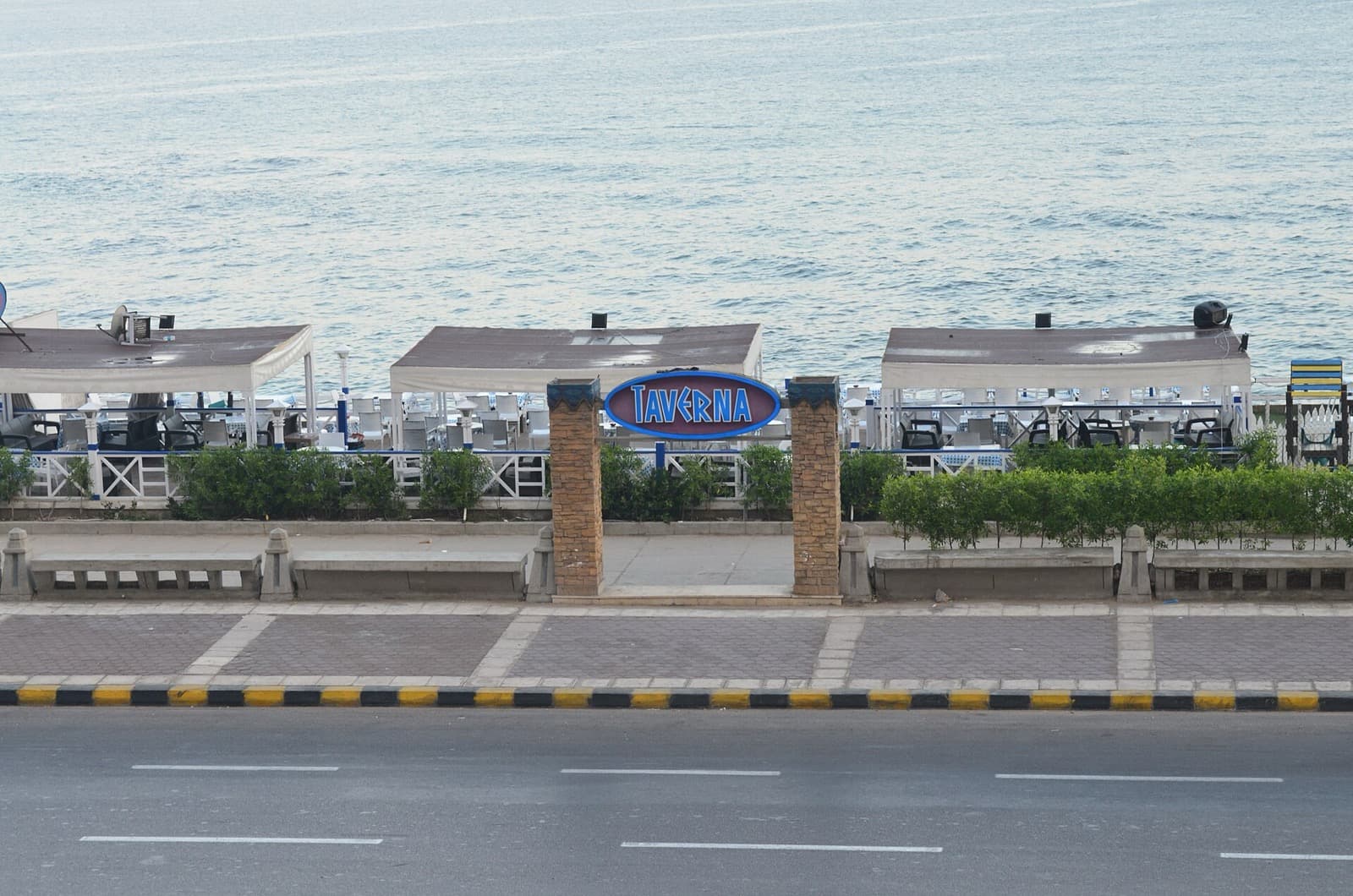
Walk the Corniche and the same theme deepens. The long seafront curves around the Eastern Harbour, which the ancients called the Portus Magnus, and the water in front of you hides the ancient royal quarter on the harbour floor. Since the early nineteen nineties the marine archaeologist Franck Goddio and his European Institute for Underwater Archaeology, working with the Egyptian Ministry of Antiquities and the Hilti Foundation, have mapped the submerged remains, including the small island of Antirhodos that ancient writers linked to the palaces of the Ptolemies. Divers have recovered statues, sphinxes, columns, coins, and the long timbers of a ceremonial pleasure boat. The quarter sank over centuries through earthquakes, tidal action, and slow land subsidence, then lay under sand for well over a thousand years. The palaces where ancient writers place Cleopatra the Seventh, Julius Caesar, and Mark Antony are not in some distant museum. They are directly beneath the harbour surface, a drowned city holding its breath.
The god the city engineered, and the underworld it imagined
The catacombs route carries the same logic underground and out to sea. It begins on a temple hill at Pompey's Pillar, a monolithic shaft of pink Aswan granite about twenty-seven metres tall, its single stone weighing near two hundred and eighty-five tonnes, raised in honour of the Emperor Diocletian around the year three hundred A D. The name is a medieval mistake, a misread Greek inscription, and the pillar has nothing to do with Pompey. It is the only ancient monument in Alexandria still standing exactly where it was first set up. Around it once stood the Serapeum, a temple built under Ptolemy the Third and dedicated to Serapis, a god the Ptolemies deliberately invented to bind Greeks and Egyptians into one people: Egyptian Osiris fused with the Apis bull, given a human Greek-style form. According to the geographer Strabo, the Serapeum held a daughter collection of the Library. In the year three hundred and ninety-one A D, after the Emperor Theodosius the First ordered pagan temples closed, the Serapeum and its books were destroyed. That is the best-documented library loss in Alexandria, and it leaves one column on a bare hill.
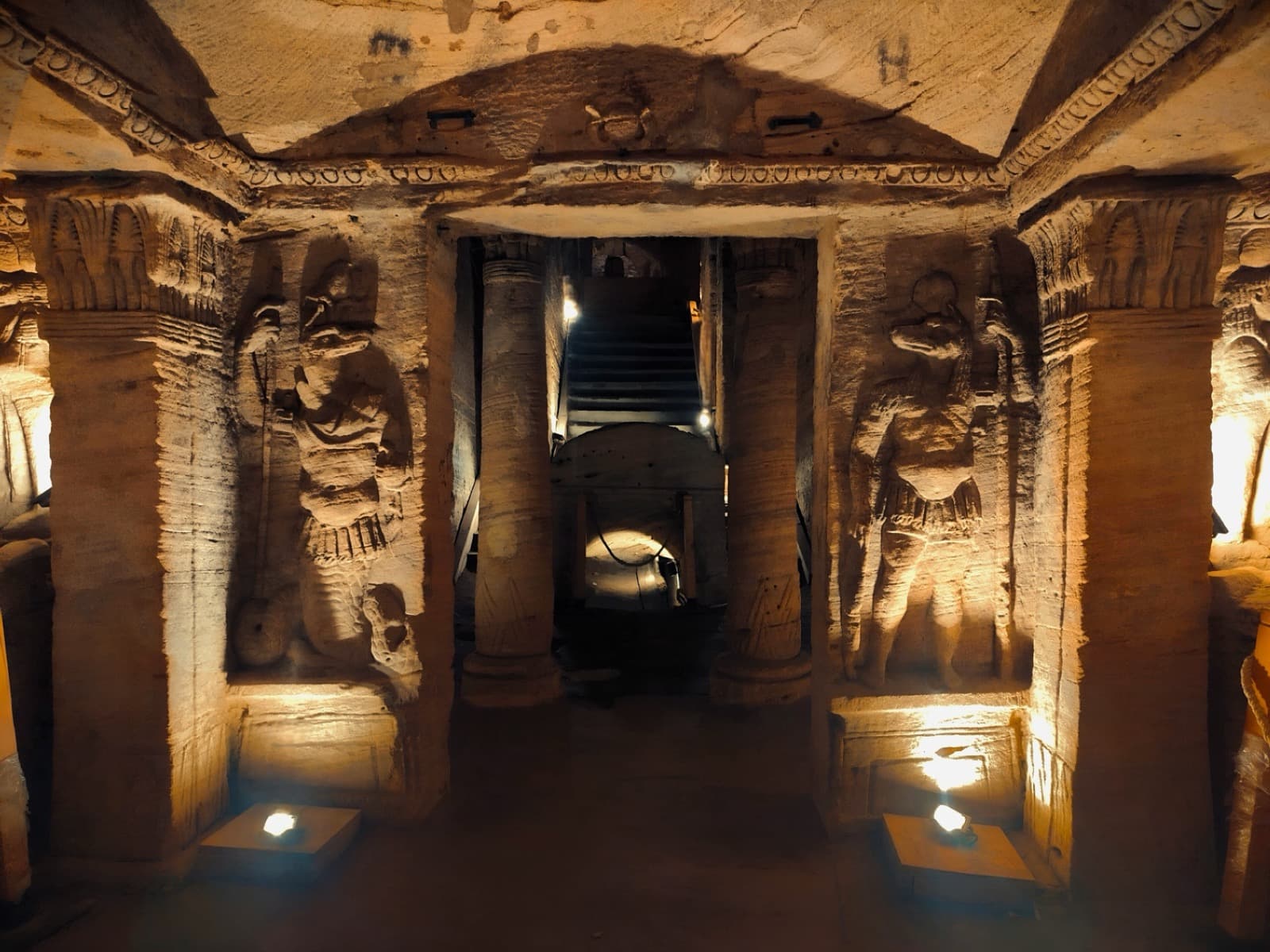
The same fusion of peoples was carved for the dead. A short distance away, the Catacombs of Kom el-Shoqafa, a Roman-era necropolis from the second century A D, spiral three levels into bedrock, the lowest once underwater. On a single tomb wall Egyptian gods appear in Roman dress, in a Greek artistic style, beside Greek mythological scenes. The name means Mound of Shards, from the broken terracotta mourners left behind. The families buried here were Egyptian, Greek, and Roman at once, and wanted an afterlife that honoured every part of who they were. These two stops open the Catacombs and the Pharos tour.
The wonder that lit the sea, and the fort built from its stone
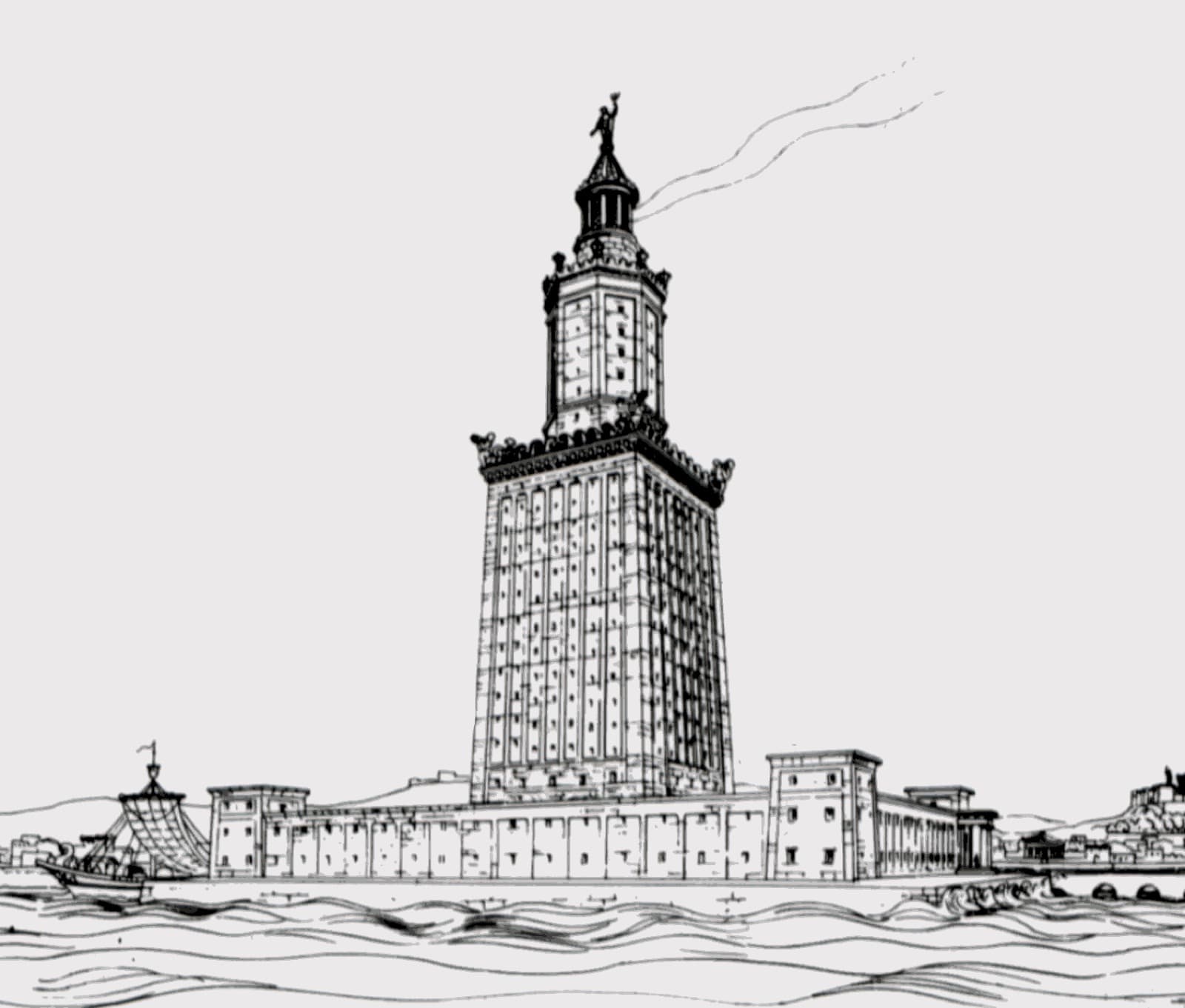
The route ends where the greatest loss turns tangible. At the harbour mouth stood the Pharos, the Lighthouse of Alexandria, begun under Ptolemy the First around three hundred and five B C and finished by Ptolemy the Second. For centuries it was among the tallest human-made structures on Earth, its height estimated near a hundred metres, a fire and mirror throwing its light out to sea. Earthquakes wore it down: a serious collapse in the year nine hundred and fifty-six, and a devastating quake in thirteen oh three that finished the ruin. In nineteen ninety-four, French archaeologists led by Jean-Yves Empereur found it underwater, enormous blocks weighing between forty-nine and sixty tonnes lying on the seabed with sphinxes and obelisks. Then, in the fifteenth century, the Mamluk Sultan Qaitbay built Fort Qaitbay on the exact site between about fourteen seventy-seven and fourteen seventy-nine, lifting some of the lighthouse's own fallen stone into its walls. Stand inside the fort and you stand partly within the wonder itself.
A city that remembers being the centre of the world
The pattern holds across both walks. Saad Zaghloul Square, named for the leader of the nineteen nineteen revolution against British rule, sits over the Caesareum begun by Cleopatra, near where the obelisks called Cleopatra's Needles once stood before their removal to London and New York. The poet Constantine Cavafy, who lived from eighteen sixty-three to nineteen thirty-three, turned the whole city into a symbol of memory and lost time; his apartment survives as the Cavafy Museum, inaugurated in nineteen ninety-two. At Kom el-Dikka, the only Roman theatre found in Egypt surfaced by chance in the twentieth century, with systematic excavation beginning in nineteen sixty under the Polish Centre of Mediterranean Archaeology. Every one of these is a fragment that rose, or was raised, against forgetting. To plan the full route, start with the Alexandria walking tours hub. Alexandria keeps almost nothing on the surface. Go down, and go out to the water, and the city is still here.
Sources
Frequently asked questions
- What happened to the ancient Library of Alexandria?
- The Library was part of the Mouseion, a scholarly institution founded under the early Ptolemies in the third century B C. Contrary to the popular story of a single great fire, modern scholarship holds that the Library declined gradually over centuries, and no trace of the building survives. The daughter library at the Serapeum was destroyed in the year three hundred and ninety-one A D.
- Can you still see anything of ancient Alexandria today?
- Very little survives above ground. Pompey's Pillar is the only ancient monument still standing where it was first set up, and Kom el-Dikka holds the only Roman theatre found in Egypt. Most of the ancient city is either buried under the modern streets or lies drowned on the harbour floor, including the royal quarter mapped by underwater archaeologists since the early nineteen nineties.
- Where was the Lighthouse of Alexandria and what remains of it?
- The Pharos stood at the mouth of the Eastern Harbour, begun under Ptolemy the First around three hundred and five B C. Earthquakes destroyed it, with a devastating quake in thirteen oh three finishing the ruin. In nineteen ninety-four French archaeologists led by Jean-Yves Empereur found its blocks underwater, and Fort Qaitbay now stands on the exact site, built partly from the lighthouse's own fallen stone.
- What is the Bibliotheca Alexandrina?
- It is a vast modern library that opened on October sixteenth, two thousand two, built as a deliberate revival of the ancient Library on the Eastern Harbour shore. Designed by the Norwegian firm Snohetta, its tilted disc roof spans about one hundred and sixty metres and its granite wall is carved with characters from about one hundred and twenty writing systems. According to the Bibliotheca Alexandrina, it can hold up to eight million books.
- Who was Serapis and why did the Ptolemies invent him?
- Serapis was a god deliberately created under Ptolemy the First to unite Greek settlers and native Egyptians into one people. He fused the Egyptian god Osiris with the sacred Apis bull but was given a human, Greek-style form. His cult spread across the Roman Empire before declining in the late fourth century, when the Serapeum temple was destroyed around the year three hundred and ninety-one A D.
Ready to experience it?
Bibliotheca and the Corniche: The Greek City by the Sea
150 min · 2.7 km · easy
More from Alexandria
Explore more at your own pace.
Alexandria Travel Guide: Days, Transport, Season, Safety, Budget
One Day in Alexandria: A Walkable Morning-to-Evening Itinerary
Alexandria's Bibliotheca: The Library Built to Answer the One the City Lost
The Catacombs of Kom el-Shoqafa: Reading Alexandria's Fused Underworld
The Site of the Ancient Library of Alexandria: A Monument With Nothing to See