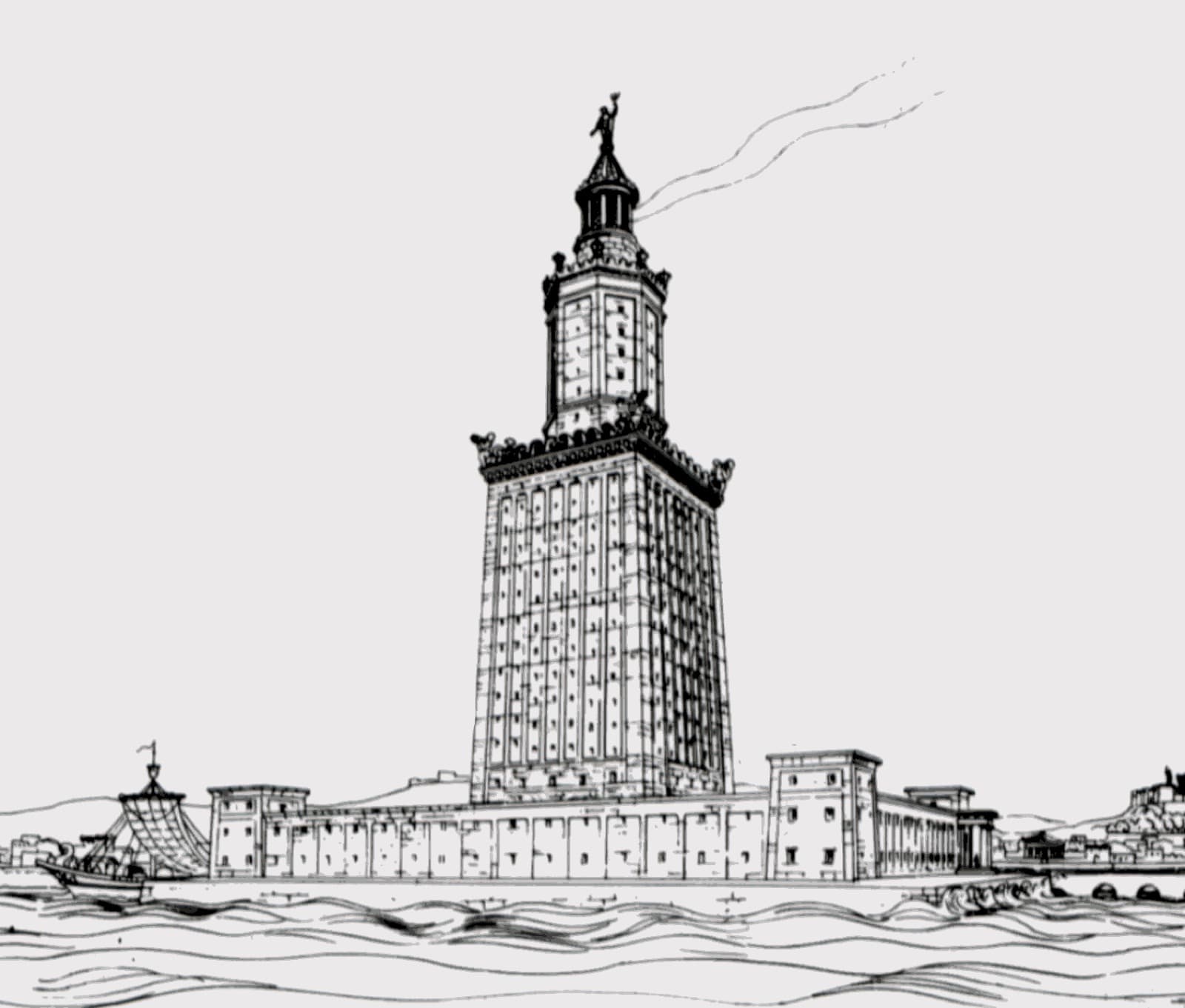
The Site of the Pharos at Alexandria's harbour mouth is one of the strangest monuments a traveller can visit, because there is almost nothing left to stand in front of. The Lighthouse of Alexandria, one of the Seven Wonders of the ancient world, once rose here at the tip of the promontory. It fell into the sea in stages across a thousand years of earthquakes, and what a visitor actually looks at today is not a tower but a stretch of water, with the fallen wonder resting on the seabed below. To understand this place is to understand that absence is the point: the lighthouse did not disappear, it drowned, and it is still here.
What the Pharos Was
The lighthouse was begun under Ptolemy the First around three hundred and five B C and finished by his son Ptolemy the Second in the third century B C. It was a Ptolemaic project, raised by the Greek dynasty that ruled Egypt after Alexander the Great, and it was built to a scale that made it famous across the ancient world. Tradition holds that it cost eight hundred talents of silver and took about twelve years to complete. Its height is estimated at somewhere around a hundred metres, perhaps more, which for centuries placed it among the tallest structures ever made by human hands.
Its function was practical before it was legendary. By day the tower was a landmark that told sailors where the low, flat Egyptian coast gave way to a safe harbour. By night a fire burned at its summit, and its light was thrown out to sea by a mirror or reflector, guiding ships into the harbour for well over a thousand years. That combination of great height and projected light is why the word itself, Pharos, became the root of the word for lighthouse in several languages, from the French phare to the Spanish and Italian faro. The building did not just serve as a wonder. It named the entire category of thing it was.
How It Fell
Hear a stop from this walk
The Site of the Pharos: The Wonder That Lit the Sea and Fell Into It
The lighthouse was destroyed slowly, by the ground rather than by war. Earthquakes damaged it again and again over the centuries. A serious collapse came in the tenth century A D, in the year nine hundred and fifty-six, when the top section of the tower gave way, and further quakes weakened what remained. A devastating earthquake in thirteen oh three finished the ruin. After that, the wonder was simply gone, its stone scattered and its outline lost.
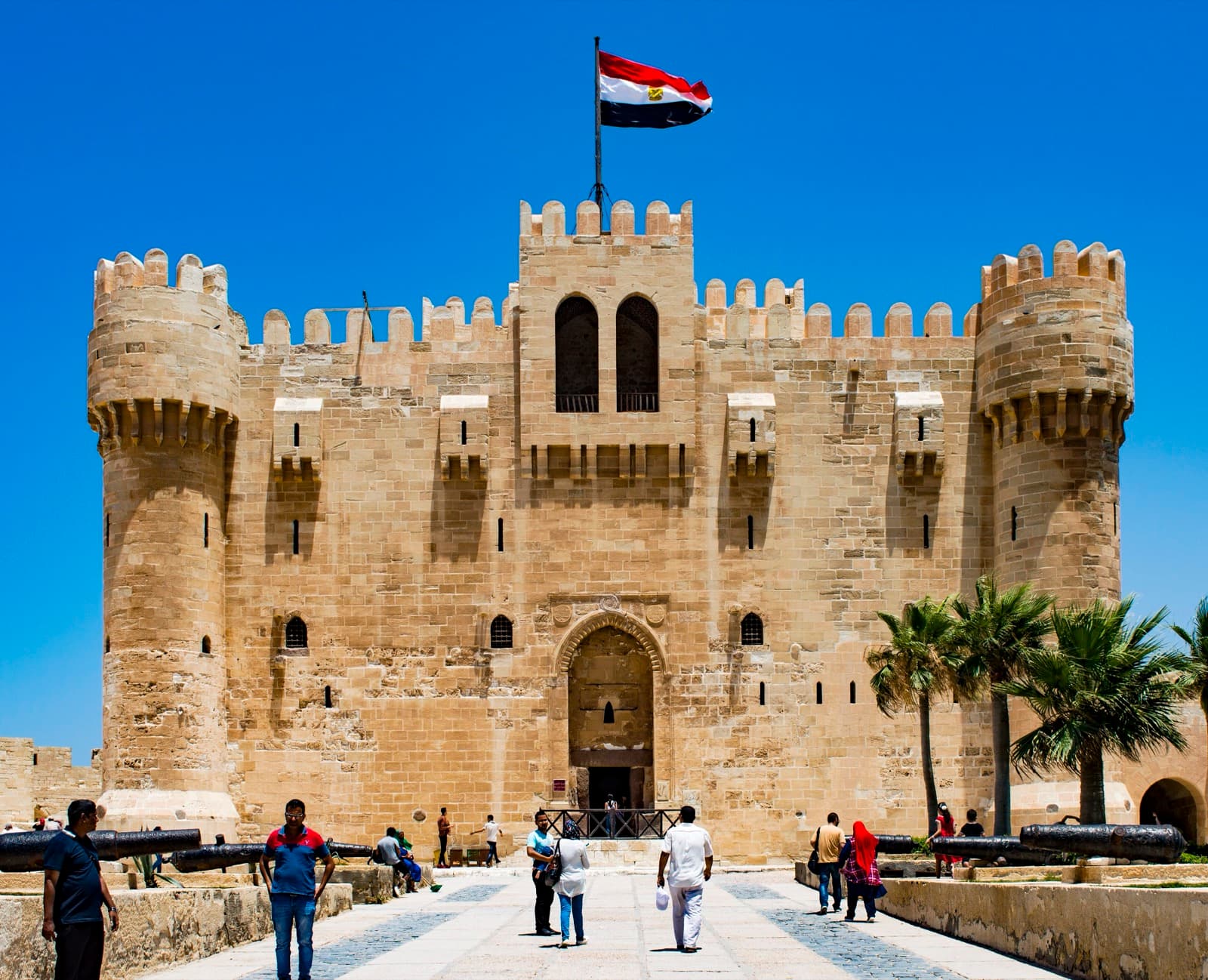
For a long stretch of history the Pharos existed only in written descriptions and in the memory of the word it had left behind. Its ruins lay at the harbour mouth for roughly a century and a half after the final collapse. Then, in the fifteenth century, the Mamluk Sultan Qaitbay ordered a fortress built on this exact spot to guard the harbour entrance. His builders did not start from bare rock. They lifted some of the lighthouse's own fallen blocks and set them into the fort's walls. So the tower did not entirely vanish even on land: part of it was reused, stone by stone, and stands today inside Fort Qaitbay at the water's edge.
The Wonder on the Seabed
The most important thing to understand standing here is where the lighthouse actually is. In nineteen ninety-four, French archaeologists led by Jean-Yves Empereur went into the water at this harbour mouth and found it. On the seabed lie enormous granite blocks, some weighing between forty-nine and sixty tonnes, along with sphinxes, obelisks and columns believed to have fallen from the lighthouse itself. The wonder that everyone assumed was lost turned out to be lying, largely intact in pieces, a short distance offshore under the surface.
That discovery changes how you should read the view. When you look out from the promontory across the mouth of the Eastern Harbour, you are not looking at an empty sea where something used to be. You are looking at the actual location of the ruin. The Pharos did not travel anywhere when it fell. It toppled straight down into the water it had spent a millennium lighting, and it is still there, beneath the boats, close enough that divers can touch it.
This is the single idea to hold on to at this stop. Most travellers arrive expecting a monument and feel a flicker of disappointment when they find a fort and the sea. But the disappointment comes from looking in the wrong direction. The lighthouse is not above you, it is below the waterline in front of you, and the giant blocks recovered from that floor are physical proof that the tallest lighthouse of antiquity is accounted for, not vanished.
Standing at the Harbour Mouth
There is no entry fee to view the harbour and the open sea from the Qaitbay promontory itself, and the Corniche is at its best in the late afternoon, when the sun softens over the water and the summer heat eases. Give yourself a moment here to line up the three things this spot ties together. There is the ancient wonder, drowned offshore. There is the fifteenth-century fort behind you, built partly from the wonder's own stone. And there is the working modern harbour in front of you, still guiding ships past the same headland, still doing the job the Pharos was built to do.
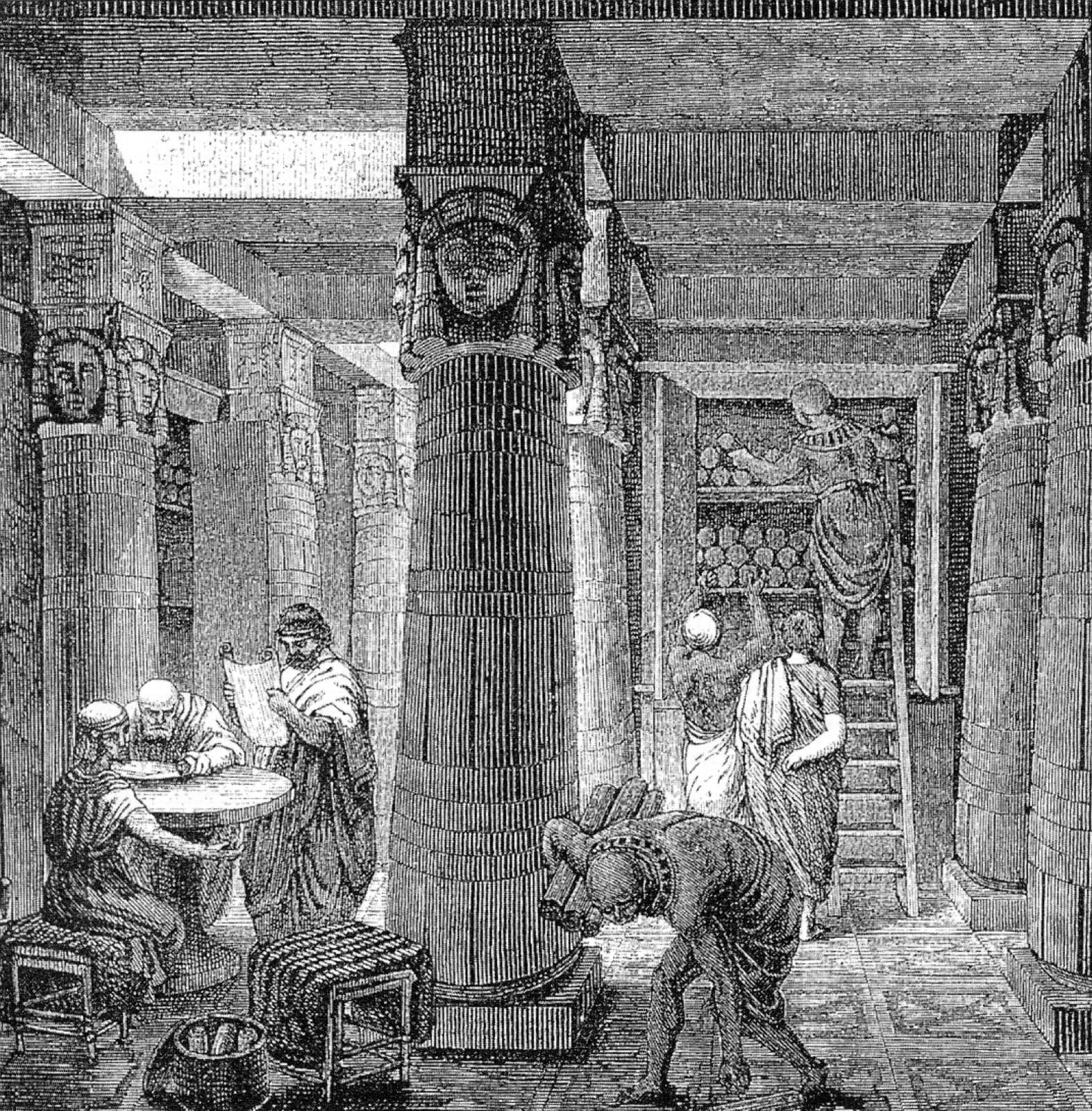
Alexandria keeps almost nothing of its ancient greatness on the surface. Its library is a legend, its royal quarter lies on the seabed, and its most famous structure is scattered in blocks across the harbour floor. The Site of the Pharos is the clearest lesson in how this city survives: not on land where you expect it, but underwater and reused, waiting for you to look in the right place. Stay as long as the light holds over the water. This is the edge of the sea, and the wonder is right there beneath it.
This stop is part of a self-guided route that gathers the fragments of ancient Alexandria that are left, from a red granite column on a temple hill to the catacombs cut three levels into bedrock and finally out to the harbour mouth. You can walk the full tour, which includes the Site of the Pharos and Fort Qaitbay, on the Roamer app. For the wider city, browse more Alexandria walking tours or start from the Alexandria city page.
Sources
- Lighthouse of Alexandria, Wikipedia: overview of the Pharos, its Ptolemaic construction, estimated height, the Pharos etymology, and the earthquakes of 956 and 1303 that destroyed it.
- Lighthouse of Alexandria, World History Encyclopedia: detail on the lighthouse's function, its fire and mirror, and its status among the Seven Wonders of the ancient world.
- Citadel of Qaitbay, Wikipedia: the fifteenth-century Mamluk fort built on the lighthouse site around 1477 to 1480, reusing fallen Pharos stone in its walls, and the 1994 underwater discovery of blocks weighing 49 to 60 tonnes led by Jean-Yves Empereur.
- Roamer tour transcript, "Catacombs and the Pharos: Underground Alexandria and the Lost Lighthouse": fact-audited narration for the harbour-mouth stop, including the 1994 underwater discovery and the recovered blocks.
Ready to experience it?
Catacombs and the Pharos: Underground Alexandria and the Lost Lighthouse
210 min · 10 km · moderate
More from Alexandria
Explore more at your own pace.
Alexandria Travel Guide: Days, Transport, Season, Safety, Budget
One Day in Alexandria: A Walkable Morning-to-Evening Itinerary
Alexandria: The City That Remembers Being the Centre of the World
Alexandria's Bibliotheca: The Library Built to Answer the One the City Lost
The Catacombs of Kom el-Shoqafa: Reading Alexandria's Fused Underworld