Bibliotheca and the Corniche: The Greek City by the Sea
150 min · 2.7 km · easy
One well-planned day in Alexandria walks the Greek and Roman city that mostly vanished, moving from the Bibliotheca Alexandrina on the Eastern Harbour in the morning, along the Corniche through downtown at midday, then out to the catacombs and Fort Qaitbay by late afternoon. Alexandria spreads its sights apart along the coast, so the honest plan is walkable stretches (the harbour seafront, the downtown squares) stitched together with two or three short taxi rides. Most sites open around 9:00 or 10:00 and close by 17:00, entry fees are small and paid in Egyptian pounds, and the light is best early and late. This guide maps that day hour by hour and hands you off to two self-guided audio routes that do the storytelling as you walk: our Alexandria walking tours hub, and the city page at /egypt/alexandria.
The short answer: is one day enough?
One day covers the essential Alexandria comfortably if you accept that you cannot walk between every stop. The classic ancient monuments (Pompey's Pillar, the Catacombs of Kom el-Shoqafa, Kom el-Dikka, Fort Qaitbay) sit in different corners of the city, and the Corniche seafront links the harbour sights on foot. A realistic day: a morning at the Bibliotheca Alexandrina and the harbour, a downtown midday around Saad Zaghloul Square and the Cavafy Museum, then an afternoon at the catacombs and the fort. Budget for two or three taxi hops (Uber and Careem both operate here) between the clusters, and keep the seafront for last so you finish with low gold light over the water.
If you are coming from Cairo for the day, the fast and comfortable option is a "Special" or VIP train, which runs the route reliably. Arriving mid-morning still leaves a full afternoon and evening.
Morning: the Bibliotheca and the vanished Great Library
Hear a stop from this walk
The Roman Theatre at Kom el-Dikka: The Ancient City Surfacing
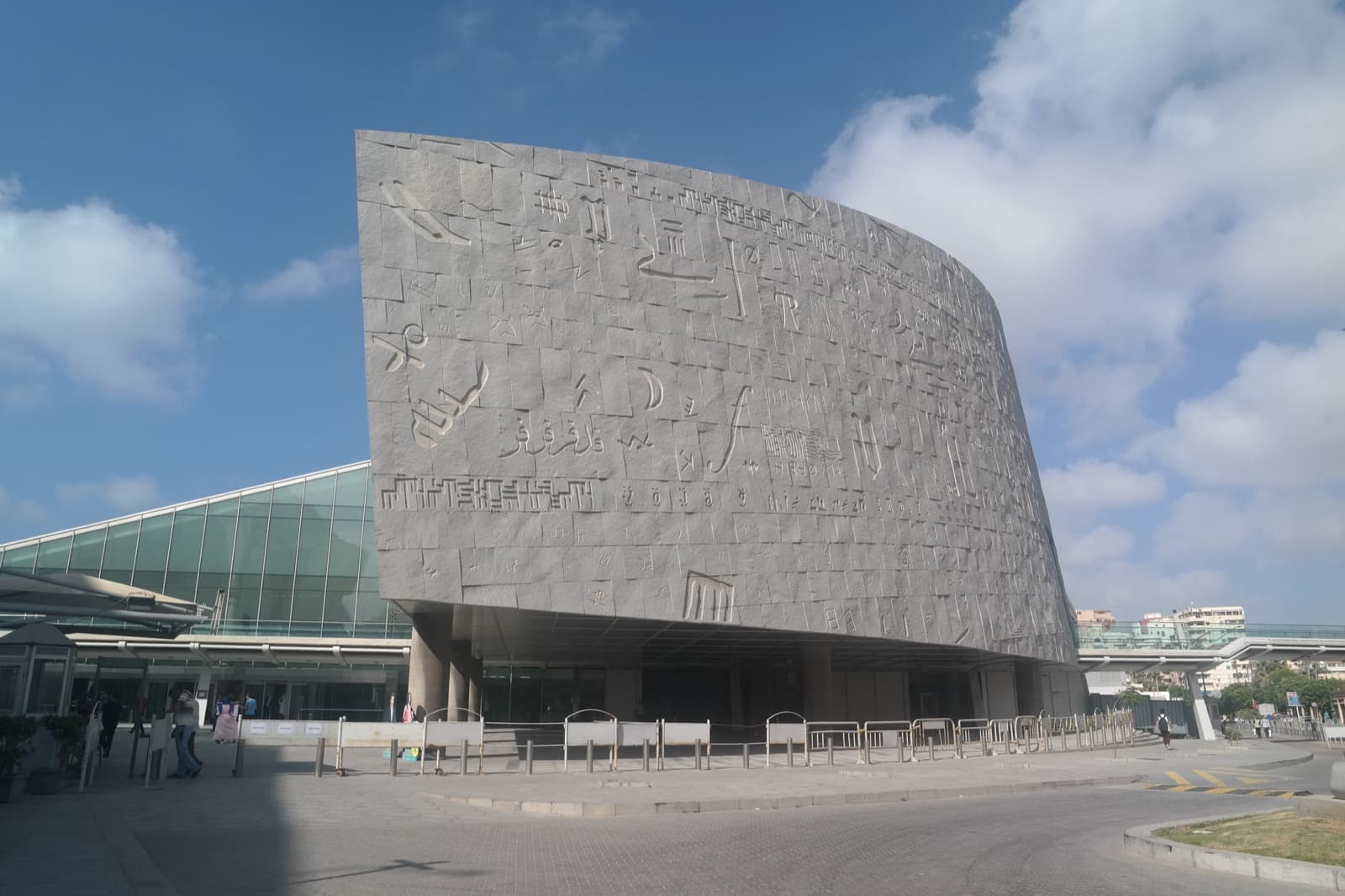
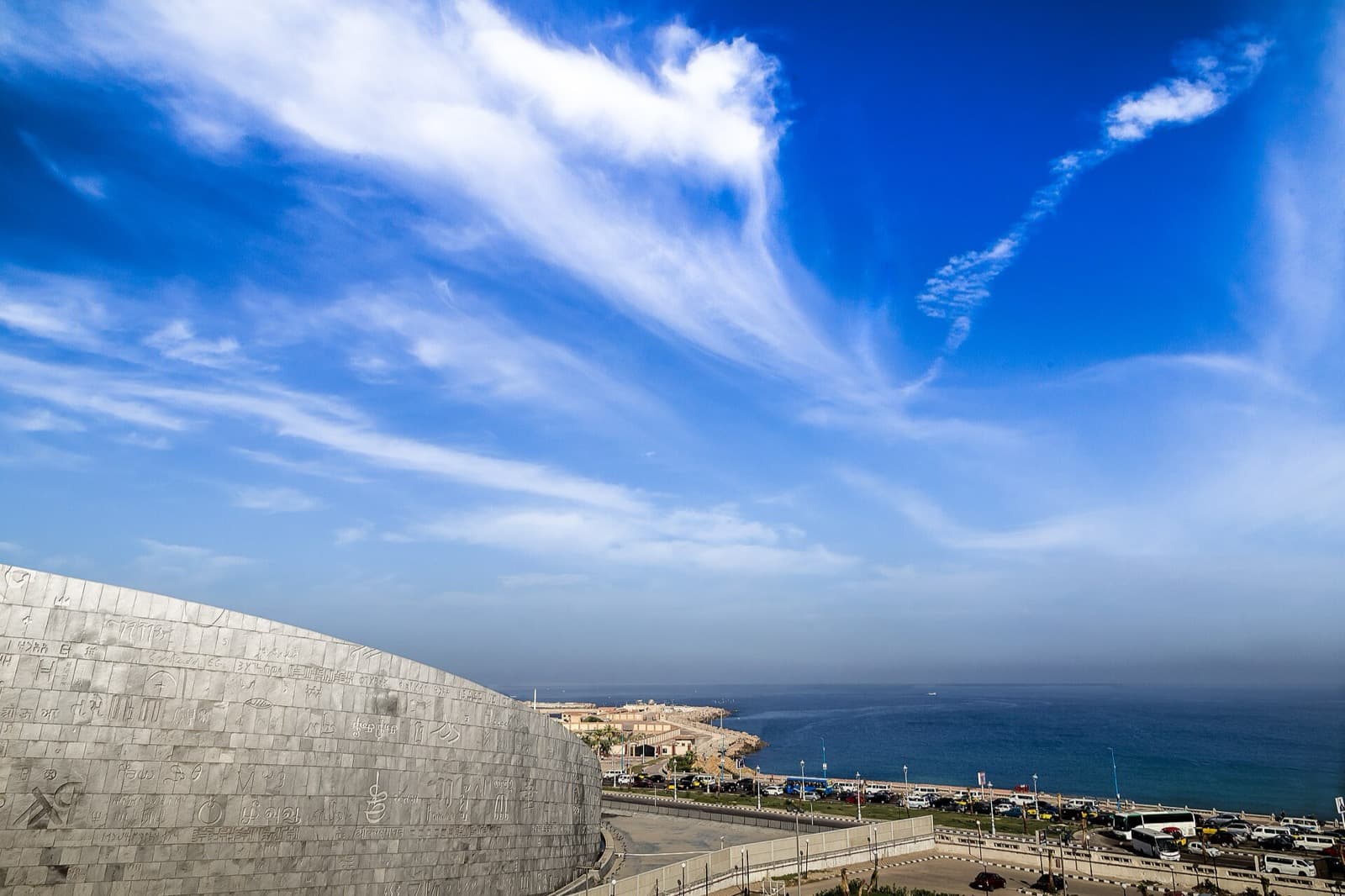
Start on the Eastern Harbour at the Bibliotheca Alexandrina, the vast modern library that opened on 16 October 2002 as a deliberate answer to the ancient one. Its tilted roof disc, about 160 metres across, angles toward the Mediterranean like a half-sunk sundial, and the granite wall around it is carved with characters from roughly 120 of the world's writing systems. It is calm, air conditioned, and a gentle place to begin a hot day. In 2026 the library opens Sunday to Thursday from about 10:00 to 19:00 and Friday to Saturday from about 12:00 to 16:00; the Main Library ticket for foreign visitors runs around 150 EGP, with an inclusive ticket (roughly 300 EGP) adding the Antiquities and Manuscripts museums. Decide which museums you actually want before you queue, because they are ticketed separately from general admission.
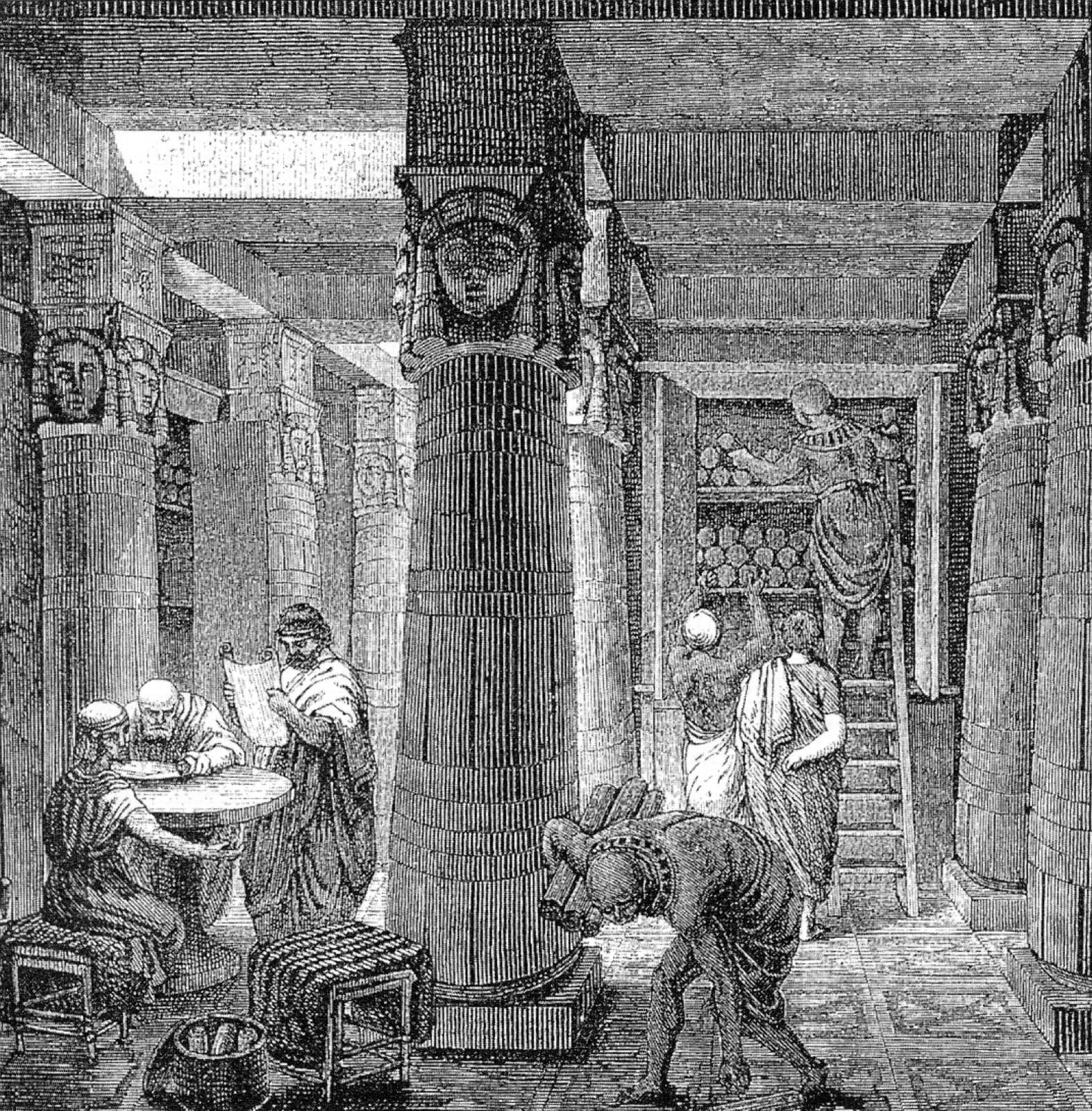
A few steps along the seafront is the harder, quieter stop: the ground near where the ancient Library and the Mouseion once stood. There is nothing to see here, and that is the point. The greatest library of antiquity left no wall or column. This is where the first self-guided route begins to earn its keep, because the story is invisible without narration. The Bibliotheca and the Corniche route opens exactly here, then follows the Corniche west.
Midday: the Corniche, downtown, and a poet's apartment
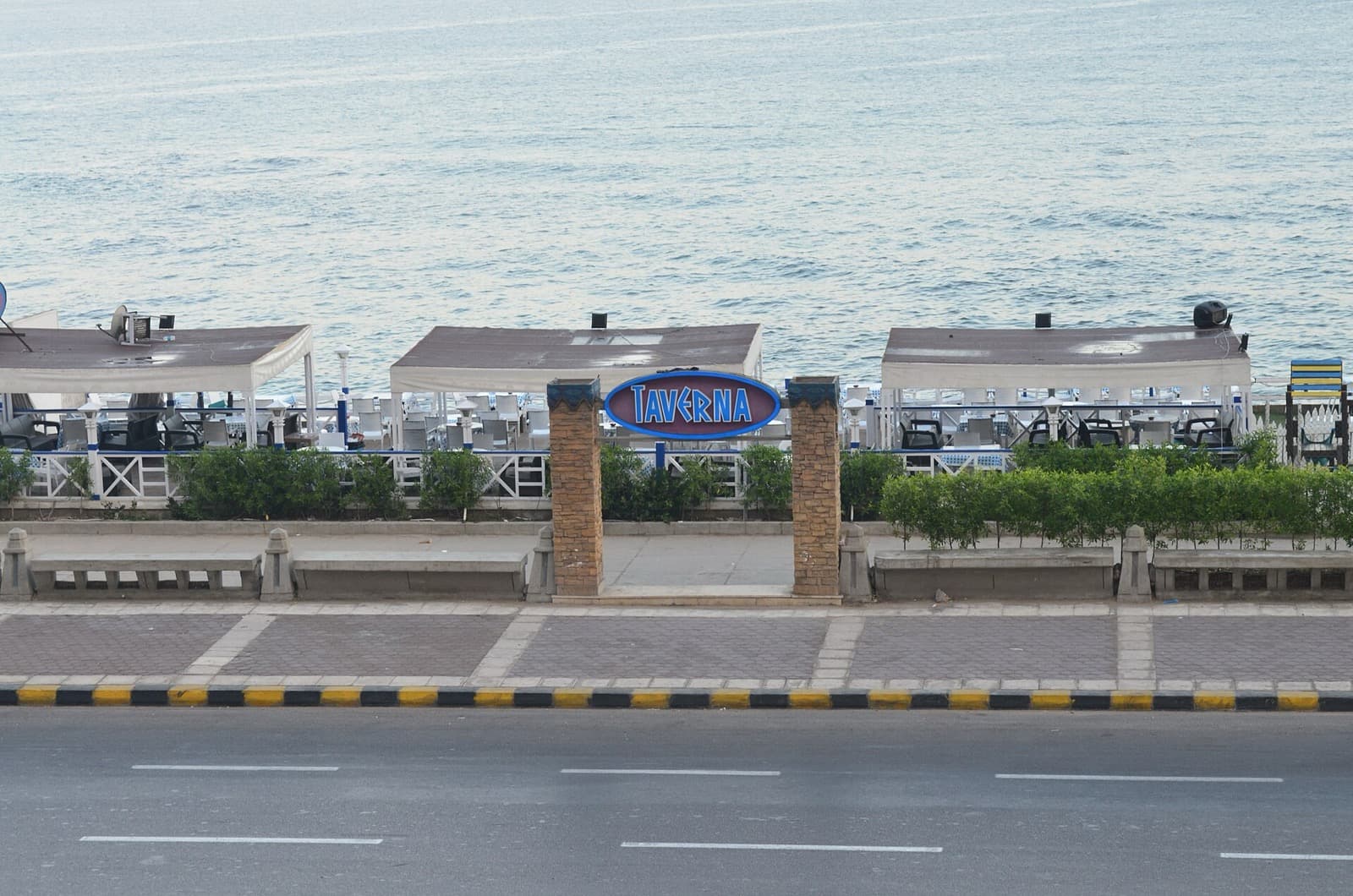
Walk the Corniche as it curves around the Eastern Harbour, the ancient Portus Magnus. The working waterfront of feluccas and fishing boats hides one of Egypt's strangest archaeological stories: since the early 1990s, marine archaeologist Franck Goddio and his team have mapped a drowned royal quarter on the harbour floor, including the small island of Antirhodos and areas ancient writers linked to Cleopatra's palaces. It is free, it is a public promenade, and it is the most pleasant walking stretch of the day.
The Corniche brings you to Saad Zaghloul Square, downtown's civic heart beside the historic Ramleh tram terminus, ringed by Belle Epoque facades from the cosmopolitan Greek, Italian, Jewish, and Levantine city of a century ago. A short walk inland is the Cavafy Museum, the second-floor apartment of the Greek poet Constantine Cavafy on the street now named for him. The house reopened in May 2024 after a restoration funded by the Onassis Foundation, and in 2026 it opens Tuesday to Sunday, roughly 10:00 to 17:00, closed Mondays, with free admission. This is a good, hushed place to pause and eat lunch nearby before the afternoon's archaeology.
Afternoon: the catacombs, the pillar, and the Roman theatre
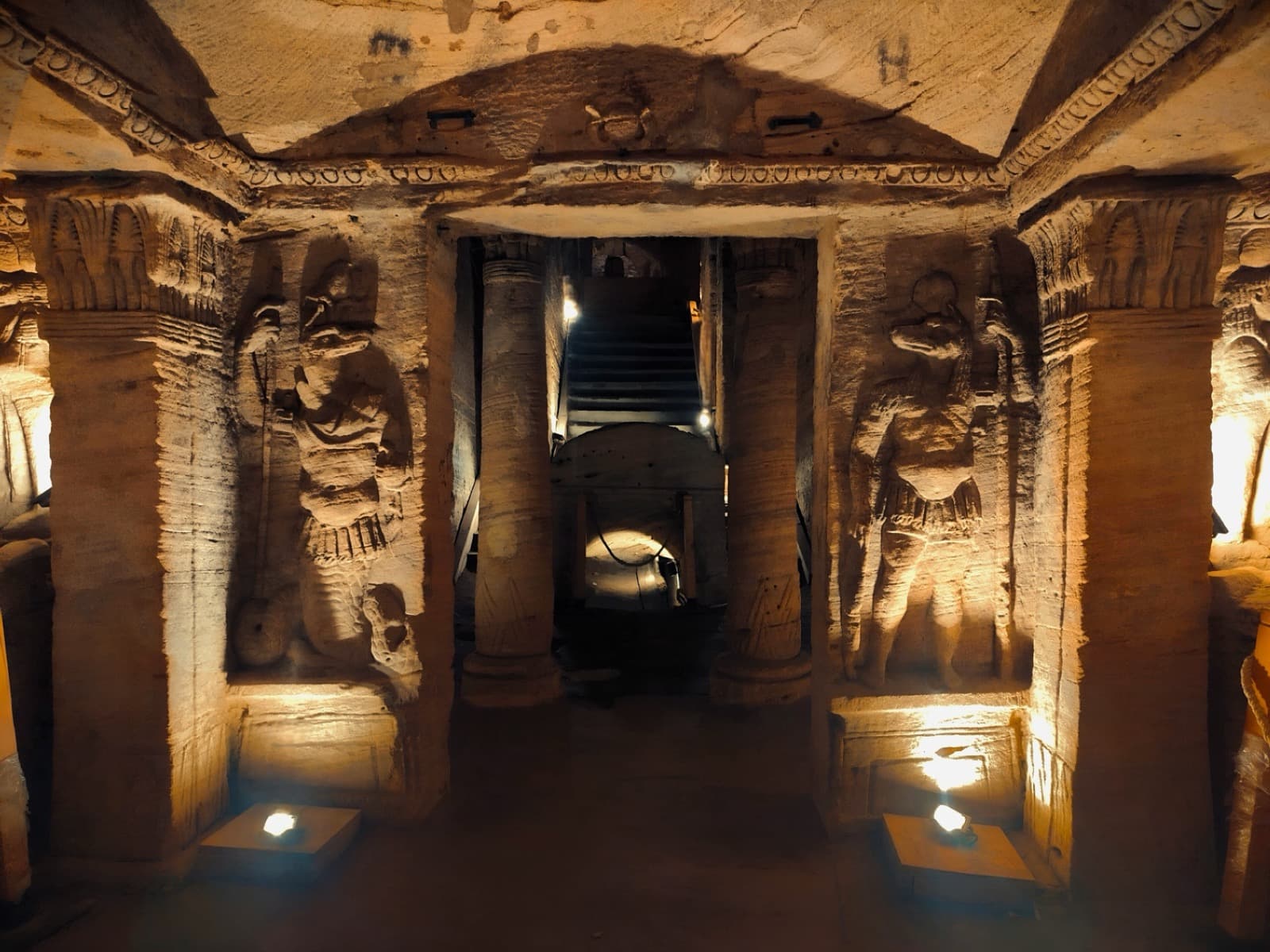
The afternoon belongs to the ancient city that fell underground. Two clusters matter. First, Pompey's Pillar and the Serapeum hill, where a single 27-metre red Aswan granite column stands over a destroyed temple, and, a short distance away, the Catacombs of Kom el-Shoqafa, a Roman-era necropolis spiralling three levels into bedrock where Egyptian, Greek, and Roman funerary art meet on a single wall. Both open roughly 9:00 to 17:00. The catacombs cost about 200 EGP for foreign visitors, the pillar a similar small fee, and a combined ticket for the two is usually the cheapest way in; always confirm the current price at the gate. Photography inside the tombs is often restricted or charged, so check at the entrance. The cool underground is a welcome break from midday sun, so time your longest lingering here.
Second, back toward downtown, Kom el-Dikka holds the only Roman theatre found in Egypt, a small marble hemicycle alongside baths, lecture halls, and the mosaic-floored Villa of the Birds. It opens around 9:00 to 17:00 and costs about 200 EGP for foreigners, with the Villa of the Birds sometimes charged separately. Because Kom el-Dikka closes by late afternoon, do it before the fort if you want both in one day. The second self-guided route, Catacombs and the Pharos, threads the pillar, the catacombs, Kom el-Dikka, and the seafront together.
Evening: Fort Qaitbay and the lost lighthouse
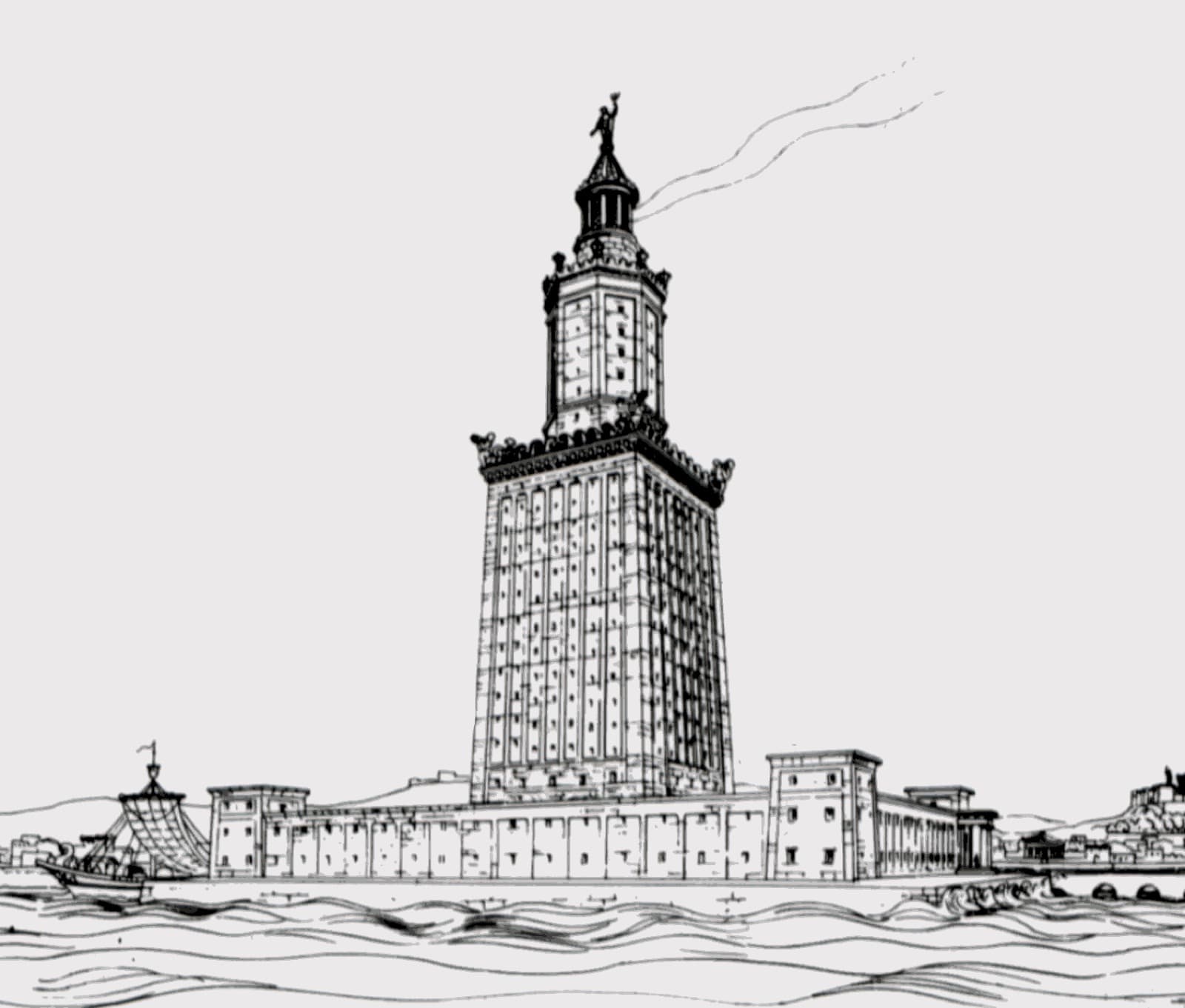
End at the harbour mouth, where Fort Qaitbay stands on the exact site of the Pharos, the ancient Lighthouse of Alexandria. The Mamluk sultan Qaitbay ordered the fortress built between about 1477 and 1479, using some of the fallen lighthouse's own stone in its walls. The fort opens roughly 9:00 to 17:00, later in high summer, and entry is inexpensive; the foreign-visitor fee has been quoted anywhere from about 60 to 200 EGP as prices are periodically revised, so confirm the current amount at the gate. From its ramparts the whole sweep of the Corniche and the open Mediterranean lies before you, the same sea the lighthouse once lit. The late-afternoon light off the water is the reason to save this for last. If you would rather skip the fort interior, the promontory and harbour view outside cost nothing.
Practical notes for the day
Carry small cash in Egyptian pounds. Ticket booths and small tips are far easier with coins and notes than cards, and prices at Egyptian antiquities sites are adjusted periodically, so treat any figure here as a guide and confirm at the gate. Wear sturdy shoes: the catacombs have a steep spiral descent, Kom el-Dikka has uneven ground, and the seafront is sun-exposed with little shade. Bring water, a hat, and sunscreen.
On safety: Alexandria in 2026 is a stable, welcoming city with visible patrols along the Corniche, the Bibliotheca, and Fort Qaitbay. Keep ordinary big-city awareness of your bag in crowds and on the tram, agree taxi fares in advance or use Uber or Careem, and expect some vendor and guide pressure near the pillar and the seafront, where a firm, polite no is enough. You are never obliged to hire anyone on the spot, which is part of why a self-guided audio walk suits Alexandria: your pace, your schedule, no group waiting on you.
Sources
- Admission and hours, Bibliotheca Alexandrina (official)
- Kom el-Dikka, Discover Egypt's Monuments, Ministry of Tourism and Antiquities
- Qaitbay Fort, Ministry of Tourism and Antiquities
- Alexandria's Cavafy Museum Opens to the Public After Two-Year Closure, CairoScene
- Is Alexandria Safe? Safety Guide 2026, The World Travel Index
Frequently asked questions
- Is one day enough to see Alexandria?
- One day covers the essential Alexandria if you accept that the sites are spread out and cannot all be reached on foot. A workable plan is a morning at the Bibliotheca Alexandrina and the harbour Corniche, a downtown midday, and an afternoon at the catacombs, Kom el-Dikka, and Fort Qaitbay. Budget for two or three short taxi rides between the clusters using Uber or Careem.
- What are the Bibliotheca Alexandrina opening hours and ticket price in 2026?
- In 2026 the Bibliotheca Alexandrina opens Sunday to Thursday from about 10:00 to 19:00 and Friday to Saturday from about 12:00 to 16:00. The Main Library ticket for foreign visitors is around 150 EGP, and an inclusive ticket of roughly 300 EGP adds the Antiquities and Manuscripts museums. Its museums and planetarium are ticketed separately from general admission.
- How much do the Catacombs of Kom el-Shoqafa and Pompey's Pillar cost?
- The Catacombs of Kom el-Shoqafa cost about 200 EGP for foreign adults, with Pompey's Pillar at a similar small fee, and a combined ticket for both is usually the cheapest option since they sit close together. Both open roughly 9:00 to 17:00. Photography inside the catacombs is often restricted or carries an extra charge, so check the rules at the entrance.
- Is the Cavafy Museum open again?
- Yes. The Cavafy Museum reopened in May 2024 after a restoration funded by the Onassis Foundation, in the poet's second-floor apartment on Cavafy Street in the Attarin district. In 2026 it opens Tuesday to Sunday, roughly 10:00 to 17:00, and is closed on Mondays. Admission is free.
- Is Alexandria safe for tourists in 2026?
- Alexandria in 2026 is a stable, welcoming city with visible security patrols along the Corniche, the Bibliotheca Alexandrina, and Fort Qaitbay. Keep ordinary big-city awareness of your belongings in crowds and on the tram, agree taxi fares in advance or use Uber or Careem, and expect some vendor pressure near major sites, where a polite no is enough.
- How do I get from Cairo to Alexandria for a day trip?
- The comfortable option is a Special or VIP train, which runs the Cairo to Alexandria route reliably and is a safe, popular choice for day visitors. Arriving mid-morning still leaves a full afternoon and evening for the walk. Once in Alexandria, use Uber or Careem or the historic tram to move between the spread-out sites.
Ready to experience it?
Bibliotheca and the Corniche: The Greek City by the Sea
150 min · 2.7 km · easy
More from Alexandria
Explore more at your own pace.
Alexandria Travel Guide: Days, Transport, Season, Safety, Budget
Alexandria: The City That Remembers Being the Centre of the World
Alexandria's Bibliotheca: The Library Built to Answer the One the City Lost
The Catacombs of Kom el-Shoqafa: Reading Alexandria's Fused Underworld
The Site of the Ancient Library of Alexandria: A Monument With Nothing to See