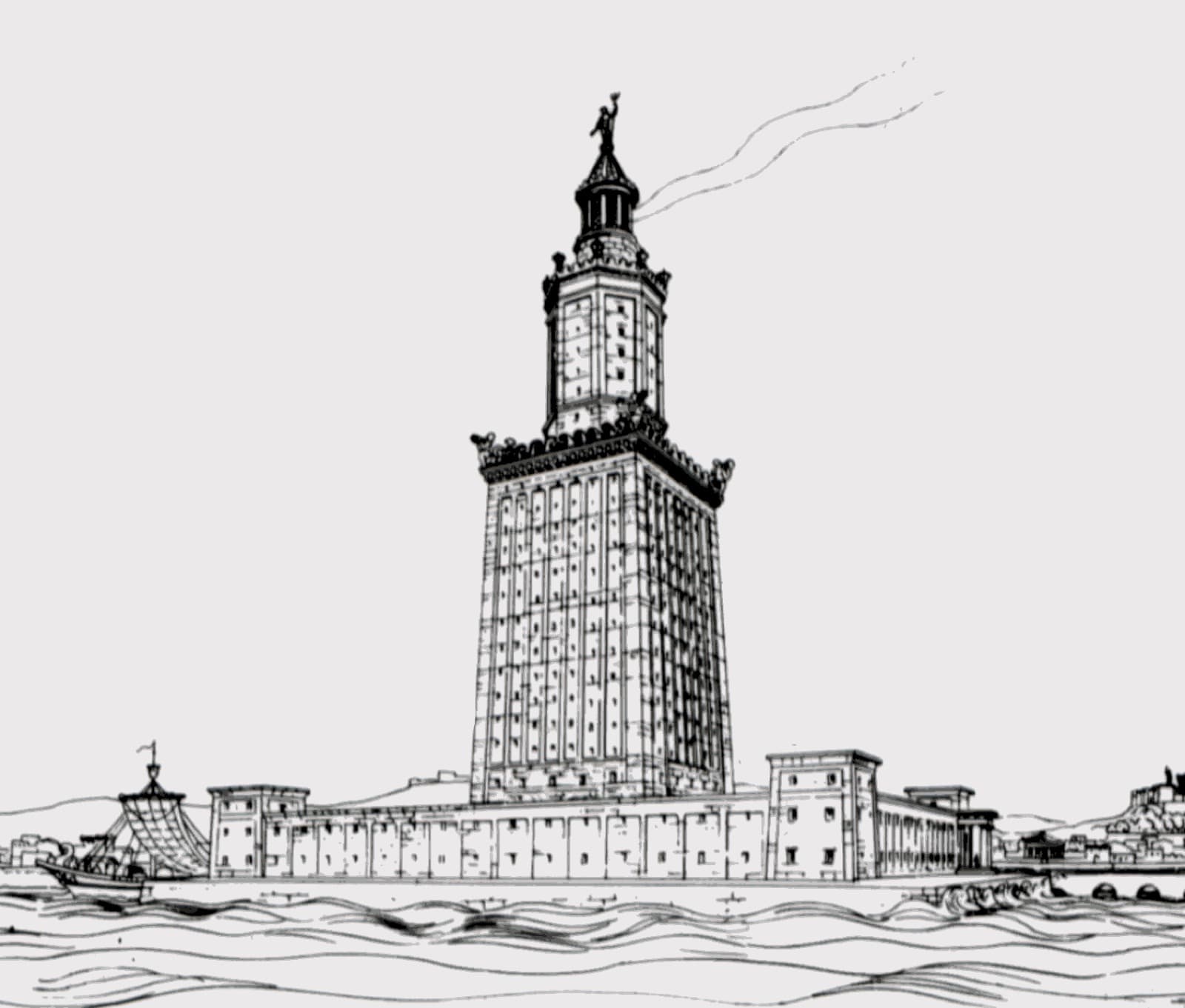
The greatest library of the ancient world once stood somewhere near this stretch of the Alexandria seafront, and the reason you cannot point to it is the whole point of standing here. There is no wall, no column, no marker, no stone. The Great Library and the Mouseion that housed it vanished so completely that scholars still argue over where exactly it sat and how, over centuries, it faded away. This stop on the Alexandria walking tours asks you to do something unusual for a monument: to look at an ordinary view of the harbour and understand that its emptiness is the artifact.
What actually stood here
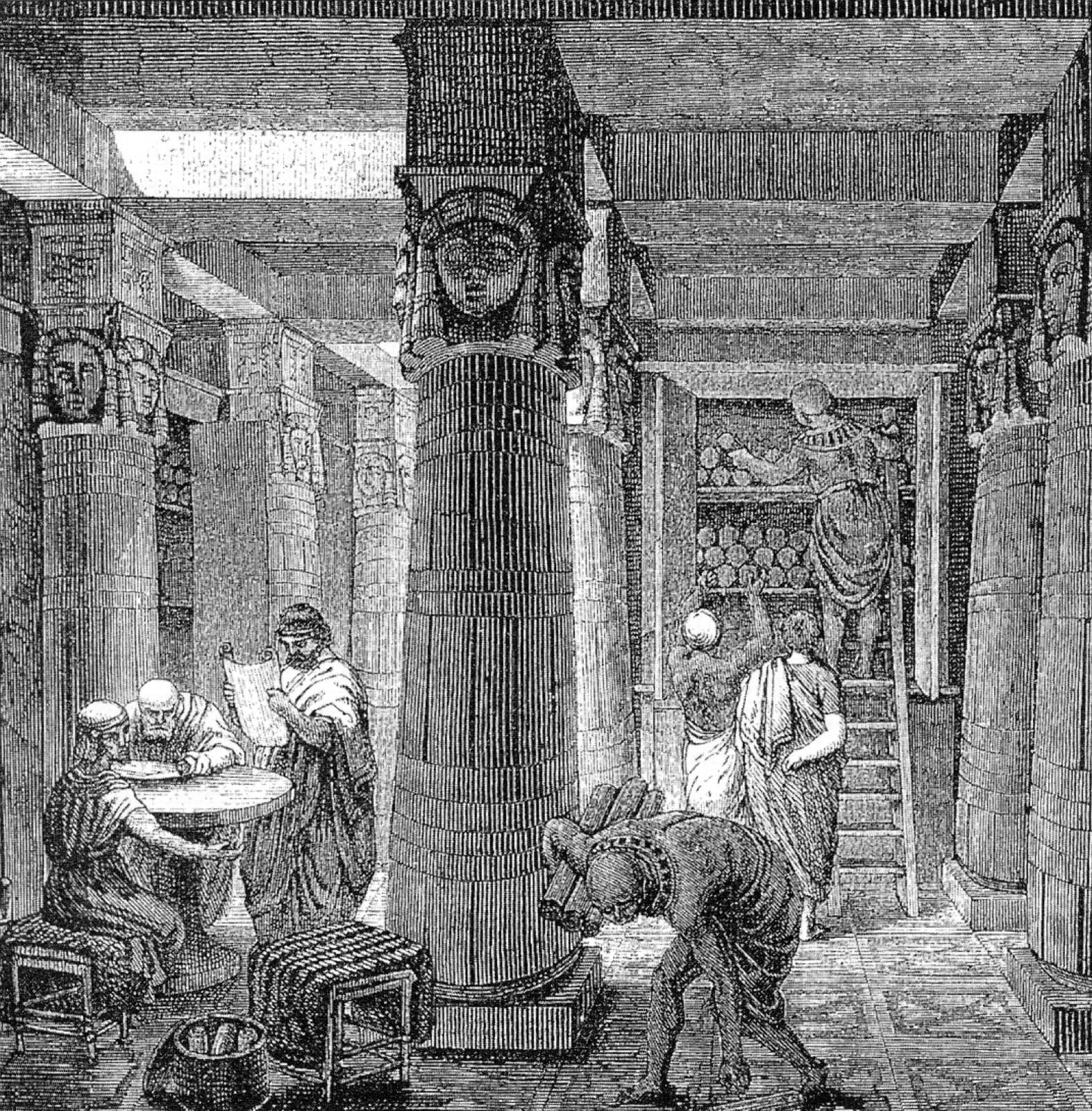
The Library was never a single building you could sketch. It was one part of a larger institution called the Mouseion, a word that means an institution of the Muses, the nine goddesses of the arts. That word is where our word museum comes from: not a hall of glass cases, but a shrine to learning. The Mouseion was most likely established under Ptolemy the Second Philadelphus, who reigned from 285 to 246 BC, with plans perhaps begun under his father. It sat within the ancient royal quarter near the Eastern Harbour, which means the ground you are near belonged to a research campus attached to a palace.
The Ptolemies who ran this city treated knowledge as an instrument of power. They pulled the finest minds of the Greek-speaking world to the harbour and gave them room, funding, and access to a collection that aimed at nothing less than everything ever written. The result reads today like a roll call of the ancient sciences.
The people who worked here
Hear a stop from this walk
The Roman Theatre at Kom el-Dikka: The Ancient City Surfacing
Eratosthenes served as chief librarian and measured the circumference of the Earth. He did it with shadows, angles, and the distance between two Egyptian cities, and he got remarkably close for a man working more than two thousand years ago. Euclid worked out his geometry in this city, laying down the logical scaffolding that students still learn under his name. Callimachus compiled the Pinakes, one of the first great library catalogues, an attempt to organize a collection so large that finding a single scroll was itself a scholarly problem. Aristarchus pored over the poems of Homer, building the kind of careful textual criticism that lets us ask which words a poet actually wrote.
Hold these names for a moment, because they are the real content of this stop. A library is not shelving. It is the people it gathers, and Alexandria gathered the ones whose work outlasted the building by more than two thousand years.
The fire you have heard about
You have probably been told that the Library burned in one terrible night, and that the blame lands on Julius Caesar in 48 BC. Treat that as legend, not fact. It is the version that gets repeated because it is dramatic and simple, a single villain and a single flame. The reality is quieter and, in its way, sadder.
Caesar's forces did set fires by the harbour during the fighting in 48 BC, and those fires damaged warehouses near the water. The institution itself, though, likely survived. Modern scholarship holds that the Library declined gradually over centuries rather than dying in one blaze. Collections were neglected, funding shifted, scholars scattered, and the political fortunes of the city changed. A daughter collection housed at the Serapeum was destroyed in 391 AD, but by then the great library was long past its height. The honest summary is that its exact fate is uncertain. No one can hand you a date and a cause and close the case.
That uncertainty matters. The popular story lets you feel a clean, cinematic grief. The truth asks for something harder: to sit with the idea that the most important library in history did not fall in a moment, but slipped away so slowly that no one recorded the day it was finally gone.
Why the emptiness is the exhibit
Almost every stop on a normal history walk gives you something to look at. Here you get the opposite, and that reversal is exactly why this spot earns its place on the route. Stand at the rail, look at the working waterfront of boats and water, and understand that you are as close as anyone can get to the place that held the sum of ancient knowledge. There is nothing to photograph and everything to imagine.
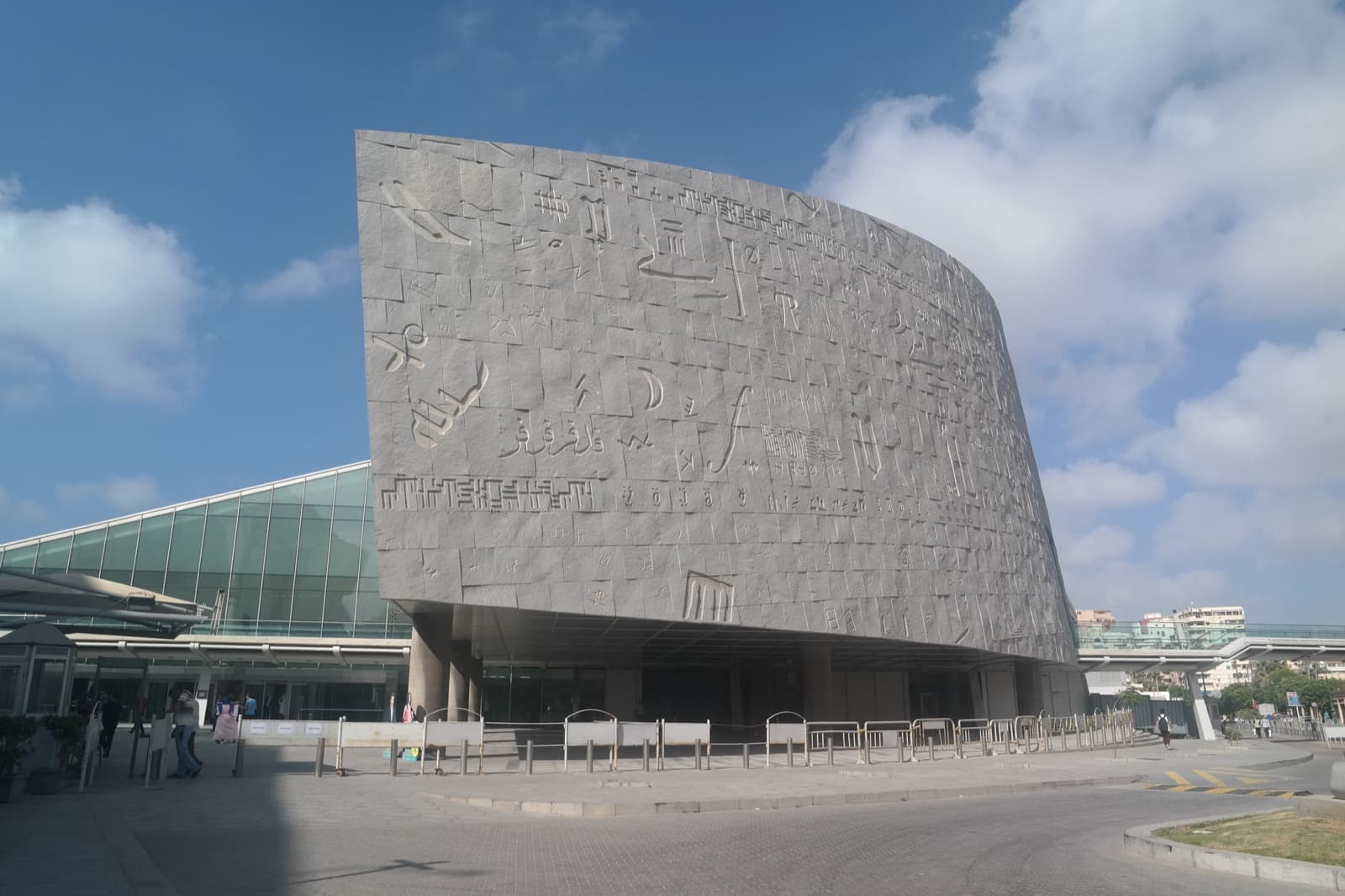
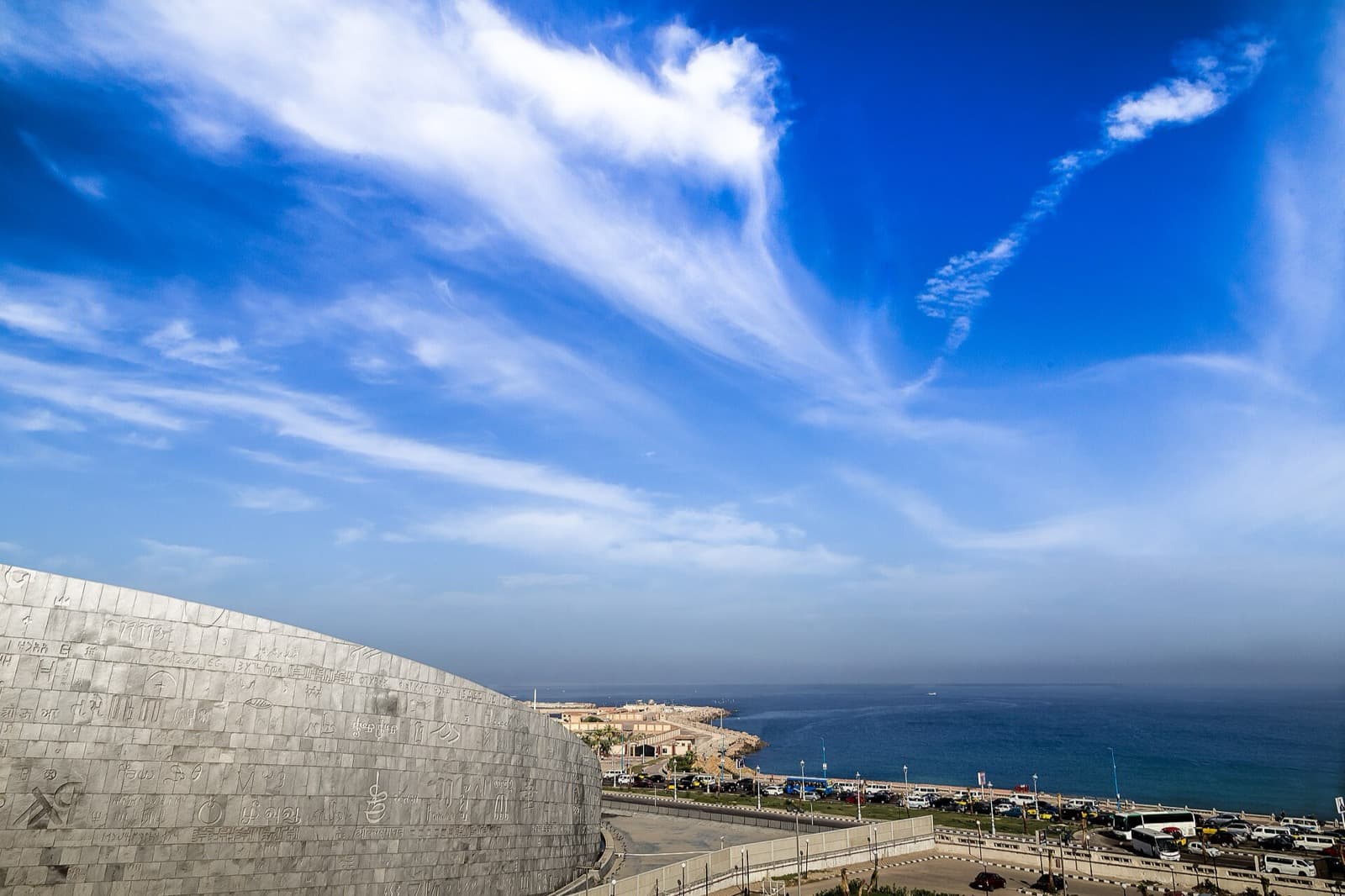
This is also why the modern Bibliotheca Alexandrina rises just along the shore from here, on the same harbour. It was built as a deliberate answer to this absence, not a reconstruction of a building nobody can describe, but a promise that a city can lose its greatest treasure and still choose to build another. Standing at the site of the ancient Library first, before or after you walk the new one, is what gives that gesture its weight. One place is a full building you can enter. The other is a hole in the record that the full building is trying to fill.
What to understand standing here
If you take one idea away from this stop, make it this: the Library of Alexandria is famous for what it contained and famous for how completely it disappeared, and both facts are true at once. It held Eratosthenes measuring the planet and Euclid ordering geometry, and it left not a single stone to prove it. The walk built around it, through the drowned royal quarter beneath the harbour, the vanished cosmopolitan city, and the Roman theatre that surfaced by chance downtown, is a walk about exactly this tension between what a city achieves and what it manages to keep.
You are looking at an ordinary view. Let it stay ordinary for a second, then remember what the ordinary is covering. The most famous library in history is a place you can only stand near and imagine, and the imagining is the visit.
To stand on this ground yourself and follow the harbour from the new library to the drowned palaces and the Roman theatre, walk the "Bibliotheca and the Corniche" self-guided audio tour, which begins on the seafront and includes this stop. Explore more routes and stories in Alexandria.
Sources
- Britannica, Library of Alexandria: overview of the ancient library, the Mouseion, and the scholarly consensus that it declined gradually rather than burning in a single event.
- Mouseion, Wikipedia: on the institution of the Muses, its founding under the early Ptolemies, and the origin of the word museum.
- Roamer tour transcript, "Bibliotheca and the Corniche" (fact-audited en.json): the primary, verified source for the figures, reign dates, and the fire legend framing used above.
- Franck Goddio and the Hilti Foundation, on the submerged royal quarter of Alexandria: context for the harbour and the ancient palace district near the library site.
Ready to experience it?
Bibliotheca and the Corniche: The Greek City by the Sea
150 min · 2.7 km · easy
More from Alexandria
Explore more at your own pace.
Alexandria Travel Guide: Days, Transport, Season, Safety, Budget
One Day in Alexandria: A Walkable Morning-to-Evening Itinerary
Alexandria: The City That Remembers Being the Centre of the World
Alexandria's Bibliotheca: The Library Built to Answer the One the City Lost
The Catacombs of Kom el-Shoqafa: Reading Alexandria's Fused Underworld