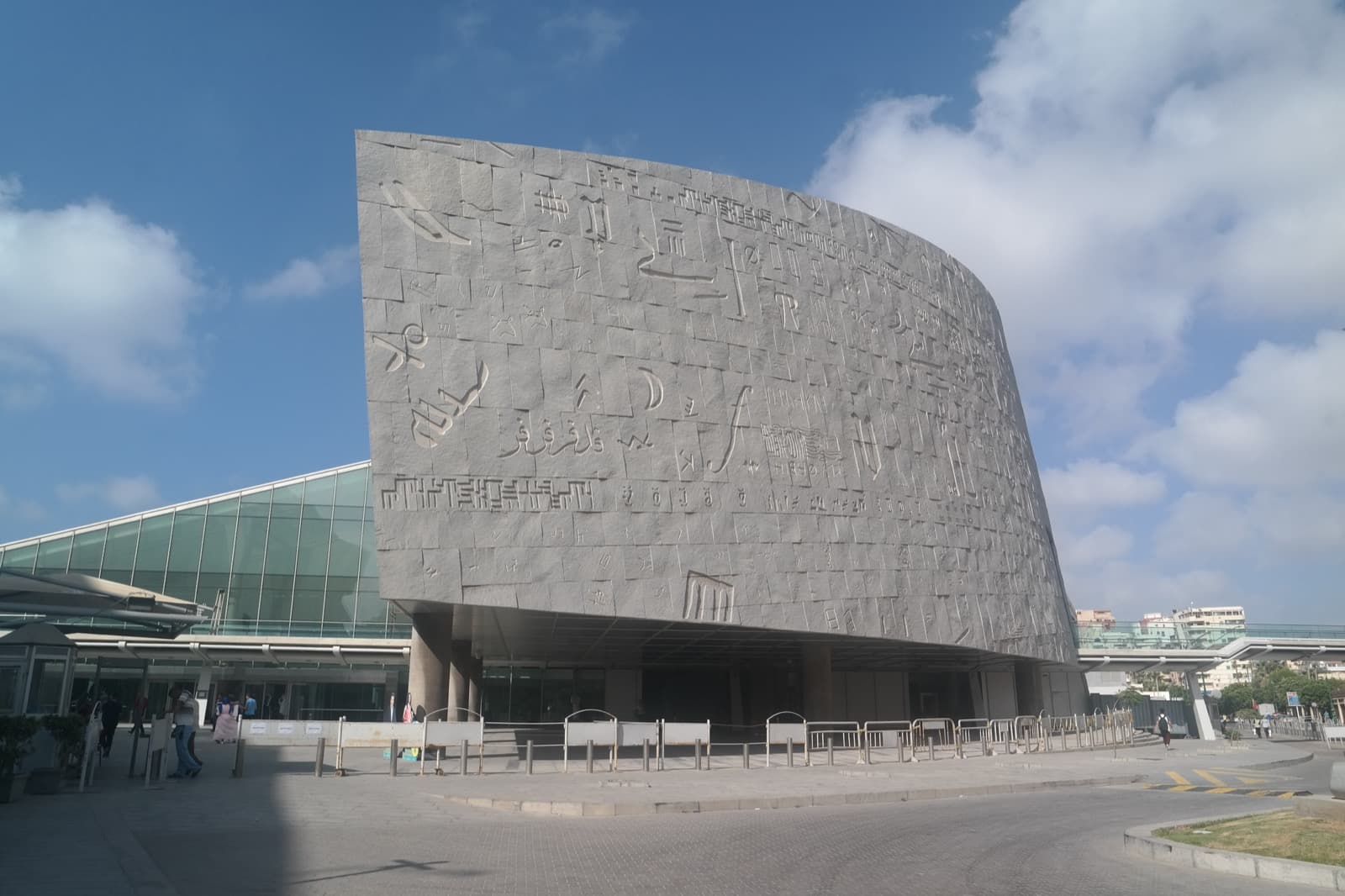
Trace the Greek city Alexander founded by the sea, from the vast new library answering the lost one to the Roman theatre surfacing in a downtown lot, along the harbour that swallowed Cleopatra's palaces.
Start · The Bibliotheca Alexandrina: The New Library Answering the Lost One
DirectionsStops
- 1
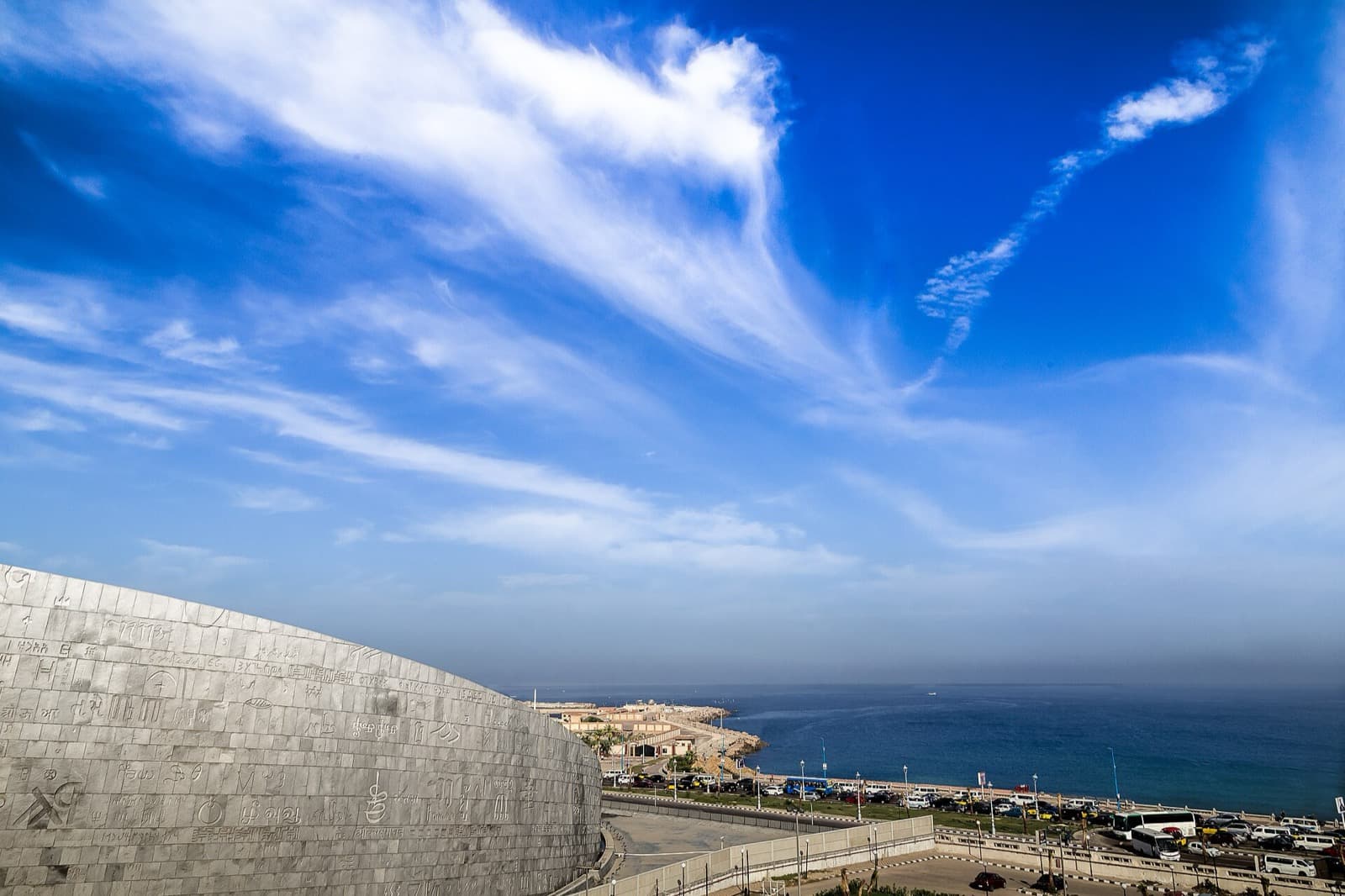
The Bibliotheca Alexandrina: The New Library Answering the Lost One
A vast modern library rises on the harbour shore, built as a deliberate answer to the greatest library of the ancient world.
- 2
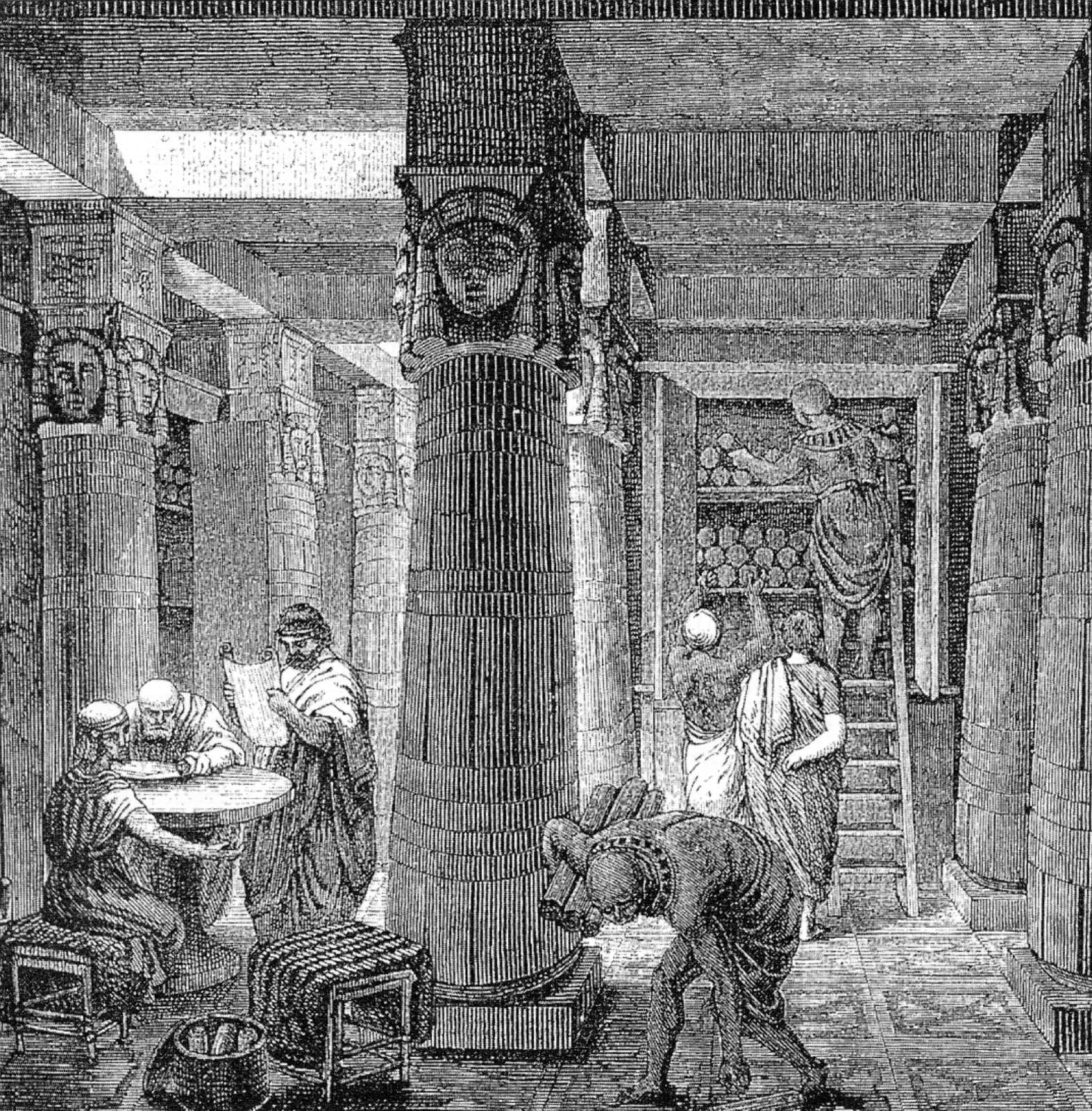
The Great Library and the Mouseion: The Library Gone Without a Stone
On the seafront beside the modern library, a beat about the greatest library of antiquity, which vanished so completely that not a single stone survives.
- 3
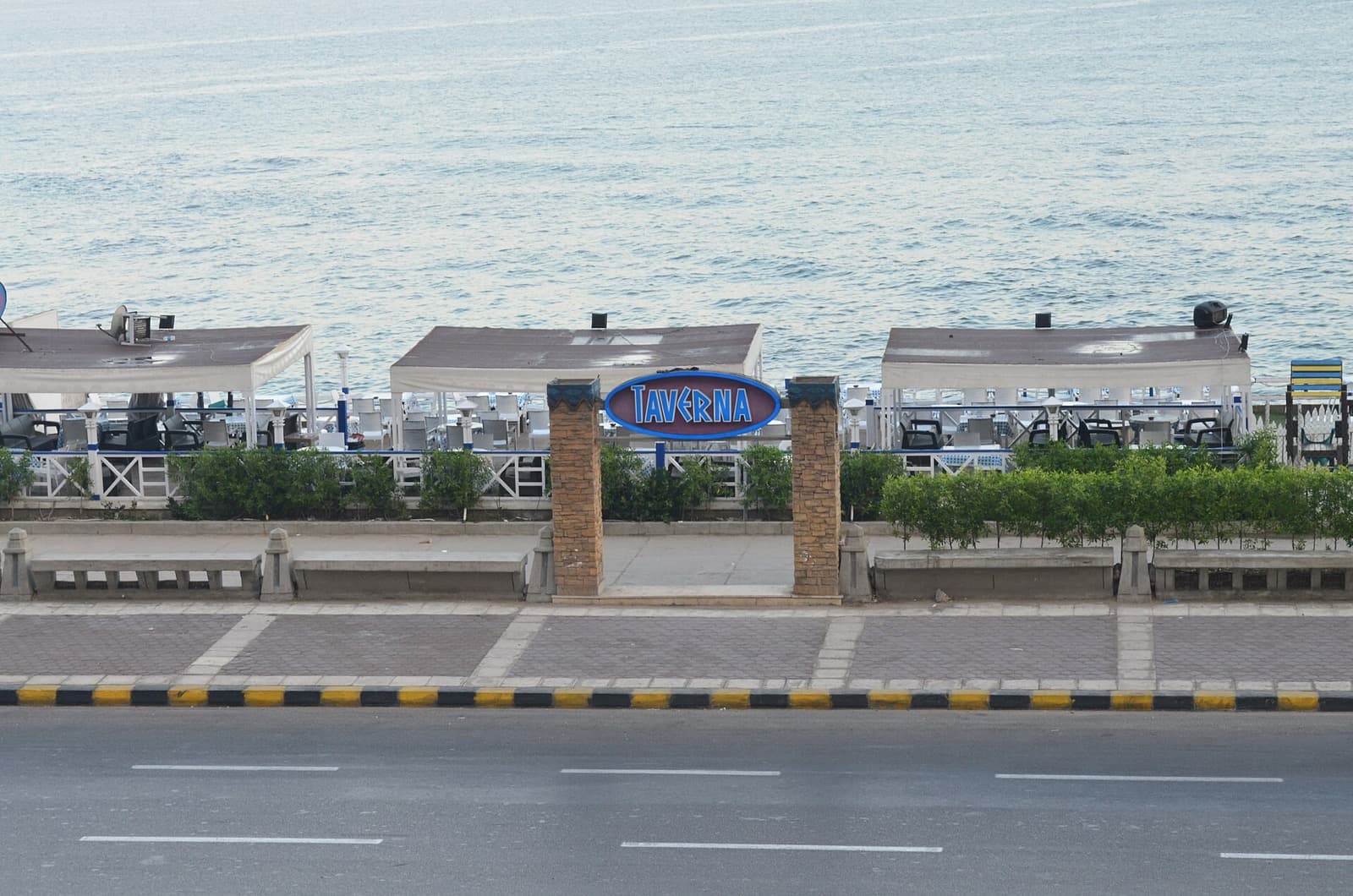
The Corniche and the Eastern Harbour: The Sea That Swallowed the City
The long seafront curves around the ancient Great Harbour, beneath which archaeologists have mapped a drowned royal quarter.
- 4
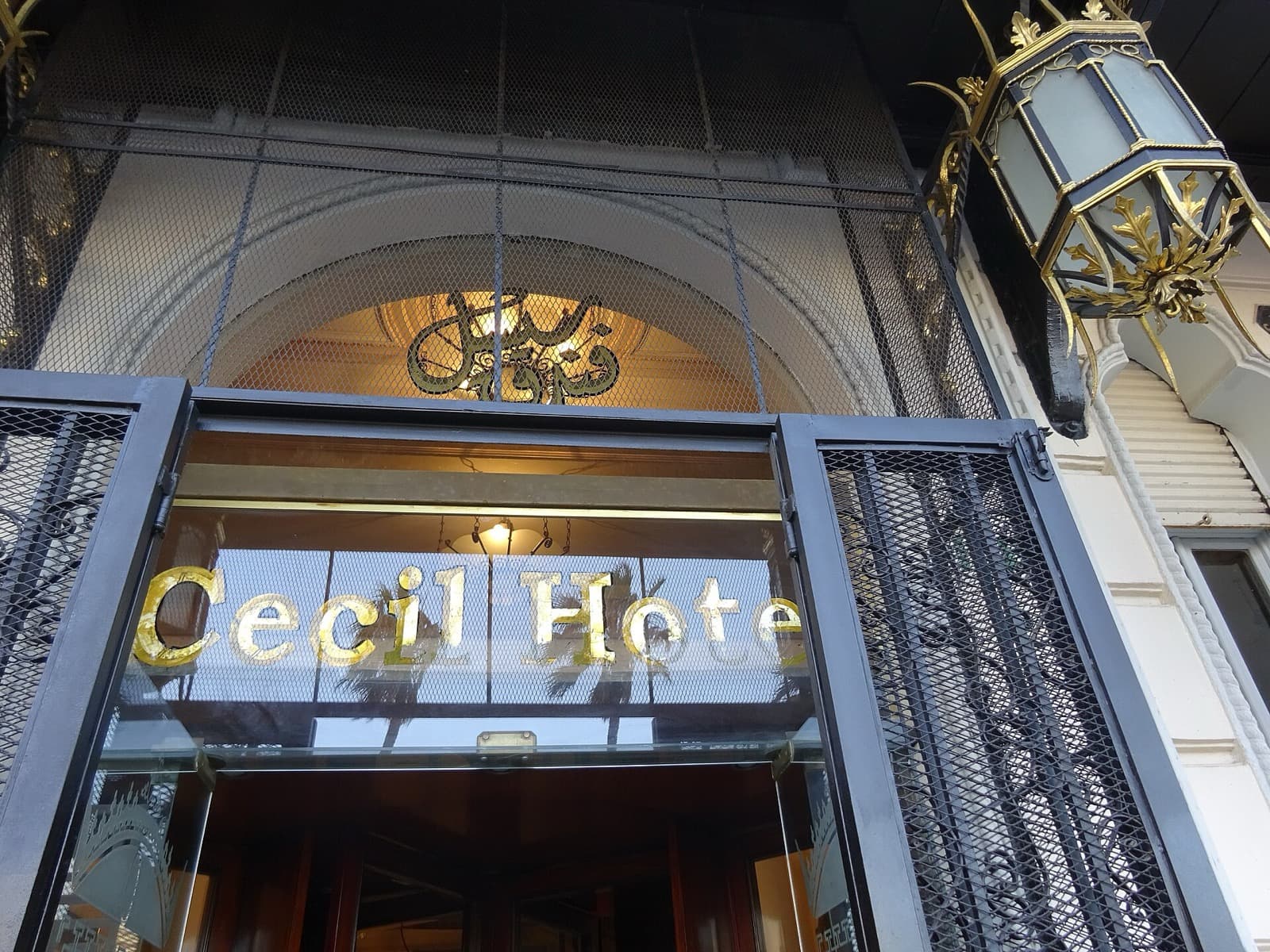
Saad Zaghloul Square: The Lost Cosmopolitan City
The civic heart of downtown Alexandria, ringed by Belle Epoque facades that recall the mingled Greek, Italian, Jewish, and Levantine city of a century ago.
- 5
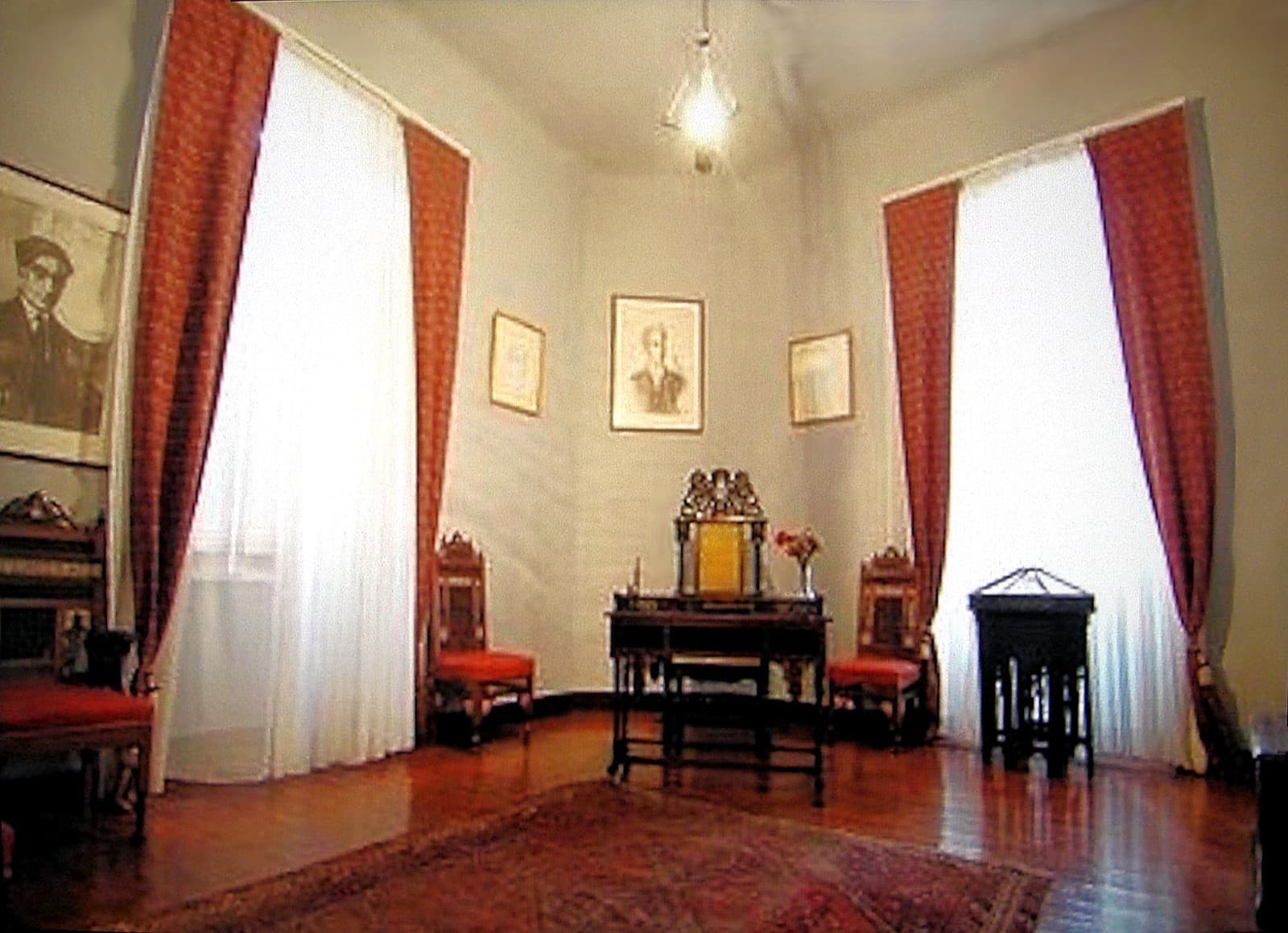
The Cavafy Museum: A City of Memory and Poetry
The second-floor apartment of Constantine Cavafy, the great Greek poet of modern Alexandria, preserved as the emblem of the city's literary memory.
- 6
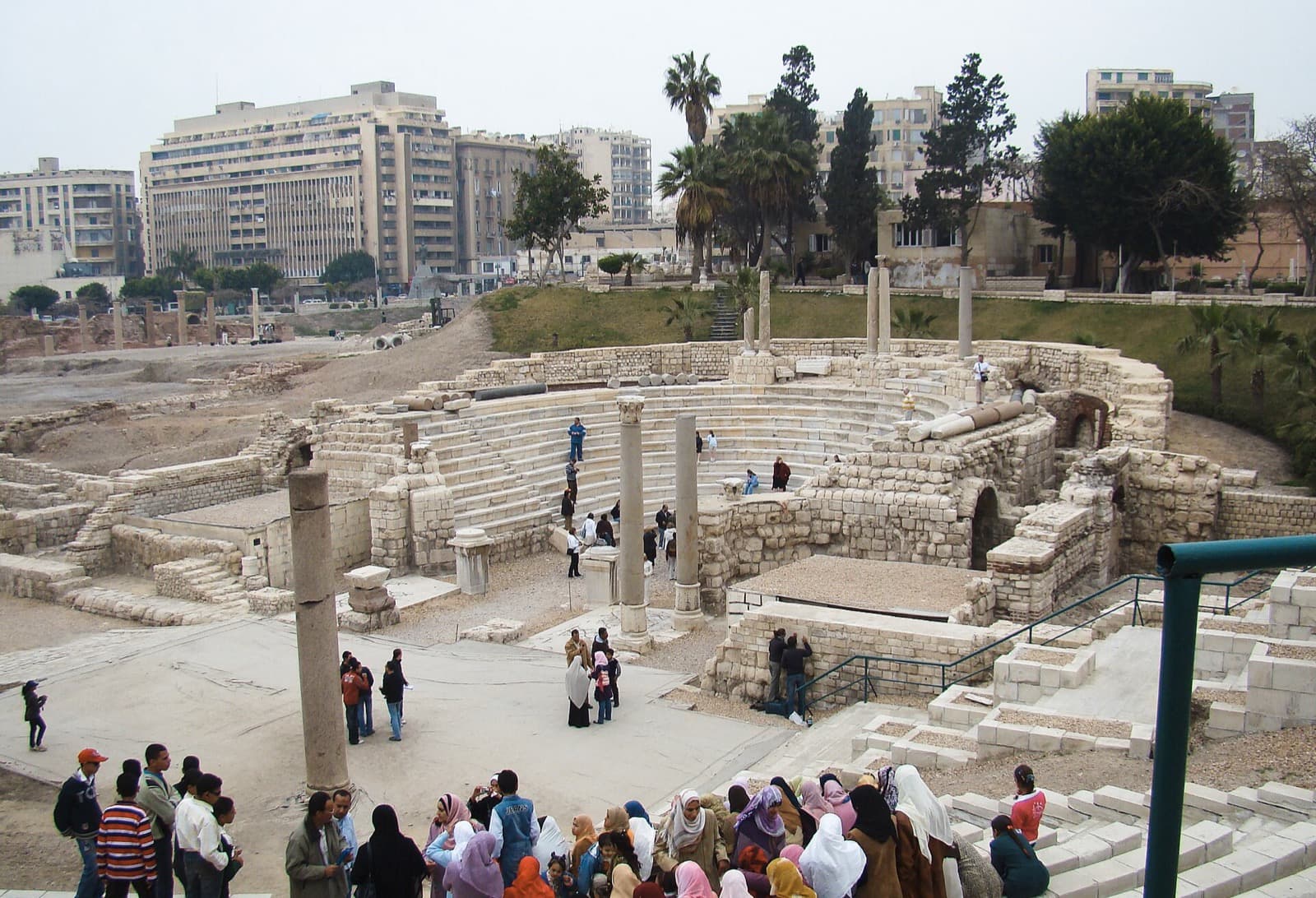
The Roman Theatre at Kom el-Dikka: The Ancient City Surfacing
The only Roman theatre found in Egypt, a small marble hemicycle uncovered by chance in the centre of the modern city, alongside baths and a mosaic villa.
Details
Best Time to Visit
Early morning or late afternoon, when the harbour light is soft and the Corniche breeze takes the edge off the heat; spring and autumn are the most comfortable seasons, while summer middays are hot and humid. The Bibliotheca Alexandrina and the Cavafy Museum keep set opening hours and close on some days, so check before setting out, and note that Kom el-Dikka and the museums generally close by late afternoon.
Pro Tips
- •This is your walk, at your pace. There is no group and no schedule, so linger at the harbour rail as long as the breeze holds you and skip any stop that does not call to you.
- •Buy the separate tickets you actually want at the Bibliotheca Alexandrina: general admission covers the library, but its museums and planetarium carry their own tickets, so decide before you queue.
- •Carry small cash in Egyptian pounds. Entry tickets at Kom el-Dikka, the Cavafy Museum, and the library's museums, plus small tips, are far easier with coins and small notes than with cards.
- •Do the harbour stretch of the Corniche on foot for the sea air and the view, but expect to take a short taxi between the seafront and the inland stops like the Cavafy Museum and Kom el-Dikka if your feet tire.
- •Give yourself real time inside the Bibliotheca Alexandrina and at Kom el-Dikka. Both reward slow looking, and the library's cool, quiet interior is a welcome pause on a warm day.
- •Bring water, a hat, and sunscreen. Much of the walk is along an open, breezy but sun-exposed seafront, and the Kom el-Dikka site has little shade.
Safety & Precautions
- •If your Alexandria travels take you into active mosques such as those honouring Amr ibn al-As or the great Cairo mosques of al-Azhar, Sultan Hassan, and Muhammad Ali, dress modestly, remove your shoes, keep your voice low, and be mindful of prayer times when non-worshippers may be asked to wait; women may be asked to cover their hair. Working churches and the Ben Ezra Synagogue likewise ask for modest dress and quiet.
- •Alexandria's sites are spread apart and often reached by taxi rather than on foot, and archaeological sites like Kom el-Dikka have uneven ground, steps, and little shade, so wear sturdy shoes and pace yourself in the heat.
- •Keep ordinary big-city awareness of your bag and valuables in crowds and on the trams, and expect some vendor and guide pressure near major sites; a firm, polite no is enough, and you are never obliged to hire anyone on the spot.
- •The currency is the Egyptian pound, and small cash is useful for tickets and tips; carry water and sun protection, since the Corniche and open sites offer strong sun and limited shade for much of the day.
- •Corniche traffic is fast and heavy, formal crossings are few, and the seafront trams share the road with cars, so cross only at signals or with a group, look both ways for trams, and take a taxi for the longer hops rather than walking beside heavy traffic.
Travel advisory: Exercise Increased Caution (Level 2).
Gallery
Related Reading
Go deeper on what you'll see, hear, and walk through.
Overview
Alexandria Travel Guide: Days, Transport, Season, Safety, Budget
7 min

Overview
Best Self-Guided Walking Tours in Alexandria (2026)
3 min
Overview
One Day in Alexandria: A Walkable Morning-to-Evening Itinerary
7 min
Thematic
Alexandria: The City That Remembers Being the Centre of the World
7 min
Companion
Alexandria's Bibliotheca: The Library Built to Answer the One the City Lost
7 min
Deep dive
The Site of the Ancient Library of Alexandria: A Monument With Nothing to See
6 min
Read
What to Eat in Alexandria: Liver, Fresh Fish, and How to Order Like a Local
5 min
Read the walk
The full story of Bibliotheca and the Corniche: The Greek City by the Sea, in words. Prefer to listen? Play it narrated, from home or on location.
Introduction
Alexander the Great founded this city on the Mediterranean shore in the fourth century B C, and for centuries it was the most brilliant city in the world. It was the seat of the Ptolemies and of Cleopatra, home to the greatest library of antiquity and to the Pharos, one of the seven wonders. Almost all of that Greek city is gone now, drowned in the harbour, quarried for stone, or buried under the modern one. Yet Alexandria, here in Egypt, still faces the sea it was built for. This walk reads a city that remembers being the centre of the world. It runs to six stops over roughly two and a half hours, covering a little under three kilometres along and just back from the harbour. Because this is your own walk, the pace is entirely yours. There is no group and no schedule, so you can linger at the harbour rail as long as the breeze holds you, or skip a stop that does not call to you. Egypt's tourism can feel crowded with pressure, so let this be the opposite: quiet, unhurried, yours. You will begin with the new library that answers the lost one, then stand where the Great Library once stood, follow the Corniche past a drowned royal quarter, cross the square that was the heart of a cosmopolitan city, visit the poet who made Alexandria a symbol of memory, and end at a Roman theatre that surfaced by chance in the middle of downtown. When you arrive at the Bibliotheca Alexandrina on the Corniche, begin with stop one.
1. The Bibliotheca Alexandrina: The New Library Answering the Lost One
You are standing before one of the boldest gestures any modern city has made toward its own past. The Bibliotheca Alexandrina opened on October sixteenth, two thousand two, conceived as a deliberate revival of the ancient Library of Alexandria, and it rises on the Eastern Harbour shore near where the ancient royal quarter once stood. The design, by the then young Norwegian firm Snohetta, was chosen from an international competition of hundreds of entries held with UNESCO's involvement. Notice the shape of it. The main reading room is roofed by an enormous circular disc, about one hundred and sixty metres across, tilted up toward the Mediterranean like a sundial half sunk into the ground. Glass and aluminium panels let in a soft, even north light over cascading terraced levels. The curved grey granite wall that wraps the building is carved with characters drawn from about one hundred and twenty of the world's writing systems, an alphabet of the whole human record pressed into stone. According to the Bibliotheca Alexandrina, the shelves can hold up to eight million books, and the complex houses four museums, a planetarium, art galleries, and a laboratory where fragile manuscripts are restored. Take your time inside if you like. It is calm and air conditioned, a welcome pause on a warm day, and you can wander the terraces or move straight on at your own pace. The ancient Library left no stone behind, which is the ache at the heart of this whole walk. What this building offers is not a reconstruction but an answer: a promise, made on the same shore, that a city can lose its greatest treasure and still choose to build another.
2. The Great Library and the Mouseion: The Library Gone Without a Stone
Somewhere near here, though no one can point to the exact spot, once stood the greatest library of the ancient world. It was not a single building but part of the Mouseion, an institution of the Muses, most likely established under Ptolemy the Second Philadelphus, who reigned from two hundred and eighty-five to two hundred and forty-six B C, with plans perhaps begun under his father. That word, Mouseion, is where our word museum comes from: a shrine to the nine goddesses of the arts. To this place the Ptolemies drew the finest minds of the age. Eratosthenes served as chief librarian and measured the circumference of the Earth. Euclid worked out his geometry in this city. Callimachus compiled the Pinakes, one of the first great library catalogues, and Aristarchus pored over the poems of Homer. Now here is the part worth slowing down for. You have probably heard that the Library burned in a single terrible fire, and often that story is pinned on Julius Caesar in forty-eight B C. Treat that as legend, not fact. Caesar's fire did damage warehouses by the harbour, but the institution itself likely survived. Modern scholarship holds that the Library declined gradually over centuries, and the truth is that its exact fate is uncertain. The daughter library at the Serapeum was destroyed in three hundred and ninety-one A D, and by then the great collection was long faded. What makes this stop ache is precisely that there is nothing to see. No wall, no column, no stone. The most famous library in history is a place you can only stand near and imagine, and that absence is what the whole modern city, and the library behind you, is answering.
3. The Corniche and the Eastern Harbour: The Sea That Swallowed the City
Follow the harbour rail and let the sea breeze reach you. This long seafront boulevard, the Corniche, curves around the Eastern Harbour, which the ancients called the Portus Magnus, the Great Harbour of Alexandria. It looks like an ordinary working waterfront of fishing boats…
Full narration for this stop unlocks with the tour.
4. Saad Zaghloul Square: The Lost Cosmopolitan City
You have reached the civic heart of downtown Alexandria. This is Saad Zaghloul Square, opening toward the Corniche beside the historic Ramleh tram terminus, and it carries three layers of the city's story at once. It takes its name from Saad Zaghloul, who lived from eighteen…
Full narration for this stop unlocks with the tour.
5. The Cavafy Museum: A City of Memory and Poetry
On a quiet street just back from the busy squares stands the apartment that turned this whole city into poetry. Constantine Cavafy, who lived from eighteen sixty-three to nineteen thirty-three, was the great Greek poet of modern Alexandria, born here and buried here, who spent…
Full narration for this stop unlocks with the tour.
6. The Roman Theatre at Kom el-Dikka: The Ancient City Surfacing
The walk ends where the ancient city literally breaks back through the surface of the modern one. This is Kom el-Dikka, a name that means roughly the mound of rubble, and it holds the only Roman theatre ever found in Egypt. It is a small semicircular odeon, an extended hemicycle…
Full narration for this stop unlocks with the tour.