Bibliotheca and the Corniche: The Greek City by the Sea
150 min · 2.7 km · easy
Alexandria rewards two unhurried days on foot and by short taxi hops, visited best in spring or autumn, reached most easily by train from Cairo, and treated with ordinary big-city caution rather than fear. This is a Mediterranean port where almost nothing of the ancient Greek city survives above ground, so the pleasure is walking between the fragments that do: a modern library answering a lost one, a Roman theatre in a downtown lot, catacombs cut into bedrock, and a fort built from the stone of a fallen lighthouse. Below is a practical, verified plan for how long to stay, how to get around, when to come, what things cost, and how safe it actually is.
How many days do you need in Alexandria?
Two days is the comfortable answer for most visitors, and one long day is enough if you are disciplined about it. The city's sights cluster into two natural routes that each take an unrushed half to full day.
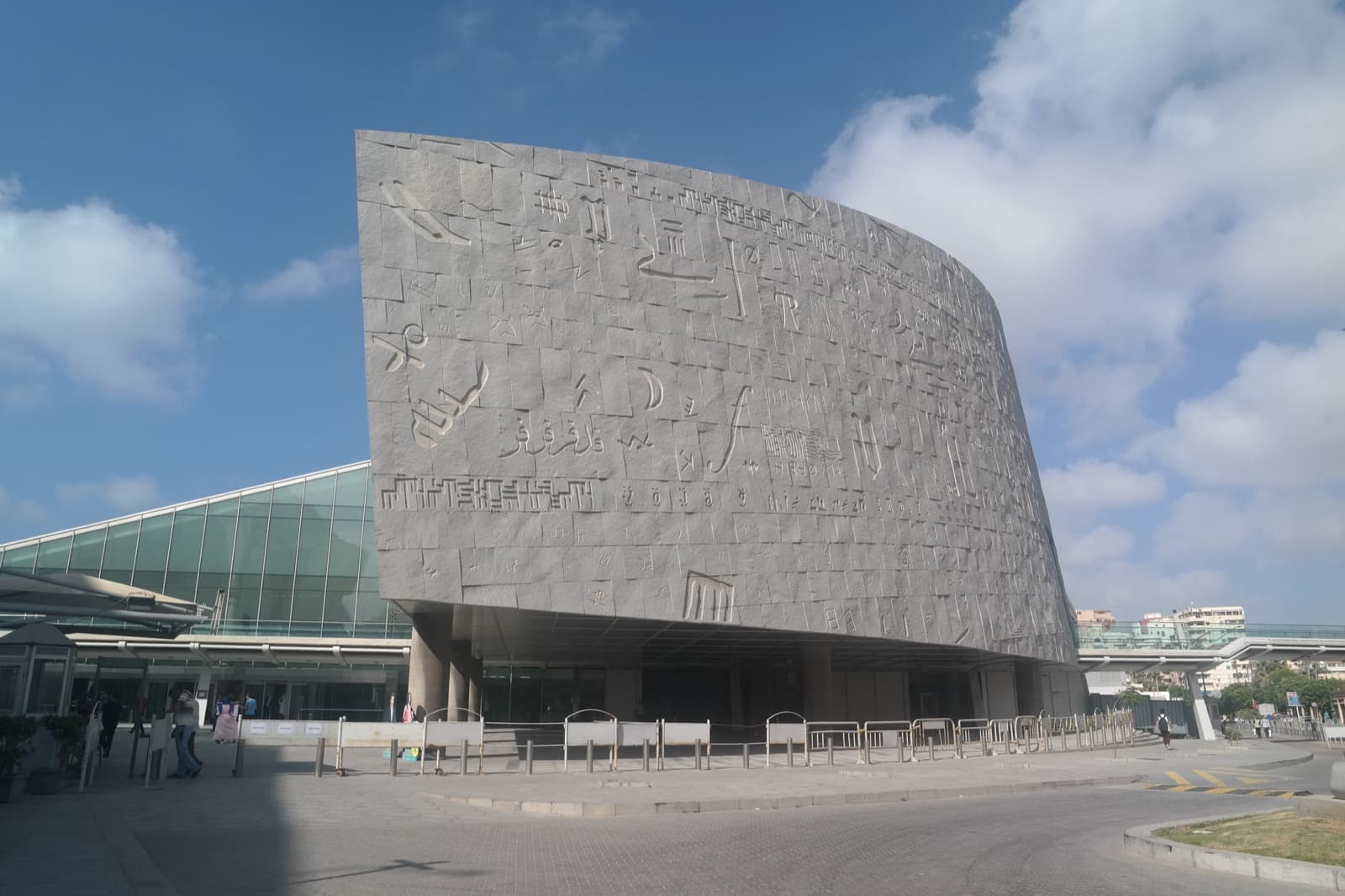
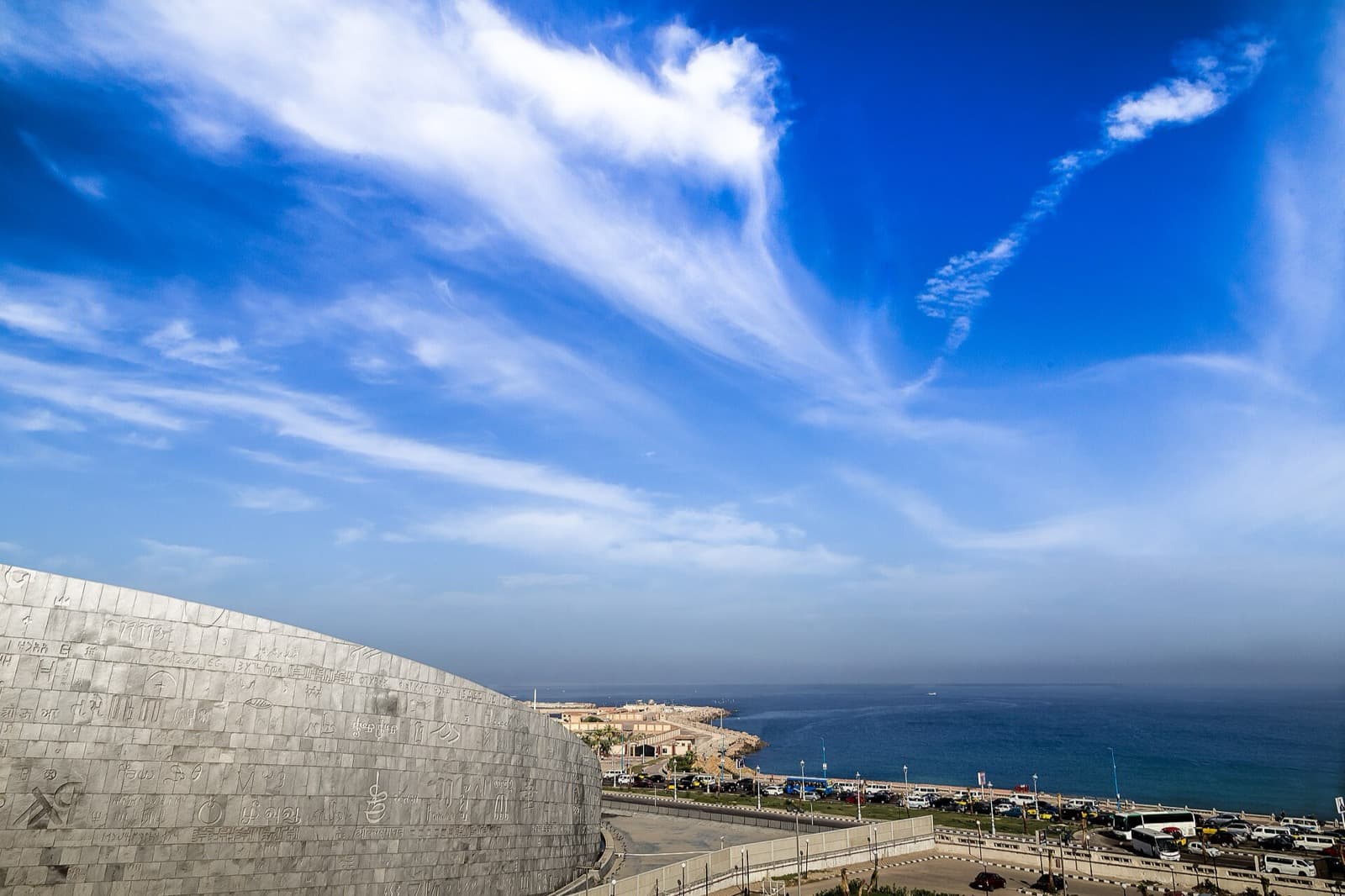
Day one is the seafront and downtown: the Bibliotheca Alexandrina, the stretch of Corniche above the drowned royal quarter, Saad Zaghloul Square, the Cavafy Museum, and the Roman Theatre at Kom el-Dikka. Our Bibliotheca and the Corniche walk covers this as a self-guided route of about six stops over roughly two and a half hours, a little under three kilometres along and just back from the harbour.
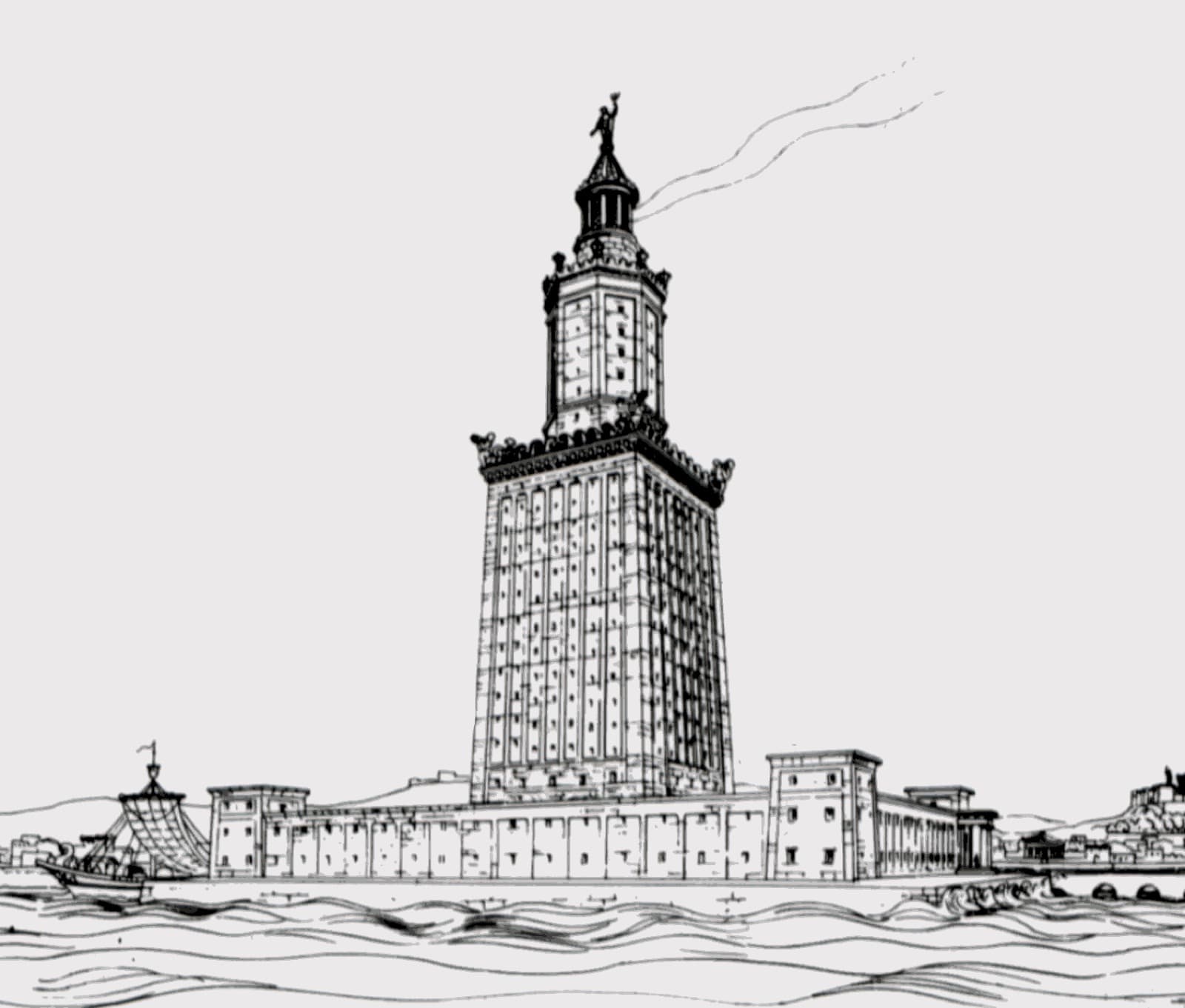
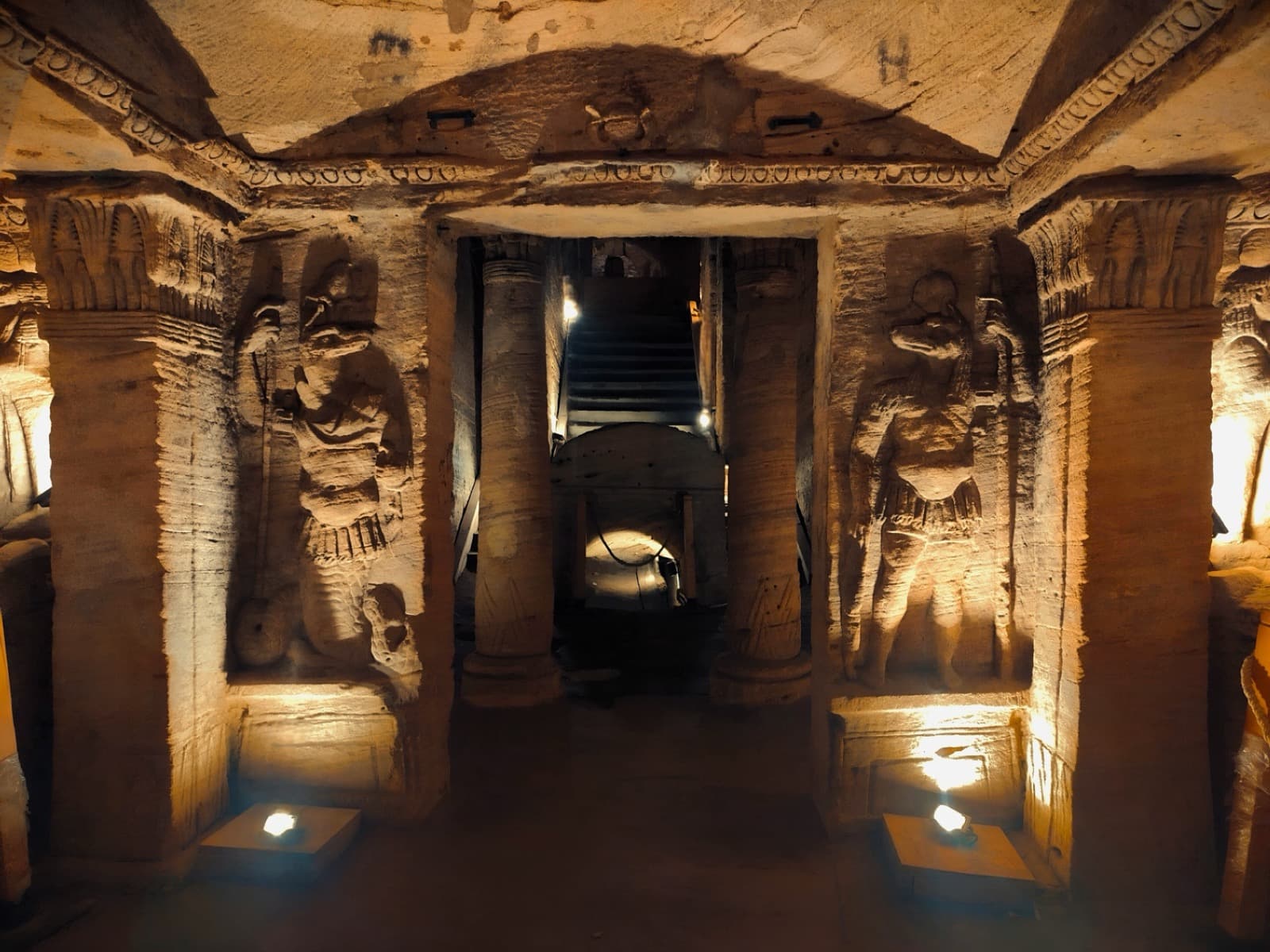
Day two goes underground and out to the harbour mouth: Pompey's Pillar and the Serapeum, the Catacombs of Kom el-Shoqafa, Kom el-Dikka again if you skipped it, the site of the ancient Pharos, and Fort Qaitbay. Our Catacombs and the Pharos walk links these across about ten kilometres and three to four hours, though these sites sit apart across a working city, so you move between them by short taxi rides rather than walking the whole way.
If you only have one day, do the seafront-and-downtown loop on foot and pick either the catacombs or Fort Qaitbay by taxi to close the day. Many travelers also visit Alexandria as a long day trip from Cairo, which works but leaves you rushing. See more routes on the Alexandria walking tours hub.
How do you get to Alexandria?
Hear a stop from this walk
The Roman Theatre at Kom el-Dikka: The Ancient City Surfacing
By train from Cairo is the standard and easiest route. Trains run frequently through the day from Cairo's Ramses (Ramesses) Railway Station to Alexandria, with dozens of daily departures. Journey time is roughly two to three hours depending on the service, and the newer Talgo trains are the fastest, at around two and a half hours. Trains stop at Sidi Gaber on the way in and then terminate at Alexandria's central Misr (Main) Station; the central Main station is the one most visitors want, since Sidi Gaber sits farther from downtown. Book a day or two ahead in high season, when seats sell out.
Driving from Cairo along the Desert Road is also common and takes a similar amount of time by car or intercity bus. Egypt's main international gateway is Cairo, so most travelers land there first; Alexandria has its own airport with more limited service.
How do you get around the city?
Alexandria is a walk-plus-taxi city. The seafront Corniche is genuinely pleasant on foot, and downtown clusters tightly enough to walk between squares, cafes, and Kom el-Dikka. For everything else, the sites are spread out, so you hop between them by car.
Ride-hailing is the simplest option. Uber operates in Alexandria with up-front pricing, which spares you haggling and explaining your destination in Arabic. Street taxis (black-and-yellow or black-and-white) are cheap but often quote a fare instead of running the meter, so agree the price before you get in. Fares are low by international standards, with short cross-town rides costing only a few dollars' worth of Egyptian pounds.
Alexandria also keeps a historic tram network, including the Ramleh line near Saad Zaghloul Square. It is slow and can be crowded, but it is inexpensive and a small experience in itself if you have time. For a smooth day, use ride-hailing between the far-apart archaeological sites and save your feet for the Corniche.
When is the best time to visit?
Spring and autumn are the most comfortable seasons, so target roughly March to June and September to November. Alexandria has a Mediterranean climate: hot, humid summers and mild, wetter winters, milder than inland Cairo year-round because it sits directly on the coast.
October and November land in the sweet spot of pleasant temperatures and little rain, and this short autumn is a peak travel window. Summer middays (roughly June to August) are hot, bright, and humid, with the sea moisture making the heat feel heavier; if you come then, walk early and late and shelter midday. Winter is mild but can be rainy and breezy, with cooler days than the rest of Egypt. Spring is pleasant but can bring occasional dusty, windy spells and the odd sandstorm.
Whatever the season, the harbour light is softest in early morning and late afternoon, which is the nicest time to walk the Corniche and Fort Qaitbay. Note that Kom el-Dikka, the Bibliotheca, the Cavafy Museum, and other ticketed sites keep set hours and generally close by late afternoon, so front-load your museum visits and finish with the seafront.
What does it cost, and what are the entry fees?
Alexandria is inexpensive on the ground, especially for transport and food. The larger costs are site admissions, and most are modest by international standards. Prices change, so treat any figure as a guide and confirm at the gate.
The Bibliotheca Alexandrina charges a low admission for the main library, with its Antiquities and Manuscripts museums and planetarium ticketed separately, so decide which you want before you queue. The Roman Theatre at Kom el-Dikka, the Catacombs of Kom el-Shoqafa, Pompey's Pillar, and Fort Qaitbay each carry a separate entry ticket in Egyptian pounds; Pompey's Pillar and the Catacombs sit close together and can sometimes be bought on a combined ticket, worth asking about. The Cavafy Museum has a small fixed admission. A few things, like the Villa of the Birds mosaics at Kom el-Dikka, may cost extra, and photography inside the tombs and catacombs is often restricted or charged.
Carry small cash in Egyptian pounds. Tickets, tips, and small purchases are far easier with coins and small notes than with cards, and not every site accepts cards. Budget travelers can see Alexandria cheaply; the seafront, squares, and Corniche cost nothing to enjoy.
Is Alexandria safe?
Alexandria is generally safe for visitors, and it should be approached with normal big-city caution, not anxiety. Violent crime against tourists is rare, and there is a visible tourism-police presence at the major sites, with bag checks and metal detectors common at entrances.
The realistic concerns are everyday ones: petty theft and pickpocketing in crowds, on the trams, and in busy markets, plus persistent vendor and would-be-guide pressure near the pillar, the catacombs, and the seafront. A firm, polite no is enough, and you are never obliged to hire anyone on the spot. Traffic is chaotic, so cross carefully and take care on uneven ground and near the water. At the country level, the United States government keeps Egypt at a Level 2 "Exercise Increased Caution" advisory, with strict "Do Not Travel" zones confined to the Sinai interior and parts of the Western Desert, well away from Alexandria and the standard tourist route. Travel insurance is not required to enter but is worth carrying.
A note on respect that doubles as safety: if your visit includes an active mosque, dress modestly, remove your shoes, keep quiet, and mind prayer times; women may be asked to cover their hair. Working churches and heritage sites ask for the same modest, quiet manner.
Sources
- Cairo to Alexandria train schedule and travel time, seat61.com
- Alexandria weather and best time to visit, agatetravel.com
- Uber and taxis in Egypt including Alexandria, thirdeyetraveller.com
- Is Alexandria safe for travelers, travelsafe-abroad.com
- Bibliotheca Alexandrina admission and hours, bibalex.org
Frequently asked questions
- How many days do you need in Alexandria?
- Two unhurried days suit most visitors, with one long day possible if you are efficient. The sights split into two natural routes: a seafront-and-downtown loop of about three kilometres (Bibliotheca, Corniche, Saad Zaghloul Square, Cavafy Museum, Kom el-Dikka) and an underground-and-harbour route of roughly ten kilometres reached by short taxi hops (Pompey's Pillar, the Catacombs, the Pharos site, Fort Qaitbay). Many travelers also do Alexandria as a long day trip from Cairo.
- How do you get from Cairo to Alexandria?
- The train is the standard route, running frequently through the day from Cairo's Ramses station to Alexandria's central Misr (Main) Station. Journey time is roughly two to three hours, with the newer Talgo trains fastest at about two and a half hours. Trains also stop at Sidi Gaber on the way in, but the central Main station is the one most visitors want. Book a day or two ahead in high season. Driving or intercity bus along the Desert Road takes a similar amount of time.
- How do you get around Alexandria?
- Alexandria is a walk-plus-taxi city. The Corniche and downtown squares are pleasant on foot, but the archaeological sites are spread out. Uber operates in the city with up-front pricing, which avoids haggling. Street taxis are cheap but often quote a fare rather than run the meter, so agree the price first. A historic tram network, including the Ramleh line, is slow but inexpensive.
- When is the best time to visit Alexandria?
- Spring and autumn are most comfortable, roughly March to June and September to November, with October and November the sweet spot of pleasant temperatures and little rain. Alexandria's Mediterranean climate makes summer middays hot and humid and winters mild but sometimes rainy. Walk the Corniche and Fort Qaitbay in the soft light of early morning or late afternoon, and visit ticketed sites earlier since most close by late afternoon.
- Is Alexandria safe for tourists?
- Alexandria is generally safe and should be approached with normal big-city caution. Violent crime against visitors is rare, and tourism police keep a visible presence at major sites with bag checks and metal detectors. The realistic concerns are petty theft in crowds, chaotic traffic, and vendor pressure, where a firm, polite no is enough. The United States keeps Egypt at a Level 2 advisory, with Do Not Travel zones confined to the Sinai interior and parts of the Western Desert, far from Alexandria.
- How much do Alexandria's entry fees cost?
- Alexandria is inexpensive on the ground, with transport and food cheap; the main costs are site admissions, most modest by international standards. The Bibliotheca charges a low library admission with its museums and planetarium ticketed separately. Kom el-Dikka, the Catacombs of Kom el-Shoqafa, Pompey's Pillar, and Fort Qaitbay each have a separate ticket in Egyptian pounds, and the Pillar and Catacombs can sometimes be combined. Carry small cash, since not every site takes cards, and confirm current prices at the gate.
Ready to experience it?
Bibliotheca and the Corniche: The Greek City by the Sea
150 min · 2.7 km · easy
More from Alexandria
Explore more at your own pace.
One Day in Alexandria: A Walkable Morning-to-Evening Itinerary
Alexandria: The City That Remembers Being the Centre of the World
Alexandria's Bibliotheca: The Library Built to Answer the One the City Lost
The Catacombs of Kom el-Shoqafa: Reading Alexandria's Fused Underworld
The Site of the Ancient Library of Alexandria: A Monument With Nothing to See