Catacombs and the Pharos: Underground Alexandria and the Lost Lighthouse
4.41·6 Stops·210 minutes·10 km·Walking + taxi
The greatest ancient city of the Mediterranean has almost nothing left to touch, so this walk goes down into fused catacombs and out to the harbour mouth to reach the fragments that survive: an invented god, a drowned wonder, and a fort built from a lost lighthouse.
Start · Pompey's Pillar and the Serapeum: The Last Pillar of the Invented God
DirectionsStops
- 1
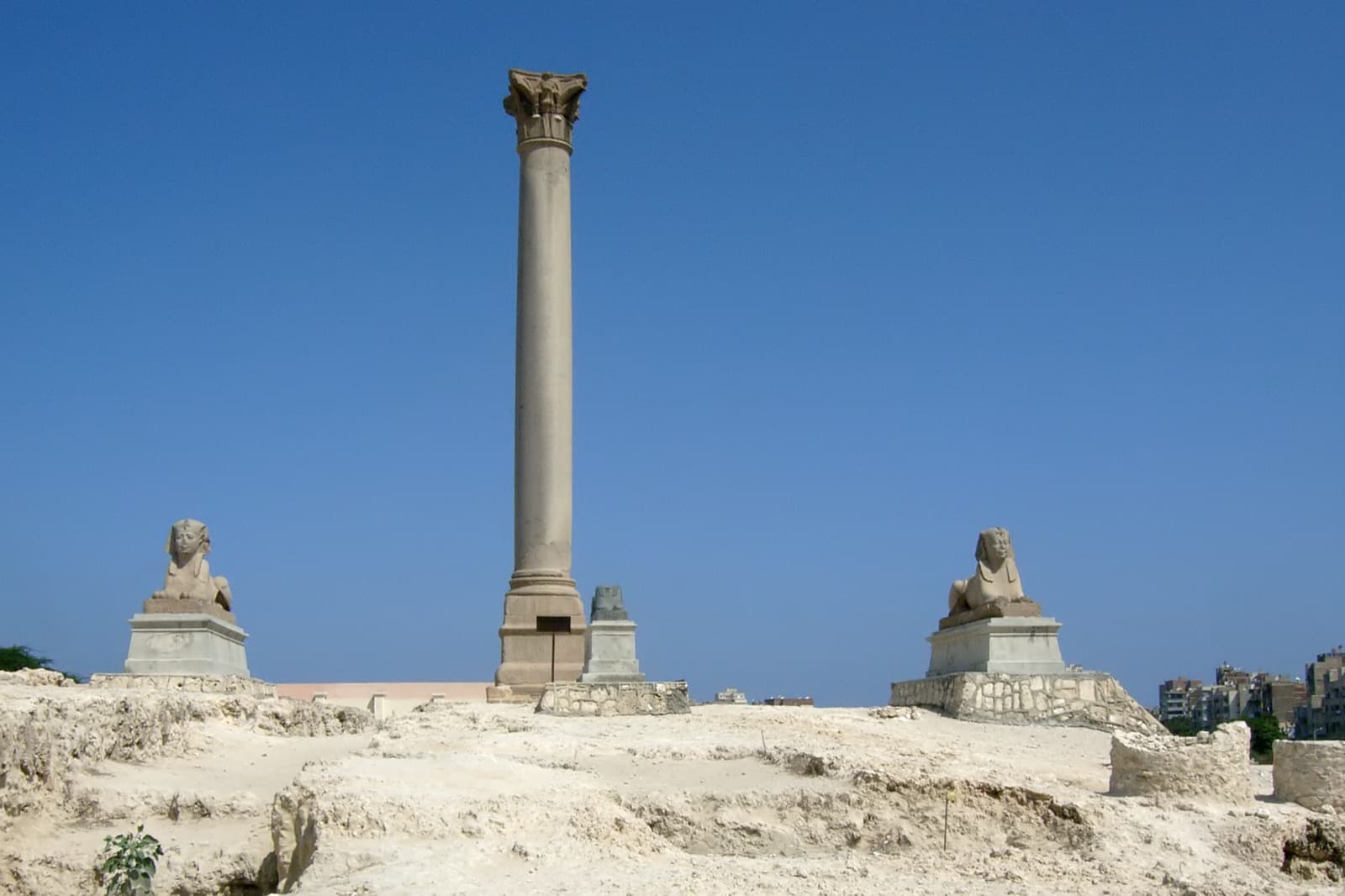
Pompey's Pillar and the Serapeum: The Last Pillar of the Invented God
A single towering column of red Aswan granite is nearly all that stands above ground of the Serapeum, the temple to a god the Ptolemies invented.
- 2
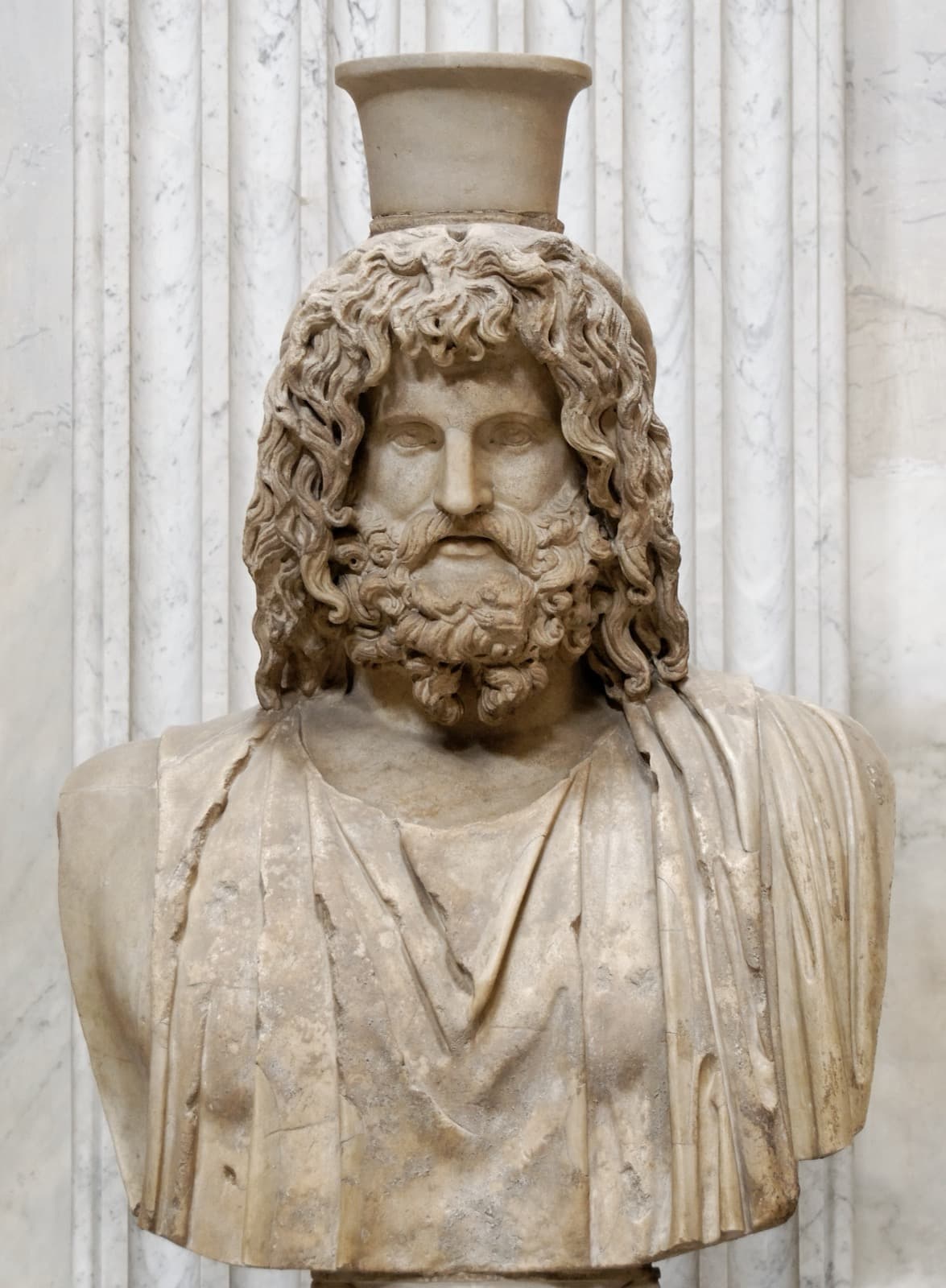
The God Serapis: A City That Engineered a God
On this same temple hill, the Ptolemies deliberately invented a new god to bind Greeks and Egyptians into one people.
- 3
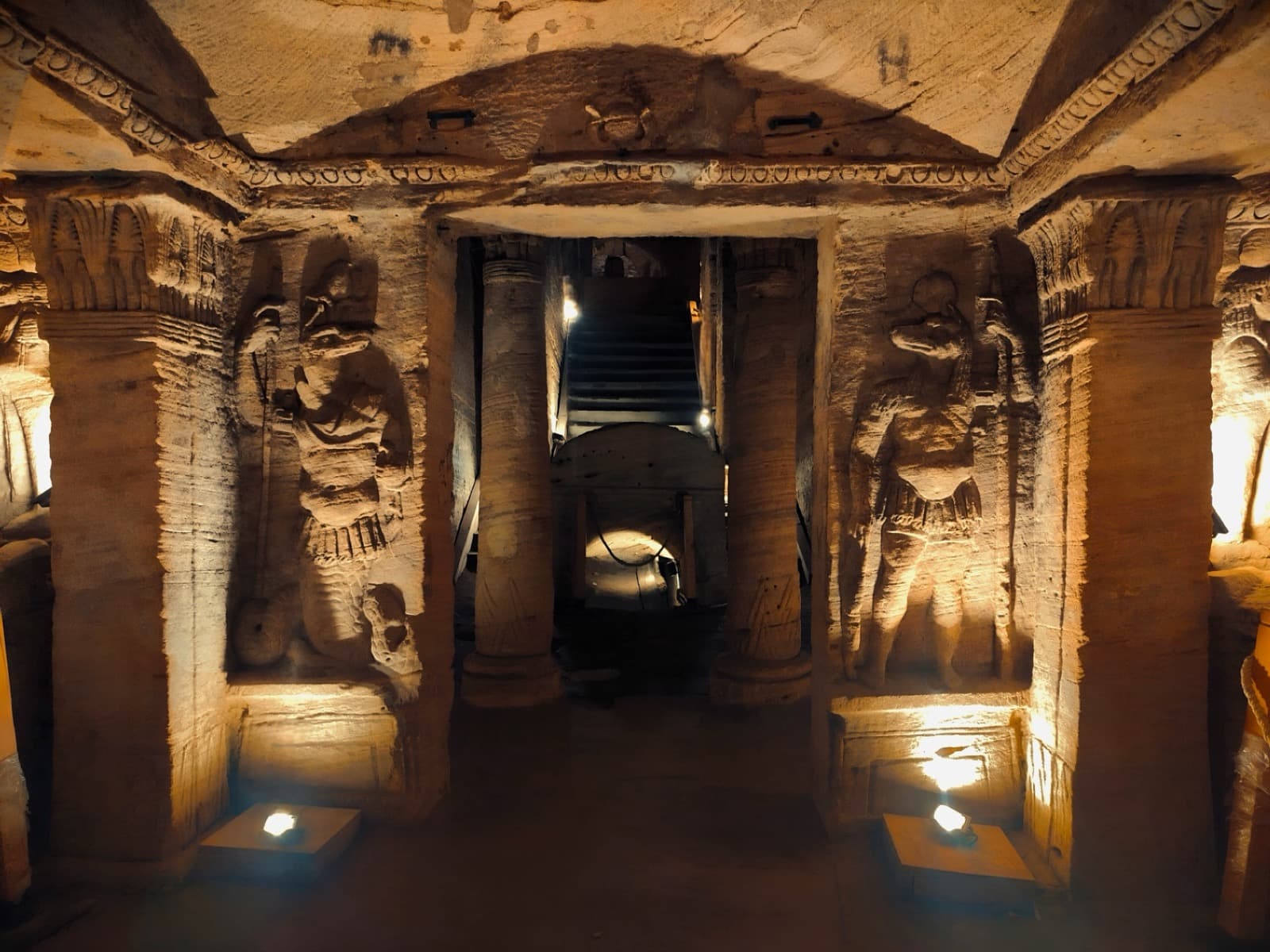
The Catacombs of Kom el-Shoqafa: Descent into the Fused Underworld
A spiral stair winds down three levels into bedrock, into a Roman-era necropolis where Egyptian, Greek and Roman funerary art meet on a single wall.
- 4
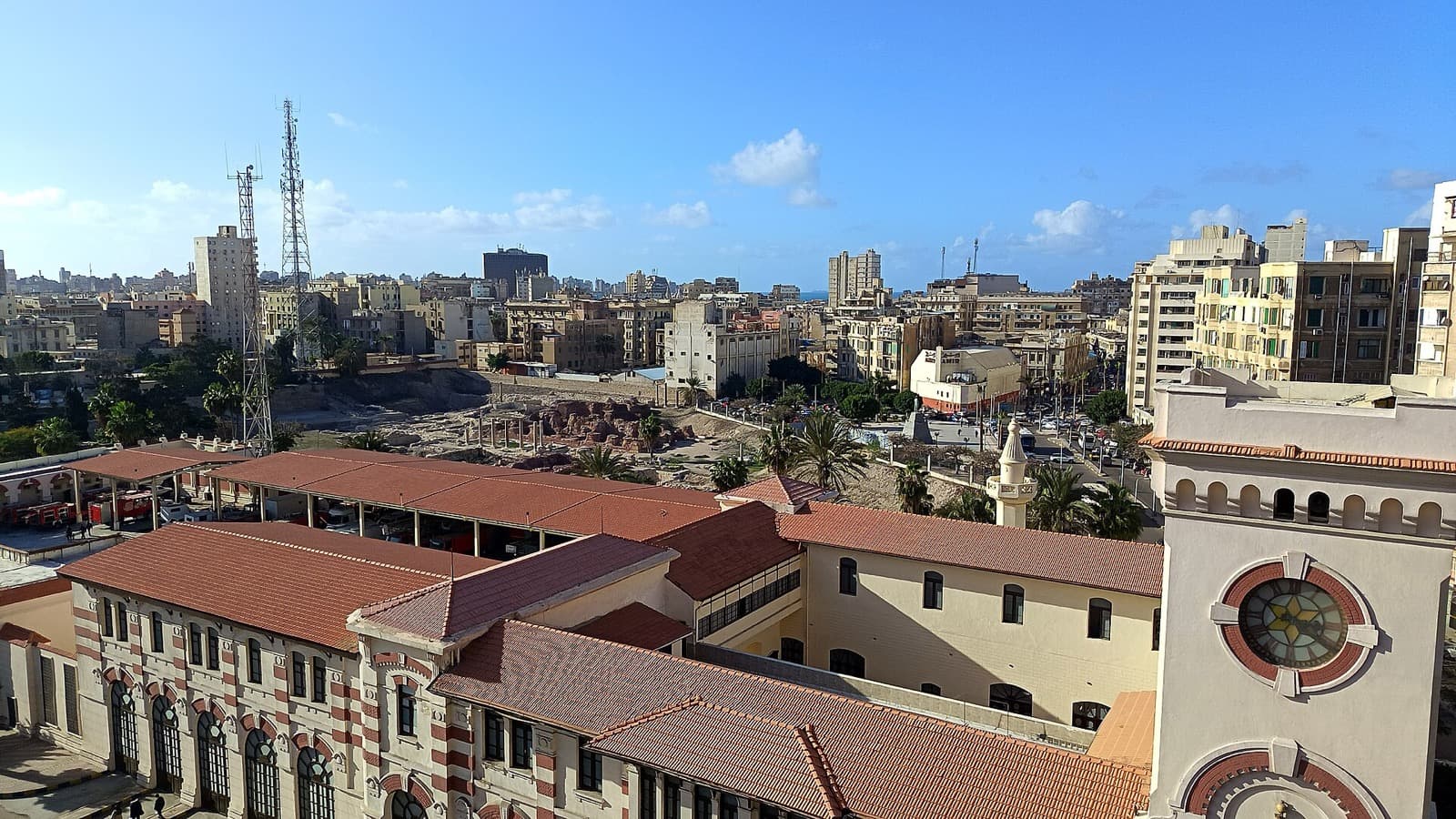
Kom el-Dikka: The Buried and Drowned Everyday City
A rare above-ground fragment of daily Greco-Roman Alexandria, with a small Roman theatre, great baths, lecture halls and mosaics, standing over a city that is mostly buried or drowned.
- 5
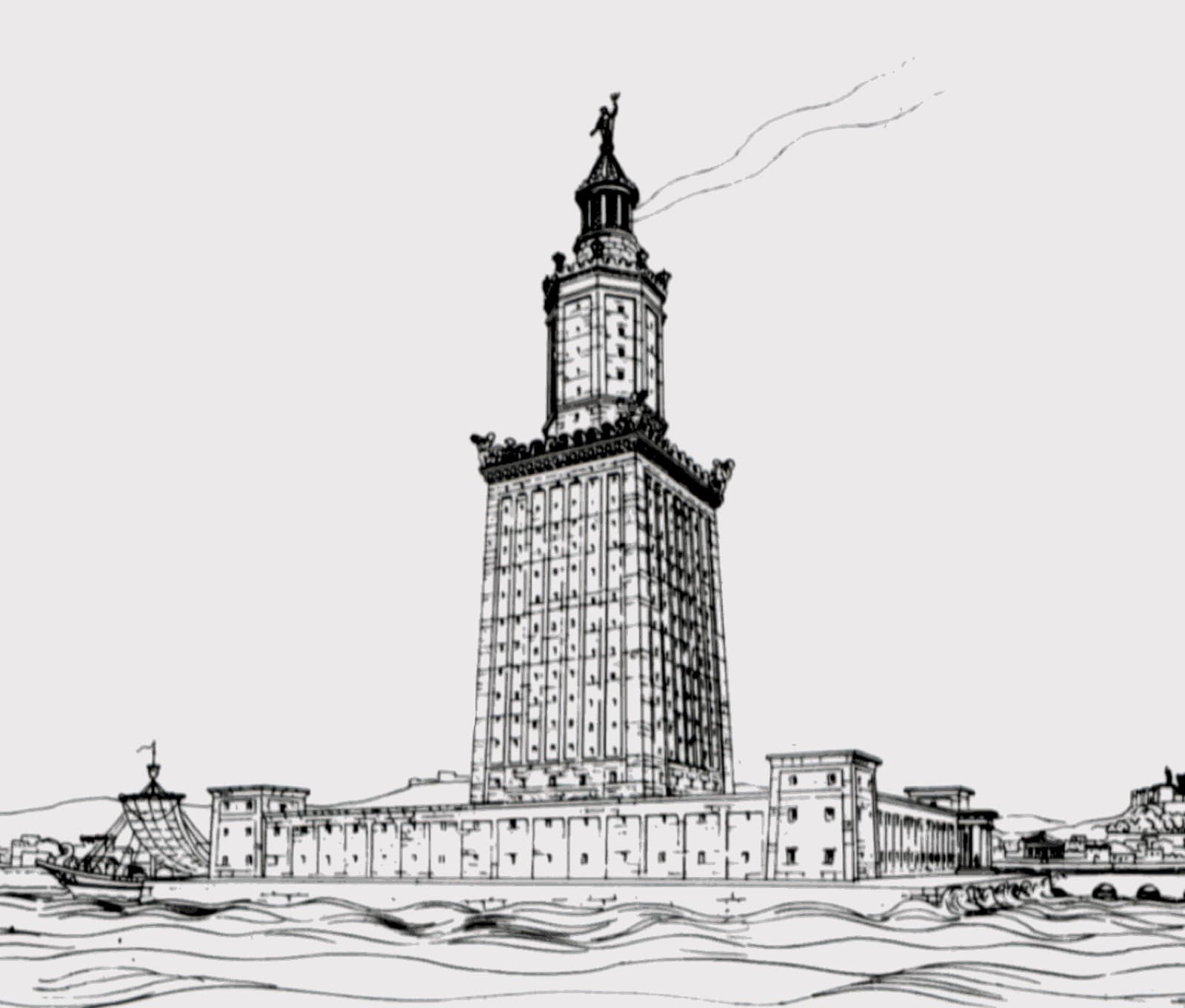
The Site of the Pharos: The Wonder That Lit the Sea and Fell Into It
At the harbour mouth stood the Lighthouse of Alexandria, one of the Seven Wonders of the ancient world, now scattered in giant blocks across the seabed.
- 6
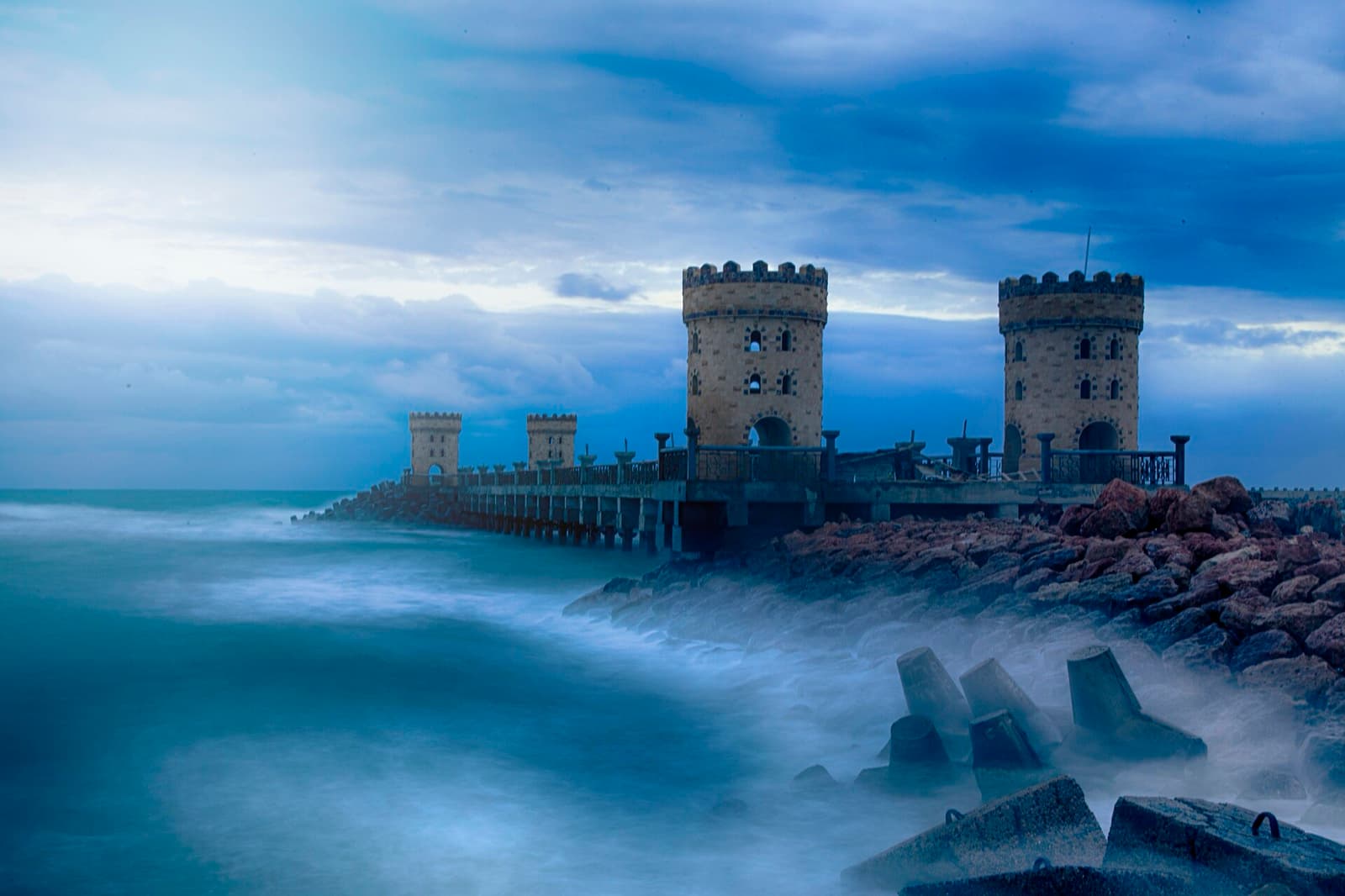
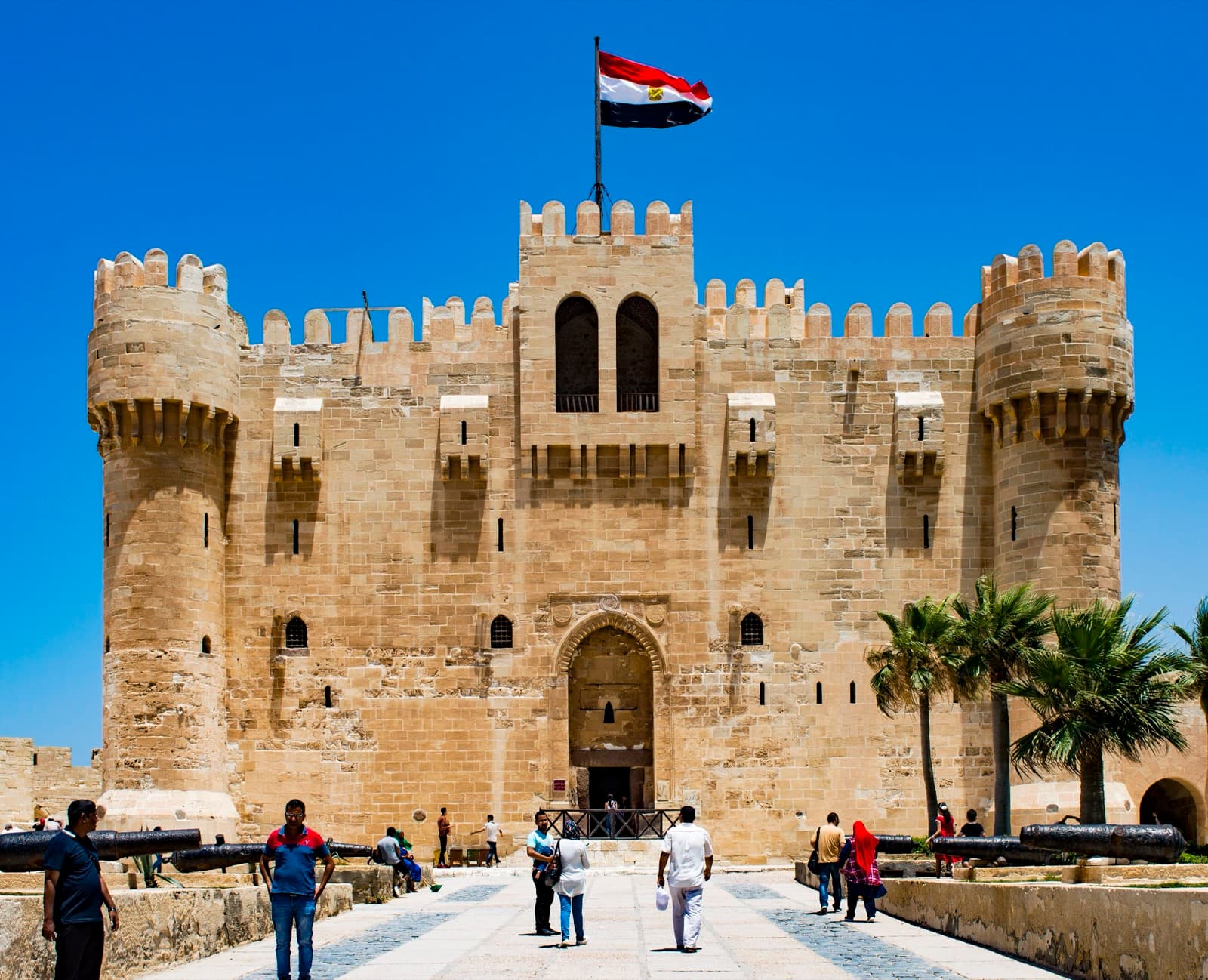
Fort Qaitbay: Standing Where the Wonder Stood
A fifteenth-century Mamluk fortress built on the exact site of the fallen Pharos, using some of the lighthouse's own toppled stone in its walls.
Details
Best Time to Visit
Late morning to mid-afternoon works well, giving you daylight inside the catacombs and clear light at the harbour, but the Corniche and Fort Qaitbay are finest in the late afternoon when the sun softens over the sea and the heat eases. Spring and autumn are the most comfortable seasons in Alexandria; summer middays are hot and bright. If you can, save the seafront stops for last so you finish with the low golden light over the harbour mouth.
Pro Tips
- •Ask about a combined ticket for Pompey's Pillar and the Catacombs of Kom el-Shoqafa, which sit close together and can be bought together for a small saving; always confirm current prices on arrival, as rates change.
- •The sites are spread across the city and are reached by short taxi rides, so agree the fare before you get in or use a ride-hailing app, and keep the day loose rather than rushing between them.
- •The catacombs are cool and dim after the descent, a welcome break from the sun, so plan your longest lingering there in the heat of the day and save the exposed harbour for later.
- •This is your own pace, so feel free to fold the two Serapeum stops together on the same hilltop, or to skip the seafront entirely if the sun is high, without any group waiting on you.
- •Carry small cash in Egyptian pounds for tickets, tips and the occasional separate charge such as the Villa of the Birds mosaics, since not every site takes cards.
- •Photography is often restricted or charged inside tombs and the catacombs, so check the rules at the entrance and keep your camera quiet in a place of the dead.
Safety & Precautions
- •The Catacombs of Kom el-Shoqafa are reached by a steep spiral descent into bedrock and hold human remains, so watch your footing, move quietly and treat the burial chambers with the dignity of a place of the dead rather than a spectacle.
- •The harbour promontory at Fort Qaitbay and the open Corniche have strong sun and very little shade, so carry water and sun protection, especially in summer, and take care on wet or uneven stone near the sea.
- •Alexandria is a busy modern city and its sites sit apart, reached by taxi, so agree fares in advance, keep ordinary big-city awareness of your bag and valuables in crowds, and expect some vendors and touts near the pillar and the seafront, where a firm, polite no is enough.
- •If your visit extends to any active mosque, such as the Mosque of Amr ibn al-As, dress modestly, remove your shoes, keep quiet and be mindful of prayer times when visitors may be asked to wait, and women may be asked to cover their hair; working churches and heritage sites ask for the same modest, quiet respect.
Travel advisory: Exercise Increased Caution (Level 2).
Gallery
Related Reading
Go deeper on what you'll see, hear, and walk through.
Overview
Alexandria Travel Guide: Days, Transport, Season, Safety, Budget
7 min

Overview
Best Self-Guided Walking Tours in Alexandria (2026)
3 min
Overview
One Day in Alexandria: A Walkable Morning-to-Evening Itinerary
7 min
Thematic
Alexandria: The City That Remembers Being the Centre of the World
7 min
Companion
The Catacombs of Kom el-Shoqafa: Reading Alexandria's Fused Underworld
7 min
Deep dive
The Site of the Pharos: Standing at the Harbour Mouth Where Alexandria's Lighthouse Fell Into the Sea
7 min
Read
What to Eat in Alexandria: Liver, Fresh Fish, and How to Order Like a Local
5 min
Read the walk
The full story of Catacombs and the Pharos: Underground Alexandria and the Lost Lighthouse, in words. Prefer to listen? Play it narrated, from home or on location.
Introduction
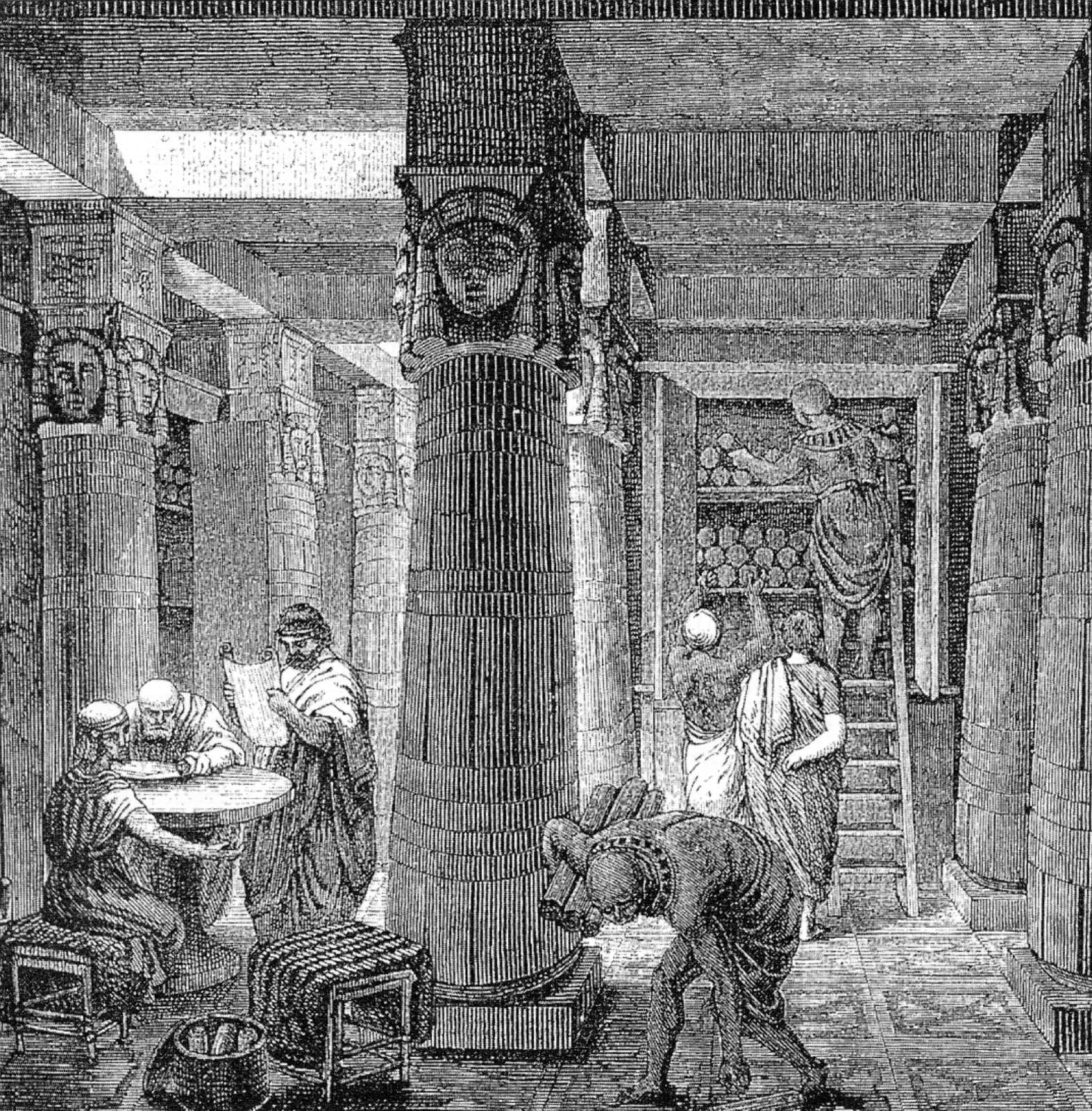
Alexandria was once the greatest city of the Mediterranean, and it is a strange thing to visit, because so little of it survives above ground. Its library is a legend, its royal quarter lies on the seabed, and its famous lighthouse is scattered in blocks across the harbour floor. So this route in Alexandria, Egypt turns that absence into its subject. You go down into the catacombs and out to the harbour mouth to reach the pieces that are left, and every piece is a place where Egypt met Greece and Rome and made something new. There are six stops here, and if you take them all the route runs about ten kilometres and roughly three to four hours, though the sites sit apart across a working modern city, so most people move between them by short taxi rides rather than on foot the whole way. This is your day at your own pace. Egypt's tourism can feel crowded with guides and touts, and the quiet pleasure of a self-guided route is that you set the rhythm: linger in the cool of the catacombs, skip the seafront if the sun is high, double back if a place holds you. The stops fall in a natural arc, from a lone red granite column on a temple hill, down a spiral stair into a fused underworld, and finally to a fort standing where a wonder of the ancient world once burned. When you arrive at Pompey's Pillar and the Serapeum, begin with stop one.
1. Pompey's Pillar and the Serapeum: The Last Pillar of the Invented God
This tall red column is the easiest monument in Alexandria to find and the hardest to name correctly. It is called Pompey's Pillar, but that is a medieval mistake. A Greek inscription mentioning a governor named Publius was misread, his name confused with that of Pompey the Roman general, and the wrong name stuck for centuries. The pillar has nothing to do with Pompey. It is a monolithic shaft of pink Aswan granite, about twenty-seven metres tall in total, its single stone weighing something near two hundred and eighty-five tonnes, and it was raised in honour of the Emperor Diocletian at the very end of the third century A D, around the year three hundred. It is the only ancient monument in Alexandria still standing exactly where it was first set up. What makes this hill matter, though, is what once stood around it. This was the Serapeum, a Greek temple built under Ptolemy the Third in the third century B C and dedicated to the god Serapis. According to the geographer Strabo, it held a daughter collection of the great Library of Alexandria, a second library on this hill. You have probably heard that the Library burned in a single dramatic fire. Historians treat that single burning as legend. The documented catastrophe happened here: in the year three hundred and ninety-one A D, after the Emperor Theodosius the First ordered pagan temples closed, the Serapeum and its books were destroyed. So this quiet column stands over the ruin of a temple, a library, and a religion, all gone. Take your time. Sphinx statues and underground galleries still survive around the base.
2. The God Serapis: A City That Engineered a God
Standing among these same ruins, it is worth pausing on the god this temple served, because he is one of the most remarkable inventions in the ancient world. Most gods are inherited. Serapis was designed. When Ptolemy the First took control of Egypt after Alexander the Great, he ruled two peoples who worshipped in completely different ways: Greek settlers and native Egyptians. In the third century B C he promoted a new god meant to unite them both. Serapis was built from the Egyptian god Osiris fused with the sacred Apis bull, a combination Egyptians already honoured. But he was given a fully human, Greek-style face and figure, resembling the Greek god Hades, lord of the underworld, because Greeks were uncomfortable with the animal-headed gods of Egypt. Into this single figure the designers folded several powers at once: the authority of the underworld, the healing associated with the Greek god of medicine, and the benevolence of the god of wine and joy. He was, in effect, a god for everyone. And it worked. The cult of Serapis spread far beyond Egypt, across the Mediterranean and deep into the Roman Empire, where his temples were called serapeia and his face even appeared on Roman imperial coins. Then it faded. Under the Emperor Theodosius the First the cult declined, and this temple, the Serapeum, was destroyed around the year three hundred and ninety-one A D. So the invented god outlasted his makers by centuries and then vanished with them, leaving a single column on a bare hill. It is a fitting first idea for this walk: a city that fused two worlds even in its heaven.
3. The Catacombs of Kom el-Shoqafa: Descent into the Fused Underworld
A short distance from the pillar, no more than six hundred metres, the story turns downward. Here a spiral staircase winds around a central shaft and descends three levels cut into solid bedrock, the lowest of them once underwater. This is the Catacombs of Kom el-Shoqafa, a…
Full narration for this stop unlocks with the tour.
4. Kom el-Dikka: The Buried and Drowned Everyday City
In central Alexandria, amid the modern grid, an excavated hollow opens beneath street level, and it offers something the monuments cannot: ordinary life. This is Kom el-Dikka. In the early Roman centuries it was an affluent residential quarter, and later, from the fourth century…
Full narration for this stop unlocks with the tour.
5. The Site of the Pharos: The Wonder That Lit the Sea and Fell Into It
Out at the tip of the promontory, where the fort waits ahead of you, the sea opens at the mouth of the harbour. This is where one of the Seven Wonders of the ancient world once stood: the Pharos, the Lighthouse of Alexandria. It was begun under Ptolemy the First around three…
Full narration for this stop unlocks with the tour.
6. Fort Qaitbay: Standing Where the Wonder Stood
And here it is, at the very edge of the sea: Fort Qaitbay, a fortress raised on the ground where a wonder once burned. When the lighthouse finally fell, its ruins lay here at the harbour mouth for a century and a half. Then, in the fifteenth century, the Mamluk Sultan Qaitbay…
Full narration for this stop unlocks with the tour.