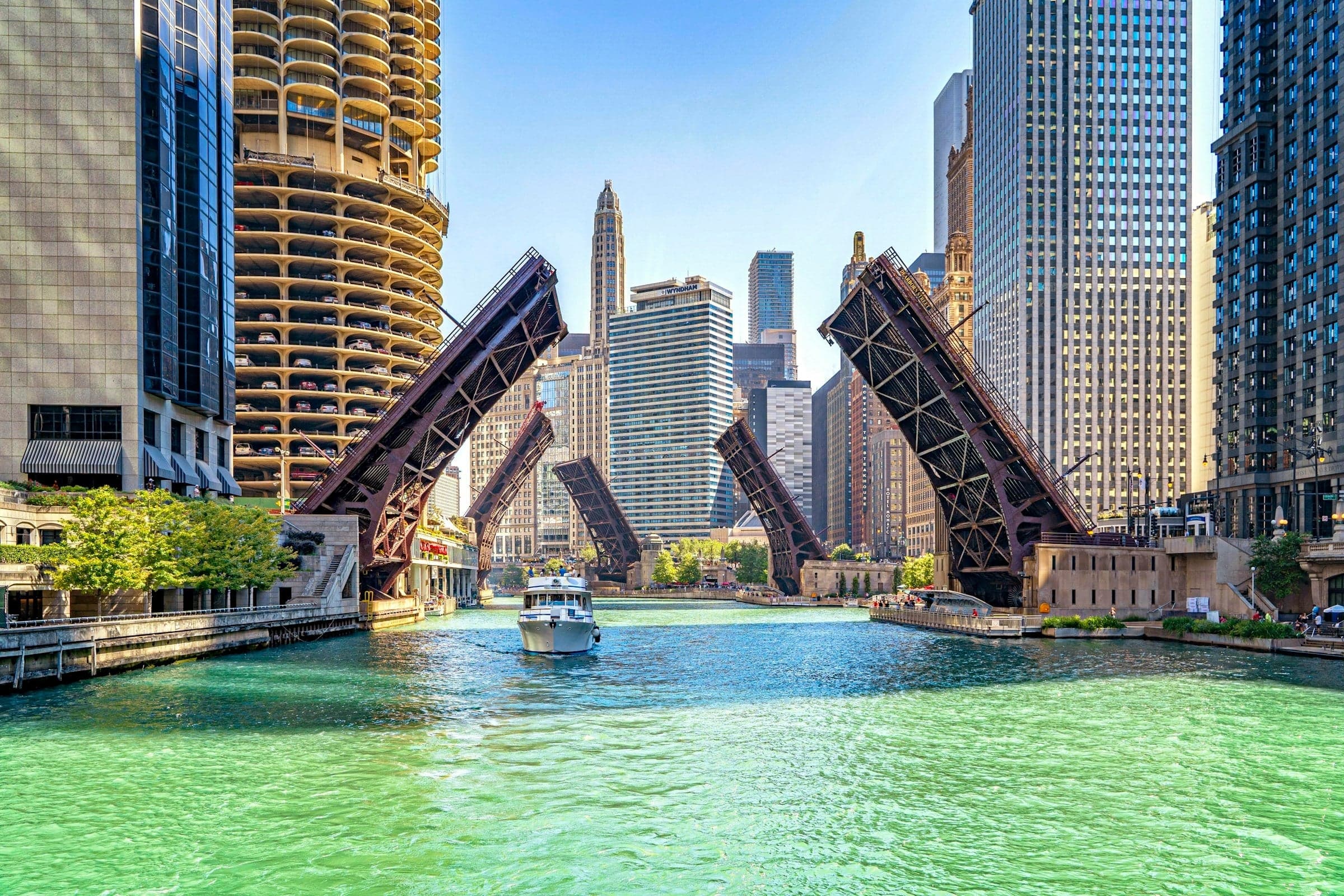
Walk Michigan Avenue from the Hancock Center to Tribune Tower, cross the DuSable Bridge, then follow the Riverwalk at river level past Marina City and the Merchandise Mart to the confluence.
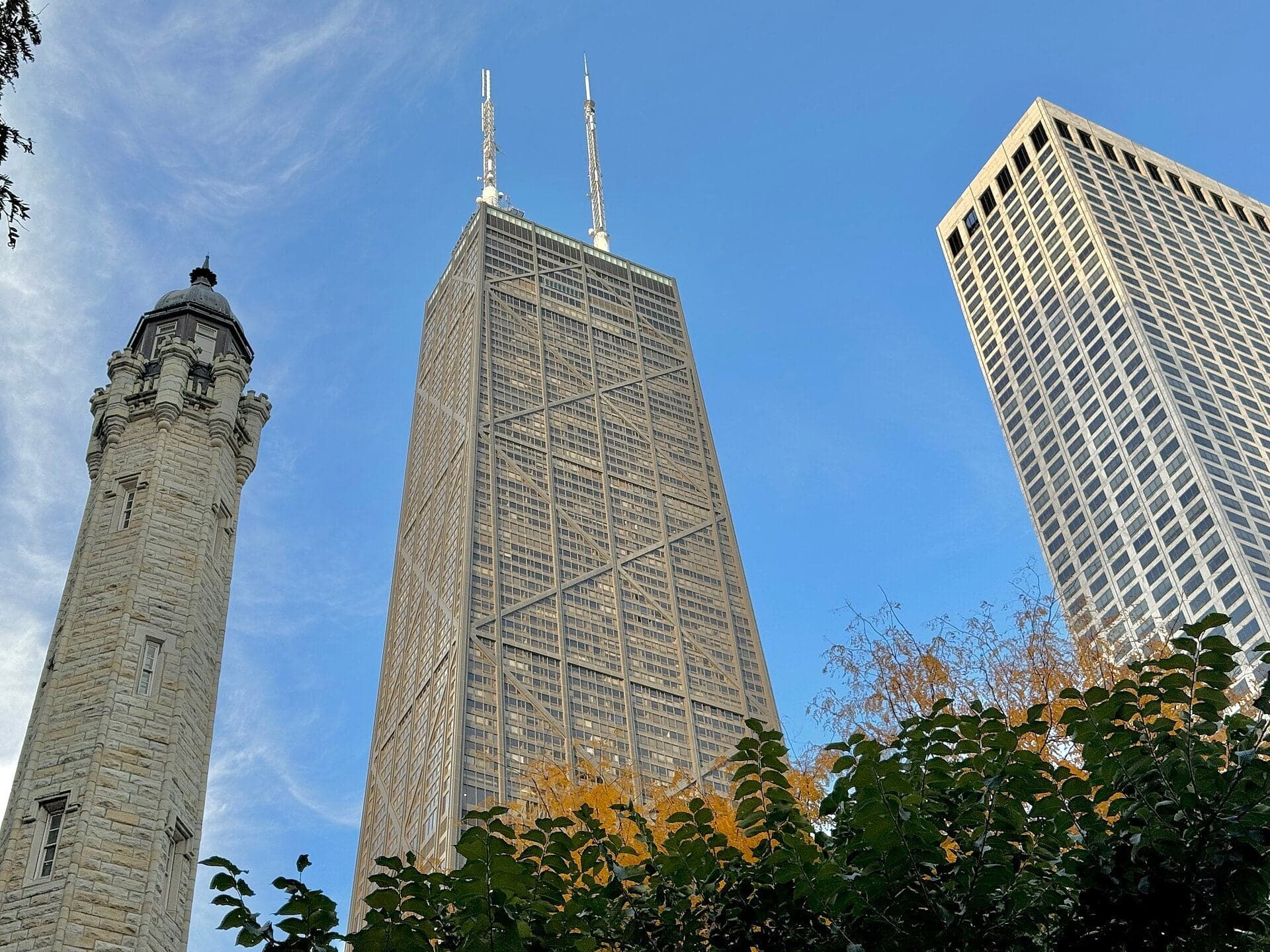
Start · Hancock Center: A Tower That Shows How It Stands Up
DirectionsStops
- 1
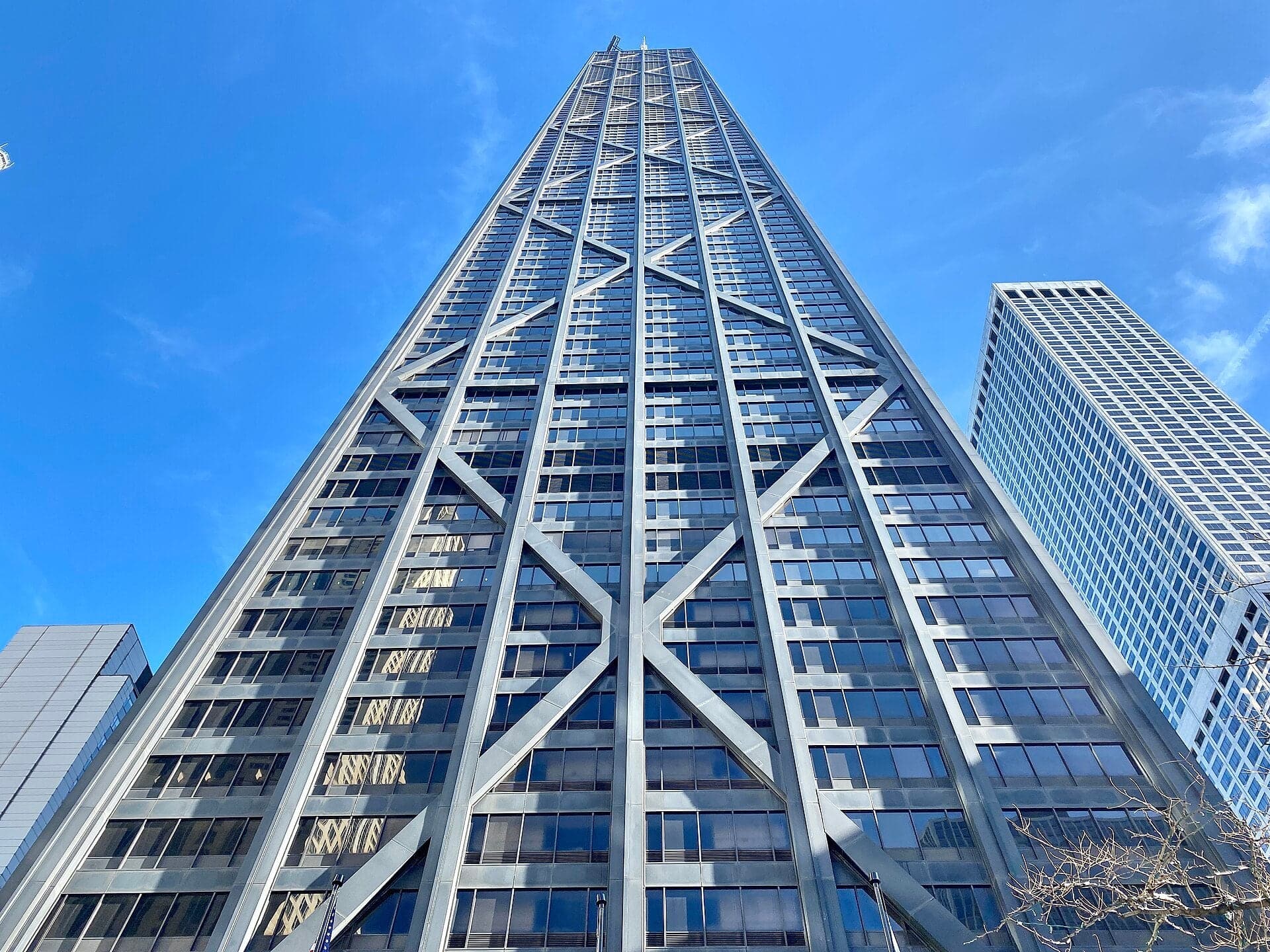
Hancock Center: A Tower That Shows How It Stands Up
Steel diagonals fight the wind. The tower narrows as it climbs, and the Magnificent Mile runs south from its foot.
- 2
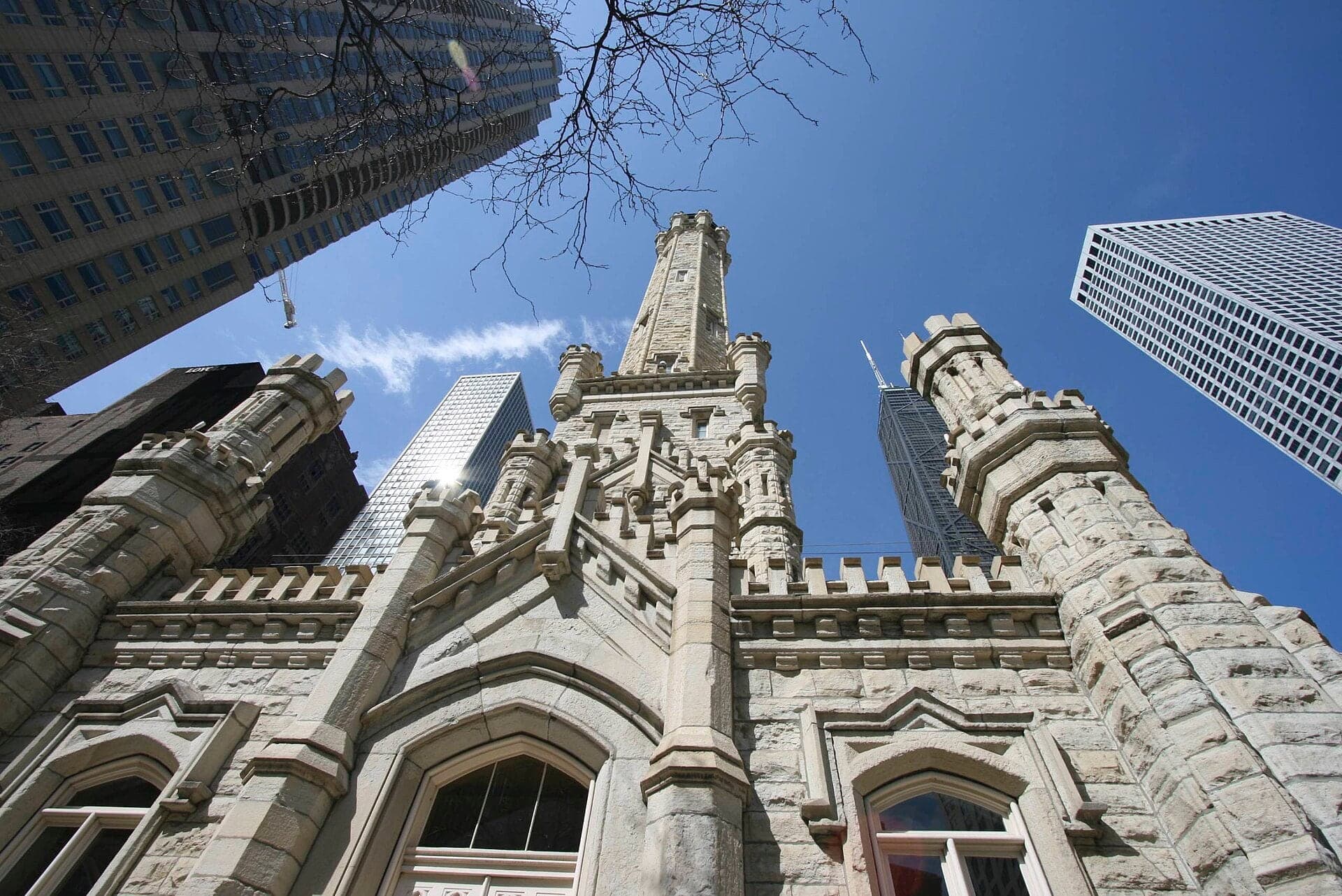
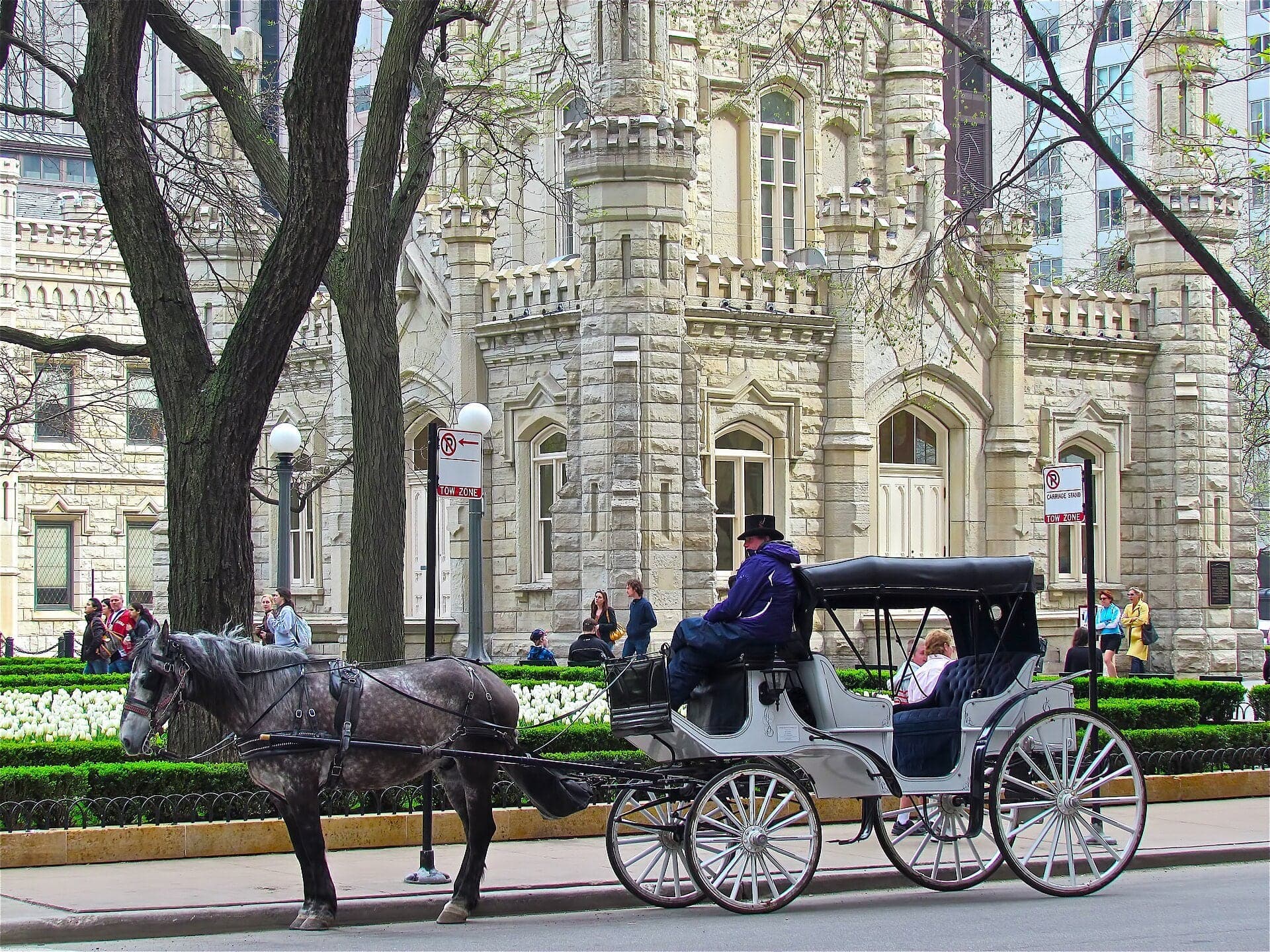
Water Tower: A Pipe in a Castle Costume
A limestone castle hiding a tall pipe. This tower and its pumping station were the only public buildings left standing in the Great Fire's path.
- 3
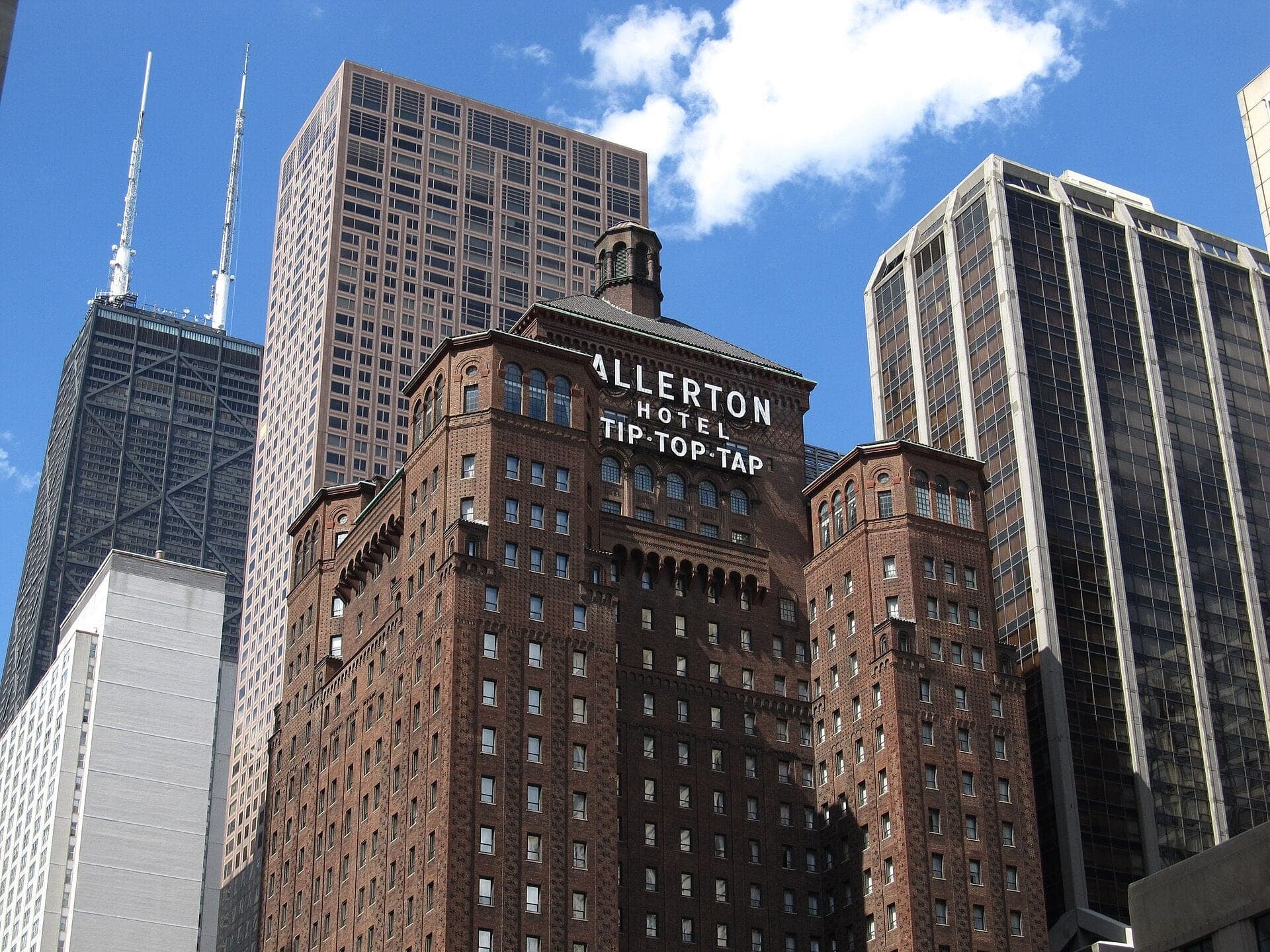
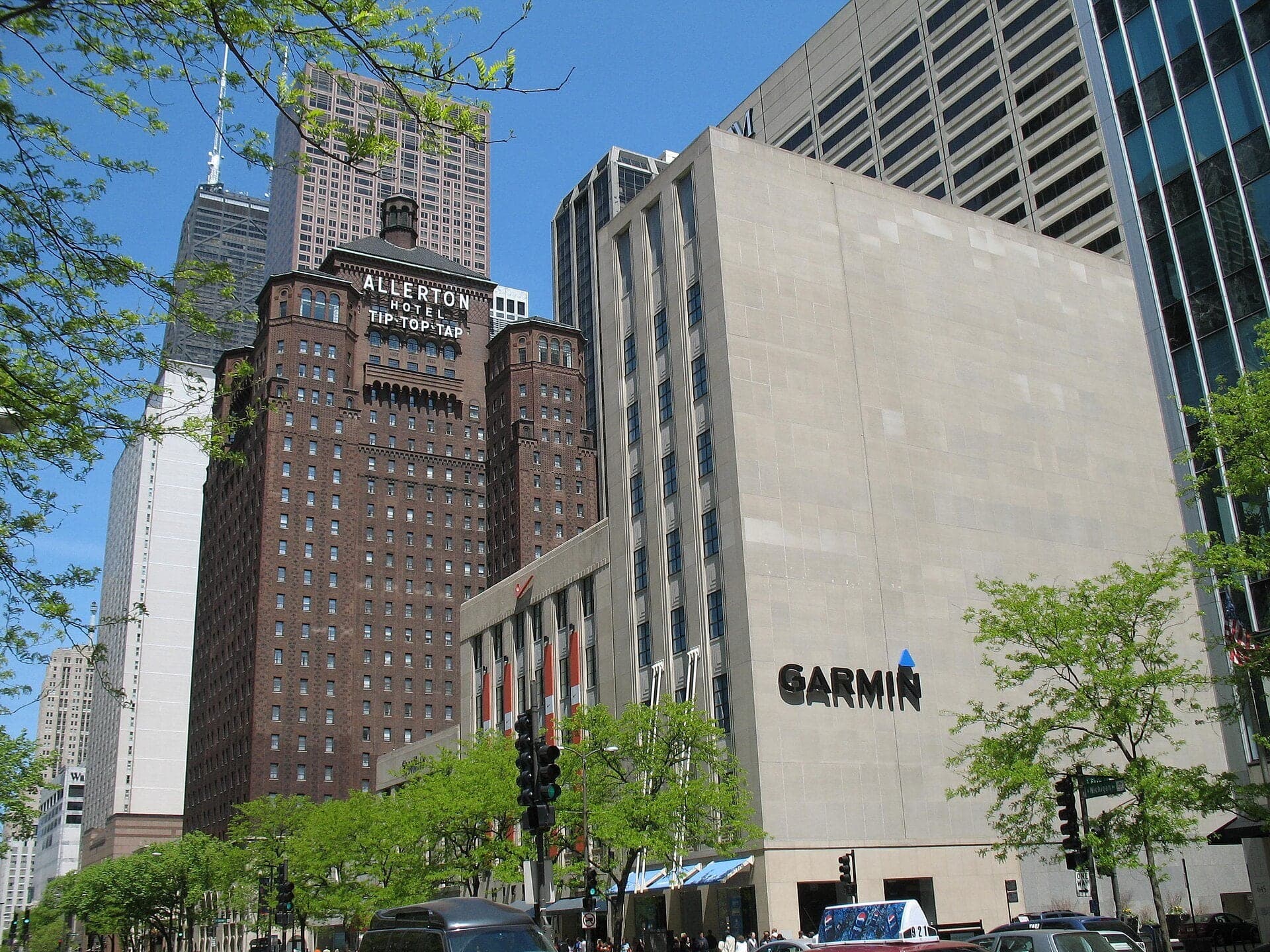
Allerton Hotel: Stepping Back Before the Law
A 1924 hotel stepped back as it rose before any law required it. Its brick tower ends in a crown of little Italian-style towers.
- 4
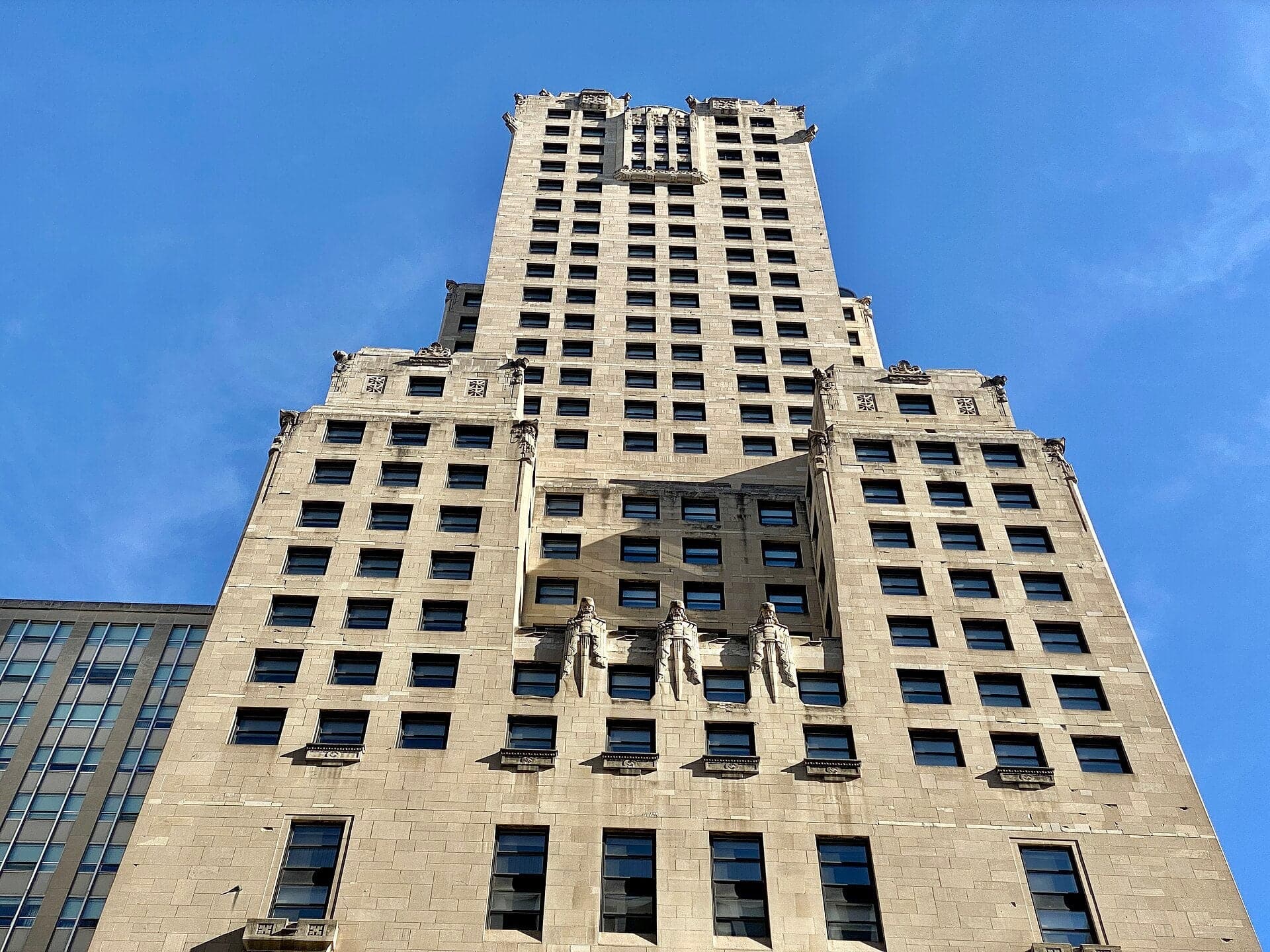
Medinah Athletic Club: Same Avenue, Different Dream
A gold dome on a 1929 club. It rose on the same avenue as the Allerton, with a very different dream.
- 5
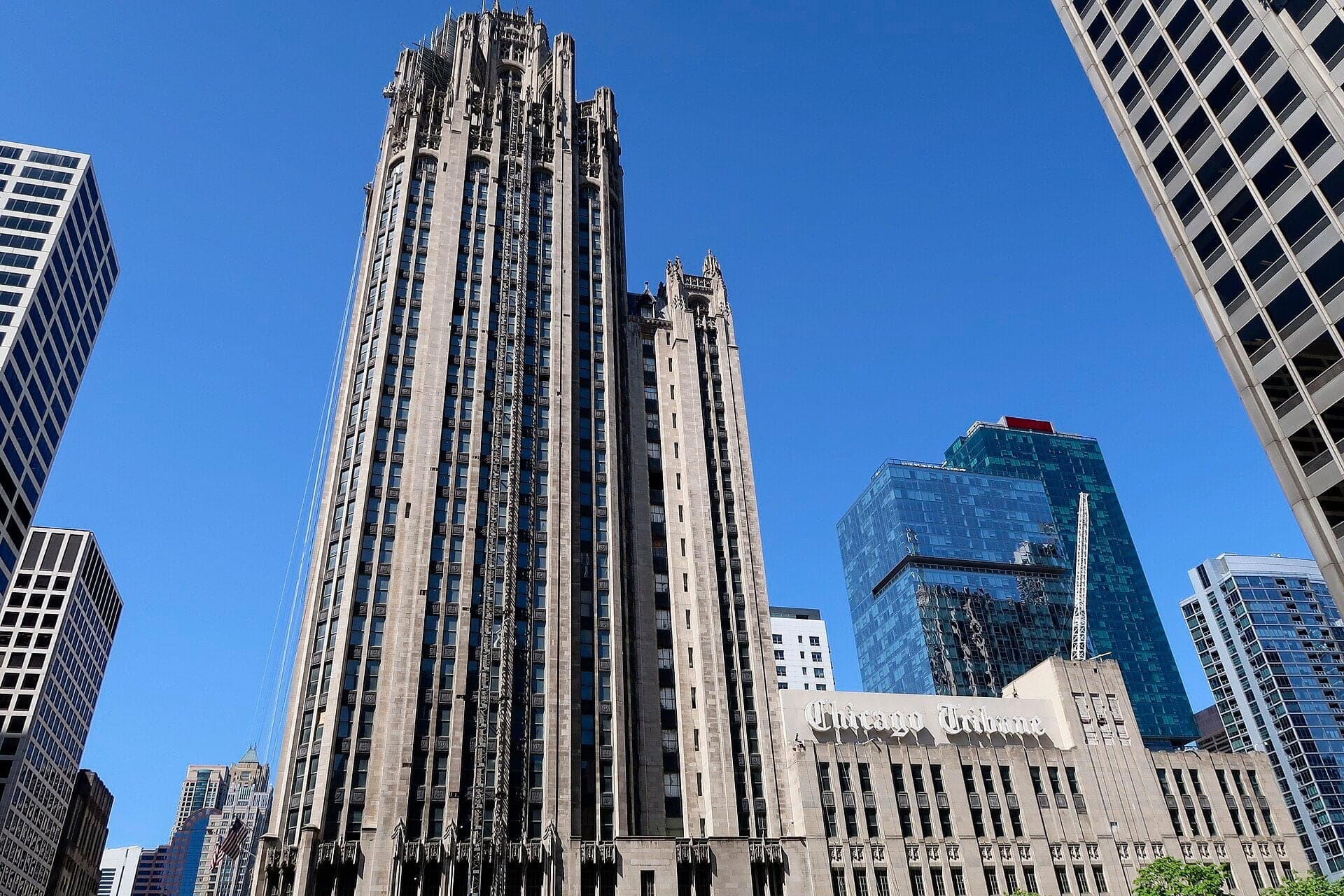
Tribune Tower: A Gothic Crown and a Wall of Souvenirs
A Gothic tower won in a 1922 contest. It now wears stones taken from famous places around the world.
- 6
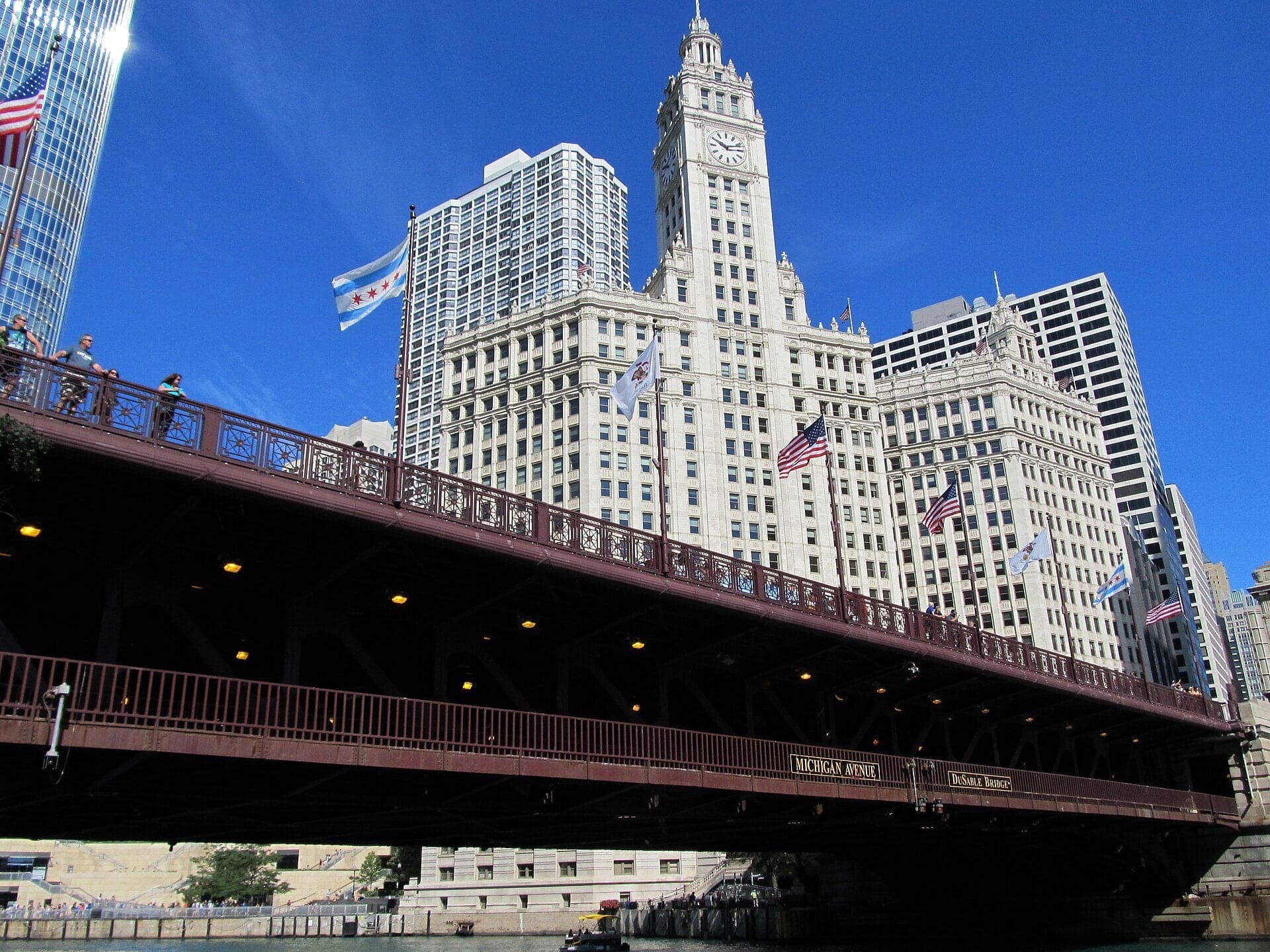
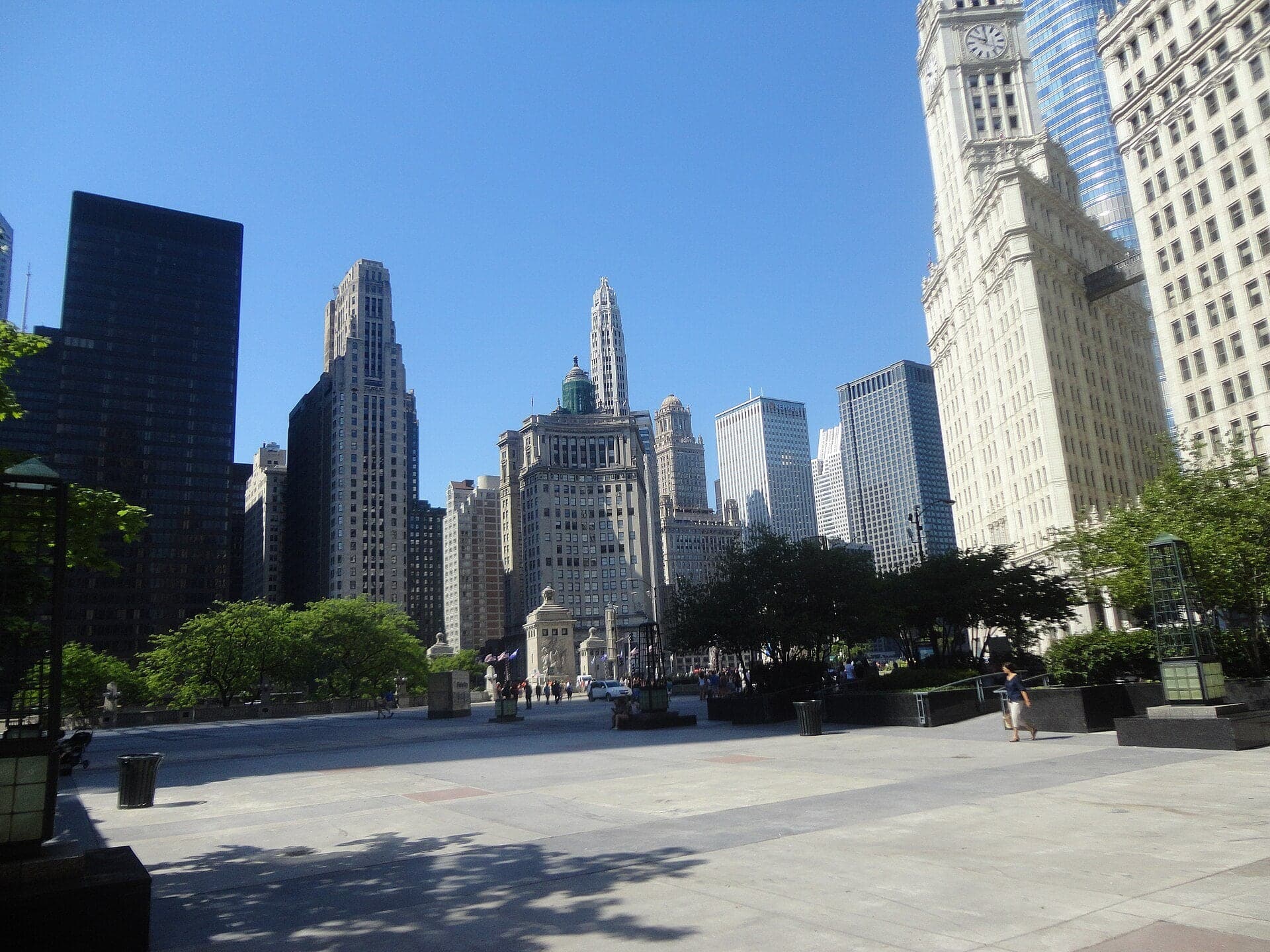
DuSable Bridge and the Wrigley Building: A See-Saw That Made a Street
A 1920 bridge that made the avenue. It tips up like a see-saw, beside a tower of white terra cotta.
- 7
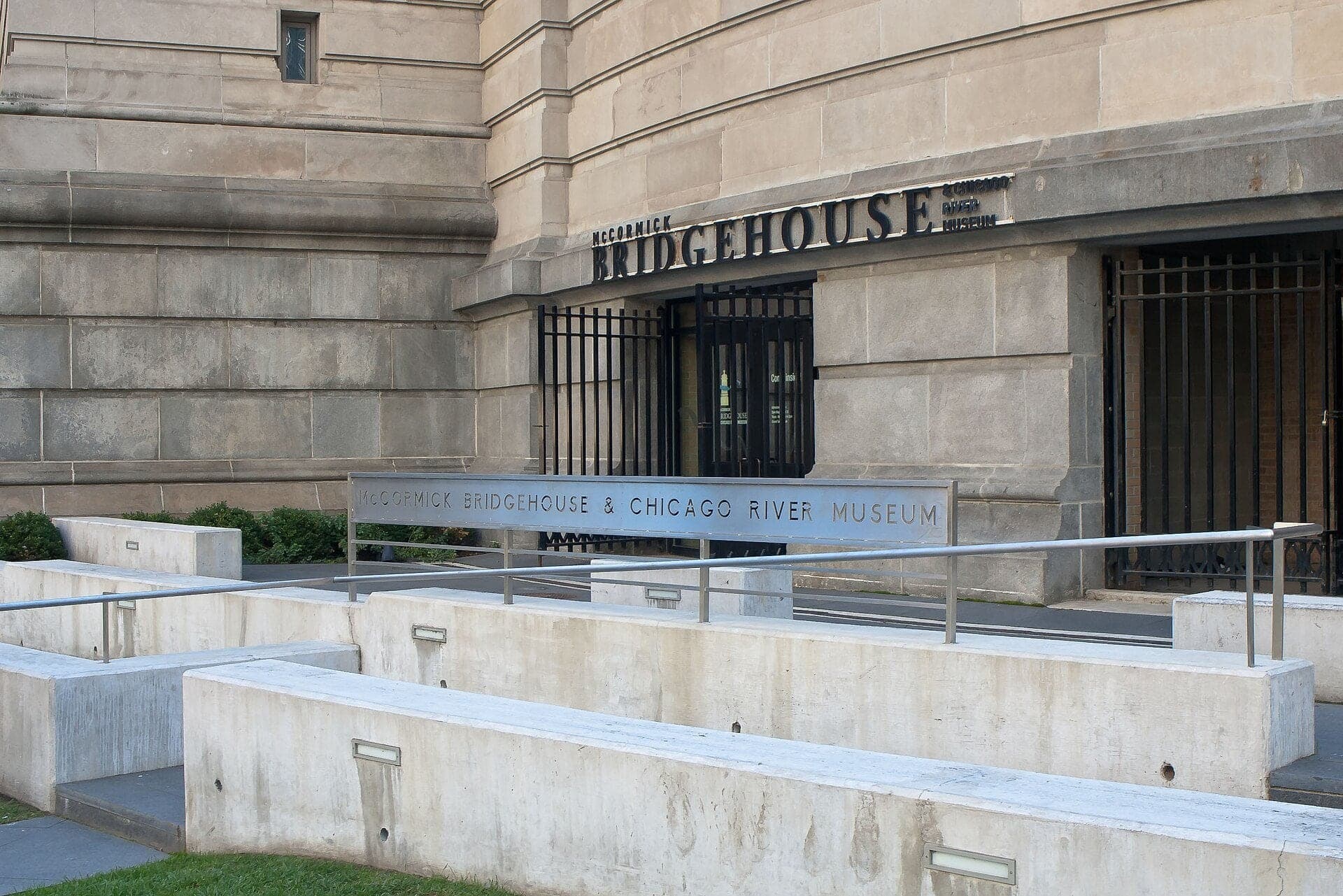
McCormick Bridgehouse: The River Sent Backward
Chicago sent its river backward. Down here at water level, you look back at the bridge.
- 8
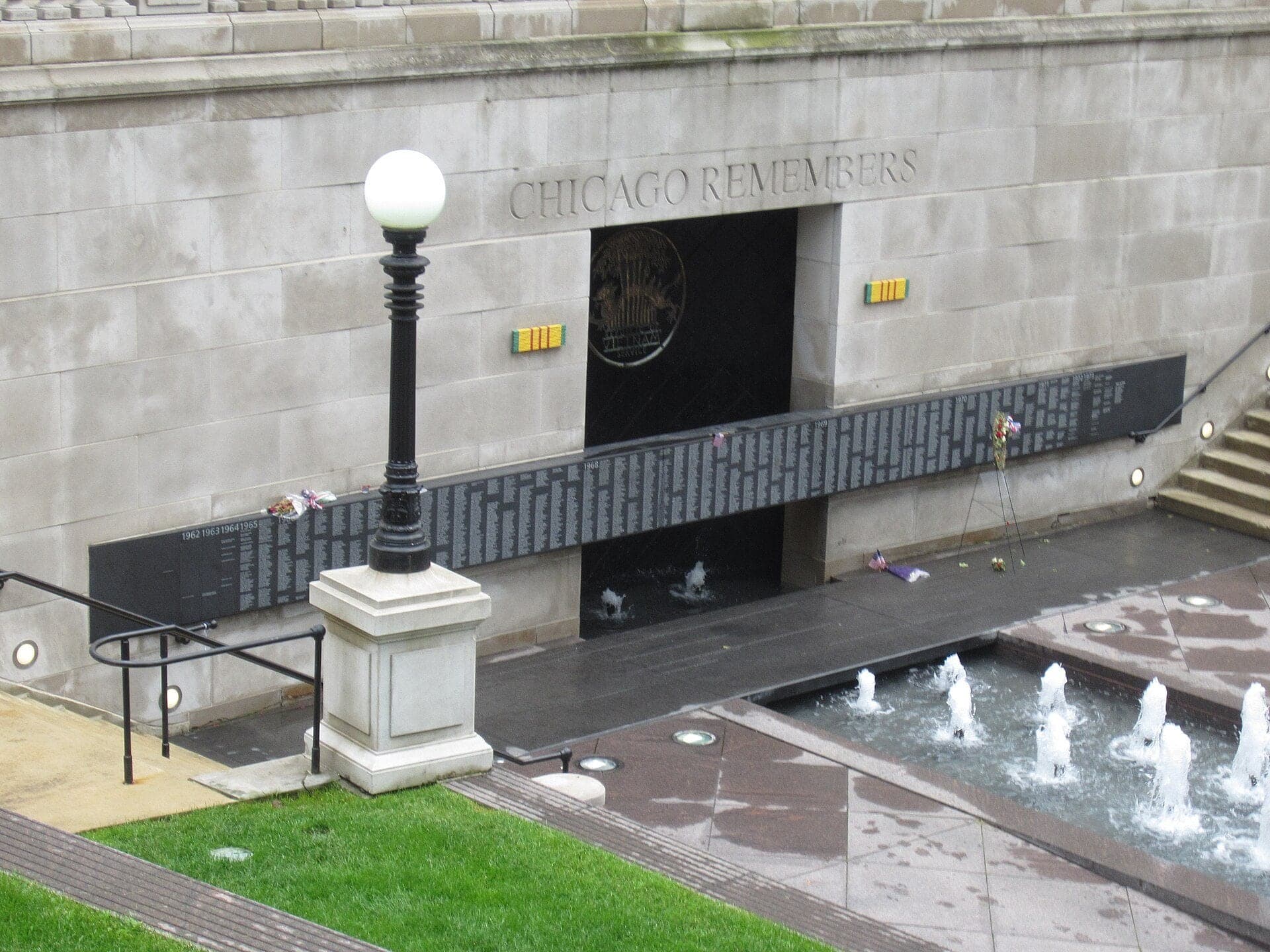
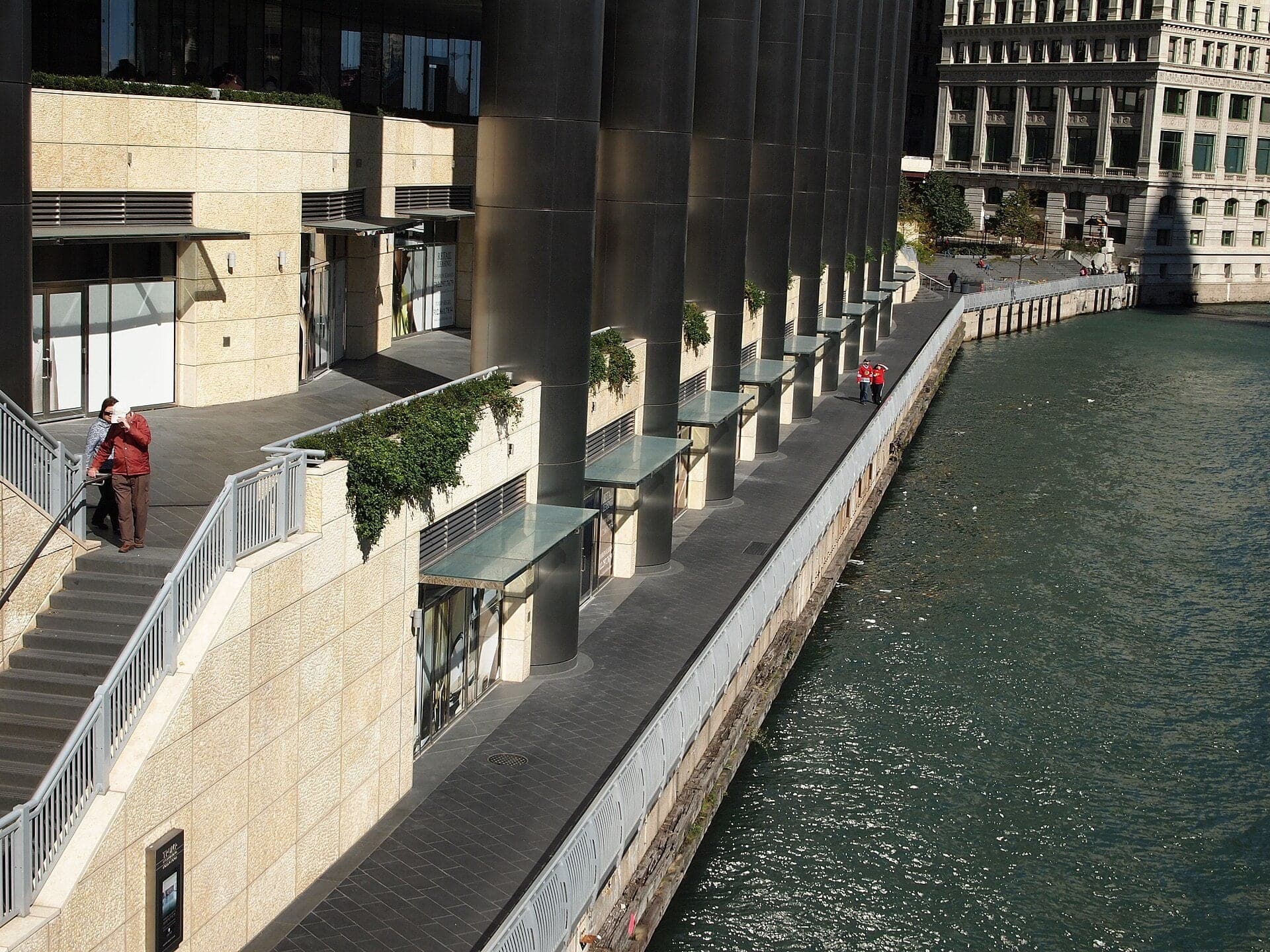
Vietnam Veterans Memorial: Where the Street Meets the Water
A memorial below Wacker Drive. Across the water, a glass tower steps back in stages toward the river.
- 9
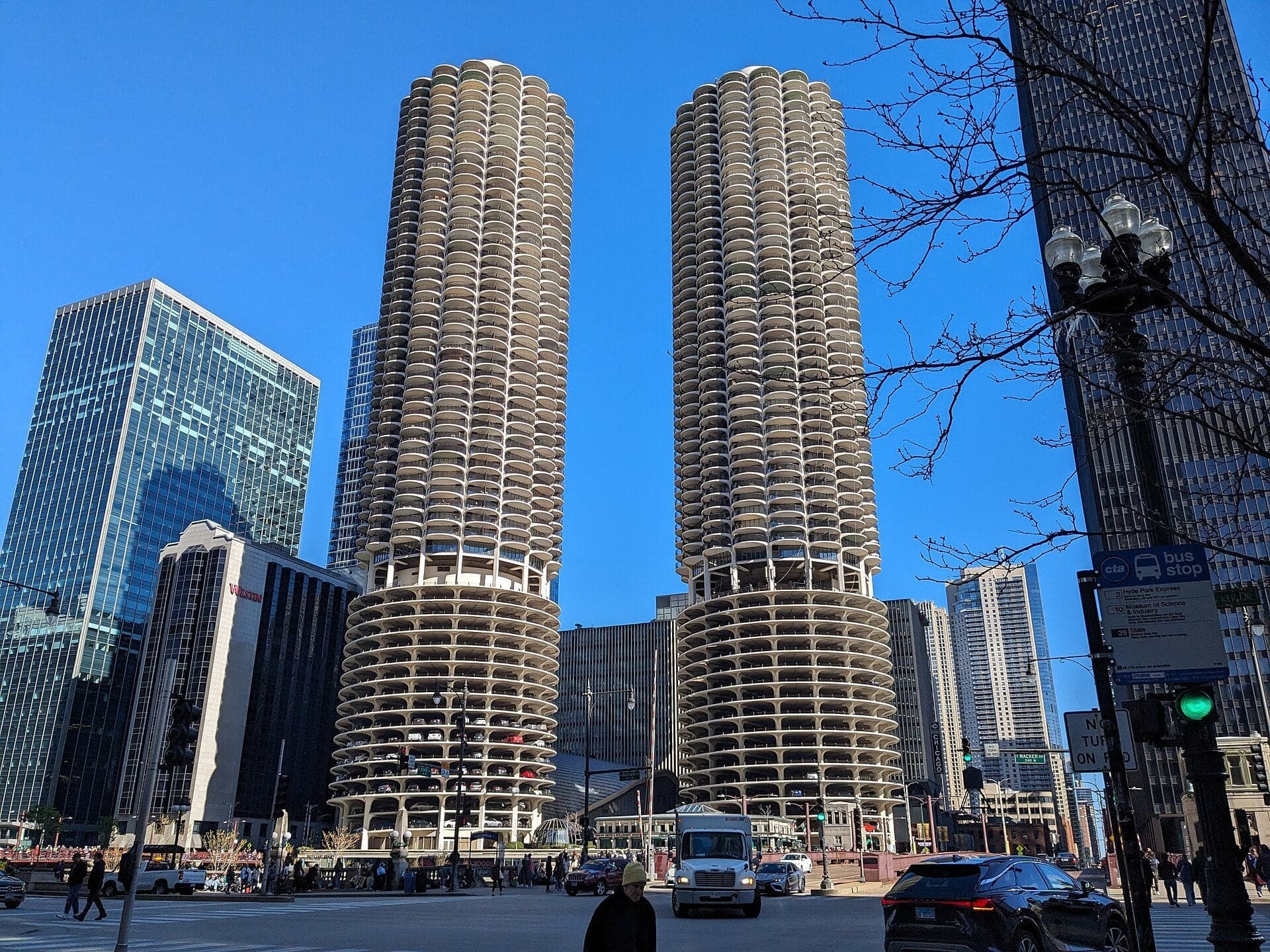
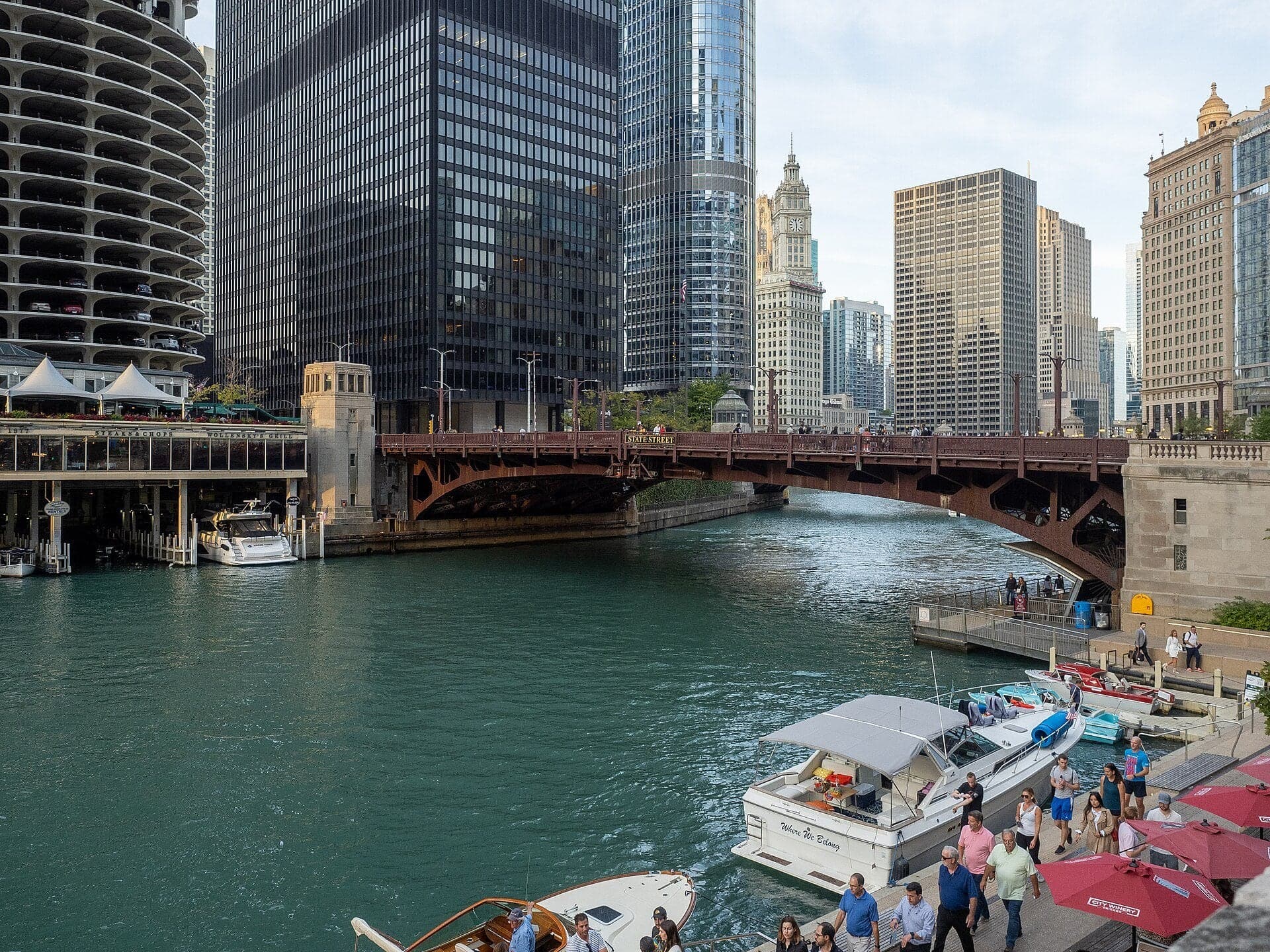
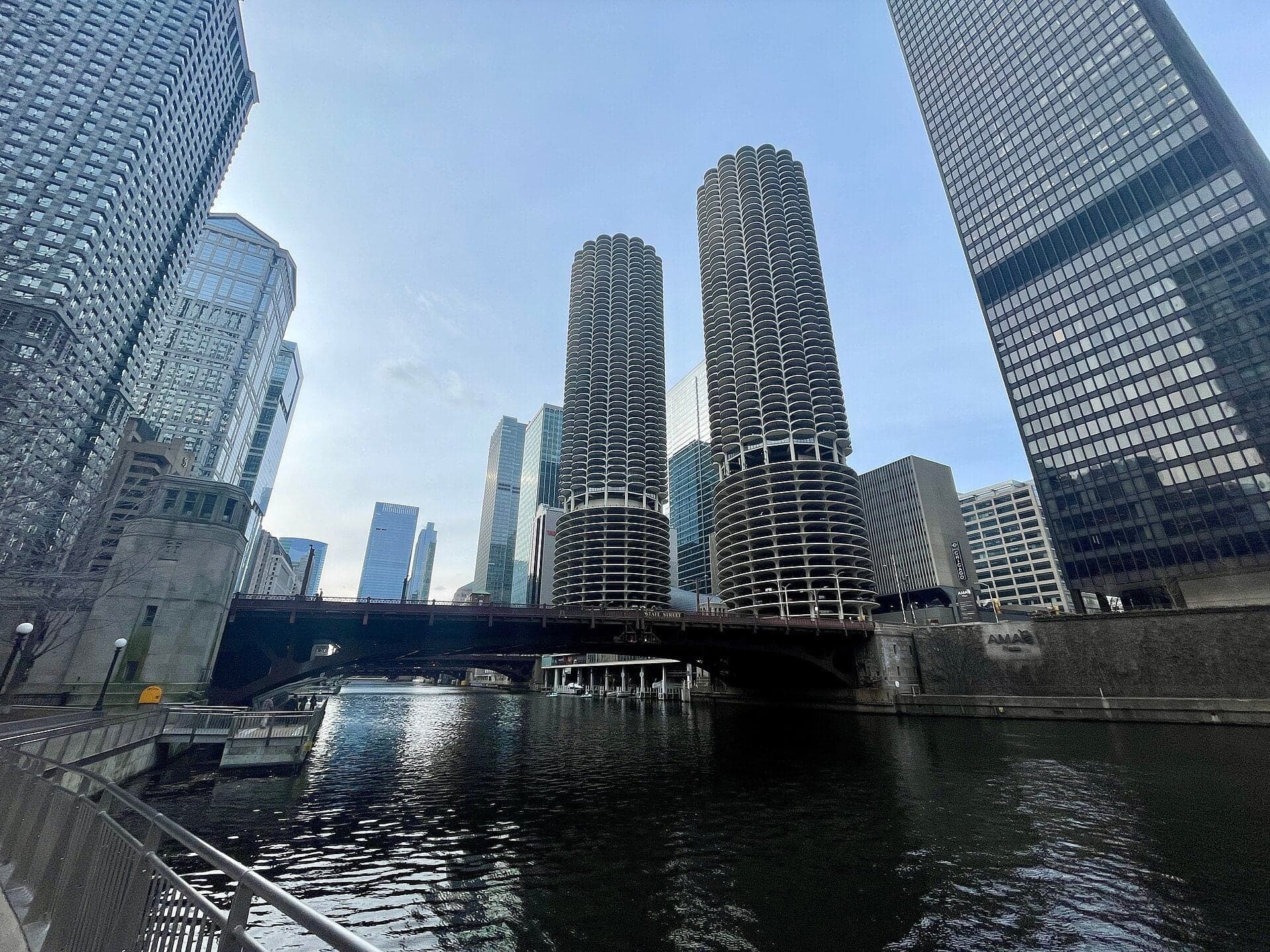
Marina City: Two Concrete Sunflowers
Two round towers on the river. The first nineteen floors are a spiral parking ramp.
- 10
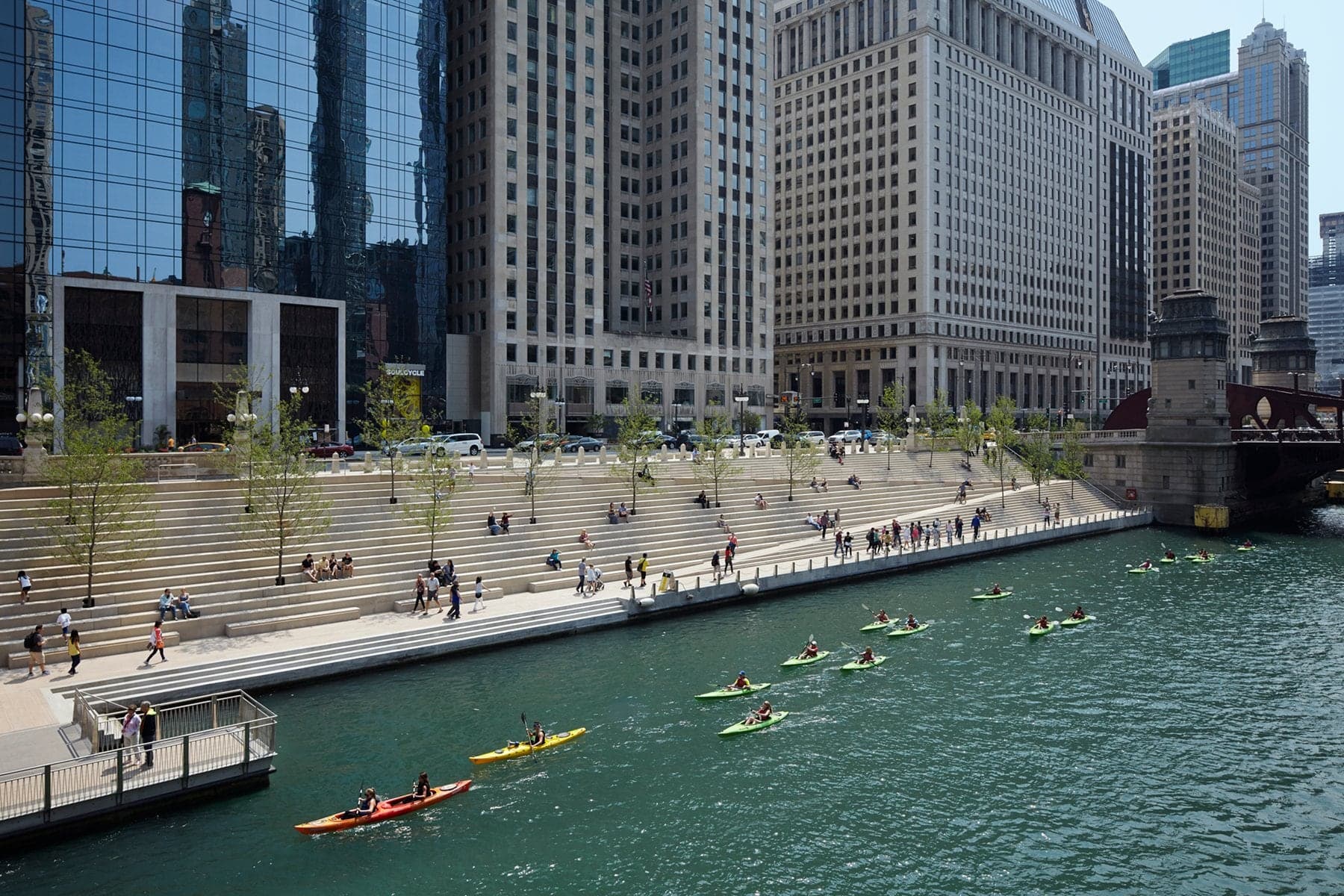
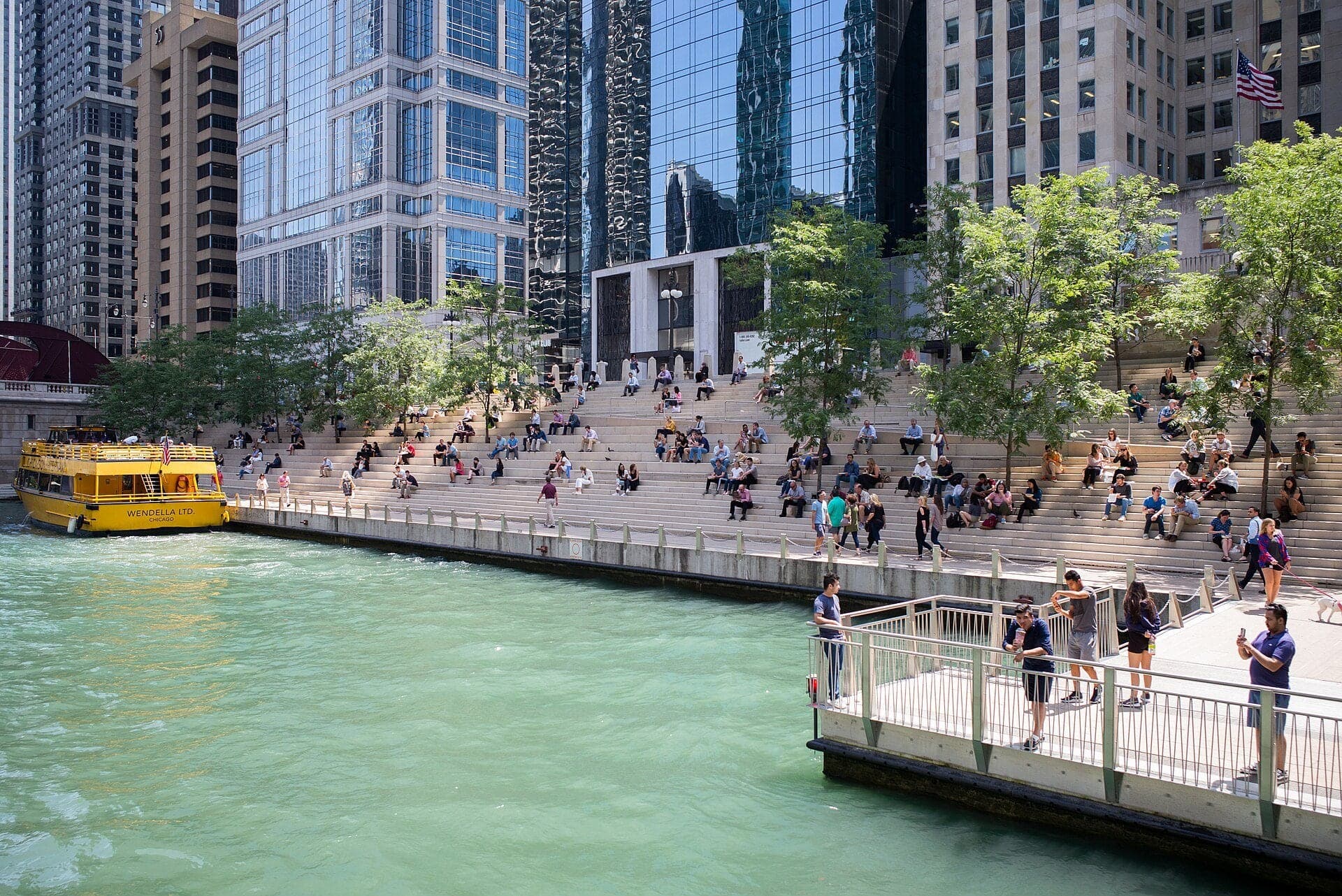
River Theater: A Park Built to Flood
Seat steps down to the water. This park was built out into the river, and it is meant to get wet.
- 11
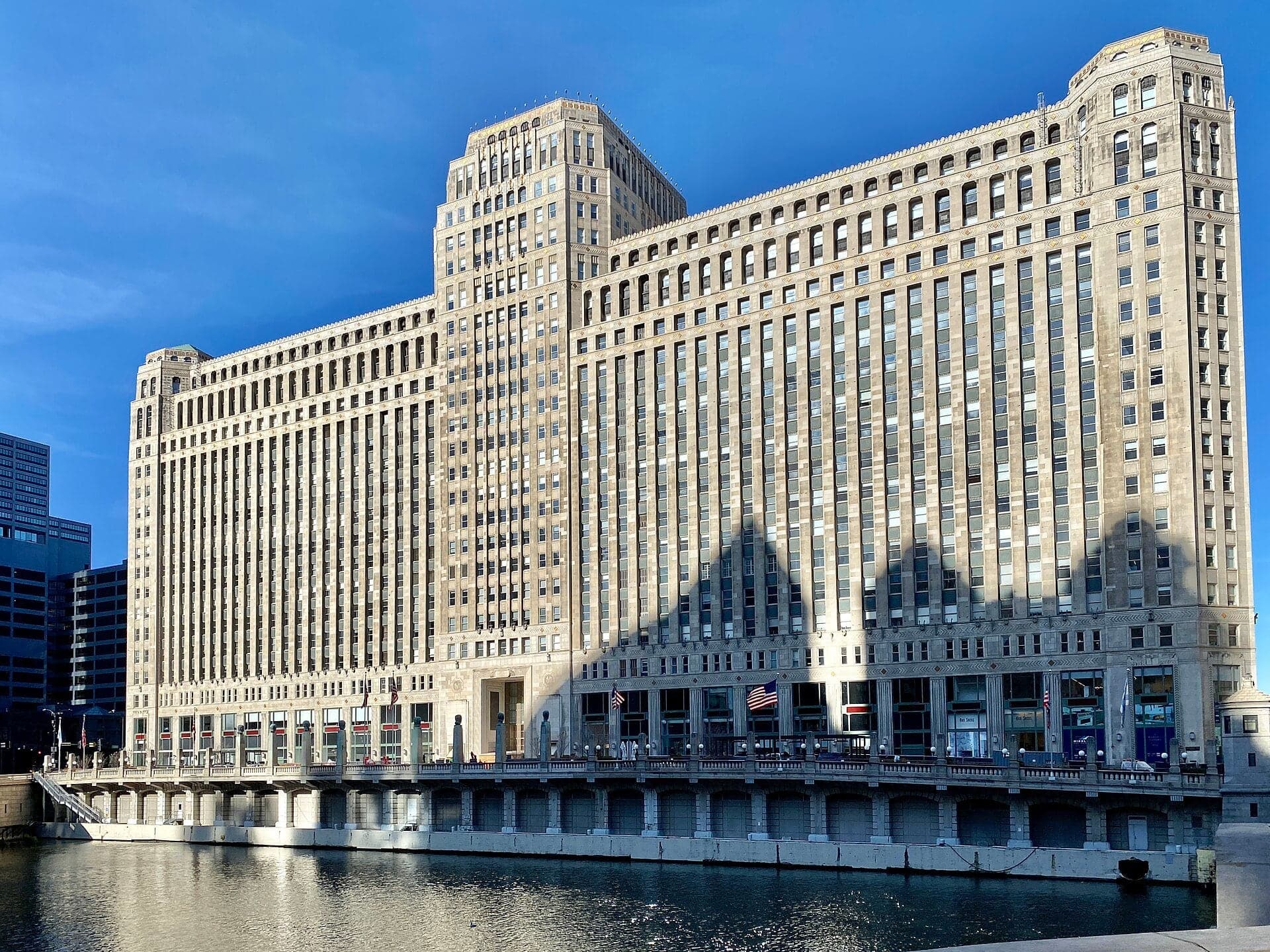
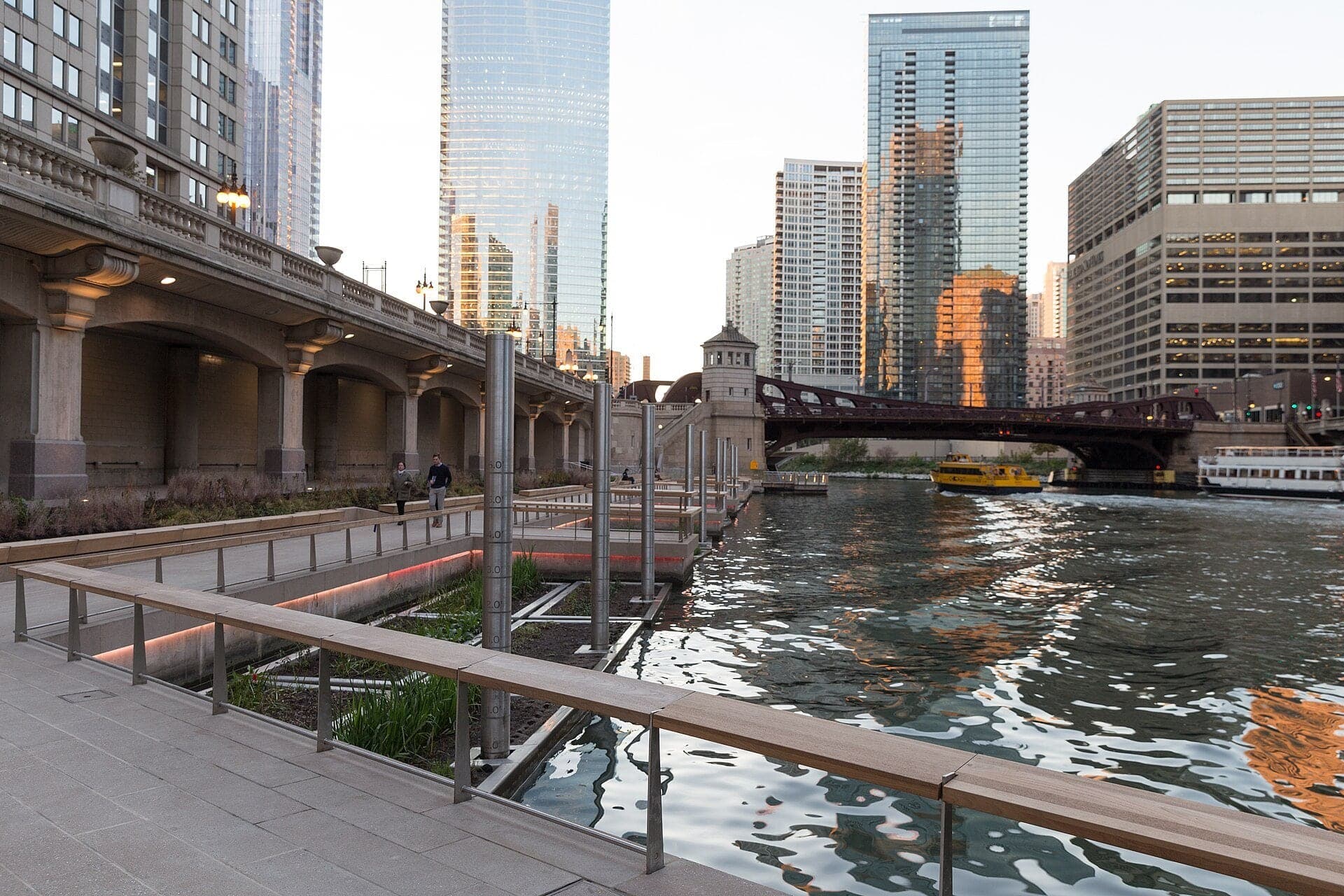
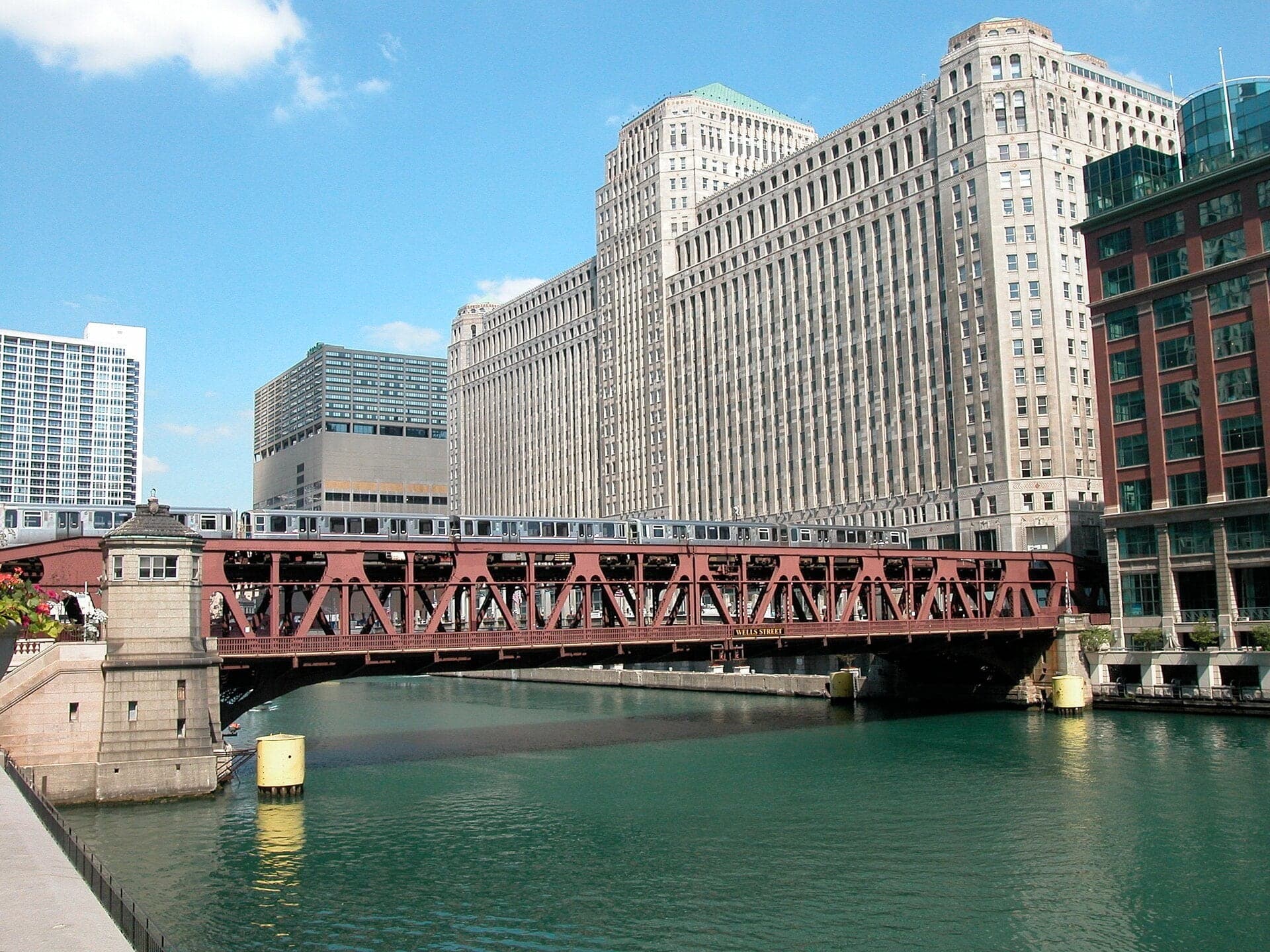
The Jetty and the Merchandise Mart: Floating Gardens and a Giant
Floating gardens on the river. Across the water, a limestone giant was once the largest building in the world.
- 12
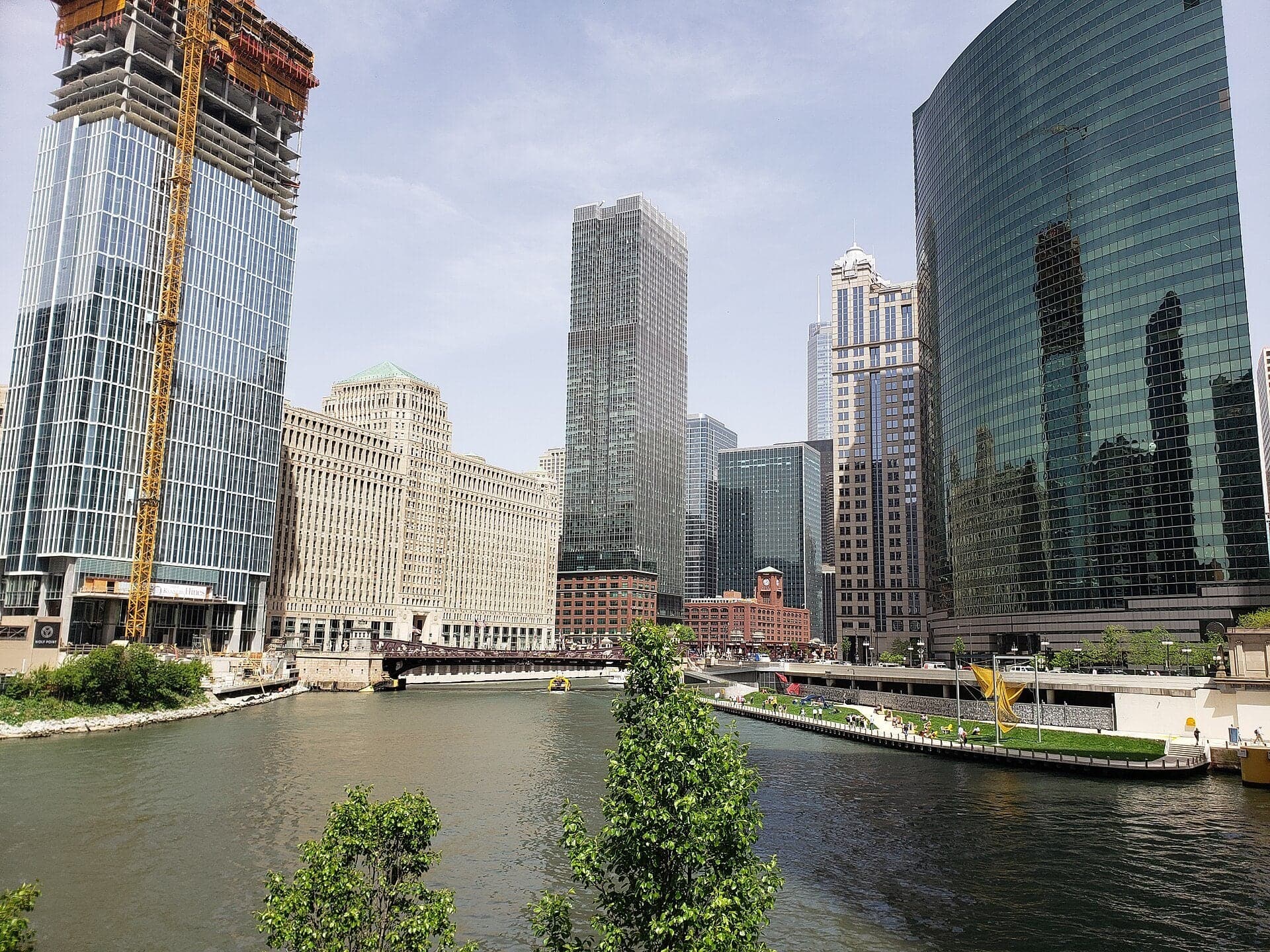
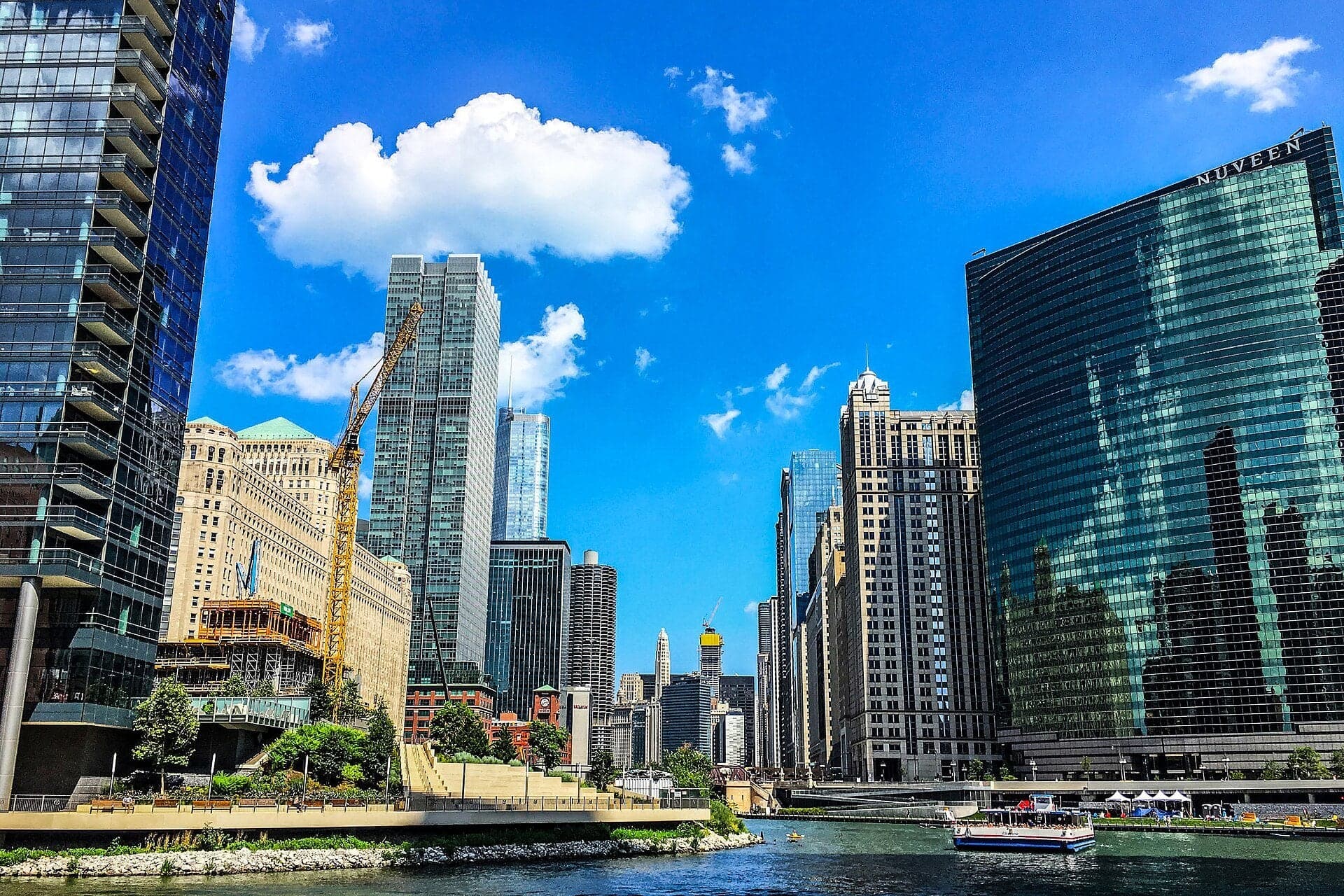
333 West Wacker and the Confluence: A Building Bent to the River
A glass tower bends with the river. Here the river's branches meet, and the Riverwalk ends.
Details
Best Time to Visit
A weekday morning keeps the Magnificent Mile sidewalks calmest, and late afternoon puts warm light on the Riverwalk's north bank. The Riverwalk is open 6 a.m. to 11 p.m. (checked 4 October 2026). To catch the Art on theMART projection from the Jetty, finish by 7:30 p.m. on a Thursday to Sunday through 27 December 2026; start about 5:45 p.m. for a 100-minute walk. Spring and fall add a bridge lift, which is worth planning around.
Pro Tips
- •Fall 2026 bridge lifts, from the city's schedule (checked 4 October 2026): Wed 7 Oct 9:30 a.m.; Sat 10 Oct 9:00; Sat 17 Oct 9:00; Tue 27 Oct 9:30; Thu 29 Oct 9:30; Sat 31 Oct 9:00; Wed 4 Nov 9:30; Sat 7 Nov 9:00; Sat 14 Nov 9:00. Each lift takes an average of 8 to 12 minutes. Spring 2027 dates are announced each spring.
- •The McCormick Bridgehouse and Chicago River Museum is open Wednesday to Sunday, 10 a.m. to 5 p.m., until Sunday 25 October 2026, then closed until spring 2027 (checked 4 October 2026).
- •360 CHICAGO, the Hancock observation deck, is open daily 9 a.m. to 11 p.m., last entry an hour before closing; adult tickets start around $27 online and more at the gate (checked 4 October 2026).
- •Art on theMART is free to watch from the Jetty, between Wells and Franklin Streets: Thursday to Sunday, 7:30 to 8:00 p.m., 10 September to 27 December 2026 (checked 4 October 2026).
- •On Saturday 21 November 2026 the Magnificent Mile Lights Festival closes North Michigan Avenue and Upper Wacker in the afternoon and evening (reported as 3 to 7:30 p.m.); confirm on the festival's own site before you plan around it.
- •The walk ends at the Riverwalk's west end. The ramp up to Wacker Drive is on the west side of Franklin Street; from the top, the Clark and Lake and Washington and Wells L stops are east, and the Merchandise Mart station (Brown and Purple lines) is to the northeast, across the river.
Safety & Precautions
- •The route down to the Riverwalk, at the south end of the DuSable Bridge, is two short flights of stairs, and there is no verified step-free way at this spot. For a step-free walk: cross the bridge, walk west on the Wacker sidewalk to State Street, take the ramp on the east side of State Street down to the Riverwalk, and walk back east about fifty metres to the Vietnam Veterans Memorial before turning west again. The City lists ramps on the east side of State Street, the west side of Clark Street and the west side of Franklin Street; the Riverwalk has no elevators (checked 4 October 2026). Stop 7 can be played from Upper Wacker.
- •The lower Riverwalk is built to flood and the City closes it in high water (it closed in the July 2023 storm); closures are posted the day of. If the lower walk is closed, stay on Upper Wacker for the same views of stops 7 to 12.
- •When a bridge lifts, its sidewalk gates close for about 8 to 12 minutes; the DuSable Bridge is the best place to wait.
- •The Lake Street Bridge, just beyond the last stop, has been closed to vehicles and pedestrians since 6 October 2025, with completion expected in January 2028; do not plan to cross it (checked 4 October 2026). Green and Pink Line service also changes from 13 to 26 October 2026.
- •A building at 500 North Michigan Avenue, near stop 4, began conversion to apartments in July 2026, so expect hoarding or a covered walkway on the sidewalk there. Stop 4 looks across the avenue and still works. If the west sidewalk is fenced, cross at Grand first and look at the dome from the east side.
- •Michigan Avenue is crossed three times, at the lights: at Delaware Place, at Grand Avenue, and at the Tribune Tower. The avenue's sidewalks are crowded at midday and on weekends.
- •Bicycles share the Riverwalk, with some posted walk-your-bike zones. The lower walk can be windy and cold off the water, and wet near the edge.
- •The Wrigley Building, Tribune Tower, Marina City and the Merchandise Mart are private buildings: view them from the street and the Riverwalk. Never enter anything on this walk except the places named as open to visitors.
- •Stop 10 is the site of the Eastland disaster, where 844 people died in 1915; the audio treats it plainly and briefly.
Travel advisory: Exercise Normal Precautions (Level 1).
Gallery
Related Reading
Go deeper on what you'll see, hear, and walk through.
Overview
Best Self-Guided Walking Tours in Chicago (2026)
4 min
Overview
Chicago Travel Guide: How Many Days, Getting Around, When to Go (2026)
5 min
Overview
How to See Chicago: A City That Reads as a Structural System
7 min
Overview
One Day in Chicago: A Walkable Downtown Itinerary (2026)
5 min
Thematic
Best Architecture Walking Tours in Chicago (2026)
2 min
Thematic
What to Eat in Chicago: A Food Guide (2026)
4 min
Companion
The Chicago River: A Civic Trick and the Century It Built
6 min
Companion
The Magnificent Mile: What the Street Replaced
5 min
Deep dive
The Chicago Water Tower: A Pipe in a Castle Costume
4 min
Deep dive
Tribune Tower: The 1922 Competition That Shaped a Decade
5 min
Read the walk
The full story of Chicago Riverwalk: From the Magnificent Mile Down to the Water, in words. Prefer to listen? Play it narrated, from home or on location.
Introduction
Chicago, the great city of the American Midwest, sits where a slow river meets a very large lake, and much of how the city looks comes from that meeting. It raised its streets to drain, sent its river the other way with a canal, and built a street and a bridge to carry its business across the water.
There are twelve stops, over about a mile and a half, a little under two and a half kilometers, in about an hour and forty minutes at an easy pace. It begins high on the Magnificent Mile, on Michigan Avenue, with a tower braced by steel X's, the water tower that stood through the Great Fire, hotels and clubs from the nineteen twenties, and a Gothic newspaper tower set with stones from around the world. Then it crosses the river on a bridge that tips up like a see-saw, goes down a flight of stairs, and follows the Riverwalk west at the water's own level, under one bridge after another, to the point where the river's branches meet.
Three people travel with you. Fazlur Khan engineered the steel X's of the Hancock Center. Edward Bennett designed the bridge, and the stairs beside it. Bertrand Goldberg designed the two round towers on the far bank. In this city, buildings show how they stand up, and bridges show how they move.
When you reach Michigan Avenue and Delaware Place, begin with stop one.
1. Hancock Center: A Tower That Shows How It Stands Up
Welcome to Chicago, and to Michigan Avenue at Delaware Place. Walk on to the sidewalk beside the plaza and stop there. The tower rising right above you is the Hancock Center. Its observation deck, Three Sixty Chicago, is ticketed and worth it. Prices and hours are on this stop's card, and the stop works just as well from the street.
Now tilt your head back. This is a skyscraper that shows you how it stands up. Across every face run huge steel diagonals, big X's stacked one above another, and the whole tower narrows as it climbs. It has one hundred stories and rises about eleven hundred and thirty feet. It was built in the late nineteen sixties by the firm Skidmore, Owings and Merrill.
The enemy of a tall building is not its weight. It is the wind, and the taller a tower gets, the harder the wind pushes. The engineer Fazlur Khan answered by putting the strength in the skin. The diagonals tie the walls together so that the whole tower works as one hollow tube, stiff against the wind. He called it a trussed tube, and nobody had built one in a building before. The braces are not decoration. They are the structure, and you can read the load path with your own eyes.
Keep that look in mind: a tower you can read. Everything ahead stands up in its own way, in stone, in terra cotta, in poured concrete.
Close by, across the side street, is the Palmolive Building, a stepped limestone tower from the late nineteen twenties and a Chicago Landmark since two thousand.
When you cross, turn round once and look back at the whole tower.
Follow the route across Michigan Avenue at the lights. Next, a stone tower that stood through the fire.
2. Water Tower: A Pipe in a Castle Costume
Walk on until the little stone tower in the plaza is in full view, and stop there. Its twin in stone, the Pumping Station, is across the avenue.
Look at the stone first. Yellow limestone, a thin tower with turrets and tiny battlements, a castle in miniature, built in eighteen sixty-nine. Now the surprise. This is not a castle and it is not a lookout. It is a pipe. Inside stood a vertical pipe, about a hundred and thirty-eight feet high and three feet across, tied into the line from the pumps. The early pumps sent the water in surges, and the pipe let the extra pressure rise and settle. The shaft is a hundred and fifty-four feet tall: a tall pipe in a castle costume.
The water came from the lake, through a tunnel two miles out and sixty feet below the surface. The city was being lifted too. From eighteen fifty-six, buildings were jacked up, streets were raised, and new sewers were laid so that the city could drain. In places the ground rose as much as twelve feet. Chicago built high first.
Then came October, eighteen seventy-one. The Great Fire jumped the river and burned virtually the whole North Division. These two buildings were the only public buildings in the burned area to survive. The Pumping Station was gutted, though its walls stood, and its machinery was so badly damaged that the city's water supply was virtually cut off for eight days. The tower came through scarred but almost intact. The fire burned all around them.
Demolition was proposed in nineteen oh six, in nineteen eighteen, when the avenue was being widened, and in nineteen forty-eight. Each time, the tower stayed.
Follow the route past the tower and on down the avenue. Next, a hotel that stepped back before the law told it to.
3. Allerton Hotel: Stepping Back Before the Law
Walk on until the dark red tower is across the avenue, and stop there. That is the Allerton Hotel.
Here is a look to learn, because the walk uses it again. Start at the bottom: a base of stone, three stories high. Above it, dark red brick with round-arched windows. Then the building steps in as it rises, up to a crown of little towers that the architects meant to recall picturesque Italian ones. That stepped outline is called a setback.
The Allerton went up from nineteen twenty-two to nineteen twenty-four. When its permit was issued, in January nineteen twenty-three, Chicago had no zoning law at all. The height limit was about two hundred and sixty feet, and a building could rise to it straight up. The Allerton stepped back anyway. The city's landmark report calls it the first building in Chicago built with a pronounced setback and towers, a form repeated in skyscrapers over the next decade. Its owners brought the idea from their New York hotels, where a nineteen sixteen law required it.
Soon the law caught up. Chicago's nineteen twenty-three zoning ordinance let a tower rise above a tall base only if it filled a quarter of the lot or less, a formula that rewarded setbacks.
The Allerton was also a club hotel for men, with a library, a grill room, and a miniature golf course in the basement.
Now a long stretch of avenue. North of the river this was once a narrow street called Pine Street, lined with rowhouses and small shops. It was widened between nineteen sixteen and nineteen twenty, as part of the nineteen oh nine Plan of Chicago, and in nineteen eighteen a business weekly predicted it would become one of the most fashionable shopping streets in the world. Stop four is a good walk on.
Follow the route south along the avenue. Next, another club, with a very different dream.
4. Medinah Athletic Club: Same Avenue, Different Dream
Walk on to the corner at Grand Avenue and stop there. Across the avenue, look up for a tall, stepped tower with a gold, onion-shaped dome on top. Keep your eye on that dome. The tower beneath it is the Medinah Athletic Club, now a hotel, the InterContinental.
The Allerton, a few minutes back, was a club hotel for men with a library and a grill room. This was a clubhouse for Shriners, three and a half thousand members by the Chicago Tribune's count in nineteen twenty-nine, and it dreamed bigger. The architect, Walter Ahlschlager, built it more than forty stories high. Like the Allerton, it steps back as it climbs. But where the Allerton wore little Italian towers, this one wears a Moorish dome in gold.
The mix does not stop at the top. In nineteen eighty-nine the Tribune called the building an attempt to trace the course of civilization, through Greek, Roman, Assyrian, Celtic, medieval, Spanish and Renaissance styles.
It opened in April nineteen twenty-nine. It had a swimming pool well up the tower, over a dozen floors above the street, which the Chicago Tribune counted among the highest in the world. Five years later, in nineteen thirty-four, the club went bankrupt. A decade after that it became a hotel. In nineteen eighty-nine a restoration costing a hundred and fifteen million dollars set out to bring it back as a hotel, with the dome to be regilded.
Follow the route across Michigan Avenue at the lights at Grand, then on down the east side. Next, a newspaper's Gothic tower.
5. Tribune Tower: A Gothic Crown and a Wall of Souvenirs
Walk on to the plaza edge, at the foot of the gray Gothic tower, and stop there. This is the Tribune Tower, and beside it is Pioneer Court, the open plaza. Look up first. Gray Indiana limestone over a steel frame, thirty-six stories, ending in a crown of flying buttresses that…
Full narration for this stop unlocks with the tour.
6. DuSable Bridge and the Wrigley Building: A See-Saw That Made a Street
Walk on to the bridge approach and stop there, with the white tower on your right and the river just ahead. This is the DuSable Bridge and, beside it, the Wrigley Building. The bridge first. It opened in May nineteen twenty, celebrated as the most important realization of the…
Full narration for this stop unlocks with the tour.
7. McCormick Bridgehouse: The River Sent Backward
You are at the river's own level now, so turn around and look back at the bridge from the water's edge. Two decks of steel stand stacked above the river, and at the foot of them is the stone bridgehouse. The museum inside it is open from spring to the end of October, by…
Full narration for this stop unlocks with the tour.
8. Vietnam Veterans Memorial: Where the Street Meets the Water
Walk on along the river edge until the granite memorial is close by, and stop by the water. Take a moment here. This is the Vietnam Veterans Memorial. It carries the names of more than twenty-nine hundred Illinois servicemen killed or missing in action, an engraved timeline of…
Full narration for this stop unlocks with the tour.
9. Marina City: Two Concrete Sunflowers
Walk on along the water until the two round towers stand straight across the river, and stop there. Tip your head back. These are Marina City. Look at the shapes first. Two round towers, sixty stories each, with balconies fanning out like petals all the way up. At the bottom,…
Full narration for this stop unlocks with the tour.
10. River Theater: A Park Built to Flood
Walk on to the wide steps that lead down toward the water, and stop there. This is the River Theater, one of the six rooms of the Riverwalk. The rooms are set by the bridges overhead, and each block between two bridges has its own character. The bridgehouse ahead is LaSalle…
Full narration for this stop unlocks with the tour.
11. The Jetty and the Merchandise Mart: Floating Gardens and a Giant
Walk on until you are out among the piers of the Jetty, and stop there. This is the Jetty room, between Wells Street and Franklin Street, where piers reach out over the river and floating wetland gardens are planted with native species. It is also a place to learn the river's…
Full narration for this stop unlocks with the tour.
12. 333 West Wacker and the Confluence: A Building Bent to the River
Walk on to the end of the Riverwalk, where the path bends, and stop there. Look up the bend to the glass tower: that is Three Thirty-Three West Wacker Drive. The river side of it is one smooth curve of blue-green glass, following the bend of the water. The street side is…
Full narration for this stop unlocks with the tour.