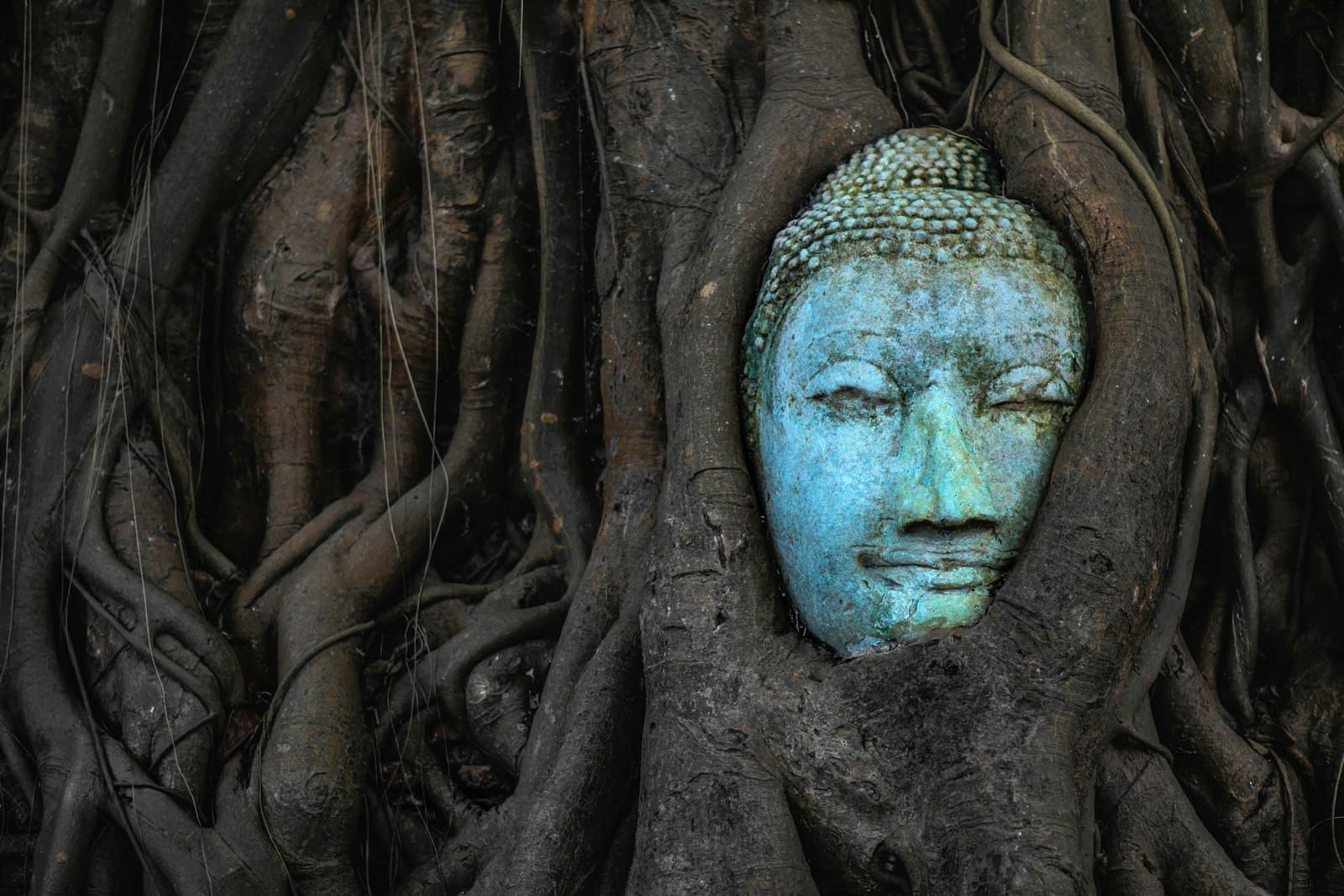
For four centuries this island city was one of the largest and richest places on earth, until a single fire in seventeen sixty-seven erased it so completely that its own bricks were carried downriver to build Bangkok. This walk reads what was lost, and why the ruins grew more powerful than the capital ever was.
Start · Wat Ratchaburana: The Looted Crypt
DirectionsStops
- 1
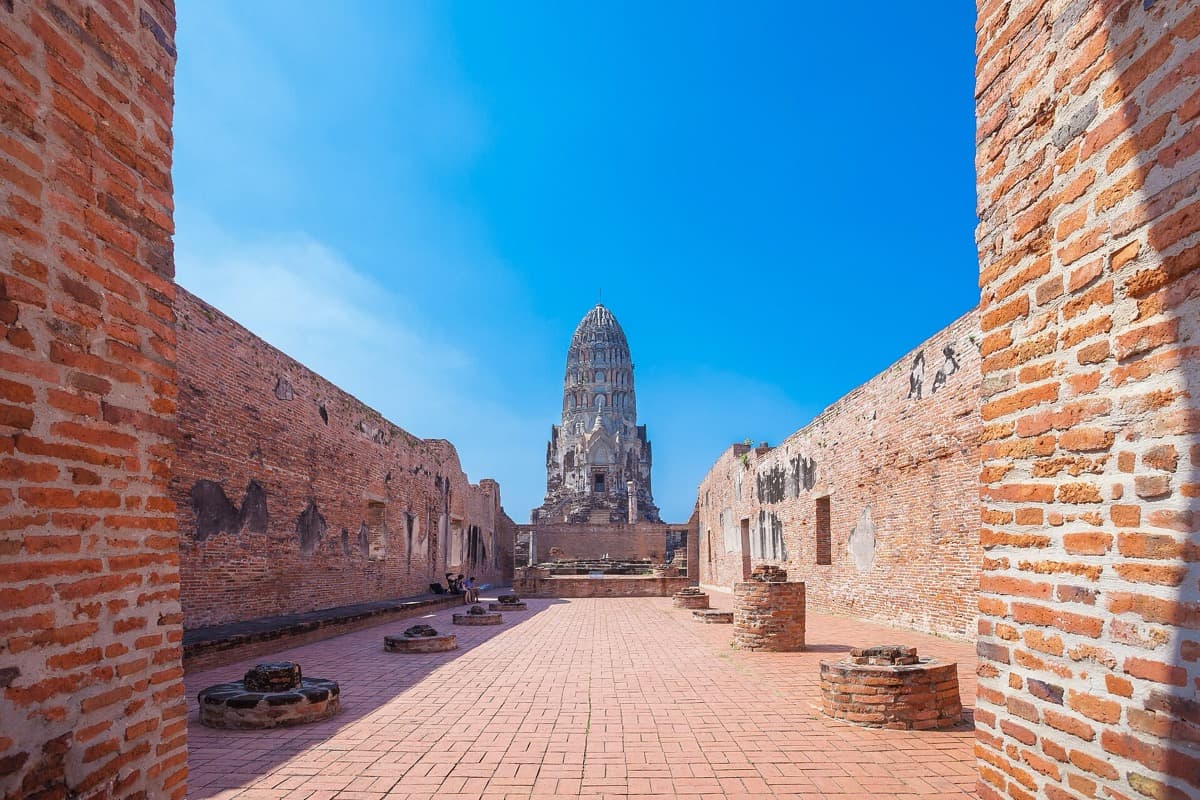
Wat Ratchaburana: The Looted Crypt
A tall central prang built over the cremation site of two princes who died duelling for a throne, its crypt famous for both its early murals and its plunder.
- 2
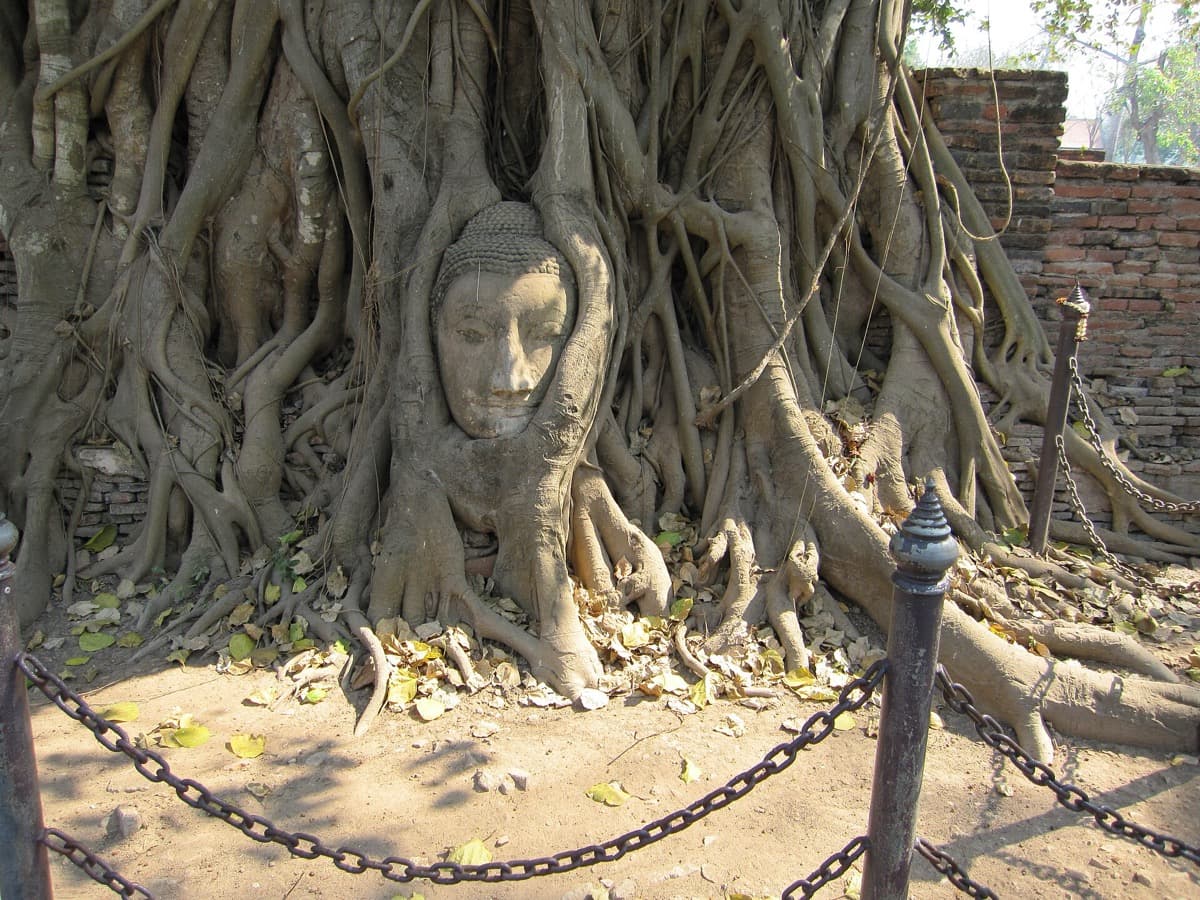
Wat Mahathat: The Head in the Roots
The old religious and political center of the kingdom, now most famous for a stone Buddha head cradled in the roots of a tree.
- 3
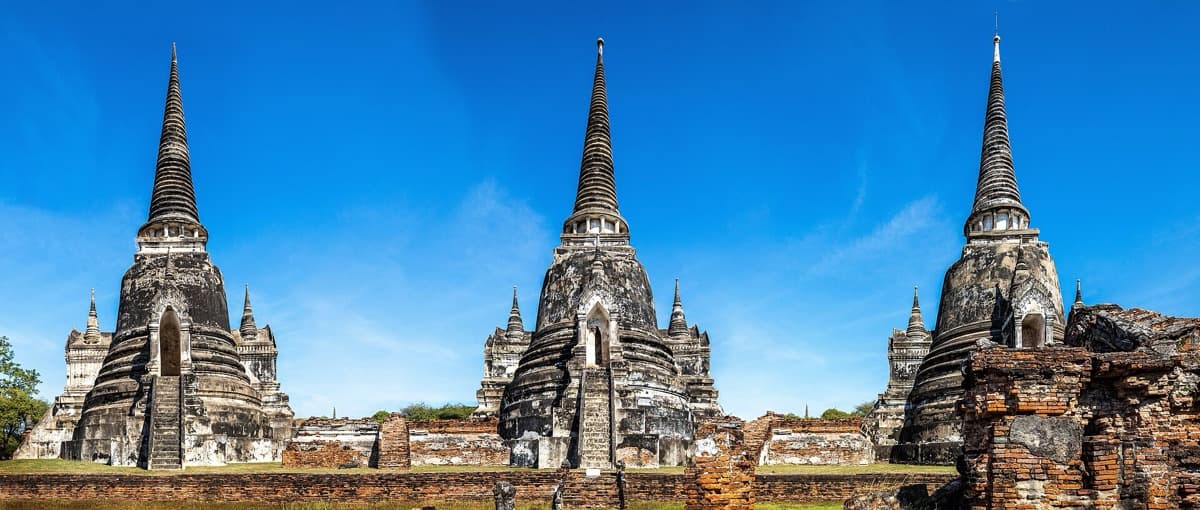
Wat Phra Si Sanphet: The Melted Gold
The king's private royal chapel, where three bell-shaped chedis hold the ashes of kings and a sixteen-metre gold Buddha once stood before the fire.
- 4
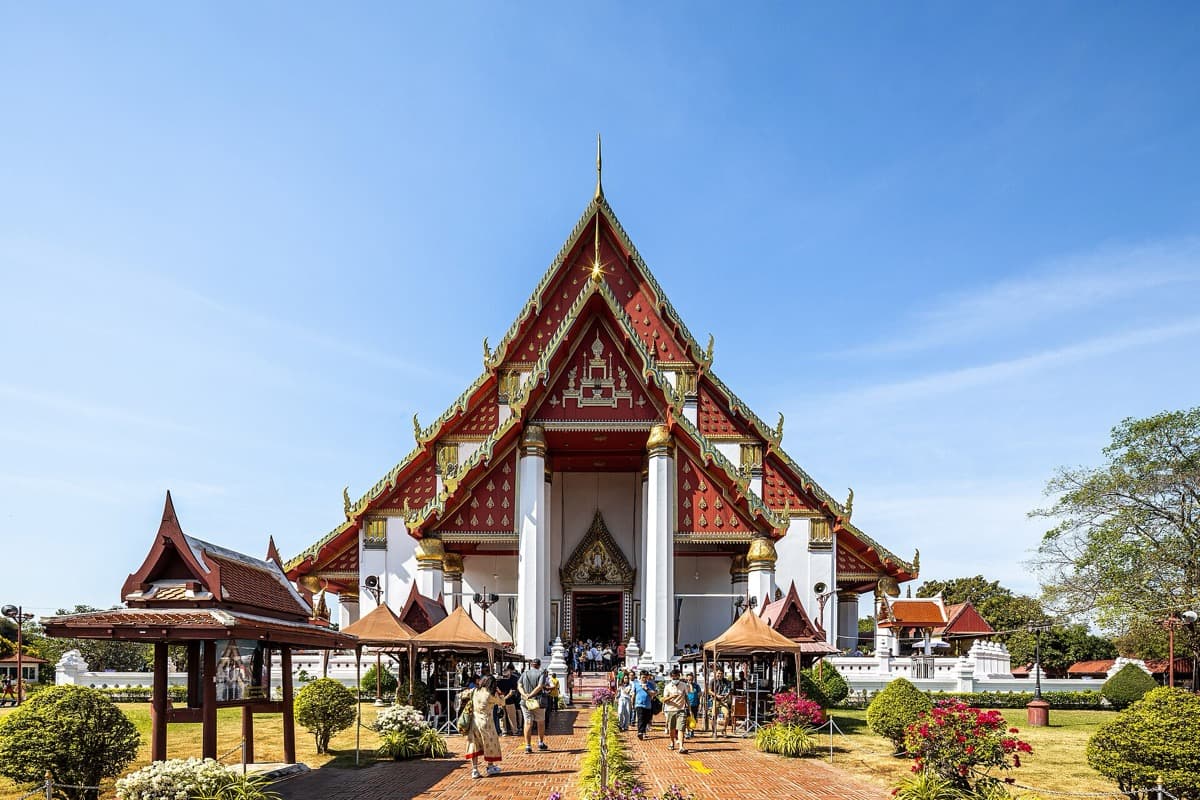
Wihan Phra Mongkhon Bophit: The Buddha That Outlived the Fire
A large active hall sheltering one of the largest bronze Buddha images in Thailand, an image that lost its head and arm in the fall of the city and was pieced back together.
- 5
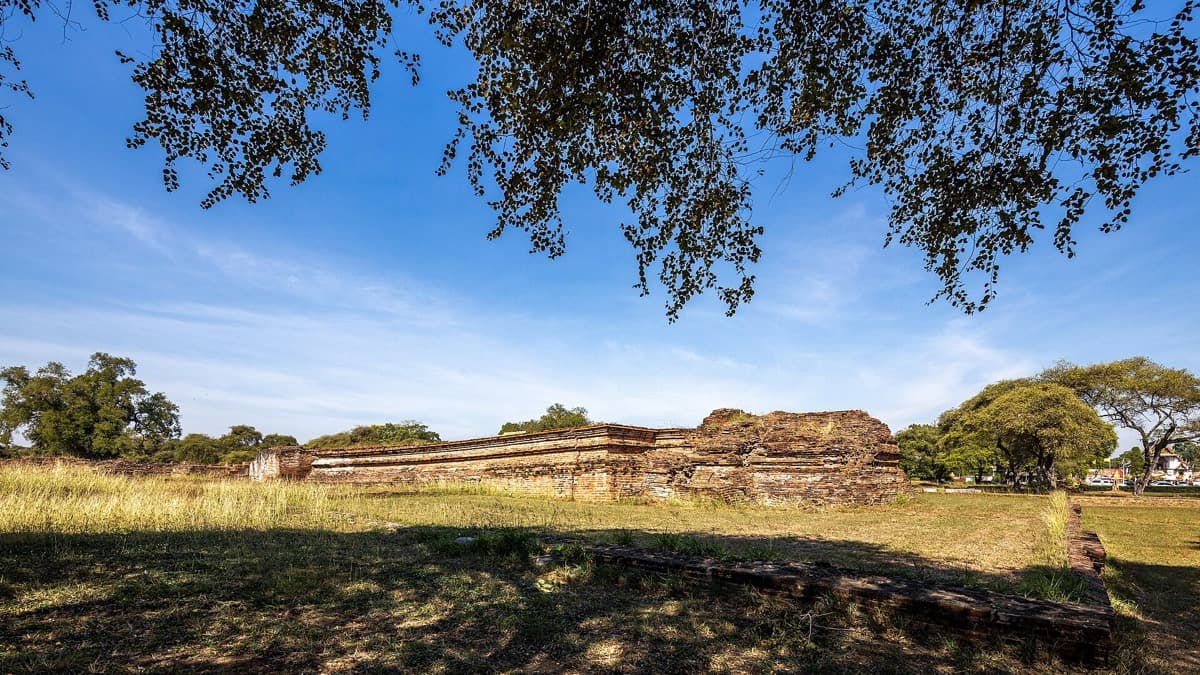
Ancient Royal Palace (Wang Luang): The Foundations That Became Bangkok
Bare brick foundations of the vanished royal palace, whose bricks were literally shipped downriver to build Bangkok's Grand Palace.
- 6
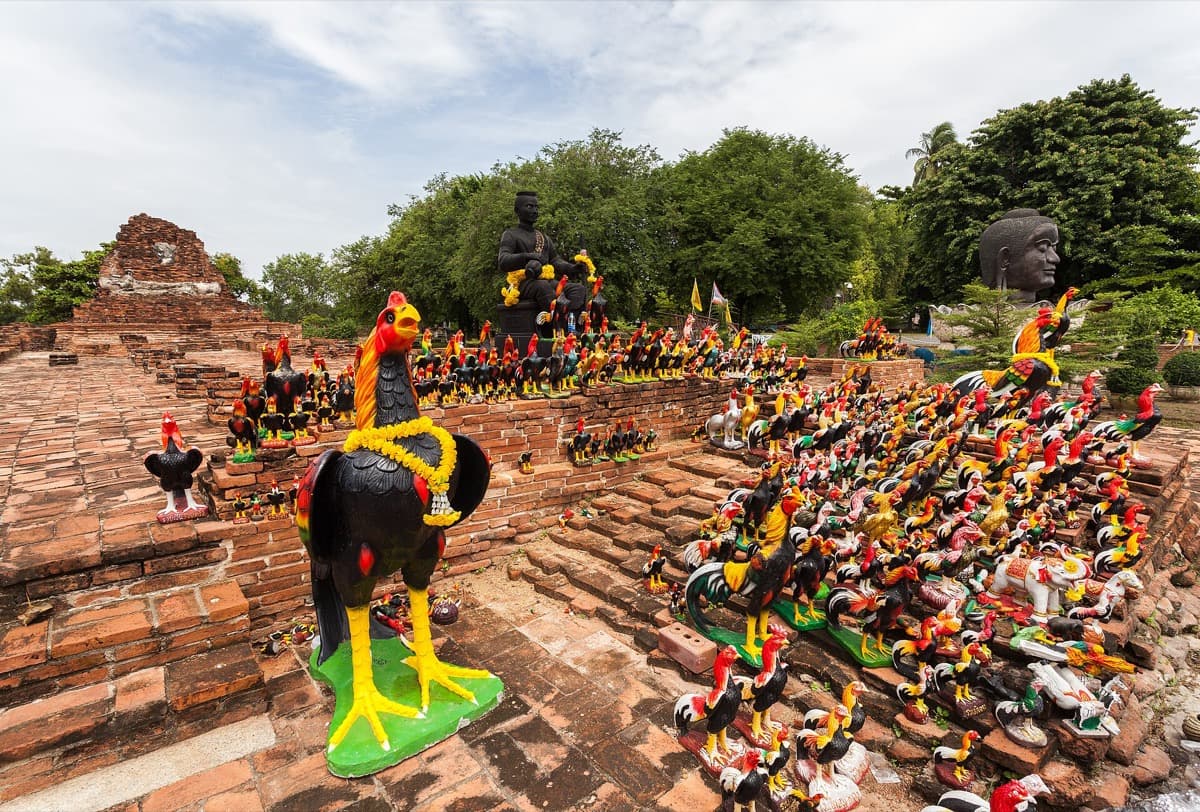
Wat Thammikarat: The Vigil of the Lions
An active temple older than Ayutthaya itself, its bell-shaped chedi ringed by fifty-two stone lions and holding a twelve-metre reclining Buddha.
Details
Best Time to Visit
Come early, ideally right at opening around eight in the morning, or in the last two hours before sunset. Midday sun on the open brick ruins is intense and there is little shade, so the cooler edges of the day are far more comfortable and the low light makes the temples glow. The dry, cooler season from November through February is the most pleasant overall, while the rainy months from roughly June through October bring heavy afternoon downpours you can plan around.
Pro Tips
- •A single six-temple park pass costs two hundred twenty baht and covers the ticketed ruins on this route, which is cheaper than paying the fifty-baht entry at each one separately.
- •Rent a bicycle near the island if you want to link the stops faster, since the distances between temples are walkable but add up under the sun.
- •Carry more water than you think you need and refill when you can, because the open ruins offer almost no shade and the heat builds quickly.
- •Wihan Phra Mongkhon Bophit and Wat Thammikarat are free and still active, so you can dip into them anytime without a ticket.
- •Go at your own pace and treat every stop as skippable: if a ruin does not hold you, move on, and if one does, linger as long as you like.
- •Visit the nearby Chao Sam Phraya Museum if you want to see the actual gold and artifacts recovered from the Wat Ratchaburana crypt described on this walk.
Safety & Precautions
- •The temple ruins are active religious sites, so dress modestly with shoulders and knees covered, and be prepared to remove your shoes before entering any hall or shrine building.
- •Heat and humidity are the real hazard here, not the history: pace yourself, seek shade between stops, wear a hat and sunscreen, and stop if you feel lightheaded.
- •In the rainy season, expect sudden heavy downpours in the afternoon, which make brick surfaces and steps slippery, so watch your footing on the climbable prangs.
- •Some prangs and platforms have steep, uneven stairs and no railings, so take them slowly, and skip any climb that does not feel safe for you.
Travel advisory: Exercise Normal Precautions (Level 1).
Gallery
Related Reading
Go deeper on what you'll see, hear, and walk through.
Overview
Ayutthaya Travel Guide: Days, Transport, Season, Safety, and Costs
5 min
Overview
Best Self-Guided Walking Tours in Ayutthaya (2026)
3 min
Overview
One Day in Ayutthaya: A Walkable Itinerary from Morning to Sunset
8 min
Thematic
The Burned Capital: How Ayutthaya's Ruins Read the World That Made Them
7 min
Companion
Wat Phra Si Sanphet: The Gold They Burned to Take
7 min
Deep dive
Wat Mahathat, Ayutthaya: The Buddha Head in the Tree Roots
6 min
Read
What to Eat in Ayutthaya: River Prawns, Boat Noodles, and Roti Sai Mai
7 min
Read the walk
The full story of Historical Park: The Burned Capital, in words. Prefer to listen? Play it narrated, from home or on location.
Introduction
For four centuries, the city you are standing in was one of the largest and richest places on earth. Ayutthaya sat on an island ringed by three rivers, here in central Thailand, its temples gilded and its court receiving ambassadors from as far away as the palace of Versailles. Then, in the year seventeen sixty-seven, a Burmese army razed it so completely that the Siamese abandoned the site entirely and built a new capital downriver at Bangkok. They even carried Ayutthaya's own bricks with them. This walk moves through the ruins on the royal island and reads what was lost, and why the kings who came after spent a century trying to rebuild its ghost. Here is the paradox you will carry from stop to stop. The more total the destruction, the more powerful the ruin became. A city burned to melt the gold off its statues is now a place people travel across the world to stand quietly inside. The route links six stops over roughly five kilometres, and you should give it around two hours, though every stop is short and skippable, and the pace is entirely yours. You will begin at the temples of relics and treasure, move into the sacred core of kingship, stand on empty palace foundations that were shipped downriver, and close at a temple older than the city itself. Go at your own speed, linger where the quiet holds you, and skip anything that does not. When you arrive at Wat Ratchaburana, begin with stop one.
1. Wat Ratchaburana: The Looted Crypt
You are standing at a temple built out of grief and a succession crisis. According to the royal chronicle, King Borommarachathirat the Second founded Wat Ratchaburana in the year fourteen twenty-four, on the very spot where his two elder brothers were cremated. When their father died, the two princes could not agree on who would take the throne, so they mounted war elephants and fought each other in single combat until both of them were killed. The king who eventually rose was their younger brother, and he raised this temple over their ashes. Look up at the tall central prang. You can climb it, and inside is a steep descent into an underground crypt. That crypt is one of the great stories of Thai archaeology. It was discovered in nineteen fifty-six and became nationwide news. Then, in nineteen fifty-seven, thieves broke in and looted it, carrying off Buddha images and gold before authorities could secure the site. Only some of it was recovered. Afterward, Thailand's Fine Arts Department excavated the crypt properly and uncovered more than two thousand objects, over one hundred thousand votive tablets, and more than one hundred kilograms of gold. Most of what survived is now in the Chao Sam Phraya Museum nearby. Down in the crypt you can still see faded murals on the walls, among the oldest surviving painted examples from the early Ayutthaya period. Stand here for a moment with the doubled meaning of the place. It was raised to honor two brothers who destroyed each other, and centuries later it was nearly destroyed again by people hunting its treasure. The gold left. The story stayed.
2. Wat Mahathat: The Head in the Roots
This was once the center of everything. Its name means Temple of the Great Relic, and the original structure here was the jewelled reliquary, the shrine that held the kingdom's most sacred relic and stood at the religious and political heart of the capital. The royal chronicle records that King Borommarachathirat the First established it in the year thirteen seventy-four. A later king, Ramesuan, expanded it in thirteen eighty-four, and it took the name it carries now. When the Burmese sacked the city in seventeen sixty-seven, this temple was reduced to the brick stumps you see around you. But almost everyone comes here for one thing. Somewhere near the outer wall, a sandstone Buddha head sits enmeshed in the roots of a bodhi tree, the face calm and level, wood curling up around it like cupped hands. It is the most photographed object in the entire park. Here I have to be honest with you, because the truth is more interesting than the legend. Nobody actually knows how the head came to be in those roots. There are two theories, and both are only theories. One says the tree simply grew around it during the long centuries the temple lay abandoned and overgrown. The other says a thief moved the head to hide it, possibly during the treasure-hunting of the early nineteen hundreds, and then never came back for it. The head itself is believed to have been struck from a statue by the Burmese invaders, who defaced many images when they took the city. So you are looking at real destruction and an unsolved mystery, held together by a tree. Take your time with it, then move on when you are ready.
3. Wat Phra Si Sanphet: The Melted Gold
This is the sacred core of the whole city, so slow down here. Wat Phra Si Sanphet was the royal temple inside the palace grounds, and no monks ever lived here. It was the king's private chapel, so important that when the capital moved to Bangkok, it became the model for Wat Phra…
Full narration for this stop unlocks with the tour.
4. Wihan Phra Mongkhon Bophit: The Buddha That Outlived the Fire
Just south of the royal temple stands a large hall, and inside it sits a survivor. This is Phra Mongkhon Bophit, one of the largest bronze Buddha images in all of Thailand. It measures about nine and a half metres across the lap and about twelve and a half metres tall, not…
Full narration for this stop unlocks with the tour.
5. Ancient Royal Palace (Wang Luang): The Foundations That Became Bangkok
This may be the emptiest stop on the walk, and also the most eloquent, so let the emptiness do its work. You are standing on the Wang Luang, the royal palace of Ayutthaya. This was the king's residence, with grand halls for royal ceremonies, a hall built to receive foreign…
Full narration for this stop unlocks with the tour.
6. Wat Thammikarat: The Vigil of the Lions
You end the walk at the oldest thing on it. Wat Thammikarat is a temple ruin near the northern part of the island, and it is older than the city of Ayutthaya itself. It likely predates the founding of the capital in thirteen fifty-one, and archaeologists have found evidence of a…
Full narration for this stop unlocks with the tour.