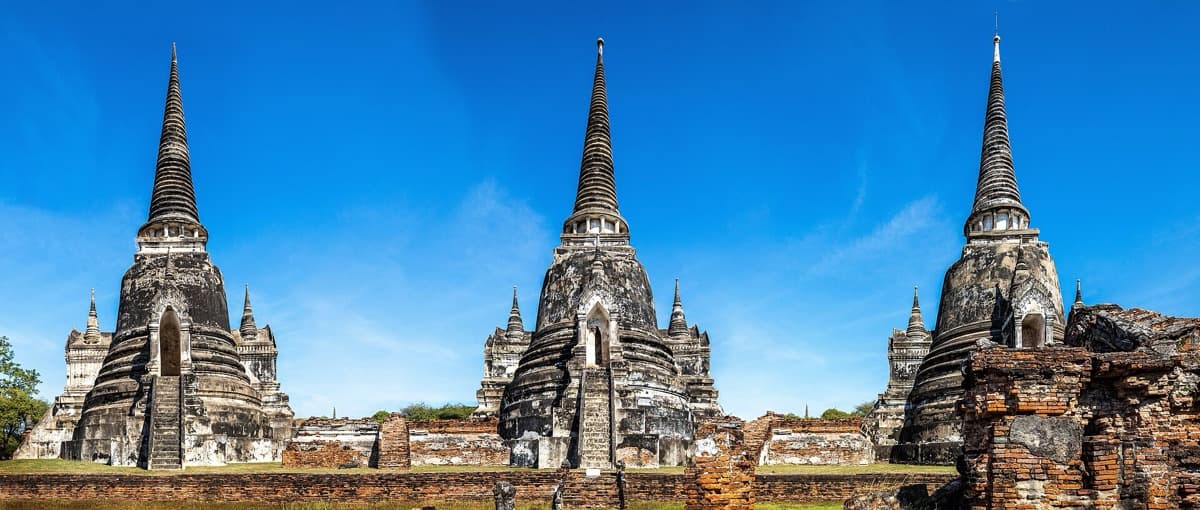
The most sacred building in one of the largest cities on earth was set on fire not out of hatred but out of arithmetic. In seventeen sixty-seven a Burmese army burned Wat Phra Si Sanphet, the private royal chapel of Ayutthaya, for one reason: to melt the roughly three hundred forty-three kilograms of gold off a standing Buddha and carry it downriver as bullion. That single act of accounting is the clearest way to read the paradox this walk is built on. The more completely Ayutthaya was destroyed, the more powerful its ruins became, and no stop makes that legible faster than the three bell-shaped chedis and the empty temple platform at the sacred center of the royal island.
Why this temple is the key to the whole city
Ayutthaya sat on an island ringed by three rivers in central Thailand, and for four centuries it was one of the richest places on the planet, receiving ambassadors from courts as distant as Versailles. Wat Phra Si Sanphet was the most important religious building inside that city. No monks ever lived here. It was the king's own chapel, folded directly into the palace grounds, and its status was so high that when the capital later moved to Bangkok, this temple became the model for Wat Phra Kaew, the temple of the Emerald Buddha that tourists photograph today.
That lineage is the argument of the whole tour in miniature. Bangkok did not replace Ayutthaya so much as copy its ghost. Stand at Wat Phra Si Sanphet and you are standing at the origin point of the modern royal capital, on the ground that was dismantled to build it.
The chronology is deep. Around thirteen fifty a founding king ordered a royal palace on this exact spot. In fourteen forty-eight King Borommatrailokkanat converted those palace grounds into consecrated ground, turning a residence into a shrine. The three restored chedis you see standing in a row are not ornament. They are tombs. Two were built in fourteen ninety-two and the third in fifteen twenty-nine, and inside them rest three kings: Borommatrailokkanat, Borommaracha the Third, and Ramathibodi the Second. The Fine Arts Department rebuilt all three in nineteen fifty-six after the Burmese destruction, which is why they read as intact today while everything around them is stumps of brick.
The gold that is no longer there
Hear a stop from this walk
Ancient Royal Palace (Wang Luang): The Foundations That Became Bangkok
The centerpiece of the paradox is a statue you cannot see, because it does not exist anymore. King Ramathibodi the Second commissioned a standing Buddha for this chapel, an image called Phra Si Sanphet that gave the temple its name. It rose about sixteen metres over a bronze core and carried roughly three hundred forty-three kilograms of gold. When the city fell in seventeen sixty-seven, the invaders did not simply topple it. They set the building on fire so the gold would run, then collected it.
Hold the two halves of that scene together. The chedis with the dead kings inside survived. The gold god did not. Destruction here was selective and rational, and that is somehow more unsettling than pure vandalism would be. The sacred was spared and the valuable was consumed, which tells you exactly what the fire was for.
Reading a ruin this way, as evidence of a decision rather than a disaster, is the skill the tour is trying to teach you. Once you have it, every other stop opens up. If this article is your pre-walk orientation, the full route through Ayutthaya walking tours puts the melted gold in sequence with five other ruins that each carry a piece of the same paradox.
How the six stops complete the argument
The walk links six stops across roughly five kilometres, and Wat Phra Si Sanphet sits at the sacred core, third in the sequence, so the temples before it build the pressure and the temples after it release it.
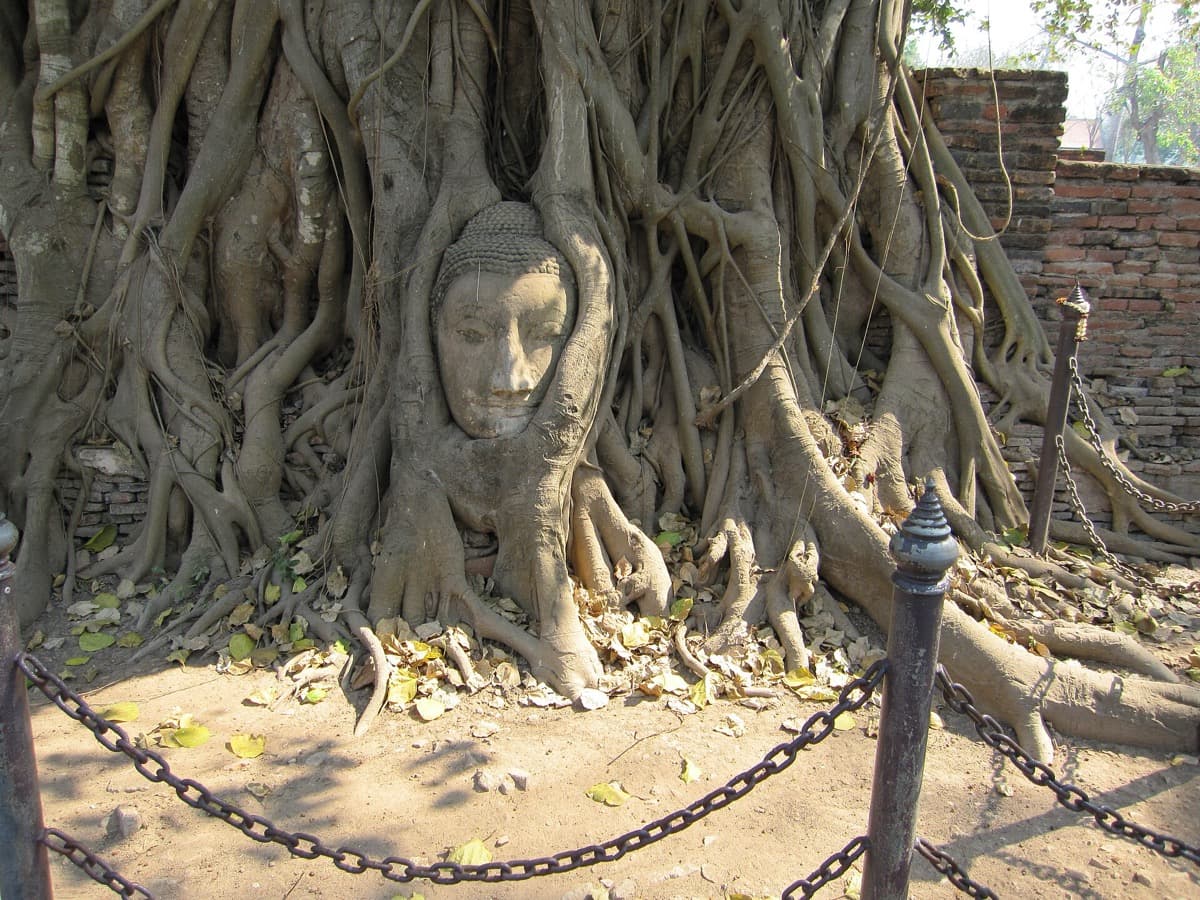
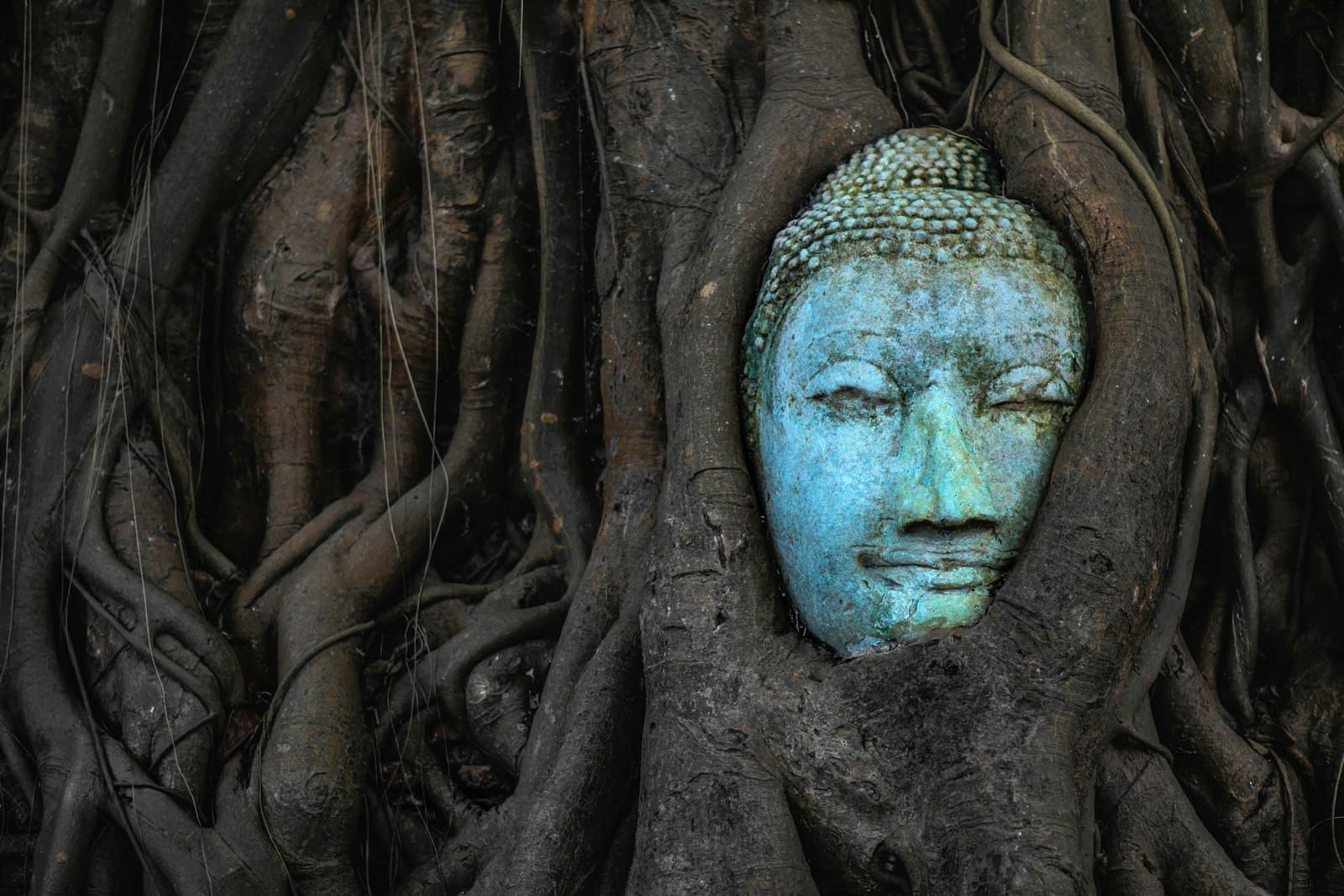
You begin at Wat Ratchaburana, founded in fourteen twenty-four by the king known as Chao Sam Phraya over the cremation site of his two elder brothers, who had killed each other in single combat on war elephants over the succession. Its crypt, discovered in nineteen fifty-six and looted by thieves in nineteen fifty-seven, later yielded more than one hundred kilograms of gold and thousands of objects now held at the Chao Sam Phraya Museum. Then comes Wat Mahathat, the old religious and political center, now famous for a sandstone Buddha head cradled in the roots of a bodhi tree. The honest version of that image is better than the legend: nobody actually knows how the head got there, and the two leading theories, a tree growing around it or a thief hiding it, are both unproven.
After the melted gold of Wat Phra Si Sanphet, the walk turns toward survival. Just south stands Wihan Phra Mongkhon Bophit, an active hall sheltering one of the largest bronze Buddhas in Thailand, about twelve and a half metres tall. It lost its head and right arm when the city fell in April seventeen sixty-seven and sat under open sky for roughly two hundred years before repair in nineteen twenty under King Rama the Sixth. In an unexpected turn, the Prime Minister of Burma donated toward restoring the hall during a nineteen fifty-six visit. This is the counterweight: one Buddha destroyed for its metal, one broken and patiently put back together.
The fifth stop is the sharpest point of the paradox. The Wang Luang, the royal palace, is now bare brick foundations, because King Rama the First had its bricks removed and ferried down the Chao Phraya by barge to build Bangkok and its Grand Palace, whose construction began on the sixth of May seventeen eighty-two, following the Ayutthaya palace layout as its prototype. You are looking at the negative space of Bangkok. The walk closes at Wat Thammikarat, older than the city itself, its bell-shaped chedi ringed by fifty-two carved lions that kept their vigil before the capital existed and stayed after it burned.
Walking it yourself
Every stop is short and skippable, and the pace is entirely yours, which suits ruins that reward lingering over hurry. Come early, near the eight o'clock opening, or in the last two hours before sunset, when low light makes the brick glow and the midday heat has eased. A single six-temple park pass costs two hundred twenty baht, cheaper than paying fifty at each ticketed ruin. Wihan Phra Mongkhon Bophit and Wat Thammikarat are free and still active. Dress modestly, carry more water than you expect to need, and take the climbable prangs slowly. When you are ready to walk the whole route, start from Ayutthaya and let the melted gold be your entry point into everything the fire left behind.
Sources
- Roamer audio tour transcript, "The Burned Capital" (fact-audited): primary source for all dates, measurements, and the sequence of the six stops.
- Wat Phra Si Sanphet, Wikipedia: royal chapel status, the three chedis and their royal occupants, and the Phra Si Sanphet Buddha and its gold.
- Grand Palace, Wikipedia: the reuse of Ayutthaya's bricks under Rama the First and the sixth of May seventeen eighty-two construction date.
- Wat Ratchaburana and Wat Mahathat, Wikipedia: founding dates, the crypt looting of nineteen fifty-seven, and the Buddha-head-in-tree context for the flanking stops.
- Wihan Phra Mongkhon Bophit, ayutthaya-history.com: the image's damage in seventeen sixty-seven, the nineteen twenty repair, and the nineteen fifty-six Burmese donation.
Ready to experience it?
Historical Park: The Burned Capital
110 min · 5 km · moderate
More from Ayutthaya
Explore more at your own pace.
Ayutthaya Travel Guide: Days, Transport, Season, Safety, and Costs
The Burned Capital: How Ayutthaya's Ruins Read the World That Made Them
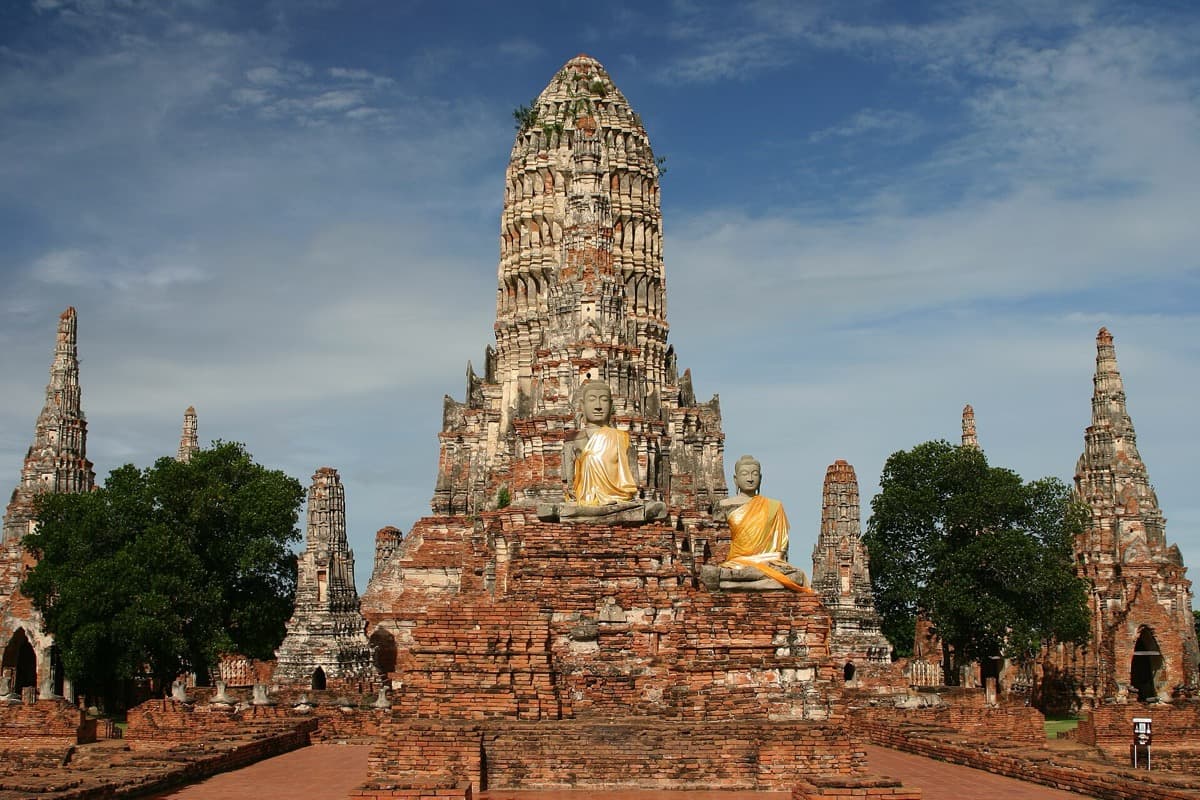
Reading Ayutthaya's Royal Skyline at Wat Chaiwatthanaram
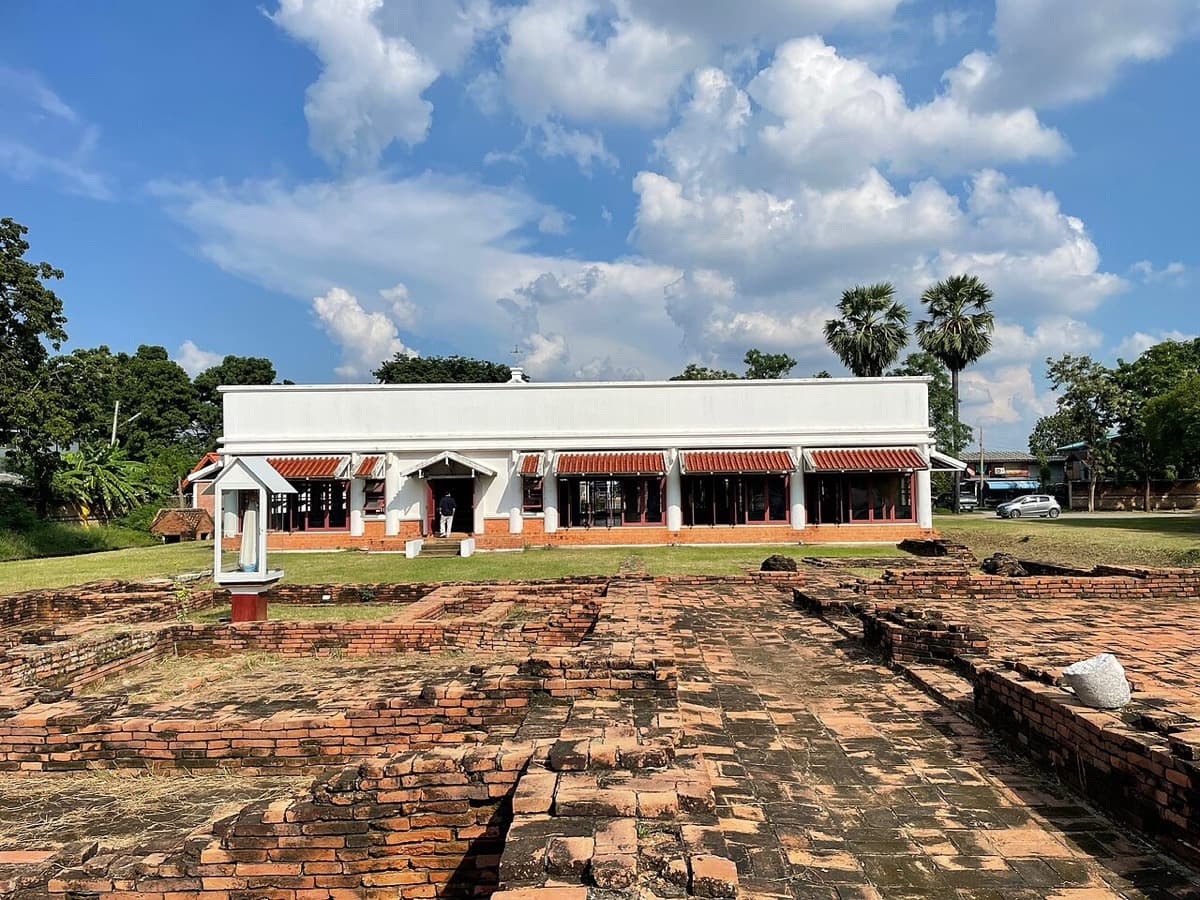
The Excavated Dead of Ayutthaya's Portuguese Settlement
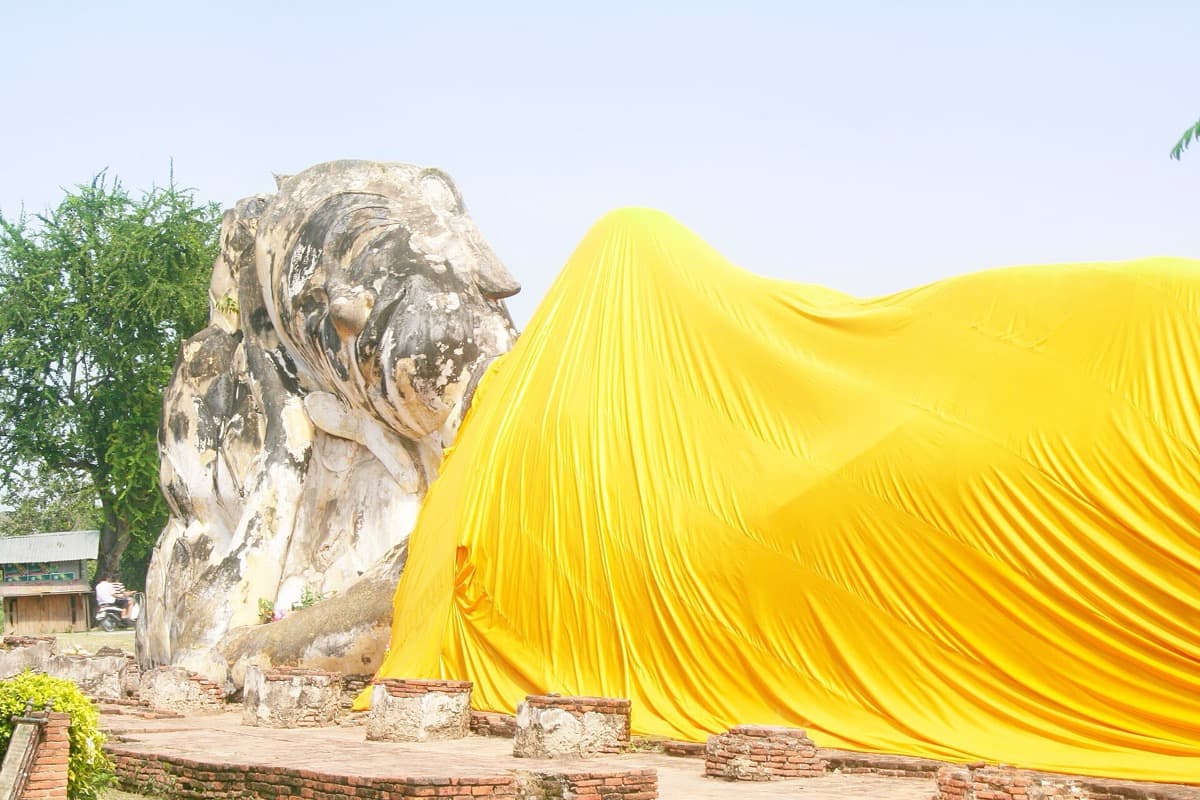
Wat Lokayasutharam: Reading Ayutthaya's Reclining Buddha