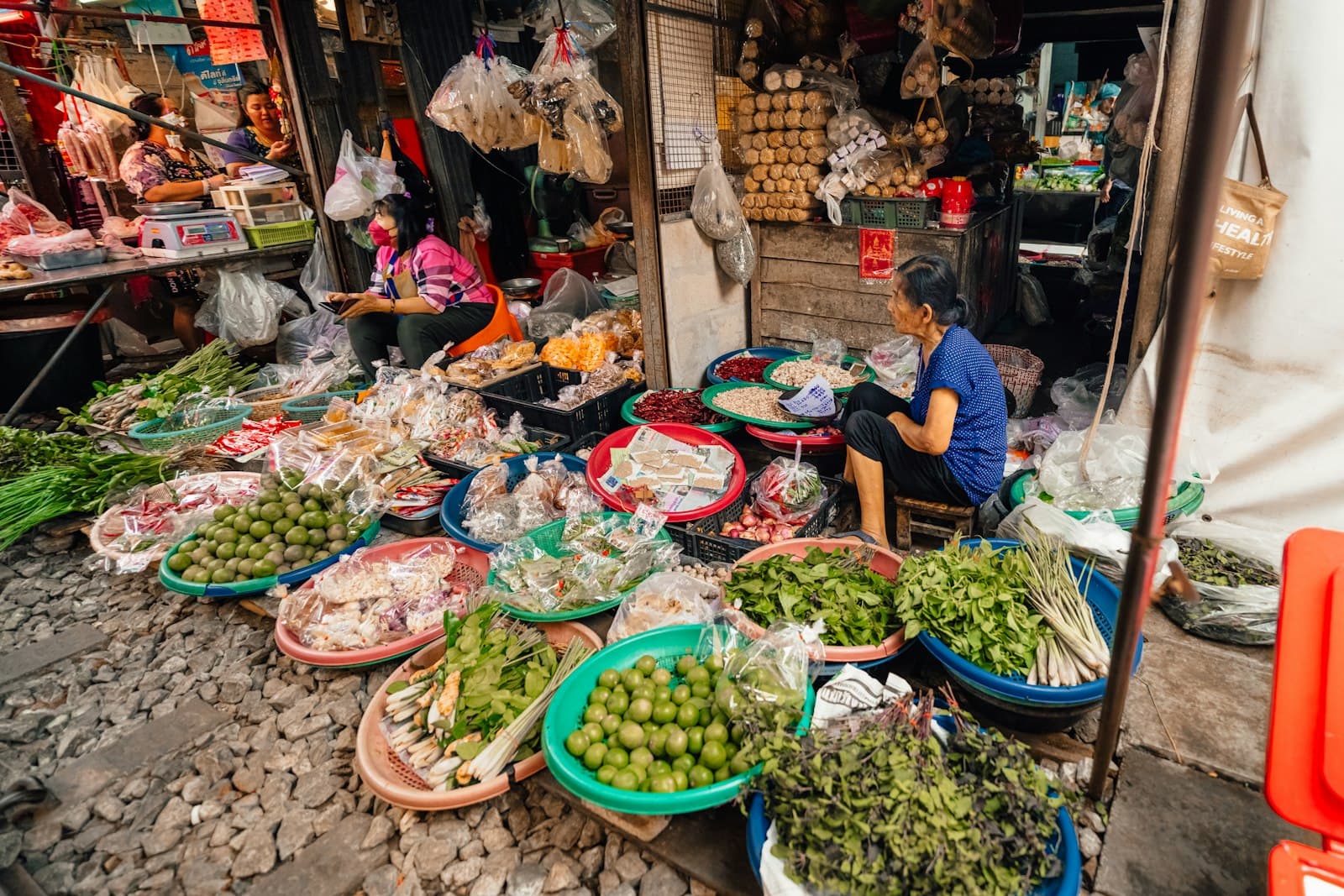
Ayutthaya is known for three dishes. Kung mae nam pao is a grilled giant freshwater river prawn, split lengthwise and grilled over charcoal. Kuay teow reua, or boat noodles, are rice noodles in a dark pork or beef broth served in small bowls. Roti sai mai is fine spun-sugar floss rolled into a thin flatbread by hand.
Historical Park: The Burned Capital
110 min · 5 km · moderate
If you have one afternoon of eating in Ayutthaya, order three things: a grilled giant river prawn (kung mae nam pao) by the water, a few small bowls of boat noodles (kuay teow reua) in dark pork broth, and a bag of roti sai mai, the spun-sugar floss you roll into a thin flatbread yourself. Those three dishes carry the whole story of the old capital: a river city full of freshwater prawns, a canal network where Chinese vendors sold noodles from sampans, and a Muslim community that turned sugar into thread. Everything else you eat here orbits those three.
Ayutthaya sits on an island where three rivers meet, an hour and a half north of Bangkok, and its food still reflects the port city that traded with the whole world for four centuries. You can eat the specialties in a single day between temples, and the walking tours on the Ayutthaya walking tours hub pass close to most of the places you would want to stop.
The giant river prawn (kung mae nam pao)
The dish locals will point you to first is kung mae nam pao, the grilled freshwater giant river prawn. These are not sea prawns. They come from the rivers around the island and can reach the size of a small lobster, with a head full of orange fat that cooks down like butter. The classic preparation is simple: the prawn is split lengthwise and grilled shell-down over charcoal with no seasoning, then served with a sharp Thai seafood dipping sauce (nam jim seafood) of lime, chili, garlic, and fish sauce.
You order these by weight, and they are expensive by Thai street-food standards, so it is normal to split one or two large prawns between people rather than order a plate each. Riverside restaurants on the Chao Phraya are the setting for this. Ruan Thai Kung Pao, a riverside spot listed in the MICHELIN Guide, is one of the better-known places to try it, and because the largest prawns sell out, calling ahead to reserve them is common practice.
How to order like a local: point to the size you want, ask for it pao (grilled), and expect it to arrive halved with the head fat intact. Eating the head fat is the point, not something to leave behind.
Boat noodles (kuay teow reua)
Hear a stop from this walk
Ancient Royal Palace (Wang Luang): The Foundations That Became Bangkok
The second dish is kuay teow reua, boat noodles, and the way to order them is in multiples. Each bowl is deliberately tiny, a few mouthfuls of rice noodles in a dark, concentrated pork or beef broth, because the dish was designed to be eaten from a rocking boat without spilling. Three, four, or five small bowls is a normal serving, and stacking your empty bowls to keep count is part of the ritual.
The broth is what makes it. That thick, near-black color comes from fresh pig's or beef blood stirred into the hot stock, which thickens it and adds a deep, iron-rich savor. The style traces back to the canals of the Ayutthaya Kingdom, which existed from 1351 to 1767, when Chinese immigrant vendors adapted their noodle traditions and sold bowls from small boats along the waterways. When Bangkok's canals were paved over in the twentieth century, the boats became land stalls, but the small-bowl format stayed.
How to order like a local: ask for however many bowls you think you want, tell them if you prefer pork (moo) or beef (nuea), and add the crushed chili, vinegar, sugar, and fish sauce from the caddy to taste. If raw blood in the broth is not for you, some shops will make it without.
Roti sai mai, Ayutthaya's signature sweet
The dessert that Ayutthaya is known for above all is roti sai mai, and you assemble it with your hands. You get a stack of thin, soft, slightly stretchy flatbreads (roti) and a mound of fine sugar floss (sai mai) in pale colors, often tinted green with pandan. You take one flatbread, lay a pinch of the floss across it, roll it up, and eat it like a small wrap. It is served at room temperature and sold in takeaway bags all over the island.
Its history is a Muslim story. According to Ayutthaya's records cited by Tourism Thailand and the MICHELIN Guide, the sweet was developed by a local Muslim man remembered as Bang Pia, whose given name is recorded as Salem Saeng-Arun, who spent years perfecting the long candy floss and sold it alongside crispy and sweet roti. Wikipedia frames the broader origin as one brought into the Ayutthaya Kingdom by Indian Muslim traders. Either way, the recipe was carried down through the province's Muslim families and became the thing travelers now buy on their way out of town.
How to order like a local: buy a bag with the floss and roti packed separately, and assemble each piece just before you eat it, because the roti dries out and the floss melts if you wrap it too far in advance.
Where to graze in the evening
For a spread rather than a single dish, the Bang Lan Night Market (also written Bang Ian) sets up on Bang Lan Road close to Wat Mahathat and runs roughly from late afternoon into the evening, around four to nine. It is mostly prepared food: pad thai, som tam (green papaya salad), grilled pork skewers (moo ping), coconut ice cream, and Thai sweets, with a run of stalls at the far end doing seafood and glass-noodle dishes. The city's Muslim-Thai heritage also shows up in dishes like khao mok gai, the local chicken biryani, which you will see at markets and small shops around town.
A calm way to think about the day: temples in the morning while the light is soft and the ruins are cooler, a boat-noodle or prawn lunch by the river, roti sai mai as your walking snack, and the night market after the historical park closes.
Fitting food around the ruins
The three self-guided walks on /thailand/ayutthaya are built so you can break for food without losing the thread. The Ayutthaya walking tours hub links all three: the royal-city loop through Wat Mahathat, Wat Ratchaburana, and Wat Phra Si Sanphet at the island's center; the foreign-quarters walk downriver past the Japanese, Portuguese, and Dutch settlement sites; and the riverside-prang walk out to Wat Chaiwatthanaram. The central loop puts you within a few minutes of the Bang Lan night market and the Wat Mahathat area, so it is the easy one to pair with an evening meal.
On the practical side, entering the historical park itself is free, but individual temples charge admission: many are 50 baht, some lesser-visited ones are 20 baht or free, and a combined pass covering six of the major temples costs 220 baht and stays valid for 30 days, sold at the entrance of each. Temples generally open from about 8 in the morning to 6 in the evening. If you are coming from Bangkok, the train from the capital is the cheap and easy option, running frequently and taking roughly one and a half to two hours, after which a ferry across the river and a tuk-tuk get you into the ruins. Bring water, cover shoulders and knees for temple visits, and plan food stops for the hotter middle of the day when you would rather be sitting in the shade anyway.
Sources
Frequently asked questions
- What food is Ayutthaya famous for?
- Ayutthaya is best known for three specialties: grilled giant freshwater river prawns (kung mae nam pao), boat noodles (kuay teow reua) served in small bowls with a dark pork or beef broth, and roti sai mai, a sweet of fine spun-sugar floss that you roll up in thin flatbread yourself. The first two come from the island's rivers and canals, and roti sai mai comes from the local Muslim community.
- What is roti sai mai and where did it come from?
- Roti sai mai is Ayutthaya's signature sweet: threads of colored sugar floss wrapped inside a thin, soft flatbread that you assemble by hand. According to Ayutthaya's records cited by Tourism Thailand and the MICHELIN Guide, it was developed by a local Muslim man remembered as Bang Pia, recorded as Salem Saeng-Arun, and Wikipedia traces the broader origin to Indian Muslim traders in the Ayutthaya Kingdom. The recipe passed down through the province's Muslim families.
- Why are Ayutthaya boat noodles served in such small bowls?
- Boat noodles were originally sold from small boats along the canals of the Ayutthaya Kingdom, so the bowls were kept tiny to avoid spilling on the water. That format stuck even after vendors moved to land, so it is normal to order three to five small bowls per person and stack the empties to keep count. The broth's dark color comes from fresh pig's or beef blood stirred in as a thickener.
- How much does it cost to eat the giant river prawn?
- Grilled giant river prawns (kung mae nam pao) are sold by weight and are one of the pricier things you can eat in Ayutthaya, so many people split one or two large prawns rather than order a plate each. They are typically served split lengthwise and grilled over charcoal with a Thai seafood dipping sauce. Because the largest prawns sell out, riverside restaurants like the MICHELIN-listed Ruan Thai Kung Pao often take advance orders.
- Where is the best place to eat street food in Ayutthaya at night?
- The Bang Lan Night Market (also written Bang Ian) on Bang Lan Road, close to Wat Mahathat, is the main evening food market, running roughly from late afternoon to around 9 pm. Expect pad thai, som tam, grilled pork skewers, coconut ice cream, seafood, and Thai sweets. It is an easy stop after the historical park closes, since the central temple loop passes nearby.
- How do I get to Ayutthaya and how much do the temples cost?
- The train from Bangkok is the cheap, frequent option and takes roughly one and a half to two hours, after which a ferry and tuk-tuk get you to the ruins. Entering the historical park is free, but individual temples charge admission: many are 50 baht, some lesser-visited ones are 20 baht or free, and a combined pass for six major temples costs 220 baht and is valid for 30 days. Temples generally open around 8 am to 6 pm.
Ready to experience it?
Historical Park: The Burned Capital
110 min · 5 km · moderate
More from Ayutthaya
Explore more at your own pace.
Ayutthaya Travel Guide: Days, Transport, Season, Safety, and Costs
The Burned Capital: How Ayutthaya's Ruins Read the World That Made Them
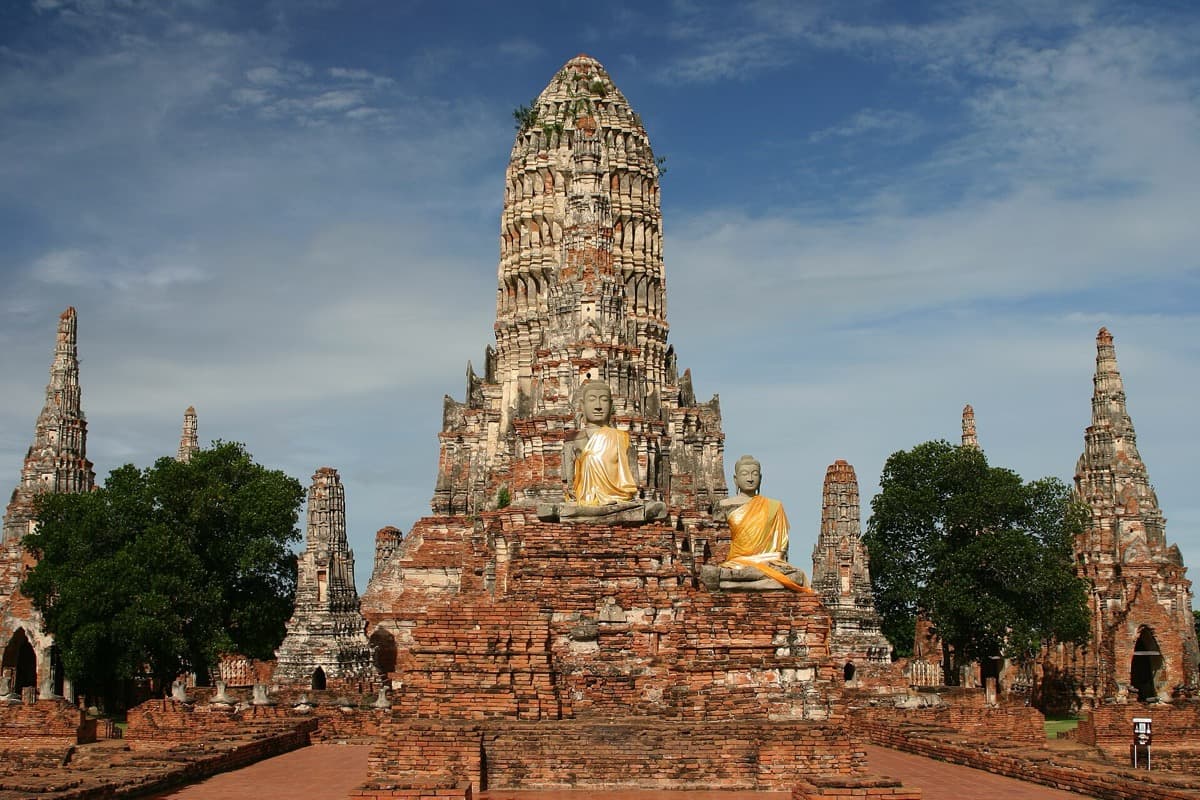
Reading Ayutthaya's Royal Skyline at Wat Chaiwatthanaram
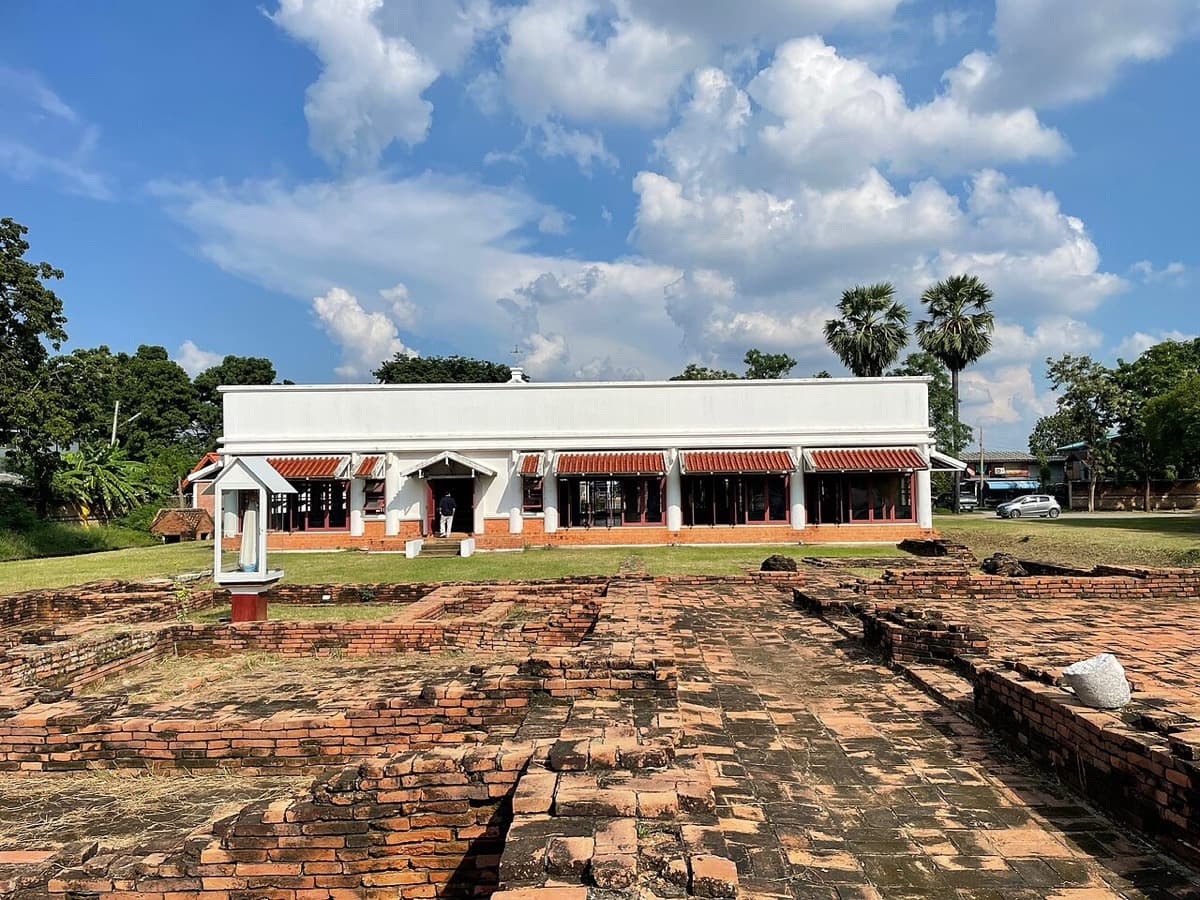
The Excavated Dead of Ayutthaya's Portuguese Settlement
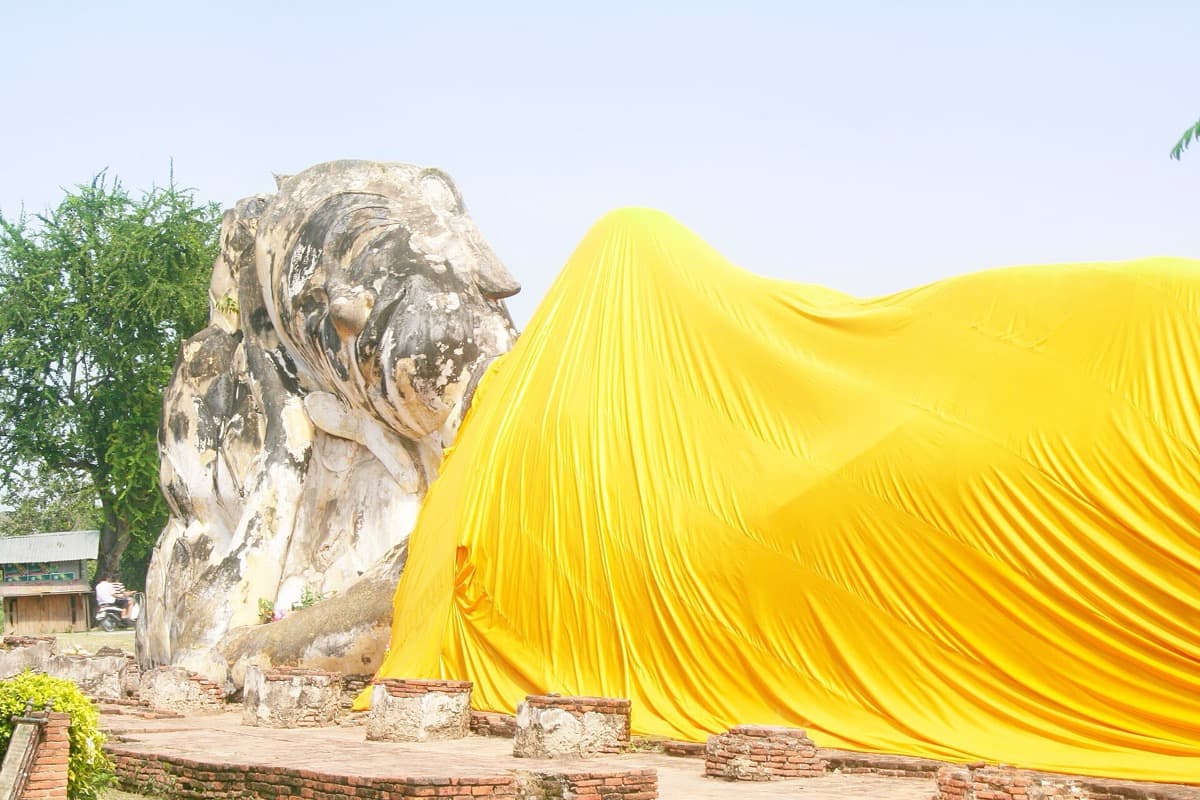
Wat Lokayasutharam: Reading Ayutthaya's Reclining Buddha