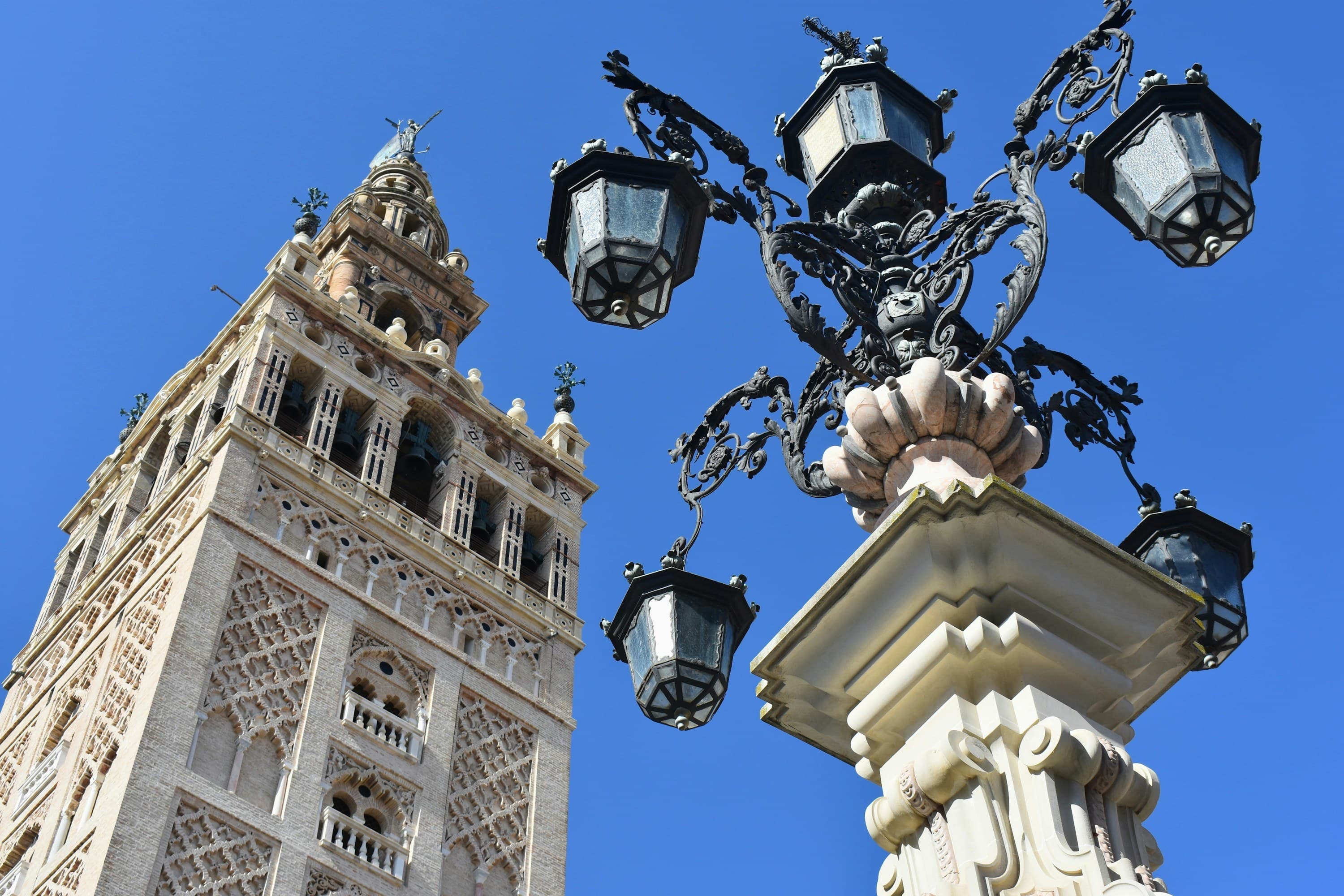
Ten stops through Seville's monumental core, every one of them a public street or square with nothing to book. The walk tests a claim the city makes about itself, that its conquerors moved into the buildings they took rather than clearing them, and finds it half true. The tower under the bells really is a minaret and the bronze doors really have carried Arabic scripture since 1248. But the picturesque Seville of whitewash, iron crosses and open squares with a medieval wall on show was designed in the twentieth century for visitors.
Start · Archivo General de Indias: The Building That Is Not Built on Anything
DirectionsStops
- 1
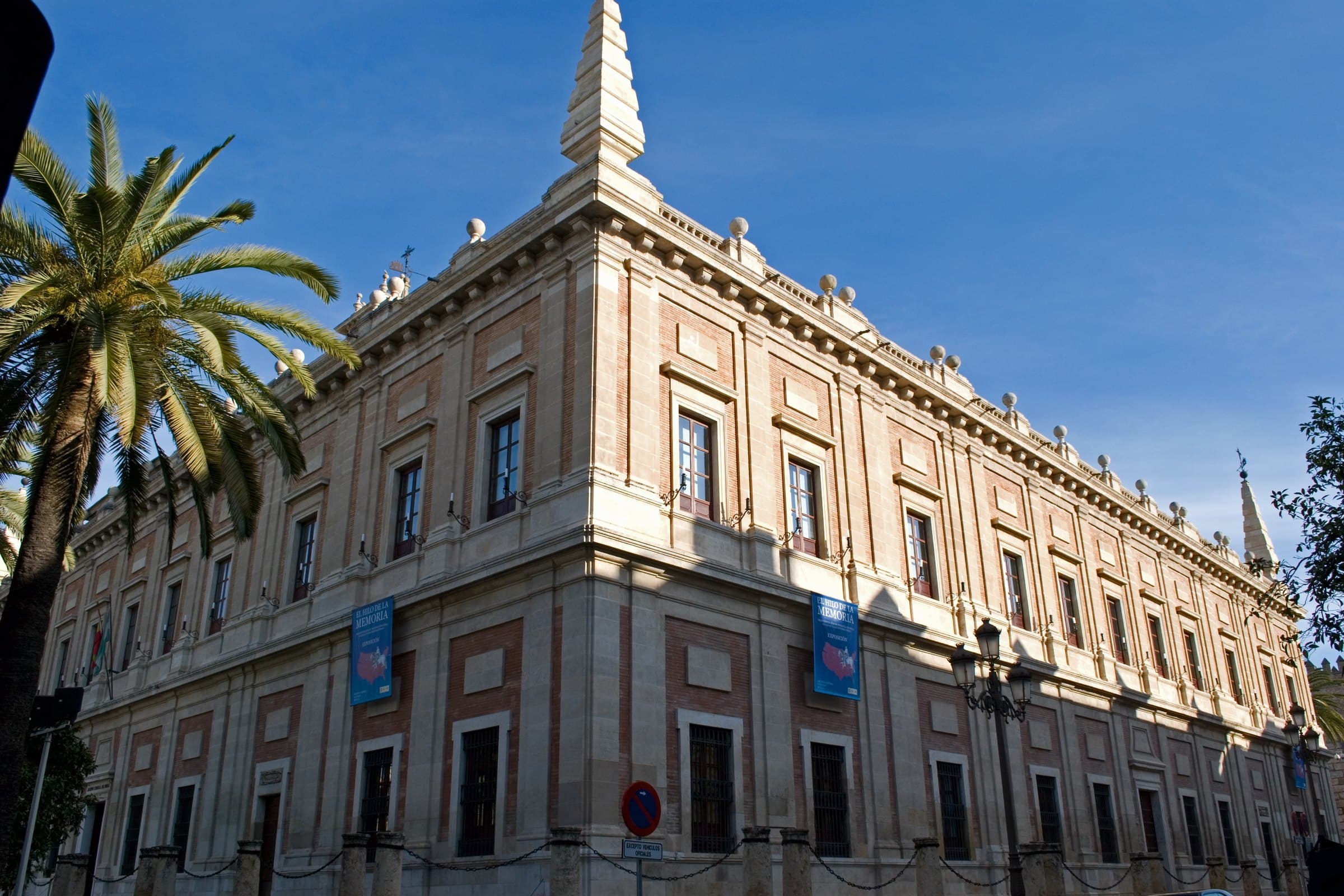
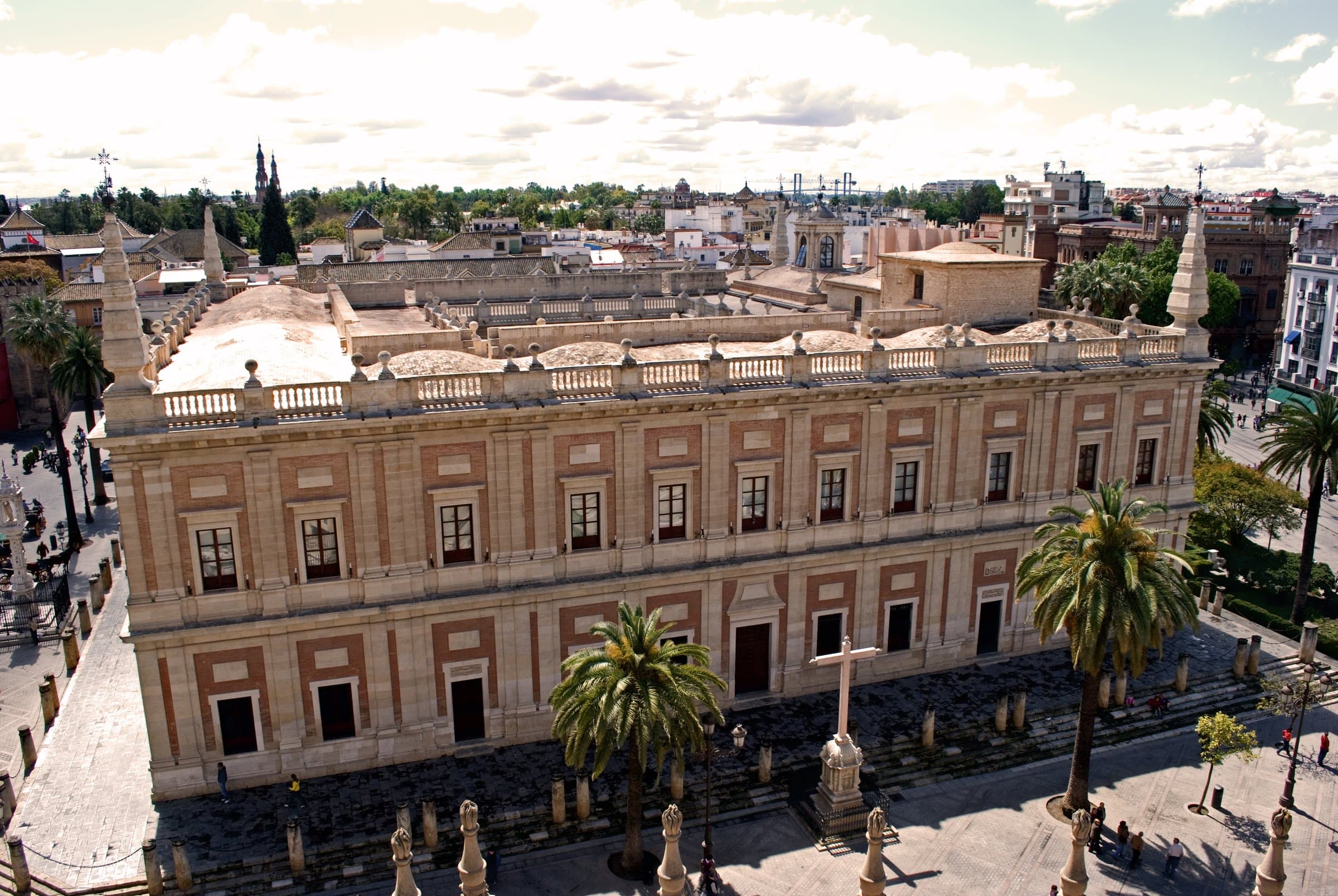
Archivo General de Indias: The Building That Is Not Built on Anything
A Renaissance exchange turned imperial archive, paid for by a tax on every cargo landed in Seville's port.
- 2
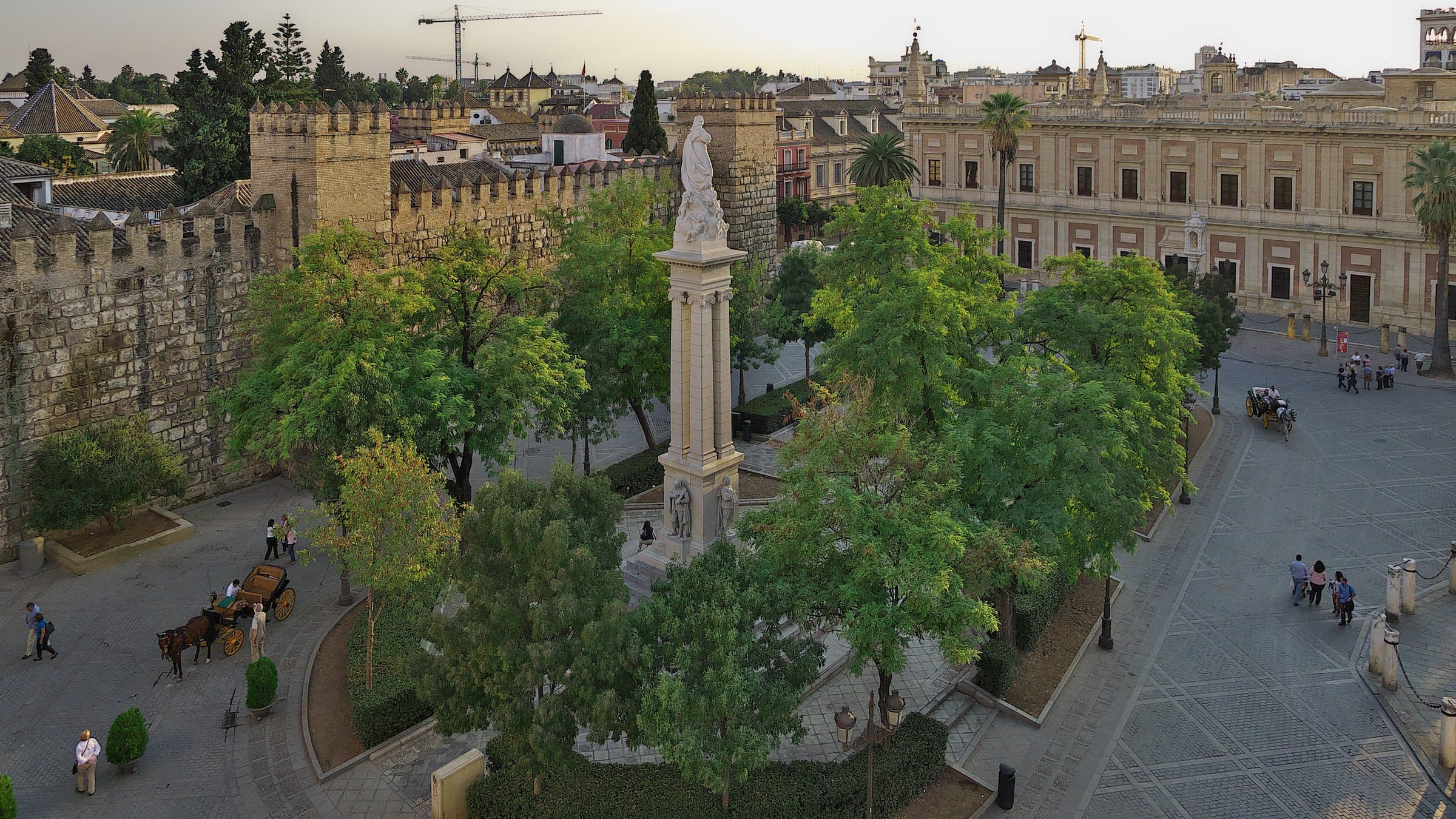
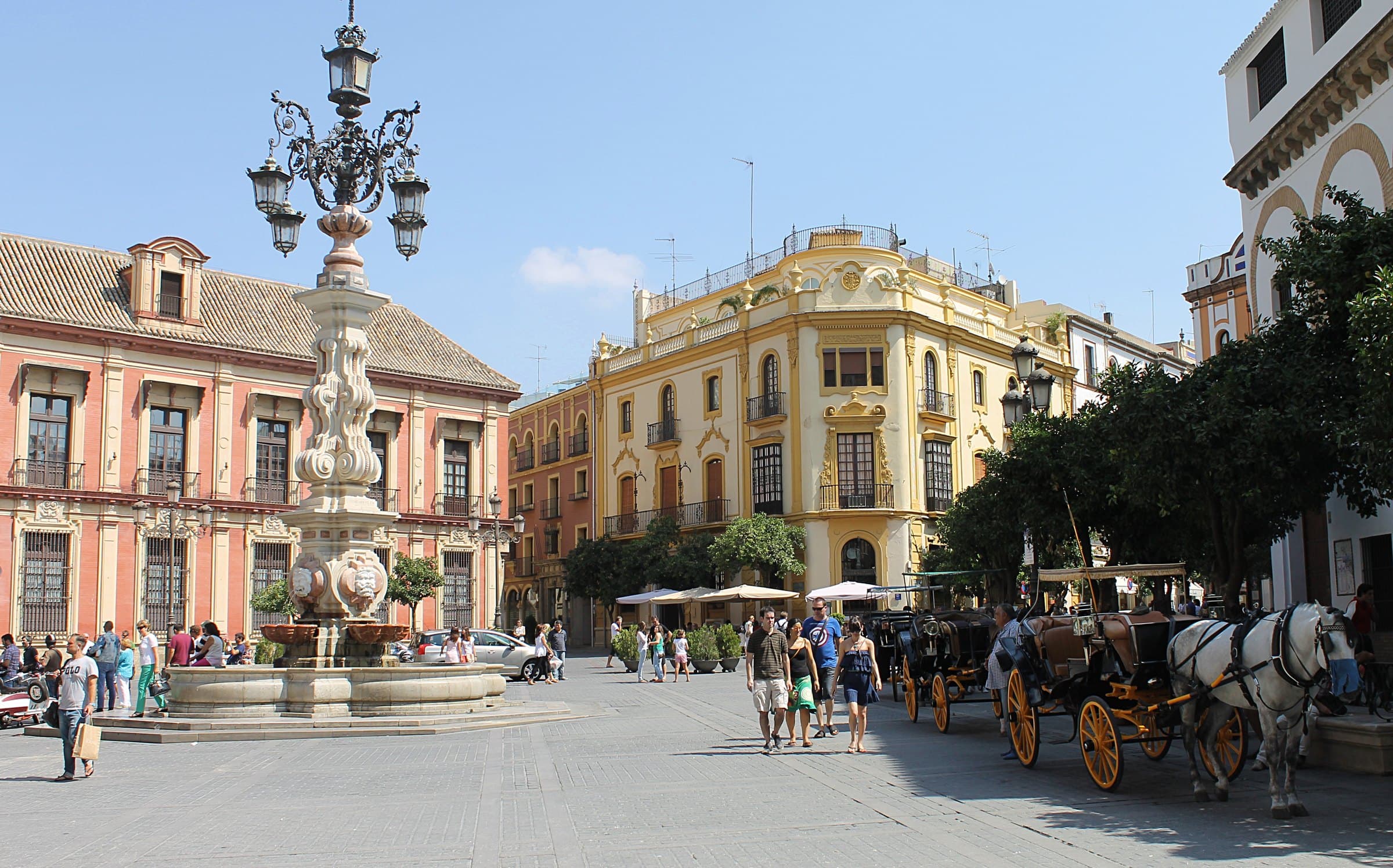
Plaza del Triunfo: Three Landlords and an Earthquake
Three World Heritage buildings meet here, around a monument the city council made the cathedral build shorter.
- 3
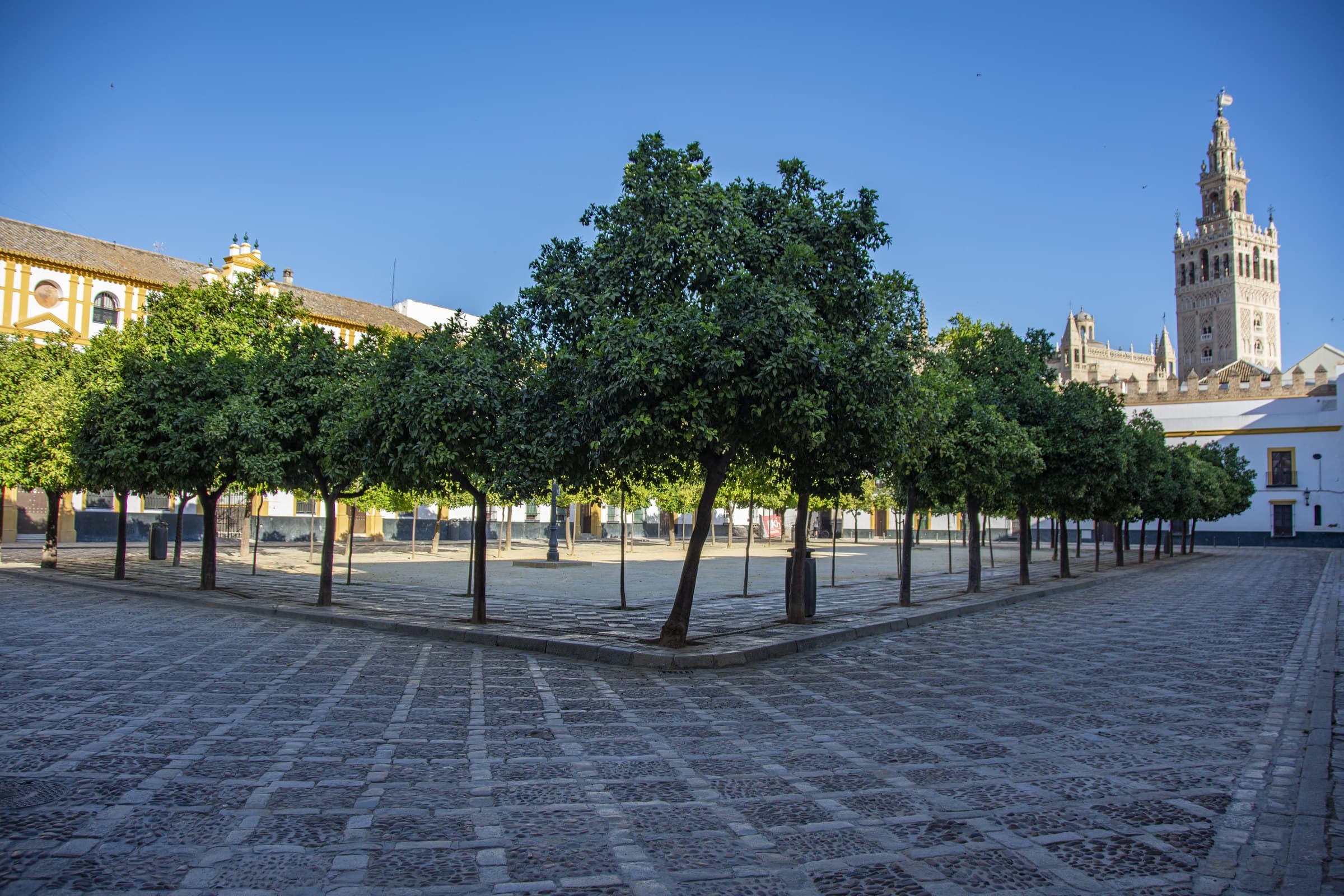
Patio de Banderas: The Cathedral That Was Not There
A free public courtyard inside the Alcazar walls, where a famous archaeological claim was disproved by digging.
- 4
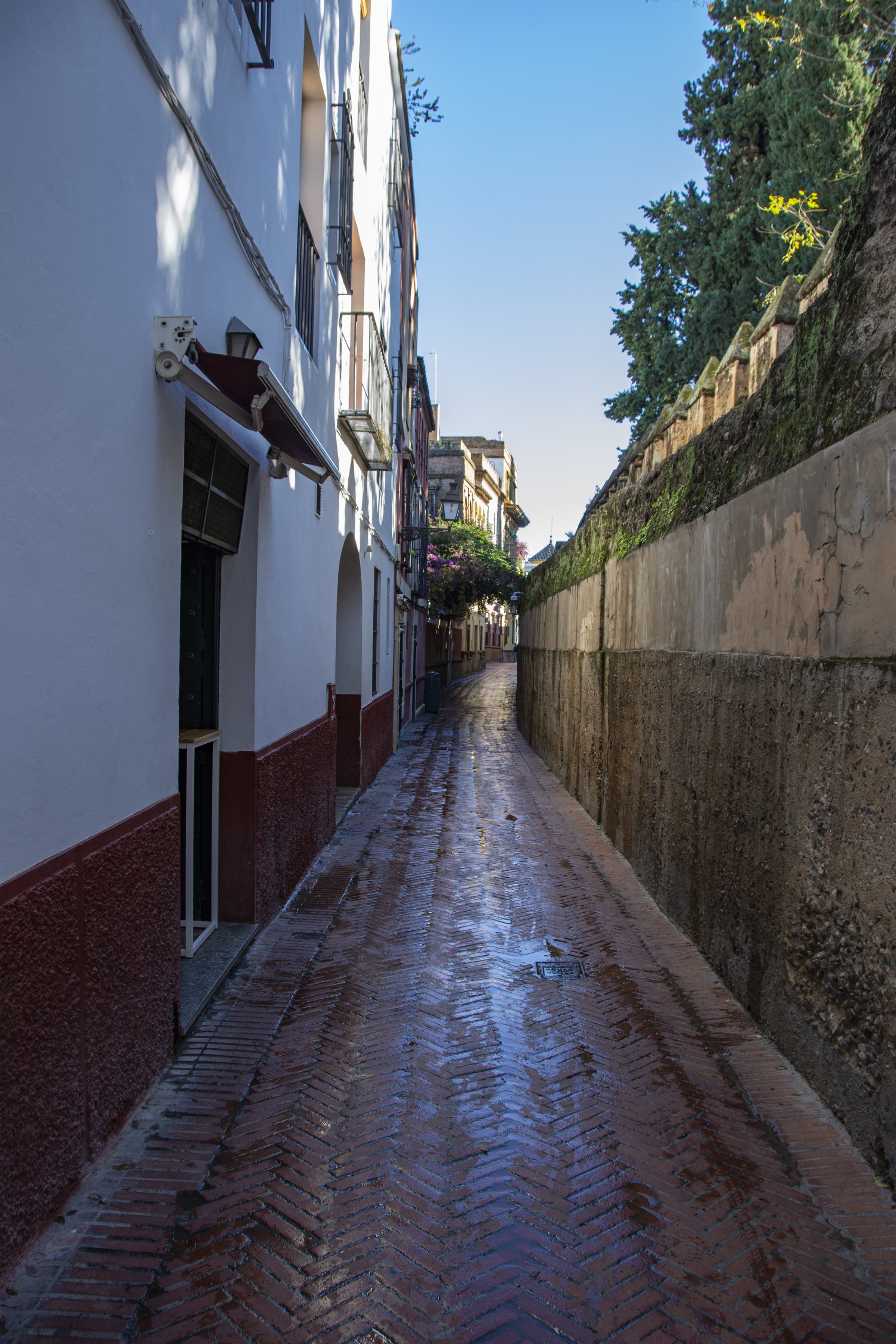
Callejon del Agua: A Wall Promoted to an Aqueduct
A city wall promoted to an aqueduct, bringing water back to Seville after seven centuries without it.
- 5
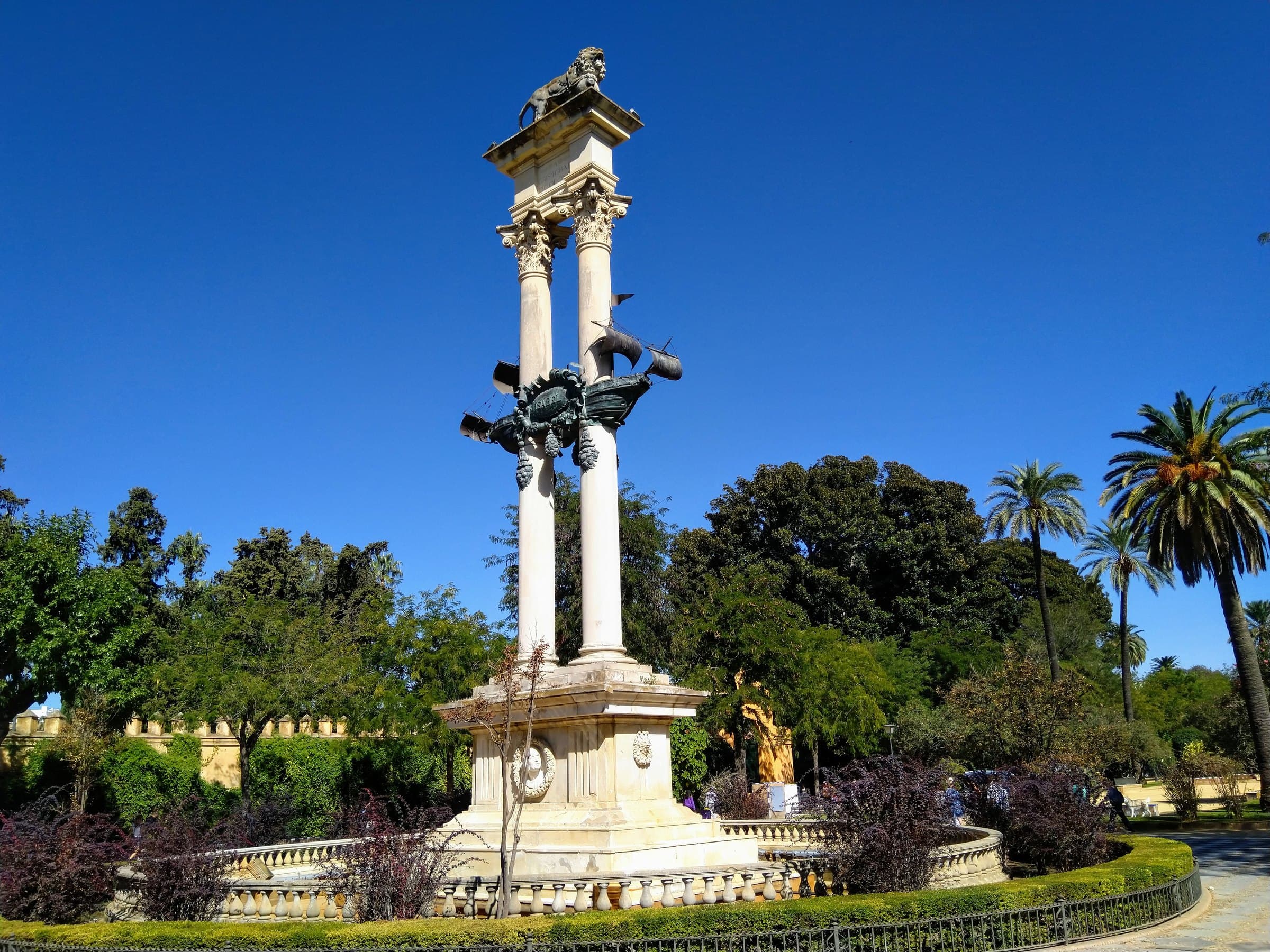
Jardines de Murillo: The Orchard the Palace Gave Up
Public gardens carved out of the palace orchard, with the medieval wall sliced open beside them.
- 6
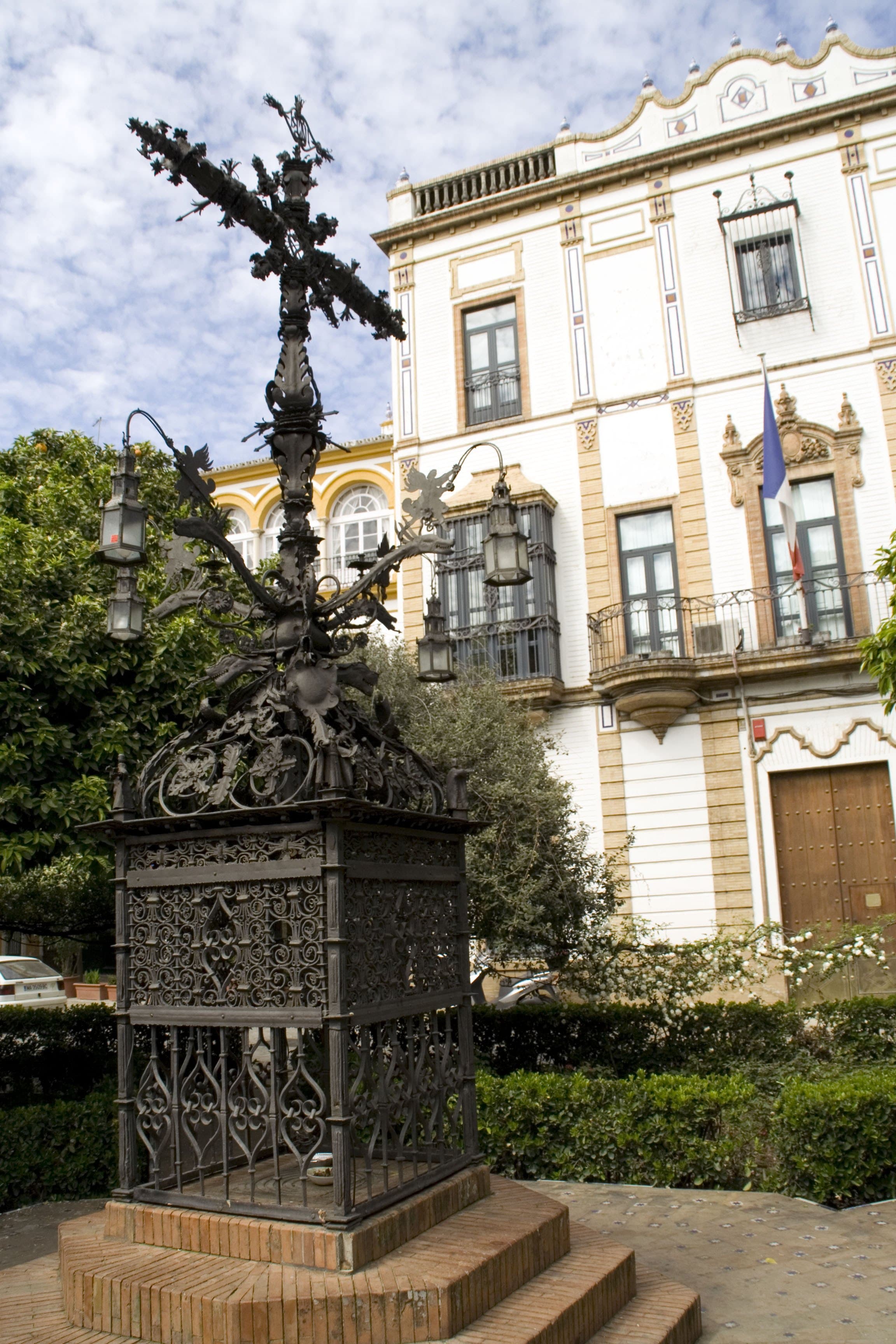
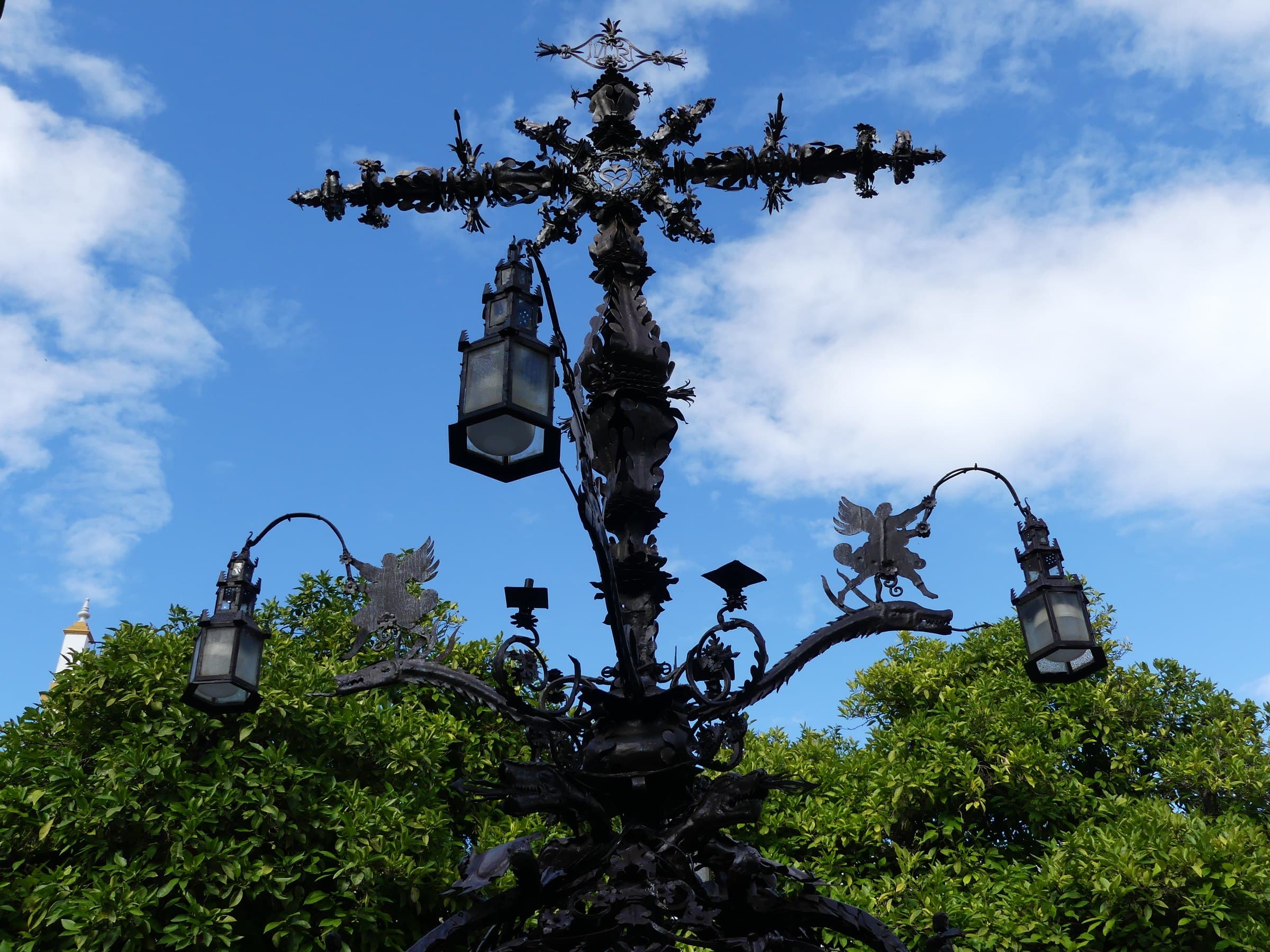
Plaza de Santa Cruz: The Cross That Arrived in 1918
An iron cross that arrived here in 1918, in a square named for a church the French pulled down.
- 7
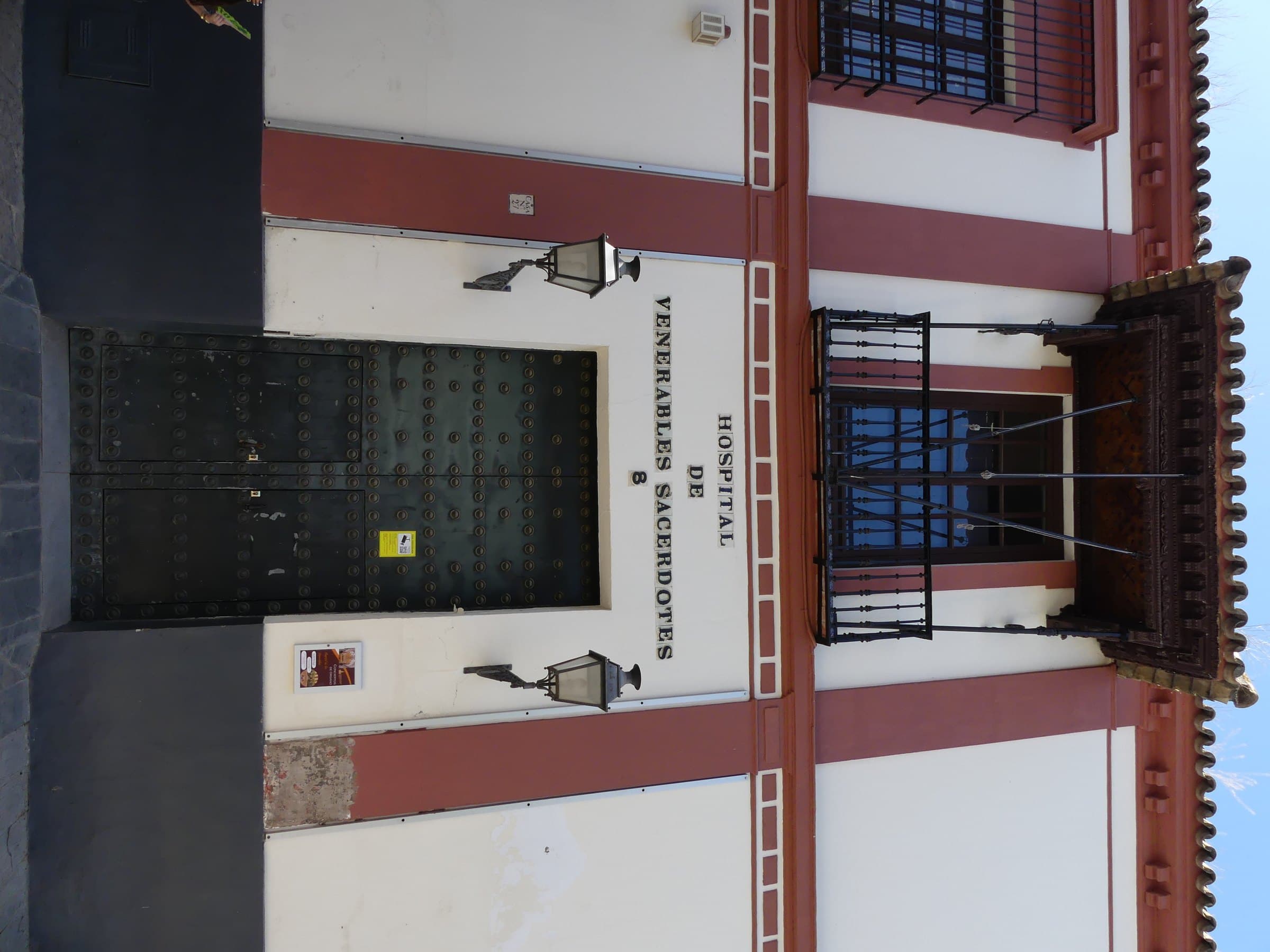
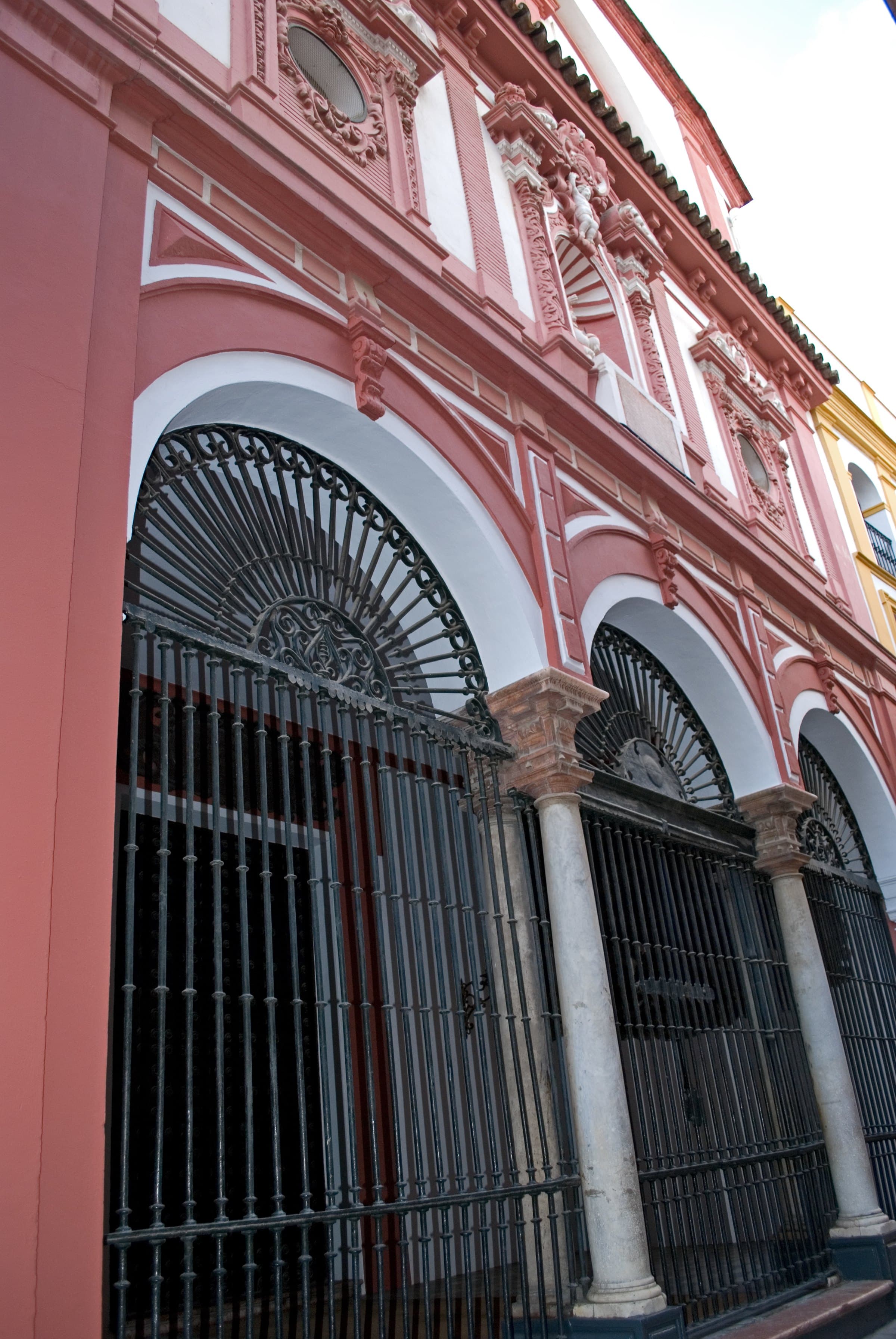
Hospital de los Venerables: Three Paintings That Left
A baroque retirement home for priests, and three great paintings that no longer hang in it.
- 8
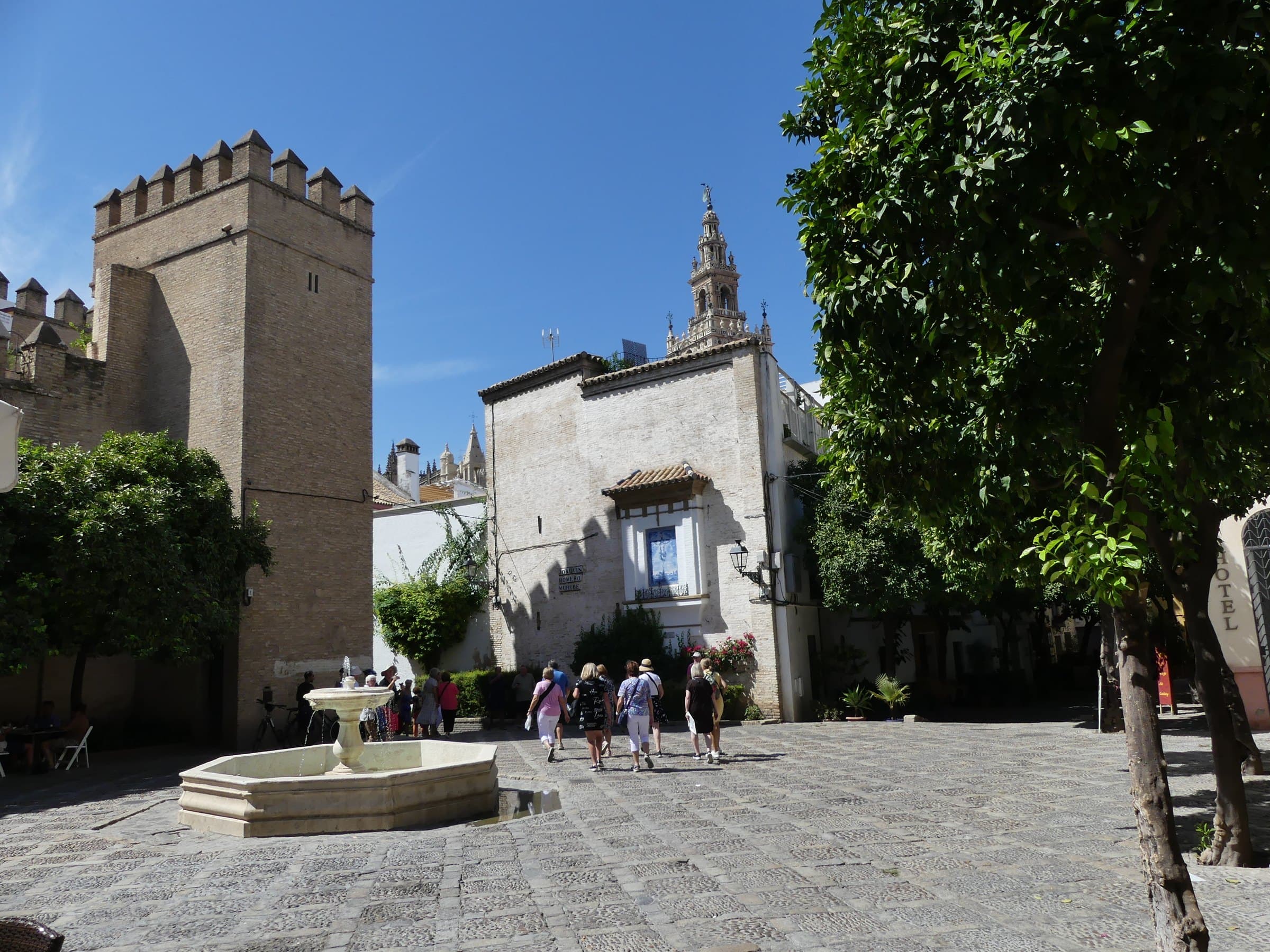
Plaza de la Alianza: A Medieval Wall with a 1960s View
A medieval wall given a 1960s view, in a square named after a textile factory.
- 9
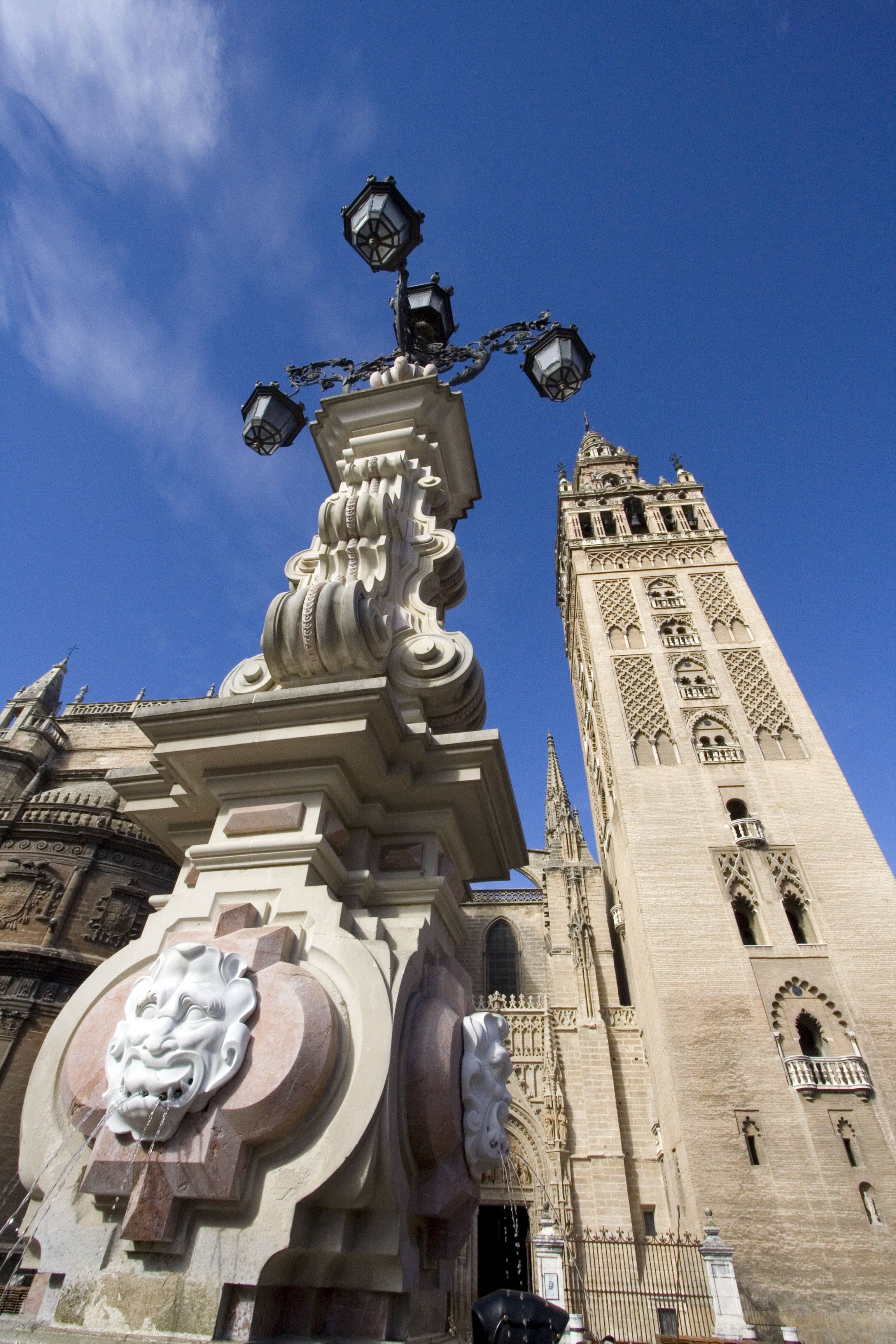
Plaza Virgen de los Reyes: The Giralda Lost Its Head
The Giralda seen entire from the square, which was solid buildings until 1791.
- 10
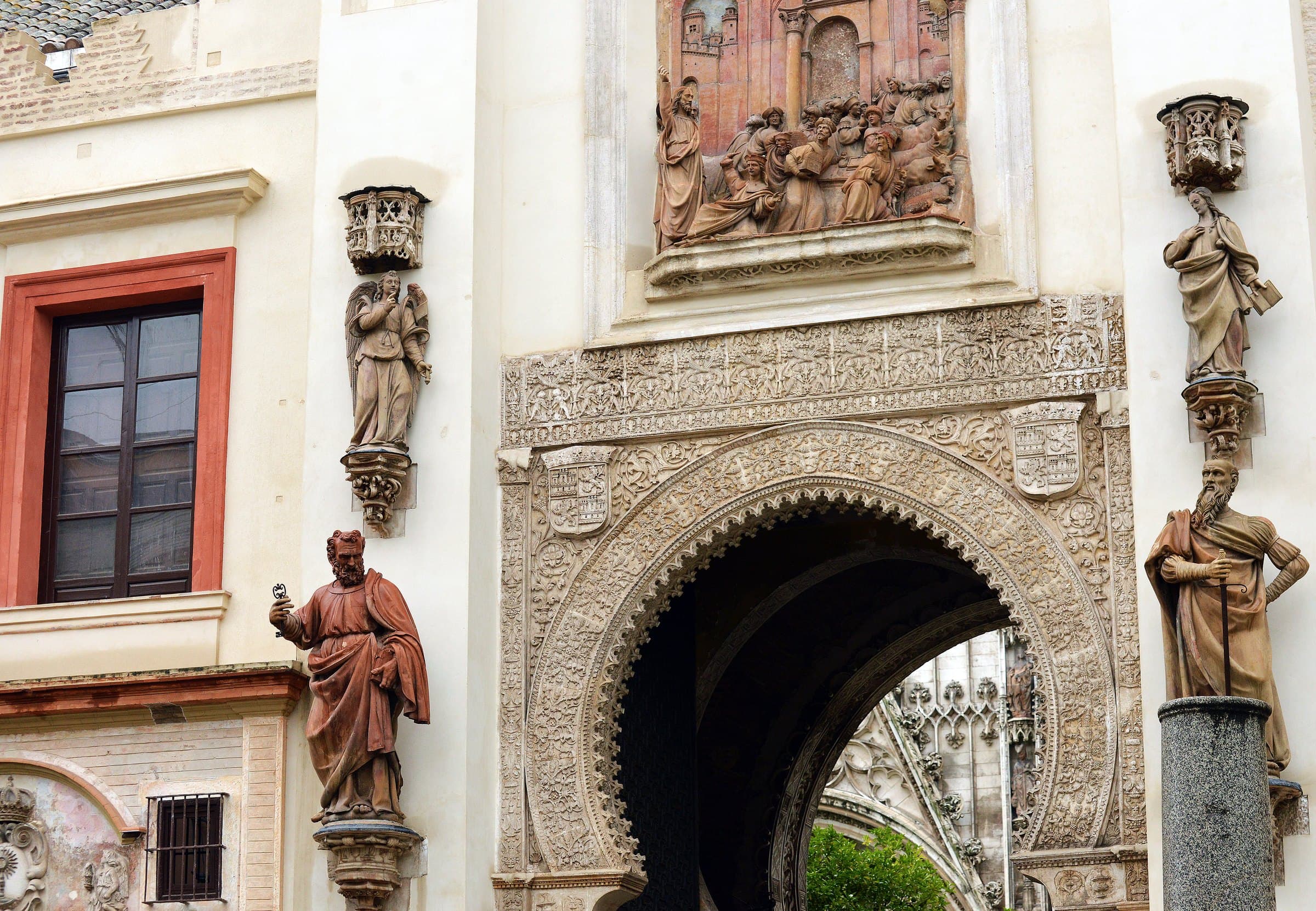
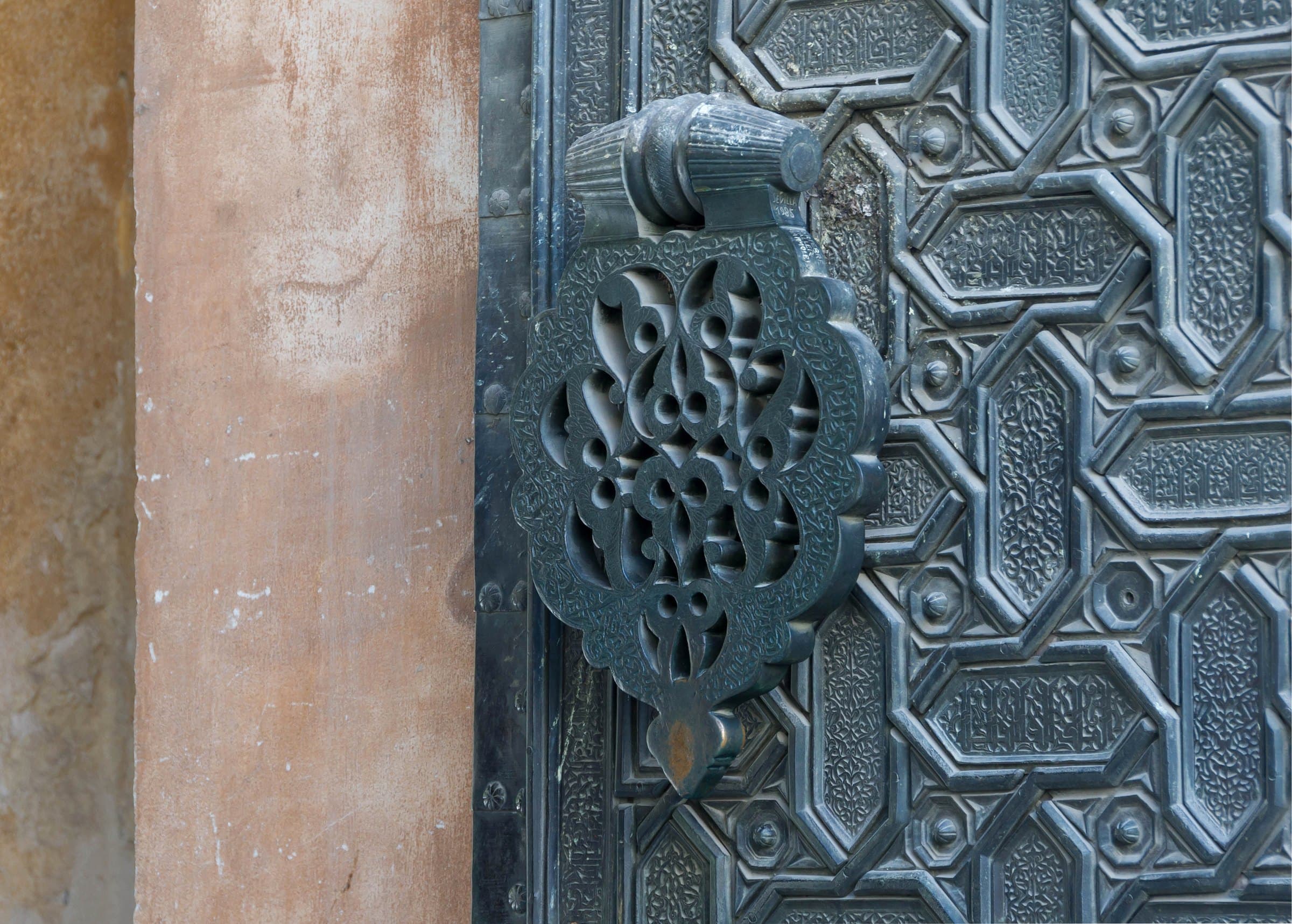
Puerta del Perdon: Arabic on a Cathedral Door
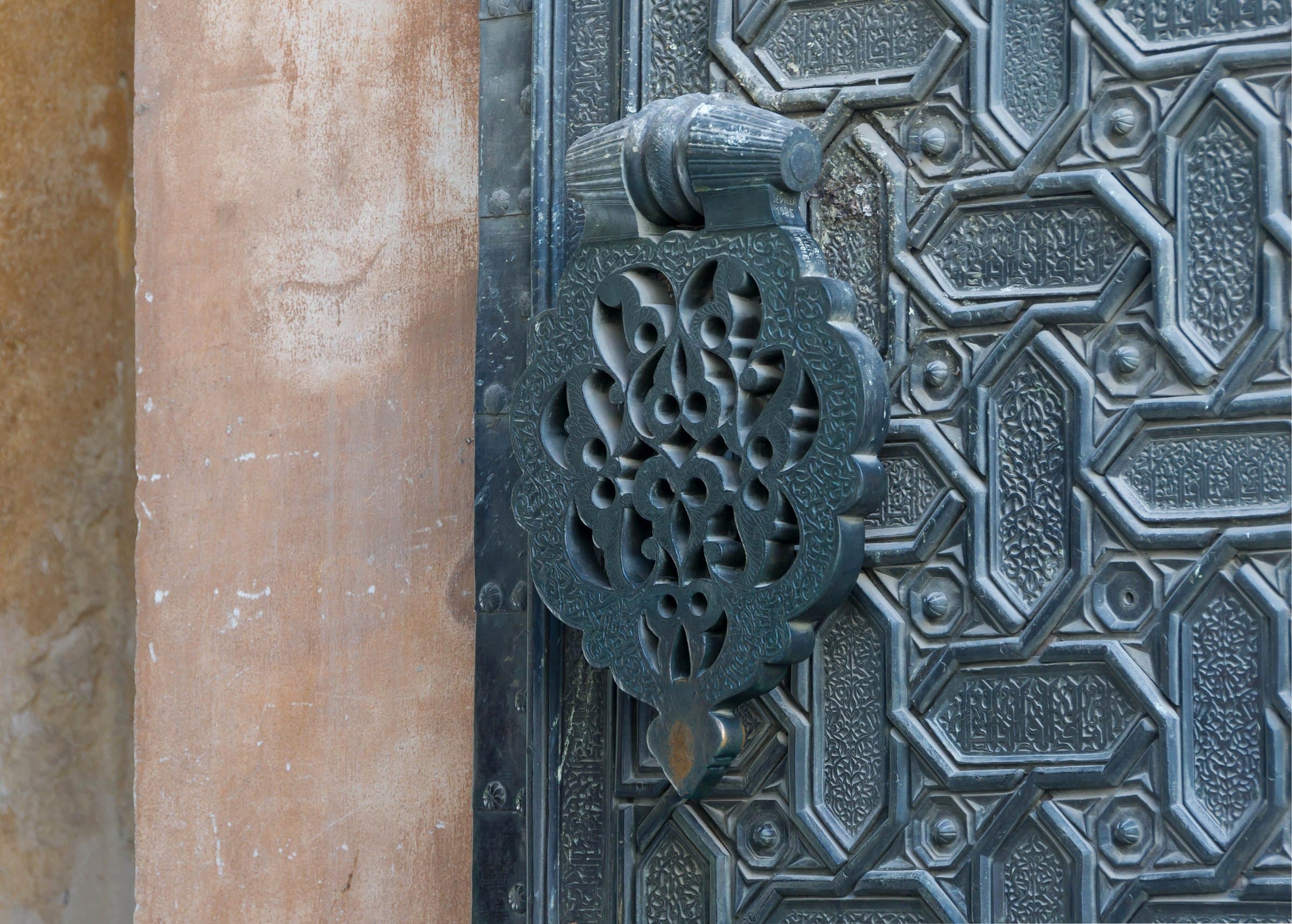
An Almohad gateway still used as a door, with Arabic scripture on its bronze since 1248.
Details
Best Time to Visit
Early morning or the last two hours of daylight. Every stop is outdoors and unticketed, so the walk works at any hour the Jardines de Murillo are open, but Andalusian summer heat from June to September makes the open squares punishing between noon and five in the afternoon. In those months start by half past eight or leave it until the late afternoon, when the light on the Giralda's brick turns and the lanes of Santa Cruz are in shade. The Barrio de Santa Cruz is busiest between mid-morning and mid-afternoon; the same streets an hour after sunrise are close to empty. Sunday mornings bring worship traffic around the cathedral doors, which affects the last two stops but blocks nothing.
Pro Tips
- •The Giralda's Renaissance crown has been under scaffolding since April 2026. The cathedral chapter announced Phase VI of the restoration, covering everything from the bell chamber up to the feet of the Giraldillo, with an estimated duration of about twenty-two months, so the top of the tower is likely to read as wrapped into 2027 and possibly 2028. Cultural visits to the monument are not interrupted. Checked 20 September 2026.
- •Nothing on this walk needs a ticket, but two of the buildings you will be looking at from outside are worth going into afterwards. The Real Alcazar charged 15.50 euro general admission and opened 09:30 to 17:00 from October to March and 09:30 to 19:00 from April to September; its ticket office is in the Patio de Banderas at stop 3, opens at 09:00 and takes card only. The cathedral and the Giralda climb charged 13.00 euro online and 14.00 at the desk, with a free public visit on non-feast Sundays. Both sell out in high season, so book online. Prices and hours checked 20 September 2026.
- •The Jardines de Murillo at stop 5 are gated and close at night. The city tourism board gives the hours as 08:00 to 22:00 in winter and 08:00 to midnight in summer, checked 20 September 2026, but municipal park hours in Seville change with the season and by resolution, so treat that as indicative and check the gate. If the gardens are shut, walk to the east end of the Callejon del Agua at Plaza Alfaro and go north up the lane from there to Plaza de Santa Cruz, about 130 metres. You lose stop 5 and the wall's outer face, and nothing else.
- •The Archivo General de Indias at stop 1 can be visited free of the walk. Its exhibition hall opened Tuesday to Saturday 09:30 to 17:00 with last entry at 16:30, and Sundays and public holidays 10:00 to 14:00, closed Mondays, with access sometimes restricted by capacity. The main door has steps; the step-free entrance is on the Plaza del Triunfo side, with a bell. Checked 20 September 2026.
- •The crypt under the Patio de Banderas, where the excavations described at stop 3 are displayed, is not a walk-in. As of the excavators' own statement it is visitable by arrangement, and the city has reported guided visits in limited groups. Check with the Alcazar or the city before counting on it.
- •The Hospital de los Venerables at stop 7 is no longer a museum. The foundation that ran it handed the building back to the archdiocese in July 2025 and it was leased to the cathedral chapter in October 2025 for a future exhibition space. Its own website now serves only a maintenance notice. Ticketed organ concerts in the church have continued. Do not plan on seeing the Velazquez there; it left with the foundation.
- •The best framed view of the Giralda on this walk is not from Plaza Virgen de los Reyes but from the south end of the Patio de Banderas at stop 3, looking back through the arch you entered by. It is about two degrees off dead centre.
Safety & Precautions
- •Every stop on this walk is free and outdoors, and no stop requires entering a ticketed building. The one exception to plan around is the Jardines de Murillo at stop 5, which are gated at night. If you find them closed, go north from Plaza Alfaro, at the east end of the Callejon del Agua, straight up to Plaza de Santa Cruz.
- •The Callejon del Agua at stop 4 and the lanes between stops 6 and 8 are narrow, with houses and hotels opening directly onto them and horse-drawn carriages on the wider routes. Stand to one side rather than in the middle while you listen, and walk in single file on Calle Mateos Gago and the approach streets.
- •Andalusian summer heat between June and September is severe and the squares at stops 2, 3 and 9 are largely unshaded. Carry water and plan a rest through the early afternoon in July and August.
- •Parts of the route between stops 5 and 6 use steps, and the paving through Santa Cruz is uneven cobble and granite sett throughout. Wear flat closed shoes, and take particular care after rain.
- •The cathedral doors, the Alcazar ticket queue in the Patio de Banderas and the narrow lanes of Santa Cruz are dense crowd points with a corresponding pickpocket risk. Keep phones and wallets in front pockets or zipped bags, particularly while stopped and looking upward.
- •The Real Alcazar remains in use by the Spanish Crown, and the gates between Plaza del Triunfo and the Patio de Banderas have carried announced conservation work. Stop 3 is inside those gates. The courtyard is free and no source publishes a closing time for it, but if you find the Plaza del Triunfo gate shut, the other way in is the arch from Calle Juderia, which has a gate of its own. If both are closed, take stop 3 from the gateway and carry on; the only other route through is inside the Alcazar's ticketed area.
Travel advisory: Exercise Increased Caution (Level 2).
Gallery
Related Reading
Go deeper on what you'll see, hear, and walk through.
Overview
Best Self-Guided Walking Tours in Seville (2026)
3 min
Overview
One Day in Seville: A Walkable Old-Town and Triana Itinerary (2026)
6 min
Overview
Seville Travel Guide: How Many Days, Getting Around, When to Go (2026)
5 min
Thematic
The Port That Monopolized the New World: How Seville Ran an Empire From One River Bend
6 min

Thematic
What to Eat in Seville: An Andalusian Food Guide (2026)
5 min
Companion
Nobody Here Started From Nothing: A Companion to Seville's Cathedral, Giralda and Alcázar
7 min
Companion
The Casa de Contratación Was Never in This Building
4 min
Deep dive
The Giralda: A Minaret That Became a Bell Tower Without Being Torn Down
4 min
Read the walk
The full story of Cathedral, Giralda and Alcazar: Nobody Here Started From Nothing, in words. Prefer to listen? Play it narrated, from home or on location.
Introduction
Seville, in the south of Spain, has changed hands by force again and again, and it has never once been cleared and started again. Every new set of rulers arrived to find the place already built, and moved in.
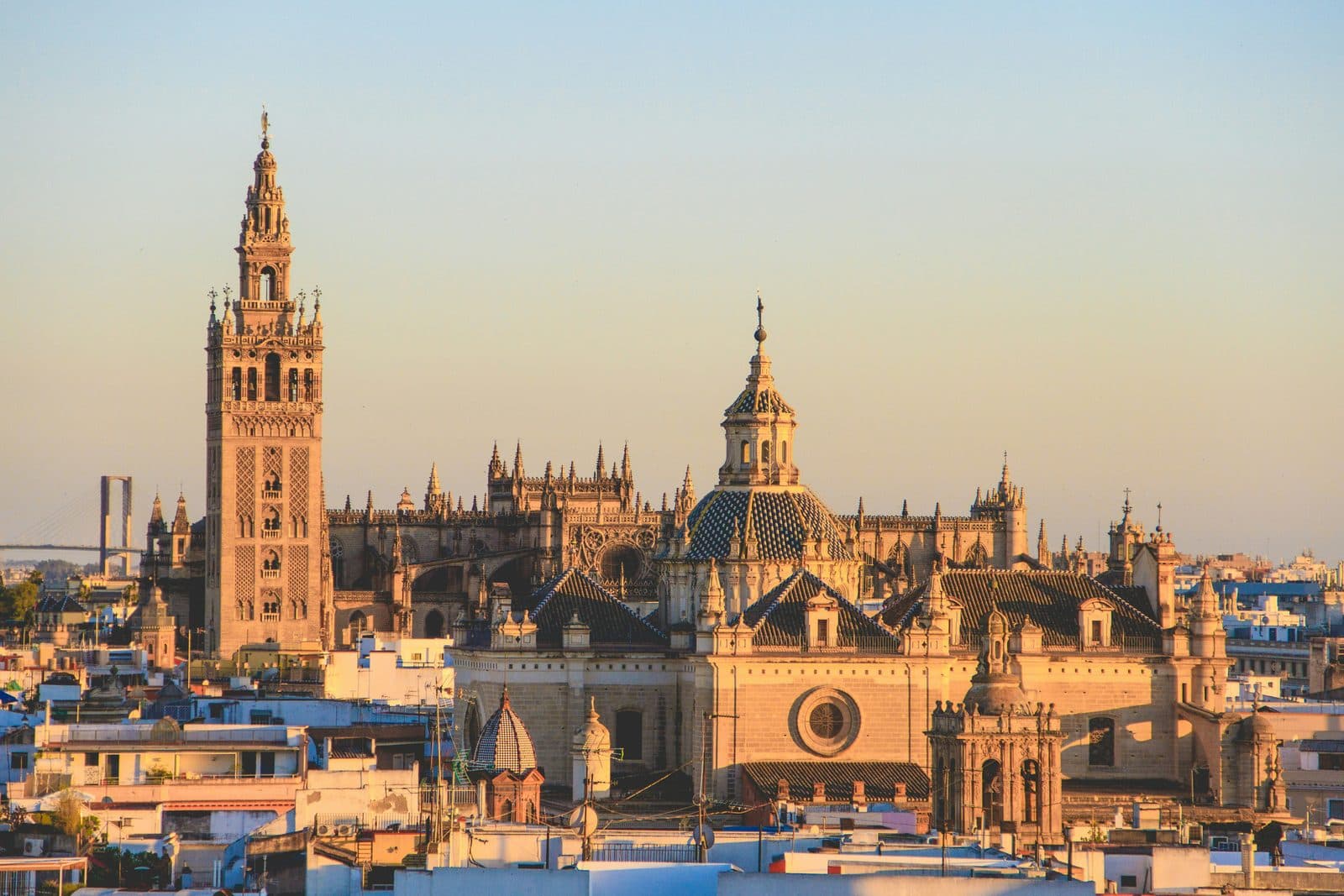
The cathedral's bell tower is a minaret wearing a Renaissance hat. The courtyard of orange trees behind it is where Muslim Seville washed before prayer, around a stone basin the cathedral says is older still, Visigothic. The royal palace stands on the ground the Muslim governor's palace stood on in the tenth century, and the Spanish royal family still uses it when they are in town.
That is the story this city tells about itself, and it is true. It is also only half the truth, and the other half is stranger. Because the Seville that appears on postcards, the whitewashed lanes, the iron cross in the little square, the open space with a medieval wall on display, was designed in the twentieth century by people who knew exactly what visitors had come to see.
Ten stops, one point seven kilometres, about ninety minutes at an easy pace. Every stop is a public street or a public square, so you will not need a ticket for any of it.
By the end you should be able to tell the two Sevilles apart. You may be surprised which one you end up liking.
1. Archivo General de Indias: The Building That Is Not Built on Anything
Welcome to Seville, and thank you for spending the next hour and a half with me.
The long building beside you, stone pilasters with panels of brick between them and a balustrade running right around the top, is the Archivo General de Indias. For nearly two and a half centuries it has held the paperwork of the Spanish empire in the Americas. And it is the one building on this walk that was not inherited. Everything else you will see today was taken over and reused. This was bought up, pulled down and started from scratch, and the money came from a tax: one third of one per cent on every item loaded or unloaded in the port of Seville, the King's own cargo excepted. Building began in 1583 and ran on into the middle of the next century. Juan de Herrera drew the design and never ran the site. Six men directed the works in succession, and one of them, Miguel de Zumarraga, vaulted the upper floor in stone instead of roofing it in timber, because timber was heavier and timber burns.
Here is the part to hold on to. This building exists to solve a problem you will meet again at the very last stop of this walk. Seville's merchants had no exchange, so they did their business on the cathedral steps, and when it rained they went inside the cathedral itself. This is where they were sent instead, and they paid for it themselves, through that tax on their own cargo.
Then the trade moved to Cadiz in 1717. The rooms emptied. Families moved in and lived here. What Carlos the Third turned into an archive in 1785 was, by then, a tenement.
Walk on down the avenue with the building on your left, and take the first turn left along its far end. The grain store on your right as you go is the Cilla del Cabildo, put up in 1770 out of the same earthquake you are about to hear about.
2. Plaza del Triunfo: Three Landlords and an Earthquake
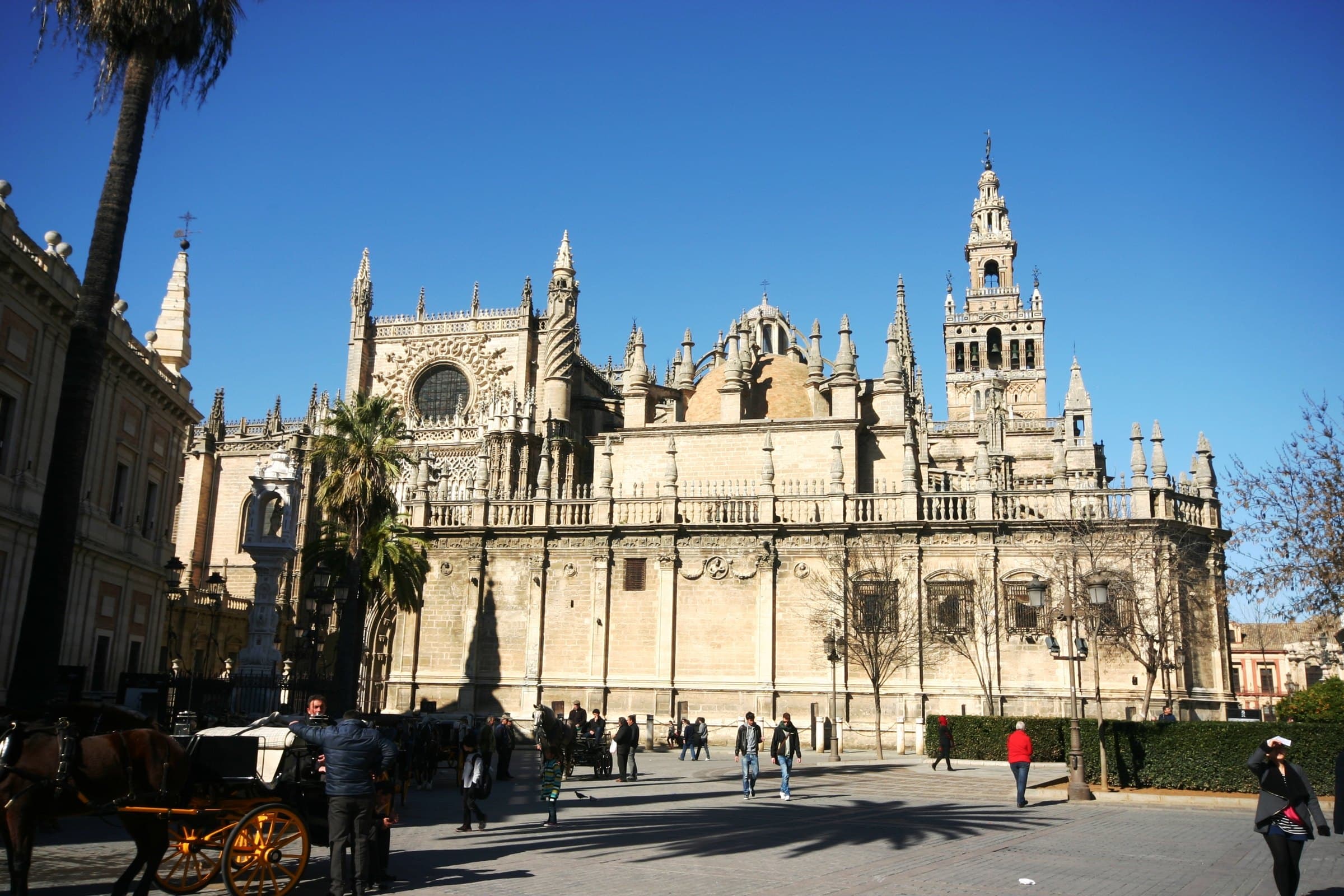
You are in the middle of Plaza del Triunfo, and this is the one spot in Seville where you can turn slowly on your heel and see three World Heritage buildings, each answering to a different landlord.
On your left, the cathedral, which belongs to the Church. Behind you and round to the right, the long pale wall with the gateway in it, the Real Alcazar, which belongs to the city. And straight behind you, the Archivo you have just left, which belongs to the state. One listing, three owners, about a hundred metres apart.
The monument just behind your left shoulder, inside its iron railing, is the reason this square exists at all. On the first of November 1755, at around ten in the morning, the earthquake that destroyed Lisbon reached Seville. The congregation ran out of the cathedral and finished Mass standing on this open ground. Six people died in the whole city. The cathedral chapter had that number cut into the pedestal, in Castilian and in Latin, and it is still legible.
They decided the ground had been made holy, and they put up a monument to hold the spot. It was unveiled on the thirty-first of October 1756, a year less a day after the earthquake.
And then the city council made them build it shorter. The council's condition, written down in April 1756, was that it be made as low as could be managed so as not to spoil the beauty of the view of the exchange. The chapter redrew it. Two hundred and seventy years later the instruction is still readable in the object: a low monument on a big square, with the four lanterns on the railing kept down to the height of the canopy. The council won that argument.
One more thing, and it will matter later. Nobody laid this square out as a square until the twentieth century. It was finished in 1918.
3. Patio de Banderas: The Cathedral That Was Not There
Walk on to the far end of the courtyard, stop there, and look back at the archway you came in through.
That is the view people come in here for: the Giralda standing inside it. The tower is two hundred metres away and about two degrees off the line of that opening, which is close enough.
This is the Patio de Banderas. It sits inside the walls of the Alcazar and it costs nothing. The ticket office is in here, which is why there is usually a queue along the western side, but the courtyard itself is public ground.
Now, the famous thing about the earth under your feet is a thing that turned out not to be there.
For about thirty years the accepted story was that Seville's first cathedral lay underneath this square: the Visigothic basilica of San Vicente, where Saint Isidore was buried. It came out of a dig in the nineteen seventies and it hardened into common knowledge. Then between 2009 and 2014 archaeologists opened more than two thousand square metres of this ground, and found no church. No baptistery. Nothing that would suggest a bishop's complex at all. What they did find was a large secular courtyard building from around the year 500, and below that, six metres down, a Roman warehouse quarter that lay outside the city and worked a port.
They also found the mark of something violent in the early third century. They think it may have been a tsunami. They are careful to say may, and preliminary, and that it needs confirming in the years ahead, so I will be careful too.
Almost everything at eye level here is furniture, and fairly recent furniture. Benches and a fountain in 1816, the benches taken out in 1857, the orange trees swapped in afterwards, the whole centre redone for the 1929 exhibition. The oldest thing you can see is the wall.
4. Callejon del Agua: A Wall Promoted to an Aqueduct
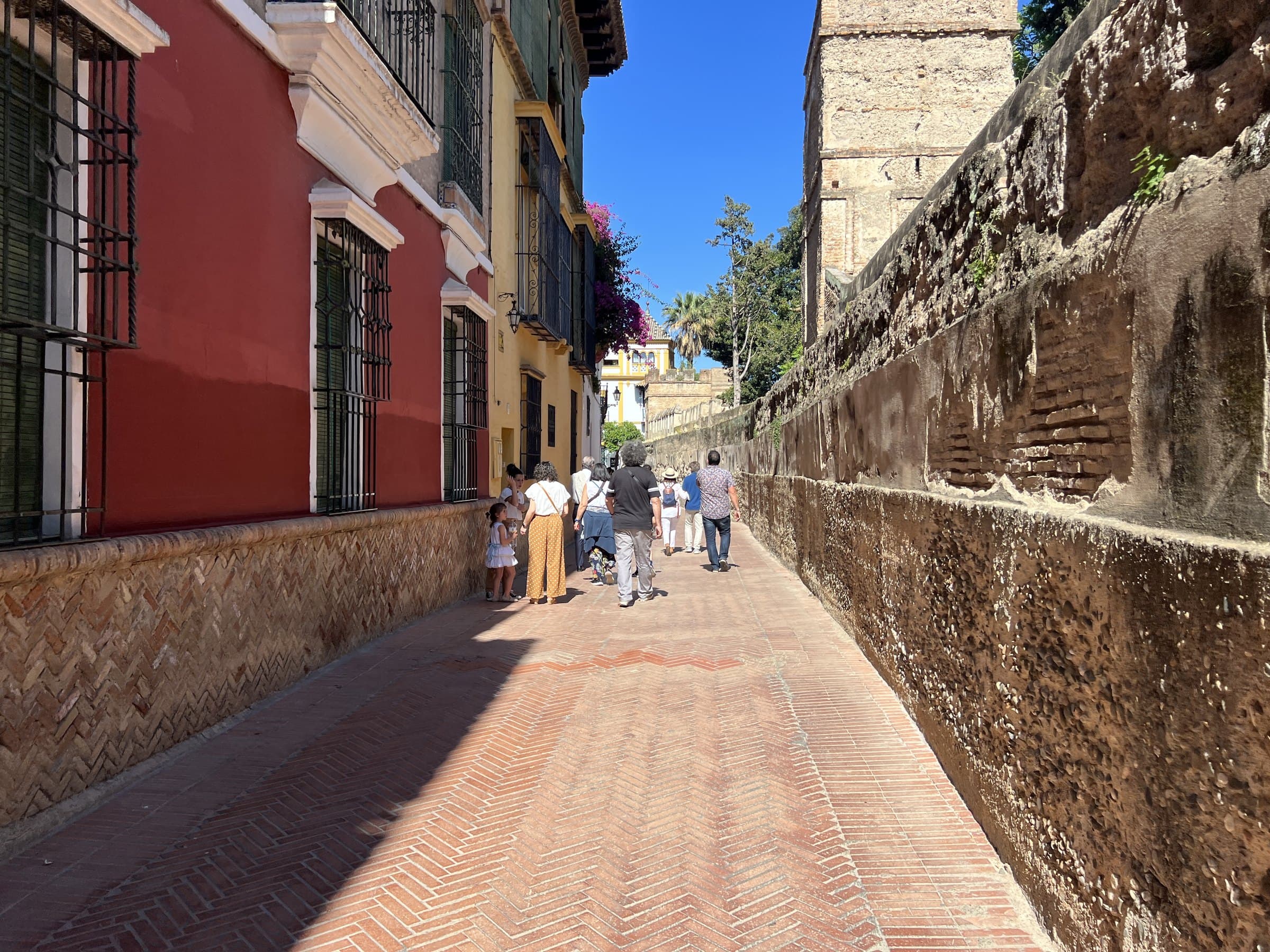
The wall running along beside you is what gives this lane its name, and nearly everything people say about it is wrong in a way worth unpicking. It is not the Alcazar's wall. It is the city wall, the wall of the medina, and the Alcazar was a separate and far smaller enclosure…
Full narration for this stop unlocks with the tour.
5. Jardines de Murillo: The Orchard the Palace Gave Up
Ahead of you the wall is cut clean through, and the gap you are about to walk into is not medieval. It was driven through in 1911, straight through the fabric, to open a street called Calle Nicolas Antonio. Go through it slowly, because the cut is the best thing on this walk.…
Full narration for this stop unlocks with the tour.
6. Plaza de Santa Cruz: The Cross That Arrived in 1918
The iron cross beside you is the picture everybody takes in this quarter, and it has only been here since 1918. It was forged in 1692 by a master ironsmith called Sebastian Conde, for a different square entirely, a little open space off Calle Sierpes, the best part of a…
Full narration for this stop unlocks with the tour.
7. Hospital de los Venerables: Three Paintings That Left
On your right, filling the whole north side of this square, is the Hospital de los Venerables Sacerdotes. The plain door on this side is the one the priests used; the carved front is round the corner on Calle Jamerdana, the street you came down. Venerable is not a compliment…
Full narration for this stop unlocks with the tour.
8. Plaza de la Alianza: A Medieval Wall with a 1960s View
This little square is the newest thing you will stand in all morning, and it is pretending to be the oldest. Look at the Alcazar wall along it, then look at how much room you have been given to look at it. That room is deliberate. At the start of the 1960s the city drove a…
Full narration for this stop unlocks with the tour.
9. Plaza Virgen de los Reyes: The Giralda Lost Its Head
There it is, straight ahead. This is the place to see the whole tower at once, which is a different thing from the framed shot you got back in the Patio de Banderas. Do not walk all the way in. From the far side of the square you can take in the whole tower at once; from the…
Full narration for this stop unlocks with the tour.
10. Puerta del Perdon: Arabic on a Cathedral Door
The gateway in front of you is where this walk has been going all morning. Those bronze-faced leaves are Almohad, made in the eleven nineties, and for a long time they were printed as Christian work of 1478. They are not. The inscriptions settled it. Each leaf carries over two…
Full narration for this stop unlocks with the tour.