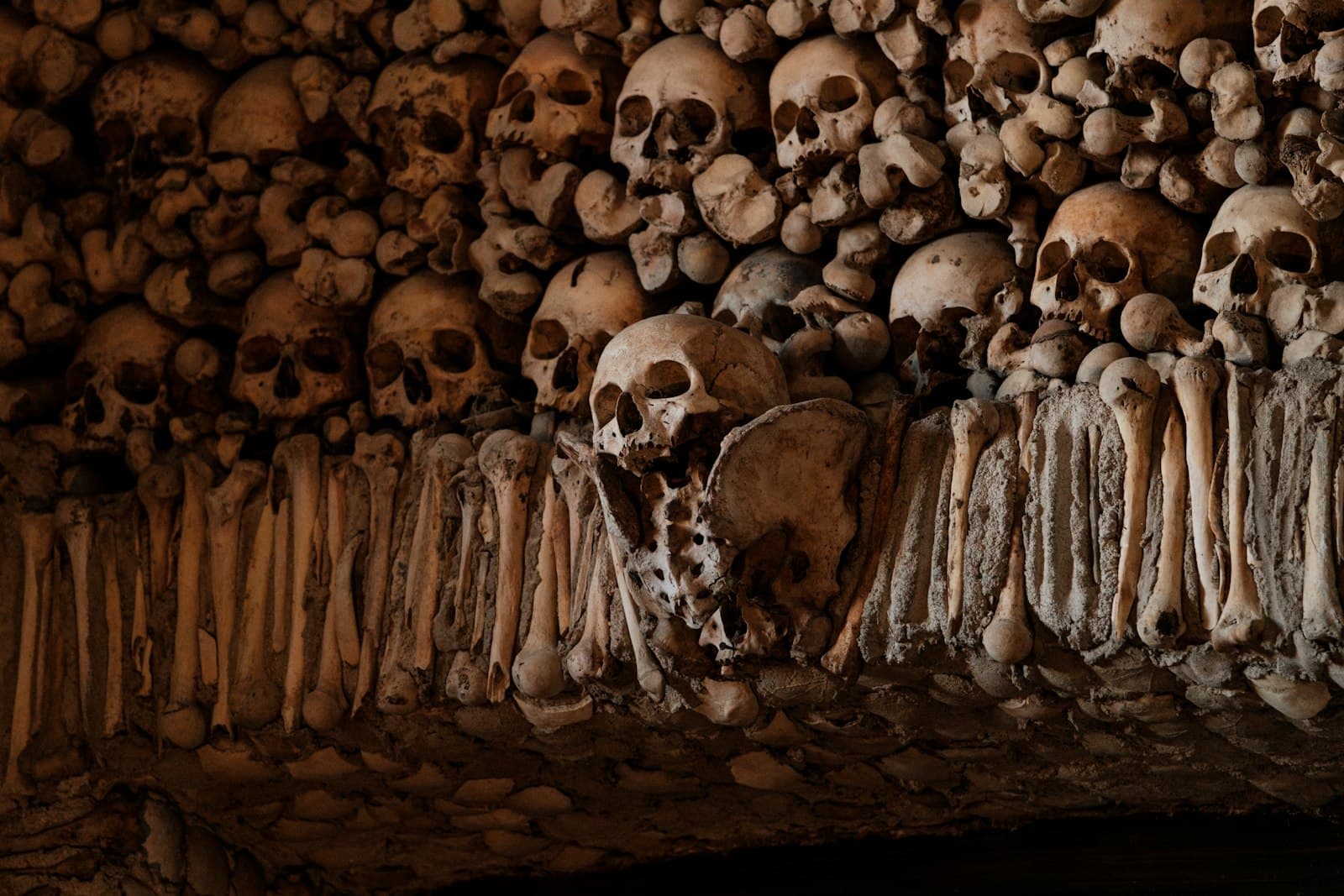
A walk through the southern old town of Evora, Portugal, built around a chapel whose walls are made from the bones of roughly five thousand of the dead, and the royal, pious, fearful city that made such a sermon possible.
Start · Capela dos Ossos: the Chapel of Bones
DirectionsStops
- 1
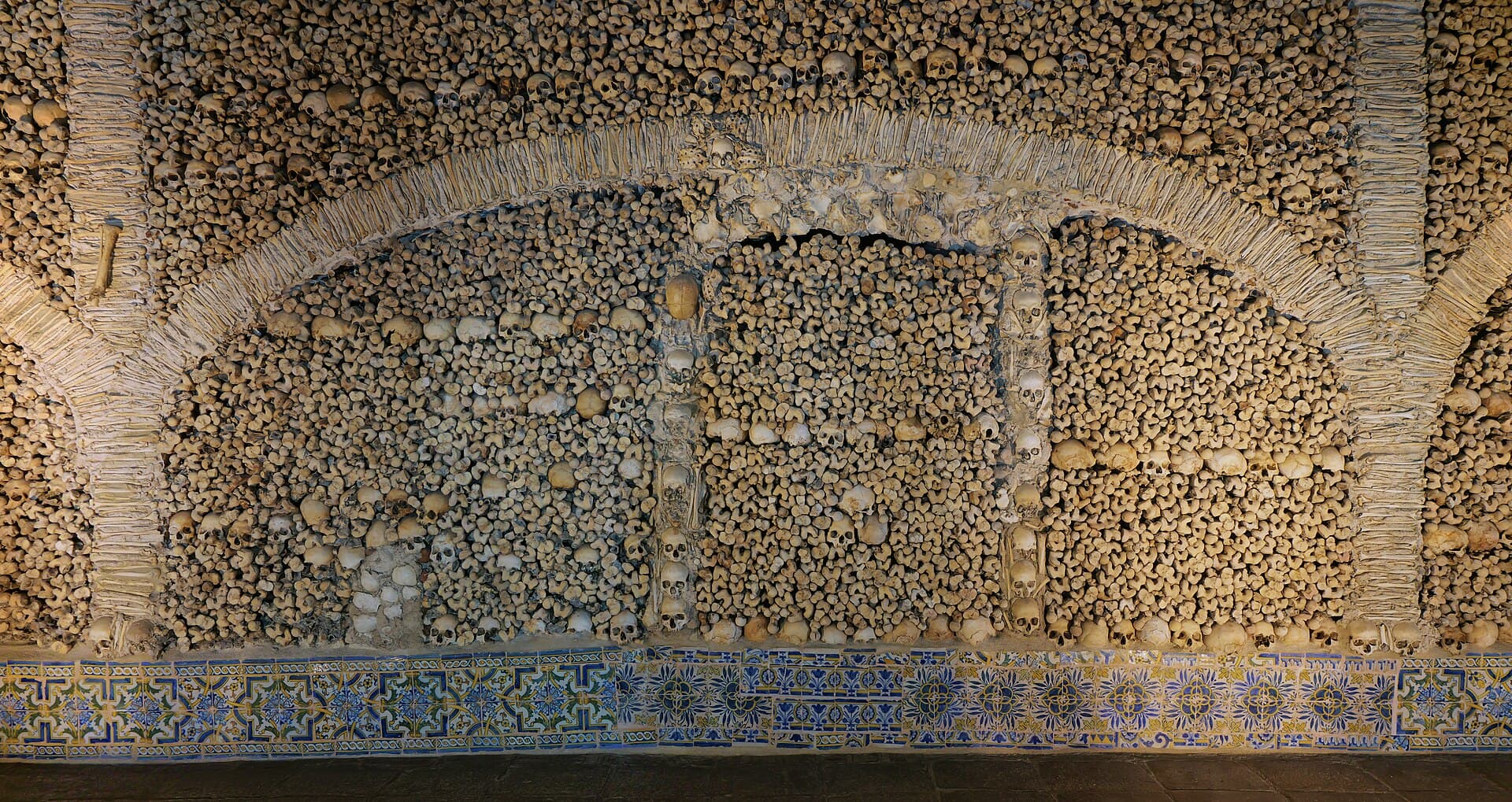
Capela dos Ossos: the Chapel of Bones
A small chapel inside the Church of Saint Francis whose walls and eight pillars are lined with the bones of roughly five thousand people, meant as a meditation on mortality rather than a fright.
- 2
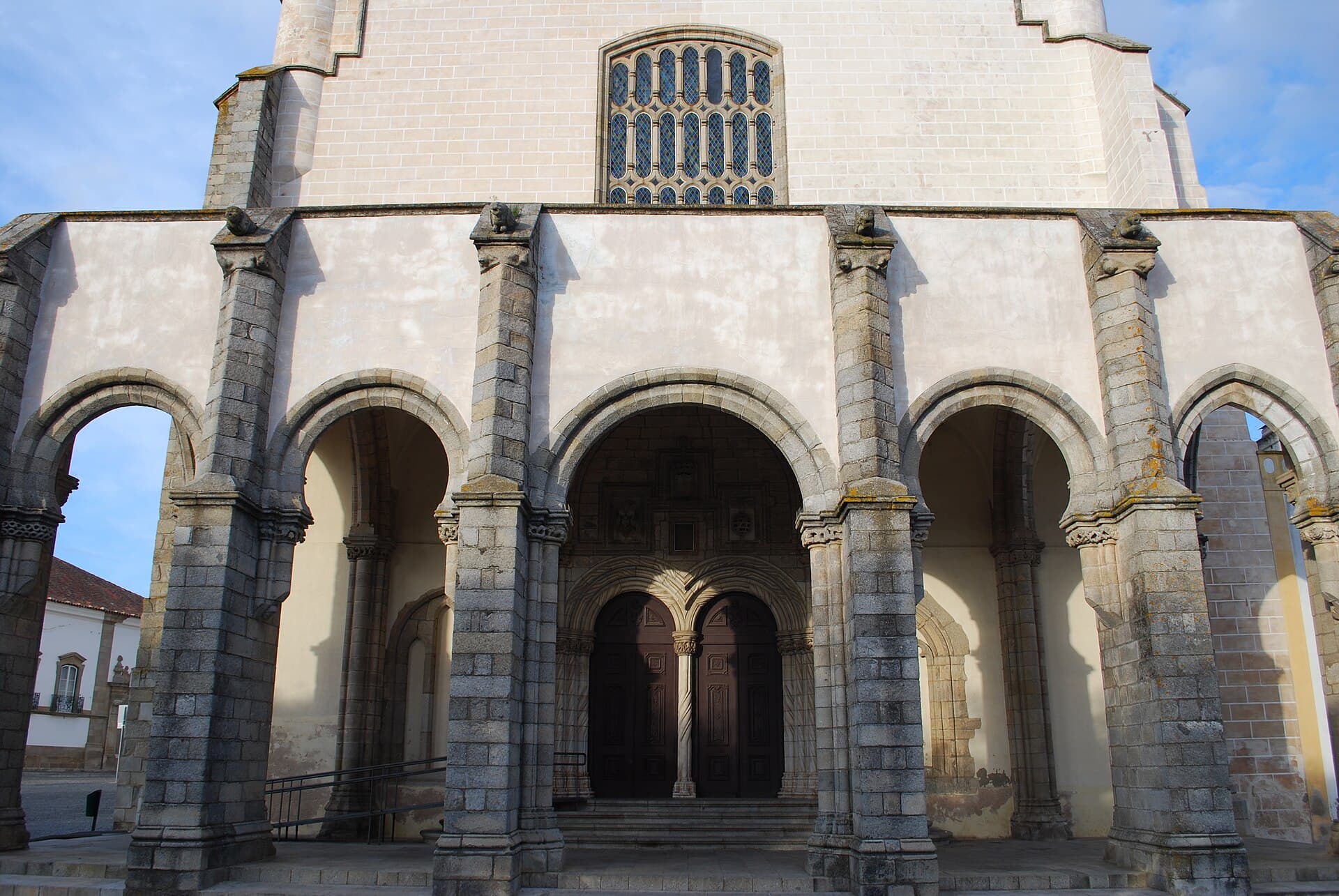
Igreja de Sao Francisco: the royal Gothic church that holds it
The large Gothic church, built for royal use in the late fifteen hundreds, that houses the Chapel of Bones and carries the emblems of two Portuguese kings above its door.
- 3
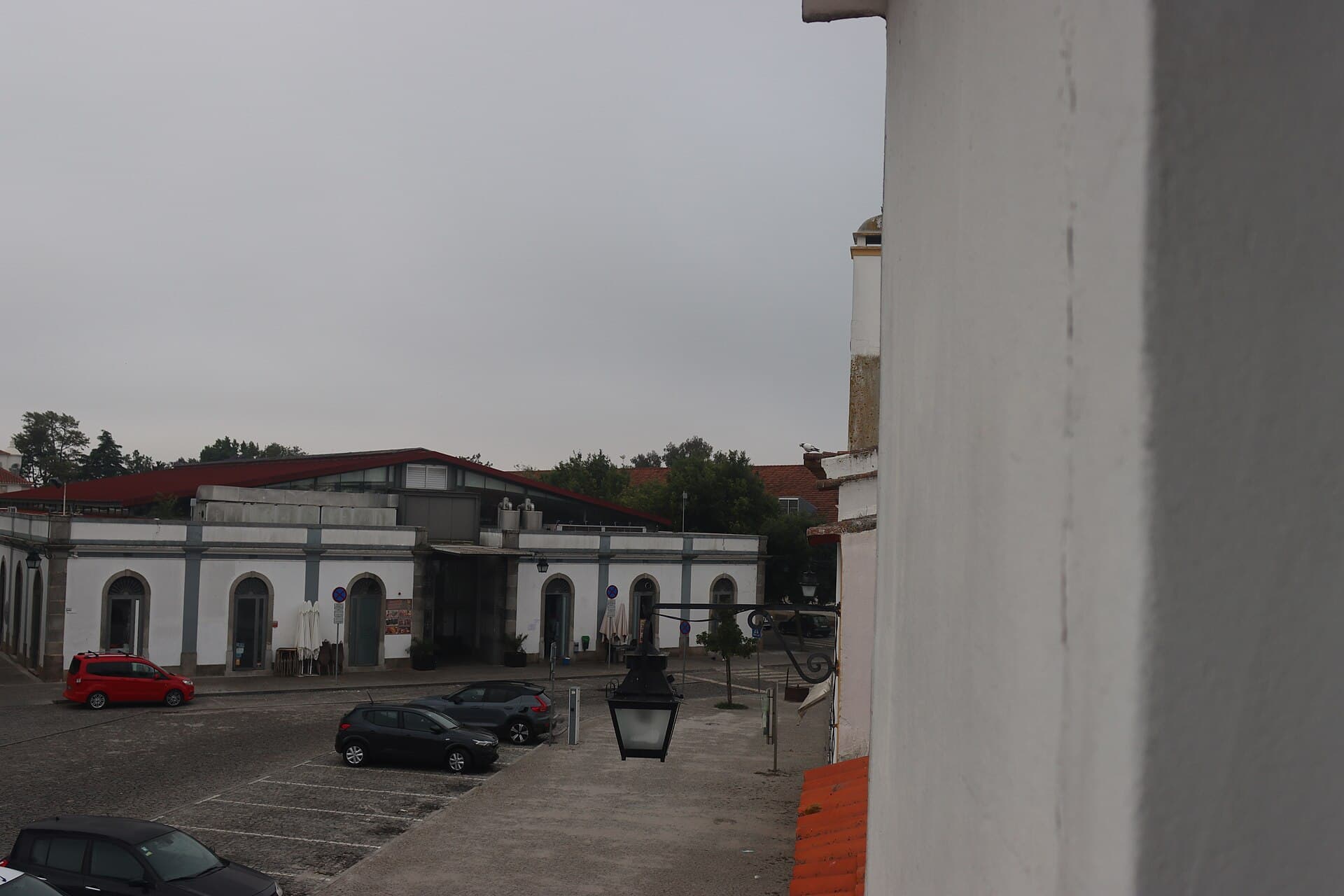
Praca 1 de Maio: the medieval lower town and its market
The square beside the church, home to Evora's municipal market, where the medieval lower town still gathers around Alentejo food and daily trade.
- 4
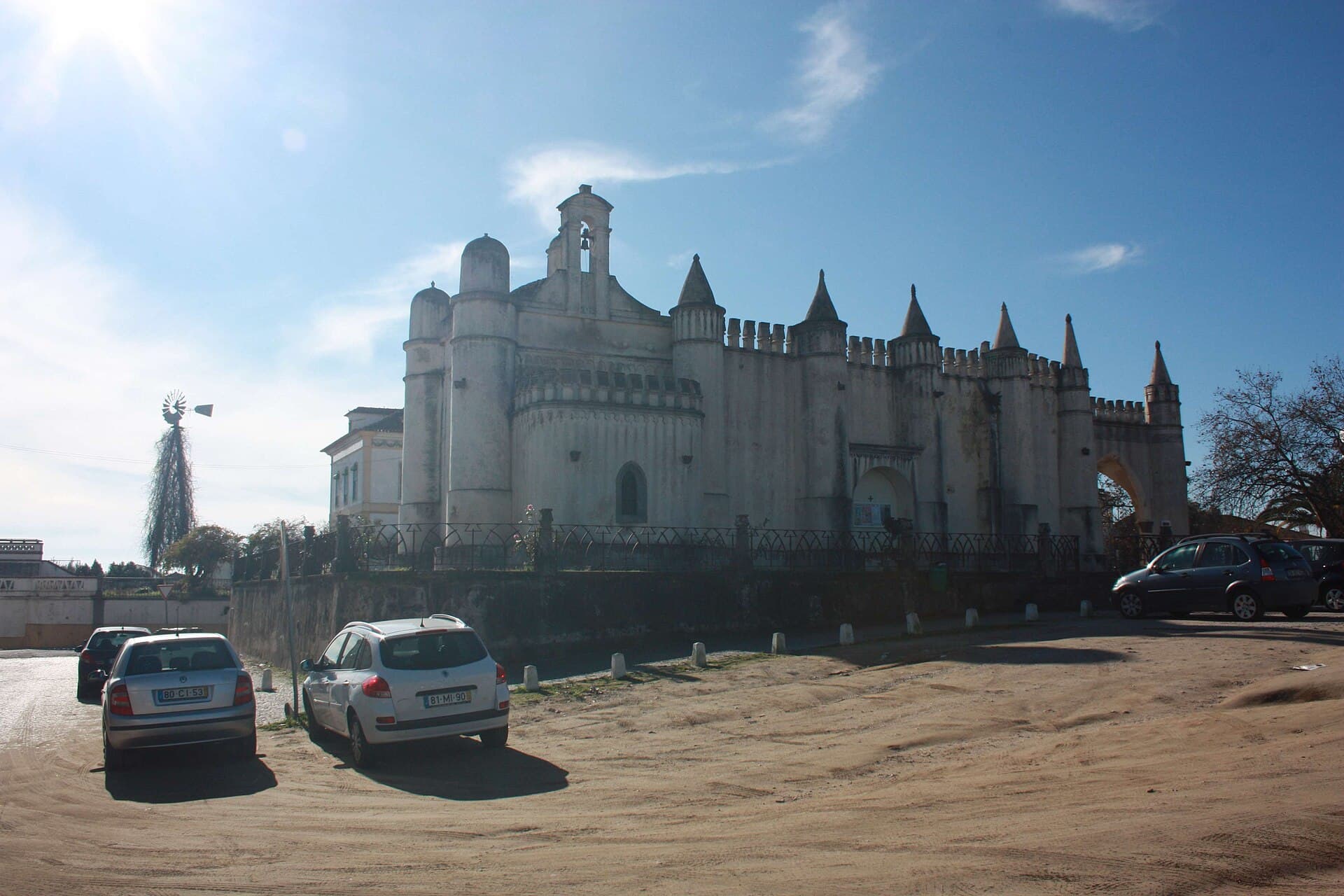
Ermida de Sao Bras: the fortified plague hermitage
A crenellated, fortress-like hermitage just outside the old walls, ordered around fourteen eighty on the site of a plague hospital and dedicated to a saint invoked against epidemics.
- 5
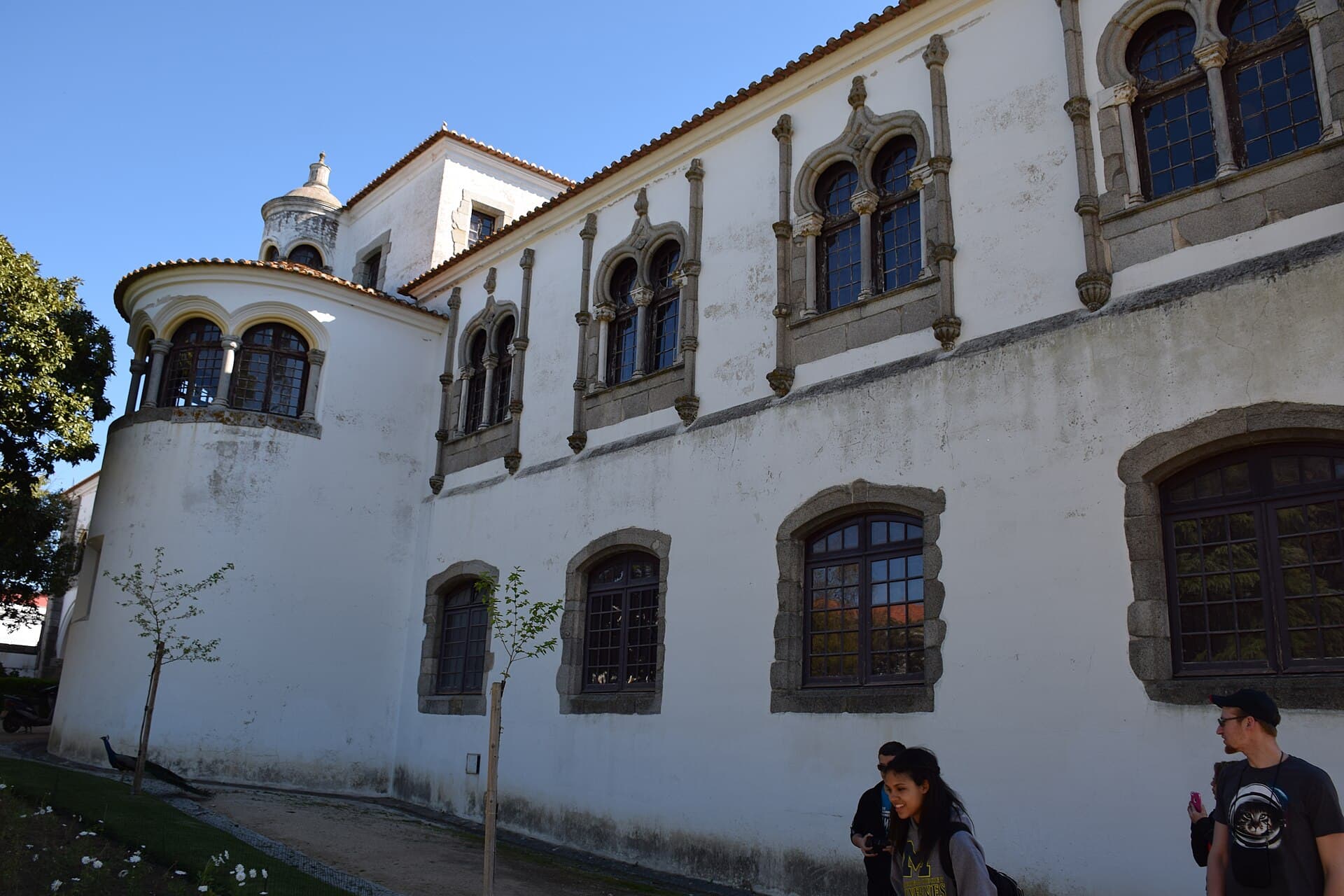
Jardim Publico and the Palacio de Dom Manuel
A public garden holding the sole surviving pavilion of Evora's former royal palace, from which, by tradition, Vasco da Gama's India expedition was commissioned.
- 6
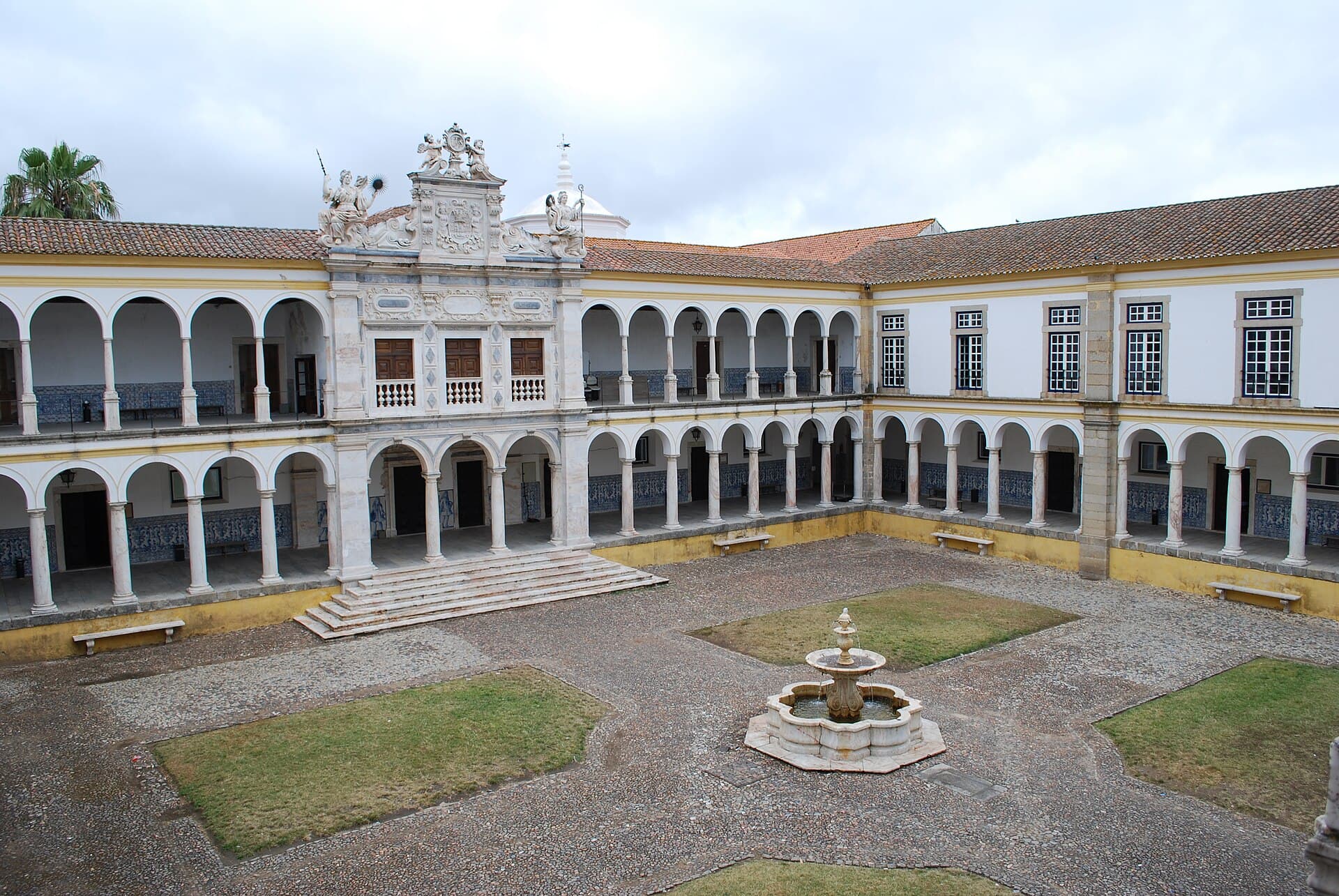
Inquisition Evora and the Counter-Reformation city
A closing stop, anchored near the old Jesuit university, that names the religious power behind everything on this walk: an archbishopric, an Inquisition seat, and a Counter-Reformation stronghold.
Details
Best Time to Visit
Late morning is ideal: the Chapel of Bones and the Church of Saint Francis are open, the municipal market is at its liveliest, and the light is still soft before the Alentejo afternoon heat sets in. Spring and autumn are the most comfortable seasons overall, since Evora's inland summers run very hot. If you visit in summer, start early and save the shaded garden for midday.
Pro Tips
- •The Chapel of Bones is entered through the Church of Saint Francis on a combined ticket, usually around six euros, so plan to see both stops one and two together in a single visit.
- •Bring a few euros in coins for the market and small admissions; some of Evora's monuments and church interiors take cash more readily than cards.
- •The interiors of the fortified hermitage and the surviving palace gallery keep limited and irregular hours, so treat their exteriors as the main event and consider any open door a bonus.
- •Carry water and wear a hat: much of this walk is exposed, and the Alentejo sun is strong even in shoulder season.
- •Save the Jardim Publico for last as a shaded rest stop, and if the palace gallery is hosting an exhibition, step inside since access is often free or low-cost.
- •Photography inside the Chapel of Bones is usually permitted, but keep it quiet and unobtrusive: it remains a place of contemplation, not a set.
Safety & Precautions
- •Evora's old town is built on a hill of calcada, traditional Portuguese stone paving, which becomes slippery when wet and uneven underfoot: wear grippy, flat shoes and watch your footing on the slopes.
- •In summer the inland Alentejo heat can be intense with little shade on the exposed stretches, so pace yourself, hydrate, and avoid the midday sun.
- •Several stops are active churches and a hermitage: dress modestly with shoulders and knees covered, keep your voice low, and respect any services in progress.
- •The narrow lanes carry occasional cars and delivery traffic with almost no sidewalk, so stay alert and step aside for vehicles, and expect ticket queues at the Chapel of Bones during busy periods.
Travel advisory: Exercise Normal Precautions (Level 1).
Gallery
Related Reading
Go deeper on what you'll see, hear, and walk through.
Overview
Best Self-Guided Walking Tours in Evora (2026)
4 min
Overview
Evora Travel Guide: Days, Transport, Best Time, Safety, and Budget
7 min
Overview
One Day in Evora: A Morning-to-Evening Walking Itinerary
11 min
Thematic
Evora: The Museum City That Never Stopped Being Lived In
7 min
Companion
The Chapel of Bones in Evora: Why a City Lined a Wall With Its Dead
6 min
Deep dive
Ermida de Sao Bras: The Fortress Chapel Evora Built Against the Plague
7 min
Read
What to Eat in Evora: The Alentejo Dishes and How to Order Them
7 min
Read the walk
The full story of Capela dos Ossos: The Chapel Built of the Dead, in words. Prefer to listen? Play it narrated, from home or on location.
Introduction
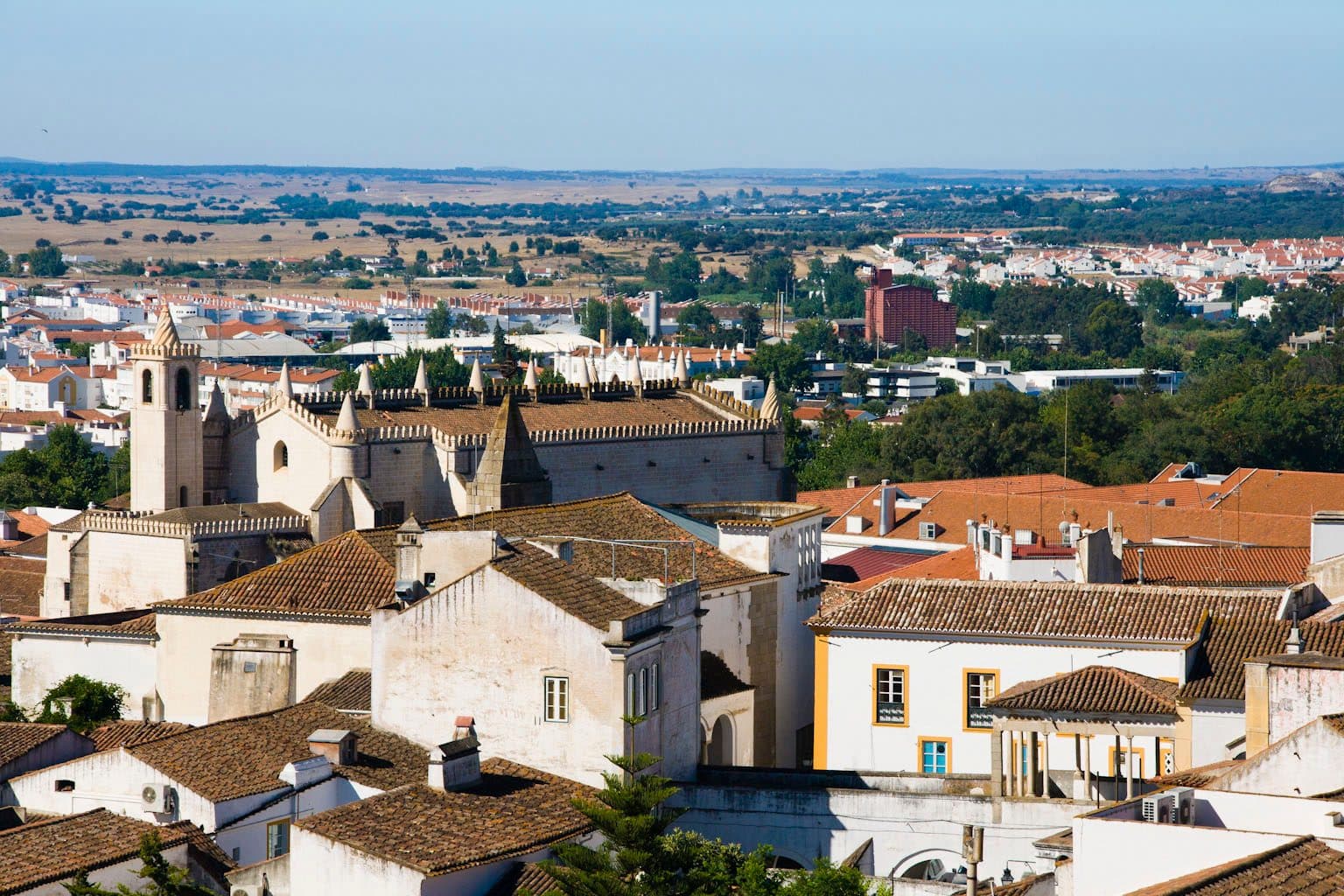
Evora sits on a low hill in the Alentejo, the sun-baked interior of southern Portugal, and its historic centre is a UNESCO World Heritage Site of whitewashed walls, Roman stone, and Gothic churches. This walk has six stops. It runs about two and a half kilometres, and if you move at your own pace, pausing where you like, it takes about ninety minutes on foot, more if you go inside the monuments. You can skip any stop and the thread still holds. The thread is this. Evora's most notorious room is a chapel whose walls and eight pillars are built from the bones of roughly five thousand of the dead, arranged by Franciscan friars, greeting every visitor with a line carved at the door. It reads like a warning. The friars meant it as a consolation. We begin inside that paradox and then step back to see the city that produced it: a royal residence, a seat of the Portuguese Inquisition, a Counter-Reformation power that turned wealth and fear into stone. You will see a Gothic church, a living market square, a fortified hermitage born from plague, and the surviving fragment of a royal palace. Death here is not a horror-show. It is the most articulate thing in the room, and the walk holds the beauty and the dread together rather than choosing one. Wear something you can enter a church in, since several stops are active places of worship. When you arrive at the Capela dos Ossos, the Chapel of Bones, inside the Igreja de Sao Francisco, begin with stop one.
1. Capela dos Ossos: the Chapel of Bones
Stand at the entrance and read the line first, because the friars wanted you to read it before you understood what you were looking at. In Portuguese it says, Nos ossos que aqui estamos, pelos vossos esperamos. We bones that are here await yours. Then you look up, and the walls resolve into what they are made of. This chapel, the Capela dos Ossos, is roughly eighteen point seven metres long and eleven metres wide, and its surfaces and its eight pillars are lined with human bones and skulls, arranged in careful patterns. According to Wikipedia, roughly five thousand corpses were exhumed from Evora's overcrowded medieval cemeteries to build it. The Franciscan friars who assembled it did so, most likely, in the late fifteen hundreds or early sixteen hundreds. The sources genuinely disagree on the exact year, so I will not pretend to give you one. What is not in doubt is the purpose. This was a memento mori, a reminder that you will die, built at a time when Evora was rich and its citizens comfortable. The friars were not trying to frighten you. They were trying to slow you down, to make you sit with the transience of everything you were chasing outside. Two desiccated bodies hang here, one of them a child. You will hear a dramatic story about a cursed adulterer attached to them. That story is folklore, not record, so hold it lightly. Take your time. The room rewards stillness, which is exactly what it was designed to demand.
2. Igreja de Sao Francisco: the royal Gothic church that holds it
Step back out into the main body of the church, because the Chapel of Bones is only a side room of something much grander. This is the Igreja de Sao Francisco, the Church of Saint Francis. Igreja means church. It was built roughly between fourteen seventy-five and the fifteen fifties, designed by an architect recorded as Martim Lourenco, and it replaced an earlier Romanesque church from the year twelve twenty-six. The style is Gothic, with Manueline touches, that ornate Portuguese idiom named for King Manuel the First. Look at the single wide nave overhead. Wikipedia describes it as one of the largest single naves of its kind in Portuguese churches, its groin-vaulted proportions spanning about thirty-six by thirty-four by twenty-four metres. In front, a narthex of seven arches blends Gothic and Moorish lines, a very Alentejo combination. Now look above the main doorway, because the church tells you who it belonged to. You will find the pelican, the emblem of King Joao the Second, and the armillary sphere, the emblem of King Manuel the First. This was a royal church. Building intensified after King Afonso the Fifth planned to lodge in part of the monastery during his stays in Evora, and its magnificence came under Manuel the First, who reigned from fourteen ninety-five to fifteen twenty-one. By tradition, the pioneering playwright Gil Vicente is associated with burial here. The church has been a National Monument since the year nineteen ten. The friars built the sermon of bones. The kings built the stage that houses it.
3. Praca 1 de Maio: the medieval lower town and its market
Come out into the open air of Praca 1 de Maio, the First of May Square. Praca means square. After the hush and the bone, this is the antidote: an ordinary, living place in the lower old town, in the parish of Se e Sao Pedro. The square holds the Mercado Municipal, the municipal…
Full narration for this stop unlocks with the tour.
4. Ermida de Sao Bras: the fortified plague hermitage
Walk out toward the southern edge of the old town, to the Ermida de Sao Bras, the Hermitage of Saint Blaise. Ermida means hermitage. It will surprise you, because it does not look like a chapel at all. It looks like a small fortress: cylindrical buttress-towers ringed with…
Full narration for this stop unlocks with the tour.
5. Jardim Publico and the Palacio de Dom Manuel
Ease off now into the Jardim Publico, the public garden. Jardim means garden. It is a calm, green pause, and it holds a remarkable survivor: the Palacio de Dom Manuel, also called the Galeria das Damas, the Ladies' Gallery. Palacio means palace. This elegant pavilion, with its…
Full narration for this stop unlocks with the tour.
6. Inquisition Evora and the Counter-Reformation city
End your walk in the upper old town, near the former University of Evora, the Colegio do Espirito Santo, the College of the Holy Spirit. This is where you name the force behind everything you have seen. A chapel made of five thousand bodies, a fortress against plague, a royal…
Full narration for this stop unlocks with the tour.