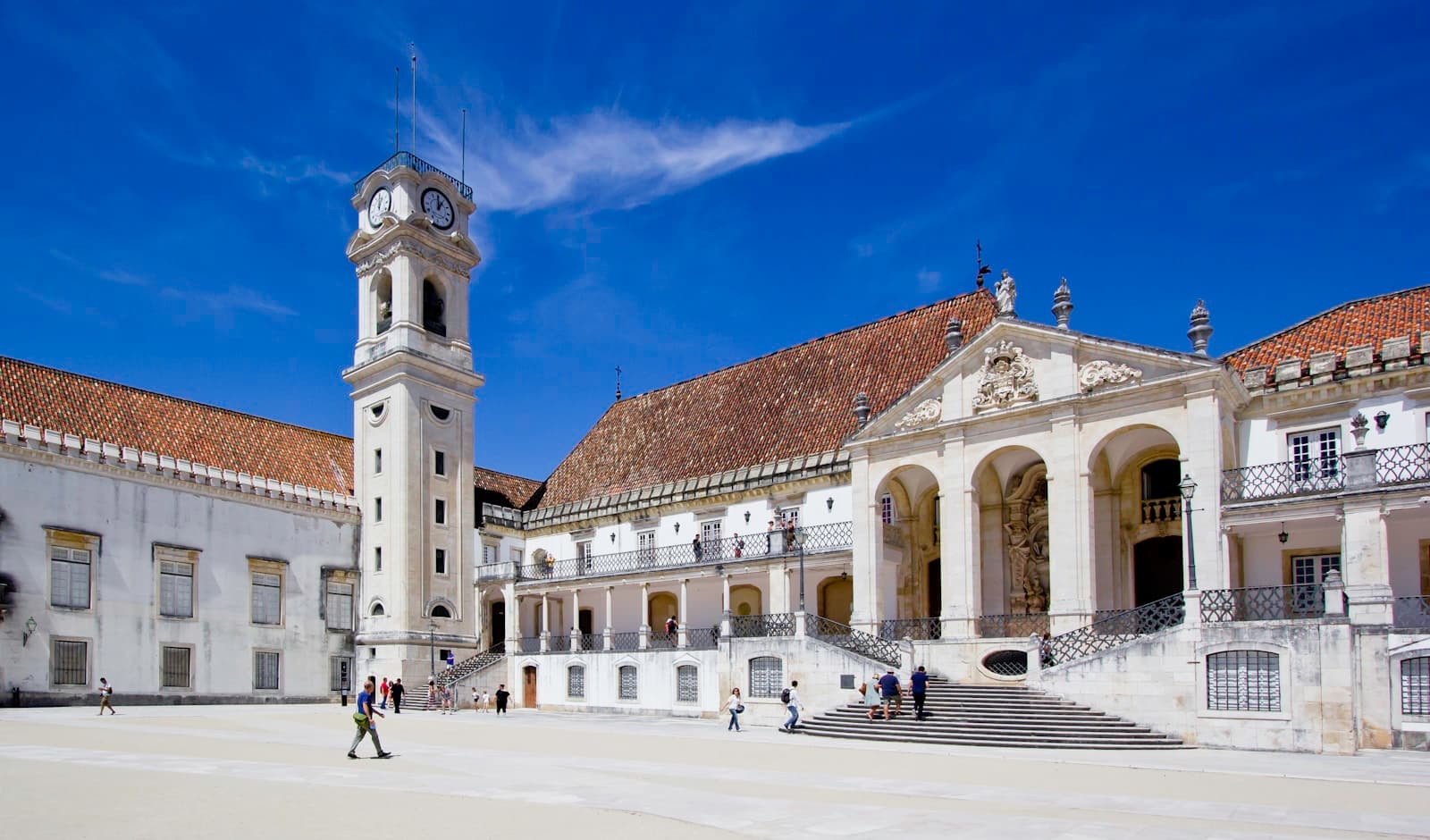
Climb the hill where a palace of kings became a palace of scholars, and read a whole Portuguese city built around one ancient school, from its Romanesque cathedral to a gilded baroque library guarded by bats.
Start · Se Velha de Coimbra: The Old Cathedral
DirectionsStops
- 1
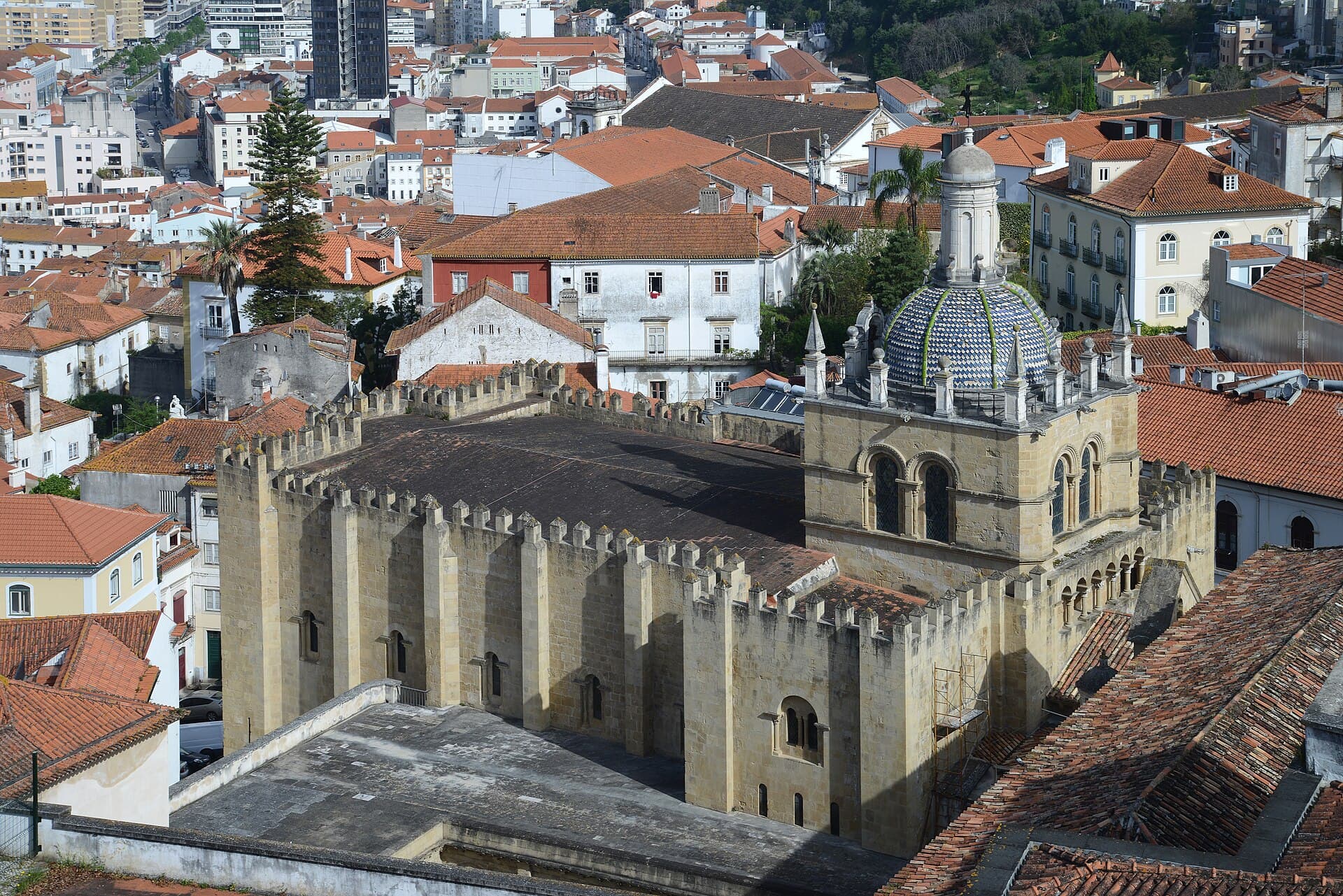
Se Velha de Coimbra: The Old Cathedral
A fortress-like Romanesque cathedral from the mid-twelfth century, the stone seed of Christian Coimbra long before the university climbed the hill above it.
- 2
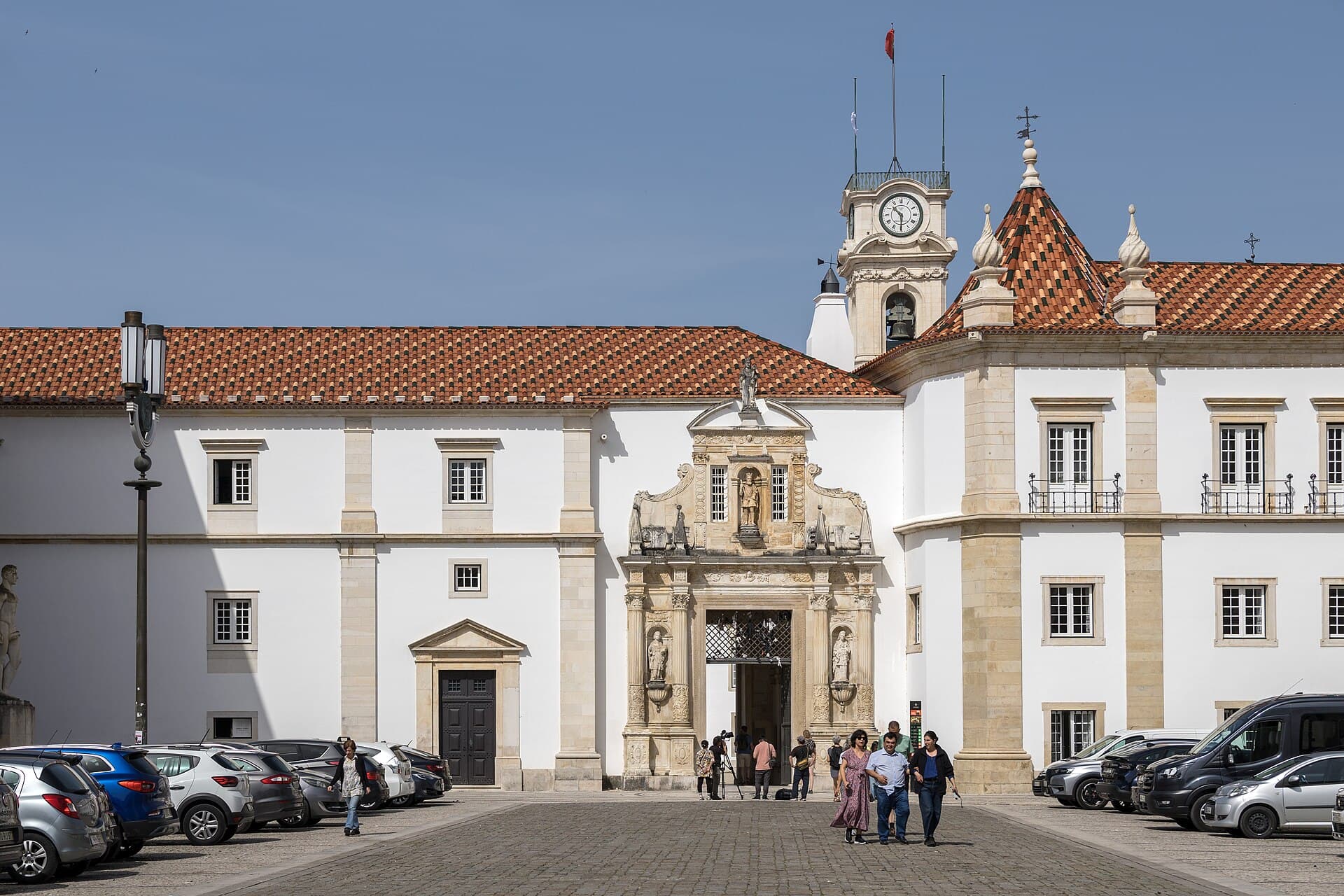
Porta Ferrea: The Iron Gate
A seventeenth-century ceremonial arch built on the site of the old Moorish citadel gate, the threshold where the medieval city ends and the palace of scholars begins.
- 3
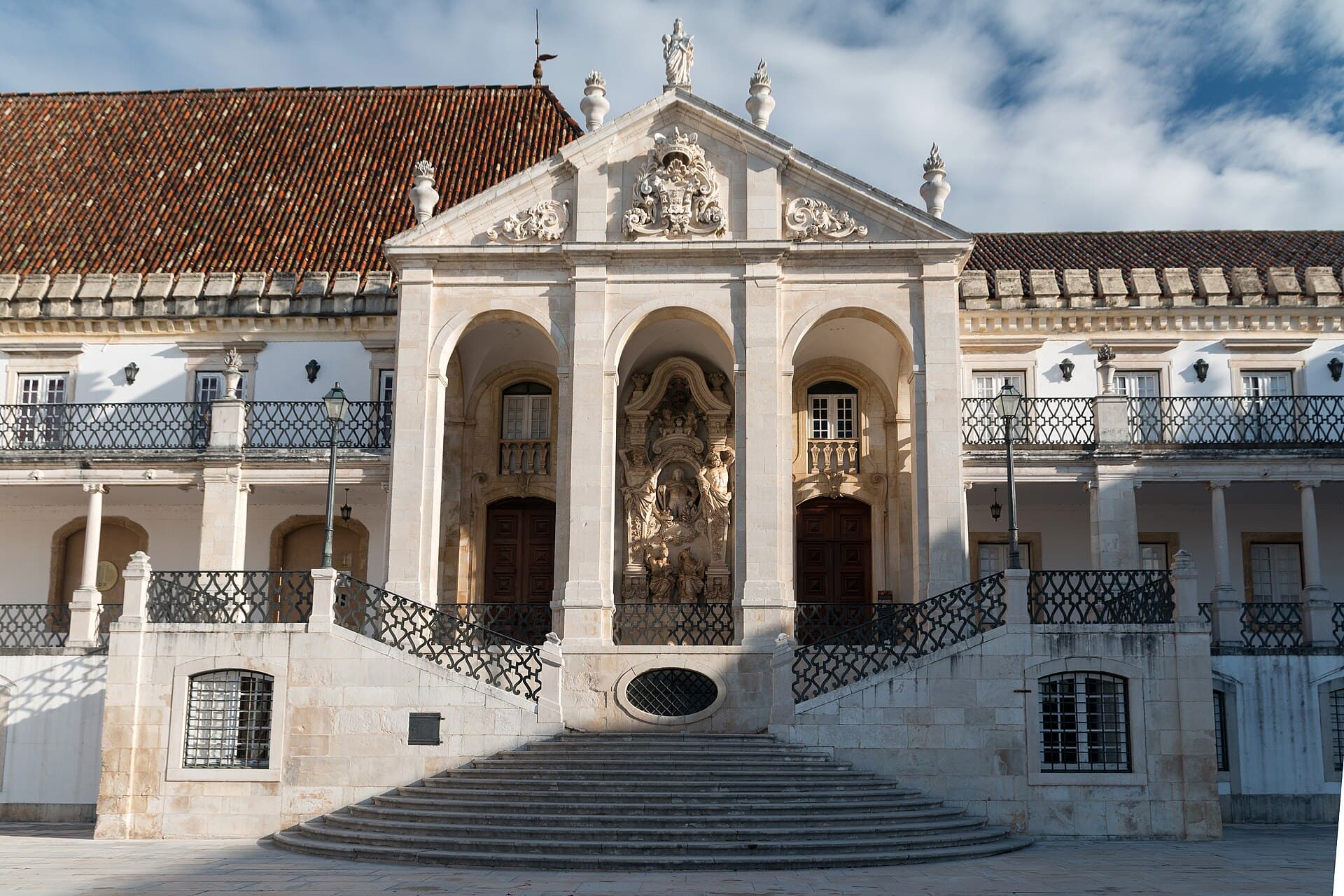
Paco das Escolas and the Via Latina: The Palace of the Schools
The U-shaped former royal courtyard, once the palace of kings and now the ceremonial heart of the university, overlooking the river Mondego far below.
- 4
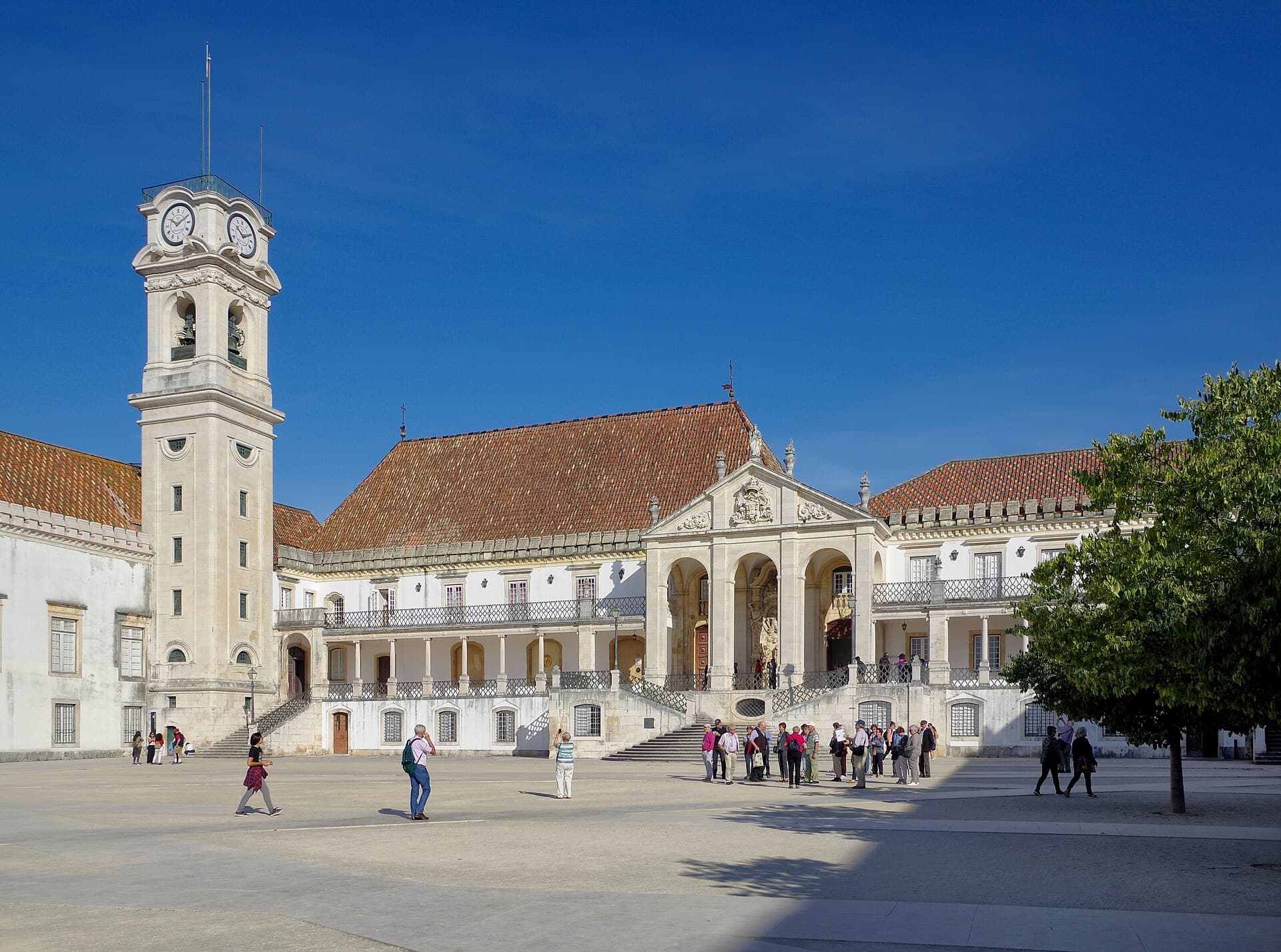
Torre da Universidade: The Tower and the Goat Bell
The eighteenth-century clock and bell tower whose bell, nicknamed the goat, rang the academic hours and the evening curfew that structured student life for centuries.
- 5
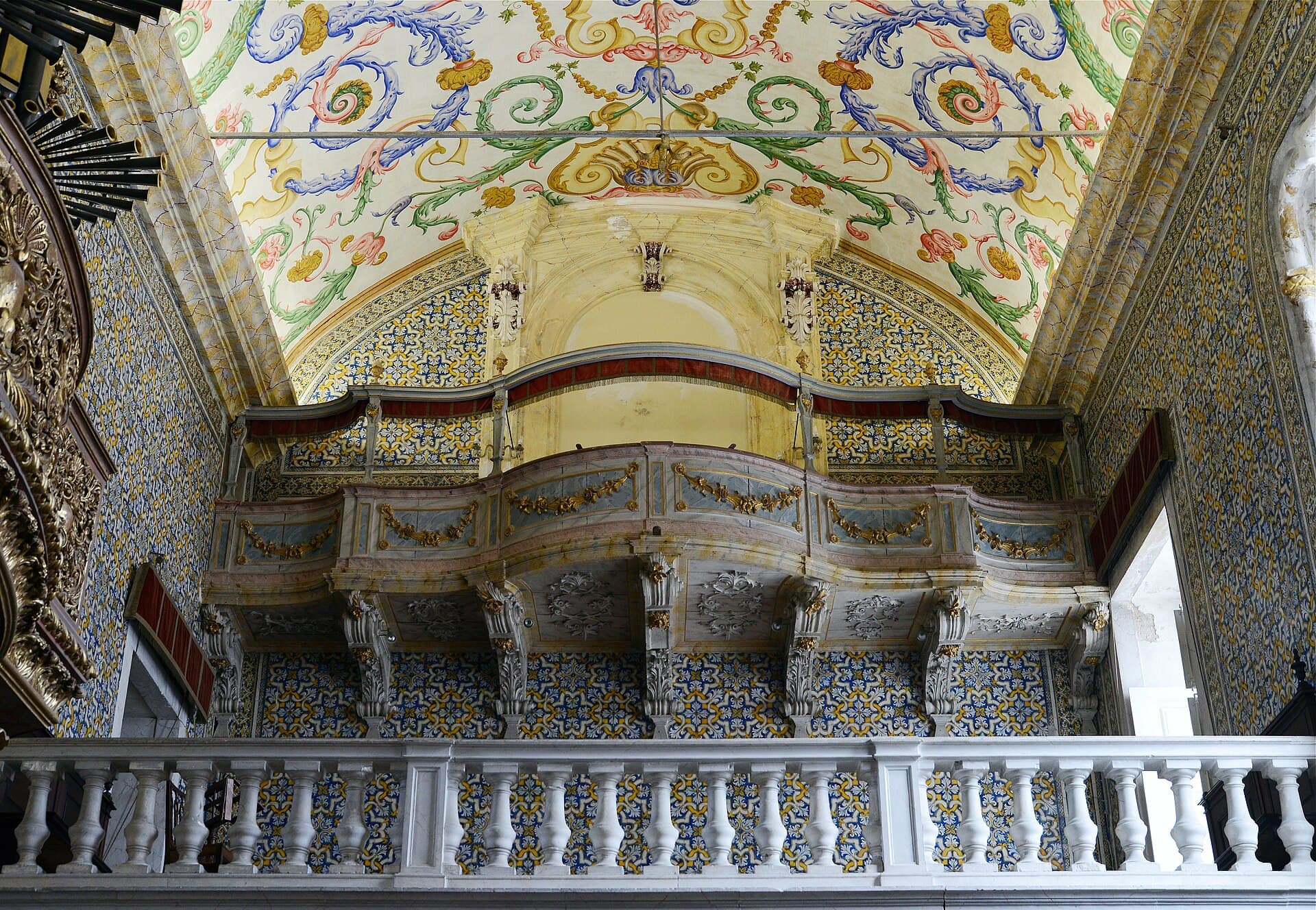
Capela de Sao Miguel: The University Chapel
A Manueline chapel on the site of a twelfth-century oratory, wrapped in painted tiles from sixteen thirteen and crowned by a baroque organ of some two thousand pipes.
- 6
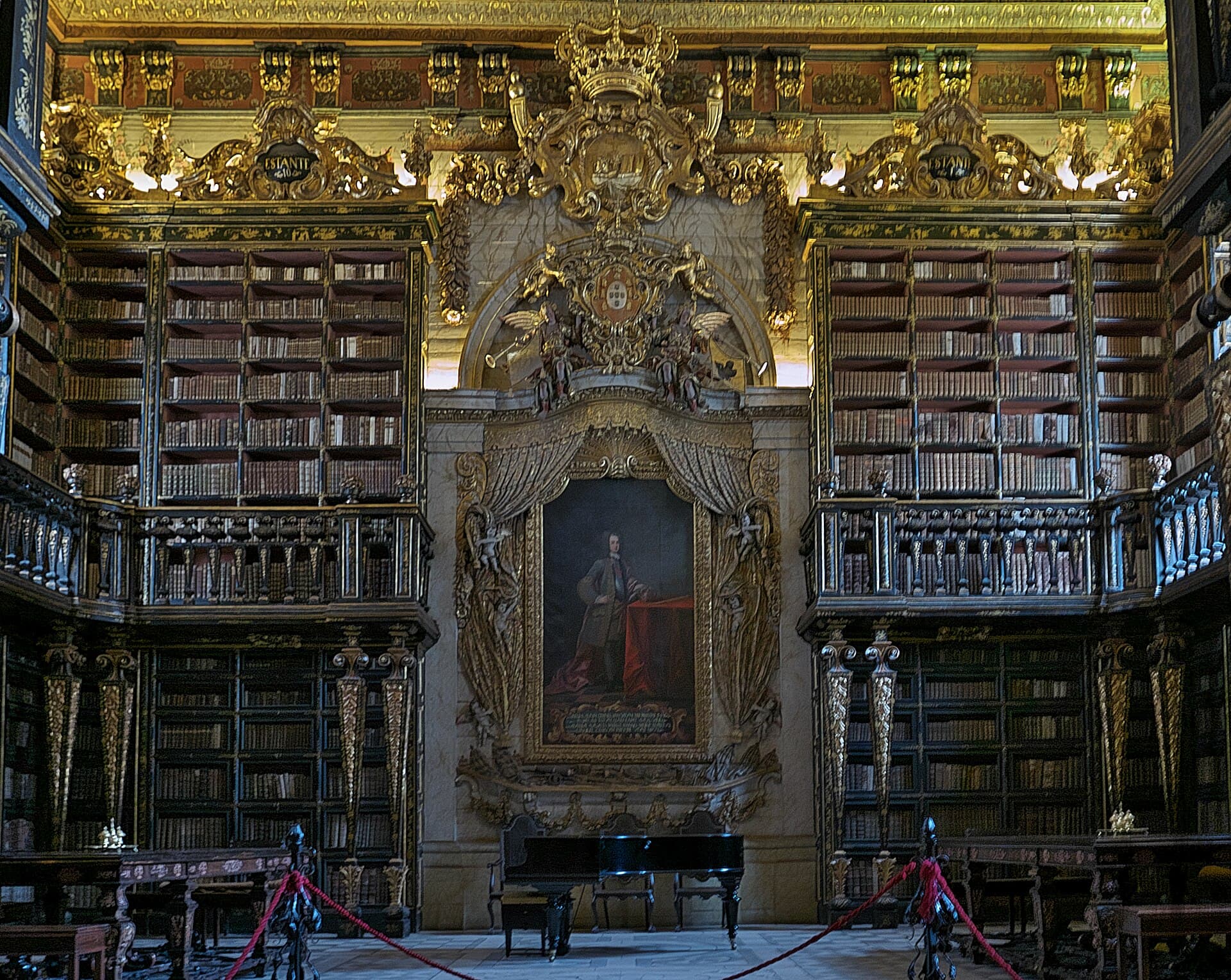
Biblioteca Joanina: The Gilded Baroque Library
The eighteenth-century library of gilded exotic wood, guarded at night by a real colony of insect-eating bats, and widely counted among the most beautiful libraries in the world.
- 7
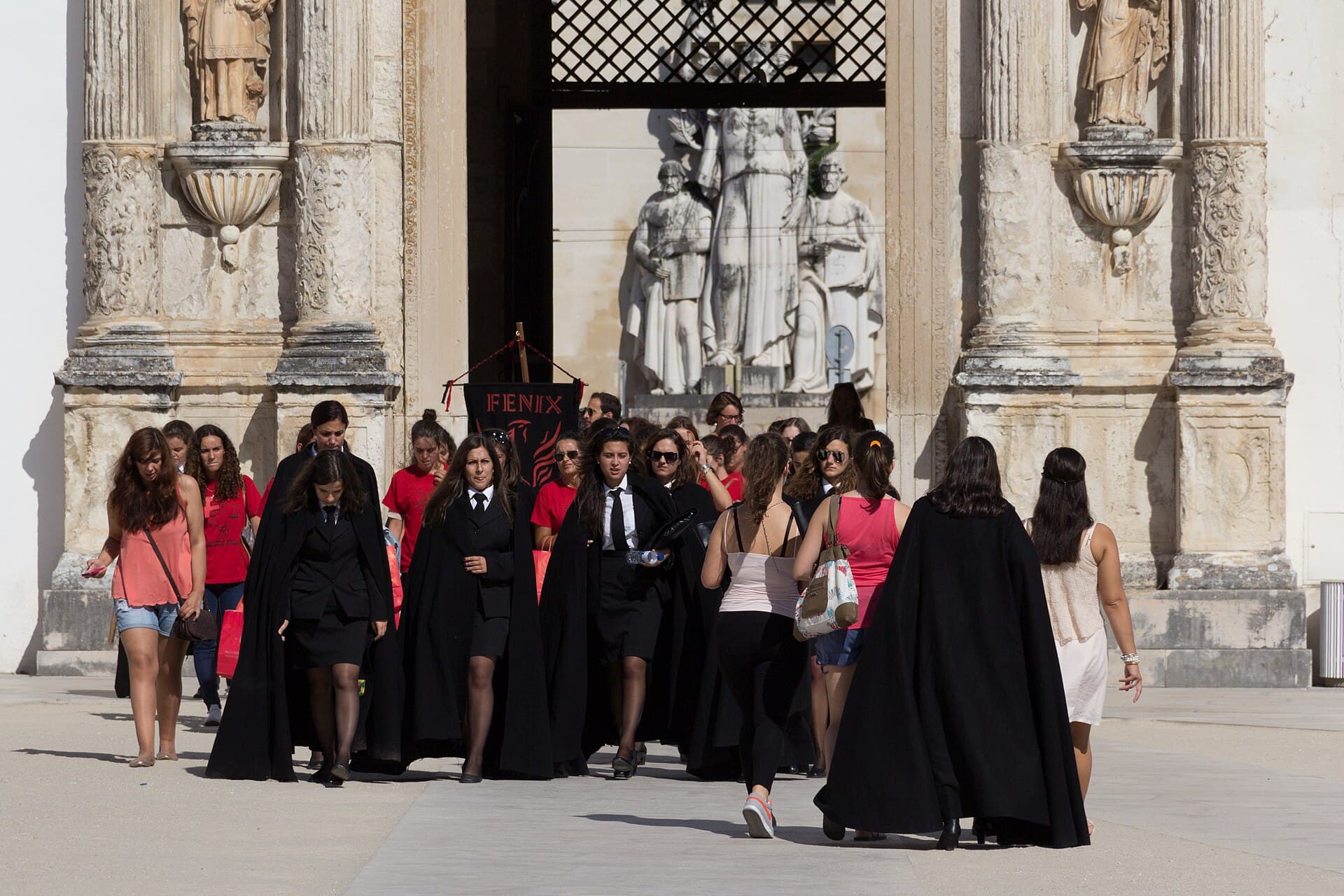
The Living Traditions: Capes, Praxe, and Queima das Fitas
The closing stop, not stone but living student culture: the black capes worn on the street, the initiation rites, the ribbon-burning festival, and the mournful guitar of Fado de Coimbra.
Details
Best Time to Visit
Late morning to early afternoon on a weekday, when the ticketed university monuments are open and the courtyard is full of students in black capes. Arrive early in high summer to climb the hill before the midday heat and to beat the queues at the Joanina Library, whose timed entry slots fill quickly. Spring, especially around the Queima das Fitas festival, brings the streets alive with color, though crowds swell accordingly.
Pro Tips
- •Buy your combined university visit ticket early in the day, since the Biblioteca Joanina is timed-entry and its short slots sell out fastest.
- •Do the walk uphill in order, from the Se Velha at the bottom to the courtyard at the top, so gravity works with you rather than against you.
- •Wear proper shoes with grip: the route runs on steep calcada, traditional Portuguese cobblestone, which is beautiful and slick.
- •Photography rules vary inside the Joanina and the chapel, so check the signs and be ready to put the camera away and simply look.
- •Carry water and pace yourself on the climb; there is no need to rush, and every stop is short enough to pause or skip.
- •Listen for the tower bell and, in the evenings, for Fado de Coimbra drifting from doorways, part of the living soundtrack of the city.
Safety & Precautions
- •The route is a steep, sustained climb on calcada cobblestones that grow slippery when wet or worn smooth, so take the descent slowly and use handrails where they exist.
- •Summer heat inland can be intense with little shade on the open courtyard and hillside, so bring water, sun protection, and plan the climb for cooler hours.
- •The cathedral and chapel are active places of worship: dress modestly, keep your voice low, and respect any services or quiet requests inside.
- •Major monuments like the Joanina Library have ticket queues and strict timed entry, and the university's narrow lanes carry pedestrian, cycle, and occasional vehicle traffic, so stay alert at corners.
Travel advisory: Exercise Normal Precautions (Level 1).
Gallery
Related Reading
Go deeper on what you'll see, hear, and walk through.
Overview
Best Self-Guided Walking Tours in Coimbra (2026)
3 min
Overview
Coimbra Travel Guide: Days, Getting Around, Safety, and Cost
6 min
Overview
One Day in Coimbra: A Walkable Morning-to-Evening Itinerary
8 min
Thematic
Best History Walking Tours in Coimbra (2026)
2 min
Thematic
Coimbra Has Been Portugal's Mind for Seven Centuries
8 min
Companion
The Old Cathedral That Explains All of Coimbra
6 min
Deep dive
Porta Ferrea: The Iron Gate That Reads Like a Curriculum in Stone
6 min
Read
What to Eat in Coimbra
6 min
Read the walk
The full story of University of Coimbra: The Oldest Classroom in the Country, in words. Prefer to listen? Play it narrated, from home or on location.
Introduction
For more than seven centuries, Coimbra has been the mind of Portugal, and this city in Portugal is organized around a single idea: a school. Its university, chartered in the year twelve ninety and one of the oldest continuously operating universities in the world, sits on the hilltop inside a former royal palace, and the whole town leans toward it. This walk climbs that hill and reads the city as one enormous ancient classroom. You will pass a Romanesque cathedral, an iron ceremonial gate, a royal courtyard turned scholars' courtyard, a bell tower nicknamed for a goat, a chapel wrapped in painted tiles, a library glittering with gold, and the black student capes that still move through these streets every day. There are seven stops across roughly seven hundred metres, tightly clustered on the university hill, and you should give yourself about ninety minutes to two hours, more if you linger inside the ticketed monuments. It is a steep climb, so take it at your own pace. Nothing here rushes you, and every stop is short enough to skip if your feet or your mood say so. The story rises with the road, from stone permanence at the bottom to living ritual at the top, and it holds one quiet tension the whole way up: this school is not a place you pass through and leave. Here the school became the city, and the city is still, in every sense, in session. When you arrive at the Se Velha, the Old Cathedral low on the hill, begin with stop one.
1. Se Velha de Coimbra: The Old Cathedral
Start low, at the Se Velha, the Old Cathedral, because everything above it grew from here. Se simply means the cathedral. This one is Romanesque, heavy and fortress-like, with crenellations along its top that make it look built for defense as much as for prayer. It was, in a way. Construction began after eleven thirty-nine, in the years following the Battle of Ourique, under King Afonso Henriques with financial support from Bishop Miguel Salomao. It was far enough along for a royal event by eleven eighty-five, and the basic building was finished by the early thirteenth century. According to Wikipedia, this is the only one of Portugal's Romanesque cathedrals from the Reconquista period to survive relatively intact, which is why standing here feels like touching the twelfth century directly. Look at the exterior, then step inside if you have a few minutes. The stone masters who shaped it carry names that come down to us: Master Robert, who also worked on Lisbon's cathedral, along with Master Bernard and Master Soeiro. Inside are hundreds of sculptured capitals, roughly three hundred eighty of them, each carved with foliage, beasts, and geometry. On one facade you will find the Porta Especiosa, a Renaissance portal added in the fifteen thirties, a softer style grafted onto the older fortress. This cathedral was the religious heart of Coimbra, its episcopal seat, until seventeen seventy-two. That date matters for our walk, because by then the true center of gravity had already moved uphill, to the school. So take one long look. This is Coimbra before the university existed. From here, we climb.
2. Porta Ferrea: The Iron Gate
Now you reach a threshold, and it is meant to feel like one. This is the Porta Ferrea, the Iron Gate. Porta means gate. It is a seventeenth-century ceremonial arch, a double-sided triumphal gateway, and it marks the moment you step out of the ordinary city and into the university's historic courtyard. It was commissioned around sixteen thirty-four, under Rector Alvaro da Costa, and it was among the first major works the university undertook after acquiring the old royal palace for itself. It stands, fittingly, on the site of the old Moorish citadel gate. So this has been a threshold for a very long time, first into a fortress, now into a school. Read the arch like a page. It carries the two founding monarchs of the university. On the outer face you meet King Denis, in Portuguese Dom Dinis, who chartered the university in twelve ninety. On the courtyard side stands King Joao the Third, under whom the school moved permanently to Coimbra in fifteen thirty-seven. Above them sits a figure of Wisdom, and around them allegorical female figures represent the early faculties: Medicine and Law on the outside, Theology and Canon Law within. In other words, the gate is a small stone curriculum. Everything the university claimed to teach is announced here before you even enter. Pause under the arch. Notice how the noise of the town falls away behind you and the courtyard opens ahead. Generations of students have passed through this exact spot on their first day, in black capes, nervous, about to be swallowed by the oldest classroom in the country. Walk through, and you become, for a moment, one of them.
3. Paco das Escolas and the Via Latina: The Palace of the Schools
You are standing now in the Paco das Escolas, the Palace of the Schools, and this courtyard is the whole thesis of the walk in one view. Paco means palace. This U-shaped space was, quite literally, a royal palace, the old Alcacova, home to Portuguese kings from the reign of King Denis until the sixteenth century. Then the crown transferred it to the university, a change completed around fifteen ninety-seven, and a palace of kings became a palace of scholars. That inversion is the reason Coimbra feels different from other university towns. The school did not build itself a campus beside the city. It moved into the throne room. Turn to the long arcaded veranda running along the main facade. That colonnade is called the Via Latina. It was begun under King Joao the Fifth, and its present form dates to around seventeen seventy-three, and it houses the rectory to this day. The name means the Latin way, because Latin was the official teaching language here until the Pombaline reform of seventeen seventy-two replaced it with Portuguese. So the name preserves the exact moment the university changed its own tongue. Take in the setting. Below you, the river Mondego winds through the valley, and the red rooftops of the lower city spill down the slope. The university was chartered by King Denis on the first of March, twelve ninety, confirmed that same year by a papal bull of Pope Nicholas the Fourth, though it began its life in Lisbon before settling here for good in fifteen thirty-seven. It is, according to UNESCO, which inscribed this site as World Heritage in twenty thirteen, one of the oldest continuously operating universities in the world, and Portugal's oldest. Stand a moment in the throne room of learning.
4. Torre da Universidade: The Tower and the Goat Bell
Look up. Rising over the courtyard is the Torre da Universidade, the University Tower. Torre means tower. It was built roughly between seventeen twenty-eight and seventeen thirty-three, and it is the vertical symbol of both the university and the city, visible from far down in…
Full narration for this stop unlocks with the tour.
5. Capela de Sao Miguel: The University Chapel
Step inside the Capela de Sao Miguel, the university chapel. Capela means chapel. After the open courtyard and the ringing tower, this is the interior, sensory beat of the walk, so slow down and let your eyes adjust. The chapel was built from fifteen seventeen, on the site of a…
Full narration for this stop unlocks with the tour.
6. Biblioteca Joanina: The Gilded Baroque Library
This is the summit, the reason many travelers climb the hill at all: the Biblioteca Joanina, the Joanina Library. Biblioteca means library. It is named for its patron, King Joao the Fifth, who gave it to the university, and it was built between seventeen seventeen and seventeen…
Full narration for this stop unlocks with the tour.
7. The Living Traditions: Capes, Praxe, and Queima das Fitas
End here, in the open courtyard, on something you can still see moving through the streets: the living student culture that carries seven centuries into the present. Because the point of this whole walk is that Coimbra's school is not a museum. It is worn on the body, every day.…
Full narration for this stop unlocks with the tour.