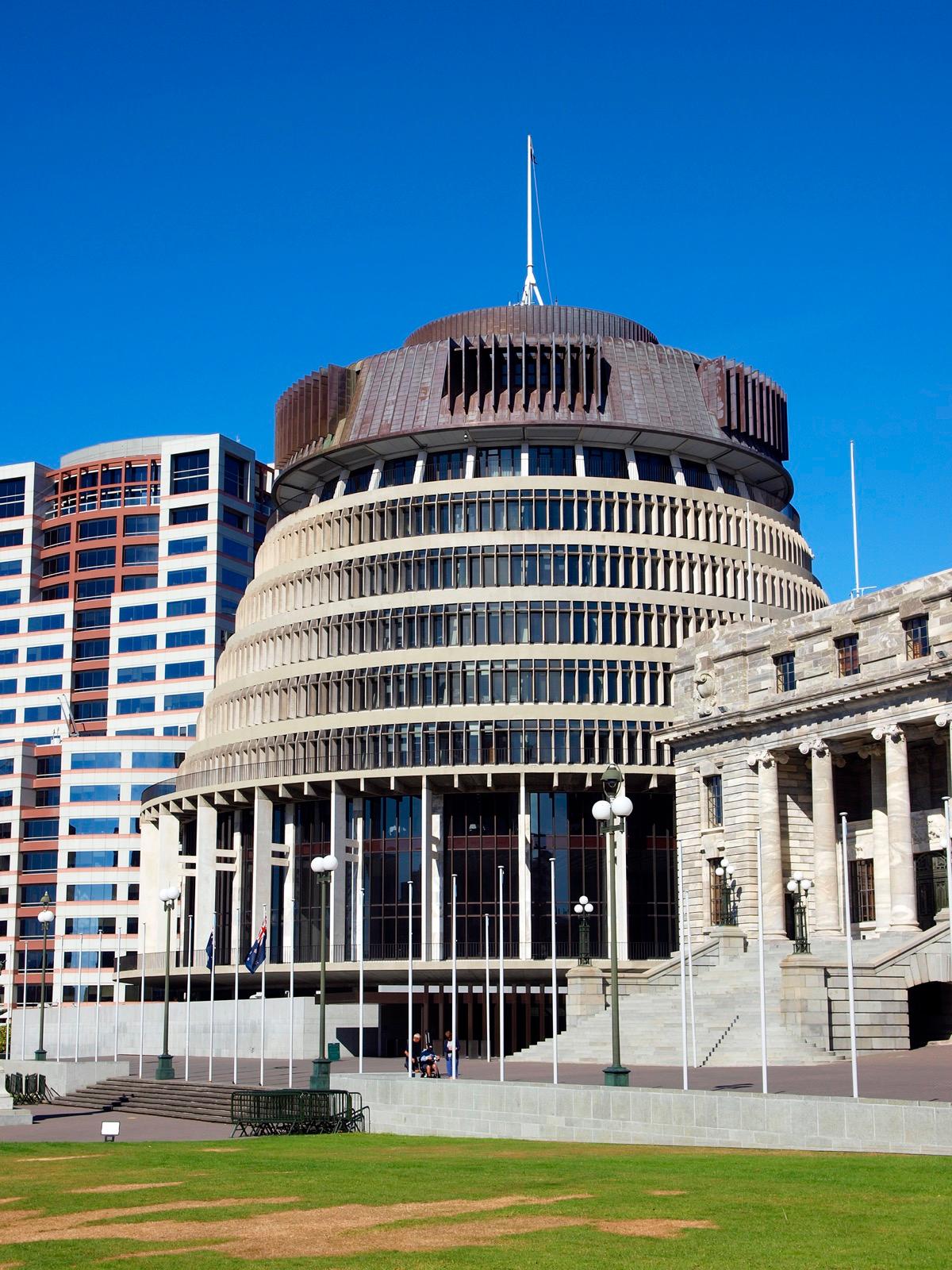
Walk the little capital of New Zealand laid out on flat land at the head of the harbour, on ground lifted from the sea by a great earthquake, where the main shopping street is a quay with no water and its old shoreline is marked in brass in the pavement.
Start · Wellington Railway Station: The Capital's Front Door by Rail
DirectionsStops
- 1
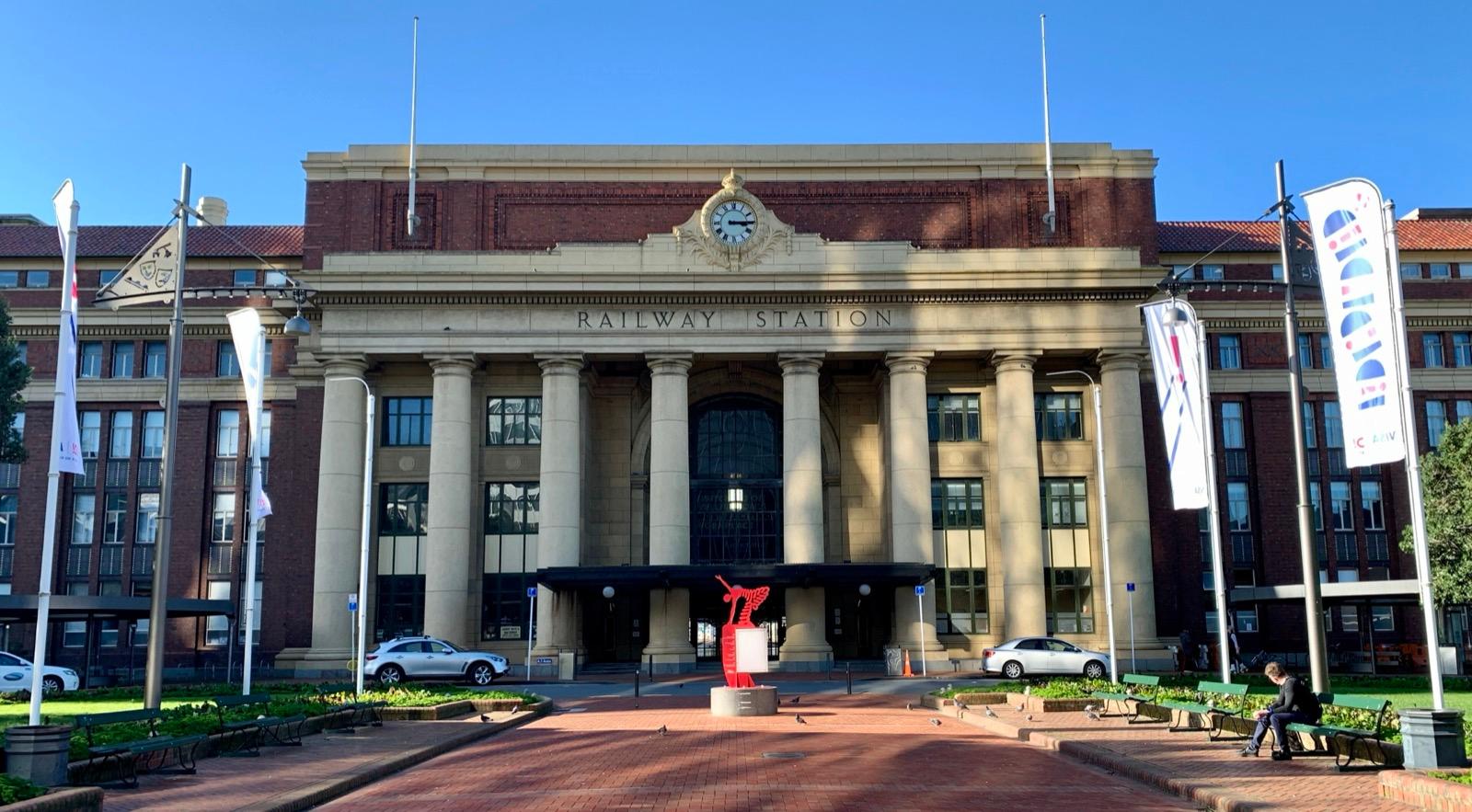
Wellington Railway Station: The Capital's Front Door by Rail
The grand colonnaded railway station at the head of the harbour, the capital's front door by rail, standing on reclaimed ground.
- 2
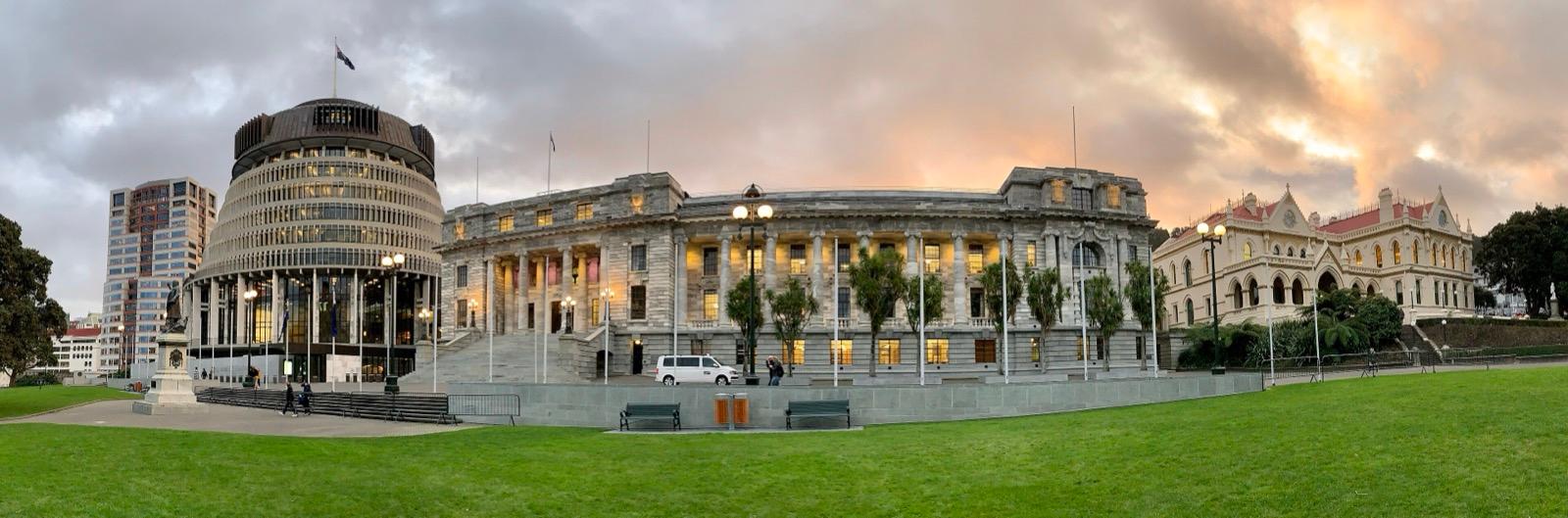
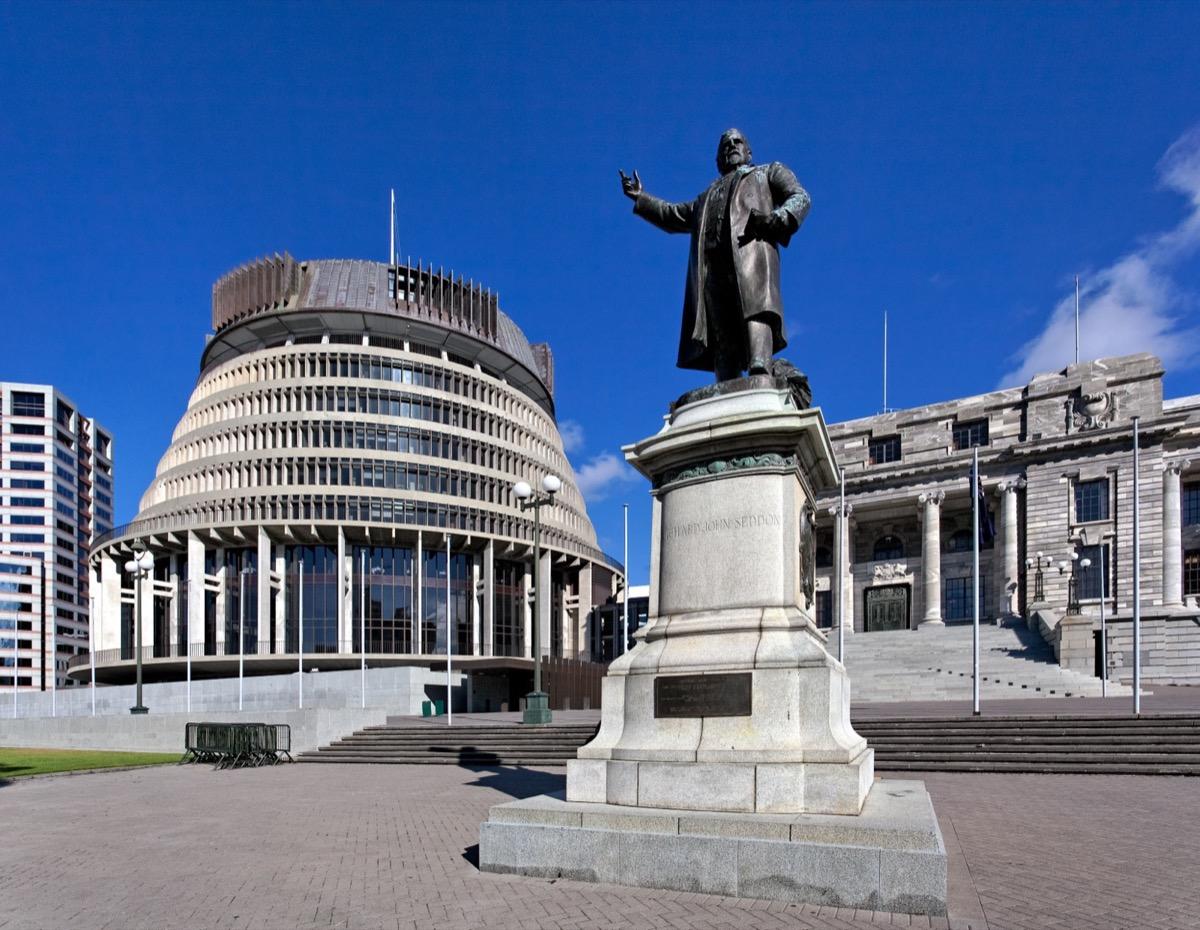
Parliament and the Beehive: The Seat of Government in a Row
Three government buildings standing in a row: a neoclassical Parliament House, a Gothic library, and the round modernist Beehive, the whole grammar of the state in three styles.
- 3
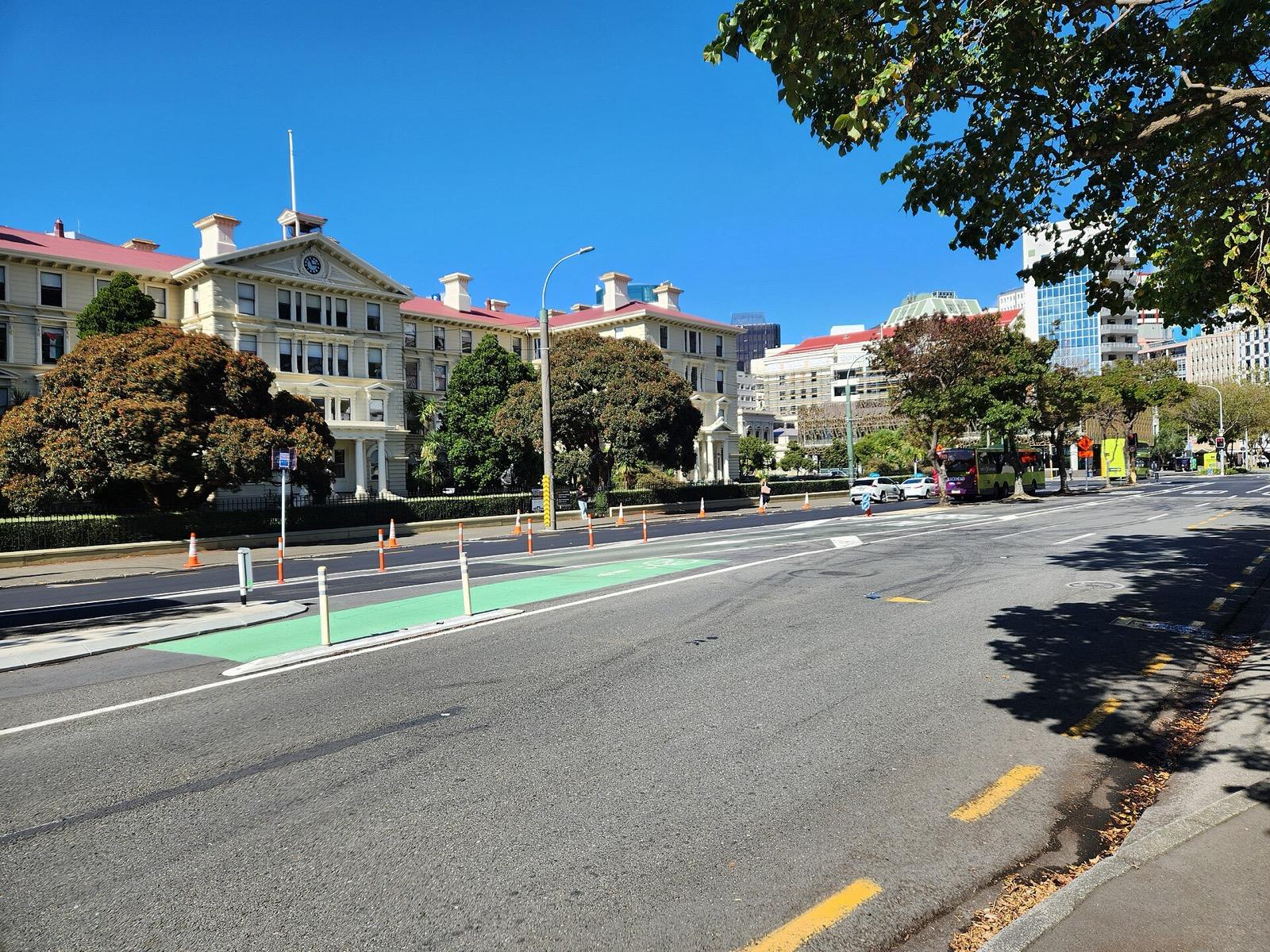
The Old Government Buildings: Timber Dressed as Stone
A giant government office built entirely of native wood but detailed and painted to look like a carved Italian stone palace.
- 4
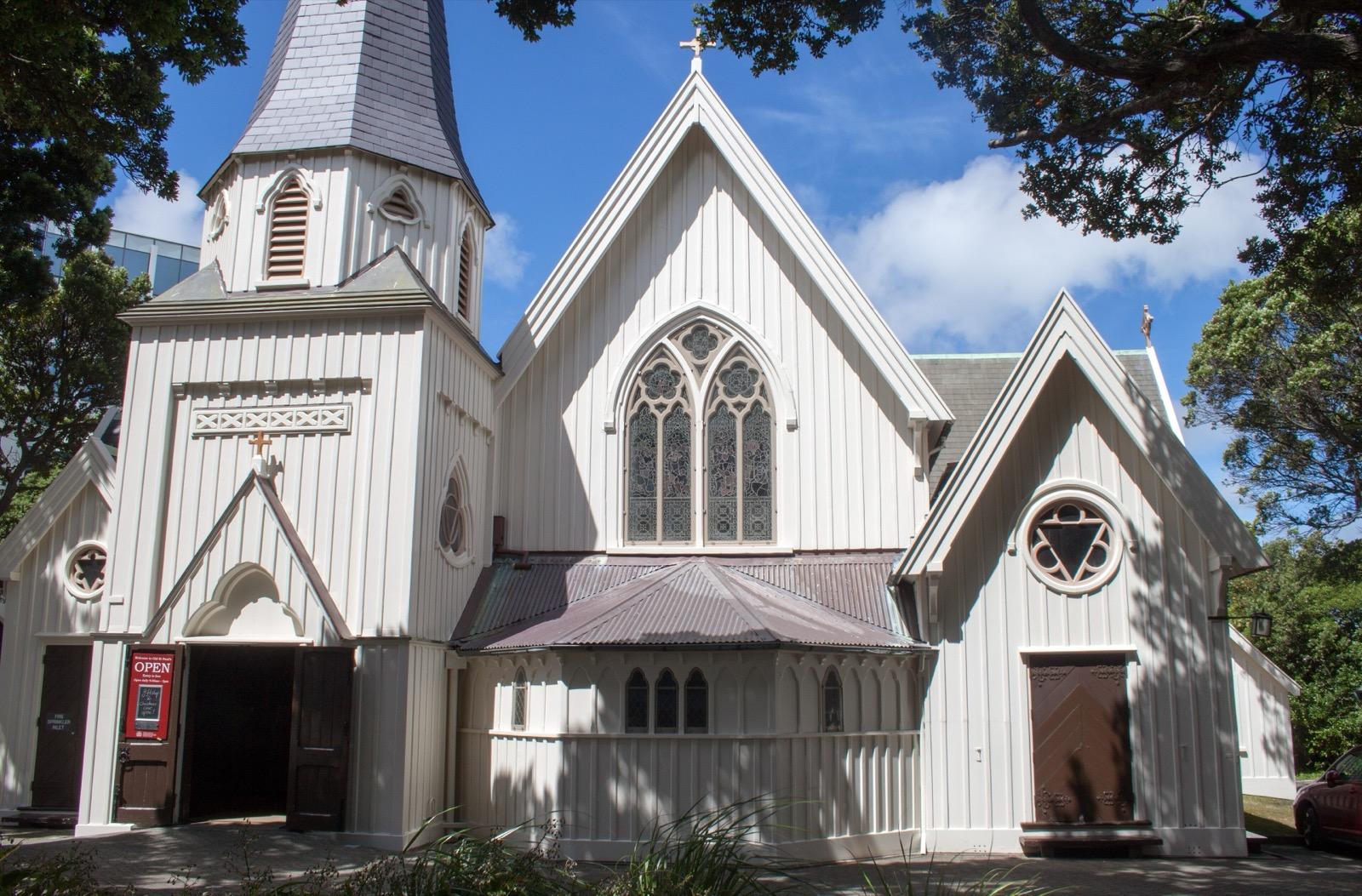
Old St Paul's: A Wooden Gothic Church of Native Timbers
A Gothic Revival church built entirely of native New Zealand timbers, glowing inside with the warm grain of rimu, totara, matai and kauri.
- 5
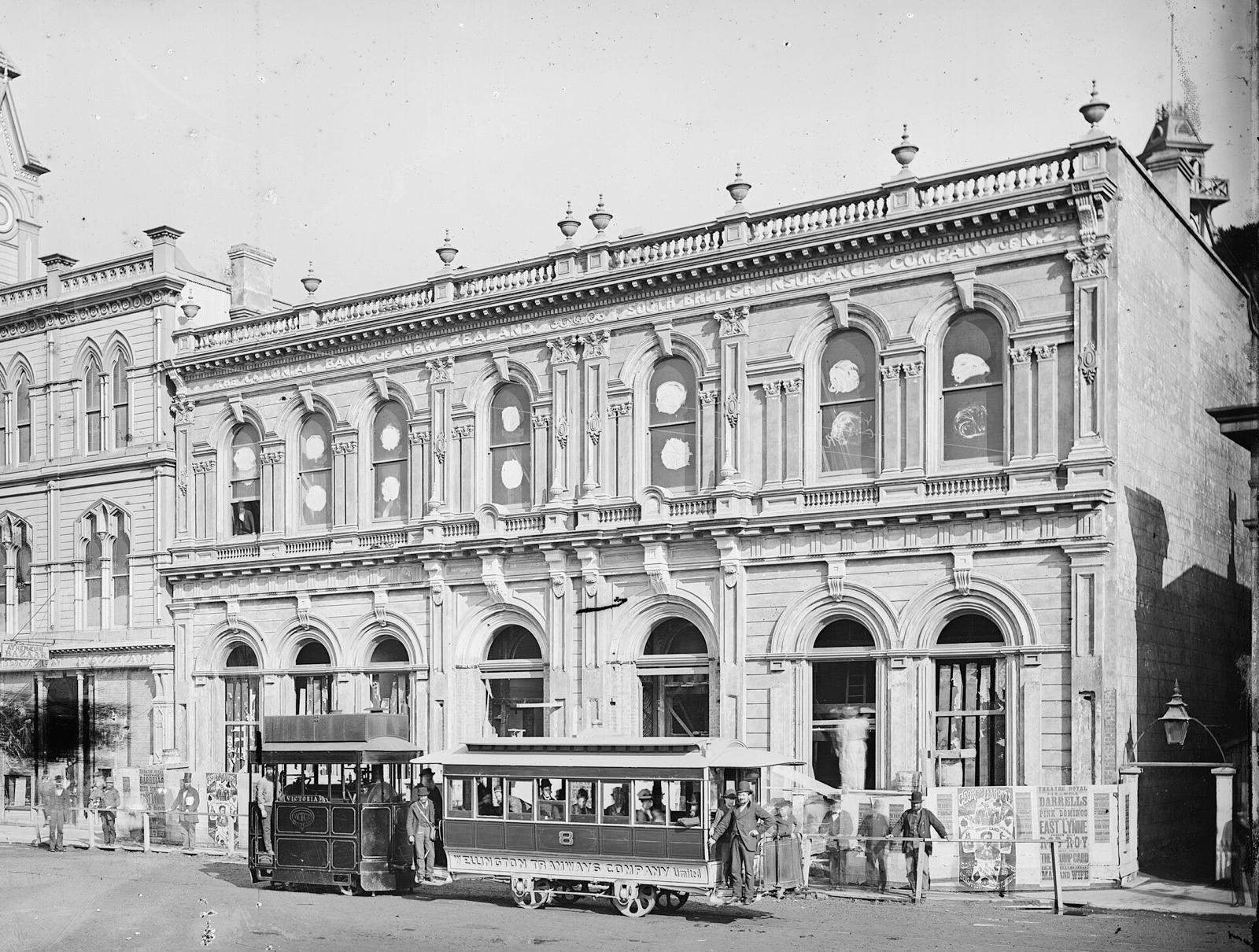
Lambton Quay: The Shoreline of Eighteen Forty in the Pavement
The capital's main shopping street, called a quay because it once ran along the beach, with the shoreline of eighteen forty now marked only by brass plaques in the pavement.
- 6
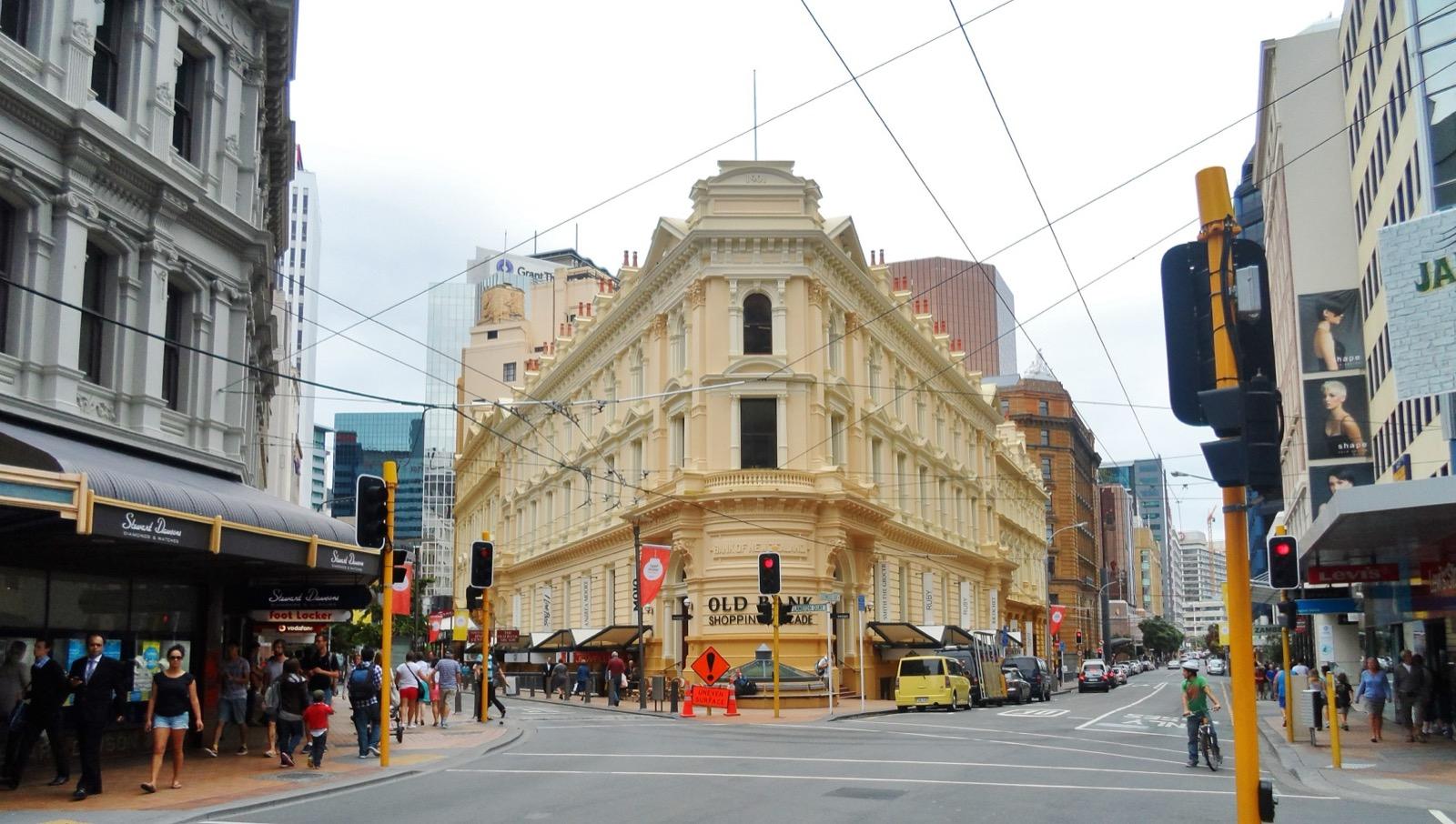
The Old Bank Arcade and Plimmer's Ark: A Ship Beneath the Bank
A grand former bank turned shopping arcade with the timbers of a beached settler ship, Plimmer's Ark, kept and displayed beneath it on the old beach.
- 7
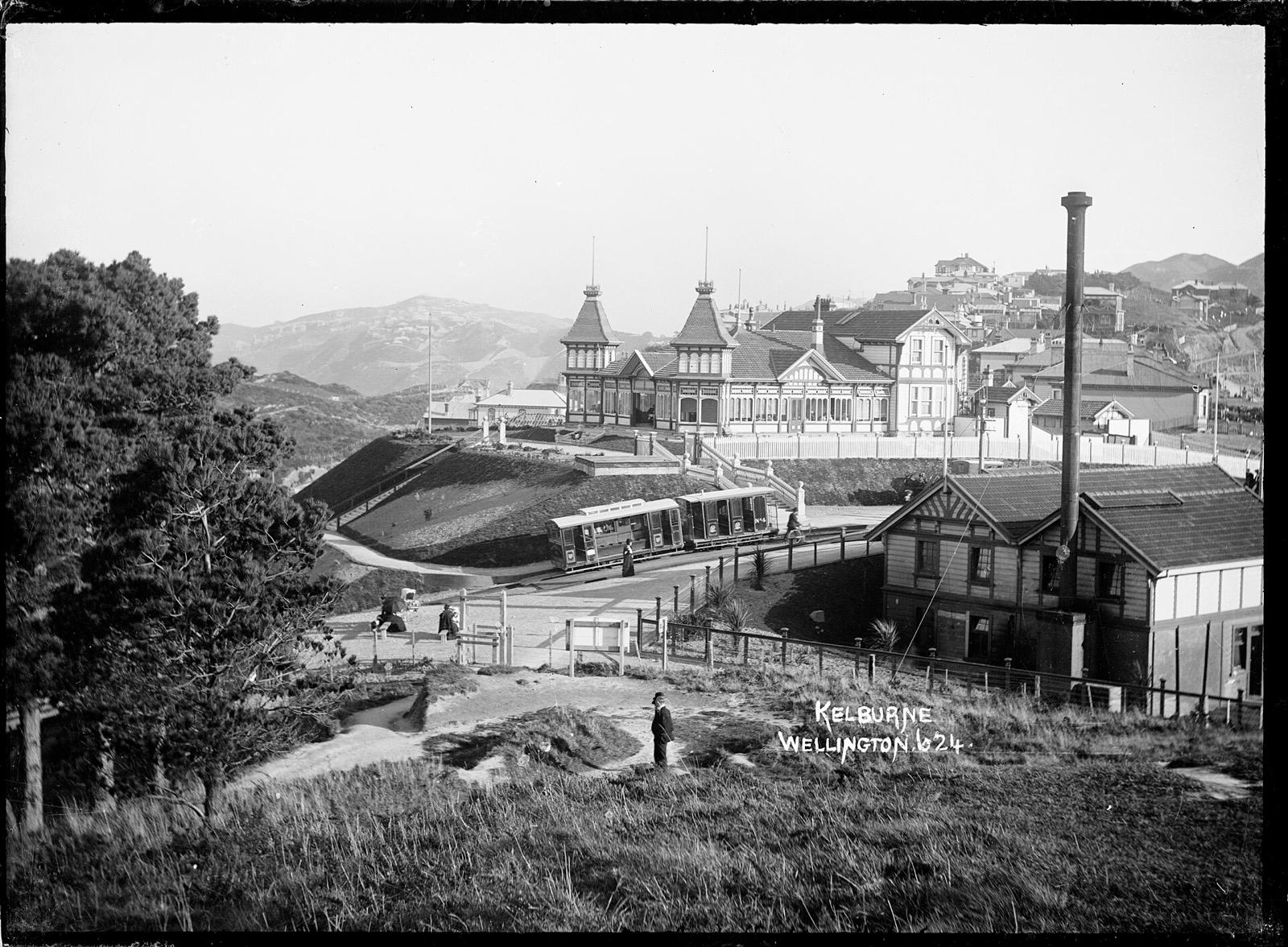
The Cable Car and the Botanic Garden: The Capital Laid Out Below
A century-old heritage cable car lifts you above the capital to a hillside botanic garden. There the whole city and harbour are laid out below, before you stroll back down at your own pace.
Details
Best Time to Visit
Late morning to early afternoon on a clear, calm day gives you the best light and the widest harbour view from the top of the cable car, and lets you catch Parliament's free guided tours and the interiors of Old St Paul's and the Old Bank Arcade while they are open. Wellington's weather changes fast, so a settled day is worth waiting for.
Pro Tips
- •Ride the cable car up at the end and walk back down through the Botanic Garden. The uphill work is done for you, and you keep the harbour view as your reward.
- •Look down, not just up, on Lambton Quay. The brass plaques marking the eighteen forty shoreline are set into the footpath and are easy to miss if you are only watching the shopfronts.
- •Parliament runs free guided tours inside the buildings. If you want the interiors of the debating chamber and the Beehive, check the day's tour times when you arrive at the grounds.
- •Step inside Old St Paul's and the Old Bank Arcade rather than passing them. The wooden church interior and the displayed ship's hull are the whole point of those two stops, and both are free to enter.
- •The walk is compact enough to fit a half day, but the interiors reward slowness. Give yourself time to sit in Old St Paul's and to find Plimmer's Ark inside the arcade.
- •Carry the cable car return fare in New Zealand dollars, or pay by card, and keep the ride in mind as part of the route rather than an add-on.
Safety & Precautions
- •Wellington is famous for its wind off the harbour, and it can be strong and cold even on a bright day. Bring a windproof, waterproof layer and expect the weather to change quickly.
- •The cable car is a working funicular on a steep grade. Hold the handrails, mind the gap at the platforms, and keep an eye on children on the ride and at the Kelburn lookout, where the ground drops away below the view.
- •Old St Paul's and the Old Bank Arcade are living heritage places, one a consecrated church and both with visitors and worship or events at times. Keep your voice low and be respectful inside, and check whether photography is welcome.
- •This is a real capital city with ordinary street traffic on Lambton Quay and around Parliament. Watch the crossings, keep valuables discreet, and note that the cable car and some sites charge entry in New Zealand dollars.
Travel advisory: Exercise Normal Precautions (Level 1).
Gallery
Related Reading
Go deeper on what you'll see, hear, and walk through.
Overview
Best Self-Guided Walking Tours in Wellington (2026)
3 min
Overview
One Day in Wellington: A Walking Itinerary
7 min
Overview
Wellington Travel Guide: Days, Transport, Cost, and Safety
7 min
Thematic
Wellington: The Capital on Ground the Sea Gave Back
7 min
Companion
Reading Wellington's Parliament and the Beehive: Three Buildings, One Capital
7 min
Deep dive
The Wellington Cable Car and Botanic Garden: The Capital Seen From Above
6 min
Read
What to Eat in Wellington: Flat Whites, Whitebait, and Craft Beer
7 min
Read the walk
The full story of Lambton Quay: The Capital on the Old Shoreline, in words. Prefer to listen? Play it narrated, from home or on location.
Introduction
Wellington is the capital of New Zealand, a small city that carries a nation's government, laid out on the flat land at the head of Te Whanganui-a-Tara, the Maori name for the Wellington harbour. This is the Country of Te Ati Awa and the wider Taranaki Whanui, the iwi, or tribes, who hold customary authority here. Much of the ground beneath your feet was lifted from the sea by the great earthquake of eighteen fifty-five and reclaimed since, so the works of the state now stand on land that was once harbour floor. Over about seven stops and close to four kilometres, and roughly two hours, part of it carried by the cable car, this walk reads that capital plainly and in order: the grand railway station, the parliament with its round Beehive, the vast government offices built all of timber but dressed to look like stone, a wooden Gothic church glowing with native woods, the shopping street that was once a beach, a bank with the bones of a beached ship kept beneath it, and a century-old cable car that lifts you above it all. It is a flat walk for most of its length, and it finishes by riding the heritage cable car up to a botanic garden on the hills, with the whole capital and its harbour spread below, before you stroll back down at your own pace. This is your route and your clock. Linger where you want, skip what you do not, no group, no schedule, no tip expected. When you arrive at Wellington Railway Station on Bunny Street, begin with stop one.
1. Wellington Railway Station: The Capital's Front Door by Rail
You begin at Wellington Railway Station on Bunny Street, at the head of the harbour on land reclaimed from the sea. It opened on the nineteenth of June, nineteen thirty-seven, designed by the Wellington firm Gray Young, Morton and Young in a stripped, neo-Georgian classical style. Its great entrance colonnade carries eight Doric columns, each about thirteen metres high, and when it was finished it was the largest building in New Zealand. The scale is deliberate. This was the terminus where the main railway lines of the lower North Island came together, and it was built to announce a capital, a grand front door for a small city that carries a nation's government. Behind the brick and the granite runs a modern frame: it was among the first large brick buildings in New Zealand to use vertical steel reinforcing throughout, its steel encased in concrete and set on more than a thousand reinforced-concrete piles, engineering that matters in a city that knows earthquakes. Heritage New Zealand lists it as a Category One historic place, its highest ranking. Stand under the columns for a moment and remember the ground itself. The land here at the head of Te Whanganui-a-Tara, the Wellington harbour, was partly lifted out of the sea by a great earthquake and then reclaimed, so this monumental station sits where water once lay. This is the Country of Te Ati Awa and Taranaki Whanui, whose occupation of the harbour long predates the colonial town. From here the walk turns inland toward the seat of government, a short, level stroll of a few hundred metres. Take it at your own pace.
2. Parliament and the Beehive: The Seat of Government in a Row
A few minutes on from the station you reach the grounds of the New Zealand Parliament, where three buildings stand in a row and read almost like a lesson in how a state pictures itself. In the middle is Parliament House, the debating-chamber building, an Edwardian neoclassical block designed by the Government Architect John Campbell and built between nineteen fourteen and nineteen twenty-two. It was left only partly finished. The grand second half its designers imagined was never built, so what you see is a capitol interrupted. Beside it stands the Parliamentary Library, completed in eighteen ninety-nine in a soaring Gothic Revival style. Its iron fire-door earned its keep: in the fire of nineteen oh seven that destroyed the earlier assembly building, that door helped save the library and its collections. Then, to the left, the Beehive, officially the Executive Wing, a round, tapering modernist tower that houses the government's ministers. It was conceived in nineteen sixty-four to a design by the Scottish architect Sir Basil Spence, built through the nineteen seventies, officially opened in nineteen seventy-seven, and occupied from nineteen seventy-nine. It rises about ten storeys, roughly seventy-two metres, and its stacked circular floors give it the beehive shape that named it. Te Ara, the Encyclopedia of New Zealand, records that Wellington took over from Auckland as the capital in eighteen sixty-five, and here, in three styles standing side by side, you can see the whole grammar of the state. Entry to the grounds is free, and Parliament runs free guided tours inside if you want to go deeper. Otherwise, read the row from the lawn and move on when you are ready.
3. The Old Government Buildings: Timber Dressed as Stone
A short walk from Parliament brings you to one of the strangest and most quietly impressive buildings in the capital: the Old Government Buildings on Lambton Quay, completed in eighteen seventy-six to the design of the Colonial Architect William Clayton. From across the lawn it reads as a heavy Italianate stone palazzo, the kind of carved-stone palace a young government might build to say it means to last. Look closer, and the trick reveals itself. The whole thing is made of wood. It is built of native kauri, one of New Zealand's great timber trees, with Tasmanian hardwood framing, and every stone detail, the quoins, the cornices, the rusticated blocks, is timber shaped and painted to imitate carved stone. For over a century it was the second-largest wooden building in the world, after the great temple of Todai-ji in Nara, Japan. Heritage New Zealand records it as a Category One historic place. The reasoning behind the disguise is itself a piece of capital-building. A colonial administration wanted to gather its scattered public service under one roof and to project permanence and strength, and stone was scarce and slow while timber was near at hand. So they built in wood and dressed it as stone, an honest structure in a borrowed skin. Today the building houses the law faculty of Victoria University of Wellington, so it is still full of the work of the state in a sense, teaching the law rather than administering it. The grounds are open and free. Circle it slowly and let the eye keep correcting itself: stone, then wood, then stone again.
4. Old St Paul's: A Wooden Gothic Church of Native Timbers
Not far from Parliament, on Mulgrave Street, stands Old St Paul's, a wooden Gothic church that turns the whole European idea of a stone cathedral into something made of New Zealand forest. It was designed by Frederick Thatcher, who was himself the vicar of St Paul's, a clergyman…
Full narration for this stop unlocks with the tour.
5. Lambton Quay: The Shoreline of Eighteen Forty in the Pavement
Now you reach the turn of the whole walk, and it is hiding in plain sight underfoot. Lambton Quay is Wellington's main shopping street, busy and ordinary, and yet it is called a quay, a word for a waterfront, though there is no water anywhere near it. The name is not a mistake.…
Full narration for this stop unlocks with the tour.
6. The Old Bank Arcade and Plimmer's Ark: A Ship Beneath the Bank
At the corner of Lambton Quay and Customhouse Quay stands the Old Bank Arcade, and it holds the climax of this walk beneath its floor. The building itself is the former Bank of New Zealand, completed in nineteen oh one to the design of the architect Thomas Turnbull and his son,…
Full narration for this stop unlocks with the tour.
7. The Cable Car and the Botanic Garden: The Capital Laid Out Below
The walk ends by leaving the flat and rising above the whole capital. From the lower terminus off Lambton Quay you board the Wellington Cable Car, a heritage funicular that has climbed this hill since it opened on the twenty-second of February, nineteen oh two. It was designed…
Full narration for this stop unlocks with the tour.