Lambton Quay: The Capital on the Old Shoreline
95 min · 4 km · easy
You can see the best of Wellington on foot in one day because New Zealand's capital packs its harbour, its Parliament, its national museum, and its liveliest street into a flat, compact core you can cross in about fifteen minutes. This one-day itinerary walks you from Lambton Quay and Parliament in the morning, through Cuba Street and the waterfront in the afternoon, and up the cable car for an evening view. It follows the same ground as Roamer's two self-guided audio tours, so you can let the narration carry the history while you keep your own pace.
Wellington rewards a walking day more than almost any New Zealand city. The central sights sit on flat reclaimed land at the head of the harbour, most of them are free to enter, and the two ends of the day, Parliament and the Botanic Garden, are barely a kilometre apart. You do not need a car, a group, or a fixed schedule.
The one-day route at a glance
Morning: Wellington Railway Station, Parliament and the Beehive, Old Government Buildings, Old St Paul's, then down Lambton Quay to the Old Bank Arcade. Afternoon: Te Ngakau Civic Square, Cuba Street, the Bucket Fountain, Te Aro Pa, and the Embassy Theatre. Late afternoon and evening: the waterfront and Writers Walk, Te Papa Tongarewa, and finally the cable car up to Kelburn for sunset over the harbour.
The whole loop is genuinely walkable. Roamer's Lambton Quay and Parliament tour covers about 4 kilometres over roughly 95 minutes of audio, and the Cuba Street and Waterfront tour runs about 3.7 kilometres over roughly 85 minutes. Add browsing, coffee, and a museum stop and you have a full, unhurried day. Both routes are rated easy, on flat pavement, with the only real climb handled for you by the cable car.
Morning: Parliament and the old shoreline
Hear a stop from this walk
Lambton Quay: The Shoreline of Eighteen Forty in the Pavement
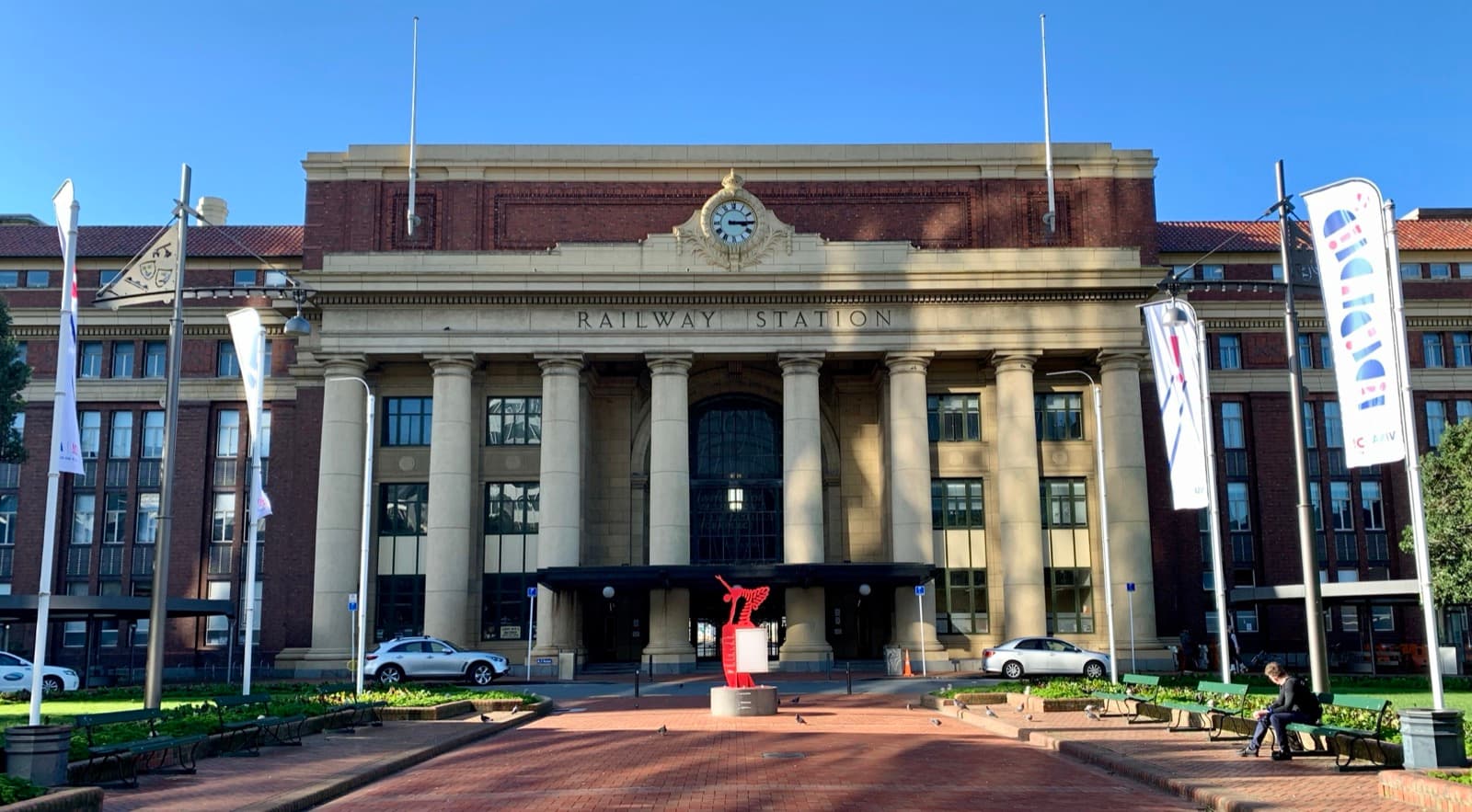
Start at Wellington Railway Station, the grand colonnaded terminus at the head of the harbour. It opened in 1937, and Heritage New Zealand records that it was the largest building in the country when it was completed. From here it is a short, level walk to the Parliament grounds.
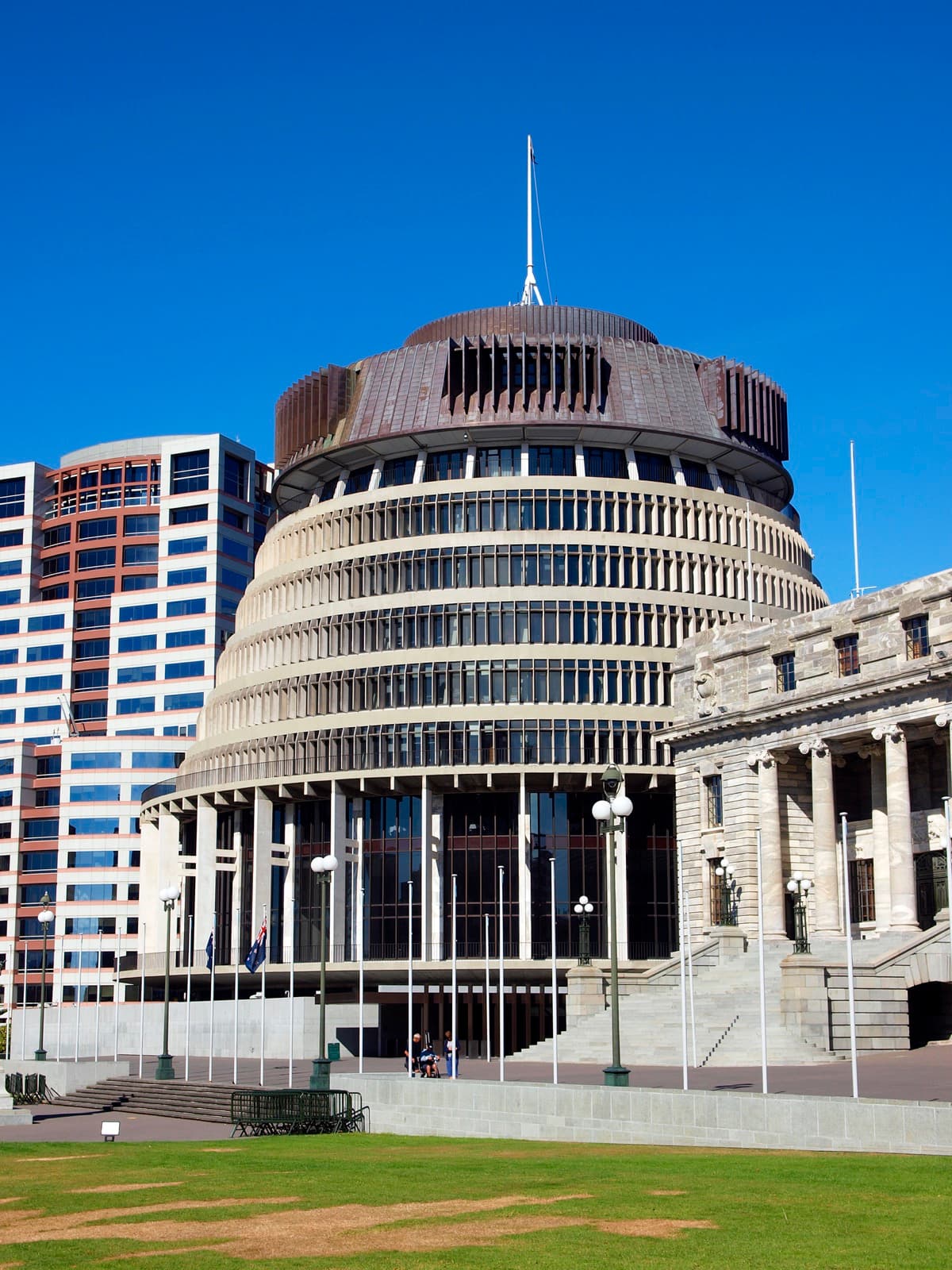
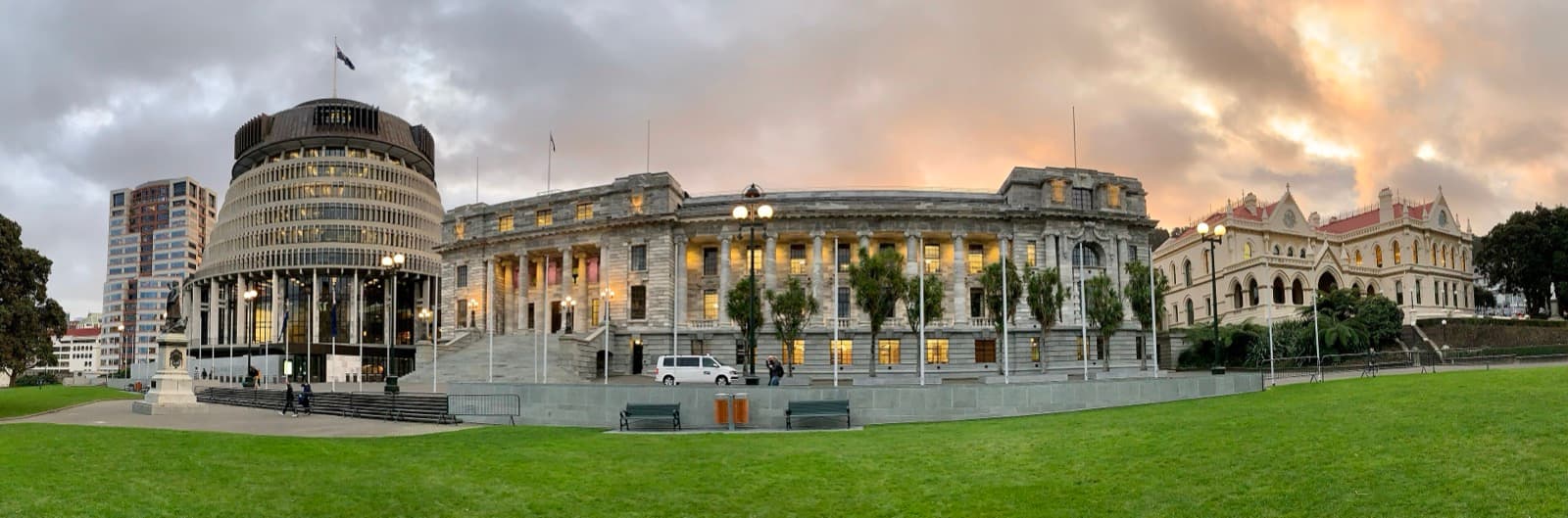
The Parliament precinct gathers three eras of government architecture on one site: the Gothic Revival Parliamentary Library of 1899, the neoclassical Parliament House built between 1914 and 1922, and the modernist Beehive of the 1970s, designed by the Scottish architect Sir Basil Spence. The grounds are free and open. If you want to go inside, New Zealand Parliament runs free guided tours seven days a week, but numbers are limited, so book a morning slot online before you arrive.
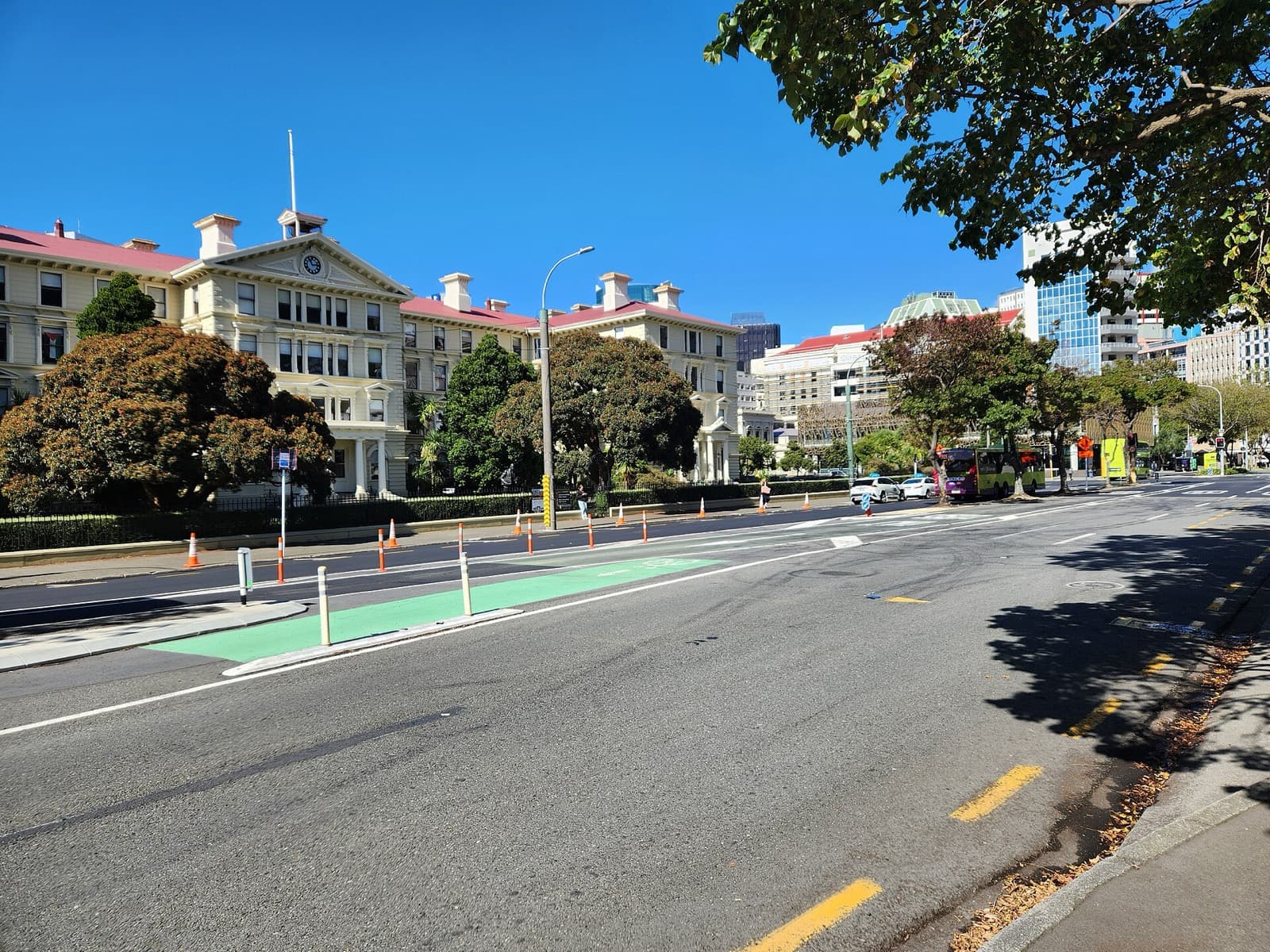
A few steps away stand the Old Government Buildings of 1876, built entirely of native kauri and Tasmanian hardwood but painted and detailed to imitate a stone Italianate palazzo. Look closely: every block, cornice, and quoin is timber shaped to look like carved stone. It now houses the Victoria University of Wellington law faculty, so the interior is a working campus rather than a museum, but the grounds are open to walk through.
Close by is Old St Paul's, a Gothic Revival church consecrated in 1866 and built from native rimu, totara, matai, and kauri. Its timber interior is one of the most admired in the country. It is open daily, generally from 10am to 4pm, and admission is by donation. Check the current hours before you go, since it closes for private functions and on some public holidays.
From here, walk down onto Lambton Quay. The name means a waterfront, yet the street now sits well back from the sea. The Wairarapa earthquake of 1855 lifted the land by two to three metres, and later reclamation pushed the harbour back further, so the 1840 shoreline is now marked only by brass plaques set into the footpath. Follow the quay south to the Old Bank Arcade, a former Bank of New Zealand building of 1901 reopened as a shopping arcade in 1999. Beneath it, on the old beach, a section of Plimmer's Ark is displayed: timbers from the ship Inconstant, which the settler John Plimmer bought as a wreck in 1851. The display is free to view.
Afternoon: Cuba Street, Te Aro, and the waterfront
Cross to Te Ngakau Civic Square, the city's civic heart, and pick up the second half of the day. From here the Cuba Street and Waterfront route reads Wellington as a creative capital rather than a political one.
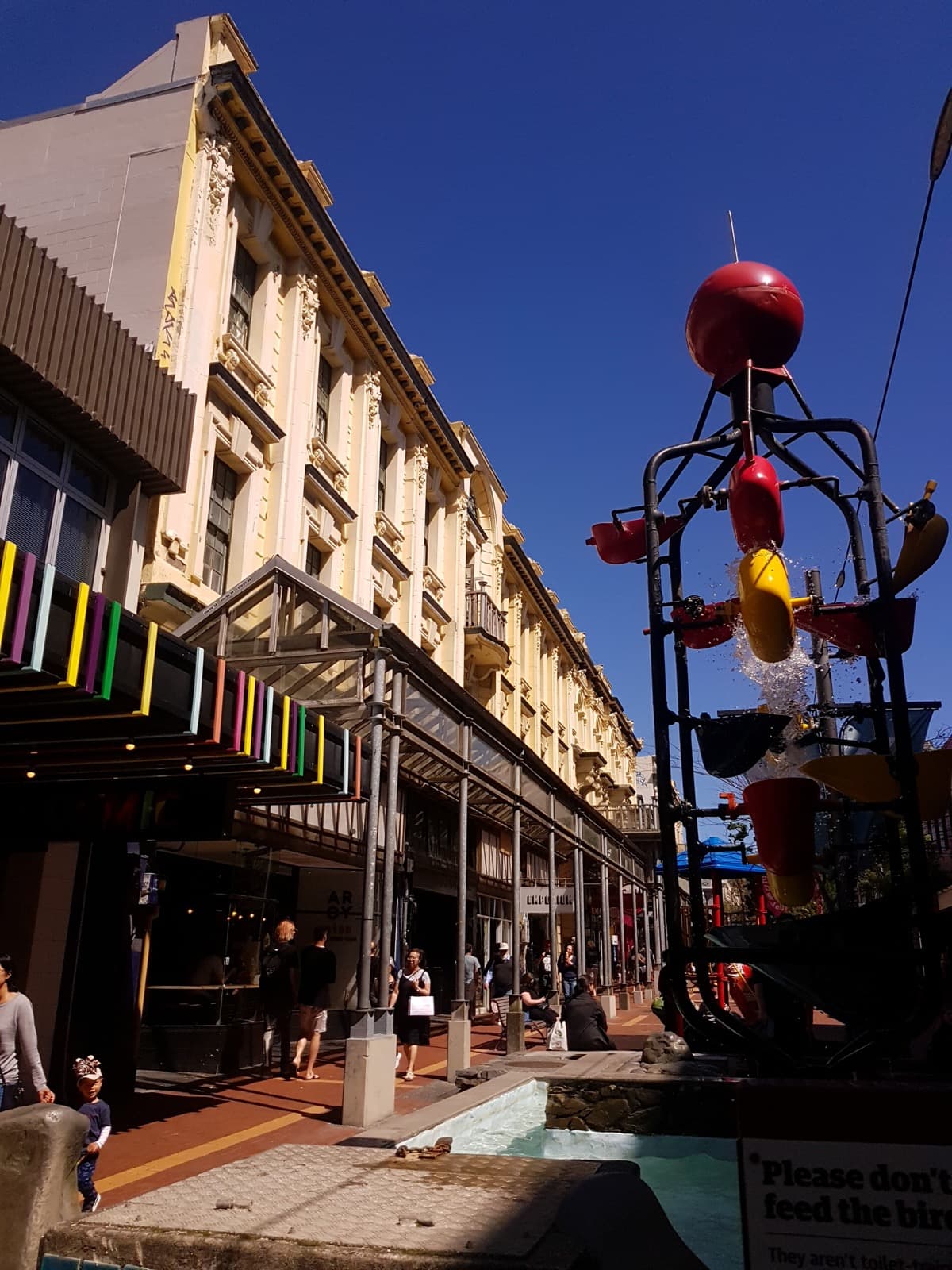
Cuba Street is the city's preserved bohemian spine, a heritage area of Victorian and Edwardian shopfronts, cafes, record stores, and murals. Partway along the pedestrian mall stands the Bucket Fountain, a kinetic water sculpture that has splashed passers-by since the 1960s and become an unofficial city mascot. Nearby, at Te Aro Pa, the archaeological remains of a pre-European Maori settlement are preserved with an interpretive display; viewing hours vary, so treat it as a short, quiet stop rather than a fixed appointment.
Walk east toward the harbour and you reach the Embassy Theatre, the 1920s picture palace on Kent Terrace. The exterior is free to admire any time; if a film is screening you can buy a ticket in New Zealand dollars, but for a one-day walker it is a facade to appreciate on the way past. From here the waterfront opens up. The promenade along the harbour carries the Wellington Writers Walk, a series of text sculptures set with quotations from New Zealand writers, and it makes an easy, flat stroll toward the museum.
Late afternoon: Te Papa and the cable car
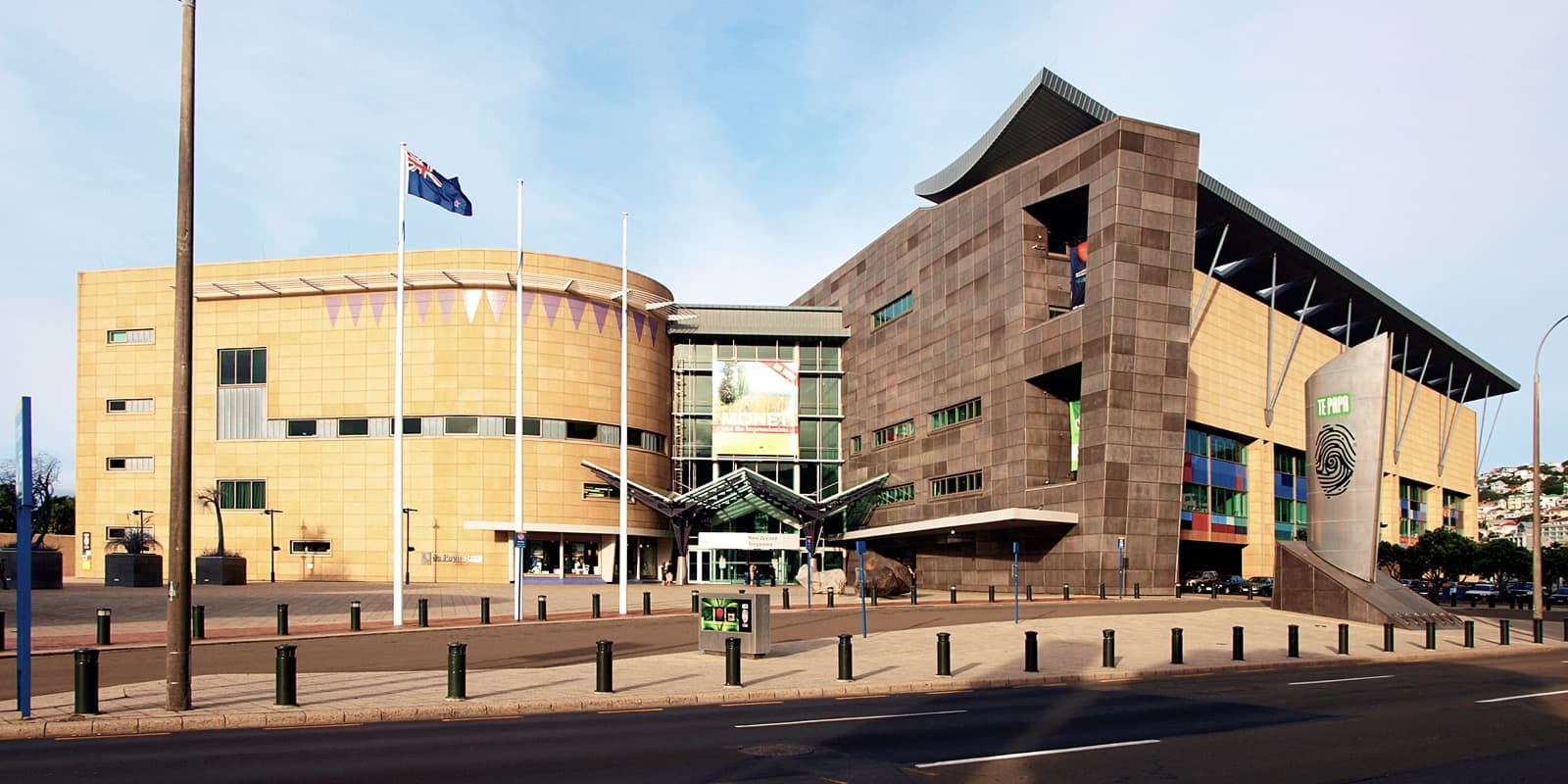
Time your afternoon so you reach Te Papa Tongarewa, the national museum on the waterfront at 55 Cable Street, with an hour or two to spare. Te Papa is open daily from 10am to 6pm, closed only on Christmas Day. General admission is free for New Zealanders and people living in New Zealand, though international visitors aged 16 and over pay an entry fee (recently NZ$35), and some special exhibitions are ticketed separately. Even a short visit gives you the Maori collections, the natural-history galleries, and harbour views from the upper floors.
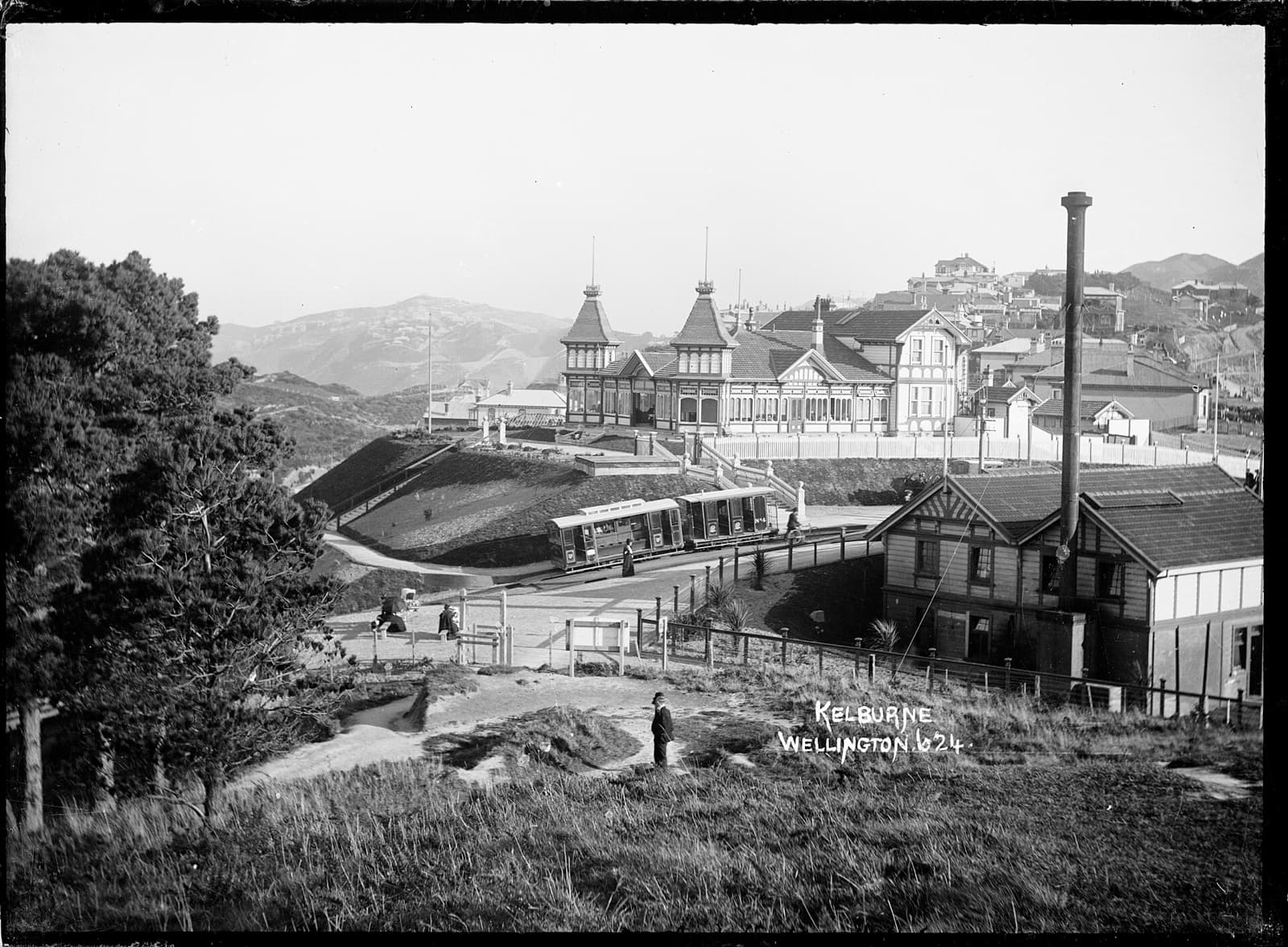
Finish the day back near Lambton Quay at the base of the Wellington Cable Car, which opened in 1902 and climbs about 628 metres up to Kelburn through three tunnels. The current adult fare is 7 New Zealand dollars one way and 13 dollars return, and cars leave roughly every ten minutes, daily except Christmas Day. One important thing to check: the cable car closes for about a week of annual maintenance in late July, so confirm it is running if you travel in winter. At the top, the Wellington Botanic Garden, established in 1868, spreads across the hills with the whole city and harbour laid out below. Ride up for the view, then either take the cable car back down or walk down through the garden at your own pace as the light goes.
Practical notes
Nearly everything on this day is free: the station, Parliament grounds, Old Government Buildings, Lambton Quay, Cuba Street, the waterfront, and Te Papa's general admission for New Zealand residents. Your only likely spending is the cable car fare, an international museum-entry fee if that applies to you, and food. Wellington is a compact, generally safe city to walk during the day and into the evening, with the usual sensible caution after dark and around nightlife areas. The weather is the real variable: Wellington is famously windy and can turn quickly, so carry a layer and a light rain jacket even on a clear morning.
Because both Roamer routes are GPS-guided audio walks, you can start wherever you happen to be, pause for lunch or a gallery, and pick the tour back up later. Open the city page at /new-zealand/wellington to browse both Wellington walks and begin.
Sources
Frequently asked questions
- Can you see Wellington in one day?
- Yes. Wellington's main sights sit on flat, reclaimed land at the head of the harbour, and the central core takes about fifteen minutes to cross on foot. A single day covers Parliament, Lambton Quay, Cuba Street, the waterfront, Te Papa, and the cable car without needing a car.
- Is Wellington a walkable city?
- Very. The capital's central attractions are close together on level ground, and most are free to enter. The two ends of a typical walking day, Parliament and the Botanic Garden, are only about a kilometre apart, and the one real hill is handled by the cable car.
- How much does the Wellington Cable Car cost?
- The current adult fare is 7 New Zealand dollars one way and 13 dollars return. Cars run roughly every ten minutes, daily except Christmas Day, and the line closes for about a week of annual maintenance in late July, so check before a winter visit.
- Is Te Papa free to visit?
- General admission to Te Papa Tongarewa is free for New Zealanders and people living in New Zealand, and the museum is open daily from 10am to 6pm, closed only on Christmas Day. International visitors aged 16 and over pay an entry fee (recently NZ$35), and some special exhibitions are ticketed separately.
- Do you need to book a Parliament tour in Wellington?
- Yes. New Zealand Parliament runs free guided tours seven days a week, but you must book ahead online because numbers are limited. The grounds and the Beehive exterior are free to walk around at any time without booking.
- What is the best walking route for one day in Wellington?
- Start with Parliament and Lambton Quay in the morning, move to Cuba Street and the waterfront in the afternoon, then finish at Te Papa and ride the cable car up to the Botanic Garden for evening views. This mirrors Roamer's two self-guided audio tours, about 4 km and 3.7 km respectively.
Ready to experience it?
Lambton Quay: The Capital on the Old Shoreline
95 min · 4 km · easy
More from Wellington
Explore more at your own pace.
Wellington Travel Guide: Days, Transport, Cost, and Safety
Wellington: The Capital on Ground the Sea Gave Back
Cuba Street, Wellington: The Bohemian Spine Named for a Ship, Not the Country
Reading Wellington's Parliament and the Beehive: Three Buildings, One Capital
Te Papa Tongarewa: Why New Zealand's National Museum Is Built Around a Marae