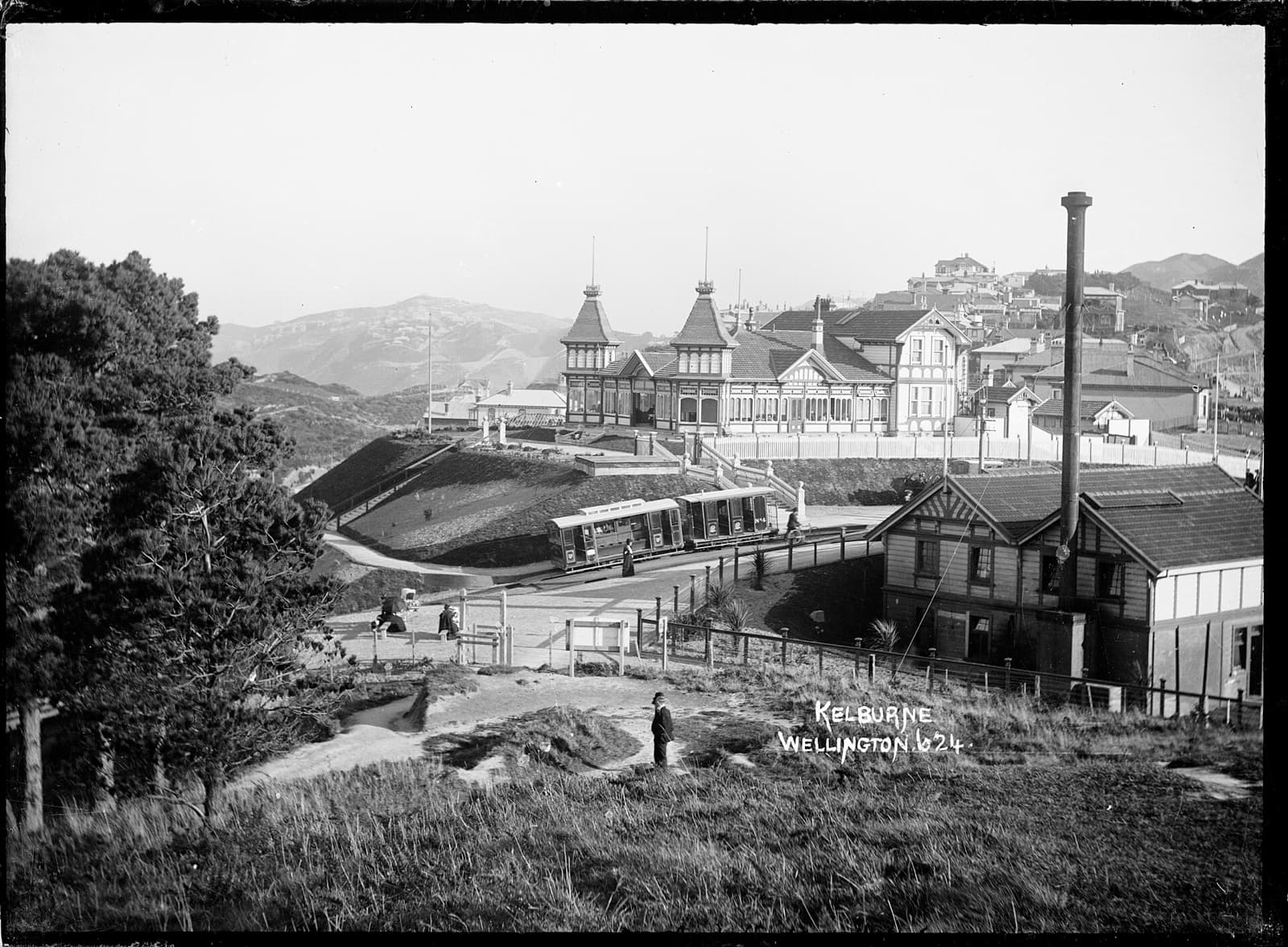
Cuba Street in Wellington was named for a ship, not the country, and that small fact opens up the whole walk. The first Surveyor-General, Captain William Mein Smith, laid the street on his plan and named it after the Cuba, a New Zealand Company vessel sent ahead of the immigrant ships, which reached Wellington Harbour on the third of January in eighteen forty. The street carries the name of one of the first boats to arrive, drawn onto the map before the town it would serve even existed. That origin sets the tone for everything Cuba Street became: a place where the ordinary story is never quite the one you expect, and where the name on the sign hides a longer history underneath.
A street that survived
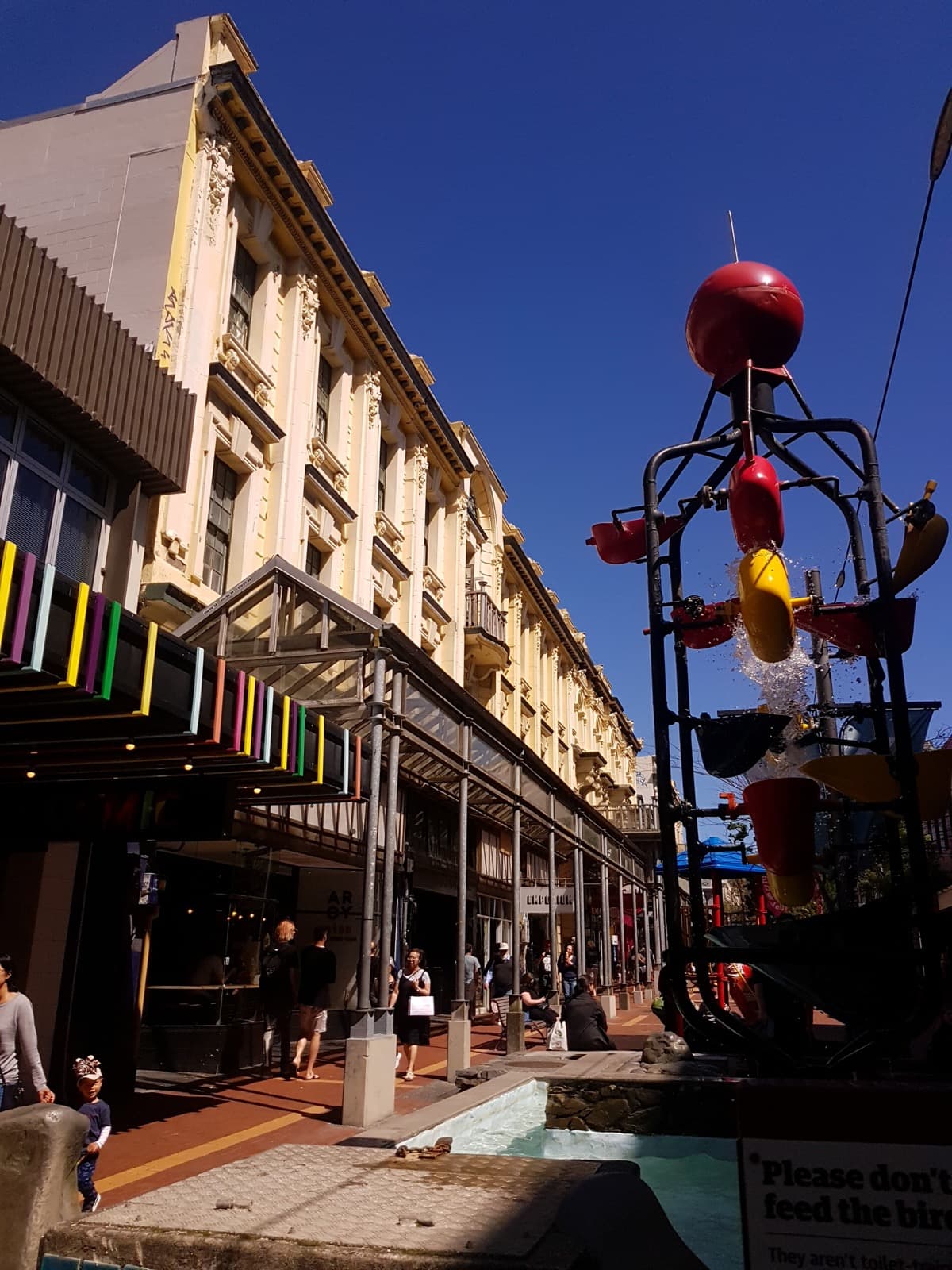
What makes Cuba Street worth slowing for is not just its age but its survival. Through the nineteen sixties, seventies, and eighties, much of central Wellington was pulled down and rebuilt. This street escaped. Heritage New Zealand records that Cuba Street holds the most complete collection of Victorian and Edwardian commercial architecture in Wellington, and it has been a registered historic area since nineteen ninety-five, with over forty buildings of historic significance. Walk it slowly and you can read the ironwork, the tall windows, and the ornament sitting above the awnings, all of it left standing while the streets around it were remade.
The middle section, the pedestrian mall, was closed to traffic on the fourteenth of October in nineteen sixty-nine, after a petition signed by five thousand residents asked the city to give the street back to people on foot. That is the ground you walk today: a living run of cafes, record shops, and music laid over more than a century of preserved shopfronts. It is the kind of place that rewards no hurry at all, which is exactly why a self-guided walk suits it. You set the rhythm, linger at the shopfronts that hold you, and let the street set your pace rather than a guide moving you toward the next stop.
The absurdity at its center
Hear a stop from this walk
Cuba Street: The Street Named for a Ship
At the heart of the mall sits the object Wellington loves most for being ridiculous. The Bucket Fountain went up in nineteen sixty-nine, the same year the mall closed to traffic, designed by Graham Allardice of the firm Burren and Keen, and built of steel, aluminium, and fibreglass for about two thousand dollars. The idea is simple: a stack of buckets fills with water until each one, top-heavy, tips and empties into the buckets and pool below, then swings back to fill again. On a still day it is a gentle, dribbling clock. On a windy Wellington day the water sails sideways and can catch a passer-by full in the face, which is part of the affection.
It was not loved at first. When it went up, critics called it an engineering joke and a monstrosity. The brief had only asked Allardice for a water motif that could be lit at night for visual enjoyment, and what he delivered divided the city for years before it became one of its most recognized objects. It is a fitting emblem for Cuba Street: cherished precisely for refusing to take itself seriously.
What lies beneath the town
The bohemian street is a delight, and so is the harder thing that sits directly beneath it. At thirty-nine to forty-three Taranaki Street stand the preserved remains of Te Aro Pa, a Maori settlement (a pa is a settled village) that stood on this flat long before the colonial town. First established by Ngati Mutunga about eighteen twenty-four and, after that iwi relocated to the Chatham Islands in eighteen thirty-five, later occupied by Taranaki and Ngati Ruanui groups, it was, Heritage New Zealand records, one of the largest pa in the Wellington region at the time of European colonisation. It covered about five acres and supported roughly one hundred and thirty permanent residents. Then the colonial town was built over it.
In December of two thousand five, during the demolition of a later building, three whare (houses) built of ponga, the tree fern, came to light. They are the first eighteen-forties Maori site found in the city, preserved where they were discovered, and the site became a Category One historic place in two thousand eight. It is a quiet stop, and worth standing at quietly: this is a living people's land, and their settlement here long predates the town that grew over it. Reading the street this way, as layers rather than a single era, is the argument the whole tour makes.
From the civic heart to the water
Cuba Street is the middle of a longer line. This Wellington walk begins uphill in Te Ngakau Civic Square, where Neil Dawson's suspended sphere of ferns, installed in nineteen ninety-eight, floats above the town hall and galleries: a globe cut from the country's own bush, hung over its capital. From Cuba Street the route passes the Embassy Theatre on Kent Terrace, the only custom-built nineteen-twenties cinema still in use anywhere in New Zealand, where nearly one hundred and twenty thousand people filled the streets around Courtenay Place for the two thousand three world premiere of The Lord of the Rings: The Return of the King.
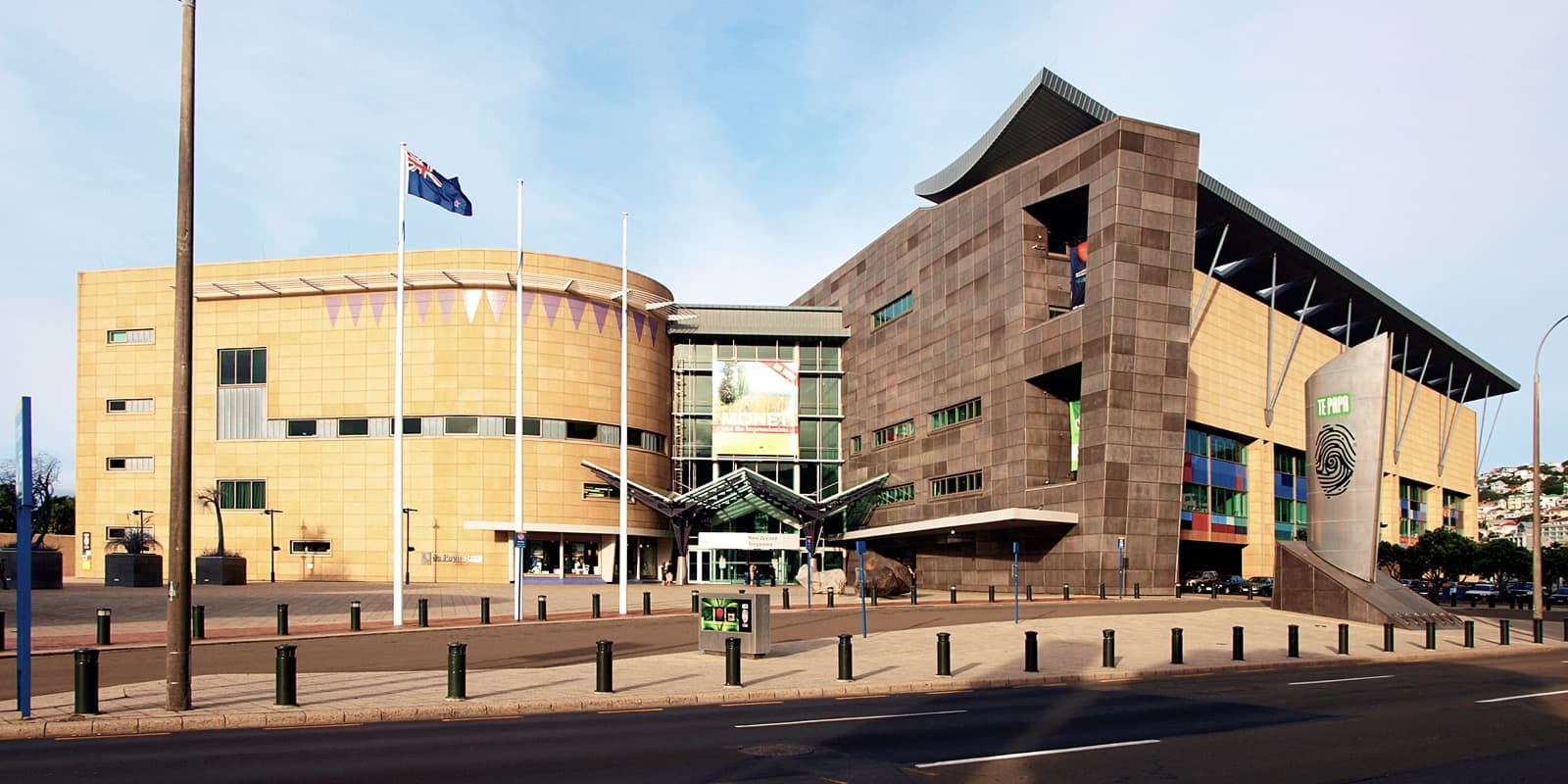
Then it comes down to the harbour edge of Te Whanganui-a-Tara, the Maori name for Wellington harbour, where the Wellington Writers Walk sets about twenty-three quotations from New Zealand writers into the ground, among them Katherine Mansfield and Patricia Grace. The walk ends at Te Papa Tongarewa, the national museum, opened on the fourteenth of February in nineteen ninety-eight, whose name means roughly a container of treasured things and which holds a living marae, Rongomaraeroa, at its heart. General admission is free for New Zealand residents; international visitors aged sixteen and over pay a museum entry fee, so check current pricing before you go.
Across about three and a half kilometres and seven short stops, the route reads the creative capital from its civic center out to the sea, and every stop is yours to take at your own pace, with no group and no schedule. Cuba Street is where the argument becomes plain: a city that keeps its layers, and lets you walk them in whatever order holds you. For more routes through the capital, see our guide to the best Wellington walking tours.
Sources
- Cuba Street, Wellington (Wikipedia): street naming, heritage status, and the pedestrian mall history.
- Cuba Street Heritage Area, Wellington City Council: the registered historic area and its concentration of Victorian and Edwardian buildings.
- Bucket Fountain and its history (Wellington City Council / Wikipedia): the fountain's designer, materials, and reception.
- Toenga o Te Aro (remains of Te Aro Pa), Heritage New Zealand: the pa's size, occupation, and the two thousand five discovery.
- Te Papa (Wikipedia) and Wellington Writers Walk (Wikipedia): the national museum's opening and bicultural design, and the waterfront quotation trail.
Ready to experience it?
Cuba Street: Bohemian Wellington by the Bay
85 min · 3.7 km · easy
More from Wellington
Explore more at your own pace.
One Day in Wellington: A Walking Itinerary
Wellington Travel Guide: Days, Transport, Cost, and Safety
Wellington: The Capital on Ground the Sea Gave Back
Reading Wellington's Parliament and the Beehive: Three Buildings, One Capital
Te Papa Tongarewa: Why New Zealand's National Museum Is Built Around a Marae