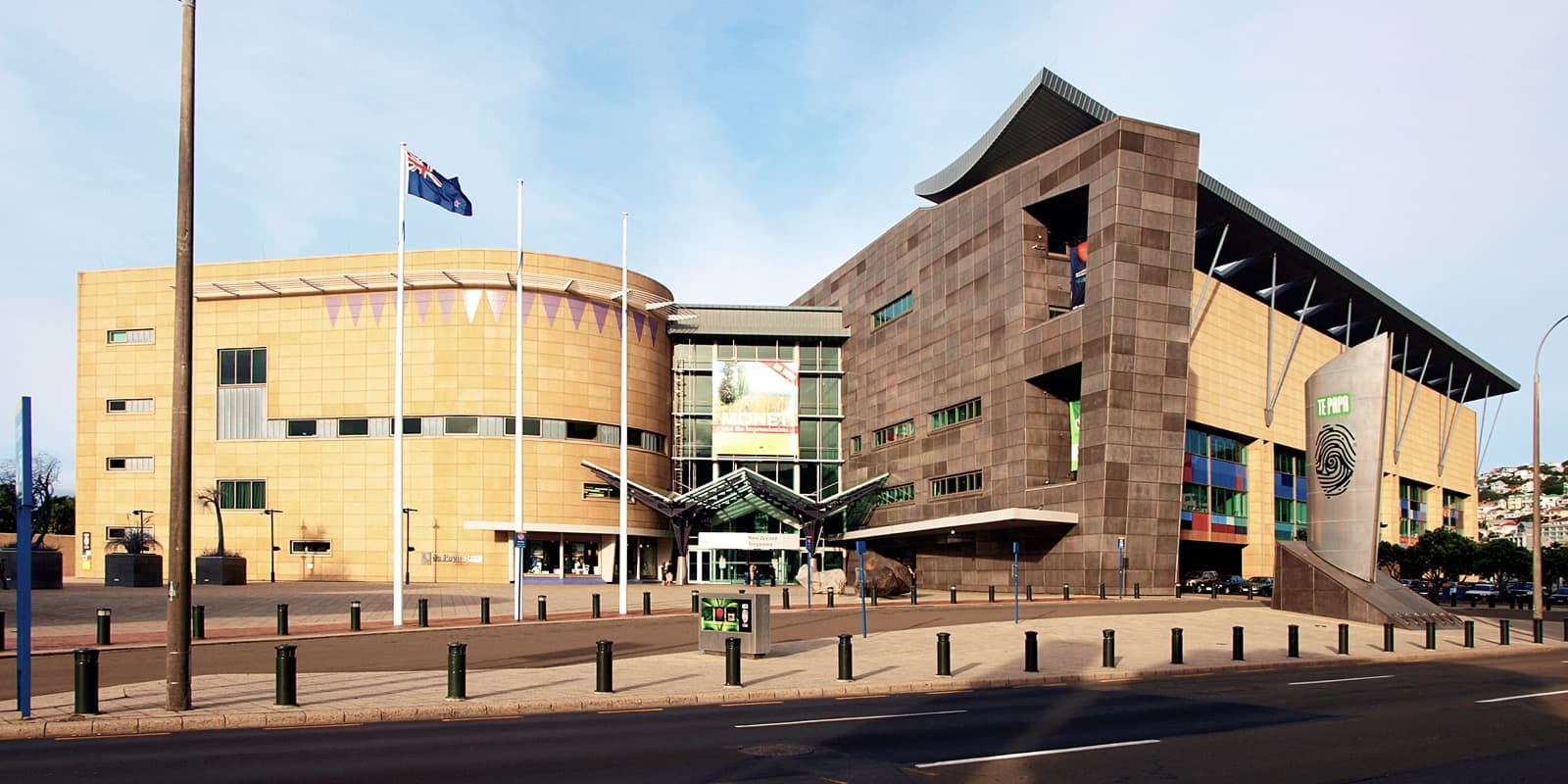
Te Papa Tongarewa is New Zealand's national museum, and the one thing worth understanding while you stand in front of it on the Wellington waterfront is that the building is structured biculturally around the Treaty of Waitangi, with a living Maori meeting place at its heart rather than a single grand hall of treasures. Most national museums organize themselves around their collections. Te Papa organizes itself around a relationship between two founding peoples, and it makes that relationship visible in the shape of the architecture itself. Once you see it, the whole place reads differently.
What the name tells you
Start with the name, because it carries the argument. Te Papa Tongarewa means, roughly, a container of treasured things. That word "container" is doing quiet work. The building is not a temple to a nation's greatness. It is a vessel that holds the country's story, and it is careful about whose story sits where. Te Papa opened on the fourteenth of February in nineteen ninety-eight, designed by the Auckland architecture firm Jasmax, and it draws well over a million visitors a year. It sits on Cable Street, on land reclaimed from the harbor that once belonged to the Wellington Harbour Board, so the ground under your feet is itself made rather than found, pushed out into the bay.
The museum you are looking at replaced two older institutions. It was established by the Museum of New Zealand Te Papa Tongarewa Act of nineteen ninety-two, which merged the National Museum of New Zealand and the National Art Gallery into one body. That merger matters, because it let the designers start fresh instead of grafting a bicultural idea onto an existing colonial museum. They could build the idea in from the foundations.
The building takes a position
Hear a stop from this walk
Cuba Street: The Street Named for a Ship
Here is the detail to hold onto. Te Papa's own account describes the museum as structured biculturally around the Treaty of Waitangi, the eighteen forty agreement between the British Crown and Maori that founds the modern nation. The tangata whenua areas, meaning the areas of the people of the land, face north toward the harbor. The tangata tiriti areas, meaning the areas of the Treaty partners who arrived later, align instead with the city street grid. Two orientations, two peoples, deliberately set side by side in the plan of the building.
You can feel this without reading a single label. Sightlines pull one way toward the water and another toward the town, and the friction between those two geometries is the point. A conventional museum hides its structure behind neutral white galleries. Te Papa lets its structure make a statement about who this country belongs to and how its two founding peoples are meant to stand together.
At the very center of that structure is a marae, a Maori meeting place, called Rongomaraeroa, with a contemporary carved meeting house, a wharenui, named Te Hono ki Hawaiki. This is not a display of a marae behind glass. It is a functioning meeting place inside the national museum, used for ceremony and welcome. Putting a living cultural space at the literal heart of the building, rather than a rotunda or a hall of founders, is the clearest thing Te Papa says about itself. The nation's container of treasures is built around a place where people gather, not around a single object everyone files past.
What that means for your visit
Knowing the plan changes how you move through it. Six floors climb above you across a thirty-six-thousand-square-metre building, holding exhibitions, cafes, and shops. Entry is free for New Zealanders and people living in New Zealand. From September of twenty twenty-four, international visitors aged sixteen and older pay a general-admission fee, currently thirty-five New Zealand dollars, with the ticket valid for forty-eight hours so you can return the next day at no extra cost. Under-sixteens enter free. The principle behind it is the same one that shaped the building: the collections belong to the country first, so residents keep the door that visitors help fund. Some special exhibitions are ticketed separately in New Zealand dollars, while the marae, the natural history halls, and the national collections are covered by general admission.
The building also had to survive where it stands. Wellington sits on an active fault, and the museum was engineered for it using base isolation, a New Zealand-developed technology that sets the structure on flexible bearings so the ground can move underneath it while the building above rides more gently. A seismic gap runs around the base to give it room. It is one of the reasons a museum this ambitious could be built on soft, reclaimed harbor land at all.
If you want a single object to anchor the visit, the museum holds the world's largest specimen of the rare colossal squid, a creature that weighs about four hundred and ninety-five kilograms and measures over four metres. It was caught in Antarctic waters and is the kind of thing you can only really grasp by standing next to it. But even here the lesson holds: the squid is a treasure the container keeps, not the reason the container exists.
How to read it on foot
Te Papa is the closing stop on our self-guided Wellington walking tours route through the creative capital, which threads from Te Ngakau Civic Square down Cuba Street and along the harbor before it arrives at the museum on the bay. That sequence is deliberate. By the time you reach Te Papa you have already passed Te Aro Pa, the Maori settlement that stood on this flat long before the colonial town, and the Wellington Writers Walk quotations set into the waterfront ground. The museum then gathers all of it: the two peoples, the harbor, the reclaimed land, and the written record of the place.
Arriving on foot, from the waterfront rather than a car park, is the right way to meet it. You come at the building the way it faces the sea, and you carry with you everything the walk has already shown you about how Wellington holds its history. Give yourself an hour or two inside at the end, stand for a moment at the entrance to Rongomaraeroa, and let the building do what it was designed to do, which is to make an argument about a country without saying a word.
To walk the full route and end here, explore self-guided audio tours in Wellington and set your own pace from the civic square to the sea.
Sources
- Te Papa (Wikipedia): opening date, Jasmax design, 1992 Act merging the National Museum and National Art Gallery, Cable Street reclaimed-land site, base isolation, six floors and building area, colossal squid specimen.
- Museum of New Zealand Te Papa Tongarewa, Jasmax project page: bicultural structuring around the Treaty of Waitangi and the tangata whenua / tangata tiriti orientation of the building.
- Te Papa official visitor information (tepapa.govt.nz): admission is free for New Zealanders and residents while international visitors pay from September 2024, and the Rongomaraeroa marae with the wharenui Te Hono ki Hawaiki.
- Roamer tour transcript, "Cuba Street: Bohemian Wellington by the Bay" (fact-audited): name meaning, opening on 14 February 1998, bicultural design, and the marae at the museum's heart.
Ready to experience it?
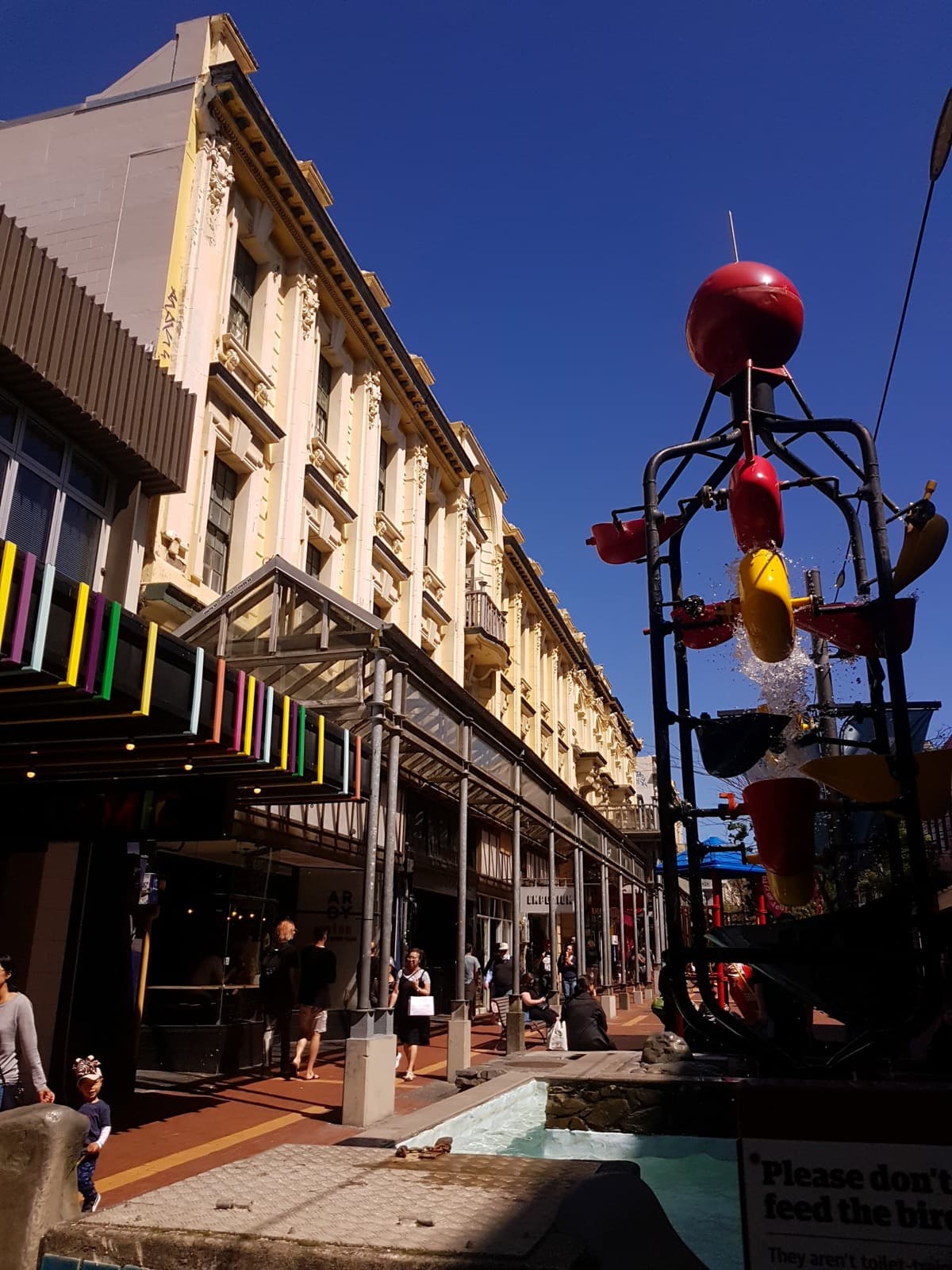
Cuba Street: Bohemian Wellington by the Bay
85 min · 3.7 km · easy
More from Wellington
Explore more at your own pace.
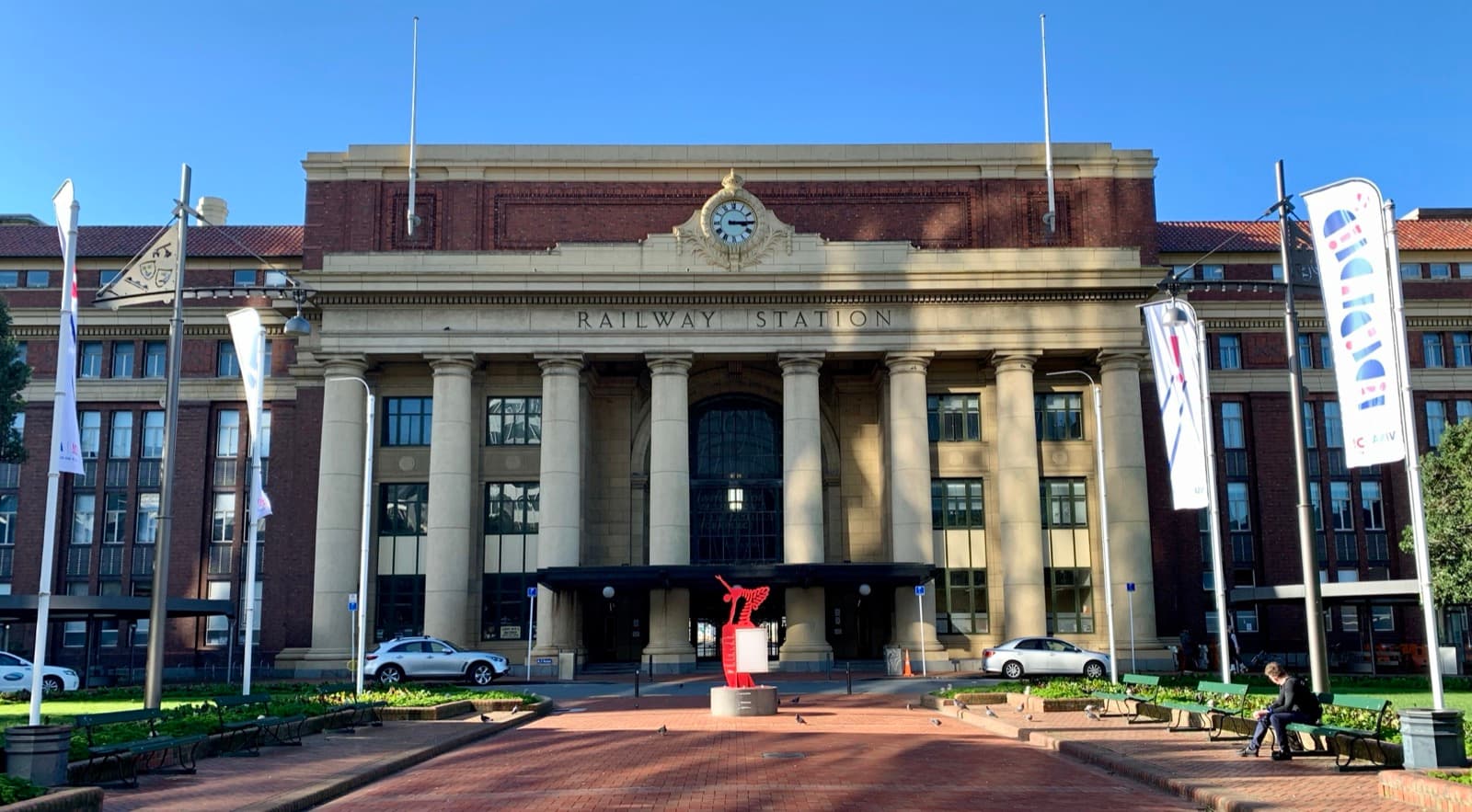
One Day in Wellington: A Walking Itinerary
Wellington Travel Guide: Days, Transport, Cost, and Safety
Wellington: The Capital on Ground the Sea Gave Back
Cuba Street, Wellington: The Bohemian Spine Named for a Ship, Not the Country
Reading Wellington's Parliament and the Beehive: Three Buildings, One Capital