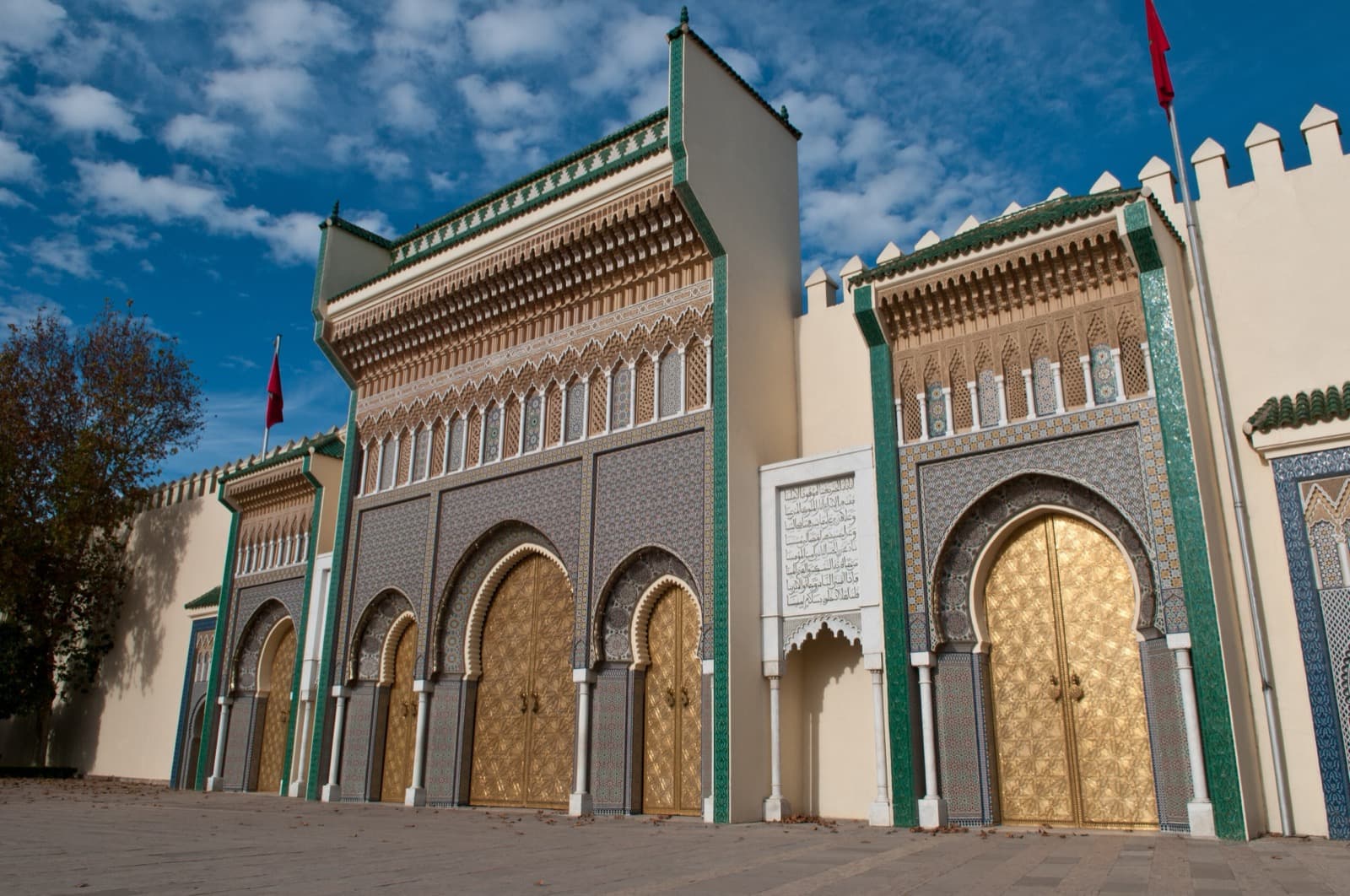
A walk through the second Fez the Marinids built beside the ancient medina: golden royal gates, the street-facing mellah with its surviving synagogue and outlasting cemetery, the empty parade grounds, a cool royal garden, and the ruined tombs of the dynasty that founded it all.
Start · The Royal Palace Gates: The New City's Golden Doors
DirectionsStops
- 1
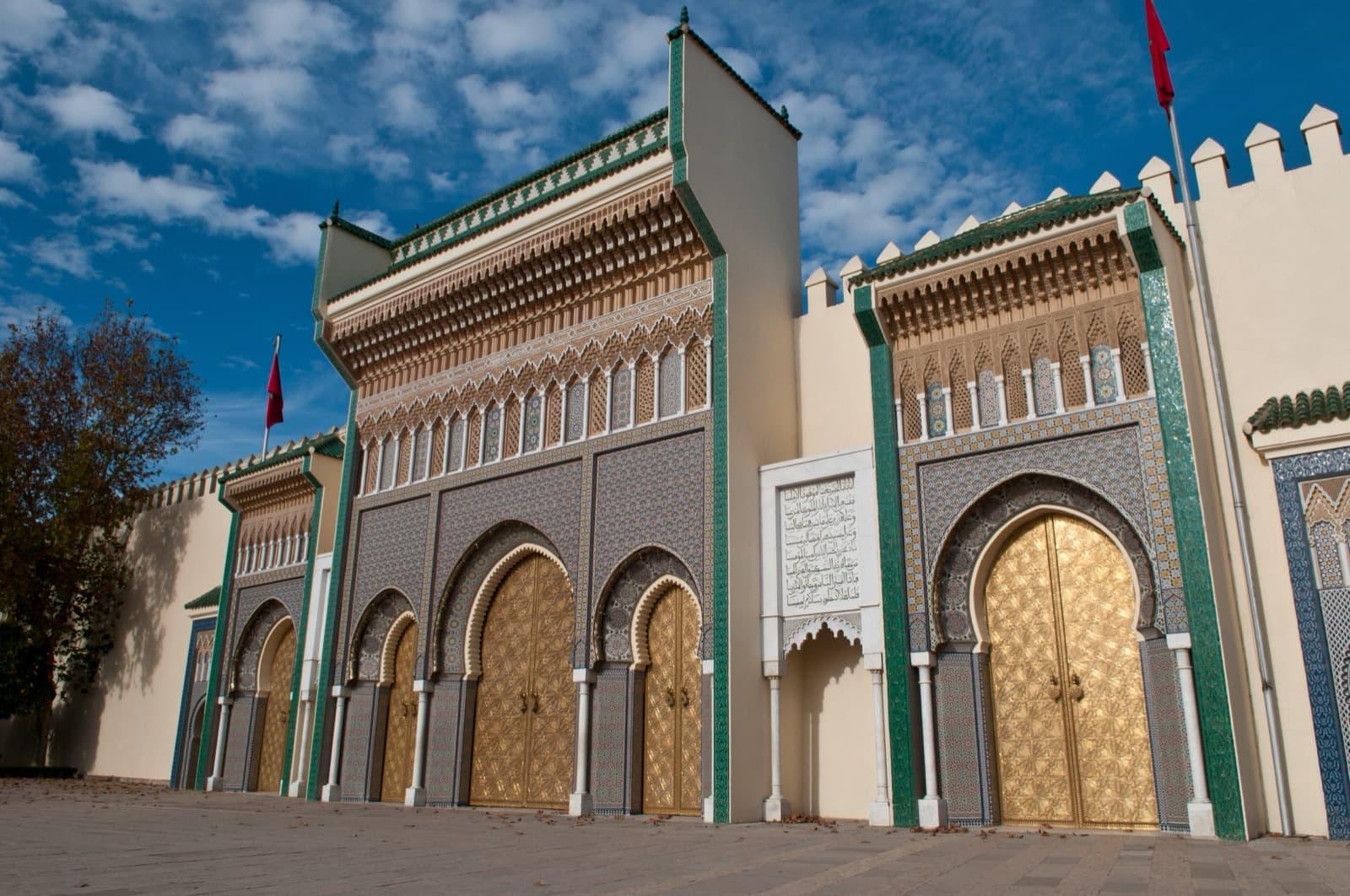
The Royal Palace Gates: The New City's Golden Doors
The gilded bronze gates of Morocco's working royal palace, the ceremonial face of a citadel begun by the Marinids and closed to the public today.
- 2
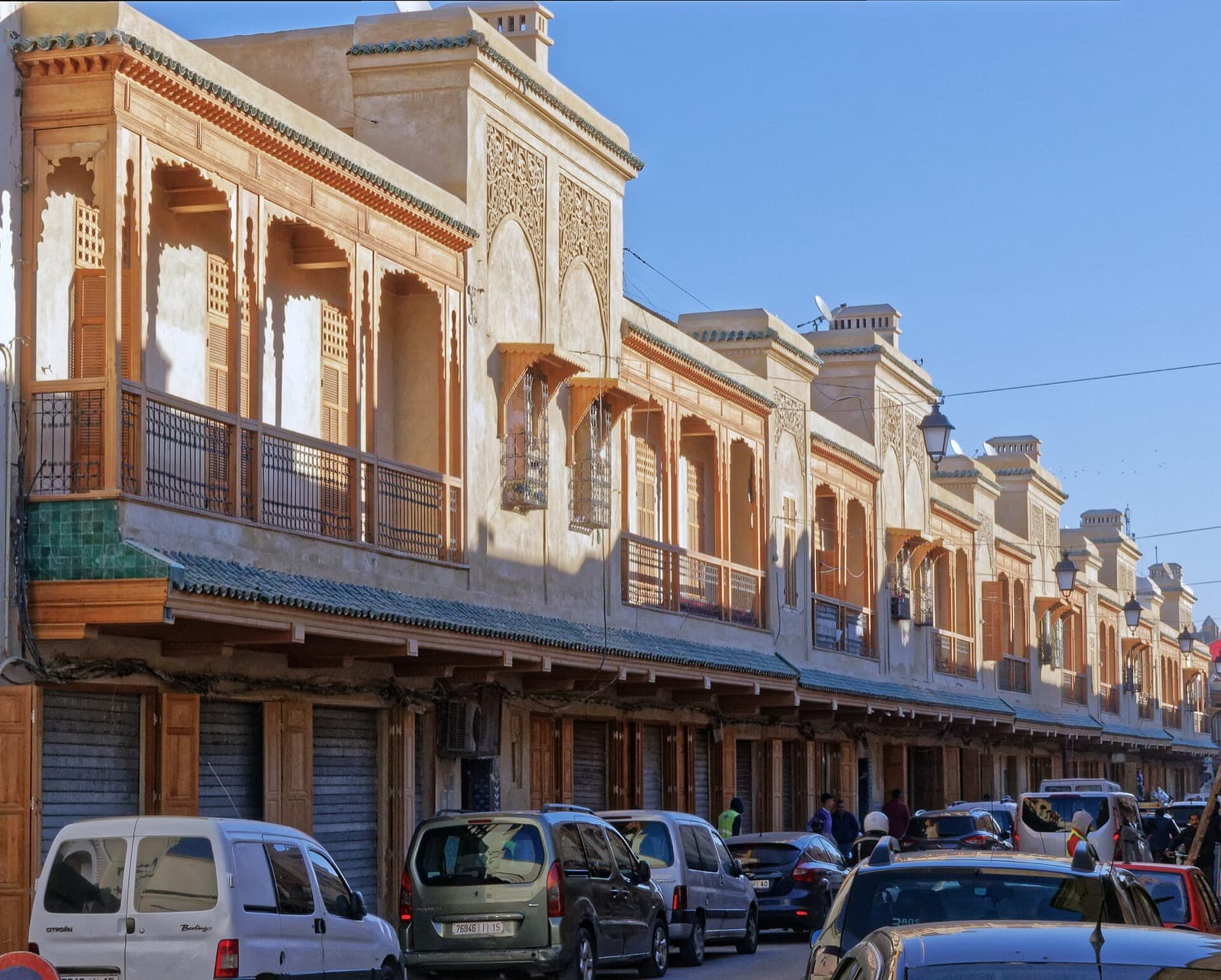
The Mellah of Fez: The Quarter That Faced the Street
The first mellah in Morocco, a historic Jewish quarter whose balconied, window-lined houses turned outward to the street rather than inward for privacy.
- 3
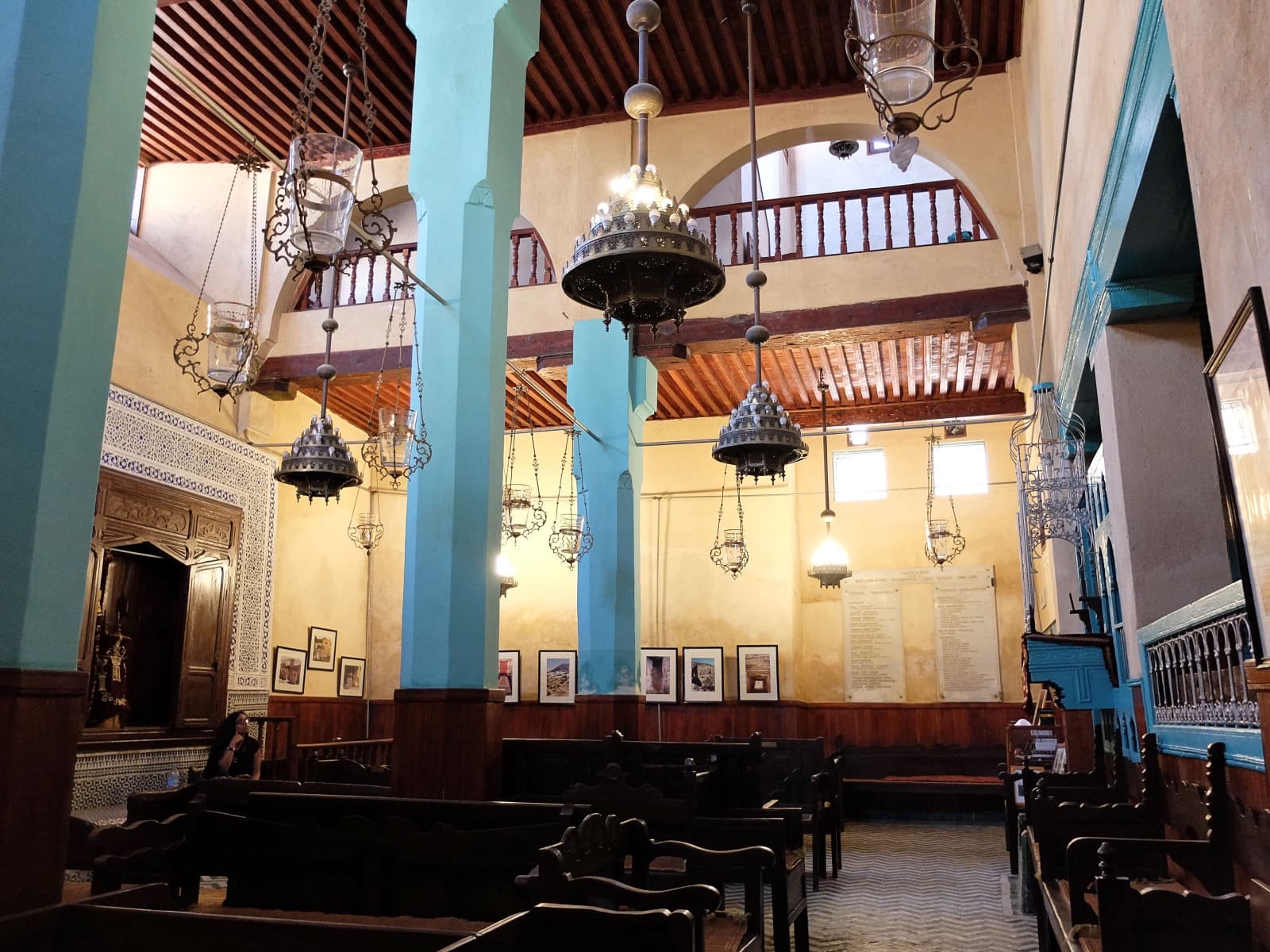
The Ibn Danan Synagogue: The One That Survived
One of the oldest surviving synagogues in Morocco, a seventeenth-century house of prayer with a carved Torah ark, blue-tiled walls, and a mikveh discovered beneath its bimah.
- 4
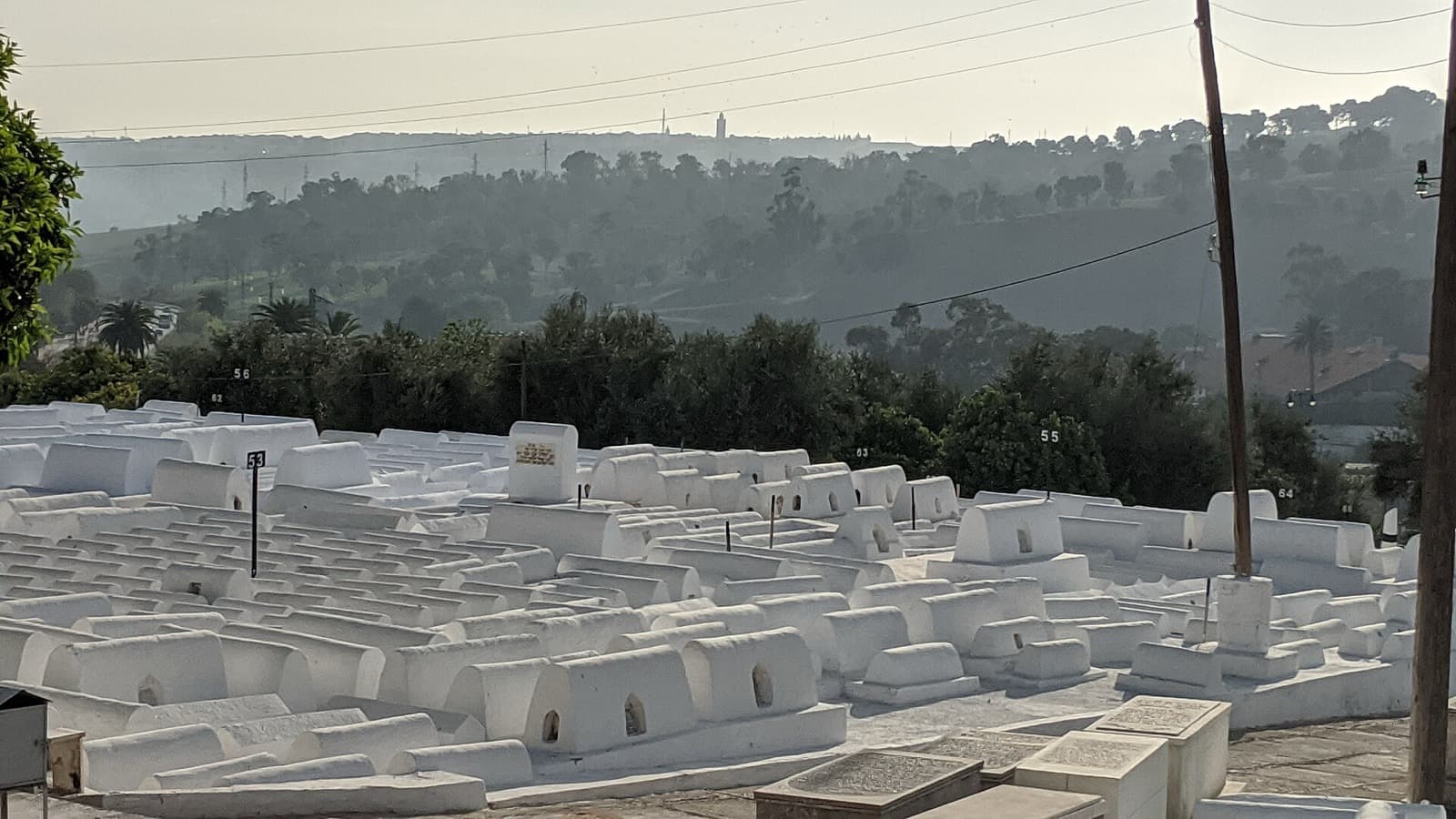
The Jewish Cemetery: The White Field That Outlasts
A hillside of close-set whitewashed tombs below the mellah, still tended today, holding centuries of the community's dead and the venerated grave of the martyr Solica.
- 5
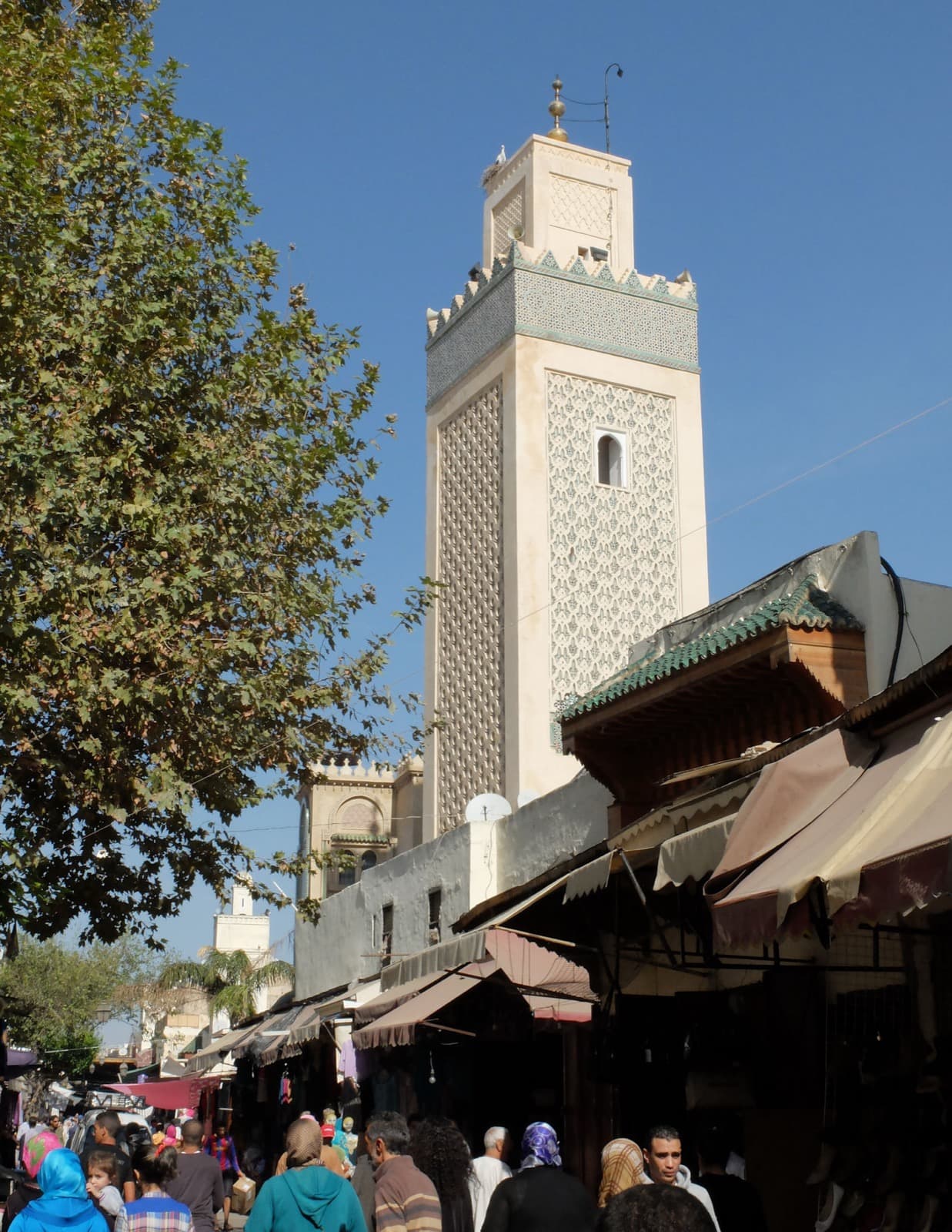
The Petit Mechouar and Bab Dekkaken: Where a Kingdom Was Staged
The walled parade grounds and monumental Marinid gates of New Fez, where sultans once held public audiences, dispensed justice, and assembled their armies.
- 6
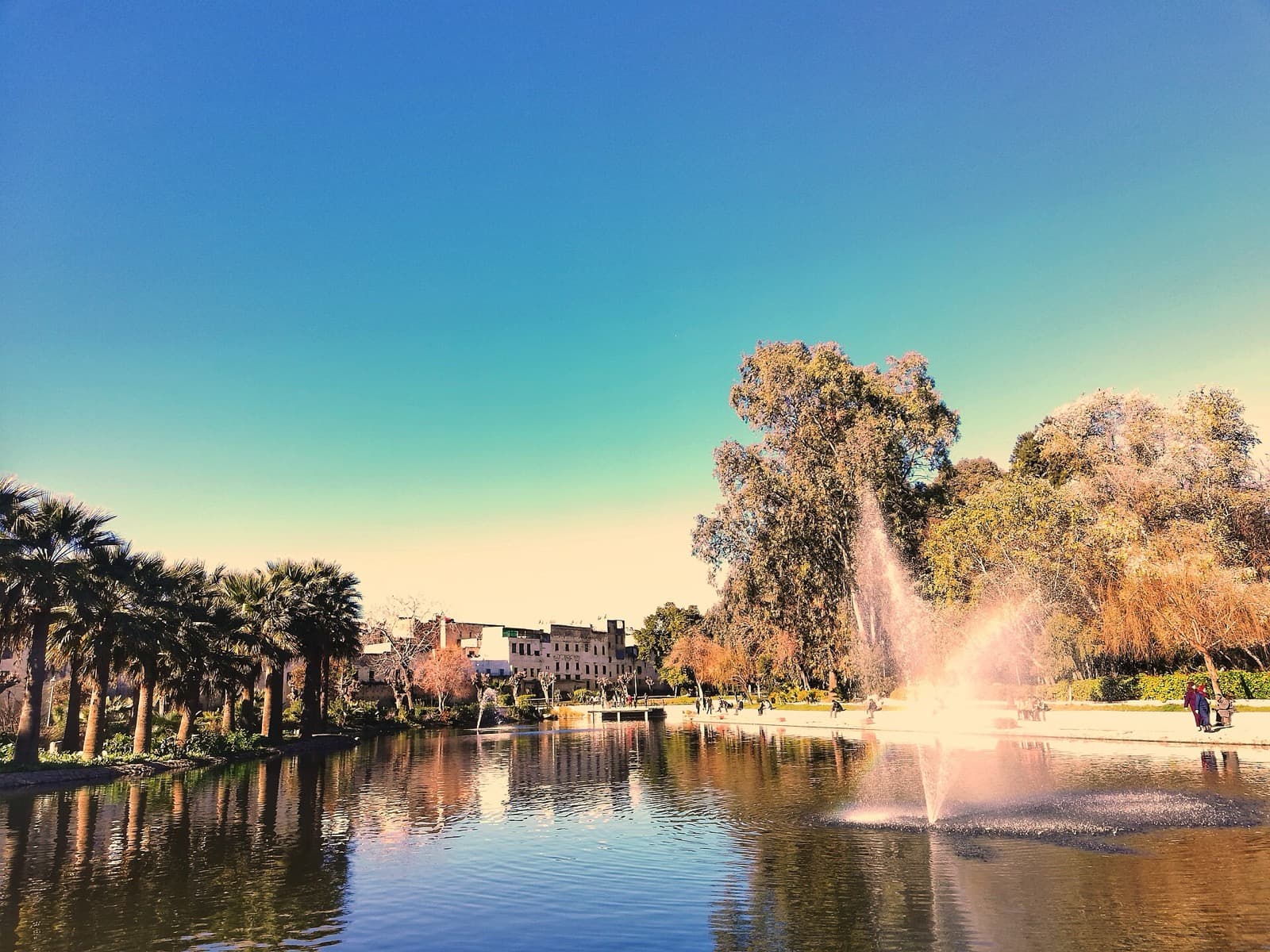
Jnan Sbil Gardens: The Green Seam Between Two Cities
A cool nineteenth-century royal garden of tall palms, historic water wheels and a river-fed pool, set in the seam between New Fez and the ancient medina.
- 7
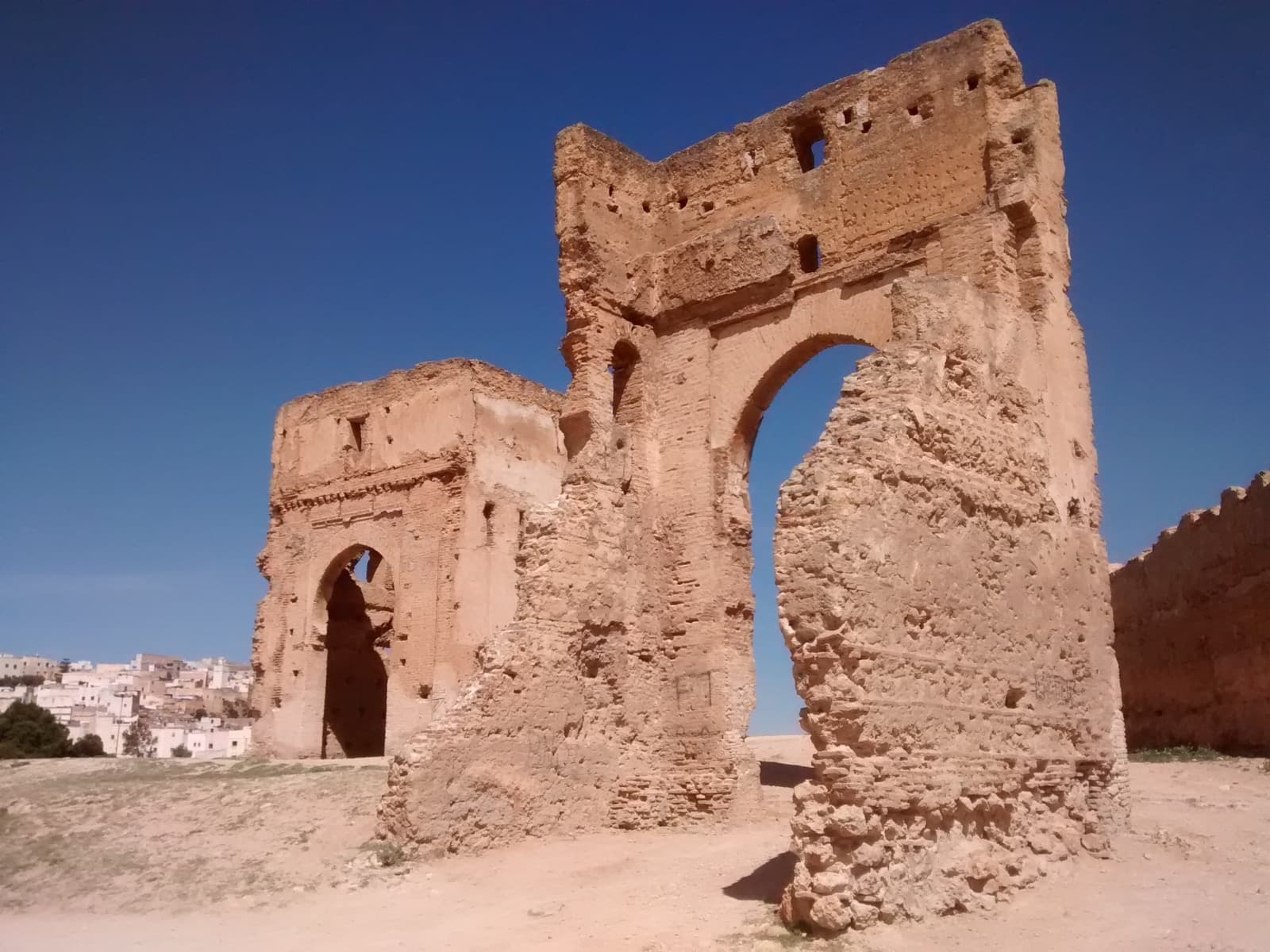
The Marinid Tombs: The Whole City From the Dynasty's Ruin
The ruined fourteenth-century royal tombs of the Marinid dynasty on the hill above the medina, and the classic panorama of the whole of old Fez spread below.
Details
Best Time to Visit
Morning is ideal for the flat first half through Fes Jdid and the mellah, when the light is soft and the quarter is quiet. Save the climb to the Marinid Tombs for late afternoon, when the whole medina glows below and the panorama is at its best; sunset there is a local ritual. Jnan Sbil gardens are normally closed on Mondays, and Friday prayer times change the rhythm of the mosque quarters, so plan a weekday if you can.
Pro Tips
- •Do the flat first half through Fes Jdid and the mellah in the morning, then time the uphill leg to the Marinid Tombs for late afternoon, when the whole medina glows below at sunset.
- •The mellah, the Ibn Danan Synagogue and the Jewish cemetery are close together, so walk them as one quiet cluster and give the synagogue interior and the cemetery unhurried time.
- •Carry small cash in Moroccan dirham for the synagogue donation, a tip to the cemetery caretaker, and gate tickets; card payment is rarely an option at these sites.
- •Check that Jnan Sbil is open before you arrive, as the gardens are normally closed on Mondays, and use the shade and the pool there as a rest before the final climb.
- •Keep your own map handy at the medina gates and around Fes Jdid; a firm, polite no to faux-guides and shopkeepers keeps you moving at your own pace without being steered into a shop.
- •Wear shoes with grip for the last leg up to the Marinid Tombs, which is an open uphill walk on uneven ground, and bring water since there is little shade on the hill.
Safety & Precautions
- •Non-Muslims cannot enter active mosques or living shrines in Fez, including the Qarawiyyin mosque and the Zawiya of Moulay Idriss the Second, so view them only from the outside; the restored Ibn Danan Synagogue and the palace-square gates are the interiors and exteriors you are meant to see on this walk.
- •Insistent faux-guides, touts and shopkeepers work the medina gates and the lanes of Fes Jdid, so a firm polite no and your own quiet map keep you free to linger or move on without pressure or being led into a shop.
- •Dress modestly throughout, and especially at the mellah synagogue and the Jewish cemetery, which are places of faith and remembrance; keep shoulders and knees covered and treat the tombs with quiet respect.
- •The medina lanes are a genuine maze with uneven, sometimes slick footing, and the climb to the Marinid Tombs is exposed with strong sun and little shade, so go at your own pace, watch your step, and carry water.
Travel advisory: Exercise Increased Caution (Level 2).
Gallery
Related Reading
Go deeper on what you'll see, hear, and walk through.

Overview
Best Self-Guided Walking Tours in Fez (2026)
3 min
Overview
Fez Travel Guide: Days, Transport, Season, Safety, Budget
7 min
Overview
One Day in Fez: A Walkable Medina-to-Sunset Itinerary
7 min
Thematic
Best History Walking Tours in Fez (2026)
2 min
Thematic
Fez, Two Cities in One Wall: Reading the Medieval Medina and the Imperial City
7 min
Companion
The Mellah of Fez: The Jewish Quarter That Faced the Street
7 min
Deep dive
The Royal Palace Gates of Fez: Golden Doors to a City Within a City
7 min
Read
What to Eat in Fez: A Local Food Guide
5 min
Read the walk
The full story of Fes Jdid and the Mellah: The Imperial and Jewish City, in words. Prefer to listen? Play it narrated, from home or on location.
Introduction
Beside the ancient medina of Fez, in Morocco, there is a second city. In the thirteenth century the Marinid dynasty built Fes Jdid, New Fez, a walled royal citadel of palaces, parade grounds and gates, and beside it the first mellah in Morocco, a Jewish quarter that turned its windows to the street. This route reads that imperial and layered Fez across seven stops, roughly two and a half hours at an unhurried pace, over about five kilometres with one uphill leg at the end. You will move from the golden gates of a working royal palace no visitor enters, through a balconied Jewish quarter with its seventeenth-century synagogue and its white hillside of tombs, past the empty grounds where a kingdom was staged, into a cool royal garden, and up to the ruined tombs of the very dynasty that founded the New City, where the whole of old Fez finally spreads out in a single view. It is a solo walk, your pace and your schedule, no group waiting on you and no one steering you into a shop. Around the medina gates the faux-guides and shopkeepers can be insistent, so a firm polite no and this quiet map keep you free to linger or move on exactly as you like. The Medina of Fez, including Fes Jdid, was inscribed by UNESCO in nineteen eighty-one as Morocco's first World Heritage Site, and UNESCO calls it one of the best-conserved historic towns of the Arab-Muslim world. When you arrive at Place des Alaouites in front of the Royal Palace gates, begin with stop one.
1. The Royal Palace Gates: The New City's Golden Doors
You are standing at the front of a city within a city. Behind these gates lies Dar el-Makhzen, the Royal Palace of Fez, and it sits on the ground where New Fez began. In the year twelve hundred and seventy-six, the Marinid sultan Abu Yusuf Yaqub founded Fes Jdid here as a fresh royal citadel and seat of government, and the court moved in soon after. What you see of the palace today is mostly the work of the Alaouites, the dynasty that has ruled Morocco since the seventeenth century, and the complex spreads across roughly eighty hectares, most of Fes Jdid itself. The gates in front of you are newer than they look. They were built between nineteen sixty-nine and nineteen seventy-one under King Hassan the Second: doors of gilded bronze worked in fine geometric patterns, framed by carved cedar and bands of zellij, the cut-tile mosaic Fez is known for. They open onto Place des Alaouites, the grand square laid out to give the palace a ceremonial face. This is a working palace, still used by the King of Morocco, so the doors do not open for visitors and the guards and protocol are real. The reward here is the outside. Notice how the light catches the metal, how the geometry never repeats, how the cedar and tile hold together at a scale meant to be seen from exactly where you stand. There is no group hurrying you and no schedule. Linger on these doors as long as you like, read the patterns, then when you are ready, we move a few streets on into the quarter the Marinids placed right beside their palace.
2. The Mellah of Fez: The Quarter That Faced the Street
This is the mellah, the historic Jewish quarter, and it was the first of its kind in Morocco. The pattern set here was copied across Moroccan cities in the centuries that followed; the mellah of Marrakech, for instance, came later. Scholars place the Jewish community's main move into this quarter in the middle of the fifteenth century. The name itself carries a story rather than a settled fact. By tradition, mellah comes from the Arabic word for salt or a saline place, attributed either to a saline water source nearby or to a former salt warehouse on this ground. Take that as tradition, not certainty. Now look up at the houses. This is the thing to notice, and it is the heart of what makes the mellah different. The buildings here open outward. They carry balconies that face the street, and far more windows than you find elsewhere in the old city, where traditional Moroccan houses turn inward around a private courtyard and show the lane almost nothing. Historians add one honest caveat: this street-facing character is relatively recent, and older houses here followed the more closed, conventional design. Still, walk these lanes and the outward gaze is unmistakable. This was a large and ancient community. In the late nineteen-forties, the mellah's Jewish population stood at roughly fifteen thousand. By nineteen ninety-seven, only about a hundred and fifty Jews remained in all of Fez, most having emigrated to the Ville Nouvelle, to Casablanca, to France, Canada and Israel. So you are walking a quarter that was full of life and is now largely departed, its architecture still speaking of a community that once looked out on this very street. Take your time; the next stop is one of the few interiors that survived.
3. The Ibn Danan Synagogue: The One That Survived
Here is one of the few interiors of the mellah you can step inside, and it is one of the oldest surviving synagogues in Morocco and North Africa. This is the Ibn Danan Synagogue. It dates to the seventeenth century; the historian Hicham Rguig has proposed the specific year sixteen eighty, though the broad seventeenth-century range is what is firmest. It was built by a wealthy merchant named Mimon Boussidan. Unlike the active mosques of Fez, which non-Muslims may not enter, this restored synagogue is open to visitors, so you can walk in with respect and see it whole. Inside, look for the large carved-wood Torah ark, the hekhal, with ornate plasterwork above it. The lower walls are wainscotted in figured blue Moroccan tiles, and there is a wooden bimah, the reading platform, crowned with a wrought-iron canopy of Islamic-style arches, Jewish and Moroccan craft in one room. There is a discovery here too. In nineteen ninety-seven, during restoration, workers found a mikveh, a ritual bath, hidden beneath the bimah: stairs descending to a square basin fed by an underground water channel. That restoration is why the synagogue stands so well today. The community had nominated it to the nineteen ninety-six World Monuments Watch of the World Monuments Fund, and the late-nineteen-nineties work followed, funded with American Express and carried out with Morocco's Ministry of Culture and the Judeo-Moroccan Cultural Heritage Foundation. Think about what this small room means. The great community that filled the mellah largely left in the twentieth century, and yet this synagogue was saved, restored, and reopened. It is the one that survived, tended and standing, when the people who prayed here had gone.
4. The Jewish Cemetery: The White Field That Outlasts
Below the mellah the ground falls away into a field of white. This is the Jewish cemetery of Fez, sometimes called the Em Habanim cemetery, a hillside of close-set whitewashed tombs, and it is still tended today. Here lie the community's dead across many centuries, revered…
Full narration for this stop unlocks with the tour.
5. The Petit Mechouar and Bab Dekkaken: Where a Kingdom Was Staged
Now you stand in the open, and the scale changes. These are the mechouars of Fes Jdid, the great walled courtyards where the sultan's power was performed. A mechouar is a palace parade or assembly ground, and there are several here: the Old Mechouar to the northeast, the New…
Full narration for this stop unlocks with the tour.
6. Jnan Sbil Gardens: The Green Seam Between Two Cities
After the stone and the sun of the parade grounds, this is the breath. Jnan Sbil, also called the Bou Jeloud Gardens, is one of the oldest gardens of Fez and a rare stretch of green in the old city, laid exactly in the seam between Fes Jdid and Fes el-Bali, the two walled Fezes.…
Full narration for this stop unlocks with the tour.
7. The Marinid Tombs: The Whole City From the Dynasty's Ruin
This is the climb's reward, and the close of the walk. These are the Marinid Tombs, ruined monumental tombs of the Marinid dynasty, standing on the al-Qula hill, the Hill of the Marinids, above and north of Fes el-Bali. They are attributed to the fourteenth century. What…
Full narration for this stop unlocks with the tour.