Fes el-Bali: Inside the World's Largest Living Medina
150 min · 2 km · moderate
One day in Fez runs downhill through Fes el-Bali, the old medina, from the Blue Gate in the morning to the tanneries and a garden by late afternoon, then out to a hilltop of ruined tombs for the sunset view. The city is car-free inside the walls and built on a slope, so a walkable day means starting high at Bab Bou Jeloud, following the great lane down through the madrasas and the mosque quarter, and saving the open squares and green spaces of Fes Jdid for when your legs want easier ground. This guide sets out the route, the opening hours and ticket needs verified against current 2026 sources, and where the two self-guided Fez walking tours pick up so your phone carries the story instead of a hired guide steering your pace.
The short answer: how to spend one day in Fez
Morning belongs to the medina. Enter at Bab Bou Jeloud (the Blue Gate), walk down Talaa Kebira toward the Bou Inania Madrasa, then work your way to the Qarawiyyin mosque and university, the al-Attarine Madrasa, the shrine of Moulay Idriss the Second, and the Nejjarine woodwork museum. Reach the Chouara Tannery by late morning, when the dye vats are best seen from the leather-shop terraces above.
Afternoon shifts to Fes Jdid, the "new" royal city the Marinids built beside the medina. See the golden Royal Palace gates on Place des Alaouites, the mellah (the historic Jewish quarter) with the Ibn Danan Synagogue and the old cemetery, then cool off in the Jnan Sbil Gardens. End the day with a taxi up to the Marinid Tombs on the north hill for a wide view over the whole medina bowl as the light drops.
The walking is modest in distance but slow in practice. The medina lane runs roughly two kilometers downhill; the Fes Jdid loop covers about five, with an uphill stretch at the end. Wear sturdy shoes for uneven, sometimes slick footing.
Morning: down through Fes el-Bali
Hear a stop from this walk
The Chouara Tannery: The Craft That Stains the City's Hands
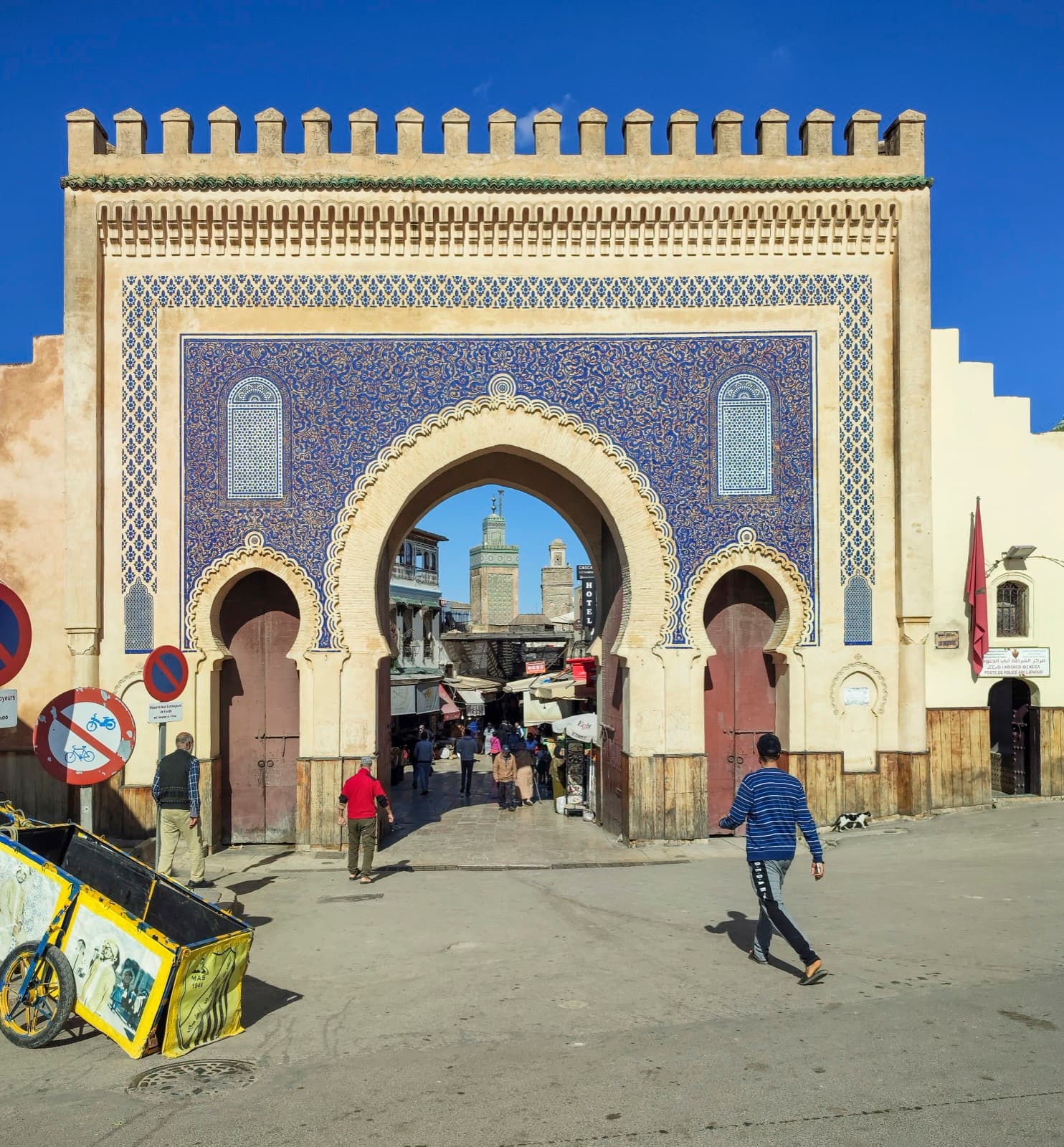
Start at Bab Bou Jeloud, the tiled triple-arch gate that most people mean when they say the Blue Gate. It is free and public, a natural top-of-slope starting point. From here the medina falls away in front of you along Talaa Kebira, the great sloping artery. When you are unsure of direction in the lanes, follow the slope downhill toward the river.
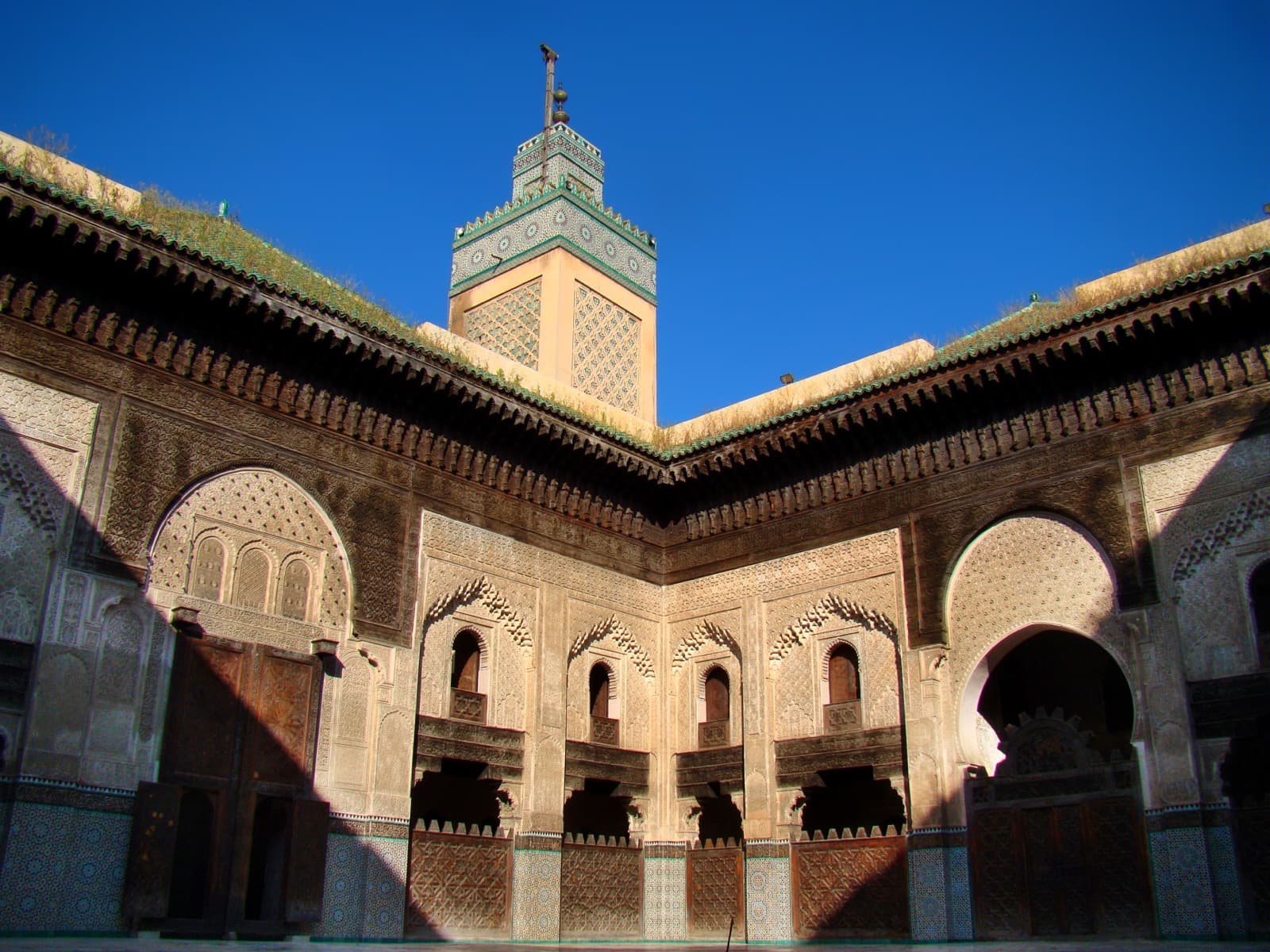
A few minutes in stands the Bou Inania Madrasa, a fourteenth-century religious school and one of the few in Fez that also functioned as a congregational mosque. It charges a small entry fee, commonly reported at 20 dirham, and is generally open Saturday through Thursday from around 9 in the morning to 6 in the evening, closed to visitors during prayer times. Across the lane, look up for the old Dar al-Magana water clock.
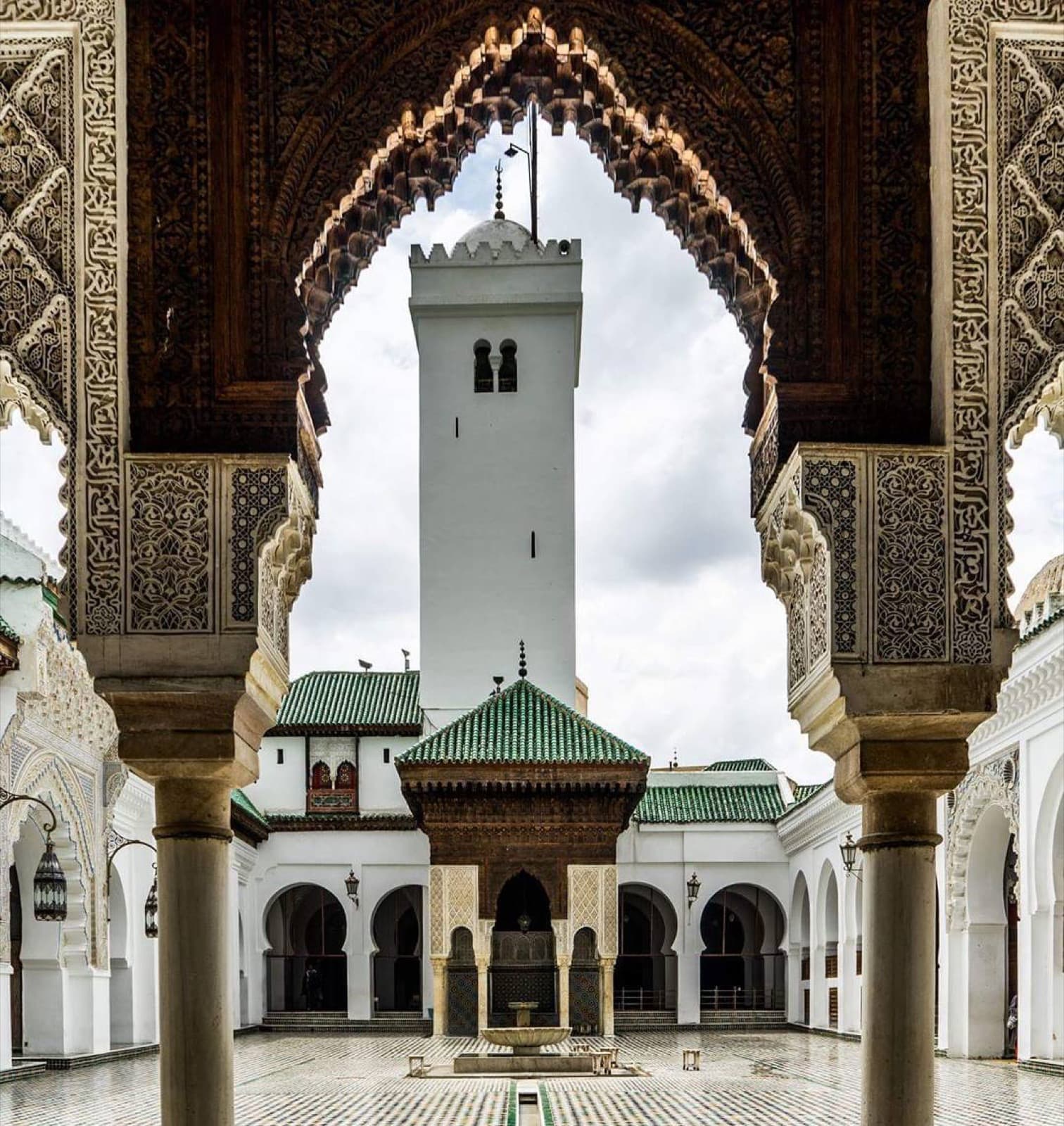
Continue down toward the spiritual and scholarly heart of the city: the Qarawiyyin mosque and university, a foundation with roots in the ninth century and a library often described as among the oldest continuously operating in the world. Non-Muslims cannot enter the working mosque, so treat the courtyard glimpse and the ornate doorways as the reward. A short walk on, the al-Attarine Madrasa rewards a ticket (again around 20 dirham) with some of the finest carved cedar, stucco, and zellij tilework in the medina; reported hours vary between sources, so aim for late morning to be safe. Nearby, the Zawiya of Moulay Idriss the Second, the shrine of the man traditionally credited with founding the city, is open only at its threshold for non-Muslims. Keep your voice low near the shrine and dress modestly, covering shoulders and knees.
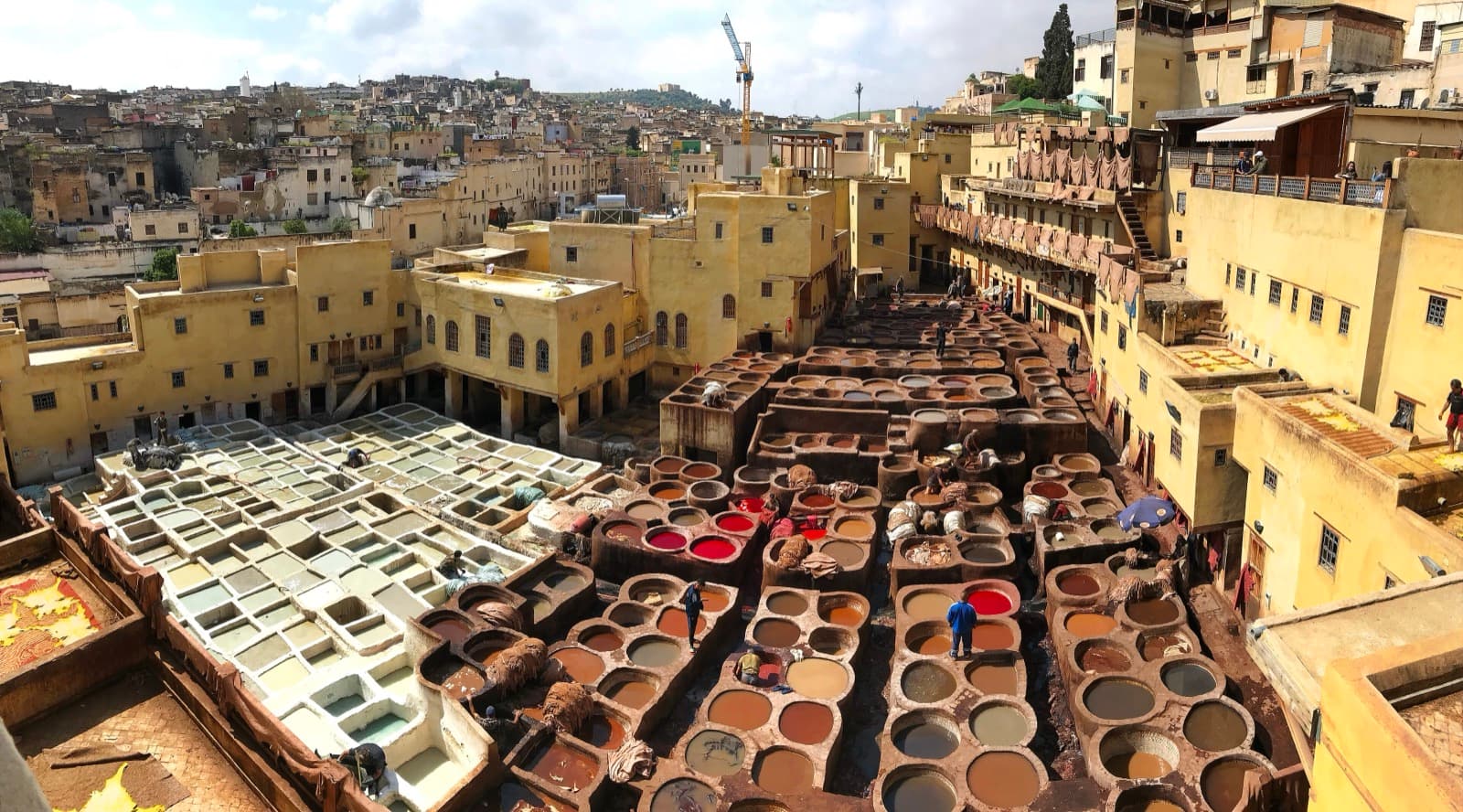
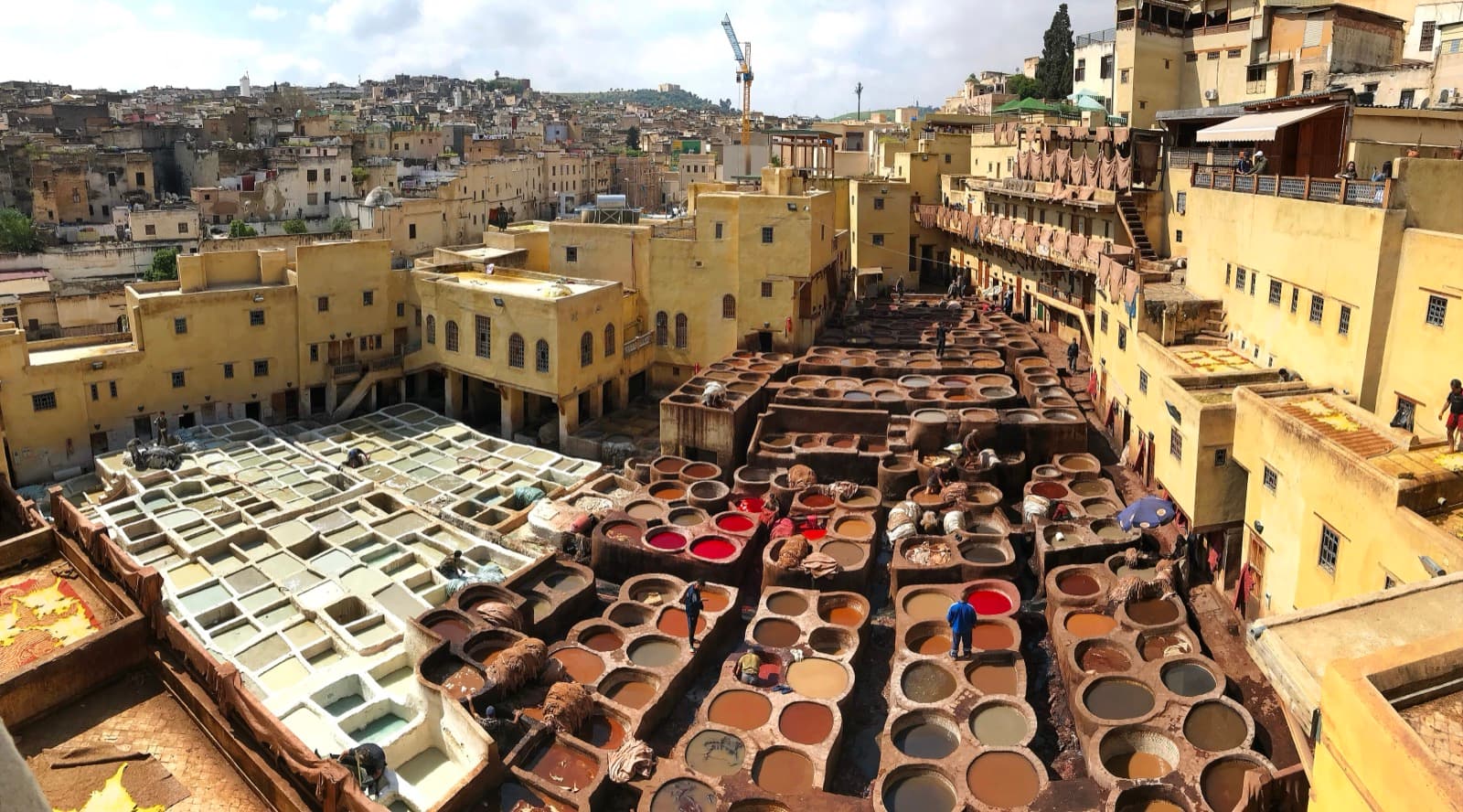
The Nejjarine Funduk, a restored merchants' inn, now holds a small museum of wooden arts and crafts (a modest ticket, roughly 20 to 30 dirham) with a rooftop terrace worth the climb. From here you are close to the Chouara Tannery, the medieval dye pits still worked by hand. Viewing is free from the terraces of the leather shops that ring the pits, though the shopkeeper who lets you up expects a small tip, often 10 to 20 dirham, whether or not you buy. The smell is strong; terraces sometimes hand you mint to hold to your nose.
This morning stretch is exactly what the self-guided Fes el-Bali medina walk narrates stop by stop, from the Blue Gate down to Chouara, so you can move at your own pace and stop as long as you like at each courtyard.
Afternoon: the royal city and the mellah
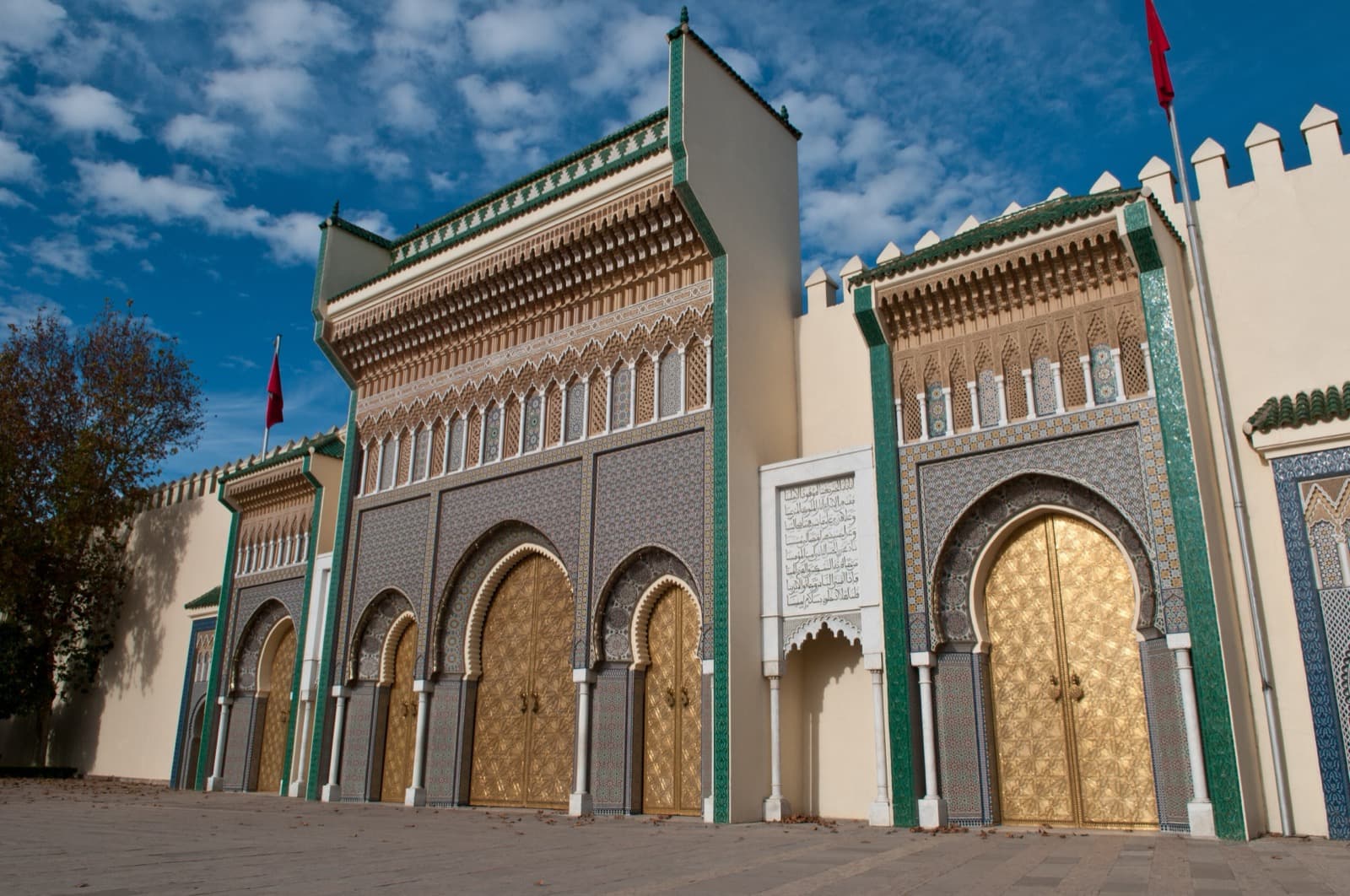
Walk or take a short petit-taxi ride out of the medina to Fes Jdid. The Royal Palace of Fez is closed to the public, but its gates on Place des Alaouites are a landmark in themselves: seven brass doors set in tilework, freely viewed from the square.
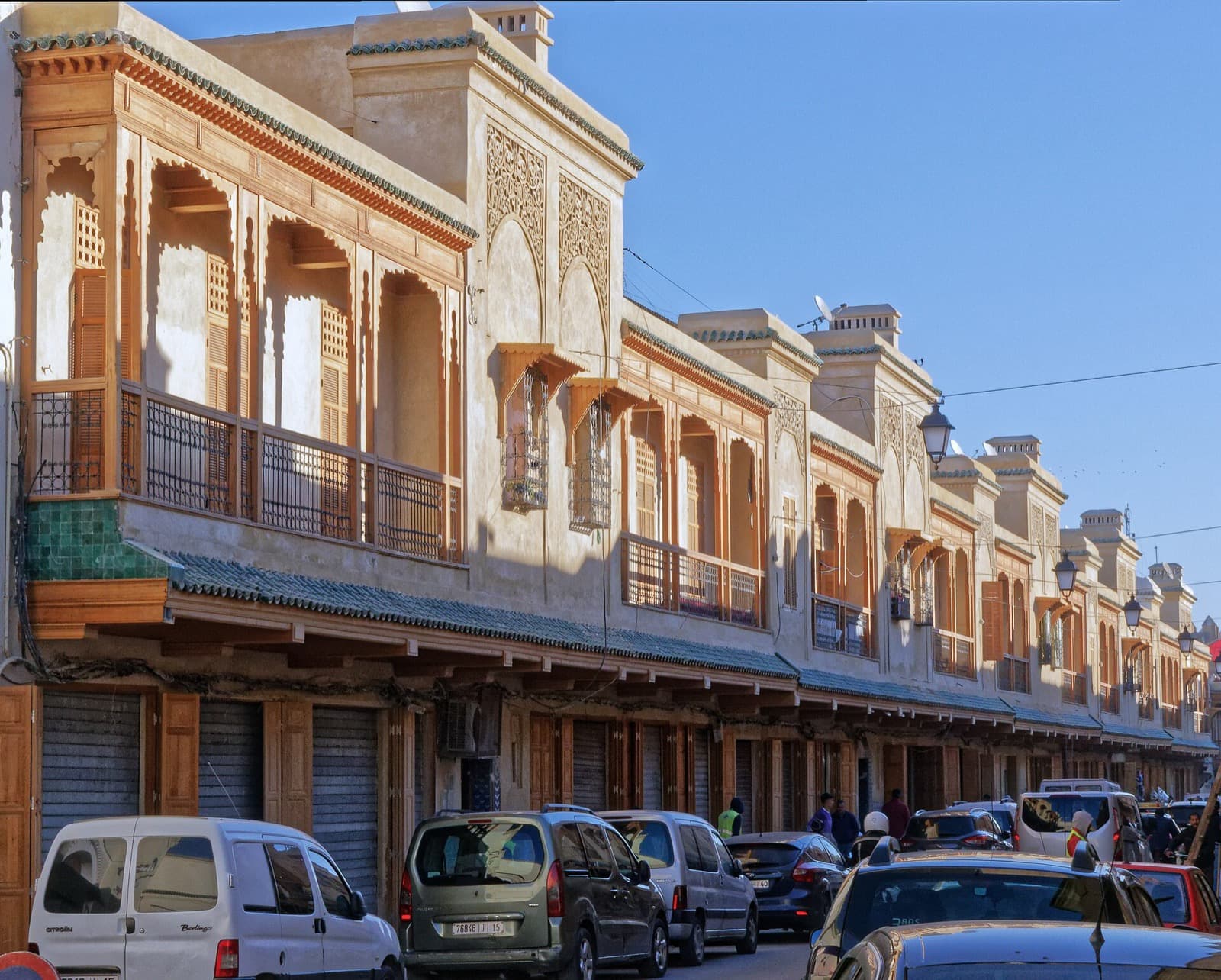
Beside it lies the mellah, laid out in the fifteenth century as the city's Jewish quarter, with tall street-facing balconied houses unlike anything in the old medina. The Ibn Danan Synagogue, a restored seventeenth-century synagogue, is open to visitors for a small cash entry or donation that supports its upkeep; carry dirham, since card payment is unlikely. Just downhill, the Jewish cemetery, with its rows of whitewashed tombs, is free to enter, and a caretaker tip is customary.
When you want shade, the Jnan Sbil Gardens are one of the oldest public gardens in the city, free to enter and laid out with water channels, tall palms, and a bamboo grove. Note the standing detail confirmed for 2026: the gardens are closed on Mondays, so if your one day falls on a Monday, plan the medina and the tombs instead.
Evening: the view from the Marinid Tombs
Close the day at the Marinid Tombs, the ruined royal tombs on the hillside north of the medina. They are open ruins, free to reach, and the point is not the crumbling walls but the panorama: the entire medina spread below, the green-tiled Qarawiyyin and the minarets catching the last light. A petit taxi from Fes Jdid or the medina gates gets you up in a few minutes, which saves your legs for standing and looking. The full Fes Jdid and mellah loop, ending here, is the second self-guided tour on Roamer's Fez page.
Getting there and getting around
Fes-Saïss Airport sits about 13 kilometers southwest of the medina. A taxi runs roughly 25 to 35 minutes in light traffic; an airport bus also connects to the city for a low fare, taking around 40 minutes. The simplest arrival, especially if you are staying inside the walls, is to ask your riad to arrange a driver, since cars cannot enter the medina and the lanes are hard to navigate on a first day. Inside the city, petit taxis are cheap and handle the links between Fes el-Bali, Fes Jdid, and the tomb hill; the walking itself all happens on foot within each quarter.
A calm word on safety
Fez is generally safe for visitors who take normal city precautions, and tourist areas see a visible police presence. The most common frustration is not crime but persistent faux-guides and touts near the gates and busy lanes who offer to lead you or steer you toward a shop. A firm, polite no and your own map keep you moving freely. The medina is a true maze with thousands of alleys and weak phone signal in the deep lanes, which is the practical reason to carry a downloaded route: it lets you wander without worrying about being led. Watch for handcarts and loaded mules squeezing past, keep valuables secure in crowds, and stick to well-traveled routes after dark.
Sources
- Bou Inania Madrasa visitor information, feelmorocco.travel
- Nejjarine Museum tickets and hours, Trip.com
- Jardin Jnan Sbil (Monday closure, free entry), Tripadvisor
- How to visit Chouara Tannery (terrace access and tips), passportandstamps.com
- Is Fes safe for tourists, honest local guide, casacadovoyageurs.com
Frequently asked questions
- How many days do you need in Fez?
- One full day is enough to see the essentials of Fez on foot: the Fes el-Bali medina in the morning and the royal city and mellah of Fes Jdid in the afternoon, ending at the Marinid Tombs for sunset. A second day lets you slow down, revisit the tanneries, and explore quieter lanes, but the core sights fit into a single well-planned walking day.
- Is Fez safe to walk around on your own?
- Fez is generally safe for visitors who take normal city precautions, with violent crime rare and a visible police presence in tourist areas. The main annoyance is persistent faux-guides and touts near the medina gates who offer to lead you or steer you to shops; a firm, polite no and your own downloaded map keep you moving freely. Phone signal is weak in the deep lanes, so carry an offline route.
- How much does it cost to enter the madrasas in Fez?
- The Bou Inania Madrasa and the al-Attarine Madrasa each charge a small entry fee, commonly reported around 20 dirham, and the Nejjarine wooden-arts museum runs roughly 20 to 30 dirham. Carry small cash in Moroccan dirham, since these sites take cash rather than card. The Qarawiyyin mosque and the Moulay Idriss shrine are not open to non-Muslims, so you view them from the threshold for free.
- Can you visit the Chouara Tannery for free?
- Viewing the Chouara Tannery is free from the terraces of the leather shops that surround the dye pits. The shopkeeper who lets you climb up expects a small tip, often 10 to 20 dirham, whether or not you buy anything. The smell is strong, and terraces sometimes offer mint to hold to your nose.
- What is closed on Mondays in Fez?
- The Jnan Sbil Gardens are closed on Mondays. If your one day in Fez falls on a Monday, plan around the medina, the mellah, and the Marinid Tombs, which stay open, and save the gardens for another day.
- How do you get from Fez airport to the medina?
- Fes-Saïss Airport is about 13 kilometers southwest of the medina. A taxi takes roughly 25 to 35 minutes in light traffic, and an airport bus connects to the city for a low fare in around 40 minutes. Because cars cannot enter the medina, the easiest option is to have your riad arrange a driver who can meet you at the nearest gate.
Ready to experience it?
Fes el-Bali: Inside the World's Largest Living Medina
150 min · 2 km · moderate
More from Fez
Explore more at your own pace.
Fez Travel Guide: Days, Transport, Season, Safety, Budget
Fez, Two Cities in One Wall: Reading the Medieval Medina and the Imperial City
The Mellah of Fez: The Jewish Quarter That Faced the Street
The Qarawiyyin: Walking Into the World's Oldest University in Fez's Living Medina
The Chouara Tannery in Fez: How Leather Is Still Dyed by Hand