Fes el-Bali: Inside the World's Largest Living Medina
150 min · 2 km · moderate
Plan two to three days in Fez, get around on foot inside the car-free medina and by metered red petit taxi elsewhere, aim for spring or fall, carry cash in dirhams, and treat the city as safe but scam-aware rather than dangerous. Fez rewards a slow, self-guided approach: the old walled city of Fes el-Bali is one of the largest car-free urban areas on earth, so the walking is the trip, not a detour from it. Here is how to plan it.
How many days do you need in Fez?
Two full days is the honest minimum, and three is comfortable. Fez has two historic cores, and they split naturally into two walks.
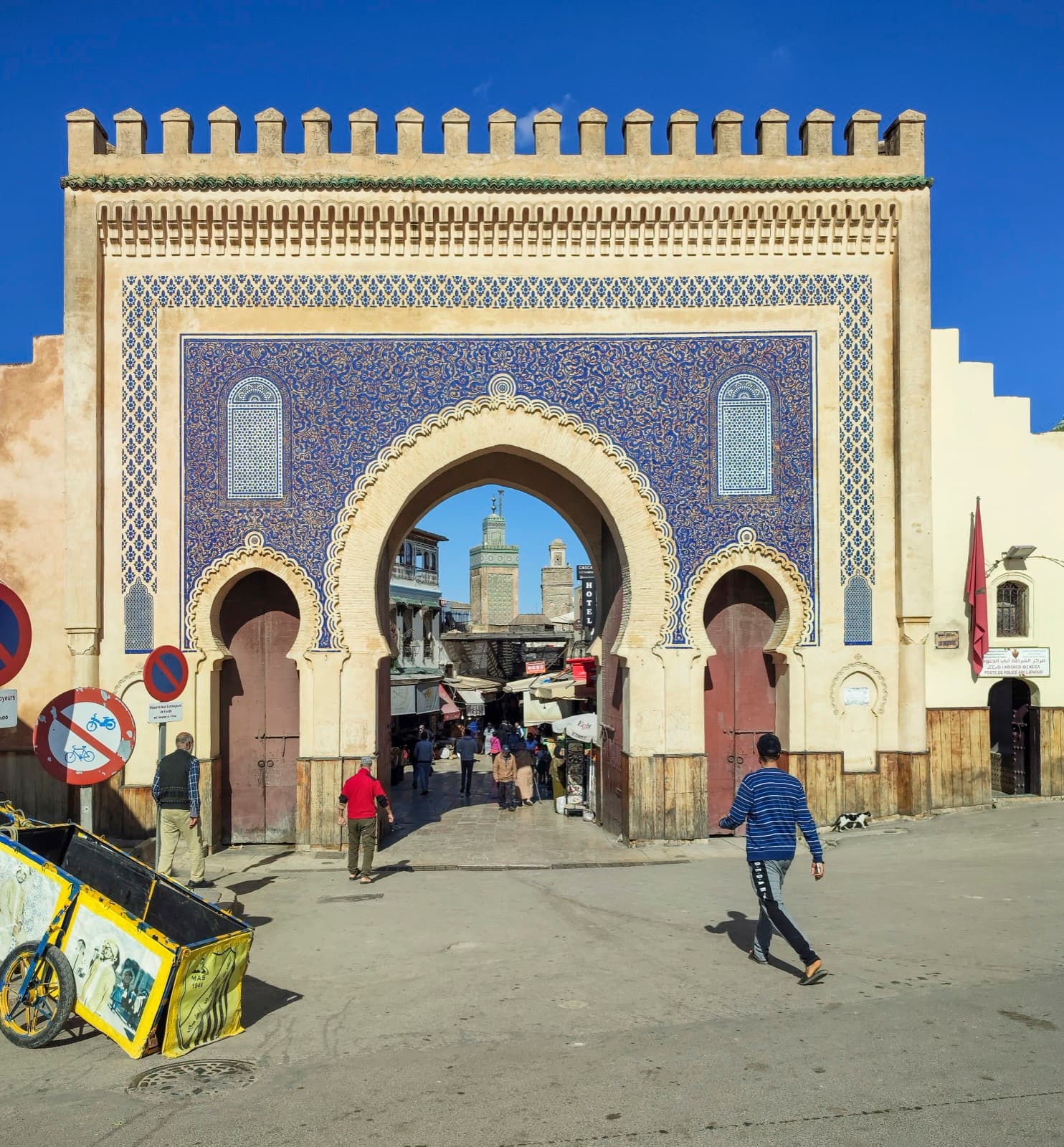
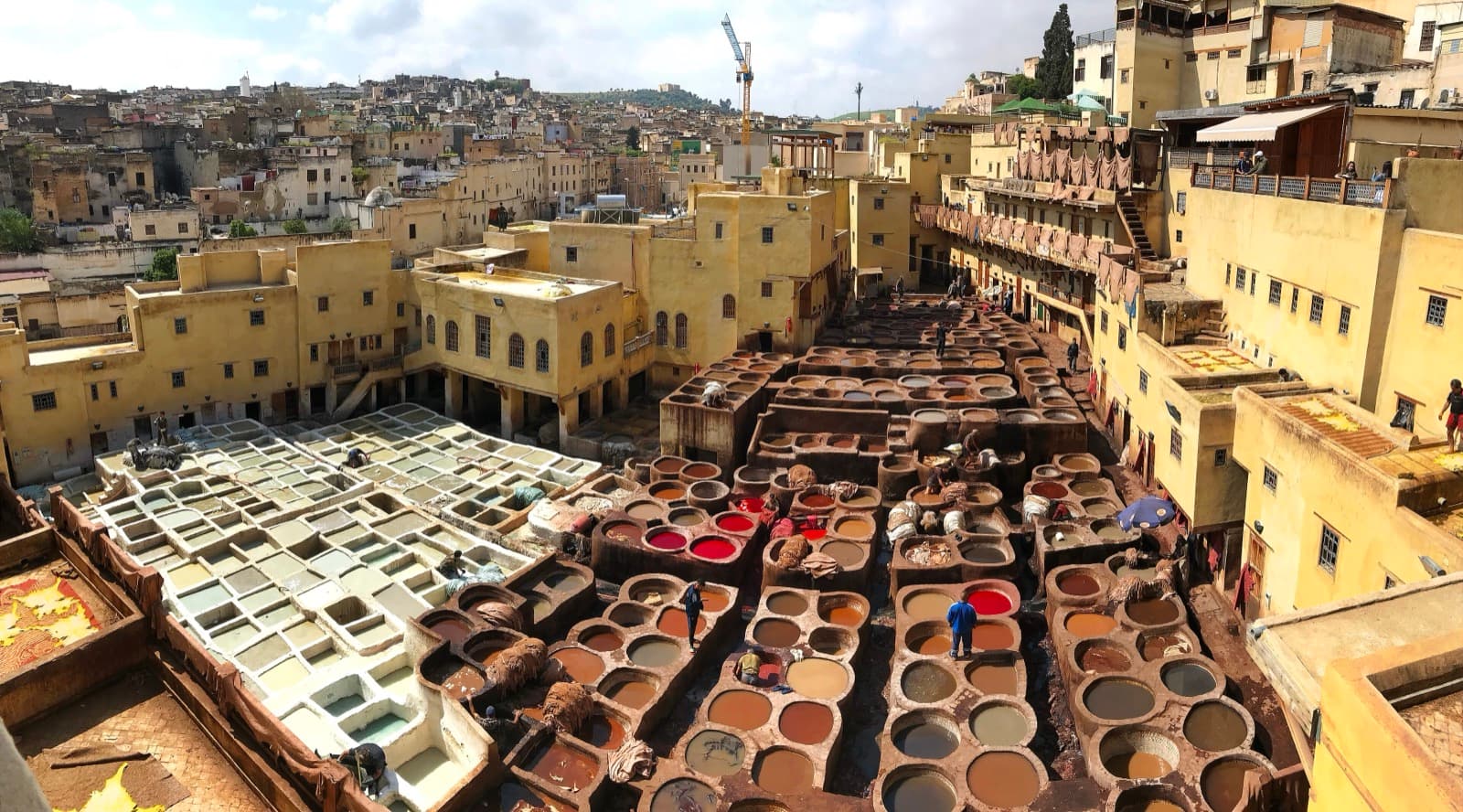
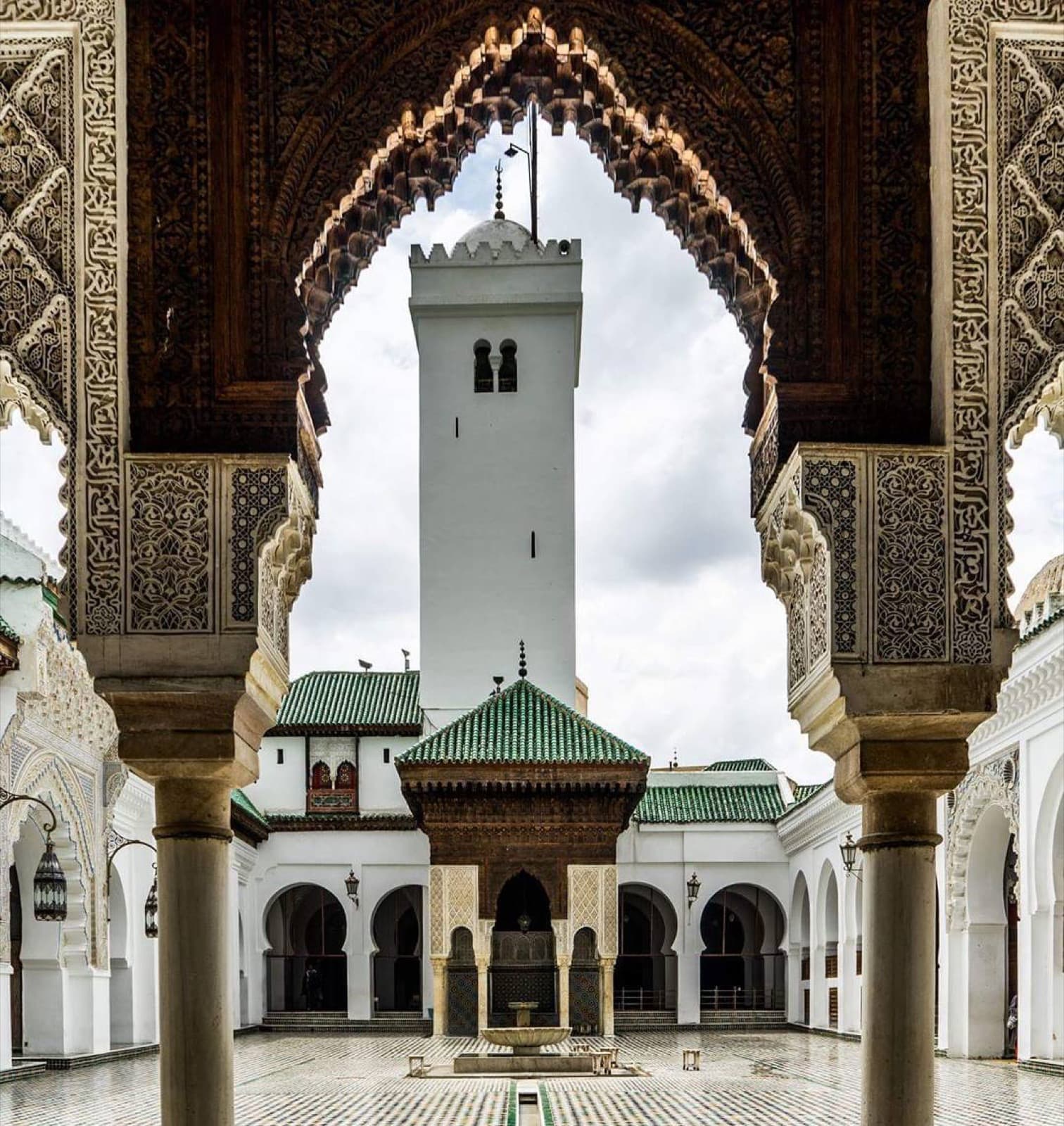
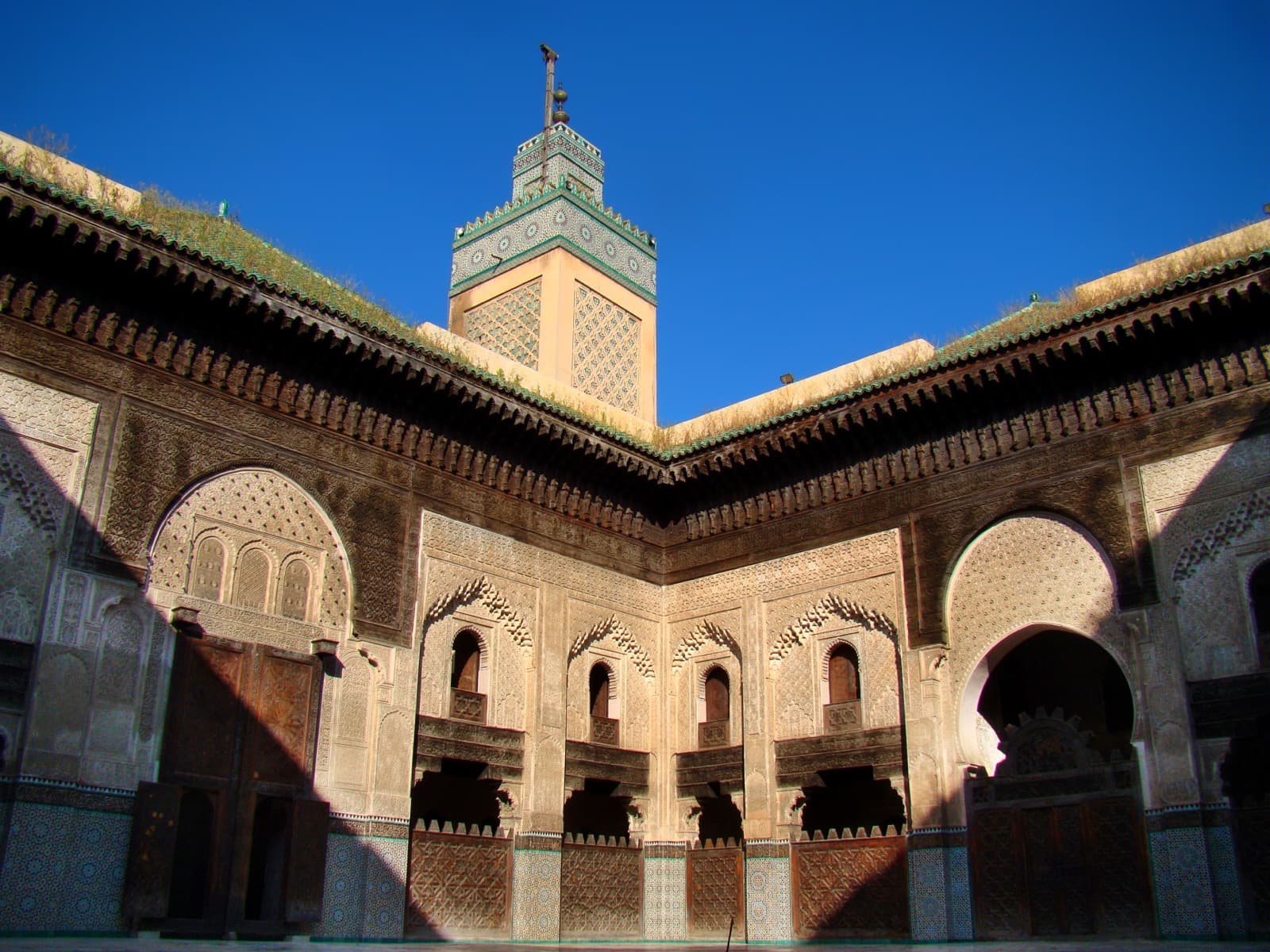
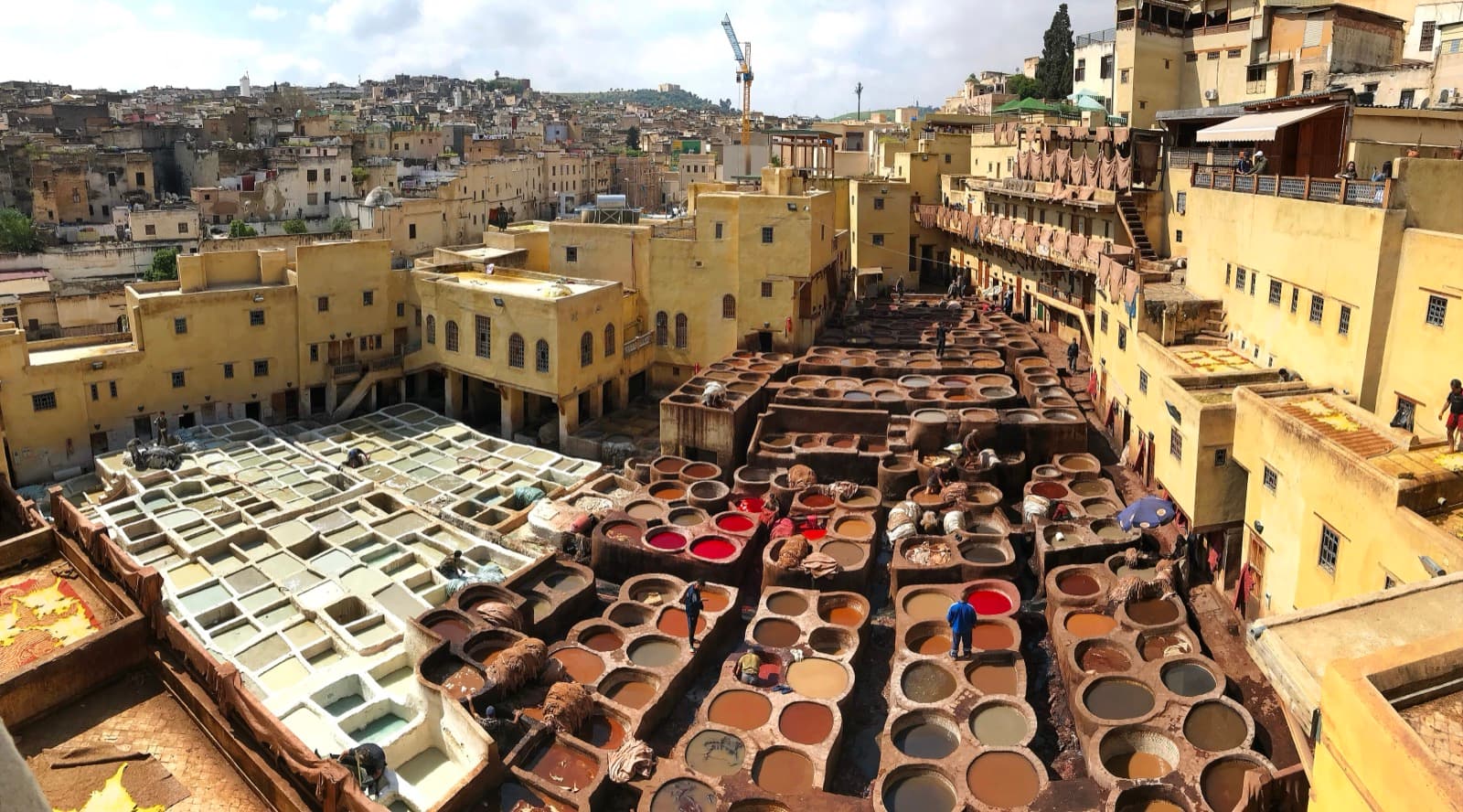
Spend one day inside Fes el-Bali, the medieval old city founded in the ninth century by the Idrisids and grown to its height under the Marinid dynasty, inscribed by UNESCO in 1981. The main artery, the Talaa Kebira, runs downhill from the Blue Gate to the tanneries, and it packs the Qarawiyyin (the world's oldest continuously operating university, founded by a woman), the Bou Inania Madrasa with its medieval water clock, the perfume-market jewel box of Al-Attarine, the shrine of the city's founder-saint, and the Chouara Tannery into a little under two kilometers. That sounds short. It is not, because you will stop constantly, and two to three hours of actual walking is realistic.
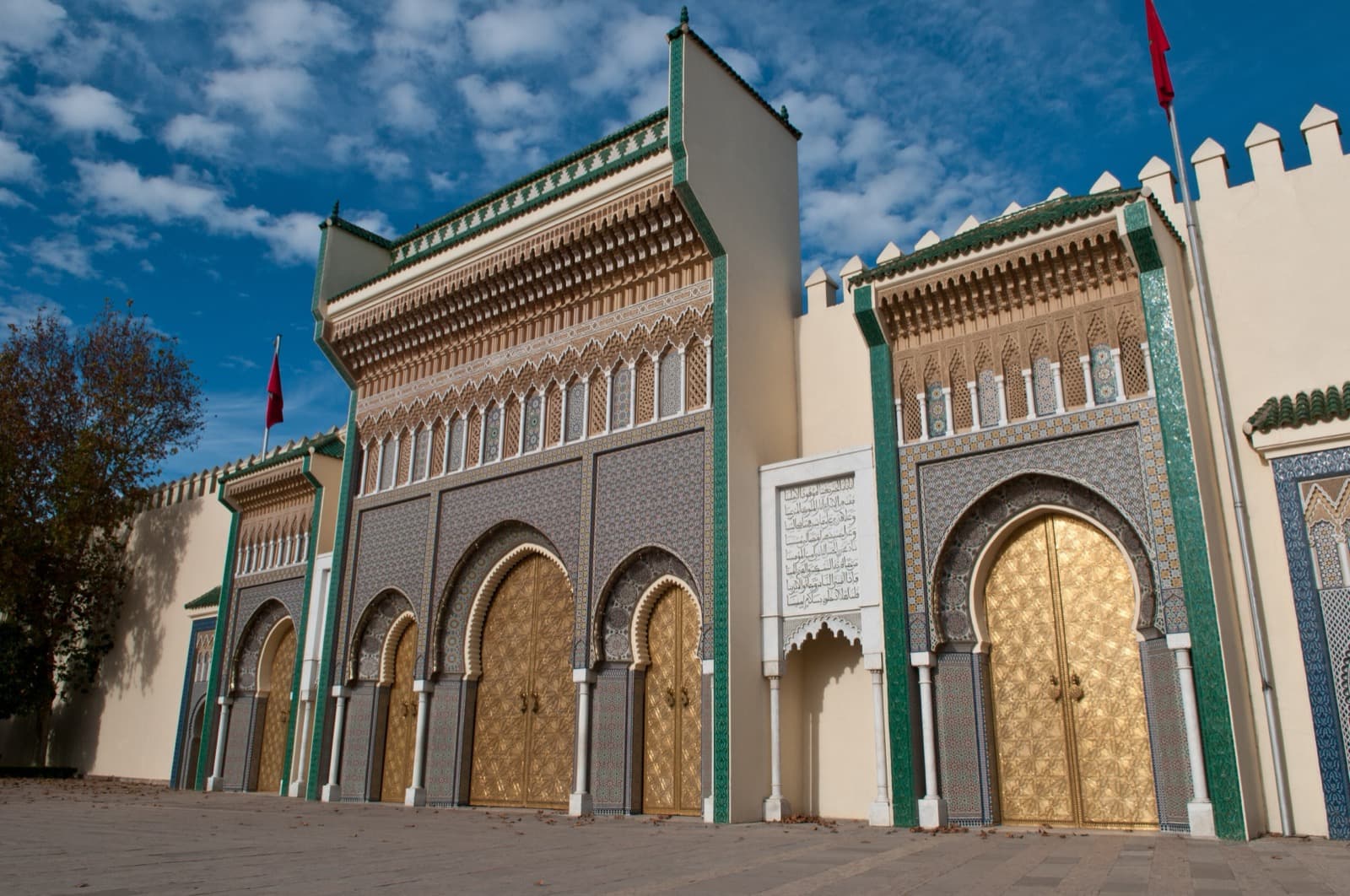
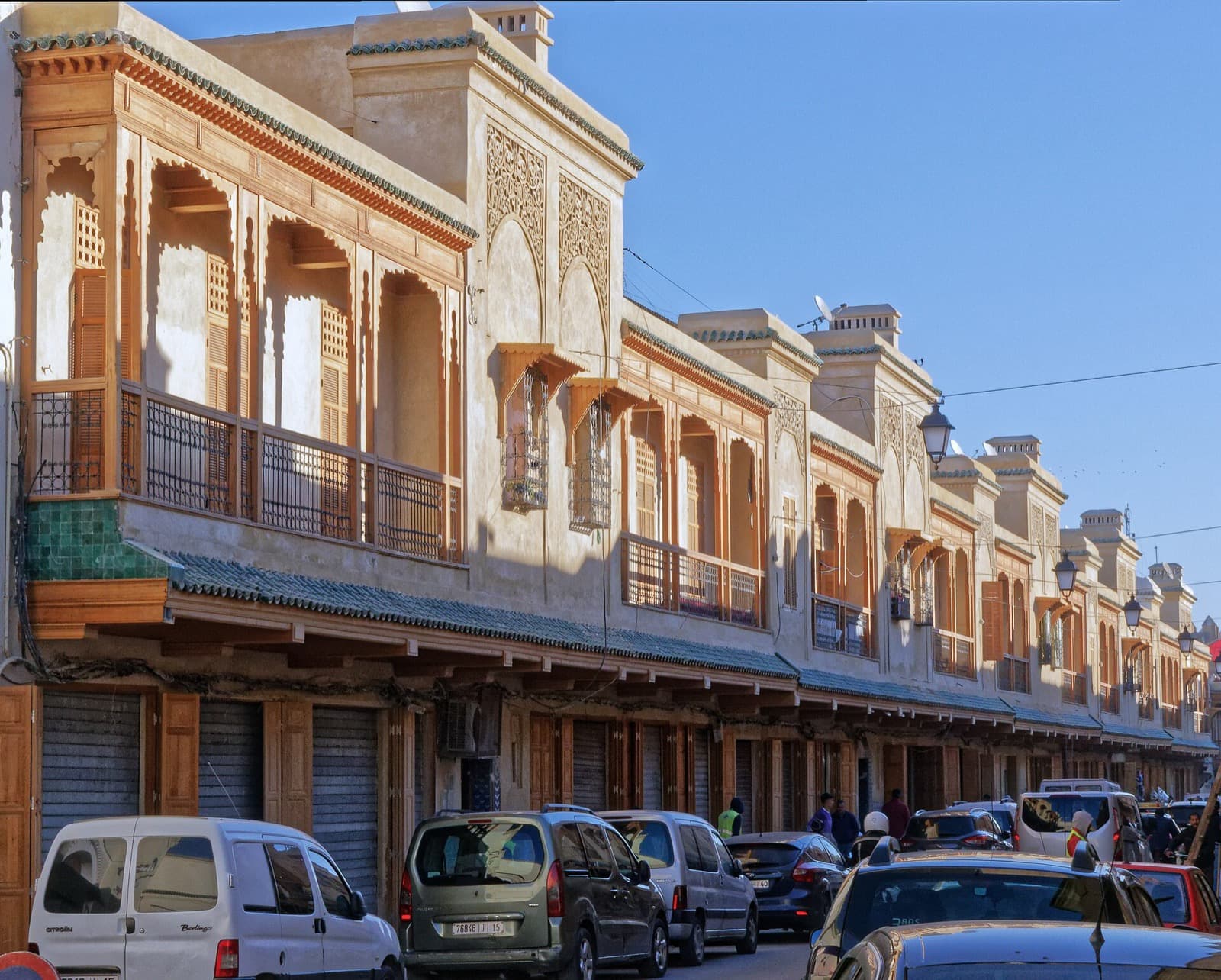
Give the second day to Fes Jdid, the "new" Fez the Marinids built beside the old one: the golden royal palace gates, the mellah (the historic Jewish quarter) with the restored Ibn Danan Synagogue and the hillside Jewish cemetery, the cool Jnan Sbil Gardens, and a climb up to the Marinid Tombs for the view back over the whole bowl of the city. That circuit runs about five kilometers.
A third day buys you slack: an afternoon in the ville nouvelle (the French-built new town) for a normal cafe and modern streets, or a day trip out to the Roman ruins at Volubilis and the hill town of Moulay Idriss.
Roamer covers both cores as self-guided audio walks. Start with Fez walking tours, or jump straight to the /morocco/fez city page to pick between the Fes el-Bali medina walk and the Fes Jdid and Mellah walk.
How do you get around Fez?
Hear a stop from this walk
The Chouara Tannery: The Craft That Stains the City's Hands
Inside the medina, you walk. There are no cars in Fes el-Bali because the lanes are too narrow, so every route through it is on foot. Handcarts and the occasional mule handle deliveries. This is the single most important logistical fact about Fez: the old city is a maze of unmarked alleys, GPS drifts against the high walls, and a phone map alone will not keep you oriented. A self-guided audio tour that triggers at each stop and narrates the turns is built for exactly this, which is why walking Fez guided-but-solo works so well.
For everything outside the medina, take a petit taxi. In Fez these are small red cabs, and by law they run a meter. If a driver says the meter is broken or opens with a flat price, that is the overcharge starting: politely ask for the meter ("khdem le compteur") or wait for the next cab, of which there are many. Petit taxis cannot enter the medina, so they drop you at a gate like Bab Bou Jeloud or the Blue Gate area and you continue on foot. Grand taxis (larger, shared, usually cream-colored) handle longer hops and airport runs.
Getting to Fez is easy by rail. The national operator ONCF runs frequent conventional trains linking Fez with Casablanca, Rabat, Meknes, Tangier, and Marrakech; the Casablanca run takes roughly three hours and fifty minutes. Note that Morocco's Al Boraq high-speed line does not reach Fez as of 2026, so do not expect the bullet-train times you may have read about for the Tangier corridor. From Fez's airport, a fixed-rate taxi runs into town, or the budget option is city bus number 16 between the airport and the train station for a few dirhams.
When is the best time to visit Fez?
Spring (roughly March to May) and fall (September to November) are the clear winners. Daytime temperatures in those months sit in a comfortable range for medina walking, and the light is kind for the tilework and the tanneries.
Avoid high summer if you can. Fez sits inland in a bowl, and June through August is genuinely hot, regularly pushing into the mid-to-high thirties Celsius (high nineties Fahrenheit). Inside the enclosed medina, with its narrow sunless-then-sun-struck lanes, that heat is stifling and the walking becomes a slog. Winter (December to February) is the opposite: cool, sometimes cold, with real rain that makes the sloping stone lanes slick, though it is quiet and atmospheric if you pack a warm layer and a rain shell. One planning note: spring is popular, so book a riad two to three months ahead for April and May.
Is Fez safe?
Yes, with the ordinary caveats of a busy tourist medina. Morocco is politically stable and violent crime against visitors is rare. The real friction in Fez is not danger, it is hassle: faux guides and hard sales.
The classic pattern is a "helpful" local who attaches himself to you in the maze, insists you are going the wrong way or that a sight is closed, and steers you toward a relative's shop or a tannery viewpoint where a payment is then extracted. The clean defense is to decline politely and keep moving, and to not follow unsolicited directions. This is precisely where a self-guided audio tour earns its keep: when your own map and narration are telling you where the next stop is, you do not need the stranger, and the offer loses its grip. Keep the same everyday caution you would in any crowded place, watch your bag in tight lanes, and you will be fine. Solo travelers, including solo women, visit Fez regularly; dressing modestly (shoulders and knees covered) reduces attention and is respectful near the mosques and shrines.
What will Fez cost, and should you carry cash?
Fez is inexpensive by European or North American standards, and it runs on cash. The currency is the Moroccan dirham (MAD), a partially closed currency you generally cannot buy before you arrive, so plan to withdraw dirhams from an ATM on arrival. As a rough anchor in 2026, one US dollar is worth around ten dirhams and one euro around eleven.
Carry small notes. Riads, medina stalls, taxi drivers, food counters, and the caretaker tips at sites like the Jewish cemetery all prefer cash, and small bills spare you the "no change" routine. Cards work in the ville nouvelle, larger hotels, and some restaurants, but not reliably deep in the old city. Most of the walking sights are free to approach: the gates, the tannery viewpoints from shop terraces (a tip or purchase is expected), the shrine threshold, and the Marinid Tombs cost nothing to reach. A handful of interiors, the Bou Inania and Al-Attarine madrasas, the Nejjarine museum, the Ibn Danan Synagogue, charge a modest entry, payable in cash. Budget travelers can see Fez comfortably on a fraction of what a European city costs; the biggest single expense is usually your riad.
Practical planning checklist
Most visitors need no visa: citizens of the US, UK, EU, Canada, and Australia get 90 days on arrival with a valid passport. Bring comfortable, closed, grippy shoes for uneven and sometimes wet stone. Download your walking route and audio for offline use, because signal is unreliable inside the medina walls. Note that Jnan Sbil Gardens closes on Mondays if that stop matters to your Fes Jdid day. And build in more time than the distances suggest: two kilometers in Fes el-Bali is an afternoon, not a stroll.
Sources
Frequently asked questions
- How many days do you need in Fez?
- Two full days is the practical minimum and three is comfortable. Give one day to the medieval medina of Fes el-Bali along the Talaa Kebira, one day to Fes Jdid and the mellah, and an optional third day for the ville nouvelle or a day trip to Volubilis and Moulay Idriss. The distances are short but the constant stopping makes each core a half to full day.
- How do you get around Fez?
- Inside the Fes el-Bali medina you walk, because it is one of the largest car-free areas in the world and the lanes are too narrow for vehicles. Outside the medina, take a metered red petit taxi and insist on the meter rather than a flat quote. ONCF trains connect Fez with Casablanca, Rabat, Tangier, and Marrakech, with the Casablanca run taking about three hours and fifty minutes.
- What is the best time to visit Fez?
- Spring from March to May and fall from September to November offer the most comfortable walking weather. Avoid high summer, when inland Fez regularly climbs into the mid-to-high thirties Celsius and the enclosed medina turns stifling. Winter is cool with real rain but quiet, so pack a warm layer if you go then.
- Is Fez safe for tourists?
- Yes. Morocco is politically stable and violent crime against visitors is rare. The main issue in Fez is hassle from faux guides and pressure selling, especially near the tanneries and inside the maze. Decline unsolicited help, do not follow strangers' directions, and keep normal caution in crowds. Solo travelers, including solo women, visit regularly.
- Do you need cash in Fez, and what is the currency?
- Carry cash in Moroccan dirhams (MAD), which you generally cannot buy before arriving, so withdraw from an ATM on arrival. As a rough 2026 anchor, one US dollar is worth around ten dirhams and one euro around eleven. Riads, stalls, taxis, and site tips prefer cash; cards work in the new town and larger hotels but not reliably deep in the old city.
- Do you need a visa to visit Fez, Morocco?
- Most visitors do not. Citizens of the US, UK, EU countries, Canada, and Australia receive 90 days visa-free on arrival with a valid passport. Always confirm the current rule for your specific nationality before travel, since entry policies can change.
Ready to experience it?
Fes el-Bali: Inside the World's Largest Living Medina
150 min · 2 km · moderate
More from Fez
Explore more at your own pace.
One Day in Fez: A Walkable Medina-to-Sunset Itinerary
Fez, Two Cities in One Wall: Reading the Medieval Medina and the Imperial City
The Mellah of Fez: The Jewish Quarter That Faced the Street
The Qarawiyyin: Walking Into the World's Oldest University in Fez's Living Medina
The Chouara Tannery in Fez: How Leather Is Still Dyed by Hand