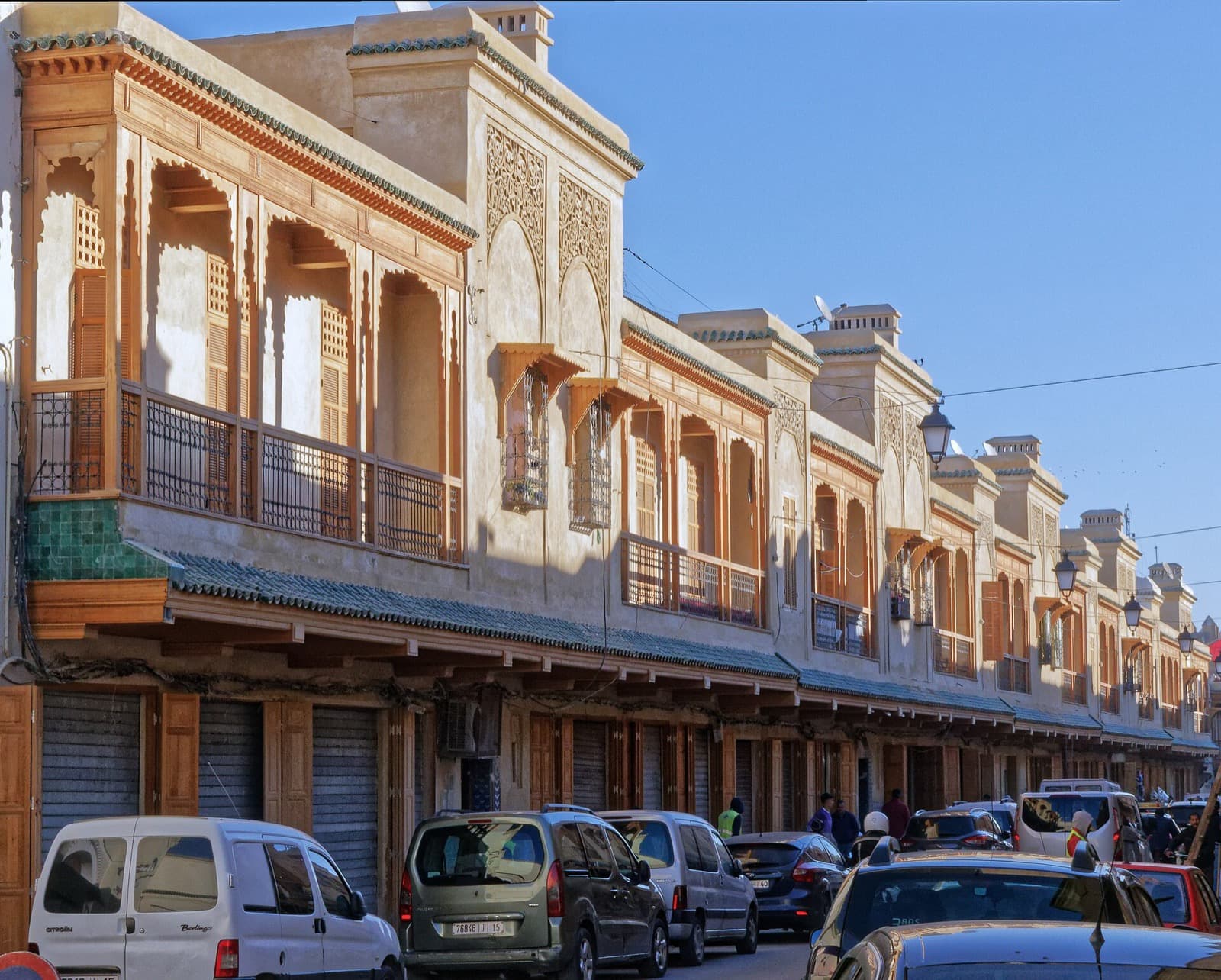
Stand in the Mellah of Fez and look up, not down. The houses here carry balconies and windows that face the street, and that single outward gaze sets this quarter apart from every other lane in the old city, where traditional Moroccan homes turn inward around a private courtyard and show the street almost nothing. This was the first mellah in Morocco, the Jewish quarter the Marinid dynasty placed right beside their palace when they built a second Fez next to the ancient medina. Reading those outward-looking walls is the way into the entire imperial and layered city, from golden royal gates to a dynasty's own ruined tombs.
A second city, built beside the first
In the year twelve hundred and seventy-six, the Marinid sultan Abu Yusuf Yaqub founded Fes Jdid, New Fez, as a walled royal citadel and seat of government, and the court moved in soon after. It was a deliberate act: a fresh administrative capital raised beside the older medina of Fes el-Bali, complete with palaces, parade grounds and gates. The mellah was part of that plan, a quarter for the Jewish community set within reach of royal authority. Scholars place the community's main move into this quarter in the middle of the fifteenth century, though the exact date and reasons are not firmly settled.
The name itself carries a story rather than a settled fact. By tradition, mellah comes from the Arabic word for salt or a saline place, linked either to a saline water source nearby or to a former salt warehouse on this ground. Take that as tradition, not certainty. What is firmer is the influence: the pattern set here was copied across Moroccan cities in the centuries that followed. The mellah of Marrakech, created in fifteen fifty-eight, came more than a century later. Fez wrote the template.
The architecture of a community that looked out
Hear a stop from this walk
The Mellah of Fez: The Quarter That Faced the Street
The outward-facing houses are the heart of what makes this place worth slowing down for. Historians add one honest caveat, that this street-facing character is relatively recent and that older houses here followed the more closed, conventional design shared with their Muslim neighbors. Even so, walk the lanes and the difference is unmistakable. The balconies and the many windows speak of a quarter that lived toward the street rather than hiding from it.
This was a large and ancient community. In the late nineteen-forties, estimates put the mellah's Jewish population at roughly fifteen thousand, with about twenty-two thousand in all of Fez. By nineteen ninety-seven, only about a hundred and fifty Jews remained in the whole city, most having emigrated to the Ville Nouvelle, to Casablanca, and to France, Canada and Israel. So the walk is through a quarter that was full of life and is now largely departed, its architecture still speaking of the people who once looked out on this exact street. That tension, presence written in stone and absence written in the numbers, is what the rest of the route carries forward.
What the mellah still holds
A few paces on stands one of the few interiors you can enter, and one of the oldest surviving synagogues in Morocco: the Ibn Danan Synagogue. Its construction has been dated across the seventeenth century, and the historian Hicham Rguig has proposed the specific year sixteen eighty, though the broad seventeenth-century range is firmest. It was built by a wealthy merchant named Mimon Boussidan, one of the toshavim notables of Fez. Unlike the active mosques of Fez, which non-Muslims may not enter, this restored synagogue is open, so you can walk in and see it whole: a large carved-wood Torah ark, lower walls wainscotted in figured blue Moroccan tiles, and a wooden reading platform crowned with a wrought-iron canopy of Islamic-style arches. In nineteen ninety-seven, during restoration, workers found a mikveh, a ritual bath, with a vault beneath the bimah and stairs leading down to a square basin fed by an underground water channel. That late-nineties rescue was an international effort, funded with American Express through the World Monuments Fund, alongside Morocco's Ministry of Culture and the Judeo-Moroccan Cultural Heritage Foundation, after the synagogue was nominated to the nineteen ninety-six World Monuments Watch.
Below the quarter the ground falls into a field of white: the Jewish cemetery, a hillside of close-set whitewashed tombs, still tended today. Here lie the community's dead across many centuries. One grave draws pilgrims. It belongs to Sol Hachuel, known as Solica, a young woman born in Tangier in eighteen seventeen who in eighteen thirty-four, at the age of seventeen, was executed in Fez for refusing to renounce her Jewish faith. Her tomb has a blue tint and green-topped turrets above a horseshoe arch, its epitaph written in both French and Hebrew, and by tradition it is associated with healing and fertility and has been visited by both Jews and Muslims. The mellah above has largely emptied; the cemetery below is still cared for. It is the quieter half of the same story, the living quarter departing and the field of tombs outlasting it.
From the quarter to the whole city
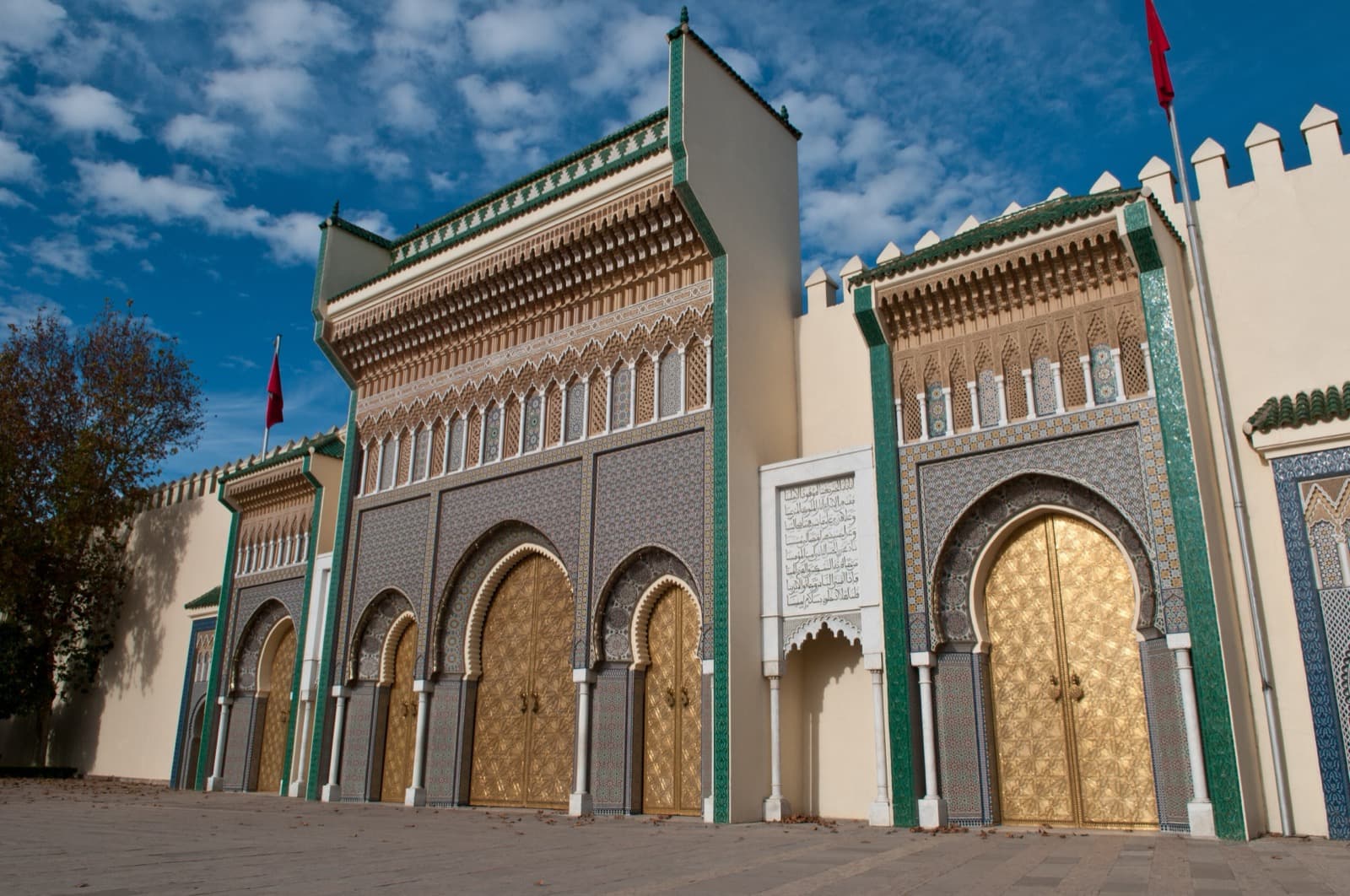
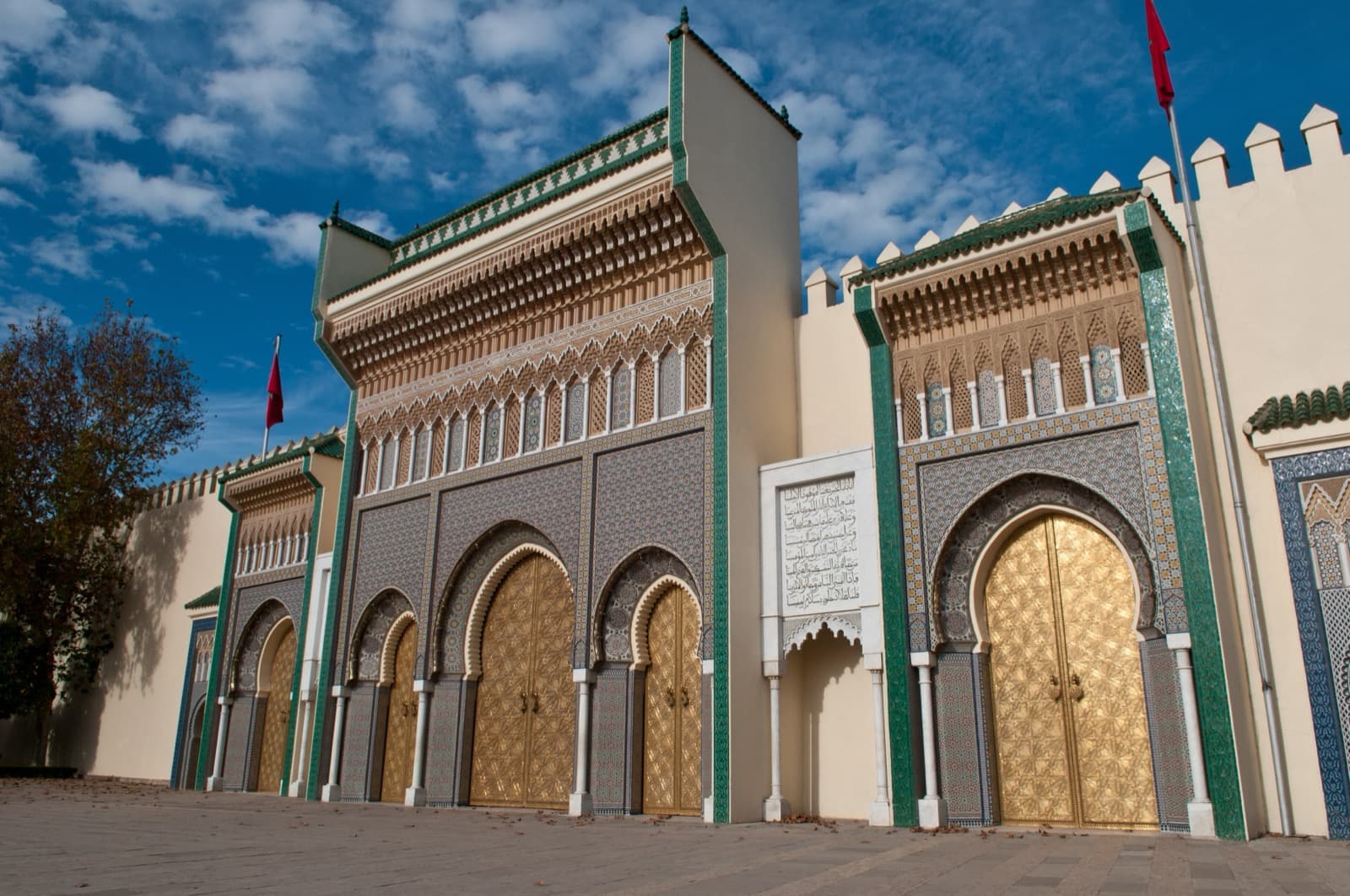
The mellah is the human center of a route that also reads the machinery of empire. The walk begins at the gilded bronze gates of the Royal Palace on Place des Alaouites, built at King Hassan the Second's order around nineteen sixty-nine to nineteen seventy-one, fronting a working palace still closed to visitors. It passes the mechouars, the great walled parade grounds where sultans held public audiences and massed armies, and the monumental Marinid gates like Bab Dekkaken, once called Bab es-Sebaa. The last Marinid sultan, Abd al-Haqq the Second, was overthrown and killed in a revolt in Fez in fourteen sixty-five, after which New Fez declined until the Alaouites revived it as the seat of power.
Then comes relief: Jnan Sbil, one of the oldest gardens of Fez, created in the nineteenth century by Sultan Moulay Hassan the First and opened to the public in nineteen seventeen, a cool green seam between the two walled cities. The route ends by climbing to the Marinid Tombs on the hill north of the medina, ruined mausoleums attributed to the fourteenth century where five Marinid sultans are documented buried, including Abd al-Haqq the Second, the dynasty's last ruler. From that ruin the whole of old Fez, including the great Qarawiyyin, spreads below in a single sweep.
The walk closes where the dynasty's story does. You start at the golden gates of the New City the Marinids founded in twelve hundred and seventy-six, and you finish at their own broken tombs, looking down on the city they made. It is a solo walk, your pace, your schedule, no group and no one steering you into a shop. Browse more Fez walking tours, or start planning your route through Fez.
Sources
- Mellah of Fez, Wikipedia: history of the quarter, the salt etymology tradition, the outward-facing architecture, and the population figures.
- Ibn Danan Synagogue, Wikipedia: seventeenth-century dating, Mimon Boussidan, the mikveh discovery, and the World Monuments Fund restoration.
- Sol Hachuel, Wikipedia: the martyr Solica, her execution in Fez in 1834, and her tomb in the Jewish cemetery.
- Fes Jdid and Royal Palace of Fez, Wikipedia: the Marinid foundation of the New City in 1276, the 1465 Fez revolt, and the Alaouite-era palace gates.
- Marinid Tombs, Wikidata (Q9276395) and Wikipedia: the fourteenth-century hilltop tombs and the panoramic view over the medina.
Ready to experience it?
Fes Jdid and the Mellah: The Imperial and Jewish City
150 min · 5 km · moderate
More from Fez
Explore more at your own pace.
Fez Travel Guide: Days, Transport, Season, Safety, Budget
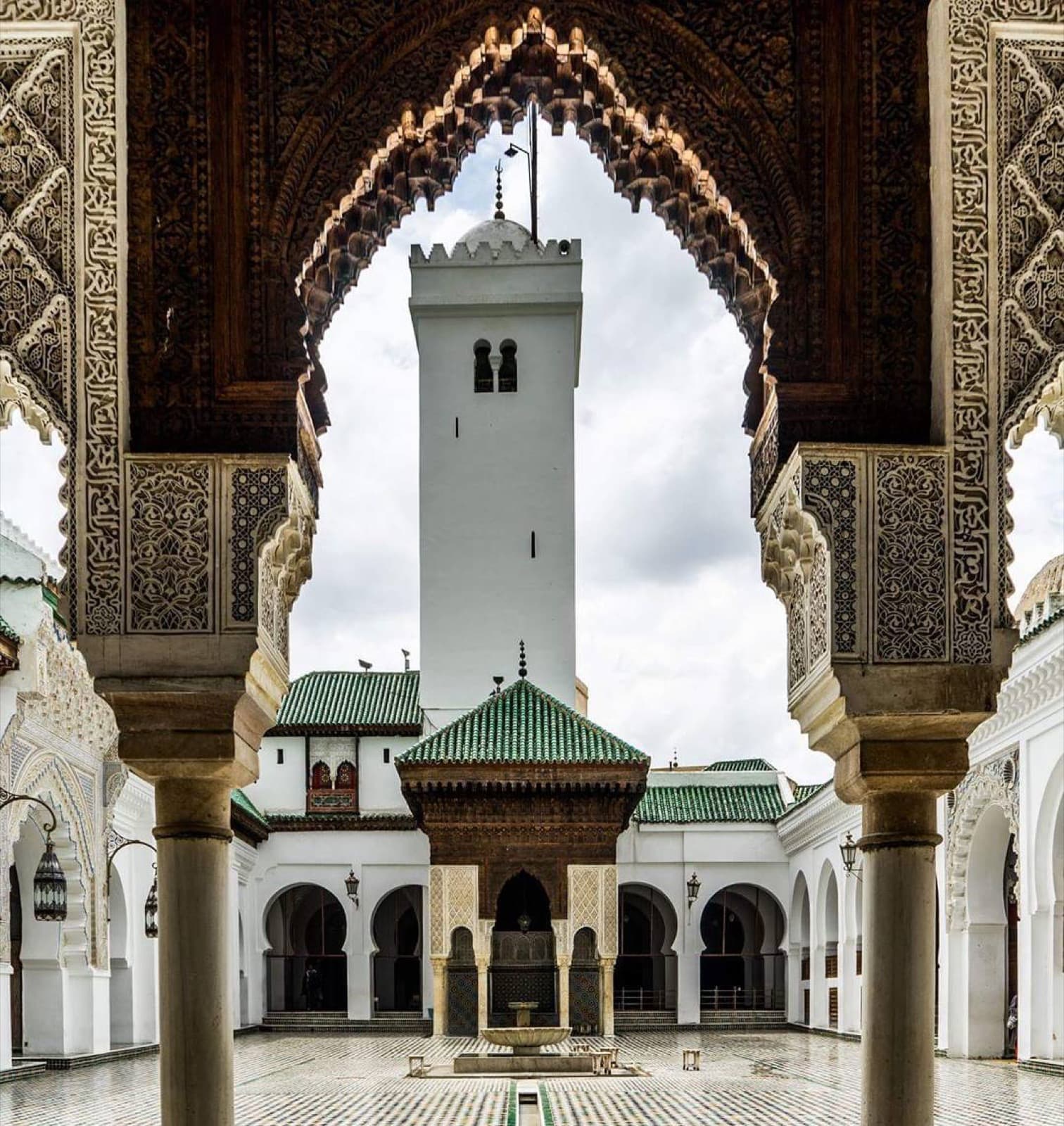
One Day in Fez: A Walkable Medina-to-Sunset Itinerary
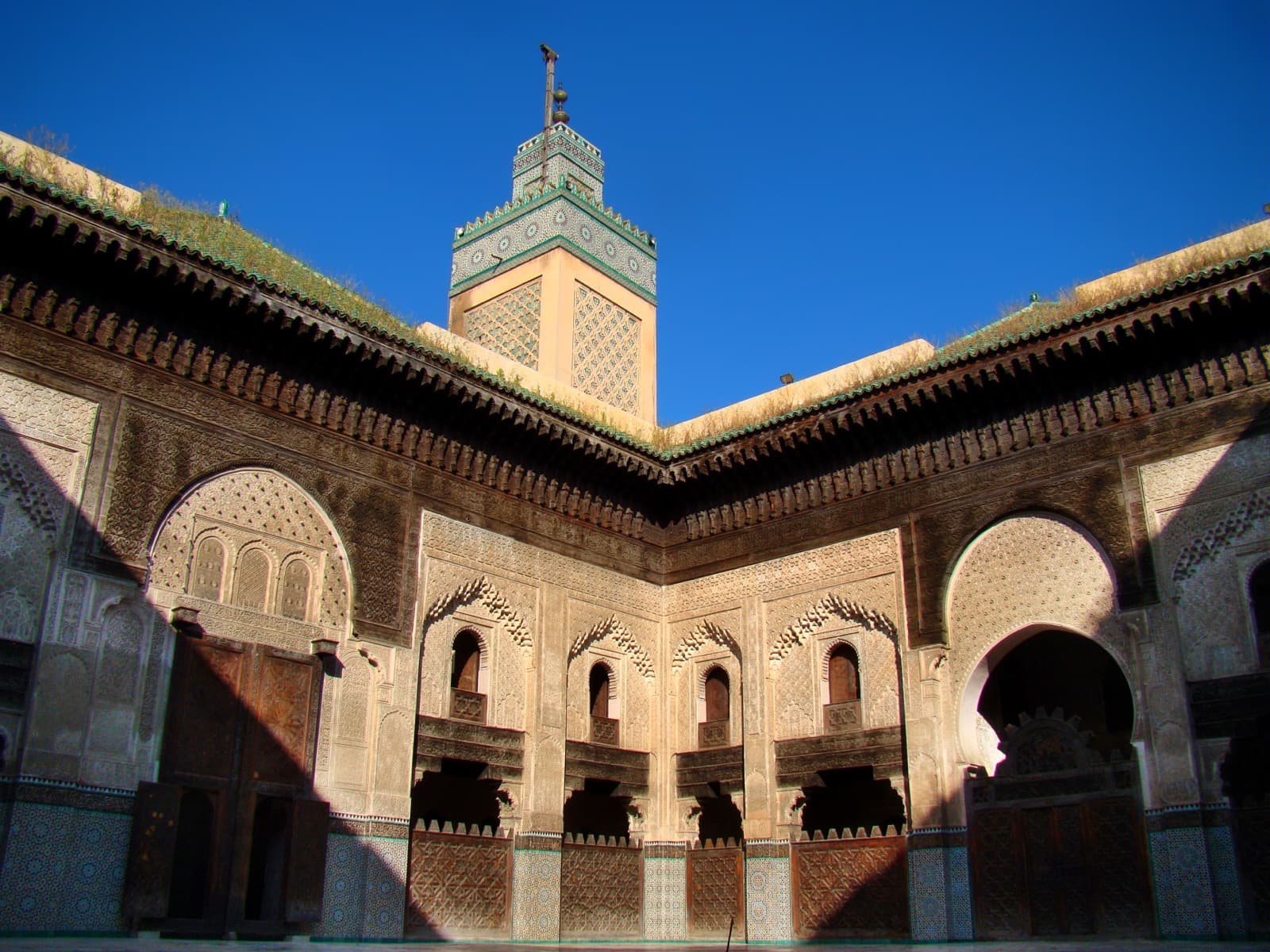
Fez, Two Cities in One Wall: Reading the Medieval Medina and the Imperial City
The Qarawiyyin: Walking Into the World's Oldest University in Fez's Living Medina
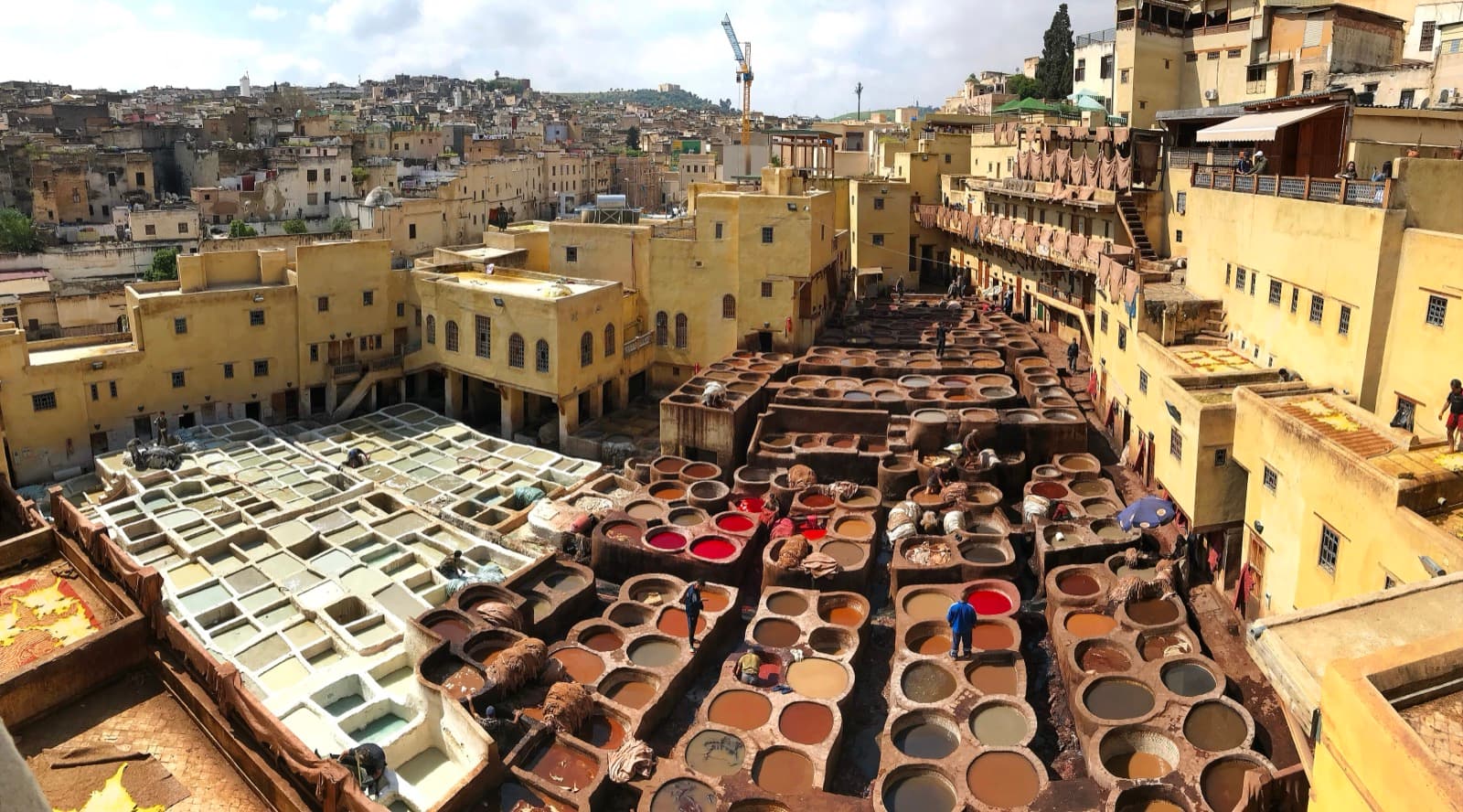
The Chouara Tannery in Fez: How Leather Is Still Dyed by Hand