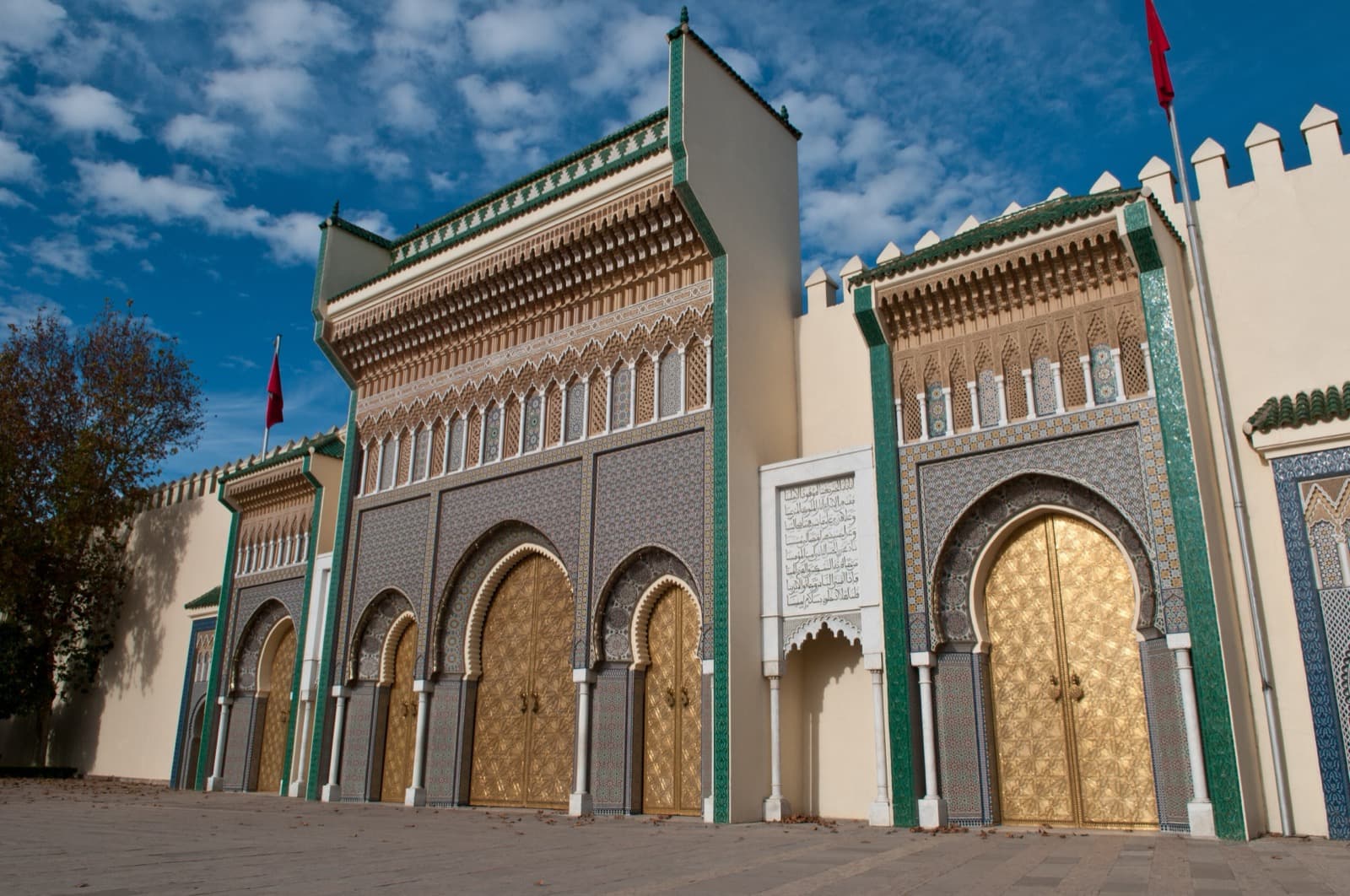
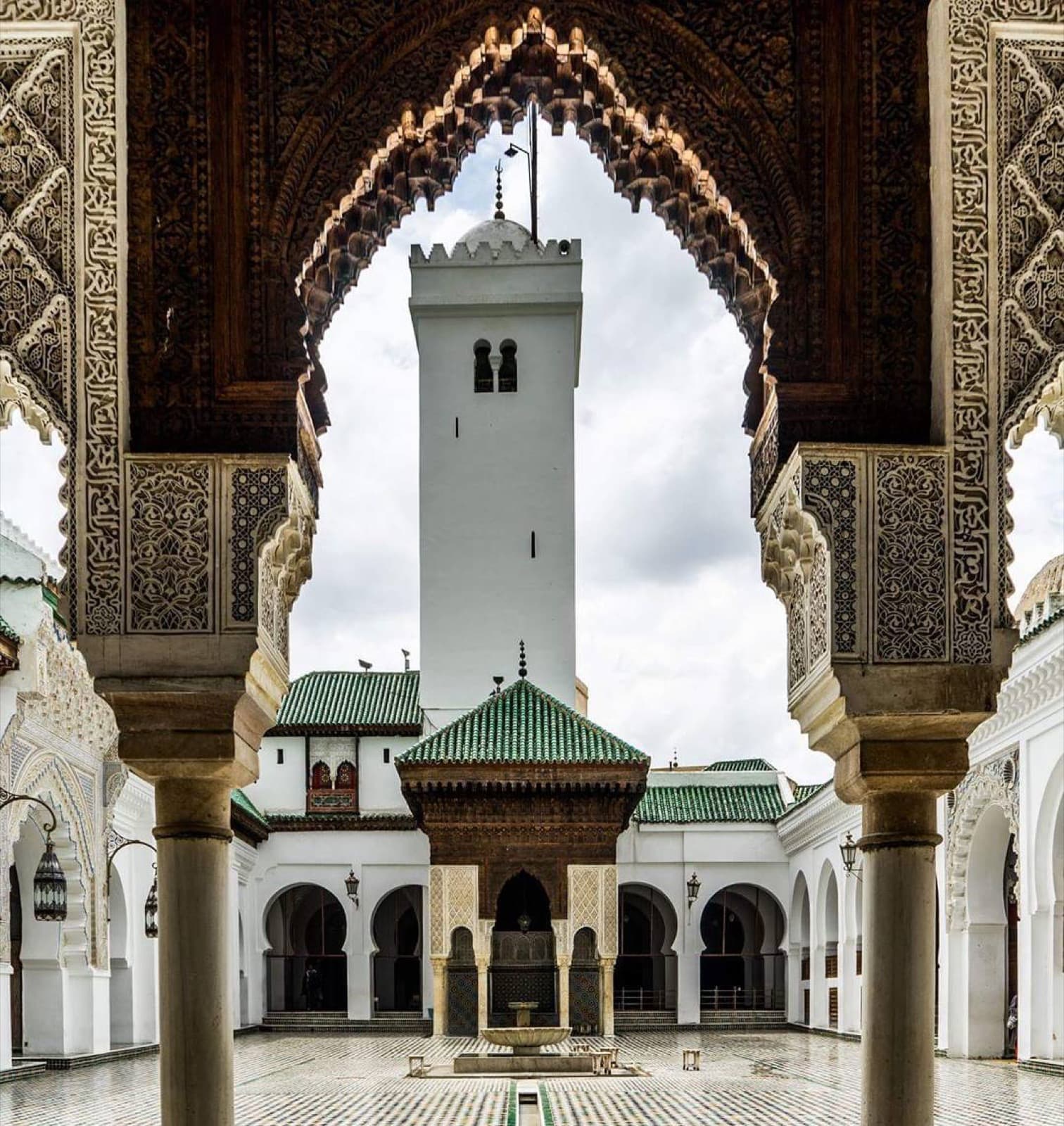
A woman founded the oldest continuously operating degree-granting university in the world, and it still teaches inside the walls of Fez. That single fact, anchored at the Qarawiyyin Mosque and University, is the argument that the whole Fes el-Bali walking tour makes: this medieval city was never abandoned, never museumized, and never stopped working. The Qarawiyyin is where the point becomes undeniable. Established between 857 and 859 by Fatima al-Fihri, a woman whose family had come from Kairouan, it has been teaching for more than eleven hundred years. UNESCO and Guinness World Records both recognize it as the oldest continuously operating degree-granting educational institution on earth, older than any university in Europe.
The Fact That Reframes Everything
Most world-famous old buildings are ruins or relics, admired for what they used to be. The Qarawiyyin is different, and standing at its gates makes the difference physical. The mosque covers about half a hectare and can hold around 22,000 worshippers, placing it among the largest in Africa. It is a living mosque, so non-Muslim visitors do not enter. Instead you approach the great gates, look through, and catch the courtyard, the arches, the fountains, and the students crossing between them. That glimpse from the threshold is the reward, and it costs nothing.
The name itself carries the origin story. Al-Qarawiyyin means "the Kairouanese," after the founder's family from Kairouan in what is now Tunisia. Sit with the full weight of it: a university a woman endowed in the ninth century, before the institution of the university existed anywhere in the Christian world, still functioning inside a lived-in city.
There is one interior here you can walk right into. The Qarawiyyin library is among the oldest libraries in the world, holding manuscripts that include a copy of the work of the historian Ibn Khaldun. It was restored by the Moroccan-Canadian architect Aziza Chaouni, commissioned in 2012 by the Moroccan Ministry of Culture, and reopened to the public in 2016. So at one site you move at your own pace between what you may only glimpse and what you may enter completely, which is exactly the rhythm of the entire medina.
A Downhill Spine Through a Car-Free City
Hear a stop from this walk
The Chouara Tannery: The Craft That Stains the City's Hands
The Qarawiyyin sits near the middle of a route built around one idea: Fes el-Bali is one of the largest car-free urban areas on earth, and the only way through it is on foot. The tour runs about two kilometers downhill along the medina's great sloping artery, the Talaa Kebira, from the ceremonial gate near the top toward the river below. Seven stops, roughly two to three hours if you let the place slow you down.
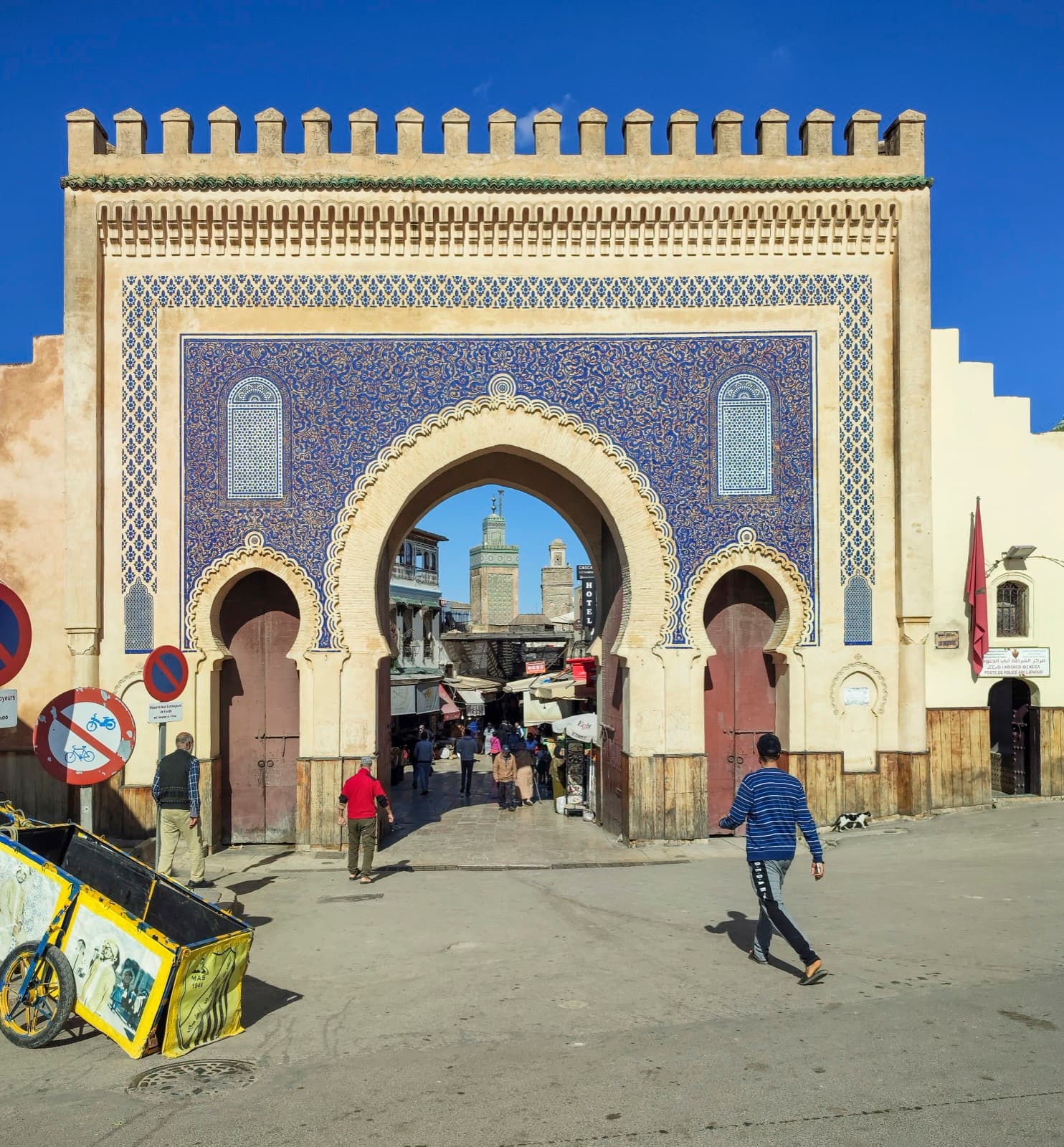
It opens at Bab Bou Jeloud, the Blue Gate, the grand western entrance completed in 1913 under the French colonial administration, whose chief of municipal services, Captain Mellier, drew up plans in December 1912. The gate is younger than almost everything beyond it. Its outer face wears the blue tiles long associated with Fez, its inner face the green of Islam, and framed inside the main arch you can see two minarets. Step through, and the engines and honking of the modern street simply end. That threshold, where the cars stop, is the promise the rest of the walk keeps.
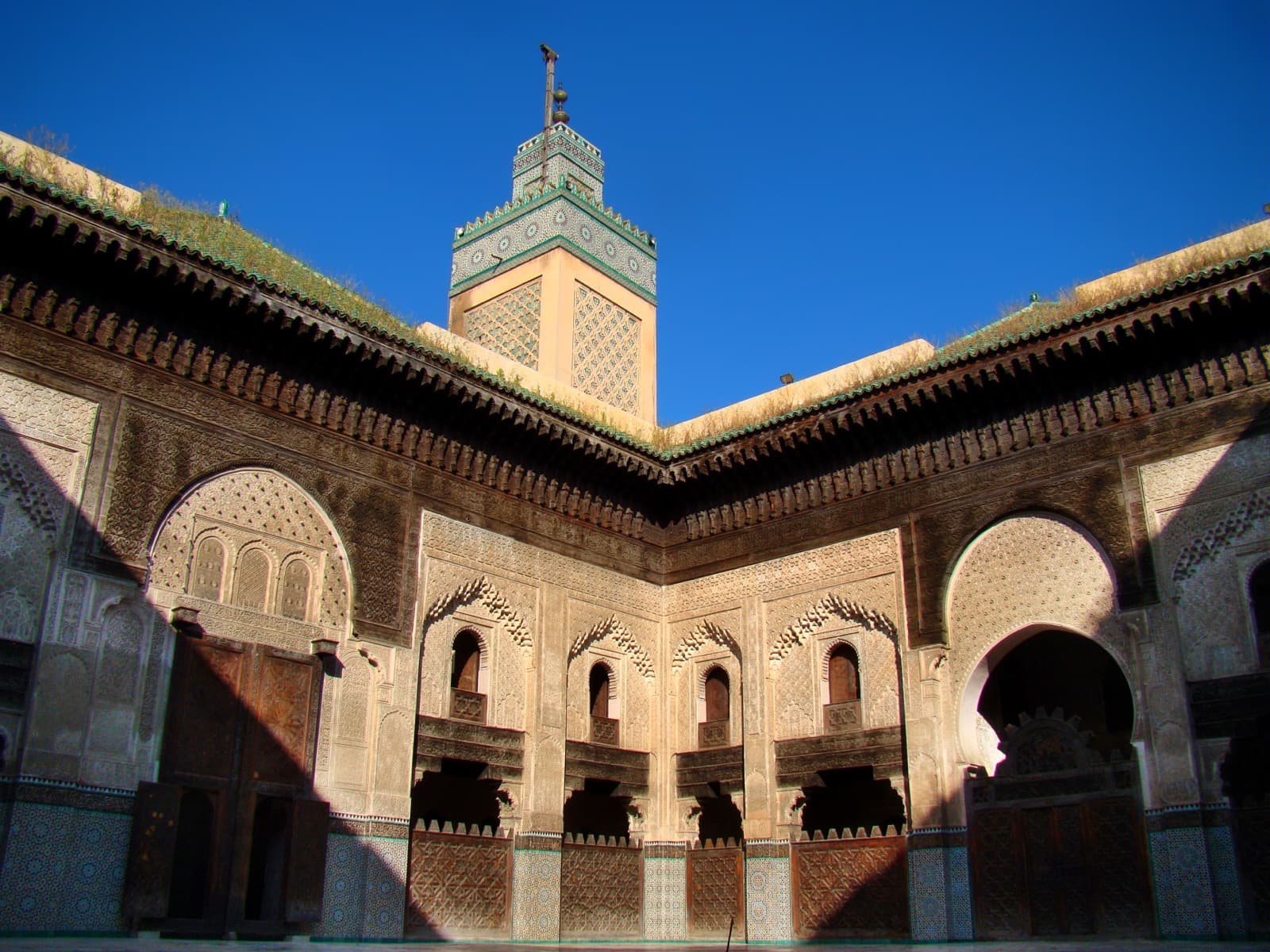
Just down the Talaa Kebira rises the Bou Inania Madrasa, a masterpiece of Marinid craft built by Sultan Abu Inan Faris between 1350 and 1355. It is the only madrasa in Morocco that also functioned as a full congregational mosque. Directly across the street, high carved cedar beams are all that remain visible of the Dar al-Magana, a medieval water clock likely completed in 1357 whose mechanism, famously, has never been fully understood. A college that is also a mosque, and a clock no one can fully explain, both more than six hundred years old, both on a street you can simply walk.
The Craft That Never Left
Past the Qarawiyyin, the tour keeps making its case that this is a working city, not a preserved one. Beside the mosque, at the edge of the perfume and spice market, stands the al-Attarine Madrasa, built by the Marinid sultan Abu Said Uthman the Second between 1323 and 1325 under the supervision of a sheikh named Abdallah ibn Qasim al-Mizwar. It is small and celebrated not for size but for mastery: zellij tilework, carved stucco worked into honeycombed muqarnas, and cedar packed into a jewel-box courtyard behind a deliberately plain exterior. This one you can enter, and no group is waiting to move you along.
Deeper into the maze is the Zawiya of Moulay Idriss the Second, the shrine and tomb of the man traditionally regarded as the founder and patron saint of Fez, who lived from 791 to 828 and developed the city from about 809. It is one of the holiest sites in Morocco and a place of living pilgrimage. Its sacred zone was once marked by wooden bars across the lanes; before 1912, neither non-Muslims nor pack animals could pass beyond them. Today you approach the threshold quietly and watch faith in motion at the exact center of the city.
Then the Nejjarine Funduk, a caravanserai built in 1711 under the Alaouite sultan Moulay Ismail in the carpenters' quarter, its ground floor once storing goods and stabling animals while merchants lodged in the galleries above. Restored in the 1990s, it reopened in 1998 as the Nejjarine Museum of Wooden Arts and Crafts, an inn now guarding the very cedar craft you have seen on every gate and ceiling since the Blue Gate.
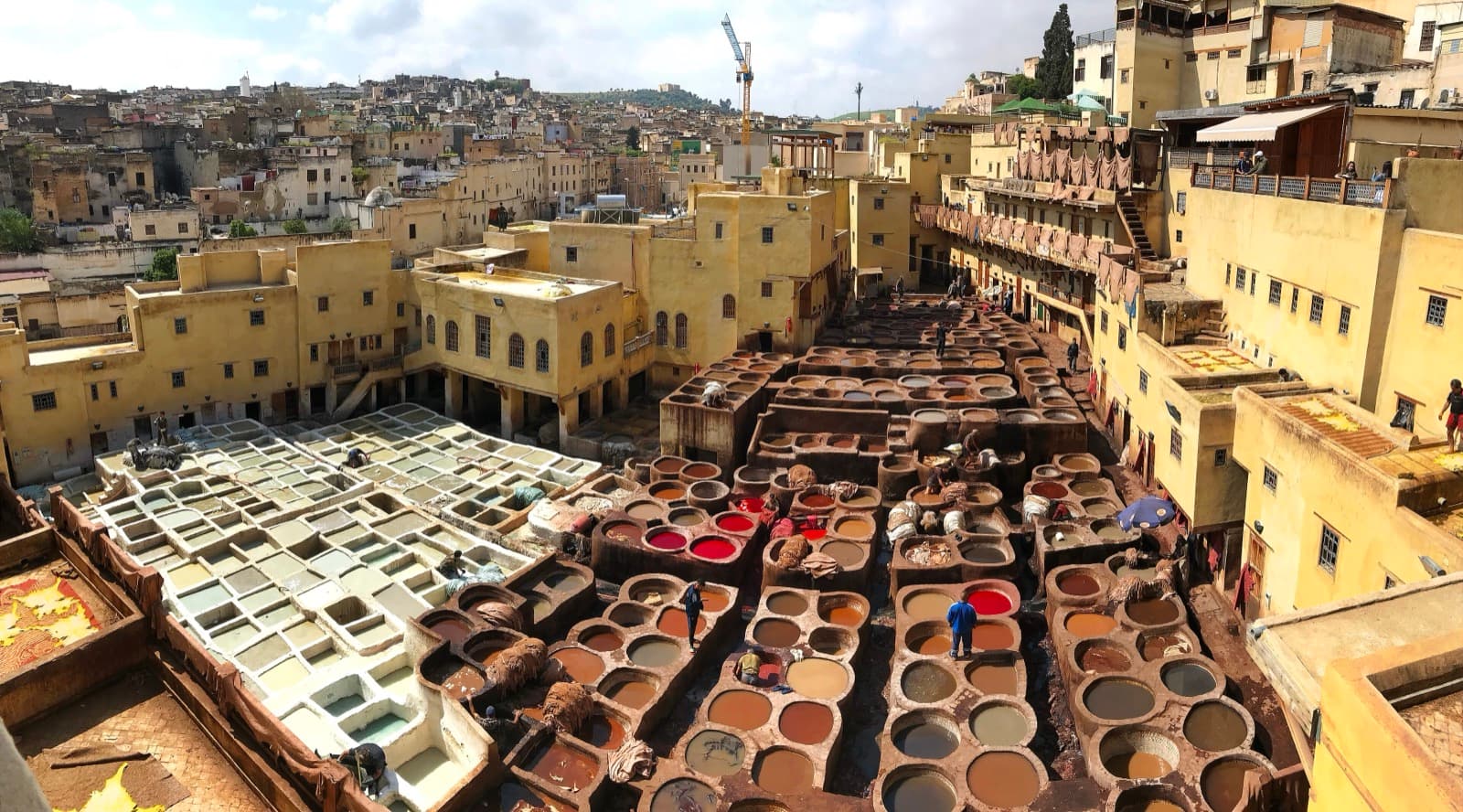
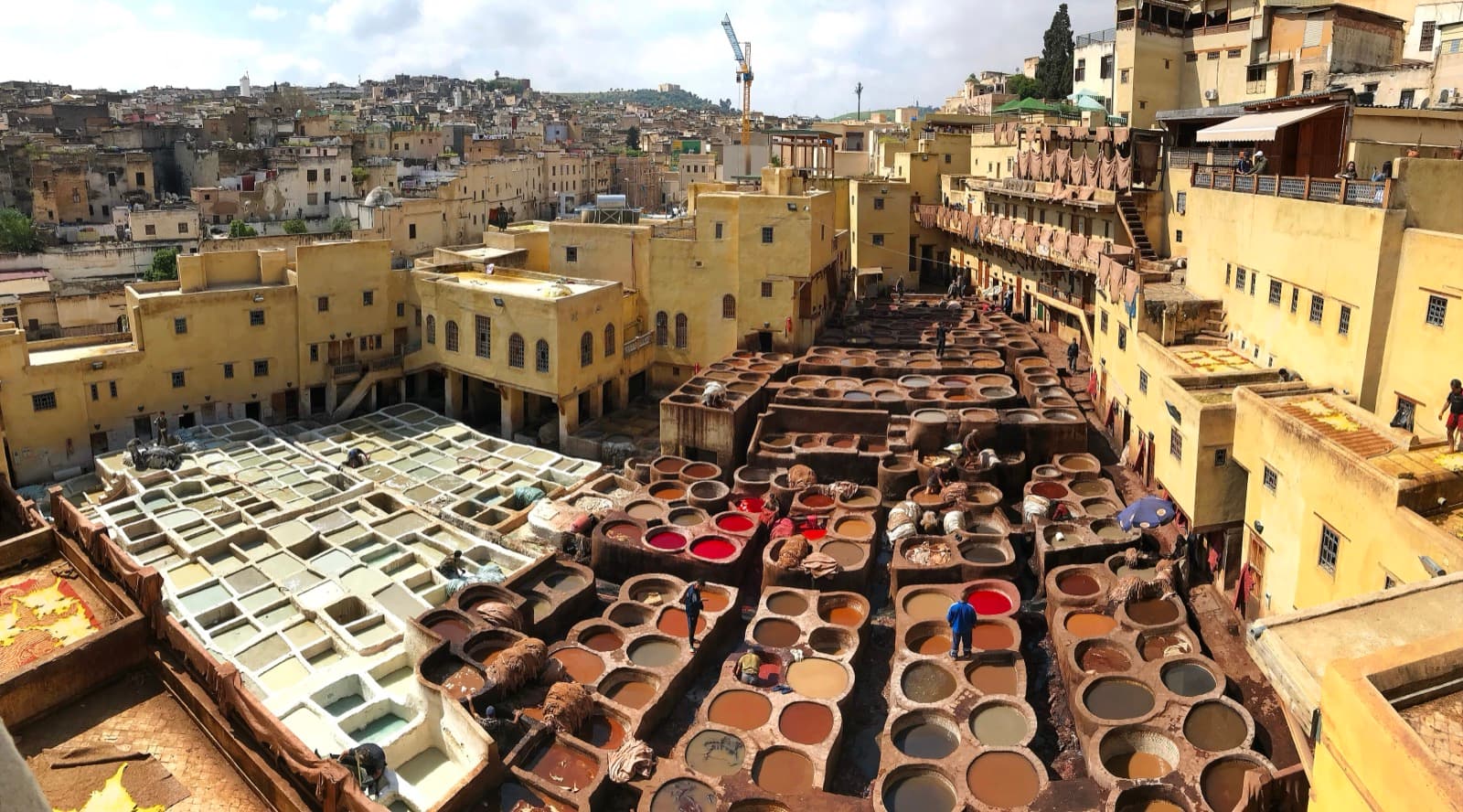
The walk ends at the Chouara Tannery, the largest and one of the oldest in Fez, along the Oued Fes. From the leather-shop terraces above, it opens as a honeycomb of round stone pits, some pale, some brilliant with color. The process runs entirely by hand, with hides cured and then dyed in natural colorants: indigo for blue, poppy for red, henna for orange. It too was recently rehabilitated under Aziza Chaouni, and crucially left in place rather than moved out. That is the honest last image of the tour: a medieval craft, still working, still hard, still staining the hands of the men who do it.
Walk It at Your Own Pace
The Qarawiyyin is the reason to start, but the argument only completes on foot, stop by stop, downhill along the Talaa Kebira. Because you cannot drive here, the medina hands you back your own schedule: linger at a threshold, read a facade, move on when you choose. Browse more Fez walking tours or explore everything on offer in Fez, then take this route yourself, with your own quiet map, no group, and no one steering you into a shop.
Sources
- University of al-Qarawiyyin, Wikipedia. Foundation by Fatima al-Fihri (857 to 859), UNESCO/Guinness recognition as the oldest continuously operating degree-granting institution, mosque capacity, and library history.
- Restoring the World's Oldest Library, TED Ideas. Account of architect Aziza Chaouni's restoration of the Qarawiyyin library and its 2016 reopening.
- Bou Inania Madrasa and Dar al-Magana, Wikipedia. Marinid construction dates and the medieval water clock across the Talaa Kebira.
- Chouara Tannery, Wikipedia. The hand-worked dyeing process, natural colorants, and the recent rehabilitation.
- Zawiya of Moulay Idris II and Idris II of Morocco, Wikipedia. The founder-saint's dates, the shrine's sacred boundary, and its role as a pilgrimage site.
Ready to experience it?
Fes el-Bali: Inside the World's Largest Living Medina
150 min · 2 km · moderate
More from Fez
Explore more at your own pace.
Fez Travel Guide: Days, Transport, Season, Safety, Budget
One Day in Fez: A Walkable Medina-to-Sunset Itinerary
Fez, Two Cities in One Wall: Reading the Medieval Medina and the Imperial City
The Mellah of Fez: The Jewish Quarter That Faced the Street
The Chouara Tannery in Fez: How Leather Is Still Dyed by Hand