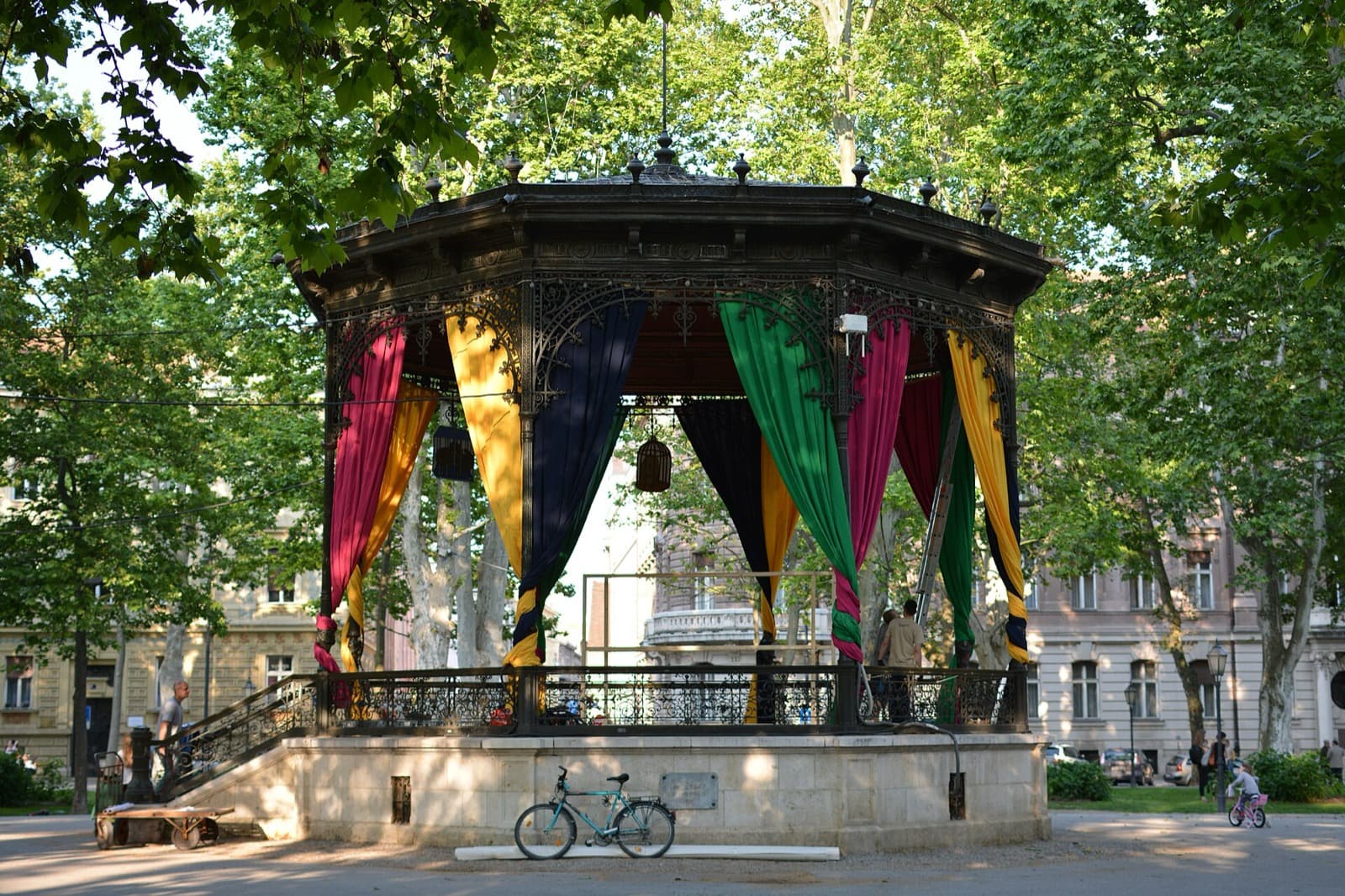
Zrinjevac was the first square of Zagreb's Green Horseshoe, and if you want to understand how a young Croatian capital planned its ambition park by park, this one plane-tree promenade ringed by academies is where to begin. Stand under its London plane trees, look at the museums and courts framing the greenery, and you are reading the grammar of an entire district in miniature. Everything that follows on the walk takes its cue from here.
The square's formal name is Nikola Subic Zrinski Square, in Croatian Trg Nikole Subica Zrinskog, but nobody says all that. Everyone calls it Zrinjevac. It was the first park laid out in the Lower Town, or Donji Grad, and it opened with ceremony on the fourteenth of June, eighteen seventy-three. Before that, this ground was an old cattle-market field. The town council resolved to turn it into a representative square on the three-hundredth anniversary of the Battle of Siget, and dedicated it to Nikola Subic Zrinski, the defender who died there in fifteen sixty-six. So the newest, greenest thing in the city carried one of the oldest names in Croatian memory. That pairing of new civic space and old national anchor is the move the whole district makes.
A leafy room ringed by institutions
What makes Zrinjevac worth slowing down for is not any single monument but the logic of the arrangement. The central avenue of plane trees, imported (local sources say) from Trieste, forms a long green room. Around that room stand the institutions: the Archaeological Museum to the west, the Croatian Academy of Sciences and Arts to the south, the Supreme Court to the north. Greenery framed by civic palaces. Once you notice that pattern here, you see it repeat at every stop on the walk, which is exactly the point.
Two small things reward a closer look before you move on. The music pavilion, a graceful iron bandstand, was built in eighteen ninety-one as a private gift to the city from Eduard Prister, not a public commission. Nearby stands a meteorological column of Istrian marble, given by a military doctor and amateur weather-watcher, Doctor Adolf Holzer. Its instruments came from Gottingen, its clock from a Zagreb maker named Konig, and the column itself was designed by the architect Hermann Bolle. Look down as well as up on this square, and it keeps giving.
The horseshoe, and the man who drew it
Hear a stop from this walk
The Mimara and the Museum-City Read Whole
People now call this promenade of parks the Green Horseshoe, or the Lenuci Horseshoe, after the urbanist Milan Lenuci, who conceived the full scheme beginning in eighteen eighty-two. Here is a detail that resets the usual story: Zrinjevac opened in eighteen seventy-three, nearly a decade before Lenuci drew the complete U. The first room came before the master plan. The rebuilding that followed the eighteen eighty earthquake then spurred the larger idea along. What Lenuci did was thread a U-shaped chain of leafy squares through the Lower Town's grid, lining them with an academy, museums, a theatre, an exhibition pavilion, and a botanical garden. A city boxed in below its two medieval hills decided to prove it belonged among European capitals, not with one grand monument, but with a whole planned district.
That is the argument the walk lets you read on foot. From Zrinjevac you move to the Croatian Academy palace at the square's southern foot, a warm yellowish-brick building styled after the Renaissance palaces of Florence, completed in eighteen eighty. Inside is the Strossmayer Gallery of Old Masters, which opened in eighteen eighty-four with two hundred and fifty-six works, and the Baska tablet, dated to around eleven hundred and two, one of the oldest monuments of the Croatian language and the oldest known Glagolitic inscription. The whole institution grew from one bishop's patronage: Josip Juraj Strossmayer decided in eighteen sixty-eight to give his art collection to the Croatian people. A young nation endowing itself with learning, made personal.
What the rest of the U holds
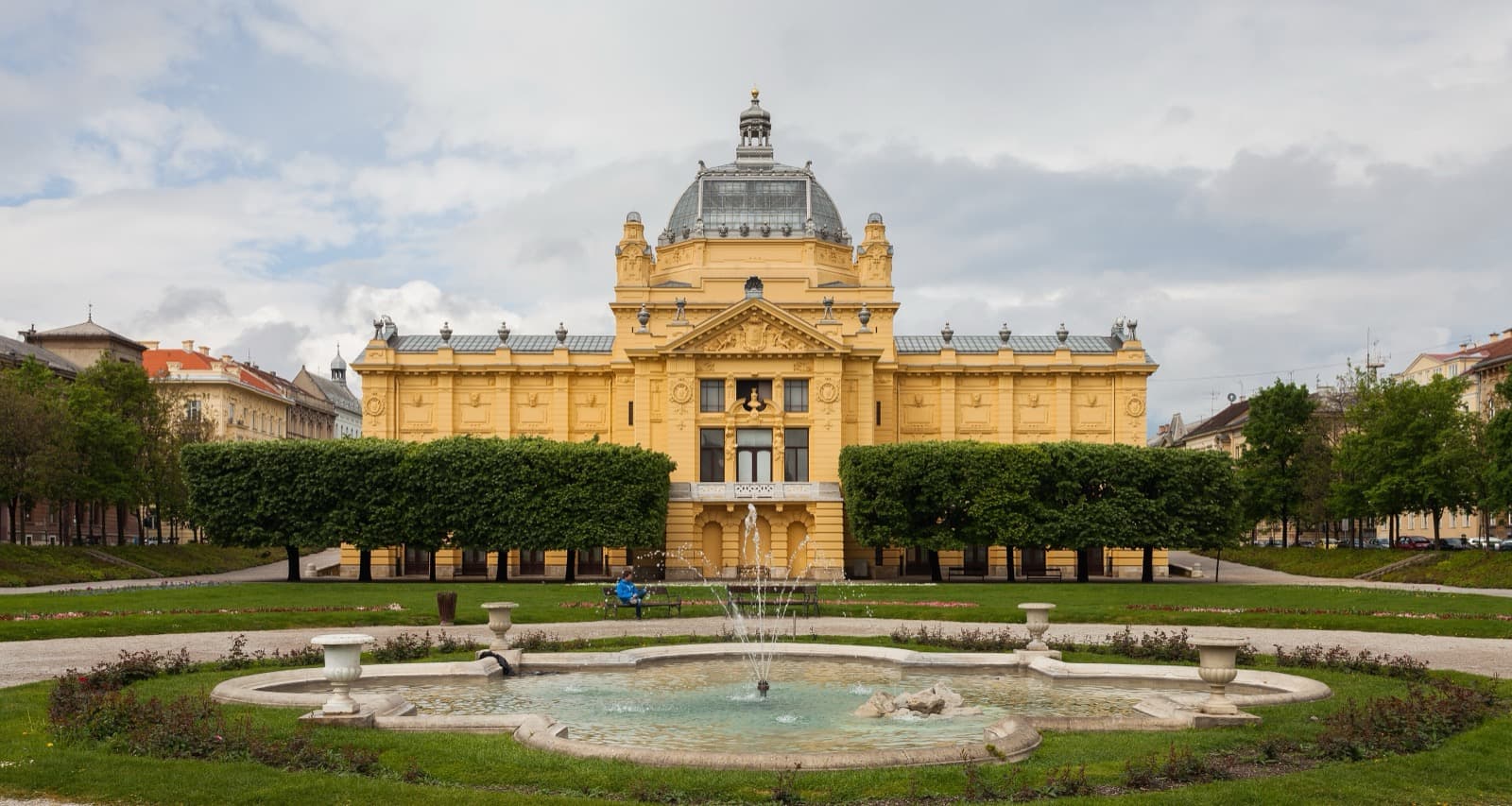
Keep walking and the ambition keeps declaring itself. The Art Pavilion, a golden-yellow iron hall, is the only building in this story that literally arrived by train: its prefabricated frame was first built for the Budapest Millennium Exhibition of eighteen ninety-six, then dismantled and shipped by rail to Zagreb, re-erected with an adaptation by the Viennese firm of Fellner and Helmer, and opened on the fifteenth of December, eighteen ninety-eight. King Tomislav Square forms the ceremonial arrival axis, its bronze equestrian king facing the long neoclassical facade of the Main Railway Station, inaugurated on the eighteenth of August, eighteen ninety-two, on a date chosen to fall on Emperor Franz Joseph's birthday. For a nineteenth-century traveler stepping off a train, the first thing you saw was ambition laid out as a promenade.
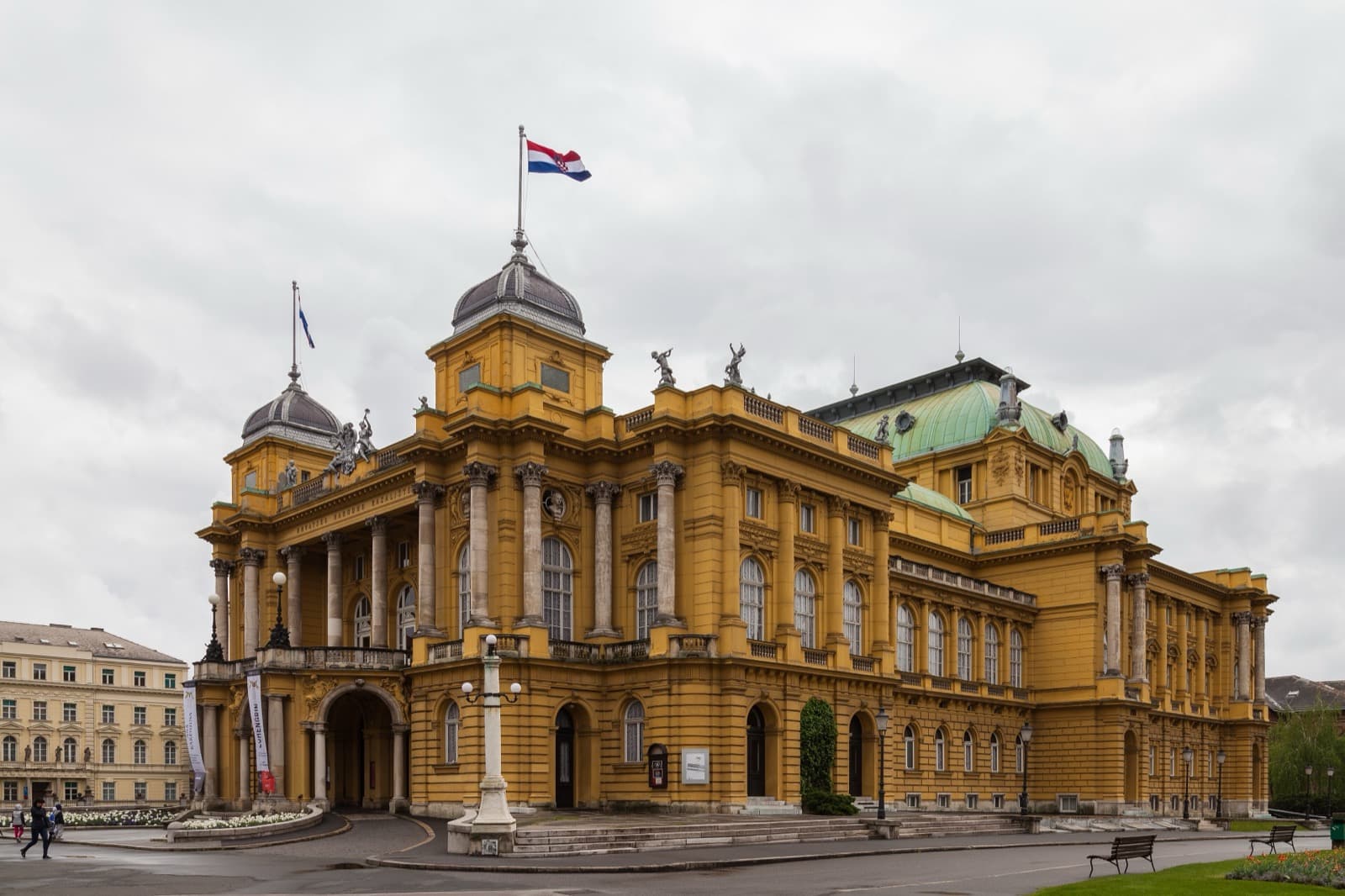
At the bottom of the U the design softens into the Botanical Garden of the University of Zagreb, founded in eighteen eighty-nine and opened to the public in eighteen ninety-one, a working teaching garden of about five hectares that some counts credit with close to ten thousand plant species. It is the calm hinge between the two arms. The western arm then climaxes at the Croatian National Theatre, a neo-Baroque house designed again by Fellner and Helmer and opened on the fourteenth of November, eighteen ninety-five, with Ivan Mestrovic's bronze fountain the Well of Life set before it. The last stop, the Mimara Museum on Roosevelt Square, a former school built in the eighteen nineties, bookends the west. Two of these, the Art Pavilion and the Mimara, have been closed for reconstruction since the twenty twenty Zagreb earthquake, so you meet them as facades rather than galleries, but their squares stay open and free.
Why start here, and where to go next
The reason Zrinjevac is the right first room is that it teaches you how to read every square that follows. Once you have felt the pattern, a leafy room ringed by institutions carrying a young city's ambition, the whole three-kilometre loop becomes legible. It is flat, easy walking, about two hours at a gentle pace, and because it is a loop the order is a suggestion rather than a rule. You can join wherever you happen to be and let a bench or a bandstand set your pace. If you are planning a wider visit, browse the Zagreb walking tours and the Zagreb city page to see how the Horseshoe fits alongside the two old hills above it. Bring a coffee-house pause, sit under the planes, and start with the first grand square. The rest of the argument unfolds from there.
Sources
- Nikola Subic Zrinski Square, Wikipedia. History of Zrinjevac, its surrounding institutions, the eighteen ninety-one Prister music pavilion, and the Holzer meteorological column.
- Strossmayer Gallery of Old Masters, Wikipedia. The Academy palace completed in eighteen eighty, the eighteen eighty-four gallery opening with two hundred and fifty-six works, Strossmayer's eighteen sixty-eight donation, and the Baska tablet.
- Art Pavilion, Zagreb, Wikipedia. The pavilion's Budapest origin, rail transport, Fellner and Helmer adaptation, and eighteen ninety-eight opening.
- Lenuci Horseshoe, Wikipedia. Milan Lenuci's eighteen eighty-two scheme and the role of the eighteen eighty earthquake in rebuilding the Lower Town.
- InfoZagreb, official Zagreb tourism board. Zrinjevac's cattle-market origin, the plane trees from Trieste, and the Lower Town squares.
Ready to experience it?
Lower Town: The Green Horseshoe
120 min · 3.3 km · easy
More from Zagreb
Explore more at your own pace.
One Day in Zagreb: A Walkable Morning-to-Evening Itinerary
Two Hills and a Horseshoe: How Zagreb Became a City
Dolac Market and the Seam That Made Zagreb One City
Zagreb Cathedral: The Twin-Spired Church That Keeps Rebuilding Itself
Zagreb's Botanical Garden: The Living Corner of the Green Horseshoe