Upper Town: The Hill of Saint Mark
90 min · 1 km · moderate
If you want to eat like Zagreb, start with three things: zagorski štrukli (cheese-filled dough, boiled or baked), purica s mlincima (roast turkey with soaked-and-crisped flatbread), and a slow coffee on a terrace. Zagreb sits at the edge of Hrvatsko Zagorje, the green hill country to the north, and the capital's plate leans inland and continental rather than coastal: dairy, freshwater and farmyard, dough and slow roasts, finished with a Central European sweet tooth. The dishes below are the specific regional ones worth ordering, where the tradition comes from, and how to order them without guessing. This walk-and-eat guide pairs directly with the self-guided routes in the city, since the best food stop on any of them, Dolac market, is also a tour stop.
The one dish to order first: zagorski štrukli
Štrukli is Zagreb's signature. It is a thin sheet of dough wrapped around a filling of fresh cottage cheese, eggs and sour cream, then either boiled or baked. The dish comes from Hrvatsko Zagorje, the rural region just north of the city, and it was added to Croatia's list of intangible cultural heritage by the Ministry of Culture in 2007. In March 2022 the European Commission registered "Zagorski štrukli" as a Protected Geographical Indication, one of the few Croatian foods to carry that EU mark. The name shows up in the historical record early: a recipe for cooked štrukli was written down at a manor near Graz in 1589, and the first Croatian-language cookbook, Ivan Birling's 1813 volume, uses the word štrukli for a strudel-type dish.
How to order it: you choose two things. First boiled or baked (kuhani or pečeni). Boiled štrukli arrive soft and comforting, sometimes in a light broth. Baked štrukli come blistered and golden under a layer of cream, richer and more like a gratin. Second, savory or sweet. The savory cheese version is the classic and the one to try first. Sweet versions come with fruit like cherries or blueberries. It works as a starter, a main, or dessert, so order accordingly.
Where: La Štruk on Ulica Skalinska, a small place a two-minute walk from Dolac market, specializes in nothing but štrukli, boiled or baked, savory or sweet, plus creative fillings like truffle or pumpkin seed. It is tiny and popular, so expect a short wait at peak hours.
Purica s mlincima: the northern Croatian roast
Hear a stop from this walk
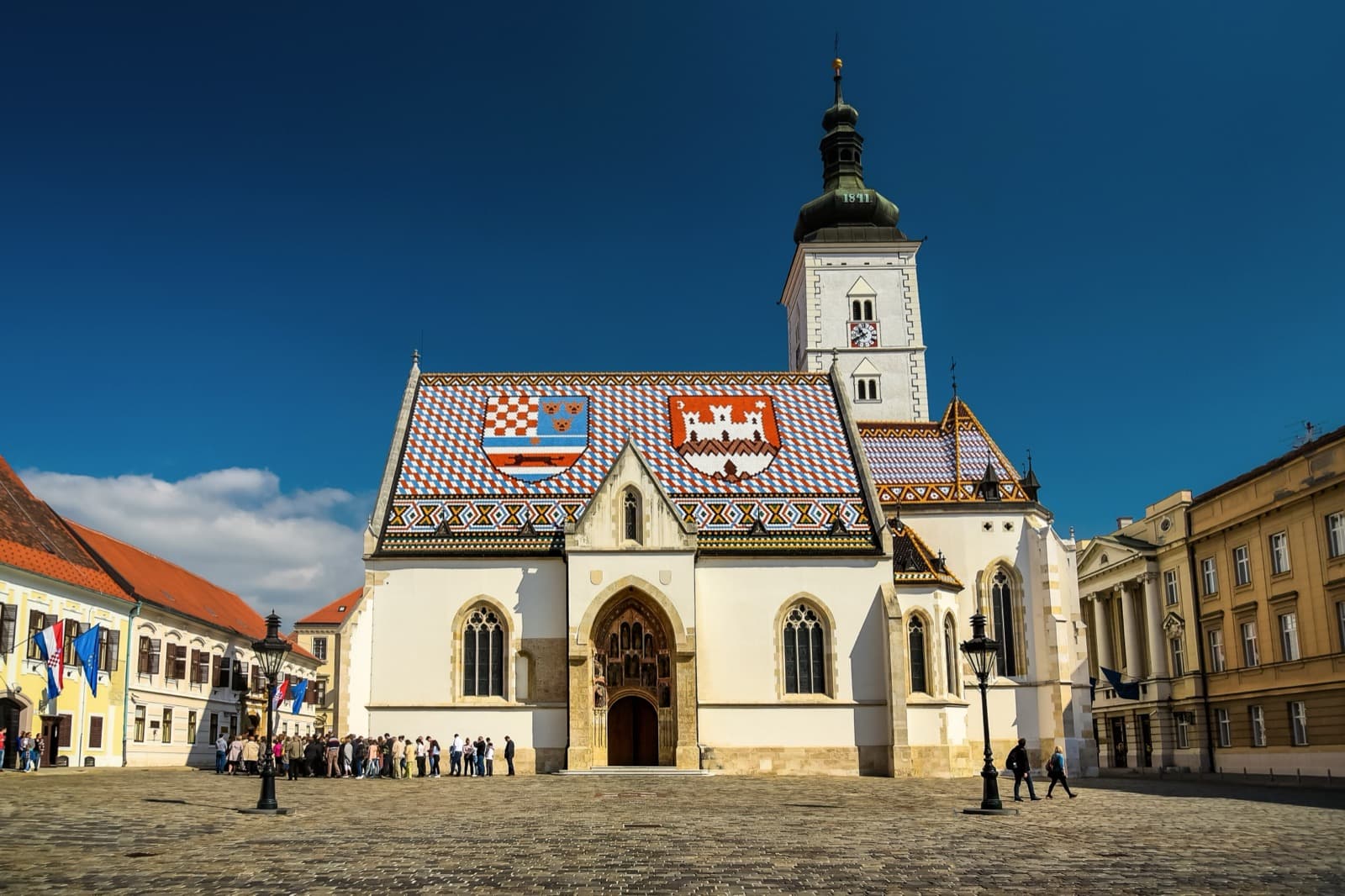
St Mark's Church: The Roof That Flies the Kingdom
If štrukli is the snack, purica s mlincima (turkey with mlinci) is the Sunday-lunch and holiday centerpiece of Zagreb and the northern regions. A whole turkey is slow-roasted until the skin is deep gold. The signature is the mlinci: sheets of thin unleavened flatbread, baked crisp and dried for storage, then softened in hot water or broth and finished in the roasting-pan drippings so they soak up all the fat and juice. The result sits somewhere between a pasta and a dumpling, and it is the part locals actually argue about. This is the classic Zagreb, Zagorje and Medimurje Christmas plate, but traditional restaurants serve it year-round. Order it when you want one full, meaty, unmistakably continental Croatian meal.
Zagrebački odrezak: the city's own schnitzel
Zagrebački odrezak, the Zagreb schnitzel, is the local answer to Wiener schnitzel and cordon bleu. It is a thin veal escalope (pork, chicken or turkey also appear) folded around ham and cheese, then breaded and fried so the cheese melts inside a crisp crust. The difference from a Vienna schnitzel is exactly that stuffing of ham and cheese. It is filling, familiar and on nearly every traditional menu, which makes it a safe pick for anyone who wants a hot sit-down meal without navigating unfamiliar dishes.
Dolac market: where to taste the raw ingredients
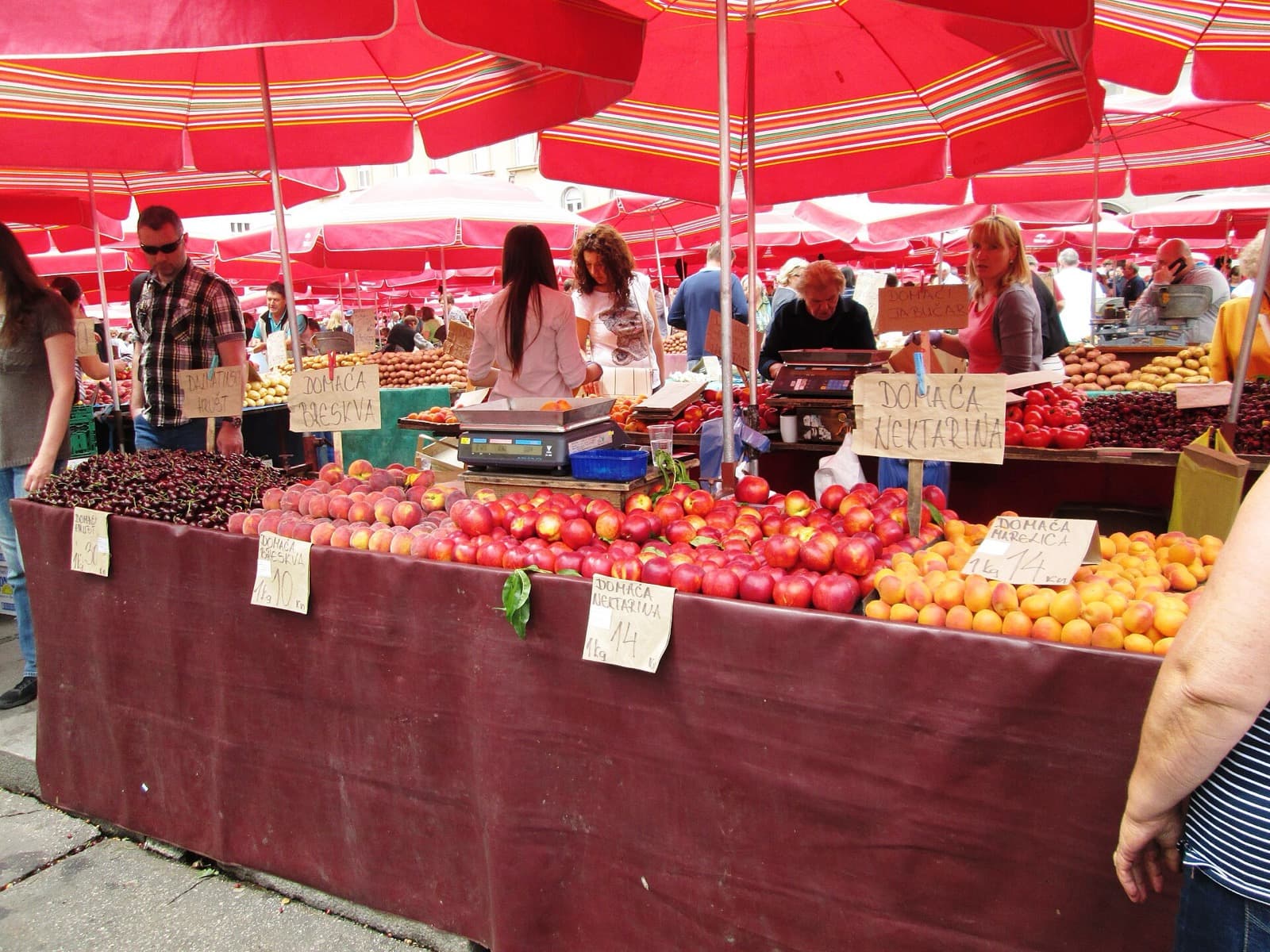
The single best food stop in the old town is Dolac, the open-air market on the terrace between the two old hills, opened in 1930 and nicknamed the "belly of Zagreb." The upper level is the field of red parasols shading produce stalls; the covered hall below holds butchers, fishmongers and dairy sellers. Buy a little sir i vrhnje, the fresh cheese and cream that is a Zagreb staple and the same cheese-and-cream idea inside štrukli, and bring cash, since small vendors may not take cards. Dolac is a stop on the Kaptol and Dolac walking route, so you can taste the market and hear its history in the same visit. It is busiest and best in the morning; Saturday is the biggest and most crowded market day.
Something sweet: kremšnita
For dessert, look for kremšnita, a custard slice of two thin sheets of puff pastry around a thick layer of vanilla cream, often topped with whipped cream and dusted with icing sugar. The most famous version comes from Samobor, a small town near Zagreb: samoborska kremšnita, credited to the Lukačić family pastry shop and developed in the 1920s by the confectioner Đuro Lukačić. It was recognized as intangible cultural property of Croatia on 18 January 2021, and in Samobor it is traditionally served warm. In Zagreb you will find it in cafes and pastry shops across the city.
How to order like a local: the coffee ritual
The most Zagreb thing you can do with food is not eat at all: it is sit. Špica (the word means "peak") is the Saturday-morning ritual, roughly 11am to 2pm, when locals dress up and fill the terraces around Cvjetni trg, the Flower Square, and along Tkalciceva Street to drink coffee, see and be seen. The custom often pairs with a morning shop at Dolac. A coffee here is an hour-long social event, not a to-go cup, so order one, take an outdoor table, and stay. Both Cvjetni trg and Tkalciceva are stops on the self-guided routes, so you can end a walk exactly where locals end their week.
Ordering notes and simple safety
Tap water is fine to drink and usually brought free with a coffee. Portions of štrukli, schnitzel and turkey are large, so under-order and share. Bring cash for the market and small bakeries even though restaurants take cards. Zagreb is a calm, walkable capital and the food scene needs no special caution beyond ordinary market-crowd sense: keep your bag secure in the Saturday Dolac crush and give vendors room to work. To plan the walking around your eating, see Zagreb walking tours and the Zagreb city page, which lay out the three self-guided routes through the Upper Town, Kaptol and Dolac, and the Lower Town.
Sources
Frequently asked questions
- What food is Zagreb famous for?
- Zagreb is best known for zagorski štrukli, a dough parcel filled with fresh cheese, eggs and sour cream that is boiled or baked. Other signatures are purica s mlincima (roast turkey with soaked-then-crisped flatbread) and zagrebački odrezak, a veal schnitzel stuffed with ham and cheese. The cuisine is continental and inland, leaning on dairy, dough and slow roasts rather than seafood.
- What is zagorski štrukli and where does it come from?
- Zagorski štrukli is thin dough wrapped around fresh cheese, eggs and sour cream, served boiled or baked. It comes from Hrvatsko Zagorje, the region just north of Zagreb. It was added to Croatia's intangible cultural heritage list in 2007 and registered as an EU Protected Geographical Indication in March 2022.
- Where can I try the best štrukli in Zagreb?
- La Štruk on Ulica Skalinska, a short walk from Dolac market, specializes only in štrukli. You choose boiled or baked and then savory or sweet, with the classic cheese version being the one to try first. It is small and popular, so expect a brief wait at peak times.
- What should I eat at Dolac market?
- Dolac is Zagreb's main open-air market, opened in 1930 and nicknamed the belly of Zagreb. Buy sir i vrhnje, the local fresh cheese and cream, from the covered dairy hall, plus seasonal produce from the red-parasol stalls upstairs. Bring cash, since many small vendors do not take cards, and go in the morning when it is liveliest.
- What is the špica coffee ritual in Zagreb?
- Špica, meaning peak, is Zagreb's Saturday-morning social ritual, roughly 11am to 2pm, when locals dress up and fill the café terraces around Cvjetni trg (Flower Square) and Tkalčićeva Street to see and be seen. Coffee here is a slow, hour-long event, not a takeaway. It often follows a morning shop at Dolac market.
- Is there a famous Zagreb dessert?
- Yes, kremšnita, a custard slice of puff pastry around a thick layer of vanilla cream topped with whipped cream and icing sugar. The most famous version is samoborska kremšnita from nearby Samobor, credited to the Lukačić family pastry shop and developed in the 1920s, and recognized as intangible cultural property of Croatia on 18 January 2021. In Samobor it is traditionally served warm.
Ready to experience it?
Upper Town: The Hill of Saint Mark
90 min · 1 km · moderate
More from Zagreb
Explore more at your own pace.
One Day in Zagreb: A Walkable Morning-to-Evening Itinerary
Two Hills and a Horseshoe: How Zagreb Became a City
Dolac Market and the Seam That Made Zagreb One City
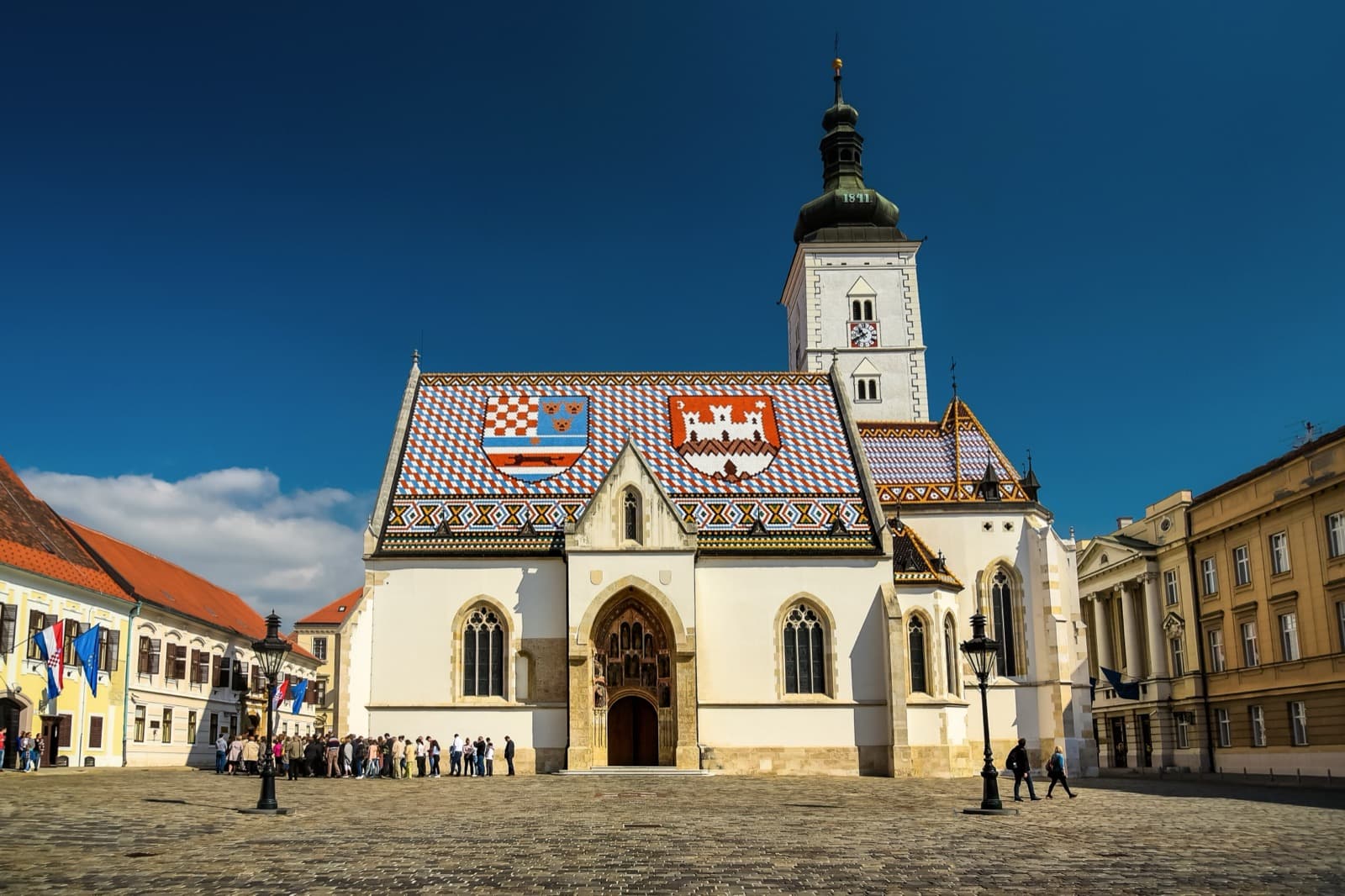
St Mark's Church in Zagreb: The Roof That Flies a Whole Kingdom
Zagreb Cathedral: The Twin-Spired Church That Keeps Rebuilding Itself