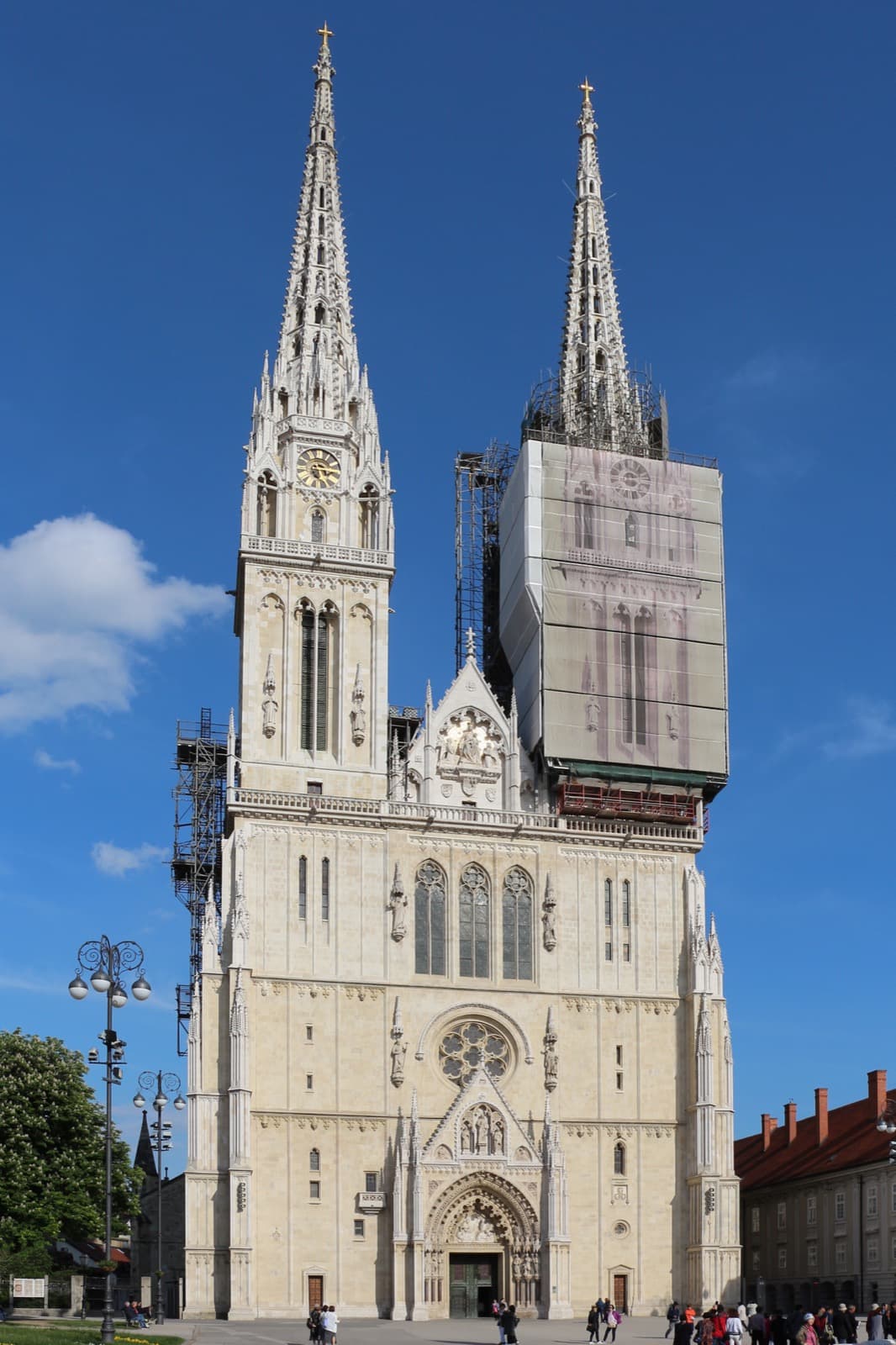
Zagreb Cathedral has been rebuilt so many times that the church you photograph today records a repair, not an origin. Its two neo-Gothic spires, each climbing to roughly one hundred and eight metres and making it the tallest sacral building in Croatia, went up between 1880 and 1902. That is centuries after the first cathedral was consecrated on this same ground. Invasion, siege preparation, and earthquake have each rewritten the building, and the elegant symmetry visitors admire on Kaptol is really the surface of a much older, much scarred structure. Understanding that is the one thing worth carrying with you when you stand in front of it.
A church consecrated, then flattened
The formal name is the Cathedral of the Assumption of the Blessed Virgin Mary, dedicated as well to Saints Stephen and Ladislav. A medieval cathedral stood here first and was consecrated in 1217. It did not last long in that form. The Mongol invasion of 1242 badly damaged the building, and reconstruction in the Gothic style followed under Bishop Timothy from around 1263. So within a single generation of its consecration, the cathedral had already been ruined once and rebuilt once. That pattern of destruction and repair is the real subject of the place. Everything that came later, including the towers that define the skyline, sits on top of a church that had to be raised from damage almost as soon as it was finished.
This is also why the cathedral matters to the larger story of the city. It sits on Kaptol, one of two rival hills that eventually became Zagreb. Kaptol was the town of the bishop and his canons, an ecclesiastical settlement founded when the Diocese of Zagreb was established in 1094 by King Ladislaus. Across a narrow stream, the Medvescak, sat Gradec, the merchant town. For centuries the two hills feuded. The cathedral was the anchor of the church-side of that quarrel, the reason Kaptol existed at all.
Walls against the Ottomans
Hear a stop from this walk
Zagreb Cathedral: the twin spires of the church-town
By the late fifteenth century the threat to this church was no longer local rivalry but the advancing Ottoman frontier, and the response was defensive. Fortification walls and towers were begun around the cathedral under the bishop Osvald Thuz around 1469 and completed by 1478. Further defenses were later added around the cathedral itself under Cardinal Toma Bakac Erdody. For a while, then, this was not simply a place of worship but a fortified compound, a church ringed by military architecture because the era demanded it.
That defensive layer is easy to miss when you are looking up at the spires, but it is part of why the cathedral reads the way it does from the street. The building was shaped by fear of attack as much as by faith, and pieces of that fortification survive in the walls that still partly enclose the complex on Kaptol. If you walk the quarter around the church, you are walking the footprint of a settlement that expected to be besieged.
The earthquake that made the spires
The single most important fact about the towers is that they are younger than they look. On the ninth of November 1880 an earthquake of about magnitude 6.3 struck Zagreb and severely damaged the cathedral. The architect Hermann Bolle rebuilt it in the neo-Gothic style between 1880 and 1902, and it was that rebuilding, not the medieval church, that produced the twin spires now treated as the city's signature. When people call the cathedral ancient, they are half right. The bones are old. The soaring vertical silhouette is a careful nineteenth-century reconstruction, a Victorian-era answer to a natural disaster.
Bolle's spires are not merely a patch. They are a design statement, an attempt to give a battered medieval cathedral a coherent, unified Gothic identity it had never quite possessed. The northern tower reaches 108.20 metres and the southern 108.16, an almost matched pair. For more than a century that pairing defined the view from Ban Jelacic Square below and from most of the surrounding streets. It became the shorthand image of Zagreb itself.
The earth was not finished
Then the ground moved again. On the twenty-second of March 2020 an earthquake of magnitude 5.3 broke the tip off the southern spire. The northern spire was removed on the seventeenth of April that year for safety, and reconstruction has continued since. If you arrive during the repair work, expect scaffolding, fencing, and a skyline that looks incomplete. That is not a disappointment to be endured. It is the whole point of the building. Zagreb Cathedral has spent eight centuries being knocked down and put back up, and you are simply seeing the latest round of a very long habit. The spires you may have seen in older photographs and the spires standing today may not be identical, because the church is quite literally still being rebuilt in front of you.
There is a quiet lesson in that. Most cathedrals present themselves as finished, permanent, beyond time. This one wears its interruptions openly: a Mongol invasion, an Ottoman-era fortification program, a nineteenth-century quake, a twenty-first-century one. The neo-Gothic surface is only the most recent skin over all of it.
Standing in front of it
If you visit, remember that this is a working church still under reconstruction. Dress modestly, keep your voice low, and follow any barriers or closures, and respect the lived-in residential quarter of Kaptol around it. The best way to read the cathedral is not as a single beautiful object but as a timeline you can stand inside. The twelve seventeen consecration, the twelve forty-two ruin, the Renaissance and fortress walls, Bolle's rebuild, the 2020 quake: all of it is layered into one structure on one hill.
The cathedral is the fifth stop on our self-guided walk through Kaptol and Dolac, which traces the seam where the bishop's town and the merchant town finally became one city. The full route runs a little over a kilometre and takes around an hour and a half at an easy pace, passing the great central square, the market terrace, a street laid over a buried creek, and the lane still called the Bloody Bridge before it reaches these spires. You set the pace, pause where you like, and skip what you want. To walk it yourself, browse Zagreb walking tours or start from the Zagreb city page and open the Kaptol and Dolac tour when you are ready to stand on Kaptol and look up.
Sources
- Zagreb Cathedral, Wikipedia: consecration in 1217, Mongol damage in 1242, Bishop Timothy's Gothic rebuild, Bolle's neo-Gothic reconstruction, spire heights, and the 1880 and 2020 earthquakes.
- Timothy, Bishop of Zagreb, Wikipedia: the rebuilding of the cathedral in the Gothic style from around 1263.
- Kaptol, Zagreb, Wikipedia: the founding of the Diocese of Zagreb in 1094 by King Ladislaus and the ecclesiastical character of the quarter.
- Zagreb City Museum, first recorded mention of Zagreb: context for the city's medieval origins and the church-town of Kaptol.
- Roamer self-guided tour transcript, The Other Hill (Kaptol and Dolac): fact-audited on-site narration for Zagreb Cathedral and its surrounding stops.
Ready to experience it?
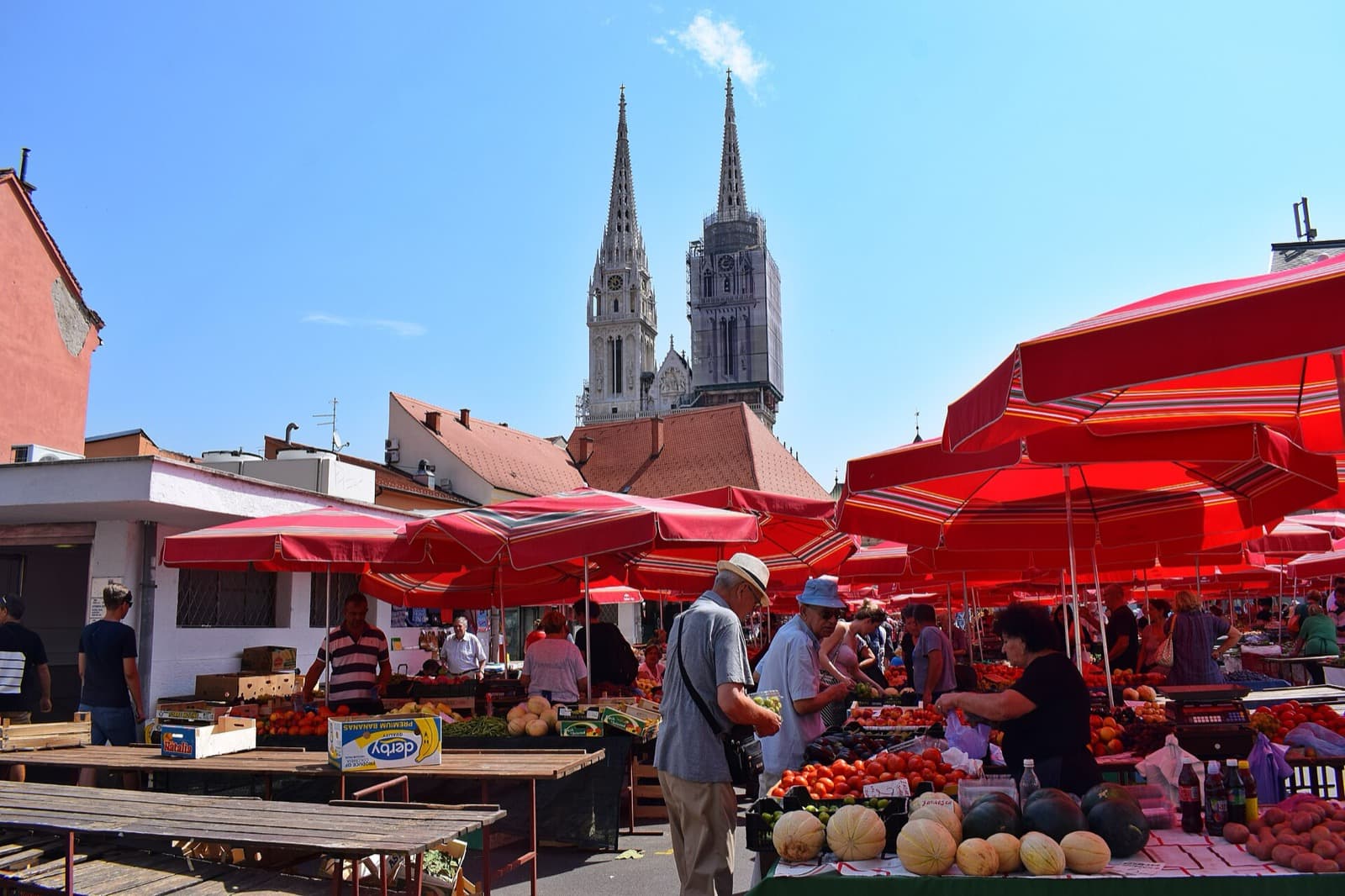
Kaptol and Dolac Market: The Other Hill
100 min · 1.3 km · easy
More from Zagreb
Explore more at your own pace.
One Day in Zagreb: A Walkable Morning-to-Evening Itinerary
Two Hills and a Horseshoe: How Zagreb Became a City
Dolac Market and the Seam That Made Zagreb One City
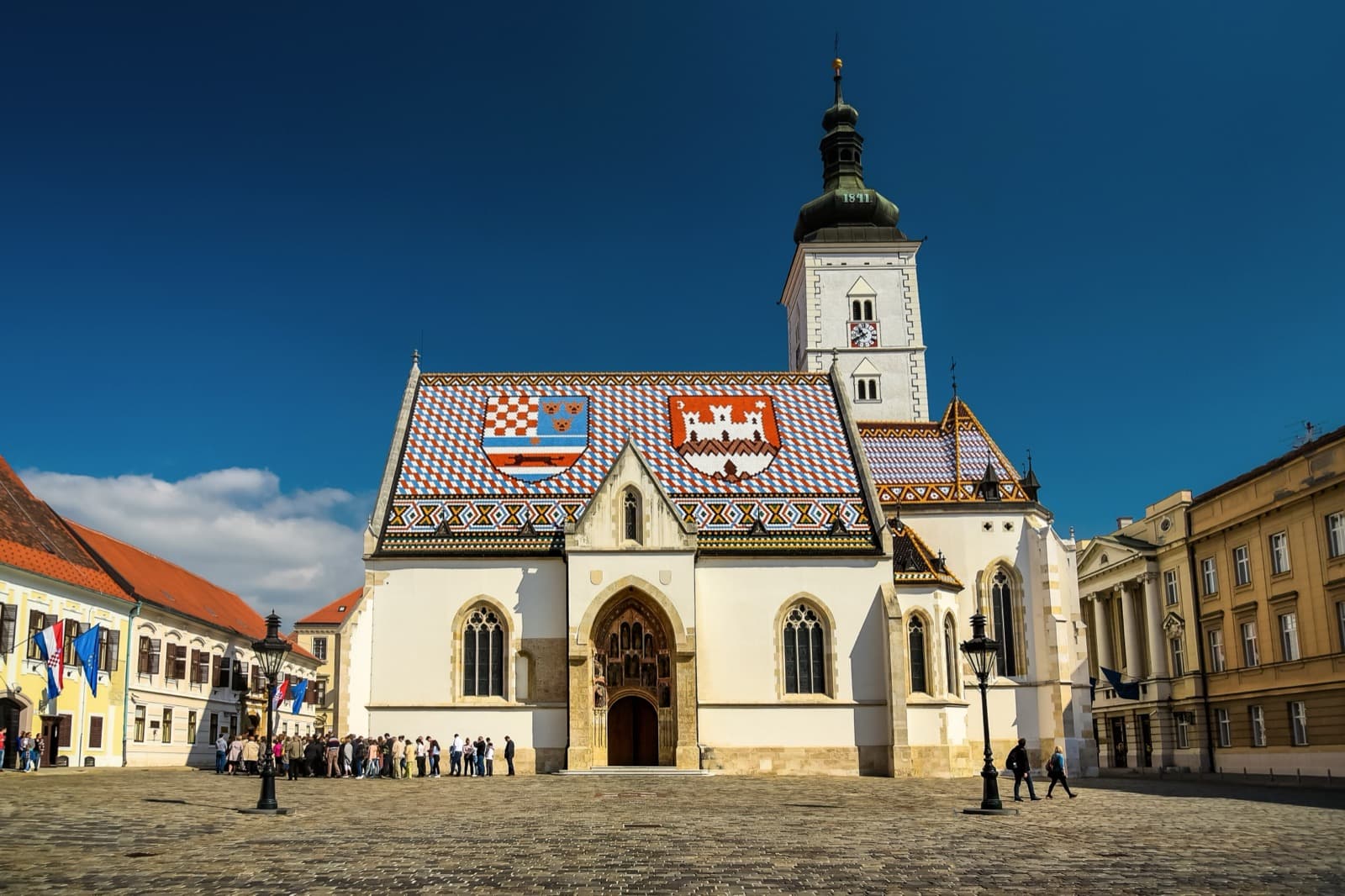
St Mark's Church in Zagreb: The Roof That Flies a Whole Kingdom
Zagreb's Botanical Garden: The Living Corner of the Green Horseshoe